


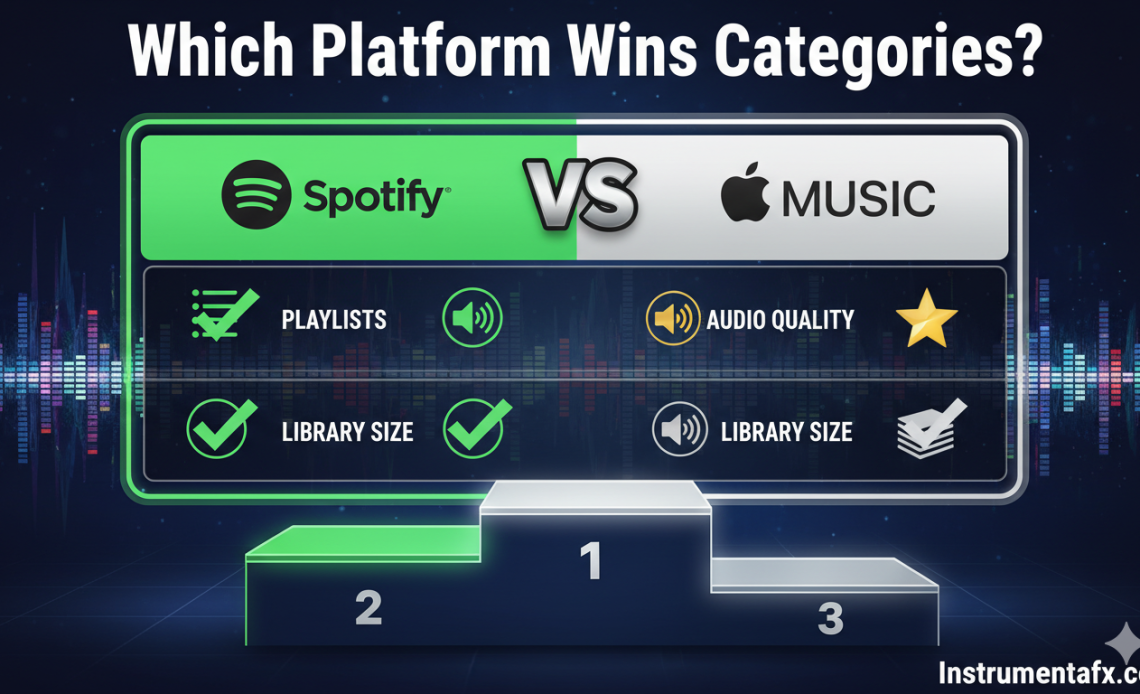
Spotify vs Apple Music remains one of the most debated topics among music streaming enthusiasts, as both platforms dominate the industry with unique features, pricing structures, and listening experiences that cater to different user preferences.
Choosing between these streaming giants depends on factors like audio quality priorities, budget considerations, ecosystem compatibility, and how you discover new music.
With over 100 million songs available on each platform, understanding their key differences helps you invest your subscription dollars wisely and enjoy the best possible listening experience tailored to your needs.
Both services have evolved significantly since their launches. Apple Music entered the market in 2015, while Spotify has been refining its platform since 2006, giving each service distinct advantages.
Understanding the Streaming Giants
Spotify has dominated global music streaming since 2006 with innovative features. The Swedish company pioneered the freemium model that changed how people consume music worldwide.
Today, Spotify boasts over 600 million monthly active users globally. Approximately 240 million of these users subscribe to premium plans without advertisements or listening restrictions.
Apple Music launched in 2015 as Apple’s response to streaming dominance. It replaced iTunes Radio and integrated seamlessly with the existing Apple ecosystem that billions already use.
Apple Music currently serves over 93 million paid subscribers worldwide. Unlike Spotify, Apple Music operates on a subscription-only model with no permanent free tier available.
Pricing Comparison 2026
Understanding the cost differences helps you determine which platform offers better value. Both services have adjusted pricing over recent years to balance profitability with user growth.
Spotify Pricing Structure
Spotify Premium Individual costs $11.99 per month for full features. This plan includes ad-free listening, unlimited skips, offline downloads, and high-quality audio streaming.
The Student plan offers Premium at $5.99 monthly with verification required. Students get three months free when signing up for the first time through the platform.
Spotify Duo costs $16.99 per month for two accounts living together. This plan includes personalized playlists for each user plus a Duo Mix combining both musical tastes.
The Family plan runs $19.99 monthly for up to six accounts. Each family member maintains separate libraries, recommendations, and listening histories for personalized experiences.
Spotify’s free tier remains available with advertisements between songs. Users endure limited skips, no offline listening, and frequent interruptions but access most catalog features.
Apple Music Pricing Structure
Apple Music Individual subscription costs $10.99 per month for complete access. This represents a $1 monthly savings compared to Spotify’s equivalent premium individual plan.
Students pay just $5.99 monthly with proper verification through UNiDAYS. The student plan includes one month free trial plus complimentary access to Apple TV+ streaming.
Apple Music Family costs $16.99 for up to six family members. Each person gets their own account with personalized recommendations and separate music libraries maintained independently.
New subscribers receive three months of Apple Music completely free. This extended trial period gives users substantial time to explore features before committing financially.
Apple One bundles Apple Music with other services starting at $19.95. This package includes Apple TV+, Apple Arcade, and iCloud+ storage, offering significant value for Apple ecosystem users.
Audio Quality Differences
Sound quality significantly impacts your listening experience, especially with quality headphones. Both platforms have made major improvements to audio quality recently through technological advances.
Spotify Audio Quality
Spotify Premium streams at up to 320 kbps using Ogg Vorbis format. This bitrate delivers excellent quality for casual listeners using standard headphones or speakers.
In September 2025, Spotify finally launched lossless audio quality for Premium subscribers. The feature streams tracks at 24-bit/44.1kHz FLAC format, matching CD quality perfectly.
Spotify’s lossless rollout came after an eight-year wait since initial announcements. The delay frustrated audiophiles who switched to competitors offering superior audio quality options.
The platform includes a customizable equalizer for sound personalization. Users adjust bass, treble, and mid-range frequencies to match their listening preferences precisely.
Spotify automatically adjusts streaming quality based on connection strength. This ensures smooth playback even when network conditions fluctuate during mobile listening sessions.
Apple Music Audio Quality
Apple Music streams at 256 kbps using AAC format as standard. This codec efficiently delivers high-quality audio that rivals higher bitrate formats in listening tests.
Lossless audio comes included with all Apple Music subscriptions at no extra cost. Tracks stream at 16-bit/44.1kHz (CD quality) up to 24-bit/192kHz (Hi-Res Lossless) quality.
Spatial Audio with Dolby Atmos creates immersive surround sound experiences. Compatible devices place instruments and vocals in three-dimensional space around the listener.
Apple uses its proprietary ALAC (Apple Lossless Audio Codec) for compression. This maintains perfect audio quality while reducing file sizes for streaming and storage efficiency.
Hi-Res Lossless requires external DAC equipment for full quality benefits. Standard iPhone speakers and AirPods cannot reproduce the highest quality tiers available through streaming.
Music Library and Content
Both platforms claim over 100 million tracks in their catalogs. However, content availability and exclusive offerings create subtle differences worth considering before choosing.
Spotify’s Content Strengths
Spotify offers comprehensive podcast integration within the main application. Over 5 million podcast episodes exist on the platform, making it a one-stop entertainment hub.
The platform recently added audiobooks for purchase and listening. Premium subscribers receive 15 hours of audiobook listening monthly included with their standard subscription.
Spotify secures exclusive content like Spotify Singles and live sessions. These acoustic versions and covers from popular artists provide unique listening experiences unavailable elsewhere.
The service occasionally experiences artist removals or limited catalogs. Some musicians like Neil Young and Joni Mitchell temporarily removed their music over platform controversies.
Spotify Canvas displays short looping videos during song playback. These visual elements enhance engagement but can drain battery life and consume mobile data quickly.
Apple Music’s Content Advantages
Apple Music frequently secures exclusive album releases from major artists. Drake, Taylor Swift, and other superstars have launched albums exclusively on Apple Music temporarily.
Apple Music Classical offers a separate app for classical music enthusiasts. This dedicated application provides superior search and organization specifically for classical compositions and performances.
The platform includes music videos for thousands of popular songs. Users watch official videos, documentaries, and concert films directly within the streaming application.
Apple Music 1 (formerly Beats 1) broadcasts live radio 24/7 globally. Celebrity DJs and artists host shows featuring exclusive interviews, premieres, and curated playlists.
The iCloud Music Library stores up to 100,000 personal tracks. Users upload songs not available on Apple Music, creating a truly comprehensive personal music collection.
User Interface and Experience
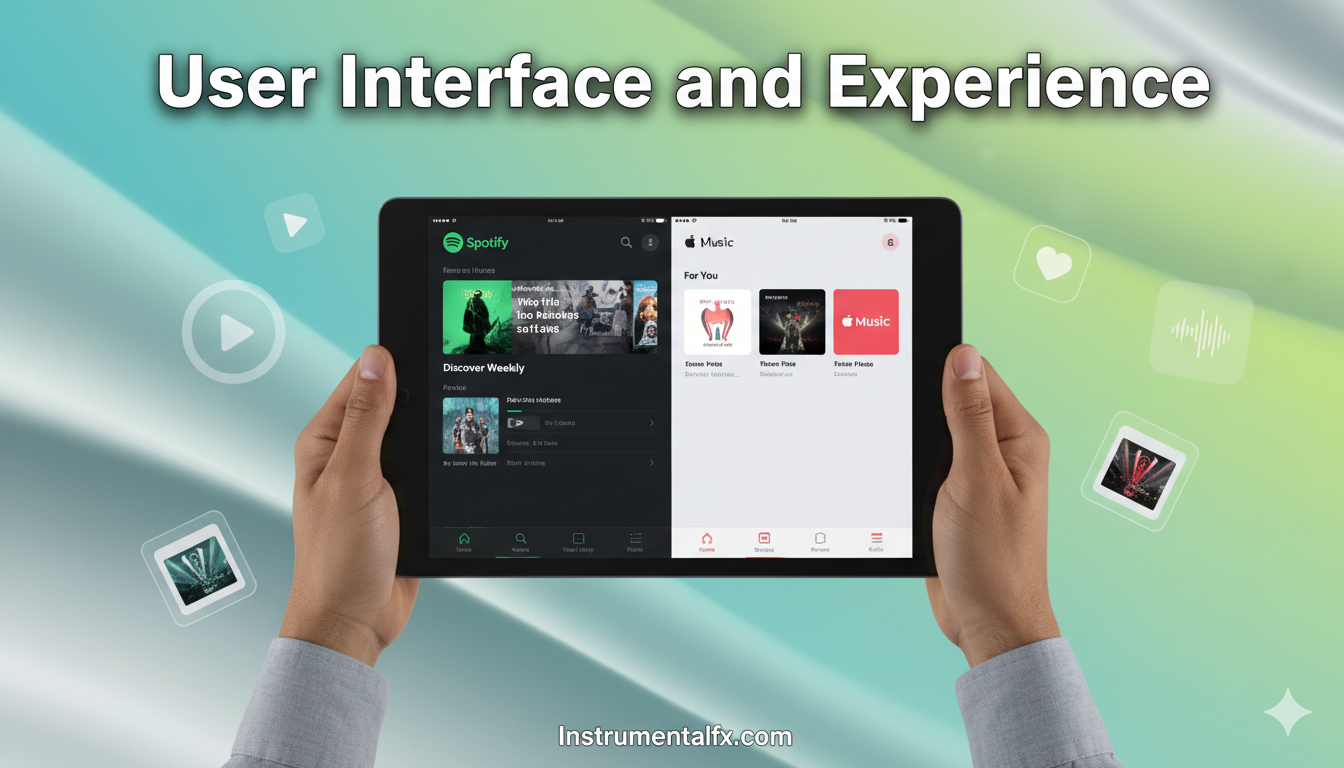
Design philosophy and usability significantly affect daily interaction with streaming services. Each platform takes different approaches to organizing and presenting millions of available tracks.
Spotify’s Interface Design
Spotify features a dark-themed, minimalist interface across all platforms. The consistent design language makes switching between mobile, desktop, and web versions seamless.
The home screen displays recently played content and personalized recommendations. Playlists, albums, and podcasts appear in an easily scrollable format for quick access.
Spotify Connect allows seamless playback switching between compatible devices. Users start music on phones then continue on laptops, smart speakers, or TVs instantly.
The search function works quickly and intuitively across content types. Users find songs, artists, albums, playlists, podcasts, and profiles with minimal typing required.
Some users report frequent UI changes through A/B testing phases. Features appear, disappear, or change positions unexpectedly, creating occasional confusion and frustration.
Apple Music’s Interface Design
Apple Music uses a clean, white layout matching Apple’s design language. The interface integrates seamlessly with iOS, iPadOS, and macOS visual aesthetics throughout.
The “For You” section curates personalized recommendations based on listening history. Apple combines algorithmic suggestions with human editorial curation for balanced discovery.
Lyric search functionality lets users find songs by typing phrases. This unique feature solves the “I can’t remember the title” problem by searching actual song lyrics.
Smart playlists allow advanced customization using multiple criteria simultaneously. Users create dynamic playlists that update automatically based on ratings, play counts, or genres.
Android users report the Apple Music app feels less polished. The interface doesn’t integrate as naturally with Android’s design patterns compared to iOS devices.
Music Discovery Features
Finding new music matching your taste keeps streaming services engaging long-term. Both platforms invest heavily in recommendation algorithms and curated content for discovery.
Spotify Discovery Tools
Discover Weekly delivers 30 personalized song recommendations every Monday. This playlist analyzes listening habits, favorite genres, and similar user patterns for accurate suggestions.
Release Radar updates every Friday with new releases from followed artists. The playlist ensures you never miss new music from your favorite performers and similar artists.
Daily Mixes create genre-specific playlists combining familiar favorites with new recommendations. Spotify generates multiple daily mixes based on distinct musical preferences and moods.
Spotify Wrapped becomes an annual cultural phenomenon each December. Users eagerly share their year-end listening statistics, top artists, and personalized insights across social media.
The algorithm excels at understanding musical preferences through machine learning. Spotify’s recommendation engine is widely considered the industry’s most accurate and responsive.
Apple Music Discovery Tools
New Music Mix functions similarly to Spotify’s Discover Weekly playlist. Updated every Wednesday, it suggests fresh tracks aligned with your established listening preferences.
Get Up! Mix energizes mornings with upbeat, motivational song selections. Apple creates mood-based playlists designed for specific times of day and activities.
Apple Music Radio features live shows hosted by actual DJs. These human-curated broadcasts provide context, stories, and insights that algorithms cannot replicate effectively.
Editorial playlists receive human curation from music industry experts. These thoughtfully arranged collections often feel more cohesive than purely algorithmic recommendations.
The “For You” section updates daily with personalized album and playlist suggestions. Apple balances automated recommendations with editorial picks for varied discovery experiences.
Social Features and Sharing
Music enjoyment often involves sharing discoveries with friends and community. Social integration capabilities vary significantly between the two streaming platforms available.
Spotify Social Integration
Spotify displays what friends are currently listening to in real-time. The Friend Activity sidebar on desktop shows live updates from your connected social network.
Collaborative playlists allow multiple users to add and arrange songs together. Friends build shared soundtracks for road trips, parties, or just discovering music together.
Blend playlists merge two users’ musical tastes into unified recommendations. This feature creates shared listening experiences for couples, friends, or family members.
Users share songs, albums, and playlists directly to social media platforms. Spotify integrates with Instagram Stories, Facebook, Twitter, and messaging apps for easy sharing.
The platform emphasizes community through public profile pages and follower systems. Users follow artists, influencers, and friends to discover their playlists and listening habits.
Apple Music Social Features
SharePlay enables synchronized listening during FaceTime calls with friends. Everyone hears the same music simultaneously while video chatting, creating shared experiences.
Users share songs via Messages, Mail, or other iOS share methods. However, Apple Music lacks the robust social discovery features Spotify offers natively.
The service integrates with Shazam for music identification and addition. Recognized songs automatically add to a Shazam playlist within Apple Music for later exploration.
Apple Music profiles display publicly shared playlists created by users. However, the social features feel less developed compared to Spotify’s community-focused approach.
Family Sharing allows playlist sharing among up to six family members. Each person maintains individual accounts while optionally sharing purchased music and curated collections.
Platform Compatibility
Device ecosystem compatibility affects where and how you enjoy music streaming. Consider which devices you own when choosing between these two major platforms.
Spotify Device Support
Spotify works seamlessly across iOS, Android, Windows, and macOS platforms. The experience remains consistent regardless of your chosen device or operating system.
The service supports smart speakers from Amazon, Google, and Sonata. Spotify Connect technology enables multi-room audio and speaker switching with simple commands.
Gaming console support includes PlayStation and Xbox systems natively. Users control playback and browse music while gaming without switching devices or applications.
Smart TVs from Samsung, LG, and others include Spotify applications. The platform reaches virtually every internet-connected device in modern homes.
Web player functionality works in any browser without downloads required. Users access full Spotify features at spotify.com without installing software on computers.
Apple Music Device Support
Apple Music integrates deeply with iPhones, iPads, Macs, and Apple Watches. The seamless ecosystem experience provides unmatched convenience for Apple device owners exclusively.
Windows and Android apps exist but feel less refined than iOS versions. The user experience on non-Apple platforms lacks the polish Apple ecosystem users expect.
HomePod speakers offer exclusive features like voice requests through Siri. Apple’s smart speakers provide the best Apple Music experience but lack Spotify support.
Apple TV integration allows browsing music videos and listening through home theaters. The tvOS app provides rich visual experiences unavailable on competing platforms.
CarPlay integration delivers superior in-vehicle Apple Music experiences. Voice control through Siri while driving makes Apple Music safer and more convenient.
Offline Listening Capabilities
Downloaded music ensures uninterrupted listening without internet connectivity. Both services allow offline playback, but implementation details create different user experiences.
Spotify Offline Features
Premium subscribers download unlimited songs, albums, and playlists for offline listening. Downloads remain accessible for 30 days without requiring internet connection verification.
Offline Backup Playlist automatically saves recently streamed content to device cache. This emergency playlist works even when users forget to manually download music beforehand.
Downloaded content syncs across up to five devices simultaneously per account. Users maintain offline libraries on phones, tablets, and computers for listening anywhere.
The platform automatically removes downloads after 30 days of no internet connection. This DRM protection prevents indefinite offline access without active subscription maintenance.
Downloads consume device storage space, with quality settings affecting file sizes. Users choose between normal, high, and very high quality for storage versus quality balance.
Apple Music Offline Features
Subscribers download songs from the 100-million-track catalog for offline playback. Downloaded music remains accessible indefinitely while maintaining an active subscription status.
iCloud Music Library syncs downloaded content across all Apple devices automatically. Changes made on one device reflect immediately on other devices using the same account.
Users download up to 100,000 songs to their personal iCloud Music Library. This massive limit accommodates even the most extensive personal music collections imaginable.
Downloaded lossless and Hi-Res Lossless files consume significant storage space. A single Hi-Res track can exceed 100MB, quickly filling device storage with limited downloads.
The service allows downloading music videos for offline viewing as well. This unique feature extends offline capabilities beyond audio-only content available on competing platforms.
Artist Compensation
Supporting musicians through streaming choices matters to many conscientious listeners. Payment structures differ significantly between platforms, affecting artist livelihoods and sustainability.
Spotify Artist Payments
Spotify reportedly pays between $0.003 to $0.005 per stream to rights holders. These per-stream rates represent some of the lowest compensation in the streaming industry.
The platform paid $10 billion to the music industry in 2024 alone. Cumulative payouts have exceeded $60 billion since Spotify’s inception, supporting countless artists globally.
Spotify for Artists provides detailed analytics and promotional tools for musicians. The dashboard shows listener demographics, playlist placements, and trending city locations.
Discovery Mode allows artists to prioritize songs in recommendation algorithms. This promotional tool trades lower per-stream rates for increased exposure and playlist inclusion.
Free tier streams pay significantly less than Premium subscriber streams. The ad-supported model generates minimal revenue compared to subscription-based listening sessions.
Apple Music Artist Payments
Apple Music pays approximately $0.01 per stream to rights holders consistently. This represents roughly double or triple Spotify’s average per-stream compensation rates.
Every Apple Music user pays for subscriptions, eliminating low-value free streams. This subscriber-only model ensures all streams generate meaningful revenue for artists.
Apple Music for Artists offers analytics but emphasizes editorial over algorithmic promotion. Playlist placement depends more on curator relationships than data-driven optimization tools.
The platform does not offer promotional tools like Spotify’s Discovery Mode. Artists cannot trade lower payments for increased algorithmic visibility or recommendation priority.
Classical music composers and performers benefit from dedicated Apple Music Classical support. This specialized app provides proper crediting and organization for complex classical compositions.
Pros of Spotify
Spotify offers the most generous free tier among major streaming services. Ad-supported listening provides access to most features without monthly subscription costs.
The platform’s algorithm excels at personalized music recommendations consistently. Discover Weekly and Daily Mixes understand preferences better than any competitor’s offerings.
Podcast integration creates a unified entertainment hub for audio content. Over 5 million podcasts eliminate the need for separate podcast applications entirely.
Social features enable better music discovery through friends’ listening habits. Collaborative playlists and Friend Activity foster community around shared musical interests.
Spotify Connect works across more devices than any competing platform. The seamless multi-device experience accommodates diverse tech ecosystems and smart home configurations.
Cons of Spotify
The service costs $1 more monthly than Apple Music for individual plans. This price difference accumulates to $12 annually for identical catalog access.
Lossless audio quality arrived eight years late compared to competitors. Audiophiles endured long waits while Apple Music and Tidal offered superior quality earlier.
Artist compensation rates remain controversial and lower than most alternatives. Conscious consumers concerned about musician welfare might prefer platforms paying higher per-stream rates.
The user interface changes frequently through aggressive A/B testing. Constant redesigns and feature relocations frustrate users who prefer consistent, stable experiences.
No music video library exists within the Spotify platform currently. Users wanting official videos must switch to YouTube or competitor services for visual content.
Pros of Apple Music
Superior audio quality comes included at no additional subscription cost. Lossless and Spatial Audio features provide audiophile-grade listening without premium tier upgrades.
The service costs $1 less monthly than Spotify for individuals. Annual savings of $12 makes Apple Music the more economical choice for budget-conscious users.
Apple Music pays artists significantly more per stream than Spotify. Ethically-minded listeners support musicians better by choosing this higher-compensation platform.
Deep integration with Apple ecosystem devices creates seamless experiences. HomePod, CarPlay, and Siri voice control work flawlessly across all Apple products.
Music video library includes thousands of official videos and documentaries. Visual content enhances artist connections beyond audio-only listening experiences available elsewhere.
Cons of Apple Music
No free tier exists, making Apple Music inaccessible without payment commitment. Users must subscribe or rely on limited three-month trials before access ends.
The Android and Windows apps feel inferior to iOS versions. Non-Apple device owners experience clunkier interfaces and fewer integrated features overall.
Music discovery algorithms lag behind Spotify’s industry-leading recommendations. Apple’s blend of human curation and algorithms produces less accurate personalization.
Limited social features reduce music sharing and community experiences. The platform lacks collaborative playlists, friend activity feeds, and social discovery tools.
Smart playlists and advanced features require desktop application usage. Mobile apps omit powerful library management capabilities available only through computers.
Which Platform Wins Categories?
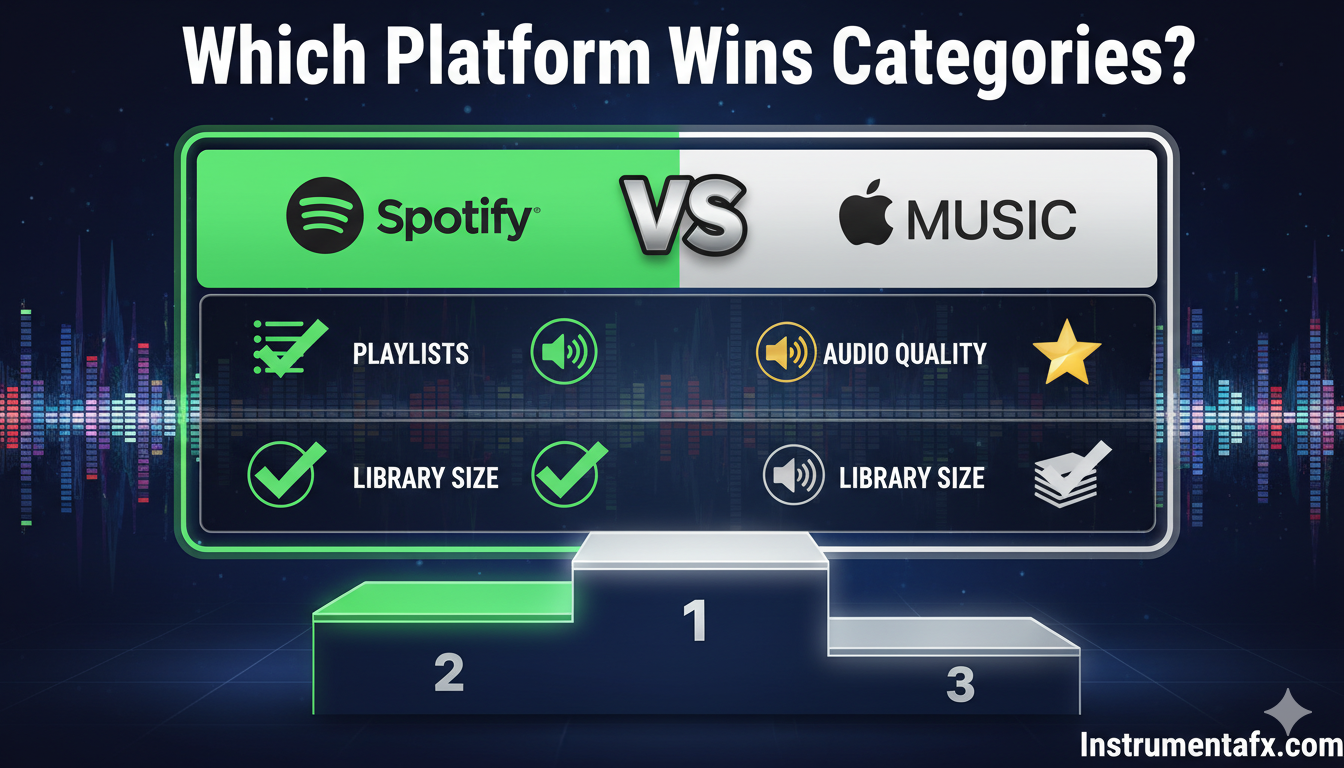
Audio quality clearly favors Apple Music with lossless and Spatial Audio. Spotify’s recent lossless addition still cannot match Apple’s Hi-Res Lossless ceiling and Dolby Atmos.
Music discovery and recommendations belong to Spotify’s superior algorithms. The platform’s machine learning understands preferences and suggests new music more accurately than competitors.
Pricing makes Apple Music the winner at $10.99 versus $11.99 monthly. The $1 difference might seem small but adds up annually for budget-conscious streamers.
Device compatibility crowns Spotify the champion across platforms universally. The service works excellently everywhere, while Apple Music favors Apple devices exclusively.
Social features undeniably favor Spotify’s community-focused approach comprehensively. Friend Activity, Blend playlists, and collaborative features create shared experiences Apple cannot match.
Artist compensation awards Apple Music for paying musicians significantly better. Conscious consumers supporting fair artist payment should choose Apple Music over Spotify.
The Final Verdict 2026
Choose Spotify if you prioritize music discovery and social sharing features. The platform’s algorithms, free tier, and community tools create unmatched personalized experiences.
Select Spotify when using diverse devices across different ecosystems regularly. Its universal compatibility ensures consistent experiences on Android, iOS, Windows, and smart speakers.
Pick Spotify if podcasts and audiobooks matter beyond just music streaming. The all-in-one audio platform eliminates juggling multiple apps for different content types.
Choose Apple Music if audio quality matters more than everything else. Lossless streaming and Spatial Audio provide superior listening for audiophiles with quality equipment.
Select Apple Music when deeply embedded in the Apple ecosystem already. Seamless integration with HomePod, CarPlay, and other Apple services justifies the choice.
Pick Apple Music to support artists through higher per-stream compensation rates. Ethical streaming choices reward musicians more fairly for their creative work.
Both services excel in different areas, making the “best” choice personal. Your priorities around quality, discovery, price, and ecosystem determine which platform serves you better.
Try both platforms using their free trial periods before committing financially. Hands-on experience reveals which interface, features, and catalog fit your listening habits perfectly.
Frequently Asked Questions
Which is better, Spotify or Apple Music?
Neither platform is objectively superior—your choice depends on individual priorities and preferences. Spotify excels at music discovery, social features, and cross-platform compatibility, while Apple Music offers better audio quality, lower pricing, and higher artist compensation. Consider your ecosystem, budget, and feature priorities when deciding.
Is Apple Music cheaper than Spotify?
Yes, Apple Music costs $10.99 monthly for individuals compared to Spotify’s $11.99 monthly rate. This $1 monthly difference equals $12 in annual savings, making Apple Music the more economical option for solo users seeking premium streaming without advertisements.
Does Spotify have better sound quality than Apple Music?
No, Apple Music provides superior audio quality with lossless streaming and Spatial Audio included free. While Spotify now offers lossless audio, Apple Music’s Hi-Res Lossless (up to 24-bit/192kHz) and Dolby Atmos surpass Spotify’s maximum quality specifications for audiophiles with proper equipment.
Can I use Apple Music on Android devices?
Yes, Apple Music works on Android phones through a dedicated application available in Google Play Store. However, the Android experience feels less polished than iOS versions, lacking some advanced features and the seamless integration Apple device users enjoy daily.
Which streaming service pays artists more money?
Apple Music pays artists significantly more, with approximately $0.01 per stream compared to Spotify’s $0.003-$0.005 per stream average. This three-fold difference means musicians earn substantially more revenue from Apple Music listeners, making it the more artist-friendly platform.
Does Spotify have a free version available?
Yes, Spotify offers a free ad-supported tier with access to most catalog features and unlimited music. Users experience advertisements between songs, limited skips, and cannot download music offline, but enjoy free listening without monthly subscription costs.
Can I transfer playlists between Spotify and Apple Music?
Yes, third-party services like TuneMyMusic, Soundiiz, and FreeYourMusic facilitate playlist transfers between platforms. These tools match songs across catalogs and recreate your playlists, though some rare tracks might not transfer if unavailable on the destination platform.
Which has better music recommendations and discovery?
Spotify wins decisively with superior algorithmic recommendations through Discover Weekly, Release Radar, and Daily Mixes. The platform’s machine learning understands musical preferences more accurately than Apple Music’s blend of algorithmic and human-curated suggestions.
Do both services work with smart speakers?
Yes, but compatibility varies by device brand and model significantly. Spotify works with Amazon Alexa, Google Assistant, and Sonos speakers universally, while Apple Music performs best on HomePod but also supports select third-party smart speakers.
Is the family plan worth it for either service?
Family plans offer excellent value for households with multiple music listeners needing separate accounts. Spotify Family costs $19.99 for six accounts ($3.33 each), while Apple Music Family costs $16.99 for six accounts ($2.83 each), making both economical compared to individual subscriptions.
Conclusion
Spotify vs Apple Music represents more than just comparing two music streaming services—it’s about finding the platform that perfectly aligns with your listening habits, device ecosystem, and personal values regarding audio quality and artist support.
Throughout this comprehensive analysis, we’ve explored pricing structures, audio quality differences, content libraries, user interfaces, discovery algorithms, social features, and artist compensation models that distinguish these industry-leading platforms.
Both services deliver exceptional value with access to over 100 million songs, but they achieve excellence through different philosophies and feature priorities.
Spotify dominates music discovery, social sharing, and cross-platform compatibility, making it ideal for users who prioritize algorithmic recommendations and community features.
Apple Music delivers superior audio quality, deeper ecosystem integration, and better artist compensation, appealing to audiophiles, Apple device owners, and ethically-minded listeners.


