


Sound of Music cast brought one of cinema’s most beloved musicals to life in 1965, creating a timeless masterpiece that continues to captivate audiences six decades later.
This iconic ensemble, led by Julie Andrews and Christopher Plummer, transformed the von Trapp family story into an unforgettable cinematic experience.
From the seven talented child actors to the supporting players, each member contributed to making this film a cultural phenomenon.
The chemistry between cast members, combined with Rodgers and Hammerstein’s unforgettable score, secured The Sound of Music’s place as one of the greatest musical films ever made.
The Lead Stars of Sound of Music
Julie Andrews as Maria von Trapp
Julie Andrews delivered an Oscar-nominated performance as Maria, the spirited postulant who becomes governess to the von Trapp children. Fresh off her Academy Award win for Mary Poppins, Andrews brought warmth, charm, and her incomparable singing voice to the role.
Director Robert Wise knew Andrews was perfect after viewing early footage from Mary Poppins. He reportedly told screenwriter Ernest Lehman, “Let’s go sign this girl before somebody else sees this film and grabs her!”
Andrews signed a contract with 20th Century Fox for $225,000 to star in The Sound of Music and one other film. Her portrayal of Maria remains one of cinema’s most iconic performances.
The actress brought genuine joy and authenticity to every scene. Her rendition of songs like “The Hills Are Alive” and “My Favorite Things” became legendary.
Christopher Plummer as Captain Georg von Trapp
Christopher Plummer portrayed the stern but loving Captain Georg von Trapp with sophistication and depth. Initially reluctant to accept the role, Plummer eventually agreed and transformed what could have been a one-dimensional character into a complex figure.
Plummer worked closely with screenwriter Ernest Lehman to develop the Captain’s character. He infused the role with wit, warmth, and a darker edge that balanced the film’s sweetness.
Though Plummer famously called the film “The Sound of Mucus” early in his career, he later made peace with the movie’s legacy. He acknowledged its cultural impact before his death in 2021 at age 91.
His chemistry with Julie Andrews created movie magic. The two stars admitted to having mutual crushes during filming, though they remained professional and became lifelong friends.
The Von Trapp Children Cast
Charmian Carr as Liesl von Trapp
Charmian Carr brought the eldest von Trapp daughter to life with grace and charm. At 21 years old, she portrayed the 16-year-old Liesl who sang the memorable “Sixteen Going on Seventeen.”
Carr was actually a model working in a doctor’s office with no acting ambitions. A friend sent her photo to director Robert Wise’s office, leading to her audition.
Wise later recalled, “She was so pretty and had such poise and charm that we liked her immediately.” Her natural beauty and presence made her perfect for the role.
Sadly, Carr passed away in 2016 at age 73. She left behind wonderful memories and her iconic performance that continues to inspire young performers.
Nicholas Hammond as Friedrich von Trapp
Nicholas Hammond played Friedrich, the oldest von Trapp son. His performance captured the character’s struggle between childhood and approaching adulthood perfectly.
Hammond had limited acting experience before landing this role. The casting process involved over 200 interviews and auditions across the United States and England.
After The Sound of Music, Hammond went on to a successful acting career. He notably played Spider-Man in the 1970s TV series and appeared in numerous films and shows.
Hammond remains active in the entertainment industry. He appeared in Quentin Tarantino’s “Once Upon a Time in Hollywood” and continues celebrating the film’s legacy.
Heather Menzies as Louisa von Trapp
Heather Menzies-Urich portrayed Louisa, the third-oldest von Trapp child. Her performance brought energy and spirit to the rebellious character.
After The Sound of Music, Menzies continued acting in television. She appeared in shows like “Dragnet” and “T.J. Hooker” and played Jessica 6 on the TV version of “Logan’s Run.”
She married television star Robert Urich in 1975. They remained together for 27 years until his death in 2002.
Tragically, Menzies-Urich passed away in 2017 at age 68. She is remembered fondly by her co-stars and fans worldwide.
Duane Chase as Kurt von Trapp
Duane Chase brought quiet charm to his role as Kurt von Trapp. His gentle portrayal made Kurt one of the most lovable characters in the film.
Chase was cast after an extensive audition process that sought children with acting, singing, or dancing experience. His natural ability shone through during filming.
Unlike many of his co-stars, Chase did not continue acting after The Sound of Music. He pursued careers in forestry and geology instead.
Chase currently lives in Washington state. He maintains close friendships with his fellow cast members and occasionally participates in Sound of Music events.
Angela Cartwright as Brigitta von Trapp
Angela Cartwright was already an established child actress when she joined The Sound of Music cast. She played the smart, bookish Brigitta who famously ignored the Captain’s whistle while reading.
Cartwright made her screen debut at age 3 in “Somebody Up There Likes Me.” Her experience showed in her confident performance as Brigitta.
The actress was screen tested for both Brigitta and Louisa. She wore a blonde wig for the Louisa test but ultimately won the role of Brigitta.
After The Sound of Music, Cartwright starred in the classic sci-fi series “Lost in Space.” She has also pursued successful careers in photography, art, and writing.
Debbie Turner as Marta von Trapp
Debbie Turner captured hearts as Marta, the sweet and gentle von Trapp daughter. At just 7 years old during filming, she brought natural charm to the role.
Turner came from a showbiz family and appeared in numerous commercials before landing this role. She tested for the film on February 7, 1964, and was signed almost immediately.
After her brief acting career, Turner became a successful floral designer. She ran Debbie Turner Originals for over 30 years, creating beautiful arrangements for weddings and events.
Turner even decorated the White House for Christmas in 2017. She called it “one of the most physically grueling and cool things I’ve ever done.”
Kym Karath as Gretl von Trapp
Kym Karath was only 5 years old when she played Gretl, the youngest von Trapp child. Her adorable performance made her character unforgettable.
Julie Andrews revealed that Karath couldn’t actually swim in the scene where she falls out of the boat. Despite this challenge, young Karath delivered a wonderful performance.
After The Sound of Music, Karath appeared in television shows including “Lost in Space,” “The Brady Bunch,” and “The Waltons.” She also had roles in soap operas.
Unfortunately, Karath faced harassment as she entered her teens in Hollywood. Her parents wisely encouraged her to focus on education rather than continue acting in that environment.
Supporting Cast Members
Eleanor Parker as Baroness Elsa Schraeder
Eleanor Parker portrayed the sophisticated Baroness Elsa Schraeder with elegance and skill. Her character served as the Captain’s love interest before Maria captured his heart.
Parker brought depth to a role that could have been simply villainous. Instead, she made the Baroness a dignified, complex woman worthy of sympathy.
Her performance perfectly balanced sophistication with subtle vulnerability. The Baroness’s graceful exit from the Captain’s life showed true class and maturity.
Parker’s extensive career included numerous film and television roles. She brought her considerable talent and experience to The Sound of Music.
Richard Haydn as Max Detweiler
Richard Haydn delivered a memorable performance as Max Detweiler, the charming and opportunistic family friend. His character provided comic relief and helped launch the von Trapps’ singing career.
Haydn brought wit and sophistication to Max. His portrayal made the character lovable despite his somewhat self-serving nature.
Max’s friendship with the von Trapp family felt genuine. Haydn’s chemistry with the entire cast enhanced every scene he appeared in.
His performance added important levity to the film’s more dramatic moments. Max became one of the most quotable and beloved supporting characters.
Peggy Wood as Mother Abbess
Peggy Wood portrayed the wise and compassionate Mother Abbess beautifully. Her character guided Maria through her spiritual journey with understanding and kindness.
Wood’s rendition of “Climb Ev’ry Mountain” became one of the film’s most powerful moments. Though her singing was partially dubbed, her acting conveyed deep emotion.
The Mother Abbess represented wisdom and maternal love. Wood brought gravitas and warmth to this important role.
Her performance provided spiritual grounding for the film’s narrative. The scenes between Wood and Andrews remain deeply moving.
Marni Nixon as Sister Sophia
Marni Nixon, famous for dubbing singing voices in classic musicals, actually appeared on screen as Sister Sophia. This marked a rare opportunity for audiences to see Nixon herself.
Nixon had previously provided singing voices for actresses in “West Side Story,” “My Fair Lady,” and “The King and I.” Her own appearance in The Sound of Music was special.
Her experience as a vocalist brought authenticity to the abbey scenes. Nixon’s presence added musical credibility to the production.
Though her role was smaller, Nixon’s contribution to musical film history cannot be overstated. Her work helped create some of cinema’s most memorable musical moments.
Behind the Scenes: The Casting Process
Finding the Perfect Maria
Director Robert Wise and screenwriter Ernest Lehman knew they needed someone extraordinary for Maria. Julie Andrews was their first and only choice.
Wise made a list that included Grace Kelly and Shirley Jones. However, Andrews topped the list from the beginning.
When Wise and Lehman viewed early Mary Poppins footage, they immediately recognized Andrews’ star quality. They signed her before the film’s release.
Andrews had reservations about the role’s sweetness. When she learned Wise and Lehman shared her concerns and planned to add depth, she enthusiastically agreed.
Casting the Captain
Finding the right actor for Captain von Trapp proved challenging. Many prominent actors were considered, including Bing Crosby, Yul Brynner, Sean Connery, and Richard Burton.
Wise had seen Christopher Plummer on Broadway and wanted him. However, the stage actor turned down the offer multiple times.
Plummer eventually agreed but helped reshape the character. He worked with Lehman to transform the Captain from a lacking substance into a stronger, more complex figure.
This collaboration resulted in a character with wit, warmth, and psychological depth. Plummer’s input greatly improved the final screenplay.
The Search for the Children
Casting the seven von Trapp children began in November 1963. The process involved over 200 interviews and auditions throughout the United States and England.
Some actors interviewed but not selected included Mia Farrow, Patty Duke, Lesley Ann Warren, Geraldine Chaplin, and even a young Kurt Russell. The Osmonds also auditioned.
Most selected actors had some acting, singing, or dancing experience. However, Charmian Carr was a notable exception as a model with no acting background.
The casting team sought children who could convincingly portray siblings. The chemistry between the young actors became one of the film’s greatest strengths.
The Music Behind the Magic
Rodgers and Hammerstein’s Masterpiece
Richard Rodgers and Oscar Hammerstein II created the unforgettable songs that made The Sound of Music legendary. Their music perfectly captured each emotional moment.
The film featured beloved songs from the Broadway production. It also included new numbers written specifically for the movie adaptation.
Rodgers provided “Something Good” and “I Have Confidence” especially for the film. These songs enhanced Maria’s character development and emotional journey.
The score balanced joyful numbers like “Do-Re-Mi” with poignant ballads like “Edelweiss.” This variety created a rich, emotionally resonant musical experience.
Recording the Songs
Musical arranger Irwin Kostal prerecorded the songs with a large orchestra before filming began. He had previously worked on Mary Poppins in the same role.
Kostal used seven children and five adults to record children’s voices for a fuller sound. However, the actual child actors also performed their own vocals.
Charmian Carr refuted claims that children’s voices were completely dubbed. Four additional children were added to enhance the sound, not replace the original performers.
Some adult actors had voice doubles, including Peggy Wood and Christopher Plummer. Bill Lee dubbed Plummer’s singing voice in the final film.
The Filming Experience
Salzburg, Austria
Filming took place from March to September 1964 in Los Angeles and Salzburg, Austria. The Austrian locations provided breathtaking scenery that became integral to the film.
The production team spent approximately three months filming in Salzburg. They captured iconic locations that fans still visit today.
Scenes at the Mirabell Gardens, Nonnberg Abbey, and Leopoldskron Palace showcased Austria’s beauty. These settings enhanced the film’s romantic, fairy-tale quality.
The local Austrian community embraced the production. Extras filled theaters for performance scenes, adding authenticity to the musical numbers.
Working with Director Robert Wise
Robert Wise brought his considerable talent and experience to The Sound of Music. His patient, kind direction helped young actors deliver outstanding performances.
Wise encouraged the children to develop their characters thoughtfully. Angela Cartwright remembered him asking about her emotional choices and approving her interpretation.
The director created a collaborative atmosphere on set. He valued input from actors, including Christopher Plummer’s suggestions for developing the Captain.
Wise’s vision balanced sweetness with substance. His direction ensured the film avoided becoming overly sentimental while maintaining its emotional power.
On-Set Relationships
The cast developed genuine bonds during filming. Julie Andrews entertained the children between takes, often singing Mary Poppins songs.
Christopher Plummer initially mocked Andrews’ sweetness, calling her “Ms. Disney.” However, he later acknowledged his immature behavior and grew to deeply respect her.
The child actors formed friendships that lasted decades. They remain close today, over 60 years after filming, regularly reuniting for special events.
Julie Andrews and Christopher Plummer admitted to mutual crushes during filming. Despite both being in troubled marriages, they remained professional and became lifelong friends.
Critical Reception and Legacy
Box Office Success
The Sound of Music became a massive box office success. Released on March 2, 1965, it initially opened as a limited roadshow theatrical release.
The film eventually earned over $286 million worldwide. It became the highest-grossing film of 1965 and held the record for highest-grossing film of all time for five years.
Audience response was overwhelmingly positive. Families returned to theaters multiple times, making it a cultural phenomenon.
The roadshow release strategy contributed to its success. Special screenings with reserved seating created an event atmosphere that enhanced the viewing experience.
Critical Divide
Critics were sharply divided in their assessment. East Coast intellectual publications destroyed it, while local papers and trade publications gave glowing reviews.
Pauline Kael called it “the sugar-coated lie people seem to want to eat.” She criticized audiences as “emotional and aesthetic imbeciles” for enjoying it.
Philip K. Scheuer of the Los Angeles Times praised it as “three hours of visual and vocal brilliance.” Variety called it “warmly-pulsating” and “magnificently mounted.”
The wildly mixed reviews reflected critical response to the stage musical. However, audiences clearly sided with positive assessments, making the film an enduring classic.
Awards and Recognition
The Sound of Music won five Academy Awards, including Best Picture and Best Director for Robert Wise. It received ten nominations total.
Other Oscar wins included Best Film Editing, Best Sound, and Best Original Music Score. The film’s technical achievements were recognized alongside its artistic merits.
In 2001, the Library of Congress selected the film for preservation in the National Film Registry. It was deemed “culturally, historically” significant.
Julie Andrews received an Oscar nomination for Best Actress. Though she didn’t win, her performance remains one of cinema’s most celebrated.
The Real von Trapp Family
Maria von Trapp’s Story
The film was based on Maria von Trapp’s 1949 memoir “The Story of the Trapp Family Singers.” The real Maria’s life provided the foundation for the beloved story.
Maria Augusta von Trapp actually was a postulant at Nonnberg Abbey. She became governess to the von Trapp children and eventually married Captain Georg von Trapp.
The real family escaped Austria in 1938 during the Anschluss. Their journey to freedom and subsequent singing career inspired millions worldwide.
Maria von Trapp served as a consultant on the film. She provided input to ensure authenticity while understanding necessary dramatic changes for cinema.
Differences from Reality
The film took creative liberties with the true story. The real von Trapps walked across the border to Switzerland, not climbed mountains as shown.
The family had ten children, not seven. Some children were combined into single characters for dramatic simplification.
Captain von Trapp was actually warm and musical, unlike his stern film portrayal. The real Captain loved his children deeply and encouraged their musical talents.
The romantic timeline was condensed for the film. In reality, Maria and the Captain’s relationship developed more gradually over time.
Cultural Impact and Phenomenon
Sing-Along Tradition
The Sound of Music inspired a unique cultural phenomenon: sing-along screenings. These events began at the London Lesbian and Gay Film Festival in 1999.
Audience members dress as nuns and von Trapp children. They sing along to lyrics superimposed on the screen throughout the film.
The tradition spread internationally to cities worldwide. The Ziegfeld Theatre in New York City hosted successful sing-along runs with cast members attending.
These interactive screenings demonstrate the film’s enduring appeal. Fans continue creating new ways to celebrate and experience this beloved classic.
Tourism Impact
The film dramatically increased tourism to Salzburg, Austria. Fans flock to locations featured in the movie, creating a thriving tourism industry.
Original Sound of Music tours began operating in Salzburg. These guided experiences take visitors to filming locations throughout the city.
Locations like Mirabell Gardens, Nonnberg Abbey, and Leopoldskron Palace became pilgrimage sites. Fans recreate iconic scenes and photograph these beautiful settings.
The economic impact on Salzburg has been substantial. The film continues generating tourism revenue more than 60 years after its release.
Generational Appeal
The Sound of Music appeals to multiple generations. Grandparents who saw it in theaters share it with children and grandchildren.
The film’s themes of family, love, and freedom resonate across cultures. Its message of choosing joy and courage remains relevant today.
Annual television broadcasts became tradition in many countries. Families gather to watch together, creating shared memories and traditions.
New viewers continue discovering the film through streaming platforms. Its timeless quality ensures ongoing popularity with contemporary audiences.
Where Are They Now?
Julie Andrews Today
Dame Julie Andrews remains active and beloved at age 89. After losing her singing voice in 1997 due to a botched surgery, she focused on other creative endeavors.
Andrews authored several memoirs and children’s books. Her writing showcases her wit, wisdom, and storytelling ability.
She introduced herself to new generations through “The Princess Diaries” films. Her role as Queen Clarisse made her relevant to young audiences.
Andrews currently voices Lady Whistledown on Netflix’s “Bridgerton.” Her distinctive voice and talent continue entertaining millions worldwide.
The Surviving Cast Members
Five of the seven von Trapp children are still alive. Nicholas Hammond, Duane Chase, Angela Cartwright, Debbie Turner, and Kym Karath remain close friends.
The group recently reunited in Florence, Italy, in 2025. They appeared at Teatro Niccolini, celebrating their 60-year friendship.
They’re working on a documentary about their experiences. This project will provide fans with deeper insights into the film’s making and legacy.
These reunions demonstrate genuine affection and lasting bonds. Their friendship transcends professional relationships, becoming truly familial connections.
Remembering Those We Lost
Christopher Plummer passed away in 2021 at age 91. He had made peace with The Sound of Music and acknowledged its importance before his death.
Charmian Carr died in 2016 at age 73. She remained connected to the film’s legacy, attending events and writing about her experiences.
Heather Menzies-Urich passed away in 2017 at age 68. She maintained friendships with her co-stars throughout her life.
Eleanor Parker, Peggy Wood, and Richard Haydn have also passed. Their performances remain preserved in this cinematic treasure.
Production Details
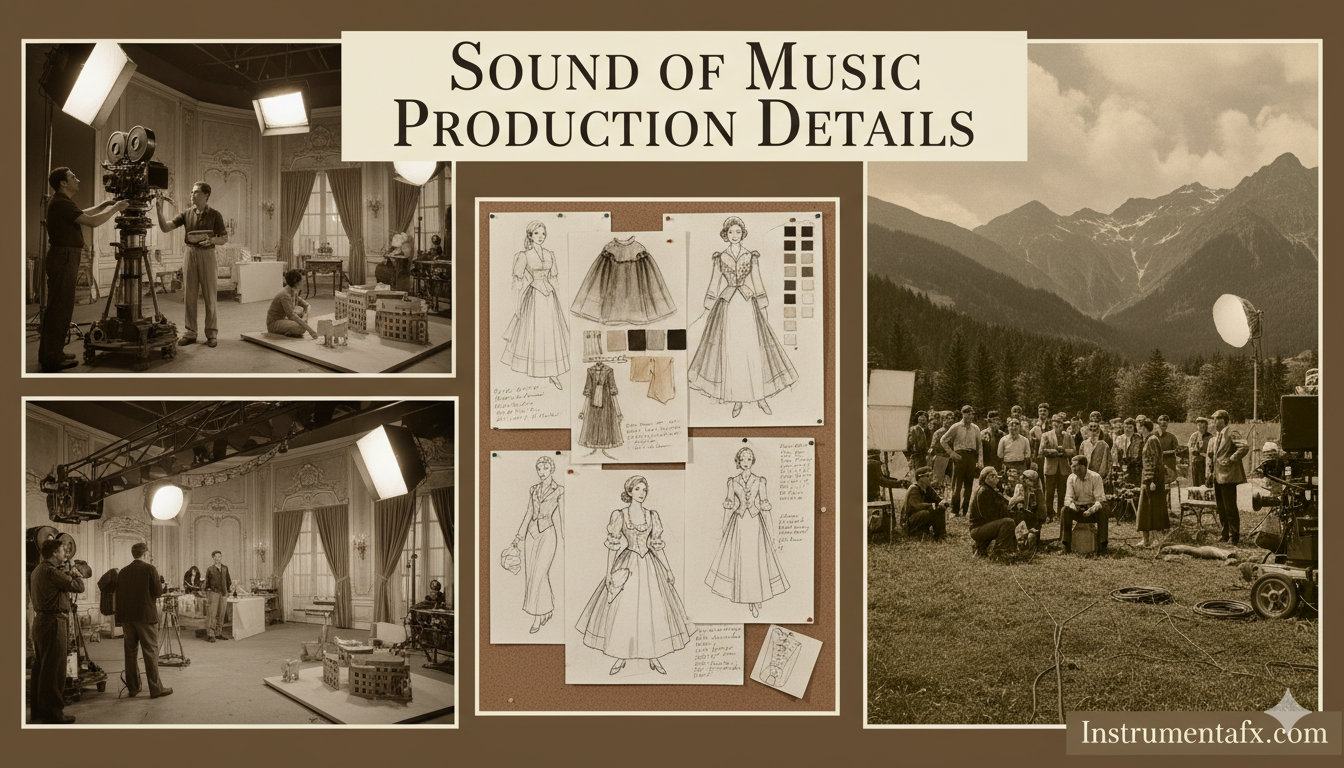
Budget and Technical Aspects
The Sound of Music had a substantial budget for its time. 20th Century Fox invested heavily in making it a spectacular production.
The film utilized 70-mm screenings and six-track stereophonic sound. These technical innovations created an immersive theatrical experience.
Cinematographer Ted McCord provided lucid, beautiful cinematography. Production designer Boris Leven created authentic, detailed sets.
Costume designer Dorothy Jeakins created the many vivid costumes. Her work helped define each character’s personality and the film’s overall aesthetic.
Marketing Strategy
Mike Kaplan directed the publicity campaign. After reading the script, he decided on the tagline “The Happiest Sound in All the World.”
This message appeared on all promotional materials and artwork. Howard Terpning painted the iconic image of Andrews on an alpine meadow.
The campaign emphasized family-friendly entertainment and spectacular scenery. It positioned the film as a must-see event for all ages.
Press junkets during the Salzburg production phase built anticipation. Journalists interviewed the cast and crew, generating early excitement.
Modern Relevance
Streaming Era
The Sound of Music found new life on streaming platforms. Disney+ makes it accessible to viewers worldwide at any time.
New audiences discover the film through these platforms. Young viewers appreciate its timeless story and spectacular musical numbers.
Social media allows fans to share their love globally. Viral moments and memes introduce the film to those unfamiliar with it.
The convenience of streaming ensures ongoing viewership. The film remains culturally relevant despite being over 60 years old.
Educational Value
Schools and music programs use The Sound of Music as teaching material. Its themes and music provide valuable learning opportunities.
The film teaches about World War II history and the Anschluss. It presents these serious topics in an accessible, age-appropriate manner.
Music educators use the songs to teach fundamentals. “Do-Re-Mi” famously introduces musical scale basics to children worldwide.
The production values demonstrate classic Hollywood filmmaking. Film students study its cinematography, editing, and direction.
Contemporary Adaptations
The stage musical continues being produced worldwide. High schools, community theaters, and professional companies perform it regularly.
NBC produced a live television version in 2013 starring Carrie Underwood. This introduced the story to a new generation.
Various countries have created their own adaptations. The universal themes allow the story to transcend cultural boundaries.
These new versions honor the original while bringing fresh perspectives. The story’s flexibility ensures its continued relevance.
The Enduring Magic
Why It Still Matters
The Sound of Music endures because it celebrates fundamental human values. Love, family, courage, and joy never go out of style.
The film provides hope during difficult times. Its message that hills are alive with possibility resonates across decades.
Perfect casting created indelible characters. Julie Andrews and the ensemble brought authenticity that transcends typical musical conventions.
The music remains unforgettable. Rodgers and Hammerstein created songs that people hum and sing for generations.
Personal Connections
Millions of people have personal connections to The Sound of Music. It marked important moments in their lives and families.
Many saw it with parents or grandparents. Those shared experiences created lasting memories and traditions.
The film comforts during challenging times. Its optimism and beauty provide emotional refuge when needed most.
Wedding couples frequently use songs from the film. “Edelweiss” and “My Favorite Things” soundtrack important life moments.
Future Generations
The Sound of Music will continue captivating audiences for decades to come. Its quality ensures ongoing appreciation and discovery.
New technologies will present it in enhanced formats. Restored versions preserve its visual and audio magnificence for future viewers.
The cast’s legacy lives on through their performances. These actors created something truly timeless that transcends their individual lives.
Young performers will continue being inspired by this masterpiece. They’ll study the performances, hoping to achieve similar magic in their own careers.
Frequently Asked Questions
Who played Maria in The Sound of Music?
Julie Andrews portrayed Maria von Trapp in The Sound of Music. She received an Academy Award nomination for her performance and became forever associated with this iconic role.
How many von Trapp children were in the movie?
The movie featured seven von Trapp children. Charmian Carr, Nicholas Hammond, Heather Menzies, Duane Chase, Angela Cartwright, Debbie Turner, and Kym Karath played the siblings.
Is Christopher Plummer still alive?
Christopher Plummer passed away in 2021 at age 91. He had an illustrious career spanning decades and eventually made peace with his famous role as Captain von Trapp.
Did the cast do their own singing?
Most cast members performed their own vocals. However, Christopher Plummer’s singing was dubbed by Bill Lee, and Peggy Wood’s performance of “Climb Ev’ry Mountain” was partially dubbed.
Where was The Sound of Music filmed?
The film was shot in two main locations. Scenes were filmed in Salzburg, Austria from March to September 1964, with additional filming at 20th Century Fox Studios in Los Angeles.
Which Sound of Music cast members are still alive in 2026?
Julie Andrews and five of the seven child actors remain alive. Nicholas Hammond, Duane Chase, Angela Cartwright, Debbie Turner, and Kym Karath continue attending reunions and events.
What happened to the child actors after the movie?
The children took different paths. Some continued acting like Nicholas Hammond and Angela Cartwright, while others pursued different careers like Debbie Turner’s floral design business.
How accurate is the movie to the real von Trapp story?
The film took creative liberties with historical facts. The real family had ten children, walked to Switzerland rather than climbing mountains, and experienced events over a longer timeline.
Why is The Sound of Music so popular?
The film’s popularity stems from its perfect combination of memorable music, strong performances, beautiful scenery, and universal themes about family, love, and courage.
Did Julie Andrews and Christopher Plummer get along?
Initially, Plummer was difficult and mocked Andrews’ sweetness. However, they eventually became dear friends and worked together again in 2001’s “On Golden Pond” television production.
Conclusion
The Sound of Music cast created something truly magical that transcends time and generations. From Julie Andrews’ luminous performance as Maria to Christopher Plummer’s complex Captain von Trapp, every actor contributed to this masterpiece.
The seven young performers brought authenticity and charm that made the von Trapp children feel like a real family viewers could love and root for throughout their journey.
Supporting cast members like Eleanor Parker, Richard Haydn, and Peggy Wood added depth and dimension to the story. Behind the cameras, director Robert Wise and his creative team crafted a visual and musical spectacle that set new standards for film musicals.
The combination of Rodgers and Hammerstein’s unforgettable songs, spectacular Austrian locations, and genuine chemistry among cast members created cinematic perfection.


