


Fur Elise sheet music remains the most sought-after piano composition for learners and professionals worldwide in 2026.
Ludwig van Beethoven’s timeless Bagatelle in A minor (WoO 59) continues to captivate pianists of all skill levels with its enchanting melody and emotional depth.
Whether you’re a complete beginner taking your first piano steps or an advanced player perfecting classical technique, finding the right sheet music arrangement is essential.
This comprehensive guide provides everything you need to master Fur Elise, from simplified beginner versions to the complete advanced arrangement.
You’ll discover free downloadable options, understand different skill level adaptations, learn proper practice techniques, and access resources including fingering guides, PDF downloads, and audio samples.
Each section is designed to help you find the perfect sheet music version matching your current abilities and musical goals for successful learning.
Understanding Fur Elise: The Composition
Fur Elise was composed by Ludwig van Beethoven in 1810. This iconic piece wasn’t published until 1865, nearly 40 years after Beethoven’s death.
The title “Fur Elise” translates to “For Elise” in English. However, the true identity of Elise remains one of classical music’s greatest mysteries.
Many scholars believe the piece was actually written for Therese Malfatti. Beethoven proposed marriage to her in 1810, but she declined his offer.
The confusion arose when Ludwig Nohl discovered the manuscript. He misread Beethoven’s handwriting, interpreting “Therese” as “Elise” in the dedication.
Another theory suggests Elisabeth Röckel as the mysterious Elise. She was a talented soprano and close friend of Beethoven.
The piece is officially catalogued as Bagatelle in A minor, WoO 59. WoO stands for “Werk ohne Opuszahl” meaning work without opus number.
Fur Elise follows an A-B-A-C-A structure with recurring themes. The famous opening melody returns throughout the composition, creating unity.
The complete piece is approximately 3-4 minutes long when played at the proper tempo. Beginners typically learn only the opening A section initially.
Why Fur Elise Sheet Music is Perfect for All Levels
Fur Elise offers natural progression for pianists at every stage. The piece can be simplified or played in its full complexity.
Beginners benefit from the memorable opening melody pattern. The right-hand notes in the A section use a comfortable hand position.
The piece introduces essential piano techniques gradually. Students learn hand coordination, fingering patterns, and dynamic control naturally.
Intermediate pianists find challenge in the B and C sections. These parts require faster passages, larger hand stretches, and more complex rhythms.
Advanced players perfect interpretation and emotional expression. The piece allows exploration of rubato, pedaling, and subtle dynamics.
The familiarity of Fur Elise motivates practice sessions. Students enjoy playing music they’ve heard and recognized for years.
Multiple arrangement levels prevent overwhelming beginners. Simplified versions build confidence before tackling the complete composition.
The piece teaches valuable sight-reading skills through repetition. The recurring A section helps students memorize patterns effectively.
Different Levels of Fur Elise Sheet Music
Level 1 – Absolute Beginner (Pre-Staff): Simplified melody using only the famous opening section. Notes are often labeled with letter names for easy recognition.
Level 2 – Late Beginner (Early Elementary): Right hand plays the main melody with basic left-hand accompaniment. Hand position stays within five-note range for comfort.
Level 3 – Early Intermediate: Complete A section with both hands playing proper parts. Introduction to basic pedaling and dynamic markings included.
Level 4 – Intermediate: Includes A and simplified B sections with moderate tempo. Requires larger hand stretches and coordination between hands.
Level 5 – Advanced (Original Form): Complete A-B-A-C-A structure exactly as Beethoven composed. Contains all challenging passages with original tempo and dynamics.
The progression through levels allows gradual skill building. Students can advance at their own pace without frustration.
Each level prepares specific techniques for the next stage. This methodical approach ensures solid foundation development.
Teachers often assign multiple levels over several years. Students appreciate returning to familiar music with new challenges.
Beginner Fur Elise Sheet Music Guide
Beginner versions focus exclusively on the opening A section. This is the most recognizable part that everyone knows.
The melody typically stays within Middle C position initially. Both hands remain in comfortable five-note spans without position changes.
Letter names often appear above or inside noteheads. This helps absolute beginners who are still learning staff reading.
Fingering numbers are clearly marked throughout the piece. Proper fingering from the start prevents developing bad habits.
The tempo marking is slower than the original. Beginners play at a comfortable speed that allows accuracy.
Simplified left-hand accompaniment uses basic quarter notes. Complex broken chords are removed or reduced to single notes.
The time signature is usually kept at 3/8. This maintains the original waltz-like feel even in simplified form.
Dynamic markings are minimal in beginner versions. Students focus on notes and rhythm before adding expression.
The piece typically ends after 16-24 measures. This provides a complete musical phrase without overwhelming new players.
Practice suggestions often accompany beginner sheet music. Helpful tips guide students through tricky sections effectively.
Intermediate Fur Elise Sheet Music Features
Intermediate versions include both A and B sections. Students experience the dramatic shift to the more aggressive middle section.
The B section introduces sixteenth-note runs and arpeggios. These fast passages require finger independence and coordination.
Hand position changes occur throughout the piece. Students must navigate the keyboard beyond five-note positions.
Left-hand broken chords appear in proper form. The characteristic “um-pah-pah” pattern creates the waltz accompaniment.
Pedaling marks are included with specific instructions. Proper damper pedal technique enhances the flowing melody.
Dynamic contrasts become more important at this level. Students learn to play soft passages (piano) and loud sections (forte).
Tempo expectations increase toward the original speed. The marking “Poco Moto” indicates a gentle, flowing tempo.
Phrasing marks show where to breathe musically. Slurs and phrase marks guide musical interpretation beyond notes.
The piece extends to 40-60 measures in intermediate arrangements. This includes most of the main thematic material.
Staccato and legato articulations are clearly marked. Students develop touch variety and expressive capabilities.
Advanced Fur Elise Sheet Music Complete Version

The advanced version contains all five sections: A-B-A-C-A. This is Beethoven’s complete original composition without simplifications.
The C section presents the greatest technical challenges. Rapid scale passages, wide leaps, and complex rhythms test abilities.
Advanced fingering is crucial for difficult passages. Suggested fingerings help navigate intricate runs and chord progressions.
The piece requires approximately 3-4 minutes performance time. Maintaining energy and concentration throughout is essential.
Subtle tempo fluctuations add musical interpretation. Rubato allows expressive freedom within the overall tempo framework.
Pedaling becomes complex with frequent changes. Advanced players use half-pedaling and flutter pedaling techniques.
Dynamic range expands from pianissimo to fortissimo. Dramatic contrasts create emotional impact throughout the performance.
Ornaments and grace notes appear in original form. These decorative elements require precise timing and execution.
The A minor key signature includes one accidental. However, chromatic passages introduce many sharps and flats.
Advanced editions often include historical performance notes. These insights help interpret Beethoven’s intentions authentically.
Where to Find Free Fur Elise Sheet Music
MuseScore offers free PDF and MIDI downloads. Multiple arrangement levels are available from various contributors worldwide.
IMSLP (International Music Score Library Project) provides public domain versions. The original manuscripts and historical editions are accessible freely.
8notes.com features transposable sheet music online. You can adjust key, tempo, and view the score interactively.
VirtualSheetMusic.com offers a free edition with MP3 files. Fingering suggestions and practice tips are included.
MakingMusicFun.net provides beginner-friendly arrangements. Their simplified versions include helpful learning resources.
PianoSongDownload.com hosts multiple difficulty levels. Both simplified and intermediate versions are available for printing.
La Touche Musicale offers free PDF downloads. Their app also provides interactive learning features.
GalaxyMusicNotes.com provides the advanced complete version. Digital download includes specific pedaling and fingering marks.
Free sheet music typically comes in PDF format. You can print unlimited copies for personal use.
Always verify copyright status before downloading. Public domain versions are legal to use freely.
Premium Fur Elise Sheet Music Options
Alfred Music publishes professional Masterwork editions. These include scholarly notes, fingering, and performance suggestions.
Henle Urtext editions provide the most accurate versions. They reference original manuscripts for authentic interpretation.
Faber Piano Adventures includes Fur Elise in method books. Integrated learning approach with technique exercises included.
Hal Leonard offers simplified and original arrangements. Their Simply Classics Solos series is popular with students.
Amazon sells physical sheet music books with fast shipping. Paperback editions are affordable and portable for lessons.
Sheet Music Plus provides digital downloads instantly. Purchase and print immediately without waiting for delivery.
Musicnotes.com offers transposable digital sheet music. Customize key signature and adjust difficulty on purchase.
Premium editions often include performance CDs or MP3s. Hearing professional recordings aids learning and interpretation.
Annotated versions provide fingering by renowned pianists. Expert suggestions help overcome technical difficulties efficiently.
Premium sheet music typically costs $3-$15 per arrangement. Investment ensures high-quality printing and editorial accuracy.
Understanding Fur Elise Sheet Music Notation
The time signature is written as 3/8 in most editions. This creates a lilting waltz feel with three eighth notes per measure.
Some publishers use 3/4 time signature instead. This makes more musical sense for tempo and phrasing interpretation.
The key signature shows A minor (no sharps or flats). However, frequent accidentals appear throughout the composition.
The opening right-hand pattern alternates E and D-sharp. This distinctive figure defines the entire piece’s character.
Grace notes precede the main melody notes. These ornamental figures require quick, light execution before the beat.
Staccato dots indicate detached, shortened notes. These appear primarily in the B section’s energetic passages.
Slurs show connected, legato playing within phrases. The opening melody should flow smoothly without breaks.
Dynamic markings range from pp (pianissimo) to ff (fortissimo). Gradual crescendos and diminuendos shape musical phrases.
Pedal markings use “Ped.” and asterisk symbols. Proper pedaling connects harmonies while maintaining clarity.
Tempo marking “Poco Moto” means “little motion” or moderately. The piece shouldn’t rush despite its flowing character.
Common Fingering Patterns in Fur Elise
The opening right-hand figure uses fingers 5-4-5-3 pattern. This allows smooth execution of the E-D#-E-D#-E-B sequence.
Left hand typically starts with finger 5 on low A. The broken chord pattern ascends using 5-3-1 finger sequence.
The B section requires finger crossings and extensions. Careful fingering planning prevents awkward hand positions.
Thumb (finger 1) pivots under for scale passages. This technique enables smooth runs without position breaks.
Fifth finger plays the highest melody notes. Strengthening the pinky is essential for projection.
Some passages allow alternative fingering choices. Larger or smaller hands may require personalized adaptations.
Consistent fingering aids memorization and muscle memory. Use the same fingering pattern every practice session.
Challenging sections benefit from isolated fingering practice. Hands separate work clarifies proper finger assignments.
Advanced players modify fingering for personal comfort. Experience allows informed decisions beyond printed suggestions.
Proper fingering reduces tension and prevents injury. Never force uncomfortable stretches or awkward hand positions.
Practice Tips for Learning Fur Elise

Start with hands separate practice initially. Master each hand independently before combining them together.
Practice in small sections of 2-4 measures. Perfect tiny segments before linking them into larger phrases.
Use a metronome for steady rhythm development. Begin very slowly and gradually increase tempo over weeks.
Focus on problem spots with targeted repetition. Isolate difficult measures for concentrated practice attention.
Practice difficult passages in rhythmic variations. Dotted rhythms and different accents strengthen technical control.
Record yourself playing to identify improvements needed. Audio playback reveals mistakes you might miss while playing.
Practice with proper posture and hand position. Curved fingers and relaxed wrists prevent tension and injury.
Memorize in musical phrases rather than note-by-note. Understanding structure aids faster, more secure memorization.
Practice musically even at slow tempos. Include dynamics and phrasing from the beginning, not just notes.
Take breaks during extended practice sessions. Fresh focus produces better results than exhausted repetition.
Technical Challenges in Fur Elise Explained
The opening D-sharp to E alternation requires control. These adjacent notes must sound even and clear.
The left-hand broken chord pattern needs smooth execution. Avoid accenting the first note of each triplet figure.
The B section’s rapid sixteenth notes demand finger independence. Each finger must move precisely without affecting others.
Wide interval jumps in the C section challenge accuracy. Practice slowly to develop spatial awareness and confidence.
The chromatic runs require even finger strength. Weak fingers (4 and 5) need special strengthening attention.
Coordinating hands in contrary motion takes practice. The B section features hands moving opposite directions.
Maintaining tempo through difficult passages proves challenging. Tendency to rush or slow must be resisted.
Smooth pedal changes without blurring harmonies requires skill. Timing pedal lifts precisely prevents muddy sound.
Playing softly with control in pp sections is difficult. Gentle touch while maintaining tone quality takes practice.
Sustaining energy throughout the complete piece challenges stamina. Building endurance requires regular complete run-throughs.
How to Read Fur Elise Sheet Music Effectively
Study the entire piece before playing any notes. Visual analysis reveals patterns, structure, and challenges ahead.
Identify the key signature and time signature first. Understanding these foundations prevents confusion during practice.
Look for patterns and sequences in the notation. Recognizing repetitions aids faster learning and memorization.
Circle or highlight challenging sections in pencil. Visual markers draw attention to spots needing extra practice.
Analyze the harmonic structure and chord progressions. Understanding harmony deepens musical interpretation beyond notes.
Read ahead while playing to anticipate what’s coming. This sight-reading skill prevents stopping and starting frequently.
Notice phrase markings and breathing points. Musical phrasing creates expressive, connected performance.
Identify fingering suggestions before practicing passages. Proper fingering from start prevents relearning later.
Study dynamic markings and articulation symbols carefully. These details transform notes into expressive music.
Use a highlighter for different musical elements. Color coding helps visualize structure, dynamics, and technique.
Fur Elise Sheet Music with Fingering Numbers
Fingering numbers appear above or below noteheads. These indicate which finger (1=thumb through 5=pinky) plays each note.
Beginner editions include complete fingering throughout. Every single note may have a number assigned.
Intermediate versions provide fingering for difficult passages. Obvious sections may omit numbers to reduce clutter.
Advanced editions offer minimal fingering suggestions. Experienced players develop personalized fingering based on hand size.
Consistent fingering is crucial for muscle memory. Random fingering choices create confusion and inconsistency.
Some passages offer alternative fingering options. Small hands versus large hands may require different approaches.
Fingering numbers sometimes appear in parentheses. These indicate optional or alternative finger choices.
Scale passages typically follow standard fingering patterns. Familiarity with scale fingerings aids learning runs.
Chord fingering depends on hand size and reach. Adjust printed suggestions if they cause strain.
Print editions from established publishers provide expert fingering. Henle, Alfred, and Faber employ professional pedagogues.
Simplified Versions vs Original Fur Elise
Simplified versions omit the challenging B and C sections. Only the beloved opening A theme appears in easy arrangements.
The original includes all five sections: A-B-A-C-A structure. Complete performance reveals Beethoven’s full compositional vision.
Easy versions reduce left-hand complexity significantly. Simple quarter notes replace elaborate broken chord patterns.
The original left hand features characteristic triplet arpeggios. This “um-pah-pah” pattern defines the piece’s character.
Simplified arrangements may change the key signature. C major versions avoid the A minor sharps and flats.
The original A minor key contains chromatic complexity. Accidentals add color and harmonic interest throughout.
Easy editions slow the tempo considerably. Beginners play at comfortable speeds like 60-80 BPM.
Original tempo marking suggests approximately 120-144 BPM. “Poco Moto” indicates gentle but flowing motion.
Simplified versions typically span one page maximum. The original complete version extends to 4-5 pages.
Educational value differs between simplified and original versions. Both serve important but different learning purposes.
PDF Downloads and Digital Sheet Music
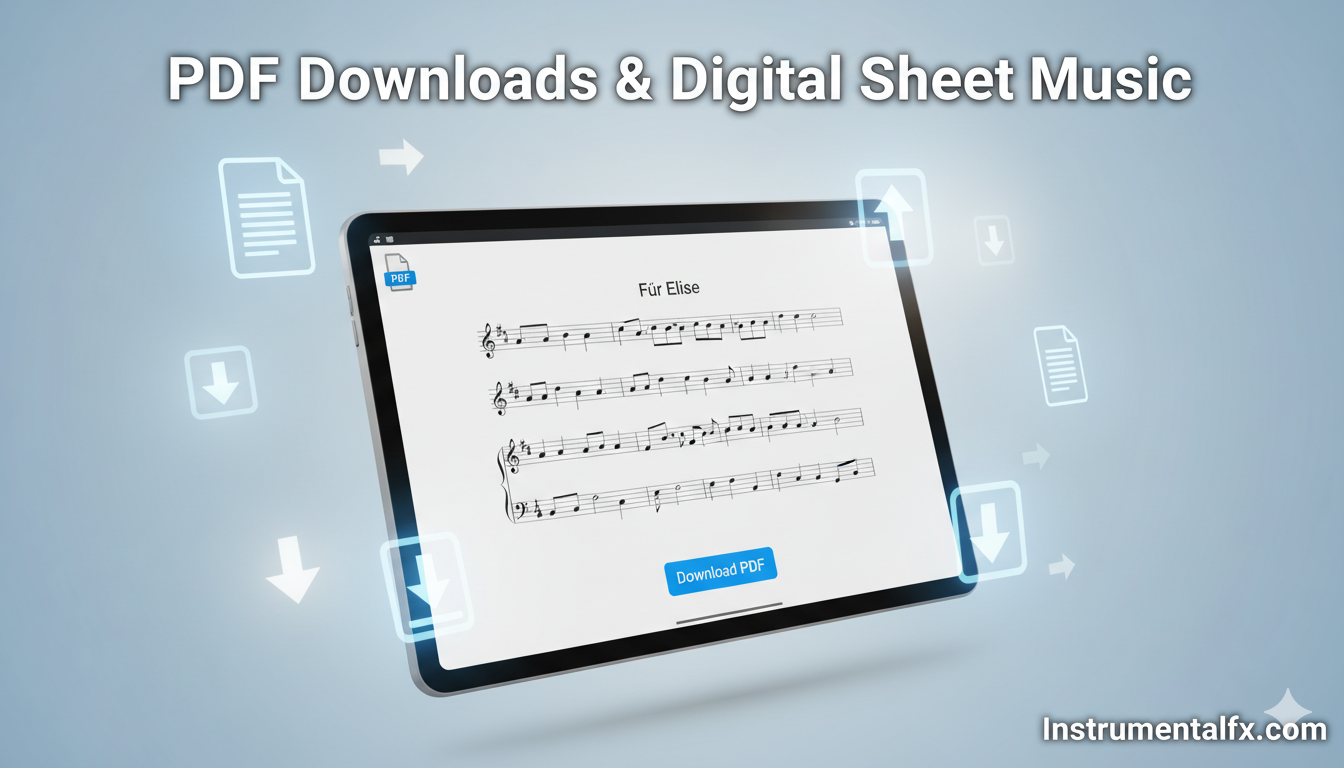
PDF format is the standard for digital sheet music. Files can be viewed on any device and print clearly.
Digital downloads offer instant access after purchase. No shipping wait time means immediate practice start.
PDFs can be stored on tablets for paperless practice. Musicians reduce clutter and always have music available.
Printable PDFs allow unlimited copies for students. Teachers can distribute to multiple pupils legally.
Some PDFs include interactive features like playback. MIDI integration allows hearing how pieces should sound.
PDF annotations let you mark fingering and notes. Digital pencil tools eliminate eraser marks and smudging.
Cloud storage keeps sheet music accessible anywhere. Practice at home, lesson, or performance venue seamlessly.
High-resolution PDFs ensure clear, readable printing. Quality matters for small notations and detailed markings.
Most websites offer immediate PDF download after payment. Check download limits and re-download policies before purchasing.
PDF files preserve original formatting perfectly. Unlike word documents, appearance stays consistent across devices.
Audio Samples and MIDI Files
Audio samples demonstrate proper performance tempo. Hearing professional recordings clarifies interpretation questions.
MIDI files allow playback at adjustable speeds. Slow down difficult sections for careful study.
Some sheet music packages include MP3 recordings. Professional pianists perform the piece for reference.
YouTube videos provide visual learning alongside audio. Watching finger techniques helps understand difficult passages.
MIDI playback highlights each note as it plays. Following along improves sight-reading and rhythm accuracy.
Software like MuseScore generates audio from notation. Even handwritten scores can become playable files.
Slowing MIDI tempo doesn’t change pitch. Practice along with recordings at your comfortable speed.
Audio samples reveal dynamics and articulation choices. Listening to interpretation enhances musical understanding.
Multiple recordings show different interpretive approaches. Compare versions to develop personal musical voice.
Looping difficult sections with audio aids memorization. Repetitive listening reinforces patterns and phrases.
Transposing Fur Elise to Different Keys
The original key is A minor (relative to C major). This key signature contains no sharps or flats initially.
Some beginners prefer C major transpositions. All white keys make reading easier for absolute beginners.
Transposing changes the character and difficulty level. Different keys suit different hand sizes and comfort.
Digital sheet music often allows instant transposition. Online platforms let you change key with one click.
Lower keys like G minor suit smaller hands. Shorter reaches make wide intervals more manageable.
Higher keys create brighter, more brilliant sound. E minor or F minor versions sound more energetic.
Transposition affects fingering patterns significantly. Standard fingerings may need complete revision.
Teachers sometimes transpose to match vocal ranges. When accompanying singers, flexibility is essential.
Music theory knowledge helps transpose manually. Understanding intervals allows creating any key version.
Most musicians eventually learn the original A minor. Authentic performance requires Beethoven’s intended key signature.
Teaching Fur Elise to Piano Students
Introduce the piece with its historical background. Students engage more when understanding context and composer.
Start with the easiest simplified version available. Build confidence before introducing complex arrangements.
Use the piece to teach specific techniques. Fur Elise offers natural lessons in many skills.
Break learning into achievable weekly goals. Small successes maintain motivation and prevent overwhelm.
Demonstrate difficult sections for students. Visual and audio examples clarify expectations effectively.
Encourage students to listen to professional recordings. Hearing great performances inspires musical excellence.
Address hand position and posture from day one. Proper technique prevents injury and enables progress.
Celebrate completing each level before advancing. Recognition of achievement motivates continued effort.
Connect Fur Elise to other classical repertoire. Use it as gateway to more Beethoven works.
Allow students to personalize interpretation choices. Musical creativity flourishes within technical framework.
Common Mistakes When Playing Fur Elise
Rushing the opening tempo is extremely common. The excitement makes students play faster than intended.
Accenting the left-hand first note creates choppy sound. The broken chord pattern should flow smoothly.
Forgetting the D-sharp in the opening measure. This accidental is crucial to the melody’s character.
Playing too loudly throughout destroys dynamics. The piece requires delicate touch and dynamic range.
Stopping between sections breaks musical flow. Smooth transitions maintain the piece’s unified structure.
Neglecting pedal usage results in dry sound. Proper pedaling connects harmonies and enriches tone.
Uneven sixteenth notes in the B section. All notes should receive equal rhythmic value.
Tensing hands during difficult passages causes errors. Relaxation allows faster, more accurate playing.
Memorizing without understanding structure creates insecurity. Musical analysis strengthens memory reliability.
Playing without expression reduces emotional impact. Technical accuracy must combine with musical feeling.
Performance Tips for Fur Elise
Practice performing in front of others regularly. Simulation reduces actual performance nervousness significantly.
Memorize the piece completely before performing. Reading during performance divides attention and causes errors.
Visualize the performance beforehand multiple times. Mental practice strengthens actual physical execution.
Develop a pre-performance routine for consistency. Same warm-up and mental preparation builds confidence.
Breathe deeply before and during the performance. Oxygen and relaxation prevent tension and mistakes.
Focus on musical expression rather than perfection. Audiences connect with emotion over technical flawlessness.
Recover gracefully from mistakes without stopping. Professional performers continue seamlessly despite errors.
Choose appropriate tempo for your ability level. Better to play slower beautifully than fast sloppily.
Dress appropriately for formal recitals. Professional appearance enhances overall presentation impact.
Record performances to evaluate and improve. Video playback reveals areas needing refinement.
Different Arrangements and Variations
Jazz versions transform Fur Elise into swing rhythm. Syncopation and improvisation create fresh interpretations.
Rock arrangements add drums and electric guitar. Modern instrumentation appeals to contemporary audiences.
Orchestral versions expand to full symphony orchestra. Beethoven’s melody sounds magnificent with rich orchestration.
Duet arrangements allow teacher-student collaboration. Playing together develops ensemble skills and enjoyment.
Easy piano arrangements simplify for absolute beginners. These accessible versions build early success.
Virtuoso concert versions add technical flourishes. Professional pianists create elaborate display pieces.
Music box arrangements create nostalgic, delicate sound. Simple harmonic reduction suits mechanical performance.
Electronic music remixes blend classical with modern beats. Dance versions introduce new generations to Beethoven.
Solo instrument transcriptions exist for violin, flute, guitar. The melody adapts beautifully to various instruments.
Vocal arrangements add lyrics to the melody. Singing versions create new emotional dimensions.
Historical Context of Fur Elise
Beethoven composed Fur Elise during his “middle period.” This era produced many of his greatest masterpieces.
The year 1810 marked significant personal challenges. Increasing deafness affected his daily life dramatically.
The piece wasn’t published during Beethoven’s lifetime. It remained private, suggesting personal rather than commercial intent.
Ludwig Nohl discovered the manuscript in 1865. Nearly 40 years passed before public knew this work.
The original manuscript has since been lost. We rely on Nohl’s transcription for authenticity.
Scholars debate the dedication’s true recipient. Therese Malfatti and Elisabeth Röckel are main candidates.
Beethoven proposed to Therese in 1810. Her rejection may have inspired the melancholic A section.
The piece reflects Romantic era musical sensibilities. Emotional expression overtook Classical period formality.
Fur Elise became popular in the 20th century. Accessibility made it beloved worldwide teaching piece.
Modern technology spread the music globally. Recordings and internet access increased its fame exponentially.
Fur Elise in Popular Culture
The melody appears in countless movies and TV shows. Its recognizability makes it perfect for various scenes.
Electronic devices use Fur Elise for ringtones and alarms. The distinctive opening makes it instantly identifiable.
Music boxes commonly feature this tune. The simple melody suits mechanical music box mechanisms.
Ice cream trucks play Fur Elise in many countries. The cheerful sound attracts children effectively.
Video games include the piece in soundtracks. Classical music adds sophistication to gaming experiences.
Commercial advertisements use it for emotional connection. The familiar melody creates instant recognition.
Piano teachers hear it repeatedly from students. It remains the most frequently requested piece.
YouTube contains thousands of performance videos. From beginners to professionals, everyone plays Fur Elise.
The piece appears in piano competitions regularly. Both amateur and professional pianists perform it.
Social media memes and parodies feature the tune. Its familiarity makes it perfect for humor.
Benefits of Learning Fur Elise
Develops essential piano technique across all levels. The piece teaches fingering, coordination, and expression.
Builds confidence through recognizable music. Playing familiar melodies motivates continued practice.
Improves sight-reading skills through repetitive patterns. The recurring A section aids pattern recognition.
Enhances musical memory and memorization skills. The structure naturally supports memorization process.
Teaches dynamic control and expressive playing. The piece requires varied touch and sound.
Introduces complex rhythms in accessible context. Triplets and sixteenth notes appear naturally.
Strengthens weak fingers through targeted passages. The fifth finger gets extensive workout.
Develops pedaling technique and control. Proper damper pedal usage is essential.
Provides performance repertoire for all occasions. Suitable for recitals, auditions, and casual playing.
Connects students to classical music heritage. Learning Beethoven opens doors to repertoire.
Resources for Fur Elise Sheet Music
MuseScore Community – Free user-submitted arrangements. IMSLP – Public domain historical editions. 8notes.com – Interactive transposable scores. VirtualSheetMusic.com – Professional quality with audio. MakingMusicFun.net – Educational beginner resources.
PianoSongDownload.com – Multiple difficulty levels. La Touche Musicale – Interactive learning app. GalaxyMusicNotes.com – Advanced complete version. Alfred Music – Professional published editions. Henle Urtext – Scholarly authentic versions.
Faber Piano Adventures – Method book integration. Hal Leonard – Simplified and original arrangements. Amazon – Physical sheet music books. Sheet Music Plus – Instant digital downloads. Musicnotes.com – Customizable transposable versions.
YouTube – Visual learning tutorials. Online Piano Lessons – Step-by-step instruction. Piano Teacher Websites – Free educational materials. Classical Music Forums – Community support and advice. Pinterest – Printable sheet music collections.
Comparing Fur Elise to Other Beethoven Works
Moonlight Sonata shares similar popularity and accessibility. Both pieces suit intermediate to advanced players.
Pathétique Sonata offers greater technical challenges. Advanced students progress from Fur Elise to this work.
Ode to Joy (Symphony No. 9 theme) has comparable recognition. Piano arrangements exist at multiple levels.
Turkish March is another accessible Beethoven piece. Similar difficulty to Fur Elise’s A section.
Für Elise is shorter than most sonatas. Bagatelles are miniature character pieces, not full movements.
The Bagatelle genre allowed experimental freedom. Less formal than sonatas, more personal expression.
Sonatas require greater stamina and concentration. Multi-movement works demand extended focus.
Für Elise’s emotional directness appeals universally. Some sonatas require deeper musical maturity.
The piece bridges classical and romantic styles. Beethoven’s transitional period shows in the music.
Many pianists learn Für Elise before tackling sonatas. It serves as gateway to more complex works.
Advanced Interpretation Techniques
Rubato allows expressive tempo flexibility within phrases. Subtle speeding and slowing enhances emotional content.
Voicing brings out melody above accompaniment. The right thumb projects while other fingers stay softer.
Pedaling choices dramatically affect sound color. Half-pedaling maintains clarity while blending harmonies.
Articulation variety creates musical interest. Combining legato and staccato adds textural contrast.
Dynamic shaping within single phrases adds drama. Crescendos and diminuendos move music forward emotionally.
Agogic accents emphasize important notes slightly. Brief pauses or lengthening create emphasis naturally.
Tonal color varies throughout the piece. Bright sound in forte sections, warm in piano passages.
Historical performance practice informs interpretation. Understanding Beethoven’s era clarifies authentic approach.
Personal interpretation develops over time. As musicians mature, understanding deepens and changes.
Recording yourself reveals interpretation strengths and weaknesses. Objective listening guides refinement efforts.
Troubleshooting Difficult Sections
The opening D#-E alternation requires finger independence. Practice slowly with finger lift exercises.
Broken chords need rotation from wrist and forearm. Avoid finger-only motion that causes tension.
The B section’s rapid passages demand gradual tempo building. Start very slow and increase incrementally.
Wide leaps in C section need spatial awareness practice. Look at target notes before jumping.
Chromatic runs require even finger strength. Exercises for fingers 4 and 5 strengthen weak digits.
Hand coordination improves through hands-separate practice. Perfect each hand before combining them.
Rhythmic accuracy benefits from counting aloud. Subdivision clarifies complex rhythmic relationships.
Memory slips indicate insufficient structural understanding. Analyze harmony and form to strengthen recall.
Tension and fatigue signal technical problems. Review hand position, posture, and movement.
Persistent difficulty may need teacher guidance. Professional instruction identifies specific issues efficiently.
Creating Your Practice Schedule
Daily practice produces faster results than sporadic sessions. Even 15 minutes daily outperforms occasional marathons.
Warm up with scales and technical exercises first. Prepare hands physically before tackling repertoire.
Allocate time proportional to section difficulty. Spend more minutes on challenging passages.
Practice hands separately before combining. Right hand and left hand each deserve focused attention.
Use slow practice for accuracy building. Speed develops naturally after correct notes solidify.
Include full run-throughs regularly. Playing complete piece builds stamina and continuity.
Schedule breaks to maintain mental freshness. Tired practice reinforces mistakes instead of progress.
Review previously learned sections to maintain polish. Don’t abandon earlier parts while learning new sections.
Record progress regularly for motivation. Comparing recordings shows improvement over time.
End practice sessions with musical playing. Finish with expression, not mechanical drilling.
Frequently Asked Questions (FAQs)
What is the best Fur Elise sheet music for beginners?
The best beginner version focuses only on the famous A section with simplified left-hand accompaniment. Look for editions with finger numbers and letter names like those from MakingMusicFun.net or MuseScore’s beginner arrangements.
Where can I download free Fur Elise sheet music PDF?
Free PDF downloads are available from IMSLP.org, MuseScore.com, 8notes.com, and VirtualSheetMusic.com. These sites offer multiple difficulty levels ranging from beginner simplifications to the complete advanced original.
How long does it take to learn Fur Elise?
Beginners can learn the simplified A section in 2-4 weeks with daily practice. The complete advanced version typically requires 3-6 months for intermediate players, depending on prior experience and practice consistency.
What is the difficulty level of Fur Elise?
The opening A section is late beginner to early intermediate level. The complete piece with B and C sections is considered intermediate to advanced (Grade 5-7), requiring solid technique and hand independence.
Is Fur Elise good for piano beginners?
Yes, simplified versions of Fur Elise are excellent for beginners. The recognizable melody motivates practice, and the piece teaches essential techniques like hand coordination, fingering patterns, and basic pedaling skills.
What tempo should I play Fur Elise?
The original tempo marking “Poco Moto” suggests approximately 120-144 BPM. However, beginners should start at 60-80 BPM and gradually increase speed as accuracy and comfort improve over time.
Does Fur Elise require pedal?
Proper pedaling is essential for the authentic sound of Fur Elise. Beginner versions can be played without pedal initially, but intermediate and advanced versions require careful damper pedal technique for connected harmonies.
What does Fur Elise mean in English?
“Für Elise” translates to “For Elise” in English. The piece was dedicated to someone named Elise, though scholars debate whether this was actually Therese Malfatti, Elisabeth Röckel, or another person entirely.
Can I learn Fur Elise without reading sheet music?
While possible using video tutorials and letter notation, learning to read sheet music is highly recommended. Reading notation provides proper understanding of rhythm, dynamics, and musical structure that tutorials alone cannot convey.
What key signature is Fur Elise written in?
Fur Elise is written in A minor, which has no sharps or flats in the key signature. However, the piece contains many accidentals throughout, particularly the crucial D-sharp in the opening melody.
Conclusion
Fur Elise sheet music continues to inspire pianists worldwide across all skill levels in 2026. This comprehensive guide has equipped you with everything needed to begin or enhance your journey with Beethoven’s timeless masterpiece.
From understanding the historical mystery surrounding Elise’s identity to accessing free and premium sheet music resources, you now have a complete roadmap for success.
Whether you’re a beginner starting with simplified versions or an advanced pianist perfecting the complete A-B-A-C-A structure, the key to mastering Fur Elise lies in patient, consistent practice with proper technique.
Remember to choose sheet music matching your current ability, focus on accurate fingering from the start, and progress gradually through increasing difficulty levels without rushing.
The benefits of learning this iconic piece extend far beyond playing one composition. Fur Elise develops essential piano techniques, builds confidence, strengthens sight-reading abilities, and connects you to classical music heritage.


