


Piano Man piano sheet music is one of the most sought-after arrangements for pianists of all skill levels worldwide.
Billy Joel’s timeless 1973 classic has become a staple in piano repertoires, from beginners taking their first steps to advanced players seeking challenging interpretations.
Whether you’re looking for simplified versions with basic chords or complex arrangements that capture every nuance of the original recording, finding the right Piano Man sheet music can transform your playing experience and help you master this beloved song.
Understanding Piano Man Sheet Music
Piano Man remains one of Billy Joel’s most iconic compositions. The song tells a vivid story through its memorable melody and heartfelt lyrics, making it perfect for piano performance.
The original composition was written in C major, featuring a distinctive 3/4 waltz time signature. This gives the piece its signature swaying, bar-room feel that has captivated audiences for decades.
Most sheet music arrangements maintain the C major key signature. This makes it accessible for beginners since there are no sharps or flats to navigate, simplifying the learning process significantly.
Difficulty Levels Explained
Beginner Level Piano Man Sheet Music
Beginner arrangements typically feature simplified left-hand patterns. These versions focus on basic chord progressions and single-note melodies, allowing new pianists to play recognizable versions without overwhelming complexity.
The easiest versions usually span 4-6 pages of music. They eliminate complex runs and ornamentations while preserving the song’s essential character and memorable hook.
Beginning pianists can expect to spend 2-4 weeks learning these arrangements. With consistent daily practice of 15-30 minutes, the piece becomes manageable and enjoyable.
Easy Piano Man Sheet Music
Easy arrangements introduce more harmonic depth than beginner versions. They incorporate basic left-hand accompaniment patterns and simple chord inversions that add musical interest.
These versions typically range from 6-8 pages in length. They include more of the original song structure while remaining accessible to players with 1-2 years of experience.
Easy arrangements often include simplified versions of the piano solo. This section gives players a taste of the more intricate passages without requiring advanced technique.
Intermediate Piano Man Sheet Music
Intermediate versions closely mirror Billy Joel’s original performance style. They include authentic chord voicings, walking bass lines, and the characteristic rhythmic patterns that define the recording.
These arrangements span 8-10 pages and require solid technique. Players need comfortable hand independence and the ability to navigate chord progressions smoothly throughout the piece.
The intermediate level includes the complete piano solo section. This instrumental break showcases more complex runs and requires coordination between both hands for authentic delivery.
Advanced Piano Man Sheet Music
Advanced arrangements offer the most faithful recreation of the original. They include all ornamentations, improvised-style passages, and the full complexity of Billy Joel’s piano performance.
These versions can extend to 10-12 pages or more. They demand strong technical proficiency, advanced sight-reading skills, and nuanced dynamic control for proper interpretation.
Professional-level arrangements may include transcriptions of live performances. These capture Joel’s spontaneous variations and improvisational elements that make each performance unique.
Where to Find Piano Man Sheet Music
Free Sheet Music Resources
MuseScore offers numerous user-generated Piano Man arrangements. The platform provides free downloads in PDF and MIDI formats, with versions ranging from beginner to advanced levels.
Websites like SheetsFree provide legitimate free sheet music options. These resources often include both simplified and standard arrangements suitable for different skill levels.
Notebusters offers educational versions with letter notations. This format helps absolute beginners learn the melody by following letter names rather than traditional notation.
Paid Sheet Music Platforms
Musicnotes features professionally arranged versions with licensing. Their catalog includes easy piano, piano/vocal/guitar, and solo instrumental arrangements with transposition options.
Sheet Music Plus offers comprehensive collections and bundles. You’ll find arrangements from renowned music publishers like Hal Leonard, with detailed previews before purchase.
Virtual Sheet Music provides interactive digital downloads. Their arrangements include playback features and adjustable tempo settings to enhance practice sessions.
Publisher-Specific Options
Hal Leonard publishes official Billy Joel songbooks. These collections feature professionally transcribed arrangements with accurate chord symbols and performance notes.
Faber Music produces educational arrangements for students. Their versions are specifically designed for progressive learning with appropriate difficulty grading.
Alfred Music offers both print and digital formats. Their arrangements cater to various ensemble configurations including piano solo, duet, and accompaniment versions.
Key Features of Quality Sheet Music
Accurate Notation Standards
High-quality Piano Man sheet music includes precise rhythm notation. Every note duration, rest, and rhythmic pattern should match the original recording’s timing and feel.
Proper chord symbols appear above the staff lines. These chord names guide harmonic understanding and allow for improvisation or simplified accompaniment patterns.
Dynamic markings indicate volume and expression changes. These notations help pianists capture the emotional arc of the song from quiet verses to powerful choruses.
Formatting and Readability
Professional layouts use appropriate spacing and staff size. Well-formatted music prevents visual clutter and allows pianists to read ahead comfortably during performance.
Clear measure numbers appear at regular intervals throughout. This organizational feature simplifies practice by making it easy to reference specific sections.
Page turns should occur at musically logical moments. Quality arrangements position breaks during rests or sustained notes rather than in the middle of complex passages.
Additional Helpful Elements
Fingering suggestions guide efficient hand positioning. These numbered indicators help players navigate challenging passages with optimal finger placement for smooth execution.
Performance notes provide interpretive guidance and context. These annotations might include tempo suggestions, stylistic tips, or historical background about the composition.
Practice tips often accompany educational arrangements. These suggestions help students tackle difficult sections systematically and develop proper technique.
Learning Techniques for Piano Man
Breaking Down the Song Structure
Piano Man follows a verse-chorus-bridge pattern throughout. Understanding this structure helps organize practice sessions and memorization by identifying recurring musical themes.
Each verse tells a different character’s story. Recognizing these narrative sections makes the piece more engaging and provides emotional context for expressive playing.
The chorus section features the most recognizable melody. Mastering this hook first builds confidence and provides a foundation for tackling the more complex verses.
Right Hand Melody Practice
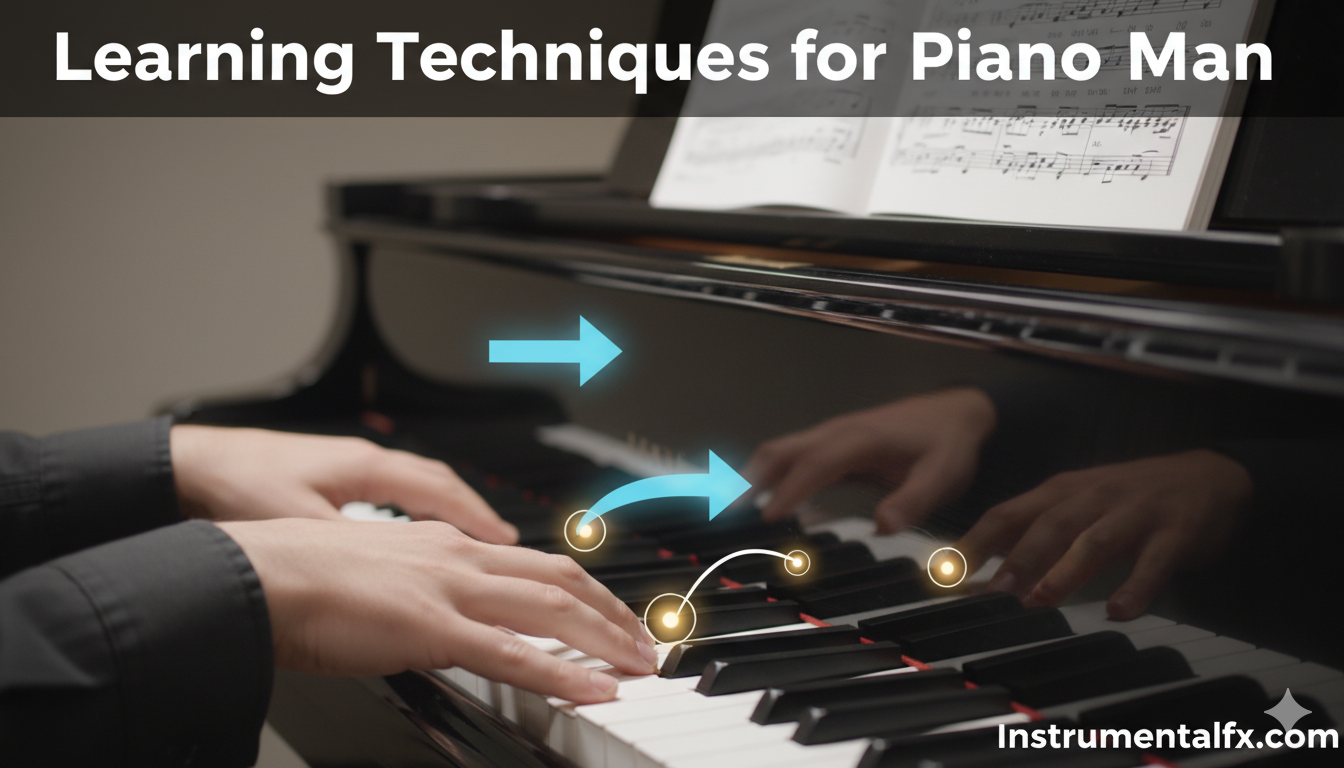
Start by learning the melody line in isolation. This focused approach allows you to internalize the tune’s contour and rhythm before adding left-hand accompaniment.
Use a metronome to maintain steady tempo consistency. Beginning slowly at 60-80 BPM helps establish accurate note relationships before gradually increasing speed.
Pay attention to phrase shaping and breathing points. Even though piano doesn’t require literal breathing, musical phrasing creates natural expression and prevents mechanical playing.
Left Hand Accompaniment Patterns
The left hand primarily plays bass notes and chords. Understanding the root-chord alternation pattern forms the foundation of Piano Man’s characteristic accompaniment style.
Practice left hand patterns separately until automatic. This muscle memory allows you to focus on melody and expression when combining both hands.
The waltz rhythm creates a distinctive lilting feel. Emphasizing the downbeat slightly while keeping beats two and three lighter captures the authentic bar-room atmosphere.
Combining Both Hands
Begin hands-together practice at a reduced tempo. This methodical approach prevents the development of mistakes and builds accurate coordination between hands.
Focus on small sections of 2-4 measures initially. Gradually expanding these practiced segments ensures solid mastery before attempting the complete piece.
Listen to the original recording while practicing. This reference helps you internalize the song’s groove, phrasing, and overall character for authentic interpretation.
Understanding the Musical Elements
Chord Progressions in Piano Man
The song primarily uses diatonic chords in C major. Common progressions include C-F-C-G sequences that create the familiar harmonic movement throughout.
Chord inversions add smooth voice leading between changes. Using first and second inversions prevents large hand jumps and creates more musical bass lines.
The bridge section introduces slight harmonic variations. These changes provide musical contrast and renewed interest before returning to the main verse-chorus structure.
Rhythm and Time Signature
The 3/4 time signature gives Piano Man its waltz character. This three-beat pattern differs from the more common 4/4 meter, creating unique rhythmic emphasis.
The tempo typically sits around 180 beats per minute. However, many arrangements allow flexibility in tempo to suit individual interpretation and performance context.
Rhythmic consistency maintains the song’s forward momentum. Despite the moderate tempo, the steady pulse drives the narrative and keeps listeners engaged.
Melodic Characteristics
The melody features stepwise motion with occasional leaps. This accessible contour makes it singable and memorable while remaining pianistically comfortable.
The vocal range spans approximately one octave. This moderate range makes the piece suitable for accompaniment regardless of the singer’s voice type.
Repetitive phrases create familiarity and catchiness. The recurring melodic motifs help listeners remember the tune and make it easier to learn.
Performance Tips and Techniques
Building Proper Hand Position
Maintain curved fingers with relaxed wrists throughout. This ergonomic position prevents tension and fatigue while enabling efficient finger movement across the keys.
Keep thumbs floating rather than rigidly positioned. Flexible thumb placement facilitates smooth scale passages and chord transitions without awkward hand rotations.
Position yourself at the correct height on the bench. Your forearms should be roughly parallel to the floor, allowing natural weight transfer into the keys.
Developing Authentic Style
Study Billy Joel’s original piano performance carefully. Observing his touch, phrasing choices, and rhythmic feel provides insights into authentic stylistic interpretation.
Incorporate subtle rhythmic variations and rubato tastefully. These expressive timing adjustments add human character without disrupting the underlying waltz feel.
Balance melody prominence with supportive accompaniment. The right hand melody should sing above the left-hand bass and chords without overpowering dynamics.
Common Mistakes to Avoid
Rushing through the waltz rhythm happens frequently. Maintaining steady three-beat measures prevents the music from feeling hurried or losing its lilting character.
Over-pedaling can muddy the harmonic clarity. Use sustain pedal judiciously, changing with chord progressions to maintain clean, articulate bass lines.
Neglecting dynamic contrast creates monotonous performances. Varying volume between verses and choruses adds emotional depth and prevents listener fatigue.
Digital vs. Physical Sheet Music
Advantages of Digital Formats
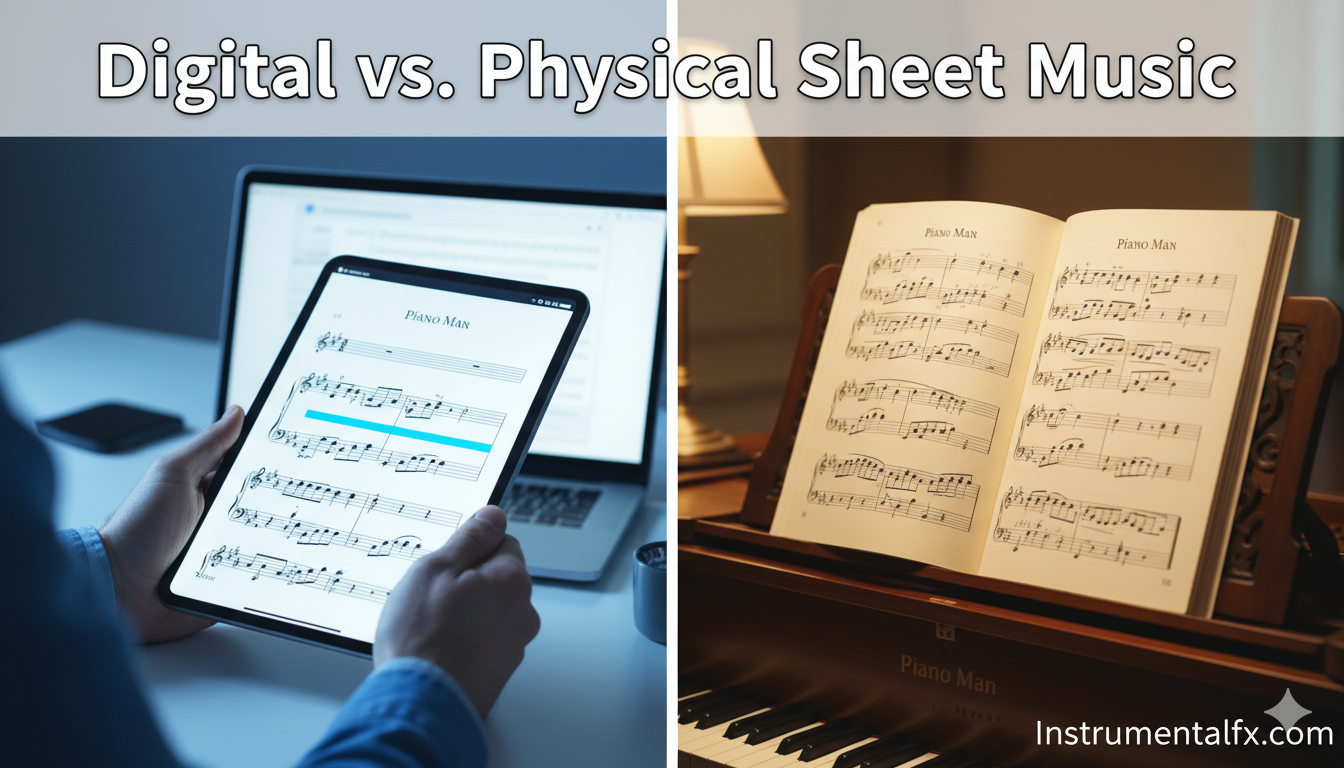
Digital sheet music offers instant accessibility and portability. You can download arrangements immediately and store entire libraries on tablets or smartphones.
Interactive features enhance modern learning experiences. Some platforms provide playback, tempo adjustment, and synchronized highlighting to support practice sessions.
Digital formats allow easy transposition to different keys. This flexibility accommodates various vocal ranges or personal preferences without purchasing multiple arrangements.
Benefits of Printed Music
Physical sheet music provides tactile familiarity for traditional learners. Many musicians prefer the sensory experience of turning actual pages during practice and performance.
Printed music doesn’t require batteries or electronic devices. This reliability eliminates technology concerns during performances, lessons, or practice sessions.
Annotations and markings become permanent reference tools. Penciling in fingerings, reminders, and interpretive notes creates personalized learning documents.
Hybrid Approaches
Many musicians combine digital and physical resources effectively. Practicing from tablets while maintaining printed copies for performances offers comprehensive flexibility.
Printing digital purchases creates permanent backup copies. This strategy provides the convenience of immediate digital access with the security of physical archives.
Using both formats for different contexts optimizes benefits. Digital for learning and experimentation, physical for performance and formal settings works well.
Piano Man Variations and Arrangements
Solo Piano Versions
Solo piano arrangements stand alone without vocal lines. These instrumental interpretations incorporate melody, harmony, and bass in a complete musical package.
Some versions emphasize the storytelling through instrumental expression. These arrangements use dynamic shaping and articulation to convey the narrative without words.
Jazz-influenced solo arrangements add improvisational elements. These creative interpretations maintain the core progression while incorporating harmonic extensions and rhythmic variation.
Piano/Vocal/Guitar Editions
These comprehensive editions include full notation for all instruments. Complete chord symbols, guitar tablature, and vocal melody appear together for ensemble performance.
The piano part supports the vocal melody throughout. Simplified accompaniment patterns allow pianists to focus on supporting singers rather than complex solo passages.
Guitar chords enable campfire or casual sing-along settings. These versatile arrangements work equally well for formal recitals or informal gatherings.
Duet and Ensemble Arrangements
Four-hand piano duets distribute the musical material between players. Primo and secondo parts allow partners to share the performance, making complex arrangements more accessible.
Ensemble versions might include additional instruments like harmonica. These expanded arrangements recreate the full band sound of the original recording.
Simplified ensemble parts accommodate mixed-ability groups. These arrangements ensure all participants contribute meaningfully regardless of individual skill levels.
Copyright and Licensing Information
Understanding Music Copyright
Piano Man remains protected under copyright law internationally. Billy Joel retains compositional rights, and proper licensing is required for public performances and recordings.
Sheet music purchases include specific usage rights. Personal practice and private performance are permitted, but public concerts may require additional licensing.
Educational institutions often have blanket licensing agreements. Schools and universities may already have permissions covering student performances in recitals.
Legal Sheet Music Sources
Purchasing from authorized retailers ensures legal compliance. Companies like Musicnotes, Sheet Music Plus, and Hal Leonard have proper licensing arrangements with rights holders.
Free arrangements on platforms like MuseScore operate differently. User-generated content may have varying copyright compliance status depending on the specific arrangement.
Always verify licensing before public performance or recording. Contact performing rights organizations like ASCAP or BMI for guidance on required permissions.
Supporting Artists and Publishers
Legitimate sheet music purchases support composers and arrangers. These royalties enable creators to continue producing quality music and educational materials.
Avoiding pirated sheet music protects the music industry. Unauthorized copies deprive artists of fair compensation for their creative work.
Consider the value of professional arrangements and transcriptions. Expert notation and editing justify the cost of legitimate sheet music products.
Preparing for Performance
Practice Strategies for Mastery
Establish a consistent daily practice routine. Even 20-30 minutes of focused work yields better results than sporadic longer sessions.
Slow practice solidifies accuracy before increasing tempo. This methodical approach prevents mistakes from becoming ingrained habits requiring later correction.
Record practice sessions to identify areas needing improvement. Listening objectively reveals issues that feel unnoticeable while actively playing.
Memorization Techniques
Learn the piece in small, manageable sections first. Mastering 4-8 measure chunks thoroughly before connecting them creates solid memory foundations.
Understand the harmonic structure beyond just notes. Knowing chord progressions and patterns aids recall when memory lapses occur during performance.
Practice from different starting points within the piece. This comprehensive memorization prevents dependency on always beginning from the start.
Performance Anxiety Management
Thorough preparation builds confidence and reduces nervousness. Knowing you’ve practiced adequately alleviates many performance anxiety triggers.
Visualization techniques help mentally rehearse successful performances. Imagining yourself playing confidently creates positive mental patterns before the actual event.
Focus on musical communication rather than perfection. Sharing the song’s story and emotion connects you with audiences beyond mere technical execution.
Transposing Piano Man to Other Keys
Common Alternative Keys
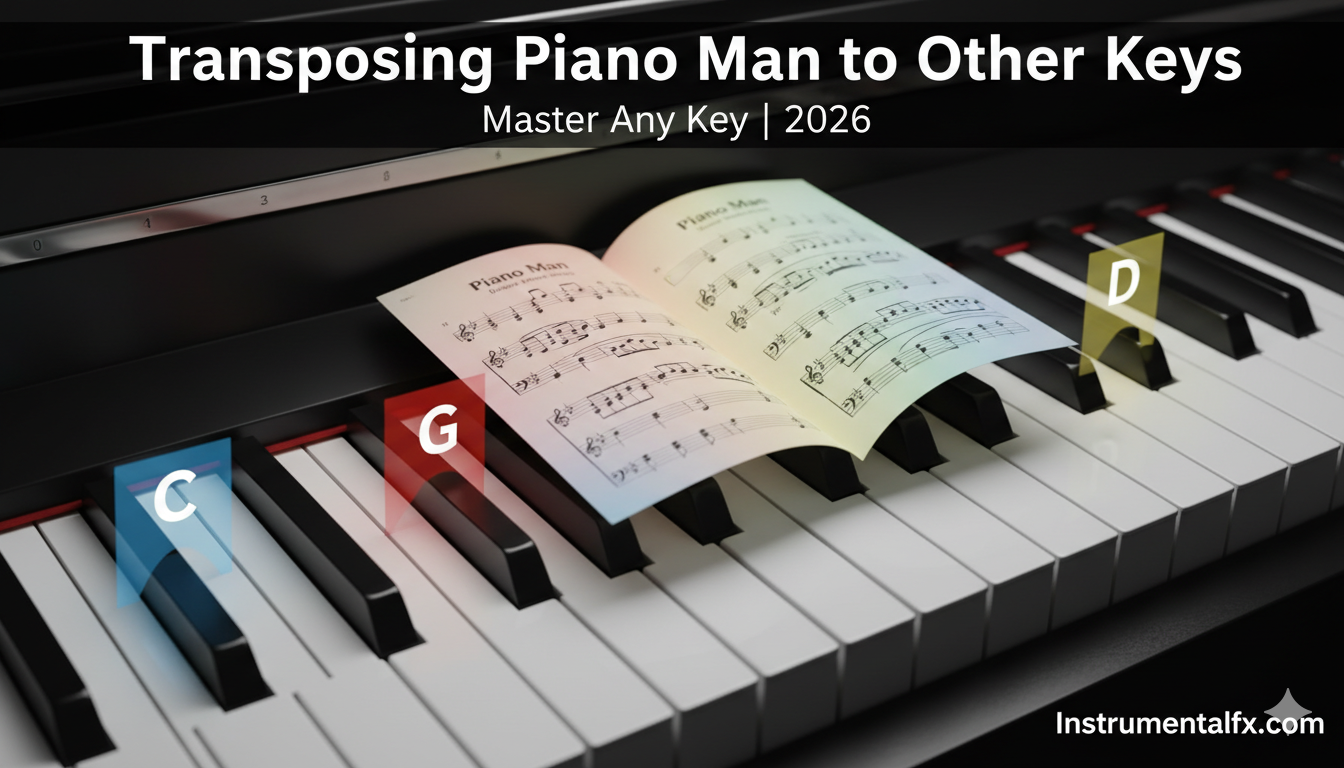
While C major is standard, some pianists prefer different keys. G major and D major are popular alternatives that maintain comfortable hand positions.
Singers may request transpositions to suit their vocal range. Male singers sometimes prefer keys like A or Bb major for optimal voice placement.
Different keys create subtle timbral variations on piano. Lower keys sound warmer and more mellow, while higher keys produce brighter, more brilliant tones.
Transposition Methods
Understanding interval relationships enables manual transposition. Moving each note the same distance preserves the melodic and harmonic relationships in new keys.
Digital software can transpose sheet music automatically. Programs like MuseScore or Finale adjust all notation to new keys instantly.
Chord-based transposition works well for accompaniment styles. Knowing chord names allows you to shift the entire progression without rewriting every note.
Key Signature Considerations
Transpositions to keys with many accidentals increase difficulty. Keys like Db major or F# major require more black key navigation than simpler alternatives.
Choose keys that minimize awkward hand positions. Consider how the new key affects chord voicings and passage playability before committing.
Voice leading principles still apply across all keys. Smooth connections between chords remain important regardless of which key you choose.
Technology Tools for Learning Piano Man
Practice Apps and Software
Playground Sessions offers interactive Piano Man lessons. This software provides real-time feedback, tempo adjustment, and hand demonstrations for effective learning.
Simply Piano and Flowkey include Piano Man in their catalogs. These apps use gamification techniques to make practice engaging and track progress systematically.
Slow-down software helps analyze difficult passages. Tools like Amazing Slow Downer or Transcribe allow you to reduce tempo without pitch changes.
MIDI and Backing Tracks
MIDI files allow you to hear individual parts isolated. This technology helps you understand how melody, bass, and chords interact within the arrangement.
Backing track apps provide accompaniment for solo practice. Playing along with pre-recorded rhythm sections simulates ensemble playing and improves timing.
Creating custom backing tracks using GarageBand or similar programs personalizes practice. Adjust tempo, instrumentation, and arrangement details to match your needs.
Video Tutorial Resources
YouTube hosts numerous Piano Man tutorial series. Free video lessons range from absolute beginner guides using letter notes to advanced performance analyses.
Paid video courses often provide structured learning paths. These comprehensive programs systematically build skills specifically for mastering Piano Man.
Slow-motion tutorials help visualize hand movements clearly. Watching expert pianists’ techniques frame-by-frame reveals subtle details about touch and timing.
Comparing Popular Arrangements
Hal Leonard Easy Piano Edition
This arrangement simplifies without sacrificing musical integrity. It maintains recognizable melody and harmony while removing technical challenges beyond beginner capabilities.
The edition spans approximately 6 pages with clear notation. Large print and spacious layout enhance readability for students and casual players.
Chord symbols appear above the staff throughout. These additions allow for simplified left-hand accompaniment if the written part proves too challenging.
Musicnotes Piano/Vocal/Guitar Version
This comprehensive edition includes complete vocal melody. Full lyrics appear beneath the staff, making it ideal for accompaniment or learning the song completely.
The piano part balances playability with authenticity. It captures essential elements of the original without requiring virtuoso technique.
Guitar chord diagrams supplement the piano notation. This versatility makes the arrangement suitable for multiple instrumentalists performing together.
Rousseau’s Advanced Arrangement
This sophisticated version showcases Piano Man’s full potential. It includes all ornamentations, complex voicings, and the complete piano solo in authentic detail.
The arrangement demands strong technical proficiency throughout. Rapid passage work, wide hand spans, and intricate coordination challenge advanced players appropriately.
Performance notes provide stylistic guidance and historical context. These annotations help pianists interpret the piece with appropriate character and expression.
Piano Man in Music Education
Curriculum Integration Benefits
Piano Man works excellently in group piano class settings. Its familiarity engages students while teaching essential skills like waltz rhythm and chord progressions.
The piece reinforces music theory concepts practically. Students apply knowledge about key signatures, time signatures, and harmonic function through performance.
Different difficulty levels accommodate mixed-ability classrooms. Teachers can assign appropriate arrangements ensuring all students experience success.
Student Motivation Factors
The song’s recognizability provides immediate gratification for learners. Students enjoy playing music that friends and family instantly recognize and appreciate.
Narrative lyrics create emotional connection with the material. Understanding the song’s storytelling deepens musical engagement beyond mechanical note reading.
Performance opportunities arise naturally with popular repertoire. Recitals, talent shows, and informal gatherings welcome well-known pieces like Piano Man.
Pedagogical Value Points
Piano Man teaches hand independence through contrasting parts. The distinct melody and accompaniment patterns develop coordination skills essential for all piano literature.
The consistent harmonic pattern supports music theory learning. Recognizing repeated chord progressions strengthens pattern recognition and analytical skills.
Expressive playing opportunities develop musical maturity. Interpreting dynamics, phrasing, and character teaches artistry beyond technical execution.
Advanced Techniques and Embellishments
Adding Jazz Harmony
Experienced pianists can enhance basic chords with extensions. Adding 7ths, 9ths, and 13ths creates richer harmonic textures while maintaining the progression.
Substitute chords introduce harmonic variety on repeated sections. These alternative voicings maintain function while adding sophistication and interest.
Walking bass lines elevate the left-hand accompaniment. This jazz technique creates continuous motion and rhythmic drive between chord changes.
Improvisation Opportunities
The piano solo section invites creative interpretation. Advanced players can improvise variations while respecting the underlying harmonic structure.
Melodic embellishment adds personal style to familiar themes. Small ornamentations and rhythmic variations make each performance unique.
Modal interchange techniques introduce borrowed chords tastefully. These advanced harmonic concepts add color without compromising the song’s essential character.
Performance Variations
Tempo fluctuations create expressive rubato in appropriate sections. Subtle timing adjustments add human character while maintaining overall rhythmic integrity.
Dynamic shaping highlights the song’s emotional trajectory. Building volume through verses toward chorus peaks creates compelling musical architecture.
Articulation choices affect the piece’s overall character. Varying between legato phrases and slightly detached notes adds textural interest.
Building Your Piano Man Sheet Music Collection

Organizing Your Music Library
Create folders organized by difficulty level and arrangement type. This systematic approach makes finding appropriate versions quick during practice sessions.
Digital catalog apps help manage extensive collections. Software like forScore or Sheet Music Direct organizes, annotates, and provides quick search capabilities.
Maintain both working copies and archival originals. Keep pristine versions while marking up separate copies with fingerings and practice notes.
Version Selection Strategy
Own multiple arrangement levels to track progress. Advancing from easy to intermediate to advanced versions documents your pianistic development.
Collect both solo and accompaniment editions. Different contexts require different arrangements, from solo recital pieces to sing-along accompaniments.
Invest in high-quality professional transcriptions. Expert arrangements save frustration and learning time compared to amateur transcriptions.
Budget-Friendly Approaches
Take advantage of free trial periods on subscription services. Platforms like Tomplay offer limited-time access to extensive catalogs including multiple Piano Man versions.
Purchase collections rather than individual sheets when possible. Songbooks containing Piano Man alongside other Billy Joel favorites provide better value.
Watch for seasonal sales at major sheet music retailers. Holiday promotions often offer significant discounts on popular arrangements.
The History Behind Piano Man
Song Origins and Inspiration
Billy Joel composed Piano Man during his Los Angeles period. The song draws from his experiences performing at the Executive Room piano bar in 1972-1973.
The characters depicted are amalgamations of real people. Joel encountered diverse personalities during his lounge pianist days, inspiring the song’s vivid storytelling.
The autobiographical nature connects performer and audience deeply. Joel’s genuine experience shines through, creating authenticity that resonates across generations.
Chart Success and Legacy
Released in 1973, Piano Man became Joel’s signature song. Despite moderate initial chart performance, it has achieved iconic status in American popular music.
The song established Billy Joel’s career trajectory. Its success led to sustained commercial viability and artistic respect throughout subsequent decades.
Cultural impact extends beyond music into broader consciousness. The phrase “piano man” has become synonymous with bar pianists worldwide.
Cover Versions and Interpretations
Countless artists have recorded Piano Man across genres. From jazz interpretations to country versions, the song’s universal appeal inspires diverse treatments.
Piano instrumental versions showcase the piece’s melodic strength. Removing vocals reveals the composition’s inherent beauty and structural sophistication.
Contemporary artists continue discovering the song. New generations of musicians introduce Piano Man to audiences, ensuring its ongoing relevance.
Troubleshooting Common Learning Challenges
Rhythm Difficulties
The 3/4 waltz rhythm confuses pianists accustomed to 4/4. Emphasizing the downbeat and consciously counting three beats helps internalize the pattern.
Subdividing beats into smaller units aids accuracy. Feeling six eighth notes per measure provides more reference points for complex rhythmic passages.
Clapping rhythms before playing establishes the pattern mentally. This preparatory step separates rhythm learning from the added challenge of finding notes.
Hand Coordination Issues
Independence between hands requires isolated practice initially. Mastering each hand separately before combining prevents overwhelming cognitive load.
Super slow-motion practice reveals coordination gaps. Playing at extremely reduced tempos allows conscious attention to simultaneous hand movements.
Focus on small sections until coordination becomes automatic. Gradually expanding mastered segments builds comprehensive coordination throughout the piece.
Reading Complex Notation
Ledger lines above and below the staff challenge many players. Practicing line and space note identification drills improves reading fluency.
Chord symbol interpretation aids harmonic understanding. Learning to recognize chord shapes visually accelerates reading accompaniment patterns.
Rhythmic notation complexity decreases with pattern recognition. Identifying common rhythmic groupings allows reading chunks rather than individual notes.
Enhancing Your Musical Expression
Understanding the Lyrics
Piano Man tells stories of bar patrons seeking escape. Understanding these narratives informs interpretive choices about mood and character.
Each verse introduces a distinct personality. Recognizing these individual stories allows you to vary expression between sections appropriately.
The chorus represents collective longing for something better. This emotional core should resonate in performance through your interpretive choices.
Developing Personal Interpretation
Avoid simply mimicking recordings mechanically. Develop your unique voice while respecting the composition’s essential character.
Experiment with slight tempo variations between sections. These interpretive choices distinguish your performance from purely academic renditions.
Balance tradition with innovation in your approach. Honor Billy Joel’s original while allowing personal musical personality to emerge.
Connecting with Your Audience
Make eye contact during memorable phrases when appropriate. This connection transforms performances from demonstrations into shared experiences.
Allow the narrative to guide your physical expression. Subtle gestures and facial expressions enhance storytelling without theatrical excess.
Trust the song’s inherent emotional power. Over-interpretation can diminish impact; sometimes straightforward sincerity communicates most effectively.
Frequently Asked Questions
What skill level do I need to play Piano Man?
Beginner versions exist for pianists with just 6-12 months of experience. These simplified arrangements feature basic chords and single-note melodies that capture the song’s essence while remaining accessible to new players.
Is Piano Man difficult to learn on piano?
Piano Man’s difficulty varies dramatically by arrangement chosen. Easy versions rank around 2/10 in difficulty with no sharps or flats in C major, while advanced transcriptions can challenge even experienced pianists with complex voicings and the full solo section.
Can I find free Piano Man sheet music legally?
Yes, platforms like MuseScore offer legitimate user-generated arrangements for free. However, professional transcriptions from publishers like Hal Leonard require purchase to ensure proper copyright compliance and support creators.
What is the best Piano Man arrangement for beginners?
The Hal Leonard Easy Piano edition and Musicnotes’ MN0092799 beginner arrangement are excellent starting points. Both simplify the left hand while preserving the recognizable melody, typically spanning 4-6 pages with clear notation.
How long does it take to learn Piano Man?
Beginners typically require 2-4 weeks for simplified versions with daily practice. Intermediate pianists might master standard arrangements in 1-2 weeks, while advanced versions could take several weeks to perform at professional levels.
What key is Piano Man originally in?
Piano Man was composed and is most commonly performed in C major. This key contains no sharps or flats, making it accessible for beginners while providing a comfortable range for most singers.
Do I need to read music to play Piano Man?
While traditional sheet music reading is ideal, alternative options exist. Letter note versions and chord charts allow players to perform simplified arrangements, and video tutorials provide visual learning for those developing reading skills.
Where can I buy professional Piano Man sheet music?
Musicnotes, Sheet Music Plus, and Virtual Sheet Music are reputable sources. These platforms offer instant digital downloads with various arrangements from easy piano to piano/vocal/guitar editions, typically priced between $4.99-$7.99.
What makes a good Piano Man arrangement?
Quality arrangements balance authenticity with playability for the target skill level. They include accurate chord symbols, appropriate dynamic markings, logical page turns, and helpful fingering suggestions while maintaining the song’s characteristic waltz feel.
Can I transpose Piano Man to a different key?
Absolutely, Piano Man transposes well to other keys. Many digital sheet music platforms offer instant transposition features, and understanding chord progressions allows manual transposition to accommodate different vocal ranges or pianistic preferences.
Conclusion
Piano Man piano sheet music offers something valuable for every pianist regardless of experience level.
From simplified beginner arrangements that introduce the iconic melody to advanced transcriptions that capture every nuance of Billy Joel’s masterful performance, the variety available ensures everyone can enjoy playing this timeless classic.
By choosing the appropriate difficulty level, utilizing quality learning resources, and dedicating consistent practice time, you’ll soon be performing this beloved song confidently.
Whether you’re playing for personal enjoyment, accompanying singers, or performing in recitals, Piano Man remains an enduring piece that connects musicians and audiences through its memorable storytelling and universal themes.
Start your Piano Man journey today with the perfect sheet music arrangement for your current skill level.


