


Easy piano sheet music provides the perfect starting point for anyone learning to play piano, whether you’re a child taking your first music lessons or an adult pursuing a lifelong dream.
These simplified arrangements feature larger notes, clear finger numbers, and straightforward melodies that build confidence quickly. With thousands of songs available across every genre—from classical masterpieces to modern pop hits—finding the right easy piano sheet music has never been more accessible.
This comprehensive guide will help you discover the best beginner songs, understand how to read sheet music, and access free and paid resources that will accelerate your piano learning journey in 2026.
What is Easy Piano Sheet Music?
Easy piano sheet music is specifically arranged music designed for beginner and early-intermediate piano players. Unlike advanced arrangements, these pieces feature simplified melodies, reduced note complexity, and helpful learning aids.
Most easy piano sheet music uses larger note heads that are easier to read. The spacing between notes is wider, making it simpler to identify individual notes without confusion. This visual clarity helps beginners develop sight-reading skills more quickly.
Easy arrangements typically stay within a limited range of the keyboard. Many beginner pieces use only the middle C position or stay within one octave, allowing new players to master hand positions without excessive stretching or movement.
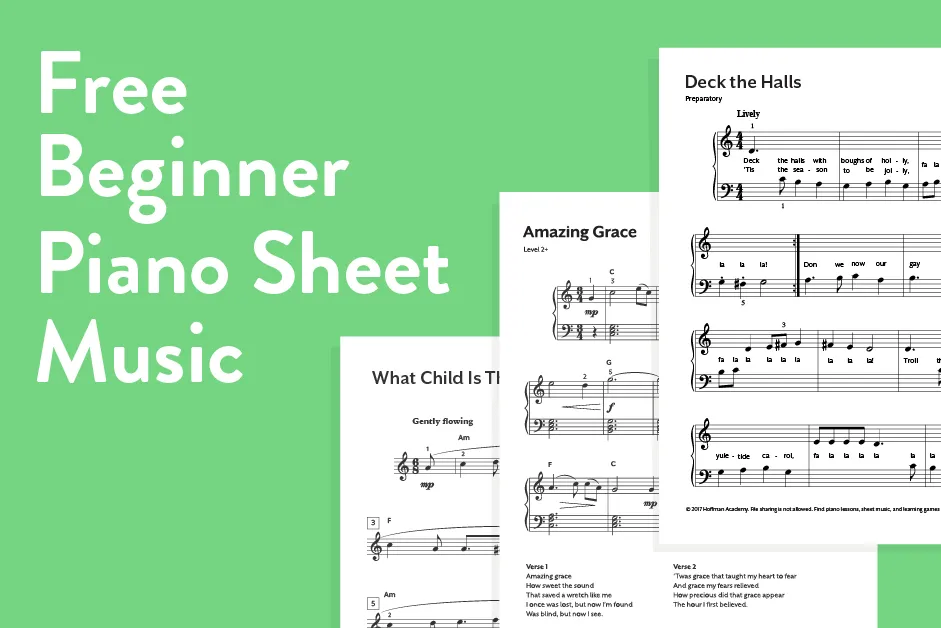
Finger numbers are often printed above or below the notes. These numbers (1-5, representing thumb to pinky) guide beginners on which fingers to use, establishing proper technique from the start.
The notation is simplified to reduce complexity. Easy piano sheet music minimizes complicated rhythms, avoids excessive sharps and flats, and uses basic time signatures that beginners can understand intuitively.
Benefits of Easy Piano Sheet Music for Beginners
Learning with easy piano sheet music offers tremendous advantages that accelerate your musical development. These specially designed arrangements build confidence by providing early success experiences that keep you motivated.
Easy pieces allow you to focus on fundamentals without overwhelming complexity. You can concentrate on proper hand position, finger technique, and reading basic notation without the frustration of advanced musical concepts.
Playing recognizable songs immediately makes practice more enjoyable. When beginners can perform familiar melodies within their first few weeks, they’re more likely to continue practicing regularly.
Simplified arrangements develop sight-reading skills progressively. Each new piece introduces slightly more complexity, building your ability to read music naturally over time without requiring separate theory lessons.
Easy piano sheet music strengthens hand-eye coordination gradually. The clear visual layout helps your brain connect what you see on the page with the physical movement of your fingers.
These arrangements also teach musical expression at an appropriate level. Even simple pieces include dynamics and phrasing marks that introduce artistic interpretation without technical demands.
Types and Genres of Easy Piano Music
Easy piano sheet music spans every musical genre, ensuring beginners can find songs they genuinely want to play. Classical music offers timeless pieces from composers like Mozart, Beethoven, and Bach arranged for beginners.
Pop and rock songs provide contemporary favorites that resonate with modern learners. Artists like Adele, Coldplay, and Ed Sheeran have numerous easy piano arrangements available that sound impressive despite their simplicity.
Movie and TV themes are incredibly popular with beginners of all ages. From Harry Potter’s “Hedwig’s Theme” to “The Imperial March” from Star Wars, these recognizable melodies inspire consistent practice.
Broadway and musical theater songs offer dramatic, expressive pieces perfect for beginners. Shows like “Wicked,” “The Greatest Showman,” and “Frozen” have easy arrangements that capture the emotional power of the originals.
Nursery rhymes and children’s songs form the foundation for young learners. “Twinkle Twinkle Little Star,” “Mary Had a Little Lamb,” and “Happy Birthday” teach basic patterns while providing familiar melodies.
Holiday and seasonal music gives beginners special repertoire for celebrations. Christmas carols, patriotic songs, and holiday favorites are consistently among the most downloaded easy piano pieces.
Jazz and blues arrangements introduce swing rhythms and syncopation at accessible levels. These pieces help beginners develop rhythmic sophistication while keeping technical demands manageable.
Best Easy Piano Songs for Absolute Beginners
Starting with the right songs makes all the difference in your piano learning journey. These beginner-friendly pieces provide perfect first experiences at the keyboard.
“Mary Had a Little Lamb” uses only five notes and simple rhythms. This classic nursery rhyme stays in the C position, making it ideal for your very first piano song.
“Twinkle Twinkle Little Star” introduces repeated patterns and hand position changes. The familiar melody keeps you engaged while you practice moving between notes smoothly.
“Ode to Joy” by Beethoven offers a recognizable classical melody within beginner reach. This arrangement uses stepwise motion that helps develop finger independence naturally.
“Happy Birthday” remains one of the most requested songs for beginners. Learning this celebration staple provides immediate practical value at family gatherings and parties.
“Chopsticks” is a fun duet piece that introduces hand coordination. Playing this simple tune with a friend or teacher makes early practice sessions social and enjoyable.
“Jingle Bells” teaches simple chord patterns alongside melody. This Christmas favorite combines left-hand accompaniment with right-hand melody in an accessible way.
“When the Saints Go Marching In” introduces swing rhythm and jazz feel. This energetic song builds rhythmic confidence while staying technically simple.
Popular Classical Pieces for Beginners
Classical music provides some of the most rewarding easy piano sheet music for developing players. These arrangements introduce timeless masterpieces in accessible versions.
“Für Elise” by Beethoven has a simplified beginning section perfect for beginners. The iconic opening melody is achievable even in your first year of piano study.
“Canon in D” by Pachelbel offers beautiful harmonies in easy arrangements. This wedding favorite teaches chord progressions while sounding sophisticated and elegant.
“Minuet in G” by Bach introduces baroque style at beginner level. The graceful dance rhythm helps develop evenness and control in both hands.
“The Entertainer” by Scott Joplin brings ragtime to beginners. Simplified versions maintain the bouncy character while keeping technical demands manageable.
“Swan Lake Theme” by Tchaikovsky showcases romantic melody beautifully. Easy arrangements capture the emotional depth while staying within beginner technical limits.
**”Spring” from Vivaldi’s Four Seasons introduces baroque ornamentation simply. These arrangements help beginners understand period style without overwhelming complexity.
“Clair de Lune” by Debussy has gorgeous easy versions available. Simplified arrangements preserve the dreamy atmosphere while removing advanced techniques.
Modern Pop Songs Made Easy
Contemporary music motivates many beginners to practice consistently. These pop hits have excellent easy piano arrangements that sound current and relevant.
“A Thousand Years” by Christina Perri features beautiful melodic lines. This romantic ballad’s simple chord structure makes it achievable for early-intermediate players.
“Let It Go” from Frozen remains wildly popular with young pianists. Easy arrangements capture the power of this anthem while keeping it technically accessible.
“Someone Like You” by Adele introduces emotional expression early. The piano-based original translates perfectly to simplified arrangements that maintain the song’s impact.
“Piano Man” by Billy Joel is naturally suited to easy piano. The singable melody and simple accompaniment pattern make this a beginner favorite.
“Hallelujah” by Leonard Cohen has numerous easy arrangements available. This modern classic’s moving melody works beautifully at every skill level.
“Can’t Help Falling in Love” by Elvis Presley teaches chord progressions beautifully. The gentle rhythm and romantic melody make practice feel effortless.
“Shallow” from A Star is Born combines modern appeal with piano accessibility. Easy versions capture the emotional arc while simplifying the technical demands.
How to Read Easy Piano Sheet Music
Understanding basic music notation unlocks thousands of songs for your enjoyment. Easy piano sheet music uses standard notation with helpful beginner-friendly features.
The musical staff consists of five lines and four spaces. Each line and space represents a different note, creating a visual map of pitch from low to high.
The treble clef (right hand) and bass clef (left hand) indicate which notes appear on each staff. Middle C sits between these two staffs, serving as the central reference point.
Note heads show which key to play. Filled notes (quarter notes) last one beat, while hollow notes with stems (half notes) last two beats, and hollow notes without stems (whole notes) last four beats.
Finger numbers printed near notes guide which finger to use. Number 1 is always the thumb, while 5 is always the pinky, regardless of which hand you’re using.
Key signatures appear at the beginning of each line. These sharp or flat symbols tell you which notes are modified throughout the piece, simplifying notation.
Time signatures indicate rhythm patterns. The top number shows beats per measure, while the bottom number indicates which note value gets one beat.
Where to Find Free Easy Piano Sheet Music
Numerous websites offer quality free easy piano sheet music for beginners. These resources provide legal downloads without requiring payment or subscriptions.
MuseScore.com hosts over 1 million user-uploaded scores with excellent beginner selections. The community-driven platform allows free downloads in PDF format with playback features.
8notes.com offers curated classical and traditional pieces organized by difficulty. Their beginner and easy sections feature hundreds of pieces with accompanying audio playback.
IMSLP (International Music Score Library Project) provides public domain classical works. While not all arrangements are easy, filtering by difficulty reveals simplified versions of masterworks.
Piano Song Download specializes in Level 1 beginner pieces with tutorials. Their free library includes children’s songs, hymns, and classical pieces with video demonstrations.
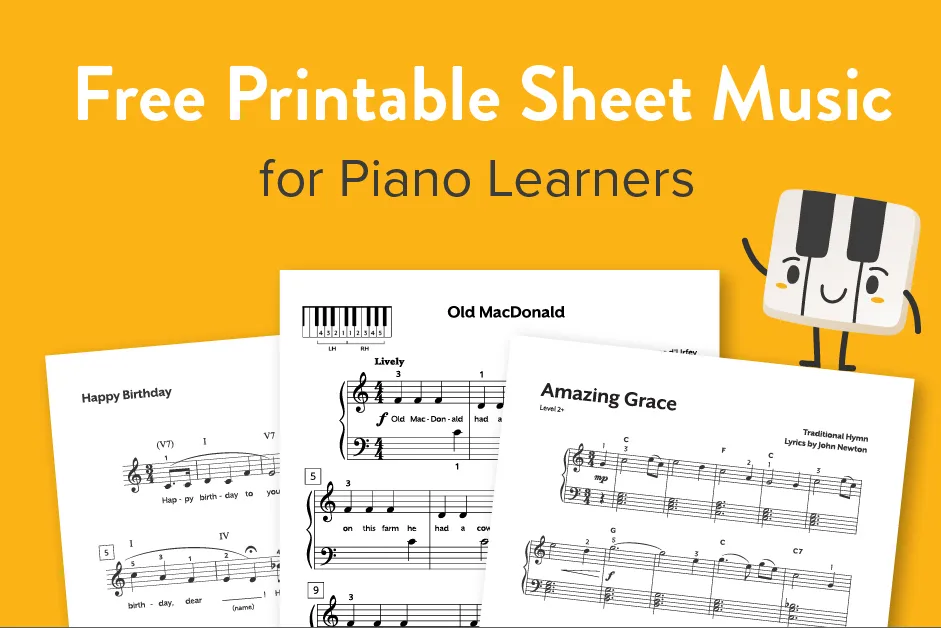
Hoffman Academy offers printable sheet music designed for their video lessons. These resources include note-naming guides and simplified arrangements perfect for absolute beginners.
Virtual Piano provides super easy arrangements playable within one octave. Their notation system uses letters alongside traditional staff notation for easier learning.
Musicnotes.com has a free sheet music section updated regularly. While their main library is paid, they offer quality free pieces for various skill levels.
Premium Easy Piano Sheet Music Resources
Investing in quality sheet music often provides better arrangements and support. These paid resources offer superior accuracy, professional engravings, and comprehensive libraries.
Musicnotes.com leads the digital sheet music market with thousands of easy piano arrangements. Their preview feature, transpose function, and mobile app make learning convenient.
Sheet Music Plus offers extensive catalog with detailed difficulty ratings. Their customer reviews help you choose appropriate pieces, and bulk discounts make larger purchases affordable.
Hal Leonard publishes renowned easy piano collections and songbooks. Their “First 50 Songs” series and “Super Easy Songbook” line provide excellent value with 50-60 songs per book.
Alfred Music creates progressive method books with coordinated repertoire. Their Premier Piano Course and Basic Piano Library include carefully sequenced pieces that build skills systematically.
Faber Piano Adventures offers the popular Piano Adventures series. These method books integrate technique, theory, and performance pieces at appropriate progressive levels.
Piano Marvel combines sheet music with interactive software. This subscription service provides thousands of pieces with real-time feedback on your playing accuracy.
Playground Sessions offers video lessons alongside sheet music. Their gamified approach makes learning pop songs particularly engaging for adult beginners.
Tips for Learning with Easy Piano Sheet Music
Approaching easy piano sheet music with effective strategies accelerates your progress. These proven techniques help beginners master new pieces efficiently and enjoyably.
Start by reviewing the piece before playing. Look for repeated patterns, identify challenging sections, and note the key signature and time signature.
Practice hands separately first. Master the right-hand melody and left-hand accompaniment independently before combining them, preventing overwhelming confusion.
Use a metronome to develop steady rhythm. Begin at a slow tempo where you can play accurately, then gradually increase speed as muscle memory develops.
Break pieces into small sections. Learning 2-4 measures at a time builds confidence and creates manageable goals for each practice session.
Say note names aloud while playing. This verbal reinforcement strengthens the connection between written notation and keyboard geography.
Mark up your sheet music with fingerings and reminders. Pencil annotations about tricky spots help you remember solutions you’ve discovered.
Record yourself playing regularly. Listening back reveals rhythm issues, dynamic imbalances, and technical problems you can’t hear while focused on playing.
Practice challenging spots in isolation. Repeating difficult measures separately from the rest of the piece builds technical mastery without wasting practice time.
Easy Piano Sheet Music for Kids
Children need specially designed easy piano sheet music that matches their developmental stage. These pieces use age-appropriate themes, simplified notation, and engaging visuals.
Picture-based notation helps very young beginners transition to traditional staff notation. Books like “Piano Safari” use color coding and images alongside standard notes.
Familiar songs from movies and TV shows motivate consistent practice. Disney favorites, cartoon themes, and video game music keep children enthusiastic about learning.
Short pieces prevent attention span challenges. One or two-line songs give kids complete pieces they can master quickly, building confidence through frequent success.
Interactive elements like stickers and coloring enhance engagement. Many children’s piano books include games, puzzles, and rewards that make practice feel like play.
Duet arrangements allow parent-child collaboration. Teacher-student duets let children play melody while an adult provides harmonic support.
Character-based method books create narrative continuity. Series like “Bastien Piano Basics” and “Music for Little Mozarts” use storytelling to maintain interest.
Rhythm games develop timing without overwhelming notation reading. Clapping exercises, body percussion, and rhythm flashcards complement sheet music learning.
Easy Piano Sheet Music for Adult Beginners
Adult learners have unique needs and preferences in easy piano sheet music. These resources respect adult musical tastes while acknowledging beginner technical limitations.
Contemporary pop and rock songs resonate with adult learners. Artists like Adele, Elton John, and Coldplay have excellent easy arrangements that sound sophisticated.
Jazz and blues standards introduce adult-oriented genres. Simplified versions of “Fly Me to the Moon,” “What a Wonderful World,” and “Georgia” maintain authentic style.
Classical masterpieces in easy arrangements satisfy intellectual curiosity. Adults appreciate understanding musical structure while learning simplified versions of famous works.
Self-paced method books acknowledge adult learning styles. Resources like “Adult Piano Adventures” and “Alfred’s Basic Adult Piano Course” respect mature learners.
Large print sheet music addresses vision considerations. Many publishers offer easy piano music in larger fonts specifically for adult eyes.
Online platforms provide flexible learning schedules. Adults with busy lives appreciate being able to download sheet music instantly and practice on their own timeline.
Familiar songs from their youth create emotional connections. Baby boomer favorites and generational hits make practice personally meaningful.
Progressing Beyond Easy Piano Sheet Music
Knowing when and how to advance from easy piano sheet music ensures continued growth. These strategies help you transition smoothly to more challenging repertoire.
Recognize signs of readiness for harder music. When you can sight-read easy pieces quickly and play them musically without excessive practice, you’re ready to progress.
Bridge the gap with late-beginner and early-intermediate pieces. Publishers label these as “Easy Piano Level 2” or “Late Beginner,” providing stepping stones upward.
Maintain a balanced repertoire mixing difficulties. Continue playing some easy pieces for musical enjoyment while tackling harder challenges for skill development.
Focus on specific technical advancement. Target pieces that introduce new skills like hand crossings, faster passages, or extended hand positions.
Work with a qualified teacher for personalized progression. Piano teachers assess your readiness and select appropriate next-level repertoire matching your development.
Explore different musical periods and styles. Advancing through various genres builds comprehensive musicianship rather than narrow specialization.
Set incremental challenge goals. Choose pieces slightly above your current level, ensuring growth without discouragement from impossible difficulty.
Building a Personal Sheet Music Library
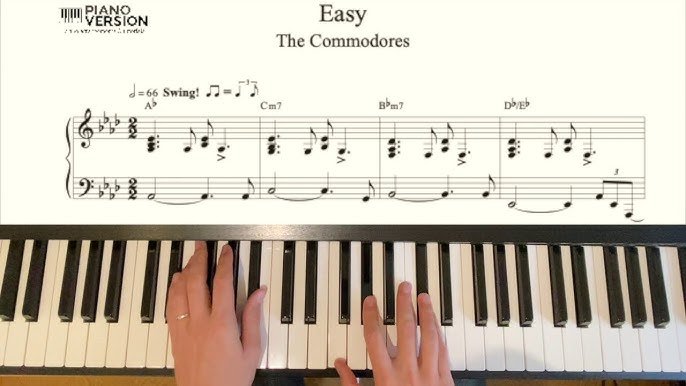
Organizing and collecting easy piano sheet music creates an valuable resource for continuous learning. A well-curated library supports varied practice and musical exploration.
Digital organization keeps hundreds of pieces accessible instantly. Create folders by genre, difficulty, and composer on your computer or tablet.
Physical binders preserve favorite printed pieces. Three-ring binders with clear sheet protectors keep frequently-played music in perfect condition.
Mix purchased and free resources strategically. Invest in quality arrangements of favorite songs while using free resources for exploration.
Maintain a wishlist of pieces to learn eventually. This forward-looking collection motivates you with exciting music awaiting your advancing skills.
Include method books alongside individual pieces. Coordinated instructional materials provide systematic skill development complementing repertoire learning.
Rotate active practice pieces regularly. Keep 3-5 pieces in current rotation while maintaining a library of mastered music you can play anytime.
Share resources with other learners. Piano student communities often exchange recommendations and occasionally share legally obtained music.
Frequently Asked Questions (FAQs)
What is the easiest piano song for complete beginners?
“Mary Had a Little Lamb” is typically the easiest piano song, using only five notes (E, D, C, D, E) in a simple pattern. “Twinkle Twinkle Little Star” and “Happy Birthday” are also excellent first songs.
Where can I find free easy piano sheet music online?
MuseScore.com, 8notes.com, and IMSLP.org offer thousands of free beginner piano pieces. Piano Song Download and Hoffman Academy also provide excellent free resources specifically for beginners.
How long does it take to learn easy piano songs?
Most beginners can learn a simple song like “Mary Had a Little Lamb” in 1-2 weeks with daily practice. More complex easy pieces may take 3-4 weeks to master comfortably.
What’s the difference between easy piano and beginner notes?
Easy piano uses simplified standard notation with added finger numbers, while beginner notes (or “big notes”) feature larger note heads and sometimes letter names inside notes. Beginner notes are designed for absolute first-time players.
Can adults learn piano using easy sheet music?
Absolutely! Many adults successfully start with easy piano sheet music and progress quickly. Adult-specific resources like “Adult Piano Adventures” are designed for mature learners who can understand concepts faster than children.
How do I know which easy piano songs match my skill level?
Look for Level 1 or “Beginner” designations. Songs using only 5-8 notes, staying in C position, and featuring simple rhythms are appropriate for absolute beginners. Preview the first few measures to assess complexity.
Should I learn to read music or use letter notation?
Learning standard music notation is recommended for long-term development. While letter notation (A, B, C inside notes) helps initially, transitioning to standard notation opens up the entire repertoire available to pianists.
How much should I practice easy piano pieces daily?
Beginners should practice 15-30 minutes daily rather than longer occasional sessions. Consistent short practices build muscle memory and reading skills more effectively than sporadic marathon sessions.
What’s the best way to practice difficult sections in easy songs?
Isolate challenging measures and practice them separately at a slow tempo. Use the “loop” method: repeat the difficult section 5-10 times correctly before integrating it back into the complete piece.
When should I progress from easy to intermediate piano music?
Progress when you can sight-read easy pieces quickly (first try through at 75% tempo) and play them musically without excessive practice time. This typically occurs after 6-12 months of consistent study.
Conclusion
Easy piano sheet music opens the door to a lifetime of musical enjoyment and personal expression. Whether you’re a child taking your first piano lessons, an adult pursuing a delayed dream, or a music teacher searching for student-appropriate repertoire, the vast selection of beginner-friendly arrangements available in 2026 makes learning accessible to everyone.
From timeless classical masterpieces to contemporary pop hits, from free online resources to premium digital downloads, you have unprecedented access to quality easy piano music that matches your tastes and skill level.
The key to success with easy piano sheet music lies in choosing pieces you genuinely want to play, practicing consistently with effective strategies, and progressing at a pace that balances challenge with enjoyment.
Remember that every accomplished pianist started exactly where you are now—playing simple melodies on easy sheet music. Those first hesitant notes on “Twinkle Twinkle Little Star” or “Ode to Joy” represent the beginning of your musical journey, not its limitation.


