


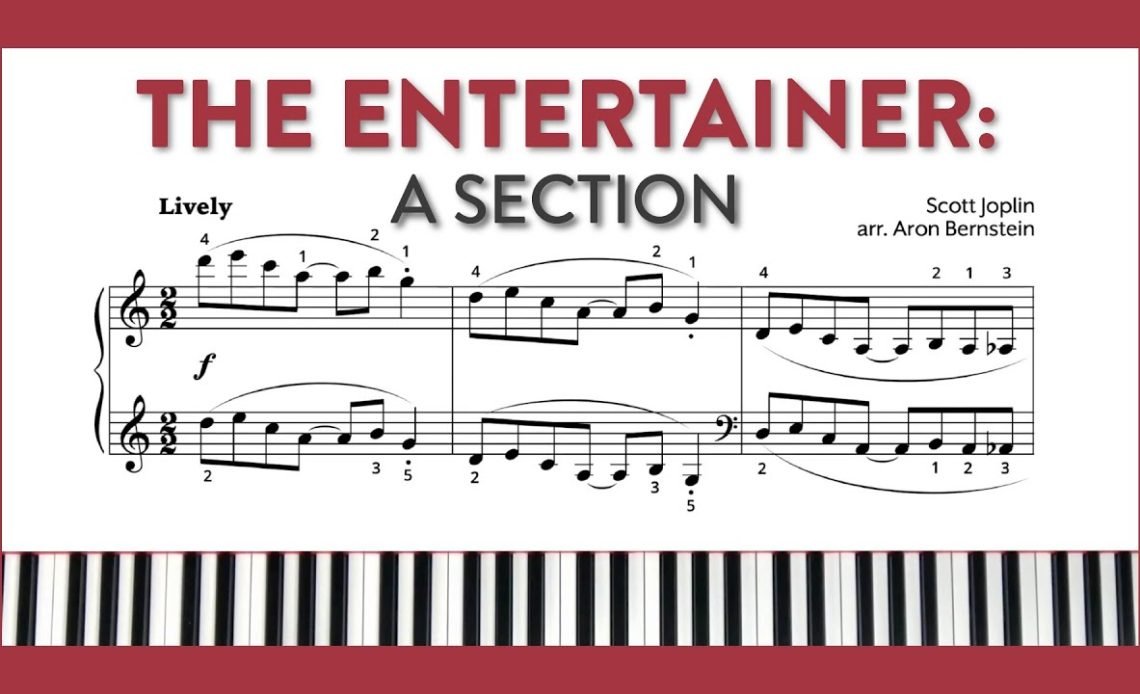
The entertainer sheet music is one of the most sought-after piano pieces for musicians of all skill levels worldwide. Composed by the legendary Scott Joplin in 1902, this iconic ragtime masterpiece has captivated audiences for over a century with its infectious syncopated rhythms and playful melodies.
Whether you’re a beginner pianist taking your first steps into classical ragtime or an experienced player looking to perfect this timeless piece, understanding the sheet music is essential.
This comprehensive guide walks you through everything you need to know about The Entertainer sheet music, from its historical background and musical structure to learning techniques, difficulty levels, and where to find the best versions available today.
The History Behind The Entertainer
Scott Joplin and Ragtime Music
Scott Joplin, born in 1868 in Texas, earned the title “King of Ragtime” through his revolutionary compositions. He elevated ragtime from its humble origins in saloons and dance halls to a respected classical music form.
During his time in St. Louis, Missouri, Joplin wrote some of his most celebrated works. The Entertainer emerged in 1902 as a “ragtime two-step,” a popular dance style of the era that combined African-American syncopated rhythms with European musical structures.
Joplin’s vision was to create music that would be taken seriously as art. He insisted his compositions be played exactly as written, without improvisation, which was revolutionary for ragtime at that time.
The Sting and Cultural Revival
While The Entertainer enjoyed modest success after its initial publication, it became a worldwide phenomenon in 1973. The film “The Sting,” starring Paul Newman and Robert Redford, featured this piece as its main theme.
Marvin Hamlisch adapted Joplin’s composition for the film’s soundtrack, introducing it to millions of new listeners. The movie won seven Academy Awards, and The Entertainer became instantly recognizable across generations.
This cultural moment sparked a massive ragtime revival in the 1970s. Sheet music sales skyrocketed, and pianists everywhere added The Entertainer to their repertoires, cementing its status as one of the most beloved piano pieces in American music history.
Original Publication Details
John Stark & Son published the original entertainer sheet music in St. Louis in 1902. The cover featured period-typical artwork and identified it as “A Ragtime Two Step” with a dedication to James Brown and his Mandolin Club.
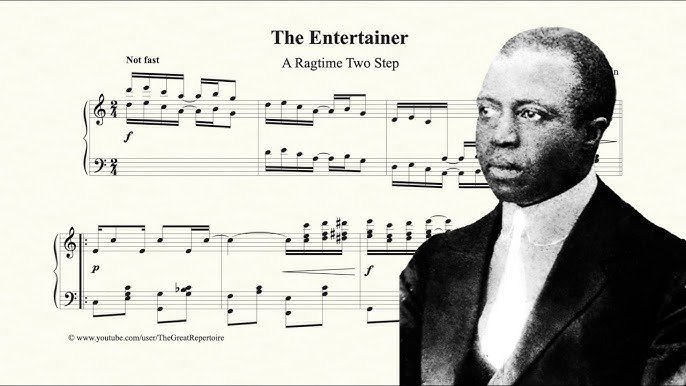
The original score contained specific performance instructions from Joplin himself, including the tempo marking “Not fast,” which many modern performers overlook. This instruction reflects Joplin’s philosophy that ragtime should maintain dignity and precision rather than rushing through the syncopations.
Original copies of the 1902 sheet music are now valuable collector’s items. However, the piece entered public domain decades ago, making it freely available in various arrangements and editions for today’s musicians.
Understanding The Musical Structure
Key Signature and Time Signature
The Entertainer is written in C major, making it accessible for intermediate pianists. C major contains no sharps or flats in its key signature, simplifying sight-reading and reducing the technical complexity compared to pieces in other keys.
The time signature is 2/4, characteristic of the two-step dance form. This means two quarter-note beats per measure, creating the bouncy, march-like rhythm that drives the piece forward and gives it that distinctive ragtime feel.
Understanding these fundamentals helps pianists approach the sheet music with proper context. The 2/4 time creates a steady pulse that supports the syncopated right-hand melody dancing above the bass line.
Form and Sections
The entertainer sheet music follows the classic ragtime structure with multiple contrasting sections. The piece consists of an introduction followed by four distinct 16-bar strains, each with its own character and melody.
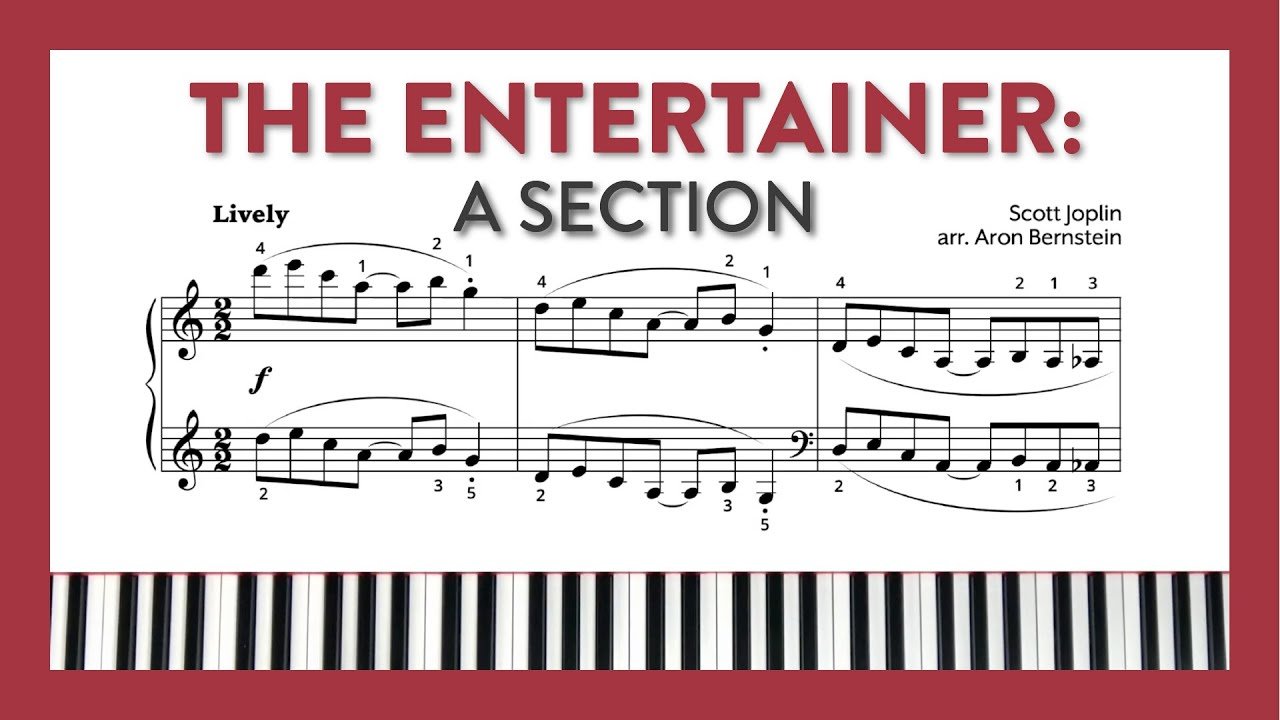
The A section features the most recognizable melody, the iconic ascending phrase that most people associate with the piece. This section repeats before moving to the B section, which introduces a contrasting melodic idea in a different register.
The C section, sometimes called the trio, typically modulates or changes tonal color while maintaining the rhythmic vitality. Finally, the D section provides another melodic contrast before the piece concludes, creating a satisfying musical journey through varied ragtime themes.
Rhythmic Patterns
Syncopation defines ragtime music, and The Entertainer showcases this brilliantly. The right hand plays off-beat accents while the left hand maintains steady, on-beat patterns, creating rhythmic tension that makes ragtime so energetic and exciting.
The classic “boom-chick” bass pattern appears throughout the left hand. This alternates between bass notes on beat one and chord strikes on beat two, providing the steady foundation upon which the syncopated melody dances.
Mastering these rhythmic relationships is crucial for authentic performance. The right hand must float above the steady left hand, never rushing or dragging, maintaining the playful character that makes this piece so delightful to hear and play.
Difficulty Levels and Arrangements
Beginner Versions
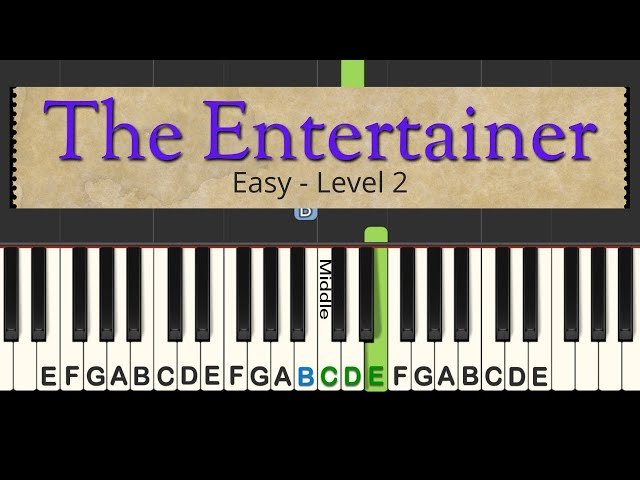
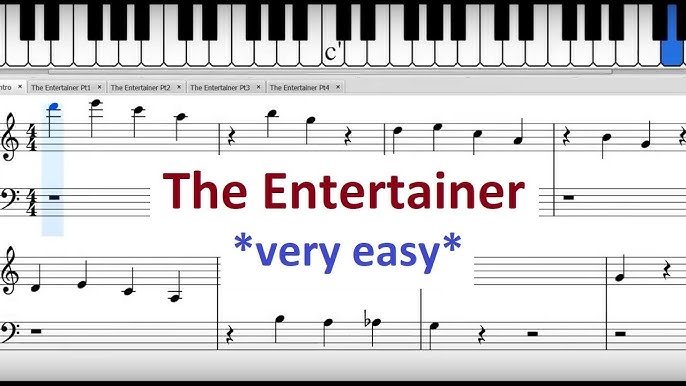
Simplified entertainer sheet music exists for novice pianists who want to play this classic piece. These arrangements reduce octave jumps, simplify chord structures, and sometimes remove the most technically challenging passages.
Beginner versions typically focus on the A section melody, the most recognizable part of the piece. They may eliminate left-hand octaves, replacing them with single bass notes, and reduce right-hand complexity by removing ornamental notes.
These simplified arrangements allow early-stage pianists to enjoy playing The Entertainer without overwhelming technical demands. They provide a stepping stone toward eventually mastering the original, more complex version as skills develop.
Intermediate Arrangements
Intermediate entertainer sheet music strikes a balance between accessibility and authenticity. These versions maintain most of Joplin’s original musical ideas while making practical concessions for players still developing advanced techniques.
At this level, pianists encounter the characteristic left-hand stride pattern and most of the original right-hand syncopations. However, some rapid passages may be simplified, and extremely wide hand stretches might be modified to accommodate smaller hands.
Many popular sheet music publishers offer intermediate arrangements. These typically suit pianists with 2-4 years of experience who have solid sight-reading skills and comfortable hand independence but haven’t yet mastered advanced classical techniques.
Advanced/Original Version
The original entertainer sheet music, as Joplin composed it, presents significant challenges even for accomplished pianists. The piece demands strong hand independence, precise rhythmic control, and significant physical stamina to maintain the stride bass pattern throughout.
Left-hand octaves appear frequently, requiring hand strength and accuracy as the bass line jumps across wide intervals. The right hand must navigate rapid scalar passages, syncopated chord progressions, and ornamental figures while maintaining rhythmic clarity.
Professional-level performers spend considerable time perfecting this piece. Despite its cheerful character, The Entertainer requires serious technical preparation, making it suitable for advanced students and professional pianists seeking to master this ragtime classic.
Where to Find The Entertainer Sheet Music
Free Online Resources
IMSLP (International Music Score Library Project) offers multiple versions of the entertainer sheet music completely free. This public domain library includes the original 1902 publication and numerous modern arrangements and editions.
MuseScore provides free sheet music created and shared by community members. You’ll find everything from simplified beginner versions to the complete original score, often with accompanying audio playback to help with learning.
8notes.com features a free arrangement suitable for intermediate players. This site allows you to view the music online, print it for personal use, and even transpose it to different keys if desired.
Paid Professional Editions
Musicnotes.com sells professionally arranged versions with excellent notation quality. Their editions often include performance notes, suggested fingerings, and the ability to transpose to different keys or adjust the difficulty level.
Hoffman Academy offers comprehensive arrangements specifically designed for educational purposes. These include detailed practice notes, technique tips, and progressive arrangements that help students build skills gradually.
Sheet Music Plus and other professional retailers stock authoritative editions from major publishers. These typically feature careful editing, historical notes, and performance suggestions from ragtime specialists and piano pedagogues.
Music Learning Apps
La Touche Musicale provides interactive sheet music that waits for you to play correct notes before advancing. This app helps you learn The Entertainer at your own pace with real-time feedback on accuracy and timing.
Simply Piano and Flowkey offer guided lessons for The Entertainer with visual aids showing which keys to press. These apps combine sheet music reading with interactive technology, making the learning process more engaging.
YouTube channels like HDpiano and Piano Tutorial Easy provide video lessons alongside downloadable sheet music. These visual learning resources help players who struggle with traditional notation by showing hand positions and finger movements in real time.
Reading The Entertainer Sheet Music
Left Hand Technique
The left hand in the entertainer sheet music follows the classic ragtime stride pattern. This alternates between low bass notes and mid-range chords, creating the “oom-pah” rhythm that defines ragtime’s characteristic sound.
Begin practicing left hand alone at a very slow tempo. Focus on accuracy rather than speed, ensuring each bass note and chord lands precisely on the beat. This solid foundation is essential before adding the right hand.
Many pianists find the octave jumps challenging initially. Practice these intervals separately, building muscle memory for the distances your hand must travel. Over time, these jumps become automatic, allowing you to focus on musicality rather than mechanics.
Right Hand Melody
The right hand carries the memorable syncopated melodies that make The Entertainer so recognizable. These phrases often begin on off-beats, creating the playful, unexpected character that ragtime celebrates.
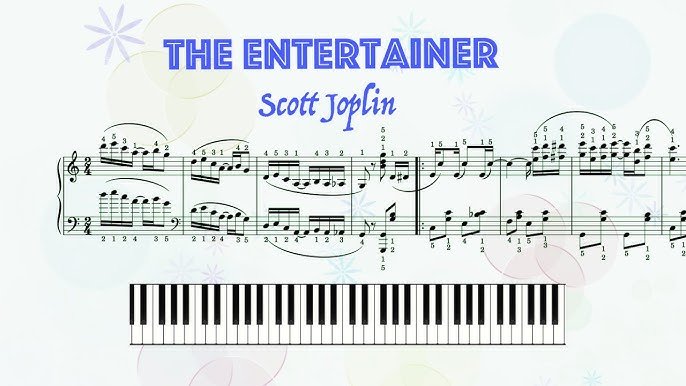
Pay careful attention to articulation markings in the sheet music. Some notes should be played staccato (short and detached) while others flow legato (smooth and connected). These details bring Joplin’s composition to life with proper character.
Fingering suggestions in quality editions help navigate tricky passages efficiently. While you can adjust fingerings to suit your hand size and technique, following professional recommendations initially helps develop good habits and prevents awkward hand positions.
Dynamics and Expression
Though ragtime seems straightforward, the entertainer sheet music benefits from thoughtful dynamic shaping. Subtle volume changes between sections and phrases add musical interest without disrupting the piece’s inherent rhythmic energy.
Joplin’s original marking “Not fast” deserves emphasis. Many performers rush through this piece, losing the rhythmic precision and dignity that ragtime deserves. A moderate, controlled tempo allows every syncopation to speak clearly.
Expression comes from rhythmic precision rather than romantic rubato (tempo flexibility). Keep the pulse steady while allowing slight emphasis on important melodic notes. This approach honors ragtime’s dance music origins while showcasing its artistic sophistication.
Step-by-Step Learning Process
Week 1: Hands Separate Practice
Start your journey with the entertainer sheet music by learning each hand independently. Spend the first week mastering the left-hand bass pattern without worrying about the right hand at all.
Practice slowly with a metronome set to a comfortable tempo, perhaps 60-80 beats per minute. Focus on consistent rhythm, accurate notes, and developing muscle memory for the stride pattern’s distinctive jumps and intervals.
Once the left hand feels comfortable, begin learning the right-hand melody separately. Again, work slowly and methodically, ensuring every note is accurate before increasing speed. This patient approach prevents mistakes from becoming ingrained habits.
Week 2-3: Combining Hands
After both hands feel secure separately, begin combining them at an extremely slow tempo. Start with just the first four measures, gradually expanding to eight measures, then sixteen.
The challenge here is maintaining independence between hands while they play conflicting rhythms. The left hand stays strictly on the beat while the right hand syncopates, creating the distinctive ragtime sound.
Don’t rush this process. It’s normal for hands-together playing to feel awkward initially. With consistent daily practice of 20-30 minutes, most intermediate pianists can combine the hands successfully within two weeks.
Week 4: Building Speed and Fluency
Once you can play entire sections hands-together slowly, gradually increase the tempo. Use a metronome and raise the speed by only 4-8 beats per minute each practice session.
This gradual approach prevents the sloppiness that occurs when pianists try to play too fast too soon. Each tempo increase should feel comfortable and controlled before moving faster.
Record yourself playing at various tempos. Listening back reveals rhythm issues, wrong notes, and technical problems you might not notice while playing. This feedback accelerates improvement and helps maintain motivation.
Common Challenges and Solutions
Maintaining Steady Tempo
Many pianists struggle to keep consistent tempo in the entertainer sheet music, especially during transitions between sections. The excitement of the syncopated melodies tempts players to rush, destroying the rhythmic foundation.
Use a metronome religiously during practice. Even if you plan to perform without one eventually, the metronome trains your internal pulse and reveals tempo inconsistencies you might not otherwise notice.
Record your practice sessions and listen for tempo fluctuations. Mark problem areas in your sheet music and drill those specific measures with the metronome until they match the surrounding material’s tempo.
Octave Jumps in Left Hand
The wide octave leaps in the left-hand stride pattern challenge pianists with smaller hands or limited reach. These jumps must be accurate and rhythmically precise to maintain the piece’s character.
Practice the left hand alone, focusing exclusively on the jump accuracy. Start extremely slowly, using your eyes to guide your hand to the correct position. Gradually, muscle memory develops and you can make these jumps accurately without looking.
If the stretches prove physically impossible, consider playing a simplified arrangement that replaces some octaves with single notes. While not identical to Joplin’s original, this compromise allows you to play the piece while building hand strength.
Syncopation Accuracy
Getting the syncopated rhythms exactly right separates mediocre performances from excellent ones. The entertainer sheet music requires precise placement of off-beat accents while maintaining the steady underlying pulse.
Count out loud while practicing syncopated sections. Use numbers (“one and two and”) or syllables (“ta-ka-ti-ka”) to verbalize where each note lands. This external counting helps internalize complex rhythmic relationships.
Practice with a metronome that emphasizes beat one strongly and beat two more softly. This creates a clear reference point, helping you place syncopated notes accurately against the steady beat.
Performance Tips
Tempo Considerations
Scott Joplin specifically marked the entertainer sheet music “Not fast,” yet many performers ignore this instruction. The ideal tempo falls around 120-140 quarter notes per minute, brisk but never rushed or frantic.
A controlled tempo allows every syncopation to speak clearly and maintains the piece’s playful character without sacrificing dignity. Fast tempos cause rhythmic blur and make the left-hand stride pattern sound sloppy.
Consider the piece’s dance origins. The two-step should feel lively but danceable, not like a sprint. Modern audiences appreciate clarity and precision over mere speed, so resist the temptation to race through this delightful composition.
Pedaling Techniques
While the entertainer sheet music typically includes minimal pedal markings, judicious pedaling enhances the sound on modern pianos. Use light, short pedal touches to connect bass notes slightly without blurring the rhythmic clarity.
Avoid over-pedaling, which muddies the texture and obscures the crisp articulation ragtime requires. The right hand’s staccato passages should remain clean and detached, which excessive pedal destroys.
Many professional ragtime pianists use almost no pedal, relying instead on finger technique to create a clear, bouncy sound. Experiment with different approaches and record yourself to determine what sounds best on your instrument.
Stage Presence
When performing The Entertainer publicly, convey the piece’s joyful, entertaining character through your body language and facial expressions. Ragtime is fun music, and your performance should communicate that enjoyment to the audience.
Maintain good posture and hand position despite the temptation to bounce or sway excessively. While some physical movement is natural, excessive motion can interfere with technical accuracy and create unnecessary tension.
If you make a mistake during performance, keep going without stopping or grimacing. The Entertainer’s repetitive structure and clear melodies mean audiences rarely notice small errors if you maintain confidence and forward momentum.
Musical Analysis
Harmonic Progressions
The entertainer sheet music employs typical late-Romantic harmonic language adapted to ragtime’s distinctive rhythmic framework. Joplin uses familiar chord progressions—tonic, subdominant, dominant—but colors them with chromatic passing tones and unexpected resolutions.
The bass line frequently outlines triads and seventh chords, creating harmonic motion that propels the music forward. Secondary dominants appear occasionally, adding harmonic interest and sophistication beyond simple three-chord ragtime.
Understanding these harmonic patterns helps with memorization and musical interpretation. When you recognize chord progressions and harmonic goals, the notes make more sense and become easier to remember and perform expressively.
Melodic Characteristics
Joplin’s melodies in The Entertainer demonstrate remarkable craftsmanship. Each strain features memorable, singable themes built from scales, arpeggios, and characteristic ragtime figures that balance predictability with surprise.
The primary A section melody uses conjunct motion (stepwise movement) combined with occasional leaps that create interest. These leaps often outline chord tones, connecting the melody intimately with the underlying harmony.
Sequence and repetition appear throughout, with melodic ideas stated and then repeated at different pitch levels. This technique creates coherence and helps listeners follow the musical argument despite the piece’s rhythmic complexity.
Contrapuntal Elements
Though not fugue-like counterpoint, The Entertainer contains moments of genuine two-voice independence. The right and left hands sometimes engage in call-and-response dialogue, with melodic fragments passed between registers.
This contrapuntal thinking elevates the piece beyond simple melody-and-accompaniment texture. Both hands contribute melodically, creating a richer, more sophisticated musical fabric than many ragtime compositions achieve.
Joplin studied classical composition formally, and his training shows in these subtle structural details. His entertainer sheet music rewards analytical study, revealing craftsmanship that explains why this piece remains beloved over a century after composition.
Teaching The Entertainer to Students
Age and Skill Requirements
The entertainer sheet music suits students from age 10 and up, provided they have at least 2-3 years of piano training. Younger students with exceptional ability might tackle simplified versions, but the original requires physical and cognitive maturity.
Prerequisites include solid sight-reading skills, comfortable hand independence, and prior experience with syncopated rhythms. Students should already play pieces at approximately ABRSM Grade 5-6 level or equivalent.
Assess each student individually rather than relying solely on age or years of study. Some students develop the necessary coordination quickly, while others need more preparation time before approaching even simplified ragtime pieces.
Motivation Strategies
Most students recognize The Entertainer immediately, which creates inherent motivation. Leverage this familiarity by playing recordings of great performances and discussing the piece’s appearance in “The Sting” and popular culture.
Set achievable short-term goals: master four measures, combine hands for eight measures, play one section at performance tempo. These small victories maintain momentum during the lengthy learning process.
Consider group performances where multiple students play different sections, or arrange piano duets where one student plays a simplified left hand while you play the right. These collaborative approaches keep practice engaging and fun.
Variations and Arrangements
Jazz Interpretations
Jazz pianists have reimagined the entertainer sheet music with improvised variations, swing feel, and harmonic reharmonizations. These interpretations respect Joplin’s original while adding modern jazz vocabulary and spontaneous creativity.
Oscar Peterson recorded a brilliant version that maintains ragtime’s character while incorporating his virtuosic jazz technique. Joshua Rifkin’s classical recordings demonstrate how the piece sounds with strict adherence to Joplin’s original intentions.
Studying different interpretations broadens your musical perspective and suggests possibilities for your own performances. While respecting the composer’s vision remains important, these variations show how great music adapts across genres and eras.
Easy Piano Collections
Many publishers include The Entertainer in easy piano collections featuring famous classical pieces simplified for developing students. These anthologies often group ragtime with other period-appropriate American music.
Books like “Easy Classics to Moderns” and “The Library of Easy Piano Classics” frequently feature simplified entertainer sheet music. These collections provide excellent value, offering dozens of pieces for students progressing through intermediate levels.
Having multiple pieces from similar periods or styles helps students develop stylistic awareness. Playing The Entertainer alongside other ragtime pieces or early 20th-century American music builds comprehensive musical understanding.
Ensemble Arrangements
While Joplin composed The Entertainer for solo piano, arrangements exist for various ensembles. Piano duet versions split the work between two players, making it accessible while reducing individual technical demands.
String quartet arrangements, wind ensembles, and even full orchestrations have been created. These versions demonstrate the composition’s strong melodic and structural qualities that transcend the original piano medium.
For students, participating in ensemble arrangements of familiar music builds collaboration skills and provides performance opportunities. Playing The Entertainer with other musicians creates memorable musical experiences and deepens appreciation for Joplin’s craftsmanship.
Digital Learning Tools
Sheet Music Apps
Modern technology has revolutionized how pianists access and learn the entertainer sheet music. Apps like forScore, Musicnotes, and Tomplay provide interactive digital scores on tablets, eliminating the need for printed music.
These applications offer features like automatic page turns, customizable zoom levels, and annotation tools for marking fingerings or practice notes. Many sync with Bluetooth page-turn pedals, allowing hands-free navigation during practice.
Digital sheet music can be backed up to cloud storage, preventing loss and allowing access across multiple devices. You can build a comprehensive library without physical storage space, though many pianists still prefer traditional printed scores.
Interactive Learning Platforms
Piano Marvel, Playground Sessions, and similar platforms combine the entertainer sheet music with interactive technology that listens to your playing and provides real-time feedback on accuracy and timing.
These systems display notes falling toward a virtual keyboard, similar to video game interfaces, making learning more engaging for students who grew up with digital media. Progress tracking and achievement badges add gamification elements.
While not replacing traditional lessons, these tools supplement learning effectively. They provide immediate feedback during home practice and help students stay motivated through structured progression systems and visible skill development.
YouTube Tutorials
Countless pianists have created video tutorials demonstrating how to play The Entertainer. These range from note-by-note beginner lessons to advanced technique discussions from professional ragtime specialists.
Channels like Piano Tutorial Easy and Pianote offer free lessons that combine visual demonstration with sheet music display. Watching professional hand position and technique helps students understand proper execution.
However, be selective about tutorial quality. Some videos contain errors or promote poor technique. Cross-reference multiple sources and ideally work with a qualified teacher who can provide personalized guidance.
Historical Context and Cultural Impact
Ragtime’s Golden Age
The entertainer sheet music emerged during ragtime’s peak popularity from 1899-1917. This uniquely American genre combined African-American musical traditions with European classical forms, creating something entirely new and exciting.
Ragtime represented musical democratization, as it moved from red-light districts and saloons into respectable parlors and concert halls. Middle-class families purchased pianos and ragtime sheet music, making this music central to American home entertainment.
Scott Joplin and contemporaries like James Scott and Joseph Lamb created a sophisticated ragtime literature that transcended the genre’s humble origins. They proved African-American composers could create art music worthy of serious critical attention.
The 1970s Revival
After decades of obscurity, The Entertainer and ragtime generally experienced a massive revival in the 1970s. “The Sting” soundtrack, arranged by Marvin Hamlisch, introduced millions to Joplin’s music.
The soundtrack album topped charts and won a Grammy Award. Suddenly, ragtime was everywhere—on radio, in concert programs, and in music stores. Sheet music publishers rushed to meet demand for The Entertainer and other Joplin compositions.
This revival sparked scholarly interest in Joplin’s life and work. The opera “Treemonisha,” which Joplin never saw professionally staged, received its first major productions. Joplin received a posthumous Pulitzer Prize in 1976.
Modern Legacy
Today, the entertainer sheet music remains one of the most frequently downloaded and purchased piano pieces worldwide. It appears in piano examination syllabi, student recital programs, and professional performances globally.
The piece transcends its historical moment to speak to contemporary audiences. Its cheerful character, memorable melodies, and moderate technical demands make it perpetually appealing to pianists seeking accessible yet substantial repertoire.
Cultural references to The Entertainer continue appearing in films, television, commercials, and popular media. Each generation discovers Joplin’s music anew, ensuring his legacy endures well into the 21st century and beyond.
Frequently Asked Questions
What level of piano skill do I need to play The Entertainer?
Intermediate-level pianists with 2-4 years of experience can typically handle simplified versions of the entertainer sheet music successfully. The original version requires advanced skills equivalent to ABRSM Grade 6-7, including strong hand independence, accurate octave jumps, and precise syncopation control.
Where can I download free sheet music for The Entertainer?
IMSLP and MuseScore offer free, legal downloads of the entertainer sheet music since the composition is in public domain. These sites provide multiple arrangements from beginner to advanced levels, including Joplin’s original 1902 version. Always verify the arrangement difficulty matches your skill level before downloading.
How long does it take to learn The Entertainer on piano?
Most intermediate pianists can learn simplified versions in 4-6 weeks with daily practice of 20-30 minutes. The complete original version typically requires 8-12 weeks for intermediate students or 4-6 weeks for advanced pianists. Individual learning speed varies based on prior experience with ragtime and syncopated rhythms.
What tempo should The Entertainer be played at?
Scott Joplin marked the entertainer sheet music “Not fast,” suggesting a moderate tempo around 120-140 beats per minute. Many performers play too quickly, losing rhythmic clarity and the piece’s dignified character. Start practicing at 60-80 BPM and gradually increase speed while maintaining accuracy.
Is The Entertainer difficult to play?
The original entertainer sheet music presents moderate to significant challenges, particularly the left-hand octave jumps and right-hand syncopations. However, numerous simplified arrangements make it accessible to developing pianists. The difficulty depends entirely on which version you choose and your current technical abilities.
Can beginners play The Entertainer?
Absolute beginners should wait before attempting the entertainer sheet music, but students with 1-2 years of experience can start with highly simplified versions. These arrangements reduce technical demands while preserving the recognizable melody, allowing early-stage pianists to enjoy playing this famous piece.
What is ragtime music?
Ragtime is an American musical genre popular from 1899-1917, characterized by syncopated (“ragged”) rhythms in the melody against a steady march-like bass. The entertainer sheet music exemplifies classic ragtime with its off-beat right-hand accents over a regular left-hand stride pattern creating rhythmic tension.
Did Scott Joplin write other famous ragtime pieces?
Scott Joplin composed over 40 ragtime pieces, including “Maple Leaf Rag,” “Elite Syncopations,” “The Cascades,” and “Solace.” He also wrote two operas and various other works. “Maple Leaf Rag” sold over one million copies and established ragtime as a serious musical genre.
What key is The Entertainer written in?
The entertainer sheet music is written in C major, making it more accessible than pieces in complex keys with many sharps or flats. C major allows pianists to focus on mastering ragtime’s rhythmic challenges without simultaneously navigating difficult key signatures or extensive accidentals.
Can The Entertainer be played on other instruments?
While Joplin composed the entertainer sheet music for piano, arrangements exist for guitar, violin, clarinet, flute, saxophone, and various ensembles. The strong melodies and clear structure adapt well to different instruments, though the characteristic ragtime stride bass pattern obviously requires modification for non-keyboard instruments.
Conclusion
The entertainer sheet music represents far more than just notes on a page—it embodies a crucial moment in American musical history when ragtime captivated the nation and introduced syncopated rhythms that would influence jazz, blues, and countless other genres.
Scott Joplin’s 1902 masterpiece continues enchanting pianists over a century later through its irresistible melodies, playful rhythms, and perfect balance of accessibility and sophistication.
Whether you choose a simplified beginner version or tackle Joplin’s original composition, learning The Entertainer provides invaluable musical benefits.
You’ll develop hand independence, master syncopated rhythms, improve sight-reading skills, and gain appreciation for American musical heritage.
The piece’s moderate length and repetitive structure make it memorizable, while its technical demands challenge without overwhelming intermediate players.


