


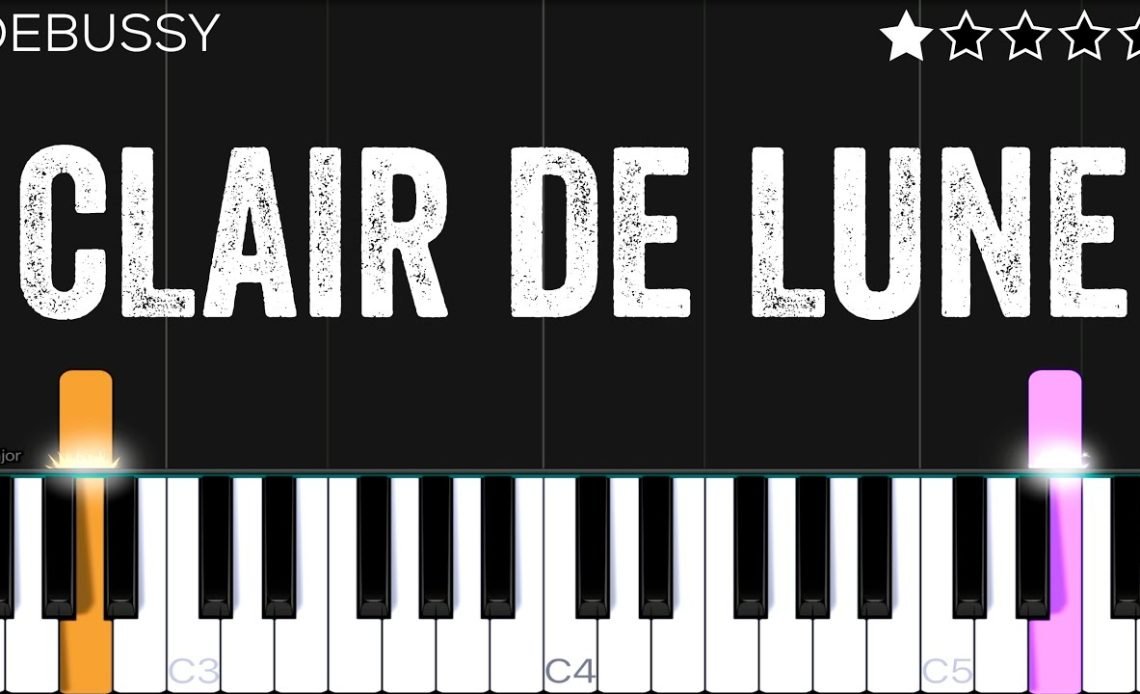
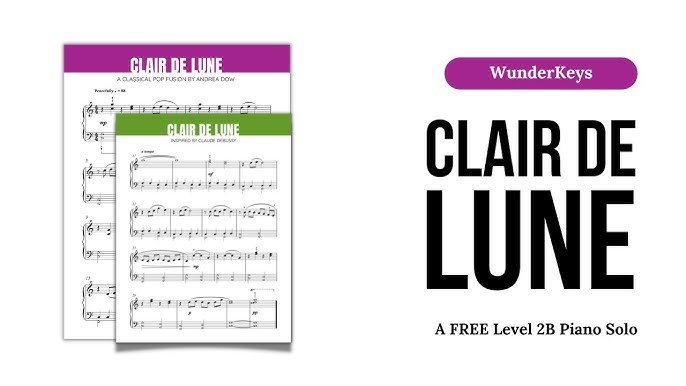
Clair de Lune sheet music represents one of the most sought-after classical piano pieces for musicians of all skill levels. Composed by Claude Debussy between 1890 and 1905, this timeless masterpiece from Suite Bergamasque continues to captivate pianists worldwide with its dreamy, impressionistic melodies and emotional depth.
Whether you’re a beginner seeking a simplifid arrangement or an advanced player ready to tackle the original five-flat version, finding quality Clair de Lune sheet music has never been easier.
This comprehensive guide provides free downloadable sheet music, detailed performance tips, historical context, and expert techniques to help you master this iconic composition in 2026.
Understanding Clair de Lune
Clair de Lune translates to “Moonlight” in English and perfectly captures the piece’s ethereal, nocturnal atmosphere. The composition evokes images of moonlight gently illuminating a quiet landscape, creating a sense of peace and reflection.
Debussy composed this piece as the third movement of his four-part Suite Bergamasque. The suite includes Prélude, Menuet, Clair de Lune, and Passepied, but Clair de Lune has become by far the most famous movement.
The piece showcases Debussy’s innovative impressionist style, breaking away from traditional romantic-era composition techniques. His use of pentatonic scales, parallel chords, and fluid dynamics created a revolutionary sound that influenced generations of composers.
History of Clair de Lune
Claude Debussy composed Suite Bergamasque, including Clair de Lune, when he was approximately 28 years old. Though completed around 1890, the suite wasn’t published until 1905, fifteen years after its creation.
Debussy deliberately added the composition date “1890” to the published proofs to clarify it was an earlier work. This context helps musicians understand the piece represents his transitional period from conventional harmony to his mature impressionist style.
The title “Suite Bergamasque” references Bergamo, Italy, and suggests the baroque dance suites popular in earlier centuries. However, Debussy transformed this classical form with his modernist sensibilities and innovative harmonic language.
What Makes Clair de Lune Special
The piece’s enduring popularity stems from its perfect balance of technical challenge and emotional accessibility. Even beginners can appreciate its beauty through simplified arrangements, while advanced pianists find endless interpretive possibilities.
Clair de Lune features a distinctive “cloudy” or “dreamy” sound achieved through extensive use of the sustain pedal. This pedaling technique allows notes to blend together, creating the signature impressionistic wash of sound.
The composition’s dynamic range spans from delicate pianissimo passages to powerful forte climaxes. This emotional journey makes it ideal for developing expressive playing skills and musical maturity.
Original Clair de Lune Sheet Music
The original Clair de Lune is written in D-flat major, a key with five flats (Db, Eb, Gb, Ab, Bb). This key signature presents significant challenges for intermediate pianists still developing comfort with multiple flats.
The original tempo marking is “Tempo rubato,” indicating flexible timing that allows performers interpretive freedom. This rubato quality is essential to capturing the piece’s flowing, dreamlike character.
Debussy’s original score contains detailed performance markings including dynamics, pedaling instructions, and phrasing indications. Studying these authentic markings provides insight into the composer’s intended interpretation.
Difficulty Level of Original Version
The original Clair de Lune is classified as late intermediate to early advanced level. It requires solid technical foundation, including comfortable hand independence, pedaling skills, and dynamic control.
Technical challenges include wide arpeggiated passages requiring hand stretches, complex rhythmic patterns between hands, and sustained melodic lines over moving accompaniment figures. These elements demand considerable practice and coordination.
The piece typically takes intermediate players 3-6 months of consistent practice to perform confidently. Advanced pianists may learn it in several weeks, while beginners should start with simplified arrangements.
Beginner Clair de Lune Sheet Music
Simplified Clair de Lune arrangements make this beautiful piece accessible to pianists with 1-2 years of experience. These versions typically transpose the piece to C major, eliminating the intimidating five-flat key signature.
Beginner arrangements reduce hand span requirements by simplifying wide arpeggios and chord voicings. They also minimize rhythmic complexity while preserving the piece’s essential melodic and harmonic character.
These simplified versions usually feature simpler left-hand patterns, reduced note density, and occasional octave changes to keep both hands in comfortable positions. Despite simplifications, they retain the piece’s emotional essence and recognizable melodies.
Intermediate Clair de Lune Arrangements
Intermediate arrangements strike a balance between accessibility and authenticity. They may retain the original D-flat major key but simplify the most technically demanding passages.
These versions often reduce some arpeggiated figures to simpler chord patterns while maintaining the original harmonic progression. They preserve most of Debussy’s expressive markings but may adjust the most challenging dynamic contrasts.
Intermediate arrangements serve as excellent stepping stones toward eventually learning the complete original version. They allow players to experience the piece’s full beauty while developing necessary technical skills.
Advanced Clair de Lune Sheet Music
Advanced players should work from authentic Urtext editions that present Debussy’s original intentions without editorial modifications. G. Henle Publishers and other respected classical publishers offer authoritative editions.
These versions include all original technical challenges, articulation markings, and performance instructions. They often feature scholarly notes about the composition’s history, performance practice, and interpretive considerations.
Professional-level sheet music may include multiple editions comparing different published versions and manuscripts. This comparative approach helps performers make informed interpretive decisions based on historical evidence.
Free Clair de Lune Sheet Music Resources
MuseScore
MuseScore offers numerous free Clair de Lune arrangements in PDF and MIDI formats. Users can download sheet music for beginner, intermediate, and advanced levels without cost.
The platform features user-created arrangements alongside traditional editions. Many arrangements include playback features, allowing students to hear how the piece should sound before practicing.
MuseScore’s community-driven model means constant updates and new arrangements. However, verify arrangement quality and accuracy before serious study, as user submissions vary in professional standard.
IMSLP (International Music Score Library Project)
IMSLP provides free access to public domain sheet music, including multiple editions of the original Clair de Lune. This resource is invaluable for accessing historical editions and scholarly versions.
The site offers scans of early published editions, manuscript facsimiles, and modern typeset versions. This variety allows comparison of different interpretations and editorial approaches.
Because Debussy’s works are in public domain, IMSLP legally hosts these scores without copyright restrictions. This makes it an essential resource for students, teachers, and professional performers alike.
Piano Street
Piano Street offers high-quality, professionally edited sheet music downloads. Their instructive editions include practice tips, technical exercises, and performance guidance alongside the notation.
The site’s “Practice Piano Like a Pro” approach integrates teaching advice directly into the sheet music. Annotations highlight challenging passages, suggest fingerings, and explain interpretive choices.
While some content requires subscription, basic Clair de Lune editions are available free. The professional typesetting and editorial quality make these excellent study materials.
Pianote
Pianote provides free simplified Clair de Lune sheet music specifically designed for beginners. Their arrangement in C major eliminates the five-flat challenge while preserving the piece’s essential character.
The resource includes video tutorials demonstrating proper technique, pedaling, and interpretation. This multimedia approach helps visual and auditory learners grasp concepts more effectively than sheet music alone.
Pianote’s teaching philosophy emphasizes emotional expression over technical perfection. Their beginner arrangement encourages early-stage pianists to experience playing this beautiful piece without overwhelming technical demands.
La Touche Musicale
La Touche Musicale offers free PDF downloads of simplified Clair de Lune arrangements. The site specializes in making classical music accessible to contemporary learners through modern technology.
Their interactive learning app allows users to connect MIDI keyboards and receive real-time feedback. This technology-enhanced approach complements traditional sheet music study with immediate correction and guidance.
The platform provides easy arrangements perfect for absolute beginners alongside more challenging versions. Multiple difficulty levels ensure progression as skills develop.
Free-Scores.com
Free-Scores.com maintains a comprehensive library of classical sheet music including various Clair de Lune editions. The site offers both original versions and simplified arrangements.
Users can browse by difficulty level, instrumentation, and arranger. This organization helps quickly locate appropriate versions without sifting through unsuitable materials.
The platform supports music education by providing free access to high-quality scores. Teachers particularly value this resource for building student libraries without significant expense.
Understanding the Sheet Music Structure
Clair de Lune follows a loose ternary (ABA) form with introduction and coda sections. The A section introduces the main theme in a calm, contemplative mood.
The B section provides contrast with increased intensity and rhythmic activity. This middle section builds toward the piece’s emotional climax before gradually subsiding.
The return of the A section features slight variations, demonstrating Debussy’s sophisticated approach to musical development. The coda gently concludes with ethereal ascending arpeggios that fade into silence.
Key Signature and Tonality
The original D-flat major key creates a warm, mellow timbre on piano. The prevalence of black keys under the hands actually facilitates certain technical passages despite the intimidating five-flat signature.
Debussy’s harmonic language extends beyond simple D-flat major tonality. He frequently employs modal scales, whole-tone passages, and ambiguous harmonies that create the piece’s characteristic dreamlike quality.
Understanding the underlying harmonic progression helps with memorization and interpretation. Even when individual notes seem complex, recognizing chord patterns simplifies learning and performance.
Time Signature and Rhythm
Clair de Lune is written in 9/8 time, grouping nine eighth notes per measure. This compound triple meter creates a flowing, lilting rhythm that evokes gentle rocking or swaying motion.
The 9/8 meter divides into three groups of three eighth notes, creating a broader sense of three beats per measure. This grouping contributes to the piece’s unhurried, contemplative character.
Debussy’s tempo marking “Tempo rubato” permits flexible timing where performers stretch and compress beats expressively. This rhythmic freedom is crucial to authentic interpretation but requires musical maturity to execute tastefully.
Dynamics and Expression Markings
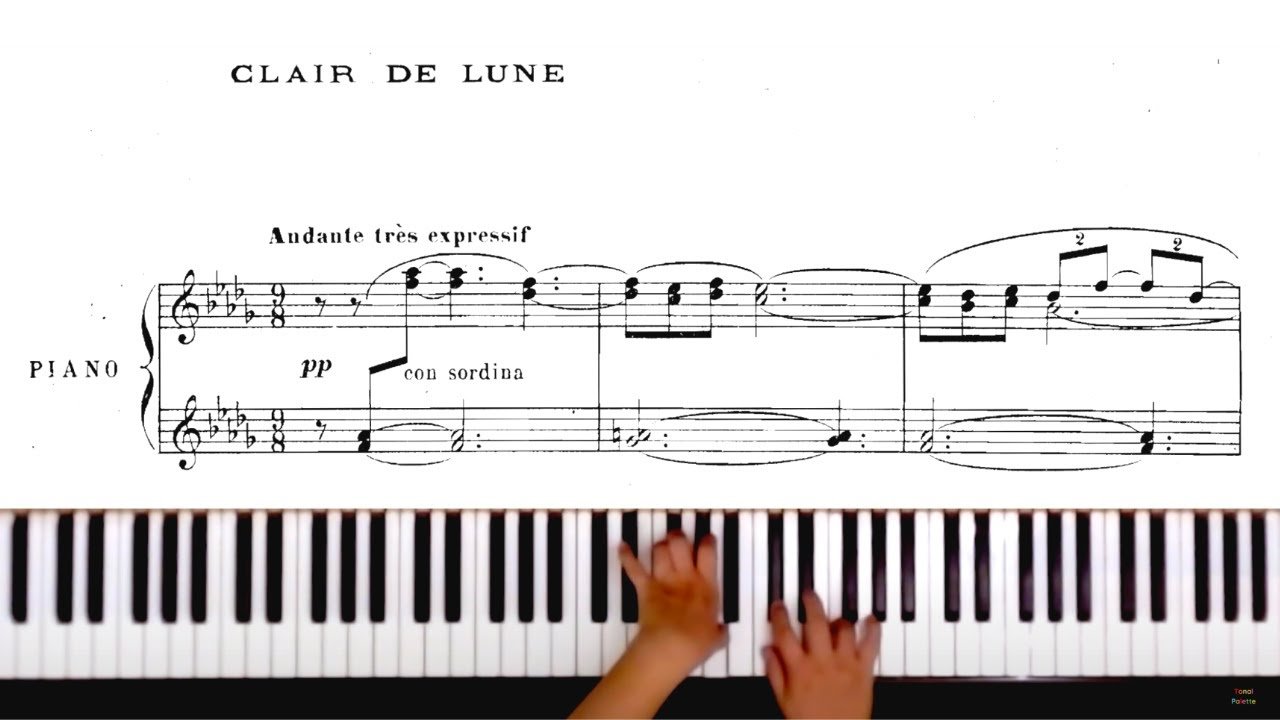
The piece features extensive dynamic markings ranging from pianissimo (pp) to forte (f). These dynamic contrasts shape the emotional narrative and prevent monotonous interpretation.
Crescendo and decrescendo markings indicate gradual volume changes that build tension or create release. Following these markings carefully reveals Debussy’s intended emotional arc.
Expression terms like “très expressif” (very expressive) and “doux et expressif” (sweet and expressive) guide interpretive approach. These markings encourage personal emotional investment rather than merely mechanical reproduction.
Pedaling Techniques
The sustain pedal creates Clair de Lune’s signature “cloudy” sound by allowing overtones to resonate together. Debussy’s original markings indicate specific pedaling points, though performers may adjust based on instrument and acoustics.
Syncopated pedaling (depressing the pedal after striking notes) prevents muddy harmonies while maintaining legato connection. This technique requires coordination but produces cleaner, more professional sound.
Partial pedaling uses shallow pedal depression to add subtle resonance without excessive blur. Advanced players employ this nuanced technique in passages requiring clarity alongside warmth.
Hand Position and Fingering
Efficient fingering choices minimize hand movement and facilitate smooth transitions. Standard editions often include suggested fingerings, though individual hand sizes may require adjustments.
Wide arpeggiated passages require hand expansion and contraction coordination. Practicing these passages slowly with exaggerated motions develops necessary muscle memory and flexibility.
Thumb crossings and finger substitutions appear frequently throughout the piece. Marking these technical challenges in the score and isolating them during practice prevents stumbling during performance.
Practice Strategies for Beginners
Begin by learning hands separately at slow tempo. Right hand typically carries melody, making it logical to master first before adding left-hand accompaniment complexity.
Use a metronome set well below performance tempo to develop steady rhythm and accurate note reading. Gradually increase speed only after achieving comfortable, accurate slow-tempo performance.
Break the piece into small sections of 2-4 measures. Master each section individually before linking them together. This chunking approach prevents overwhelm and builds confidence through achievable goals.
Intermediate Practice Tips
Focus on voicing to bring out melodic lines while subordinating accompaniment. This involves playing melody notes slightly louder than surrounding harmony, requiring subtle dynamic control within hands.
Practice difficult passages with varied rhythms (dotted rhythms, reverse dotting, triplet patterns). This cognitive variation strengthens neural pathways and reveals technical weaknesses requiring additional attention.
Record practice sessions and listen critically to identify problem areas. Audio feedback reveals issues invisible during playing, including rhythmic inconsistencies, dynamic imbalances, and pedaling problems.
Advanced Performance Techniques
Develop arm weight techniques for producing rich, singing tone quality. Debussy’s music requires warmth and depth rather than percussive attack, demanding connection between body weight and key depression.
Experiment with rubato by slightly stretching melodic peaks and compressing accompanying figures. Effective rubato maintains underlying pulse while adding expressive flexibility that sounds spontaneous yet controlled.
Study multiple professional recordings to hear interpretive variety. Notice tempo choices, dynamic shading, and pedaling approaches, then synthesize these observations into personal interpretation rather than imitation.
Common Mistakes to Avoid
Rushing through the piece destroys its contemplative character. Maintain steady underlying pulse even when employing rubato, ensuring freedom doesn’t become rhythmic chaos.
Over-pedaling creates harmonic mud that obscures Debussy’s carefully crafted voice leading. Change pedal with harmonic changes and clear during rests, even when marked pedal appears to indicate continuous sustain.
Neglecting dynamic contrasts results in monotonous performance. Consciously exaggerate dynamics initially; they’ll sound appropriately varied when performed confidently without self-consciousness.
Technical Challenges Explained
The opening right-hand triplet figures require smooth, even execution across wide intervals. Practice slowly with exaggerated finger lifting to develop independence and accuracy.
Measures 15-27 feature running sixteenth-note passages demanding finger evenness and clarity. Isolate these passages, practicing with varied articulations (legato, staccato, accented patterns) to develop control.
The climactic section around measures 51-65 requires significant hand stretches and powerful tone production. Build strength gradually through careful practice rather than forcing, which risks tension and injury.
Memorization Strategies
Memorize in small chunks using multiple sensory pathways: visual (reading score), aural (listening to sound), kinesthetic (feeling hand movements), and analytical (understanding harmony).
Away from piano, visualize playing while mentally hearing the music. This mental practice strengthens memory and reveals gaps requiring additional reinforcement.
Perform from memory starting at various points rather than always beginning from the start. This ensures solid knowledge throughout rather than relying on mechanical momentum.
Performance Preparation
Practice performing the complete piece without stopping, even when errors occur. Develop recovery skills and performance stamina by simulating actual concert conditions during practice.
Record dress rehearsal performances and evaluate critically. Video reveals physical tension, posture issues, and stage presence concerns invisible during playing.
Perform for friends and family before formal presentations. These low-stakes performances provide valuable experience managing performance anxiety and maintaining concentration under observation.
Different Arrangements and Versions
Solo Piano Versions
Beyond Debussy’s original, numerous arrangements exist at various difficulty levels. Publishers like Alfred Music, Hal Leonard, and G. Henle offer editions spanning beginner through professional standards.
Some arrangements transpose to easier keys like C major or G major. Others simplify rhythm or reduce hand-span requirements while maintaining original tonality.
Scholarly Urtext editions present the score without editorial additions. These versions are essential for advanced study and professional performance, providing direct access to composer intentions.
Ensemble Arrangements
Clair de Lune transcriptions exist for string orchestra, wind ensemble, and chamber groups. These arrangements demonstrate the piece’s melodic strength independent of piano-specific textures.
Piano duet versions allow teachers and students to perform together, with advanced players handling complex passages while beginners manage simplified parts. This collaborative approach makes the piece accessible earlier in development.
Vocal arrangements set the instrumental melodies to wordless syllables or poetry. These versions highlight the piece’s lyrical, song-like qualities.
Playing Clair de Lune on Digital Piano
Modern digital pianos effectively reproduce Clair de Lune’s nuances when properly configured. Select piano voices labeled “Concert Grand” or “Classical Piano” for appropriate timbral character.
Adjust touch sensitivity to respond to subtle dynamic gradations. Clair de Lune requires delicate control, so ensure light touches register clearly without excessive volume jumps.
Utilize headphones for private practice without disturbing others. However, regularly practice through speakers to develop awareness of sound projection and acoustic resonance similar to acoustic piano performance.
Clair de Lune for Music Theory Study
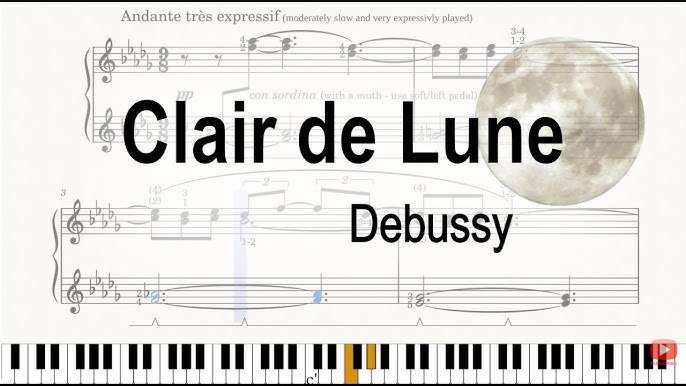
Analyzing Clair de Lune provides excellent introduction to impressionist harmony. The piece demonstrates modal mixture, borrowed chords, and extended tertian harmonies characteristic of early 20th-century composition.
Identifying non-functional harmonic progressions develops analytical skills beyond traditional tonal theory. Debussy’s coloristic approach prioritizes sound quality over conventional resolution expectations.
Studying the piece’s voice leading reveals how Debussy creates smooth linear motion despite chromatic harmonic content. This balance between horizontal melody and vertical harmony exemplifies sophisticated compositional technique.
Historical Performance Practice
Early 20th-century performance aesthetics favored more rhythmic flexibility than modern practice. Historical recordings reveal freer tempo manipulation and more pronounced dynamic contrasts.
Debussy himself performed with restrained pedaling compared to later interpretive traditions. Studying his piano roll recordings and written comments provides insight into authentic performance expectations.
Modern performers balance historical awareness with contemporary aesthetic preferences. The goal is informed interpretation rather than strict period-instrument recreation.
Famous Recordings to Study
Listening to Walter Gieseking’s interpretations provides connection to early performance traditions. Gieseking worked directly with musicians who knew Debussy, offering near-authentic interpretive approach.
Contemporary pianists like Lang Lang and Yuja Wang demonstrate modern virtuosic interpretations emphasizing technical brilliance alongside expressive depth. Their recordings showcase current performance standards and possibilities.
Comparing multiple recordings develops critical listening skills and interpretive awareness. Notice tempo choices, pedaling differences, and dynamic approaches, considering how each affects emotional impact.
Using Clair de Lune in Education
Piano teachers frequently assign Clair de Lune as students transition from intermediate to advanced repertoire. The piece develops crucial skills including pedaling technique, dynamic control, and expressive interpretation.
Simplified arrangements introduce elementary students to classical masterworks earlier than traditional progression allows. This early exposure builds appreciation and motivation for continued classical study.
Music theory classes analyze the piece to illustrate impressionist techniques, harmonic innovation, and formal structure. Its accessibility makes it ideal for demonstrating sophisticated concepts to developing musicians.
Cultural Impact and Modern Usage
Clair de Lune appears in numerous films, commercials, and television shows, making it one of classical music’s most recognizable pieces. This cultural presence introduces classical music to audiences who might not otherwise encounter it.
The piece frequently underscores romantic, contemplative, or nostalgic scenes in cinema. Its emotional versatility makes it suitable for varied dramatic contexts.
Contemporary artists occasionally sample or reference Clair de Lune in popular music. These cross-genre uses demonstrate the piece’s enduring relevance and adaptability.
Learning Resources Beyond Sheet Music
YouTube Tutorials
Numerous channels offer measure-by-measure tutorials explaining fingering, technique, and interpretation. These visual demonstrations supplement written sheet music with practical guidance.
Slow-tempo practice videos allow students to play along at manageable speeds. Gradually increasing playback speed facilitates progressive skill development.
Professional performances with on-screen scrolling notation help connect written score to actual sound. This multimedia approach benefits visual learners and aids memorization.
Piano Learning Apps
Apps like Simply Piano, Flowkey, and Piano Marvel offer interactive Clair de Lune lessons. These platforms provide real-time feedback through microphone or MIDI connection.
Gamification elements increase engagement and motivation, particularly for younger students. Achievement systems and progress tracking encourage consistent practice.
Most apps offer free trials allowing evaluation before subscription commitment. This accessibility makes professional-quality instruction available regardless of geographic location or economic resources.
Online Piano Teachers
Virtual lessons via Zoom or Skype connect students with expert instructors worldwide. This expanded access allows study with specialists in Debussy’s music regardless of physical proximity.
Online instruction offers scheduling flexibility unavailable with traditional in-person lessons. Recording sessions creates reference material for practice between lessons.
Screen sharing allows teachers to annotate digital scores in real-time, providing customized markings and suggestions. This personalized feedback accelerates learning beyond generic tutorials.
Preparing for Piano Exams
Clair de Lune appears on exam syllabi for organizations like ABRSM, RCM, and Trinity College London. Check specific requirements regarding edition, tempo, and technical standards.
Examiners assess technical accuracy, musical understanding, and stylistic appropriateness. Balance technical polish with expressive interpretation rather than prioritizing mechanical perfection over musicality.
Prepare supplementary questions about the piece’s historical context, composer biography, and musical elements. Demonstrating comprehensive knowledge beyond mere performance earns maximum marks.
Performing Clair de Lune for Recitals
Consider programming context when including Clair de Lune in recitals. Its contemplative character works well following energetic pieces, providing emotional contrast and allowing audience reflection.
Ensure adequate warm-up before performance to achieve necessary physical relaxation and finger flexibility. Tension destroys the piece’s flowing character and impedes technical execution.
Announce the piece title and composer to audiences, pronouncing “Clair de Lune” correctly (klair duh LOON). Brief program notes contextualizing the work enhance listener appreciation.
Sight-Reading Clair de Lune
Initial sight-reading focuses on harmonic outline and melodic contour rather than every note. Identify key signature, time signature, and basic structure before beginning.
Maintain steady tempo even when encountering unfamiliar passages. Rhythmic continuity matters more than perfect accuracy during sight-reading, as stopping destroys musical flow.
Notice repeated patterns and sequences to minimize reading complexity. Debussy frequently develops material through sequence and variation, reducing the amount of truly new material requiring attention.
Frequently Asked Questions (FAQs)
Is Clair de Lune suitable for beginner pianists?
Simplified arrangements of Clair de Lune are excellent for beginners with 1-2 years experience. These versions transpose to C major and reduce technical demands while preserving the piece’s essential beauty.
Where can I download free Clair de Lune sheet music?
MuseScore, IMSLP, Pianote, and La Touche Musicale offer free Clair de Lune sheet music downloads in PDF format. These resources provide multiple difficulty levels from beginner to advanced professional editions.
What is the difficulty level of the original Clair de Lune?
The original Clair de Lune is late intermediate to early advanced level, rated around Grade 7-8 (ABRSM) or Level 9-10 (RCM). It requires solid pedaling technique, hand independence, and mature musical expression.
How long does it take to learn Clair de Lune?
Beginners playing simplified versions may learn the piece in 2-3 months, while intermediate pianists need 3-6 months for the original. Advanced players can master it in several weeks with dedicated practice.
What key is Clair de Lune written in?
The original Clair de Lune is written in D-flat major with five flats (Db, Eb, Gb, Ab, Bb). Simplified arrangements often transpose to C major or other easier keys for accessibility.
Do I need a sustain pedal to play Clair de Lune?
Yes, the sustain pedal is essential for authentic Clair de Lune performance. The pedal creates the characteristic “cloudy” impressionistic sound and connects melodic phrases that hands alone cannot sustain.
What tempo should I play Clair de Lune?
The original marking “Tempo rubato” allows flexible timing, typically around 60-72 BPM for the eighth-note pulse. Beginners should practice slower initially, gradually increasing speed as comfort develops.
Is Clair de Lune part of a larger work?
Yes, Clair de Lune is the third movement of Debussy’s four-movement Suite Bergamasque, composed between 1890-1905. The suite also includes Prélude, Menuet, and Passepied.
What does Clair de Lune mean in English?
Clair de Lune translates to “Moonlight” in English, perfectly capturing the piece’s nocturnal, ethereal, and contemplative character. The title evokes moonlight illuminating a peaceful landscape.
Can I perform Clair de Lune on a digital piano?
Absolutely! Modern digital pianos with weighted keys and quality sound samples effectively reproduce Clair de Lune. Select concert grand piano voices and ensure touch sensitivity responds to dynamic nuances.
Conclusion
Clair de Lune sheet music remains one of the most beloved and accessible classical piano pieces for musicians at every skill level in 2026.
From free beginner arrangements in C major to authentic Urtext editions of Debussy’s original five-flat masterpiece, numerous resources make this timeless composition available to anyone with dedication and passion.
The piece’s enduring popularity stems from its perfect balance of technical challenge and emotional depth, offering something valuable whether you’re taking your first steps in classical piano or preparing for professional recitals.
Understanding Clair de Lune extends beyond merely playing the notes—it requires appreciating Debussy’s revolutionary impressionist techniques, mastering sophisticated pedaling and dynamic control, and developing the musical maturity to interpret this deeply expressive work authentically.
Whether you download free sheet music from MuseScore or IMSLP, study with online tutorials, or work with a private teacher, the journey of learning Clair de Lune develops essential musicianship skills that benefit all aspects of piano performance.


