


La Vie en Rose trumpet sheet music remains one of the most sought-after musical arrangements for brass players worldwide in 2026.
This timeless French classic, originally performed by Édith Piaf in 1947 and later immortalized by Louis Armstrong’s iconic trumpet rendition, continues to captivate musicians of all skill levels.
Whether you’re a beginner trumpeter looking for your first romantic melody or an advanced player seeking to perfect Armstrong’s legendary interpretation, finding the right sheet music arrangement is crucial.
The song’s beautiful melody translates exceptionally well to trumpet, with its lyrical phrases and expressive range showcasing the instrument’s singing quality.
With numerous arrangements available—from simple beginner versions to complex jazz transcriptions—this guide will help you navigate the options, understand different key signatures, and master this beloved standard in 2026.
Understanding La Vie en Rose for Trumpet
La Vie en Rose, meaning “Life in Pink” or “Life Through Rose-Colored Glasses,” is a French chanson composed in 1945 with music by Louis Guglielmi (Louiguy) and lyrics by Édith Piaf herself. The song represents one of the most romantic and enduring pieces in the French music repertoire.
Historical Significance
Édith Piaf first performed La Vie en Rose in 1947, and it quickly became her signature song. The piece captured post-war France’s yearning for romance, beauty, and optimism during difficult times. Piaf’s emotional delivery made the song an instant classic.
In 1950, Louis Armstrong recorded his trumpet interpretation with English lyrics by Mack David. Armstrong’s version introduced the song to American audiences and demonstrated how beautifully the melody suited the trumpet’s voice. His warm, vibrato-rich tone perfectly captured the song’s romantic essence.
Why Trumpeters Love This Song
La Vie en Rose has become a staple in the trumpet repertoire for several compelling reasons. The melody sits comfortably in the trumpet’s middle register, making it accessible for intermediate players while allowing advanced musicians to add sophisticated embellishments.
The song’s slow tempo provides ample opportunity to work on tone quality, breath control, and phrasing. These fundamental skills are essential for trumpeters, and La Vie en Rose offers an enjoyable way to develop them.
The romantic nature of the piece allows players to express emotion through their instrument. Unlike fast, technical showpieces, La Vie en Rose requires musical maturity and the ability to “sing” through the horn.
Original Key vs. Trumpet Keys
The original Édith Piaf version is typically performed in the key of C major or D major for voice. However, trumpet arrangements come in various keys to suit different skill levels and tonal preferences.
B-flat Major: This is the most common key for trumpet arrangements since the B-flat trumpet is the standard instrument. In concert pitch, this becomes A-flat major, creating a warm, mellow sound perfect for the song’s romantic character.
D Major: Louis Armstrong’s famous version is often arranged in D major for trumpet (concert C major). This key sits slightly higher in the trumpet’s range, providing a brighter, more brilliant tone that cuts through in ensemble settings.
C Major: For those playing C trumpet or wanting a concert pitch arrangement, C major versions are available. This key offers a middle ground between warmth and brightness.
Different Arrangement Styles
Trumpet sheet music for La Vie en Rose comes in several distinct arrangement styles, each serving different purposes and skill levels.
Classical/Straight Melody: These arrangements present the melody exactly as written, with minimal embellishments. They’re perfect for beginners or classical-oriented players who want to master the pure melodic line before adding personalization.
Jazz Interpretation: Jazz arrangements, particularly those based on Armstrong’s recording, include swing rhythms, grace notes, falls, scoops, and other stylistic elements characteristic of traditional jazz trumpet playing.
With Piano Accompaniment: Many arrangements include piano parts, allowing for duo performances. These typically present the trumpet melody with chords and sometimes countermelodies in the piano part.
Solo Trumpet: Solo arrangements are designed for unaccompanied trumpet performance. They may include written-out chord symbols or harmonic implications within the melodic line.
Brass Ensemble: Some advanced arrangements adapt the song for trumpet sections or mixed brass ensembles, with multiple trumpet parts, French horn, trombone, and tuba.
Where to Find La Vie en Rose Trumpet Sheet Music
In 2026, trumpeters have access to more sheet music resources than ever before, from traditional publishers to modern digital platforms. Understanding where to look helps you find the perfect arrangement for your needs.
MuseScore – Free Community Platform
MuseScore has emerged as one of the most popular platforms for free sheet music in 2026. This community-driven site hosts multiple arrangements of La Vie en Rose for trumpet, created and shared by musicians worldwide.
Key Features: MuseScore allows you to download sheet music in PDF and MIDI formats completely free. You can also play the scores directly in your browser to hear how they sound before downloading.
Notable Arrangements: User “Raphael Roy-dumouchel” offers a well-regarded arrangement for B-flat trumpet solo. Another popular version by “jb731219” presents Armstrong’s interpretation in concert key for C trumpet.
Quality Considerations: Since MuseScore is community-driven, arrangement quality varies. Read comments and reviews from other users before downloading. Professional-quality arrangements often receive high ratings and detailed feedback.
Musicnotes – Professional Digital Downloads
Musicnotes remains the premier commercial sheet music platform in 2026, offering professionally published arrangements with excellent production quality.
Louis Armstrong Version (SKU: MN0189694): This official arrangement captures Armstrong’s iconic interpretation in D major for trumpet. The notation includes stylistic markings, articulations, and phrasing suggestions that help you recreate his legendary sound.
Trumpet Guy Arrangement (SKU: MN0231974): Created by popular YouTube trumpeter “Trumpet Guy,” this arrangement offers a contemporary take on the classic. It’s designed for intermediate to advanced players seeking a modern interpretation.
Pricing and Features: Individual arrangements typically cost $5.99-$7.99. Musicnotes Pro membership provides discounts (25% off), free PDF downloads, and access to interactive sheet music in their mobile app.
Sheet Music Plus – Extensive Catalog
Sheet Music Plus offers comprehensive coverage of La Vie en Rose arrangements from multiple publishers and independent arrangers through their ArrangeMe platform.
Beginner Arrangement by GDJ (SKU: A0.1162248): This easy piano and trumpet arrangement is perfect for beginners. It includes chord symbols and piano accompaniment, making it ideal for students working with piano teachers or accompanists.
Intermediate Version by Daca Verlag (SKU: A0.1180278): Arranged by Danilo “Daca” Alves, this intermediate-level arrangement includes lyrics and represents a clean, well-engraved score suitable for recitals and performances.
Advanced Édith Piaf Arrangement: For advanced players, Sheet Music Plus offers sophisticated arrangements that capture the original French chanson style rather than Armstrong’s jazz interpretation.
Tomplay – Interactive Learning Platform
Tomplay has revolutionized how musicians learn pieces in 2026 with its interactive sheet music technology. Their La Vie en Rose arrangements come with several unique features.
Skill-Level Specific Versions: Tomplay offers separate arrangements for beginner, intermediate, and advanced players. Each version is carefully crafted to suit its intended skill level without oversimplification or excessive difficulty.
Orchestral Accompaniment: All Tomplay arrangements include professionally recorded orchestral backing tracks. You can adjust the tempo without changing pitch, making practice more enjoyable and effective.
Interactive Features: The sheet music follows along as you play, highlights your current position, and allows you to loop difficult sections. You can also isolate specific measures for focused practice.
Subscription Model: Access requires a Tomplay subscription ($5.99/month in 2026), but includes unlimited access to their entire catalog. A 14-day free trial lets you test the platform.
Virtual Sheet Music – Classical Focus
Virtual Sheet Music specializes in classical and traditional arrangements with excellent engraving quality and editorial notes.
Transcription Series: Their La Vie en Rose trumpet transcriptions are based on famous recordings, carefully notated to capture authentic performance practices and stylistic nuances.
Educational Resources: Many arrangements include practice tips, historical context, and performance suggestions—valuable additions for students and self-taught players.
Free PDF Resources
Several websites offer free PDF downloads of La Vie en Rose trumpet sheet music, though quality and legality vary.
IMSLP (International Music Score Library Project): While the original Piaf composition may be under copyright restrictions in some countries, public domain arrangements and transcriptions appear on IMSLP. Always verify copyright status before downloading.
PDF Coffee and Similar Sites: These platforms host user-uploaded PDFs. A trumpet and piano arrangement is available, though you should verify that such downloads comply with copyright laws in your jurisdiction.
University Music Libraries: Many university music libraries provide free access to their digital collections. Some include historical arrangements and transcriptions of popular standards like La Vie en Rose.
YouTube and Learning Platforms
YouTube has become an valuable resource for finding sheet music and learning techniques in 2026.
Flat.io: This online music notation platform allows users to create and share sheet music. Anthony Szymkowiak’s Louis Armstrong trumpet solo transcription is available on Flat with playback capabilities.
Video Tutorials with Sheet Music: Many YouTube trumpet teachers provide La Vie en Rose tutorials with downloadable sheet music. These often include measure-by-measure instruction and practice tips.
Publisher Direct Sources
Traditional music publishers maintain their catalogs through direct sales and authorized retailers.
Hal Leonard Corporation: As one of the world’s largest music publishers, Hal Leonard administers rights to many La Vie en Rose arrangements. Their official versions ensure quality and support the arrangers.
Music Sales Corporation: This publisher holds rights to the original composition and offers authorized trumpet arrangements through their catalog and retail partners.
Skill Level Considerations
Choosing the right arrangement for your current skill level is crucial for enjoyable and productive practice. La Vie en Rose trumpet sheet music ranges from simple beginner versions to advanced jazz transcriptions.
Beginner Level (0-2 Years Experience)
Beginner trumpet players should look for simplified arrangements that make this beautiful song accessible while building fundamental skills.
Recommended Key: B-flat major is ideal for beginners. This key keeps the melody in a comfortable middle register, typically ranging from written G below the staff to written D above the staff.
Simplified Rhythm: Beginner arrangements should use primarily quarter notes, half notes, and whole notes. Eighth note passages should be limited and clearly grouped. Avoid arrangements with complex syncopation or jazz rhythms initially.
Breathing Markers: Quality beginner arrangements include suggested breath marks. La Vie en Rose’s long, legato phrases can challenge breath management, so arrangements that break phrases into manageable segments help beginners succeed.
Limited Range: The best beginner versions keep the range within an octave, avoiding extreme high or low notes that could cause embouchure strain or discouragement.
Practice Tips for Beginners: Start by singing the melody before playing it. This helps internalize the tune and understand its emotional character. Practice long tones on each note of the melody to develop tone quality. Use a metronome at a very slow tempo (around 40-50 BPM) and gradually increase speed as comfort grows.
Intermediate Level (2-5 Years Experience)
Intermediate players can tackle more authentic versions that introduce stylistic elements and fuller range.
Expanded Range: Intermediate arrangements typically span from written F# below the staff to written F or G above the staff. This requires solid embouchure development across registers.
Jazz Elements Introduction: At this level, players can begin incorporating grace notes, slight scoops, and subtle vibrato that characterize the jazz style. Arrangements may include these markings or leave them to player interpretation.
Dynamic Contrast: Intermediate versions emphasize dynamic range, moving from soft, intimate passages (pp/p) to fuller, more passionate sections (mf/f). This dynamic control is essential for musical expression.
Phrasing Challenges: Longer phrases test breath support and control. Intermediate players should work on circular breathing concepts or strategic breathing that doesn’t disrupt musical flow.
Recommended Arrangements: The Daca Verlag intermediate arrangement offers excellent balance between accessibility and musical sophistication. Tomplay’s intermediate version includes helpful backing tracks for developing timing and musicality.
Practice Strategies: Record yourself playing and compare to professional recordings. Focus on matching not just the notes but the emotional character. Practice with a drone or backing track to develop intonation within harmonic context.
Advanced Level (5+ Years Experience)

Advanced trumpeters can explore complex jazz transcriptions and create personal interpretations.
Louis Armstrong Transcription: The definitive advanced version transcribes Armstrong’s actual recording, including all his stylistic nuances, alternate fingerings for tone color, and sophisticated rhythmic interpretations.
Full Range Utilization: Advanced arrangements may extend from written low C to high A or beyond, requiring complete range development and endurance.
Improvisation Sections: Some advanced charts include measures marked for improvisation, allowing you to create your own melodic variations while maintaining the harmonic structure.
Complex Articulations: Advanced versions include falls, doits, smears, half-valve effects, and other jazz trumpet techniques that require years of experience to execute convincingly.
Rubato and Tempo Flexibility: Unlike beginner arrangements with strict tempo, advanced versions expect players to stretch and compress time for emotional effect, requiring deep musical maturity.
Professional Performance Preparation: Advanced players should memorize the piece, internalize the harmonic progression, and develop multiple interpretive approaches. Study multiple recordings—Armstrong, Clifford Brown, and contemporary jazz trumpeters—to understand different valid interpretations.
Reading the Sheet Music: Key Elements
Understanding how to read trumpet sheet music for La Vie en Rose involves more than just recognizing notes. Several musical elements require attention for authentic performance.
Time Signature and Tempo
La Vie en Rose is typically written in 4/4 time (common time), with four beats per measure. This straightforward meter makes it accessible to players at all levels.
Tempo Markings: Most arrangements indicate “Slowly” or “Ballad tempo” with metronome markings around ♩= 60-72 BPM. Édith Piaf’s original version is quite slow and rubato, while Armstrong’s swings slightly and moves at a more moderate pace.
Tempo Flexibility: Classical arrangements maintain steadier tempo, while jazz versions expect rhythmic interpretation. The notation may be written straight, but performance should incorporate swing feel where appropriate.
Key Signature Details
The key signature tells you which notes are sharped or flatted throughout the piece.
B-flat Major: Two flats (B♭ and E♭). This is the most common trumpet key for this piece. Remember that when you see a C on the staff, you’re actually playing a concert B♭.
D Major: Two sharps (F# and C#). Louis Armstrong’s version often uses this brighter key. Every F and C should be played sharp unless otherwise indicated by a natural sign.
Concert Pitch Arrangements: If you’re playing from a concert pitch score (like for piano or C trumpet), the key signature will differ from B-flat trumpet arrangements. Always verify which type of score you have.
Dynamic Markings
Dynamics are crucial for expressing La Vie en Rose’s romantic character.
Opening Phrases: Typically marked p (piano/soft) or mp (mezzo-piano/moderately soft), creating an intimate, tender beginning.
Building Intensity: As the song progresses, dynamics often crescendo to mf (mezzo-forte) or f (forte), representing growing emotion and passion.
Climax Points: The highest notes or most emotional phrases may reach ff (fortissimo), demanding full, rich tone without harshness.
Final Phrases: Many arrangements return to softer dynamics at the end, creating a gentle, reflective conclusion.
Articulation Marks
Articulation indicates how to attack and release each note.
Slurs: Curved lines connecting notes indicate legato playing—smooth, connected notes without tonguing each one. La Vie en Rose features extensive slurring, creating its characteristic flowing melody.
Staccato: Dots above or below notes (rare in this piece) indicate short, detached notes. These might appear in accompaniment figures or special effects.
Accents: > or ∧ symbols indicate notes to emphasize slightly. Strategic accents help shape phrases and create musical interest.
Tenuto: Horizontal lines above/below notes indicate holding the full value, useful for highlighting important melodic notes.
Phrase Markings
Phrase marks show where musical ideas begin and end, functioning like punctuation in language.
Long, Arching Phrases: La Vie en Rose features extended melodic phrases that arch upward and resolve downward. Understanding these shapes helps you breathe in musical places and plan dynamic contours.
Subphrases: Within longer phrases, smaller musical ideas create internal structure. Recognizing these helps with memory and musical interpretation.
Breathing Locations: Commas or breath marks (‘) indicate suggested breathing spots. While you may need to breathe more frequently as a beginner, try to honor the marked phrases as your breath control develops.
Special Notations in Jazz Arrangements
Jazz versions include additional symbols unfamiliar to classically-trained trumpeters.
Grace Notes: Small notes before main notes indicate quick, unmetered ornamentations. They’re played just before the beat.
Fall-Offs: Wavy lines descending from notes indicate sliding downward in pitch at the note’s end, characteristic of jazz trumpet.
Scoops: Wavy lines ascending into notes indicate sliding upward from below the written pitch, another common jazz technique.
Shake/Vibrato Marks: Wavy lines during notes indicate vibrato or “shake” (rapid pitch oscillation), especially on longer notes.
Ghost Notes: Notes in parentheses or with special markings indicate very soft, barely audible notes that add rhythmic texture.
Step-by-Step Learning Guide
Mastering La Vie en Rose on trumpet requires systematic practice. This step-by-step approach breaks down the learning process into manageable stages.
Step 1: Listen and Familiarize
Before playing a single note, spend time listening to various recordings.
Édith Piaf’s Original: Listen to Piaf’s vocal version to understand the song’s emotional core. Notice how she shapes phrases, where she breathes, and how she conveys yearning and romance through phrasing.
Louis Armstrong’s Trumpet Version: Armstrong’s recording is essential listening for trumpeters. Pay attention to his warm tone, use of vibrato, rhythmic interpretation, and how he “sings” through the trumpet.
Modern Interpretations: Listen to contemporary trumpeters like Chris Botti, Till Brönner, or Andrea Giuffredi performing La Vie en Rose. Each artist brings unique interpretation while honoring the song’s essence.
Sing the Melody: Once you’ve internalized the tune, sing it without your trumpet. This develops musical memory and helps you understand phrasing from a vocalist’s perspective.
Step 2: Technical Preparation
Prepare your trumpet technique specifically for this piece’s demands.
Long Tone Practice: Spend 10-15 minutes daily on long tones in the key of your arrangement. For B-flat major, practice sustained notes on B♭, C, D, E♭, F, G, and A. This builds the warm, supported sound La Vie en Rose requires.
Lip Slurs: Practice lip slurs (moving between notes without valves) to develop smooth transitions. La Vie en Rose’s legato style benefits from seamless connections between notes.
Range Building: Ensure you’re comfortable throughout the piece’s entire range. Practice scales and arpeggios in the arrangement’s key, extending slightly above and below the piece’s range.
Breathing Exercises: La Vie en Rose’s long phrases demand excellent breath control. Practice breathing exercises away from the trumpet—deep inhalations, controlled exhalations, and breath support techniques.
Step 3: Learn in Sections
Break the piece into smaller, manageable sections rather than attempting to learn it all at once.
Opening Phrase (Measures 1-8): Master the iconic opening melody perfectly before proceeding. This sets the emotional tone for the entire piece. Practice until you can play it expressively with good tone and accurate intonation.
Bridge Section: La Vie en Rose typically includes a bridge or B section with different melodic material. Often this section modulates or introduces new harmonic colors. Learn it separately before connecting to other sections.
Climax Passage: Identify the piece’s emotional and musical climax (often the highest note or most intense phrase). This section deserves extra attention as it’s the piece’s focal point.
Ending: The conclusion requires special care, often featuring ritardando (slowing down) and diminuendo (getting softer). Practice ending gracefully with a beautiful final note.
Step 4: Hands-Free Practice
Develop the music mentally before combining it with physical technique.
Score Study: Away from your trumpet, study the sheet music visually. Sing through it, finger the valves without playing, and mentally hear how it should sound.
Visualization: Close your eyes and visualize performing the piece perfectly. Mental practice activates similar neural pathways as physical practice and improves performance.
Rhythm Practice: Clap or tap the rhythm while speaking note names. This separates rhythmic accuracy from pitch production, allowing you to master each element individually.
Step 5: Slow Practice
Begin physical practice at tempos significantly slower than performance speed.
Starting Tempo: Begin at 40-50% of performance tempo (around 30-35 BPM if the final tempo is 70 BPM). Use a metronome religiously during this phase.
Perfect Repetitions: At slow tempos, demand perfection from yourself. Every note should have good tone, correct pitch, and proper articulation. Slow practice embeds correct technique in muscle memory.
Gradual Acceleration: Increase tempo by 4-5 BPM only when you can play three consecutive perfect repetitions at the current tempo. Patience during this process prevents mistakes from becoming ingrained.
Challenging Sections: Difficult passages may need even slower practice than easier sections. Don’t be embarrassed to practice a challenging measure at extremely slow tempos.
Step 6: Musical Expression
Once notes and rhythms are secure, focus on making music rather than just playing correctly.
Dynamic Shaping: Exaggerate dynamics during practice. If marked mp, play truly softly. If marked f, play with full, rich sound. Overdo expression during practice so it remains present during performance.
Vibrato Development: For jazz interpretations, develop a controlled vibrato. Practice playing straight tone, then add slight pitch oscillation on longer notes. Armstrong’s vibrato was warm and moderate-speed, not fast and shallow.
Phrasing Like Singing: Remember that La Vie en Rose is a vocal piece. Your trumpet should “sing” the melody with the same natural rises and falls, breathing points, and emotional inflection a vocalist would use.
Personal Interpretation: While respecting the composition, add your personal touch. Decide where you’ll add subtle rubato, which notes deserve emphasis, and how you’ll color different phrases emotionally.
Step 7: Performance Preparation
Prepare for performing in front of others, whether in lessons, recitals, or professional settings.
Memorization: While reading from sheet music is acceptable, memorization allows deeper musical connection and stage presence. Memorize in small sections using the same sectional approach from Step 3.
Recording Yourself: Regular recordings reveal issues you don’t hear while playing. Compare your recordings to professional versions, noting differences in tone, phrasing, and interpretation.
Mock Performances: Practice performing the complete piece without stopping, even if mistakes occur. This builds endurance and teaches you to recover from errors gracefully.
With Accompaniment: If performing with piano or backing track, practice together extensively. Develop tight ensemble skills, listening to the accompaniment while maintaining your interpretive vision.
Common Challenges and Solutions
Even experienced trumpeters face specific challenges when learning La Vie en Rose. Understanding these obstacles and their solutions accelerates progress.
Challenge 1: Long Phrases and Breath Control
La Vie en Rose features extended legato phrases that can exceed most players’ comfortable breath capacity.
Problem: Running out of air mid-phrase, causing rushed endings or breaking the musical line with awkward breaths.
Solution: Strengthen breathing fundamentals through specific exercises. Practice taking quick, full breaths without raising shoulders (use diaphragmatic breathing). During practice, mark strategic breathing spots that occur at natural musical pauses. As your capacity increases, you can eliminate some of these breaths, but never compromise musical quality for the sake of playing longer phrases.
Alternative Technique: Advanced players can explore circular breathing, though this isn’t necessary for beautiful performance. Simply breathing efficiently and musically is sufficient.
Challenge 2: Maintaining Warm, Consistent Tone
The song’s slow tempo and romantic character expose any tone quality issues.
Problem: Thin, edgy, or inconsistent tone quality, especially when moving between registers or dynamic levels.
Solution: Daily long-tone practice is essential. Focus on producing a centered, resonant sound in your middle register before extending to higher and lower notes. Use sufficient air support—slow pieces often suffer from inadequate airflow. Record yourself regularly and honestly assess your sound quality.
Mouthpiece Work: Practice the melody on just your mouthpiece, focusing on producing a consistent buzz. This isolates embouchure and air issues from valve technique.
Challenge 3: Intonation Accuracy
Playing in tune becomes crucial in slow, exposed passages where every note is clearly audible.
Problem: Notes that are sharp, flat, or inconsistent in pitch, particularly during slurred passages or at different dynamic levels.
Solution: Use a digital tuner during practice, but train your ears simultaneously. Practice scales and arpeggios in the piece’s key with a tuner or drone, developing awareness of which notes tend sharp or flat on your instrument. Learn the trumpet’s inherent intonation tendencies (third valve notes often play sharp, for example) and develop compensation techniques.
Harmonic Context: When practicing with piano accompaniment or backing tracks, listen critically to how your melody notes fit within the harmony. Pure melodic practice doesn’t reveal intonation issues that become obvious in harmonic context.
Challenge 4: Appropriate Vibrato
Jazz interpretations of La Vie en Rose often incorporate vibrato, but controlling this technique requires practice.
Problem: No vibrato (making the sound sterile), or excessive/uncontrolled vibrato (making the sound wobbly and unsupported).
Solution: Develop vibrato gradually through specific exercises. Start by playing a sustained note with straight tone, then gently oscillate pitch using jaw motion, air control, or hand position shifts. Armstrong’s style used moderate-speed vibrato primarily on longer notes. Practice adding vibrato only to notes longer than a half note initially, ensuring the straight tone remains solid and supported.
Stylistic Appropriateness: Classical or French chanson interpretations typically use minimal or no vibrato. Jazz versions embrace it. Match your vibrato use to your chosen style.
Challenge 5: Range Demands
Different arrangements place melody in varying ranges, sometimes challenging players’ comfort zones.
Problem: Struggling with higher notes in D major arrangements, or feeling the lower range sounds weak and unsupported in some versions.
Solution: Choose an arrangement appropriate for your current range capabilities. There’s no shame in playing B-flat major versions that sit in a comfortable middle register. For expanding range, dedicate separate practice time to range-building exercises rather than struggling through pieces at your range limits.
Register Transition: Practice moving smoothly between registers within the piece. Use proper air support in the low register to avoid fuzzy, airy sounds. In the upper register, avoid excessive mouthpiece pressure—rely on air speed and efficiency instead.
Challenge 6: Rhythmic Feel and Jazz Interpretation
Jazz arrangements expect rhythmic flexibility and swing feel that classical training may not have addressed.
Problem: Playing rhythms too straight and stiff, missing the relaxed, swinging character of Armstrong’s interpretation.
Solution: Immerse yourself in jazz listening. Pay attention to how jazz musicians place notes slightly behind or ahead of strict metronome time. Practice with jazz backing tracks that provide the proper groove. Study Louis Armstrong recordings specifically, as his rhythmic approach was unique and highly personal.
Swing Eighth Notes: In jazz charts, consecutive eighth notes aren’t played evenly. The first is slightly longer, the second shorter, creating a “long-short” pattern. Listen and imitate rather than trying to mathematically subdivide.
Challenge 7: Emotional Expression Without Over-Playing
La Vie en Rose requires emotional depth, but inexperienced players sometimes overdo expression, creating saccharine or melodramatic performances.
Problem: Adding excessive rubato, exaggerated dynamics, or overly dramatic phrasing that sounds forced rather than genuine.
Solution: Remember that the song’s title suggests seeing life through rose-colored glasses—romantic but not overwrought. Study Édith Piaf’s vocal restraint—she conveys deep emotion through subtle nuances rather than constant dramatic gestures. Let the melody speak for itself with tasteful support from your interpretation.
Less Is More: Start with minimal expression and gradually add interpretive elements. It’s easier to add expression than to pull back from excessive interpretation.
Tips for Different Playing Contexts
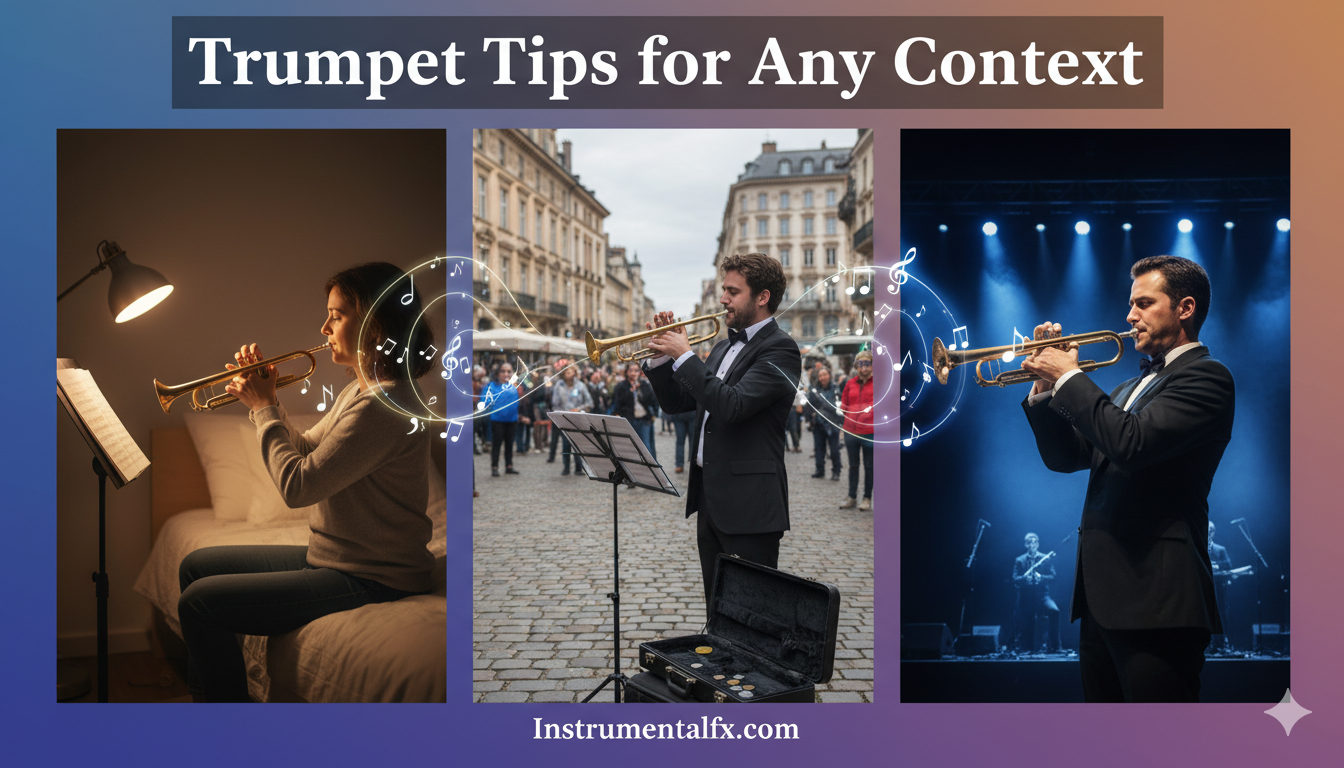
La Vie en Rose works in various performance settings, each requiring slightly different approaches.
Solo Performance
Playing La Vie en Rose as an unaccompanied trumpet solo presents unique challenges and opportunities.
Arrangement Selection: Choose arrangements specifically written for solo trumpet that imply harmony through melodic notes or include written chord symbols for reference.
Tempo Freedom: Without accompaniment, you have complete tempo flexibility. Use subtle rubato to emphasize emotional moments and create musical interest.
Projection: In solo performance, your trumpet must carry the entire musical message. Use full dynamic range and clear articulation to maintain audience engagement throughout.
Acoustic Considerations: Solo trumpet can sound thin in large halls. Consider slightly smaller venues, or use natural reverb to your advantage. Church performance spaces often provide beautiful resonance for unaccompanied brass.
With Piano Accompaniment
Piano and trumpet duo is a classic combination for La Vie en Rose.
Balance: Work with your pianist to achieve proper balance. The trumpet naturally cuts through, so the piano must play with enough presence to be heard without overpowering during soft sections.
Communication: Establish clear eye contact and breathing cues with your pianist. Agree on tempo, ritardandos, and interpretive choices before performance.
Rehearsal: Schedule adequate rehearsal time together. Even if you’ve both practiced your parts individually, ensemble rehearsal develops unified musical interpretation.
Lead Sheets vs. Written Parts: Some pianists work from lead sheets (melody with chord symbols), improvising accompaniment. Others need fully written-out parts. Clarify expectations with your collaborator.
Backing Track Performance
Many modern trumpeters practice and perform with pre-recorded backing tracks.
Advantages: Backing tracks provide full orchestral accompaniment without coordinating schedules with other musicians. They’re excellent for practice and can sound quite professional.
Tempo Lock: Unlike live accompanists who can follow your rubato, backing tracks maintain strict tempo. You must adapt to the track rather than vice versa. Some platforms like Tomplay allow tempo adjustment, but this should be set before playing.
Click Track Practice: When preparing to play with backing tracks, practice with a metronome to develop steady time. This prevents the rushed or dragged timing that makes backing track performances sound disconnected.
Recording Quality: For performances, ensure your backing track is high-quality audio. Poor quality accompaniment degrades the overall presentation.
Jazz Ensemble/Band Setting
Playing La Vie en Rose with a jazz combo or big band creates rich, full arrangements.
Chart Reading: Jazz band charts include rhythm section parts (piano, bass, drums) and possibly other horns. You may have the melody exclusively or share it with other instruments.
Solo Sections: Jazz arrangements often include improvised solo sections over the chord changes. If you’re comfortable improvising, this adds personal expression. If not, you can prepare a written-out solo beforehand.
Blend and Balance: In ensemble settings, blend your sound with other instruments when playing harmony. Step forward in the sonic picture when you have the melody.
Section Leadership: If you’re leading the trumpet section, make articulation and phrasing decisions clear through your playing. Others will follow your lead.
Church/Wedding Performance
La Vie en Rose is popular for weddings, church services, and special events.
Appropriate Arrangement: Choose versions suitable for the occasion. Weddings appreciate romantic, sweet interpretations. Church services might favor more reverent approaches.
Coordination with Event: Communicate with event coordinators about when you’ll perform, how long your performance should be, and any specific requests.
Amplification: Large churches or outdoor wedding venues may require amplification. Bring a quality microphone and small amplifier if needed, or coordinate with the venue’s sound system.
Professionalism: Arrive early, dress appropriately, and be prepared to adapt if event timing changes. These contexts prioritize reliability over artistic perfection.
Essential Practice Resources
Beyond sheet music, several resources support your La Vie en Rose journey.
Metronome Apps
Modern metronome apps offer features beyond simple clicking.
Soundbrenner: This app connects to wearable haptic devices that vibrate the beat, useful for internalizing tempo without audible clicks that interfere with musicality.
Pro Metronome: Offers complex time signatures, subdivisions, and customizable sounds. Free versions work well for basic practice.
Tempo: Features a simple interface and allows saving tempo presets for different pieces.
Tuner Applications
Accurate tuning is essential for La Vie en Rose’s exposed melodic lines.
Tonal Energy: Combines tuner, metronome, and recording features. Shows pitch tendencies over time, helping identify consistent intonation issues.
cleartune: Simple, accurate chromatic tuner with sensitive needle for fine-tuning adjustments.
Built-in Tuners: Many digital audio workstations and recording apps include basic tuning functions adequate for practice purposes.
Play-Along Tracks and Apps
Technology enhances practice effectiveness through interactive accompaniment.
iReal Pro: Create custom backing tracks by inputting chord changes. While not specific to La Vie en Rose, you can build accompaniment that matches your preferred arrangement and tempo.
Tomplay: Specifically designed for music learning, offering slowed-down accompaniment, looping features, and interactive sheet music that highlights your current position.
YouTube Slow-Down Feature: Many YouTube backing tracks can be slowed down using playback speed settings (0.25x to 2x). This helps practice at various tempos with accompaniment.
Recording Equipment
Recording practice sessions accelerates improvement by providing objective feedback.
Smartphone Recorders: Modern smartphone voice recorders capture adequate quality for practice evaluation. Position your phone several feet away for balanced sound.
Zoom H4n/H5: Portable recorders capture high-quality audio for more serious practice recording and performance documentation.
USB Microphones: For computer-based recording, USB mics like Blue Yeti or Audio-Technica AT2020USB+ offer excellent quality without requiring audio interfaces.
Recording Software: Free options like Audacity (desktop) or GarageBand (Mac/iOS) provide basic recording and playback. These allow you to layer your trumpet over backing tracks or add basic effects.
Reference Recordings
Studying master recordings informs your interpretation.
Louis Armstrong – “Louis Armstrong Sings the Blues” (1950): The definitive jazz trumpet version. Study Armstrong’s tone, phrasing, and rhythmic placement.
Édith Piaf – Various recordings (1947-1963): Multiple Piaf recordings exist. Her earliest versions capture the song’s origin, while later recordings show her evolved interpretation.
Chris Botti – “When I Fall in Love” (2004): Contemporary smooth jazz interpretation with lush production, demonstrating modern approaches to the standard.
Till Brönner – “German Songs” (2004): European jazz interpretation bringing different cultural perspective to the French classic.
Andrea Giuffredi – “In Love with Jazz” (2012): Italian trumpeter’s take showcases warm, singing tone quality particularly relevant to this piece.
Educational Books
Method books addressing La Vie en Rose’s specific technical demands.
“The Balanced Embouchure” by Jeff Smiley: Addresses tone production and embouchure flexibility crucial for smooth legato playing.
“Flexus” by Laurie Frink: Famous flexibility studies that build the smooth transitions La Vie en Rose requires.
“Clarke Technical Studies”: Classic studies for developing range, flexibility, and endurance necessary for sustained lyrical playing.
“Jazz Conception for Trumpet” by Jim Snidero: For those pursuing jazz interpretation, this book teaches phrasing, articulation, and stylistic elements.
Legal and Copyright Considerations
Understanding copyright helps you legally acquire and use sheet music.
Original Composition Copyright
La Vie en Rose was composed in 1945-1947 with music by Louis Guglielmi (Louiguy) and lyrics by Édith Piaf. Under current copyright law in most countries, this composition remains under copyright protection until 70 years after the composer’s death.
Public Domain Status: As of 2026, La Vie en Rose is not yet in the public domain in most jurisdictions. Louiguy passed away in 1991, meaning the composition won’t enter public domain until approximately 2061 in most countries.
What This Means: Free sheet music found online may not be legally distributed unless it’s an authorized free version (like on MuseScore from users who’ve obtained licenses), a legally created educational arrangement, or from public domain sources outside typical copyright jurisdiction.
Arrangement Copyright
Even after the original composition enters public domain, specific arrangements maintain separate copyright.
Arranger Rights: When someone creates a new arrangement of La Vie en Rose, that particular arrangement has its own copyright separate from the original composition. Using someone else’s arrangement without permission violates their copyright, even if the original song is public domain.
When Buying Sheet Music: Purchased arrangements from Musicnotes, Sheet Music Plus, Hal Leonard, etc., are legally licensed. Your purchase grants permission to print and perform but typically doesn’t allow redistribution.
Performance Licensing
Performing copyrighted music publicly requires different licenses than purchasing sheet music.
Public Performance: If performing La Vie en Rose in a concert, restaurant, church, or any public venue, someone (usually the venue) must hold appropriate performance licenses from organizations like ASCAP, BMI, or SESAC.
Private Performance: Practice, lessons, and performances in private settings (homes, private studios) don’t require additional licensing beyond legal sheet music acquisition.
Recording and Distribution: Recording your performance and distributing it (YouTube, streaming services, CDs) requires mechanical licenses. Platforms like YouTube have agreements with rights holders, but you should verify compliance.
Educational Use
Music education involves special copyright considerations.
Fair Use in Education: In many countries, limited photocopying for educational purposes falls under fair use provisions. However, this doesn’t mean unlimited copying—typically one copy for teacher review, or emergency replacement of purchased music.
School Performance: Schools with performance licenses can perform copyrighted music in recitals and concerts without individual licensing for each piece.
Free vs. Paid Sheet Music
Understanding why some sheet music is free while other versions require payment.
Legitimate Free Sources: MuseScore and similar platforms host user-created arrangements shared voluntarily. Some of these may technically infringe copyright if arrangers didn’t obtain permission, while others represent legitimate new creative works or arrangements with proper licensing.
Paid Professional Arrangements: When you purchase from Musicnotes, Sheet Music Plus, or Hal Leonard, you’re paying for professional engraving, editorial quality, and proper licensing. Your money supports composers, arrangers, and publishers.
PDF Sharing Sites: Many sites host PDFs of questionable legal status. While tempting, using these doesn’t support the music community and may constitute copyright infringement.
Frequently Asked Questions
What key is La Vie en Rose trumpet sheet music usually in?
La Vie en Rose trumpet sheet music most commonly comes in B-flat major (for B-flat trumpet) or D major. The B-flat major version sits comfortably in the middle register and produces a warm, romantic tone. D major, used in Louis Armstrong’s famous recording, sits slightly higher and creates a brighter, more brilliant sound suitable for jazz interpretations.
Where can I download free La Vie en Rose trumpet sheet music?
MuseScore.com offers free trumpet arrangements of La Vie en Rose in PDF and MIDI formats, uploaded by community members. Several arrangements exist for B-flat trumpet solo, including versions by Raphael Roy-dumouchel and jb731219. While free, verify that arrangements meet your skill level and musical needs before downloading.
Is La Vie en Rose difficult to play on trumpet?
La Vie en Rose difficulty varies by arrangement, ranging from beginner-friendly versions to advanced jazz transcriptions. Beginner arrangements in B-flat major with simplified rhythms suit new players, while intermediate versions introduce stylistic elements and extended range. Advanced transcriptions of Louis Armstrong’s interpretation require sophisticated jazz techniques and musical maturity.
What is the best trumpet arrangement of La Vie en Rose?
The best arrangement depends on your skill level and intended style. Beginners should try the GDJ arrangement on Sheet Music Plus, intermediate players benefit from the Daca Verlag version, and advanced players should explore Louis Armstrong transcriptions available on Musicnotes (SKU: MN0189694). Tomplay offers skill-specific versions with interactive features for all levels.
How long does it take to learn La Vie en Rose on trumpet?
Learning time varies by skill level and practice dedication. Beginners may need 4-8 weeks with regular practice to play a simplified version comfortably. Intermediate players can learn standard arrangements in 2-4 weeks. Advanced players mastering Armstrong-style jazz interpretation may spend several months perfecting stylistic nuances and personal interpretation.
Can I use La Vie en Rose trumpet sheet music for performances?
Yes, you can perform La Vie en Rose using legally purchased sheet music. The venue typically handles performance licensing through ASCAP, BMI, or SESAC agreements. For church performances, weddings, or private events, your sheet music purchase generally covers performance rights. Recording and distributing performances requires separate mechanical licenses, though YouTube has blanket agreements covering most copyrighted material.
What tempo should I play La Vie en Rose?
La Vie en Rose is typically performed at slow tempo, around 60-72 BPM (beats per minute). Édith Piaf’s original version is quite slow and flexible with tempo, while Louis Armstrong’s swings at a moderate ballad tempo. Beginners should start much slower (30-40 BPM) and gradually increase speed as technique improves.
Do I need piano accompaniment to play La Vie en Rose?
No, La Vie en Rose can be performed effectively as a trumpet solo without accompaniment. However, piano accompaniment adds harmonic depth and creates a fuller musical experience. Many arrangements include optional piano parts, and digital backing tracks provide professional accompaniment for practice or performance when live pianists aren’t available.
What trumpet techniques are needed for La Vie en Rose?
Essential techniques include legato phrasing (smooth, connected notes), good breath control for long phrases, dynamic control from soft to full sound, and consistent tone quality across registers. Jazz interpretations additionally require vibrato, grace notes, scoops, and falls. Strong fundamentals in long tones, lip slurs, and intonation are prerequisite skills.
Is La Vie en Rose suitable for beginner trumpet players?
Yes, simplified arrangements of La Vie en Rose suit beginner trumpet players excellently. The melody lies in a comfortable middle register, the slow tempo allows focus on tone quality, and the song’s popularity makes practice more enjoyable. Beginners should choose arrangements specifically marked “easy” or “beginner level” with limited range and simplified rhythms.
Conclusion
La Vie en Rose trumpet sheet music offers musicians of all levels an opportunity to perform one of the most beloved romantic songs in music history.
From Édith Piaf’s heartfelt original to Louis Armstrong’s legendary jazz interpretation, this timeless French classic showcases the trumpet’s singing quality and expressive capabilities beautifully.
Whether you’re a beginner seeking your first lyrical piece or an advanced player perfecting authentic jazz stylings, the right arrangement makes all the difference.
The comprehensive resources available in 2026—from free MuseScore arrangements to professional Musicnotes publications, interactive Tomplay features to YouTube tutorials—ensure every trumpeter can access quality sheet music suited to their skill level and musical goals.
Successfully mastering La Vie en Rose requires more than just playing the correct notes at the right time. Understanding the song’s historical significance, choosing appropriate arrangements, and developing essential techniques like breath control, tone quality, and musical expression transform mechanical practice into artistic performance.


