

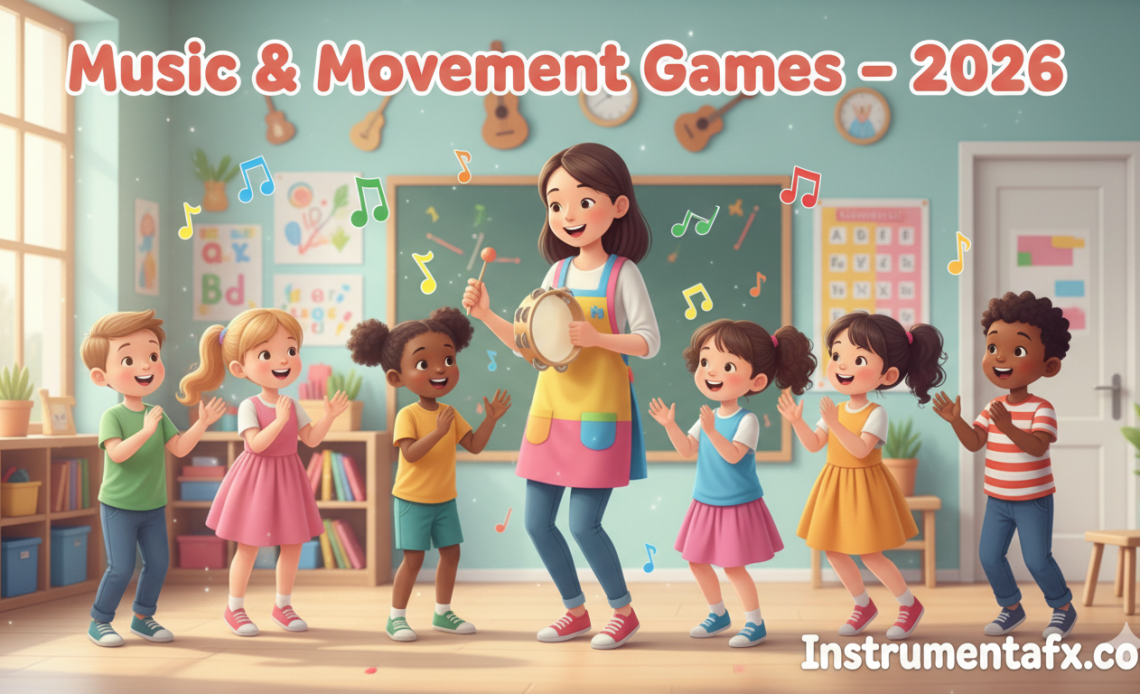
Music and movement for preschool is one of the most powerful educational tools available to early childhood educators and parents. Young children have a natural love for rhythm, dancing, and singing that makes these activities both educational and entertaining.
Through music and movement activities, preschoolers ages 2-5 develop essential skills including gross motor coordination, language development, social-emotional regulation, and cognitive abilities.
Research shows that movement increases blood flow to the brain, meaning the more kids move to music, the more they learn. This comprehensive guide shares practical games, proven teaching strategies, and updated resources for 2026 to help you successfully integrate music and movement into your daily preschool routine.
What is Music and Movement for Preschool?
Music and movement for preschool refers to educational activities that combine musical elements with physical activity. These activities include singing action songs, dancing to various music styles, playing child-friendly instruments, and participating in music-based games. The combination engages multiple senses simultaneously.
For young children ages 2-5, music and movement activities are developmentally appropriate ways to learn. Rather than sitting still and listening, preschoolers learn best when their whole bodies are involved. This active engagement makes learning memorable and fun.
Examples include dancing with scarves to classical music, playing freeze dance, singing songs with hand motions like “If You’re Happy and You Know It,” marching with instruments, and acting out stories through movement. Each activity promotes different developmental skills while keeping children engaged.
Why Music and Movement is Essential for Preschoolers
Physical Development Benefits
Music and movement activities build gross motor skills like running, jumping, hopping, and balancing. When children dance freely or follow specific movement patterns, they develop coordination and body awareness. These physical skills are foundations for more complex activities later.
Fine motor skills also improve through instrument play. Shaking egg shakers, tapping rhythm sticks together, or pressing drum surfaces helps develop hand-eye coordination. This preparation is essential for future skills like writing and using scissors.
Regular physical activity through music helps establish healthy habits early. Children learn that moving their bodies feels good and is enjoyable. This positive association with physical activity can last a lifetime and combat sedentary tendencies.
Cognitive Development Benefits
Music activities strengthen memory through repetition and pattern recognition. When children learn song lyrics and repeated movements, they exercise their memory muscles. This skill transfers to academic learning like memorizing numbers and letters.
Following multi-step directions in action songs builds sequencing skills. Children learn that activities have a specific order and that following steps leads to success. This executive function skill is crucial for school readiness.
Language development accelerates through exposure to song lyrics and rhythms. Music helps children hear syllables, rhymes, and phonetic patterns that support reading readiness. Vocabulary expands as they learn words through context in songs.
Social-Emotional Development Benefits
Group music activities teach cooperation and turn-taking. When children play instruments together or participate in circle songs, they learn to coordinate with others. These social skills are fundamental for positive peer relationships.
Emotional regulation improves as children learn to match their energy to music tempo. Fast songs help release pent-up energy, while slow songs promote calming down. This self-regulation ability helps manage emotions throughout the day.
Music provides a safe outlet for expressing feelings. Whether dancing out frustration or singing about happiness, children learn that emotions can be expressed in healthy, creative ways. This emotional intelligence supports mental health.
Brain Development Benefits
Research published in the NIH National Library of Medicine shows that music interventions positively impact children’s development across multiple domains. Studies demonstrate that rhythm training improves language and literacy processes and communication skills.
Movement increases blood flow to the brain, which enhances cognitive function. The more children move, the better their brains work for learning. This connection makes music and movement activities doubly powerful for education.
Early exposure to music before age 9 helps children reach their full musical potential. Even if they don’t become musicians, the cognitive benefits of early music education support all areas of learning throughout life.
Best Music and Movement Games for Preschool
1. Freeze Dance (Musical Statues)
Freeze Dance is a classic game where children dance freely while music plays and must freeze when the music stops. This simple activity teaches listening skills, self-control, and body awareness. It’s perfect for releasing energy in short bursts.
To play, clear space for movement and explain the rules clearly. Play upbeat music and dance along with the children, demonstrating different movements. When you stop the music, freeze in a silly position to model the behavior.
Make it more challenging by calling out specific poses to freeze in, like “freeze like a tree” or “freeze on one foot.” For younger children, just staying still is challenge enough. This game works great as a transition activity or energy release.
2. Musical Chairs with a Twist
Traditional musical chairs can be stressful for young children who get “out.” Instead, try cooperative musical chairs where children find ANY chair when music stops, even if it means sharing. This keeps everyone engaged and emphasizes cooperation over competition.
Set up chairs in a circle and play music as children walk around them. When music stops, everyone finds a seat—sitting on laps is encouraged! Remove one chair each round but allow multiple children per seat.
Another variation: instead of chairs, use shapes or letters taped to the floor. When music stops, children stand on any shape. This combines movement with shape/letter recognition and eliminates competition completely.
3. Action Song Adventures
Action songs combine singing with specific movements that match the lyrics. Songs like “Head Shoulders Knees and Toes,” “If You’re Happy and You Know It,” and “The Hokey Pokey” are perfect examples. These teach body part identification, following directions, and coordination.
Start by teaching the song slowly without music, demonstrating each movement. Practice the movements separately before combining them with singing. Gradually increase speed as children become comfortable with the routine.
Create your own action songs by adding movements to familiar tunes. For example, sing “The Wheels on the Bus” with exaggerated motions for wipers, doors, and babies. Encourage children to suggest new verses and movements for creativity.
4. Animal Movement Dance
Play music and call out different animals for children to imitate through movement. “Dance like an elephant” prompts heavy stomping, while “move like a butterfly” encourages light, floating movements. This builds imagination, gross motor skills, and animal knowledge.
Gather picture cards of various animals before starting. Show each picture as you call it out so children have visual reference. Start with simple animals like dogs, cats, and birds before moving to more complex options.
Extend the activity by discussing how different animals move and why. Ask questions like “Why do snakes slither?” or “How do kangaroos jump so high?” This adds educational content to the physical activity.
5. Scarf and Ribbon Dancing
Give children lightweight scarves or ribbons to wave, twirl, and dance with while music plays. This activity enhances fine motor skills, teaches concepts like high/low and fast/slow, and allows creative expression. Scarves add visual interest to movement.
Choose calming classical music for gentle, flowing movements. “The Skating Waltz” by Emile Waldteufel works beautifully for gliding. For livelier dances, try “Flight of the Bumblebee” by Rimsky-Korsakov for quick, buzzing movements.
Demonstrate different scarf movements: swirling overhead, waving side to side, making figure eights, hiding behind them. Let children explore freely first, then guide them with specific prompts. End with a cooling-down song where scarves float to the ground.
6. Instrument Parade
Give each child a simple instrument like shakers, drums, or bells. Lead a parade around the room or outdoor space playing instruments to march music. This teaches rhythm, following the leader, and spatial awareness while building community.
Start with everyone in a line behind you. Play march music and begin walking, playing your instrument to the beat. Encourage children to match your tempo and volume. Stop periodically and have children play solos.
Take turns being the parade leader. Each leader chooses the speed, direction, and style of movement. This builds leadership skills and gives everyone a chance to direct the group’s actions.
7. Emotion Dance
Create a playlist with songs conveying different emotions—happy, sad, excited, calm, angry. Play each song and ask children how it makes them feel, then dance in ways that express those emotions. This builds emotional intelligence and body awareness.
Discuss emotions before starting. Show emotion faces and talk about what each feeling looks like in the body. When angry, we might stomp; when happy, we might jump. These connections help children understand emotional expression.
After dancing, have children draw what they felt during different songs. This extends the activity into art and gives non-verbal children another way to express their emotional responses. Display drawings to validate all feelings.
8. Red Light, Green Light Music
This version of red light, green light uses music instead of words. When fast music plays (green light), children move quickly.</p>
This game teaches listening for musical cues, tem
po awareness, and self-regulation. Children learn to match their energy and movement speed to the music’s tempo. This skill translates to managing energy levels in other situations.
Use instrumental music without words for clearer tempo changes. Start with very obvious differences between fast and slow before making it more challenging. Praise children who listen carefully and adjust their movements appropriately.
9. Follow the Leader Dance
One child leads while others copy their dance moves. Rotate leaders frequently so everyone gets a turn. This builds confidence, creativity, leadership skills, and the ability to observe and imitate movements accurately.
Demonstrate being a good leader first. Show clear, simple movements that others can follow. Emphasize that all movement ideas are good—there’s no wrong way to dance. This reduces performance anxiety.
For shy children, let them be leader with a partner for support. Two leaders can create movements together before the group copies them. This scaffolding helps build confidence gradually.
10. Instrument Sound Matching
Play different instrument sounds and have children identify them, then move in ways that match that instrument. Drums might inspire heavy stomping, triangles prompt tiptoeing, and shakers encourage wiggling. This develops auditory discrimination and creative movement.
Introduce instruments one at a time, letting children see and hear each. Discuss how each instrument makes its sound—striking, shaking, blowing. This builds understanding of cause and effect.
Create a listening game where you play an instrument behind a barrier and children guess which one. Then everyone moves like that instrument. This combines listening skills, memory, and movement in one engaging activity.
11. Musical Story Acting
Choose a simple story like “We’re Going on a Bear Hunt” and act it out with movements while narrating or singing. Children walk through tall grass (swishing arms), cross rivers (swimming motions), and climb mountains (stepping high). This combines literacy with movement.
Read the story first without movements so children know the plot. Then introduce one movement at a time, practicing each before combining them. Finally, perform the whole story with all movements flowing together.
Let children suggest movements for different story elements. When the story mentions wind, ask “How should we move like wind?” This increases engagement and gives children ownership of the activity.
12. Body Part Dancing
Play music and call out specific body parts that must “dance” while the rest stays still. “Only your hands dance!” means wiggling fingers and hands while the body stays relatively still. This teaches body awareness, listening skills, and coordination.
Start with easier body parts like hands, feet, or head. Progress to more challenging options like elbows, shoulders, or knees. For advanced children, call out two body parts at once: “Dance with your knees and your nose!”
Turn it into a game by seeing who can follow directions most carefully. Praise creative ways children move the called-out body part. This encourages thinking outside the box and trying new movements.
13. Rhythm Pattern Copy
Clap or play a simple rhythm pattern and have children repeat it back. Start with basic patterns like clap-clap-pause-clap, then increase complexity. This develops auditory memory, pattern recognition, and rhythm skills fundamental to music.
Use visual aids initially. Show rhythm patterns with pictures or hand motions alongside sounds. This multi-sensory approach helps children “see” the rhythm, making it easier to remember and reproduce.
Let children create patterns for the group to copy. This role reversal builds confidence and creativity. Encourage variety by suggesting they use different body percussion: stomping, clapping, snapping, patting knees.
14. Dance Props Rotation
Set up stations with different dance props: scarves at one, ribbons at another, shakers at a third, bells at a fourth. When music plays, children dance with their prop. When music stops, they rotate to the next station and new prop.
This activity teaches transitions, sharing equipment, and experiencing different movement styles. Each prop inspires unique movements, keeping the activity fresh and engaging for longer periods.
Use a timer or specific signal song for rotations. Clear signals help children anticipate changes and transition smoothly. Practice rotations without music first to establish the routine before adding the excitement of music.
15. Bubble Dance
Blow bubbles while playing gentle music. Children try to pop bubbles while dancing, reaching high for floating bubbles and bending low for descending ones. This builds hand-eye coordination, tracking skills, and joyful movement.
This activity naturally encourages children to move in varied directions and at different levels. Reaching develops gross motor skills while the tracking of bubbles enhances visual perception skills important for reading later.
For indoor play, use a bubble machine to create continuous bubbles. Outdoors, let children take turns being the bubble blower. This shared responsibility teaches turn-taking and patience while waiting.
Popular Movement Songs for Preschool
Classic Action Songs
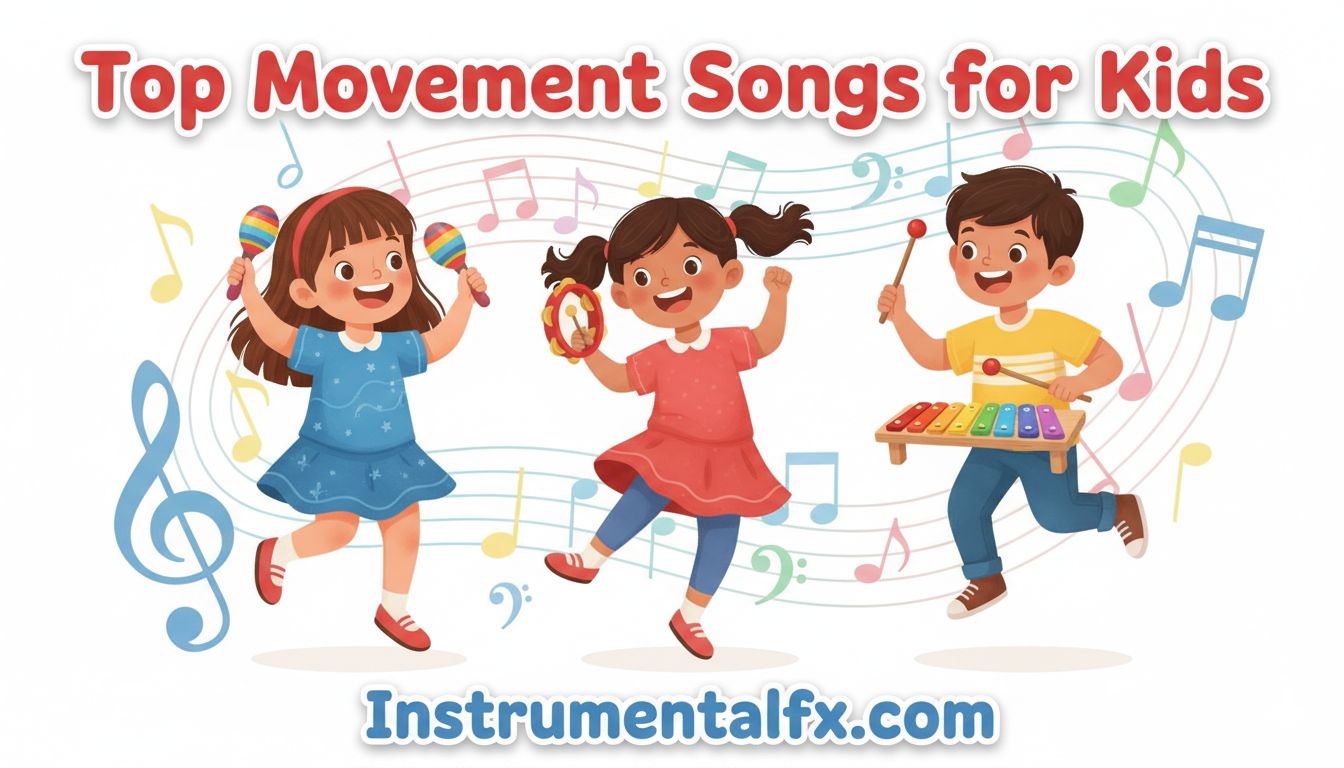
“Head Shoulders Knees and Toes” remains a favorite for teaching body parts and coordination. Sing it slowly for beginners, then speed up for a challenge. This repetition with variation keeps children engaged.
“If You’re Happy and You Know It” allows endless verses: clap your hands, stomp your feet, say hooray, do all three. The predictable structure helps children anticipate what comes next and join in confidently.
“The Hokey Pokey” teaches left and right, body parts, and following multi-step directions. Put your right hand in, take it out, shake it all about—each verse builds motor planning skills.
Modern Movement Hits
Jack Hartmann creates educational songs perfect for preschool movement. His “Move Your Body” series gets children following action directions while learning. The music is catchy enough that teachers enjoy it too.
The Learning Station’s “Shake Your Sillies Out” series is specifically designed for releasing energy. These high-energy songs help children expend restless energy in structured ways, improving focus afterward.
Laurie Berkner Band’s “Goldfish” and other songs combine imaginative play with movement. Children swim like fish, buzz like bees, or stomp like dinosaurs while engaging with creative narratives.
Transition and Calming Songs
Clean-up songs make tidying fun. “Clean Up” by various artists sets a tidy-up time limit and makes the chore feel like a game. Singing while cleaning makes the task less tedious.
“Goodbye Songs” help signal the end of activities or the day. Predictable rituals through song help children transition emotionally and prepare for what comes next. This reduces resistance to endings.
Calming songs like “Twinkle Twinkle Little Star” slow movements and prepare children for quiet activities. The familiar melody and gentle tempo naturally bring energy levels down.
Teaching Tips for Success with Music and Movement
Start Simple and Build Gradually
Begin with one or two songs children probably already know. Familiar melodies reduce anxiety and help children focus on movements rather than learning new lyrics. Build complexity slowly as confidence grows.
Introduce one new element at a time. If teaching a new song, start without movements. Once the song is familiar, add simple movements. Layer complexity gradually rather than overwhelming children with too much at once.
Repeat favorite activities frequently. Young children learn through repetition and enjoy the predictability of knowing what comes next. Don’t worry about seeming repetitive—children thrive on familiar routines.
Model Enthusiasm and Participation
Your energy sets the tone for the activity. If you’re excited about music and movement, children will be too. Dance along, sing loudly, and show genuine enjoyment. This permission to be silly helps children feel comfortable participating.
Make mistakes on purpose and laugh them off. When children see adults mess up movements or forget words without stress, they learn that perfection isn’t required. This reduces performance anxiety.
Acknowledge effort over accuracy. Praise children for trying, moving, and participating rather than doing movements “correctly.” This focus on process over product encourages continued engagement.
Create a Dedicated Music Space
Designate a classroom area for music and movement activities. Keep instruments, scarves, and props accessible in this space. Visual access reminds children music time is part of their day and builds anticipation.
Use a special rug or marked floor area that signals “music time space.” This physical boundary helps children understand when music activities begin and end. Clear boundaries support behavior management.
Store instruments where children can see them but in organized ways. Baskets or bins labeled with pictures help children choose instruments and clean up independently. This builds responsibility and organizational skills.
Use Music for Transitions
Play a specific song to signal transition times: clean-up, line-up, circle time. Consistent musical cues help children anticipate changes and move between activities smoothly without constant verbal reminders.
Shorter transition songs (1-2 minutes) work better than long ones. Children know exactly how much time they have to complete the transition. This time limit encourages efficient movement.
Make transition songs upbeat to keep energy up while moving. Slow songs might make transitions drag. Quick tempo encourages quick action while still being structured and calm.
Adapt for Different Ages and Abilities
Two-year-olds need simpler, more repetitive activities. Stick to one or two movements per song. Expect them to watch more than fully participate initially—observing is learning for toddlers.
Three- and four-year-olds can handle more complex patterns and longer activities. They enjoy taking on leadership roles and suggesting new movements. Let them contribute ideas to increase investment.
Five-year-olds appreciate challenge. Add elements like remembering sequences, performing for others, or combining multiple movements simultaneously. Their improved coordination allows for more sophisticated activities.
Incorporate Cultural Diversity
Include songs and dances from various cultures represented in your classroom. This validates children’s backgrounds and exposes everyone to global diversity. Music is a universal language that connects people.
Invite families to share traditional songs and dances from their cultures. This builds home-school connections and honors families’ contributions. Children see their home culture reflected in school.
Learn hello songs in different languages. Singing greetings in Spanish, Mandarin, Arabic, or other languages broadens children’s awareness of global diversity and language varieties.
Make Instruments Accessible
Invest in quality rhythm instruments that withstand preschool use. Good egg shakers, drums, rhythm sticks, and bells last years with proper care. Quality instruments produce better sounds that motivate children’s musical exploration.
Teach proper instrument care and respect. Before playing freely, demonstrate gentle handling and appropriate volume. This prevents damage and teaches responsibility for shared materials.
Rotate instruments periodically to maintain interest. Having a few instruments “away for rest” creates excitement when they return. Novelty maintains engagement over the school year.
Connect Music to Curriculum Themes
If studying insects, sing songs about bugs and move like different insects. Curriculum integration helps children make connections across subject areas. Music reinforces other learning naturally.
Create movement activities around letters and numbers. March while singing the ABC song, jump while counting, or move like things that start with the letter of the week. This multisensory approach supports academic learning.
Use seasonal songs and movements. Falling like leaves in autumn, melting like snow in spring, or swimming motions for summer themes connect children to the changing year and seasonal cycles.
Musical Instruments Perfect for Preschoolers
Shakers and Maracas
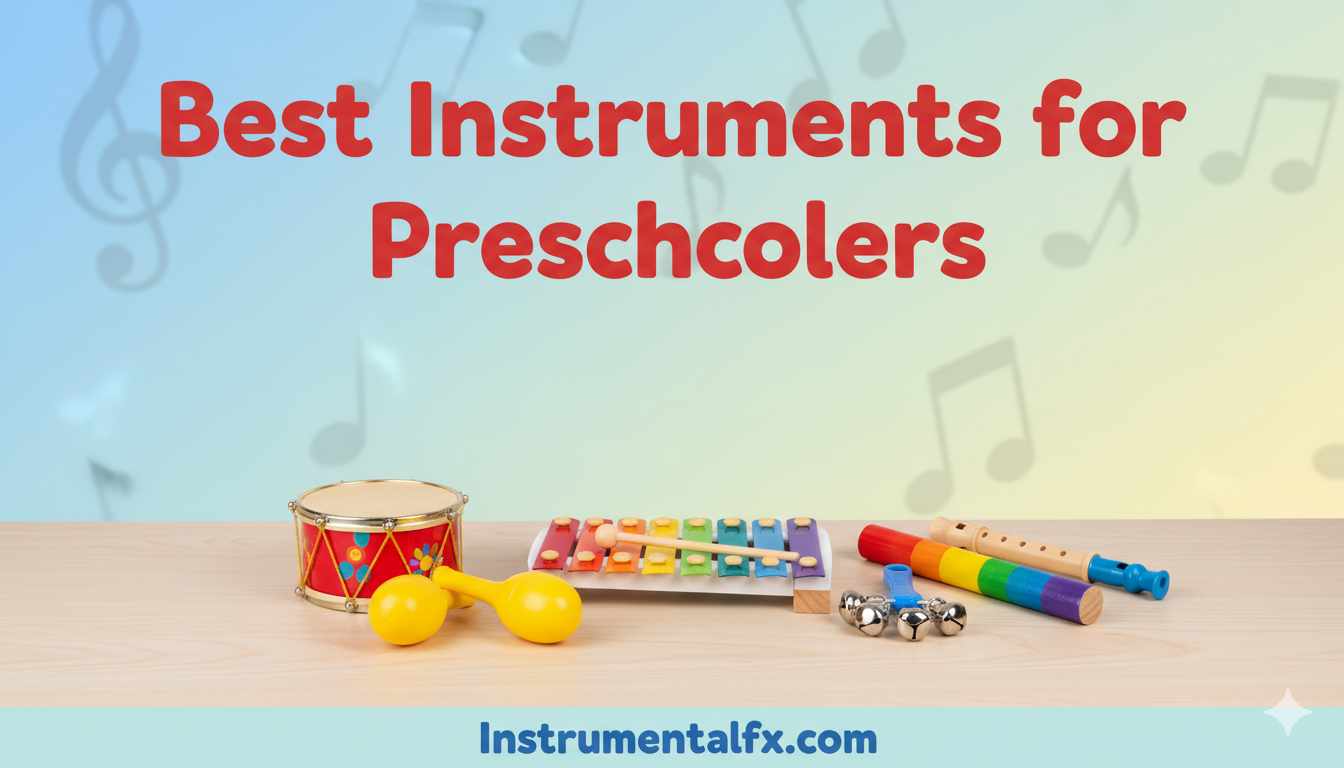
Egg shakers are ideal first instruments. They’re easy to grasp, hard to break, and produce immediate sound with simple shaking. Children as young as 18 months can successfully use shakers.
Different-sized shakers produce different sounds. Providing variety teaches children that objects have unique qualities. This observational skill supports science learning and categorization abilities.
DIY shakers can be made from plastic eggs or small containers filled with rice, beans, or beads. Creating instruments builds fine motor skills and teaches cause-and-effect relationships between materials and sounds.
Hand Drums
Small hand drums or bongos let children explore rhythm through hitting surfaces. The immediate auditory feedback teaches cause and effect: I hit, it makes sound. Varying force teaches dynamics—soft hits make quiet sounds, hard hits make loud sounds.
Drums can be used for rhythm pattern games. Teacher plays a pattern, children echo it. This back-and-forth develops listening skills, memory, and turn-taking while exploring rhythm.
Homemade drums from oatmeal containers or coffee cans work well. Decorating personal drums teaches pride in their creations and makes music time more special and personalized.
Rhythm Sticks
Rhythm sticks are simple wooden dowels clicked together to create rhythm. They’re inexpensive, durable, and excellent for teaching beat and pattern. Children can tap them on the floor, on themselves, or together.
Rhythm sticks work particularly well with nursery rhymes and poems. Adding rhythm to familiar verses makes them more engaging and helps children hear syllables and word patterns supporting pre-reading skills.
Safety note: Teach gentle tapping from the start. Set clear expectations about keeping sticks close to our own bodies. This prevents poking friends and establishes safe instrument use habits.
Bells and Jingle Bells
Wrist bells or handheld jingle bells add sparkle to movement activities. Children hear musical sounds as they dance, run, or skip. This auditory feedback enhances body awareness.
Bells on sticks are easier for younger children to control than loose bells. They can shake them rhythmically or hold them still, learning volume control and intentional sound-making.
Holiday time naturally incorporates bells, but they’re wonderful year-round. The pleasant tinkling sound isn’t overwhelming even when the whole class uses bells simultaneously.
Tambourines
Tambourines combine shaking and tapping in one instrument. Children can shake them like shakers, tap them against hands or legs, or twirl them. This versatility teaches that instruments can make multiple sounds.
Smaller tambourines work better for preschool hands. Look for plastic-framed versions that withstand drops better than wooden ones. Ribbons added to the frame make them more visually appealing.
Use tambourines for parade activities or circle songs. Their bright, cheerful sound energizes group activities and is loud enough to hear over singing voices.
Schedule Integration Strategies
Circle Time Music
Begin or end circle time with a familiar song. This routine helps children transition into group time mentally and physically. The predictability of a regular song provides comfort and structure.
Use call-and-response songs during circle time. Teacher sings a line, children echo it. This back-and-forth teaches listening, waiting for turns, and matching pitch—all valuable skills.
Incorporate movement into circle songs by adding hand motions or standing up for certain verses. This keeps children engaged longer than sitting-only activities and channels physical energy appropriately.
Transition Time Music
Instead of verbally telling children to clean up, play the clean-up song. This non-verbal cue reduces nagging and makes tidying feel fun rather than a chore.
Use specific songs for specific transitions: one song for lining up, another for washing hands, another for getting ready for rest time. These musical routines help children know what’s expected without direct instructions.
Keep transition songs short—under two minutes. This urgency helps children move efficiently. If children aren’t finished when the song ends, use natural consequences like practicing that transition again.
Indoor Recess or Rainy Day Activities
When outdoor play isn’t possible, music and movement activities release pent-up energy indoors. Freeze dance, action songs, and instrument play give children needed physical outlets without requiring playground space.
Create a movement circuit: scarf dancing station, instrument station, freeze dance area. Children rotate through stations, experiencing variety while managing space effectively with smaller groups at each location.
Use music and movement on rainy days to maintain positive mood. Being stuck inside can frustrate young children, but fun movement activities help maintain good spirits despite weather limitations.
Rest Time Wind-Down
Before rest time, play very gentle music with slow movements like stretching or slow-motion dancing. This helps high-energy children gradually calm their bodies for resting.
Teach simple yoga poses with calming music. Child’s pose, cat-cow stretches, and gentle twists release physical tension while calming the mind. Pairing movements with deep breathing enhances relaxation.
End movement time 5-10 minutes before rest begins. This buffer lets children fully transition from active to calm. Immediate transition from jumping to sleeping is unrealistic for young children’s nervous systems.
Morning Meeting Energizers
Start the day with upbeat morning movement songs. This helps children who arrive at different energy levels normalize to a ready-to-learn state. Movement wakes up sleepy children and channels excited energy productively.
Welcome songs that include children’s names build community. “Good Morning [Child’s Name], How Are You?” makes each child feel seen and valued while incorporating singing and rhythm.
Use “brain break” style songs that combine movement with academic content. Counting songs with jumps, alphabet songs with actions—these prepare brains for learning while fulfilling movement needs.
Age-Appropriate Activity Guidelines
For Two-Year-Olds
Keep activities very short—3-5 minutes maximum. Two-year-olds have limited attention spans. Better to do three short music sessions daily than one long session that loses their interest.
Use highly repetitive songs and movements. The same gesture repeated throughout a song works better than changing movements every line. Simple repetition allows successful participation.
Expect more observation than participation initially. Two-year-olds often watch before joining. Don’t pressure participation; simply model joyful movement. They’ll join when ready.
For Three-Year-Olds
Three-year-olds can handle 5-10 minute activities. They enjoy slightly more complex movements but still need lots of repetition. They’re starting to remember song lyrics and can often sing along.
This age loves animal movements and pretend play. Incorporating imaginative elements like “dance like a dinosaur” or “swim like a fish” engages their developing imagination.
They’re beginning to play alongside peers, so partner activities work sometimes but parallel play is still common. Don’t worry if they don’t interact much during music time—they’re still benefiting.
For Four-Year-Olds
Four-year-olds enjoy longer activities—10-15 minutes. They can follow multi-step directions and enjoy the challenge of learning choreographed movements to songs.
This age appreciates leadership opportunities. Taking turns being the movement leader or choosing the next song builds confidence and decision-making skills.
They’re developing better rhythm sense and can often clap or move to a beat. Rhythm pattern activities become more successful at this age. Encourage their growing musical abilities.
For Five-Year-Olds
Five-year-olds can handle 15-20 minute music sessions. They enjoy performance aspects like dancing for an audience or learning specific dance routines from videos.
Complex games like musical chairs, elaborate action songs, and partner dancing work well. Their improved social skills allow for activities requiring cooperation and turn-taking.
This age can begin learning simple recorder or keyboard basics if interested, but movement-based activities should still dominate. Their bodies still need lots of motion for optimal learning.
Budget-Friendly Music and Movement Ideas
DIY Instruments
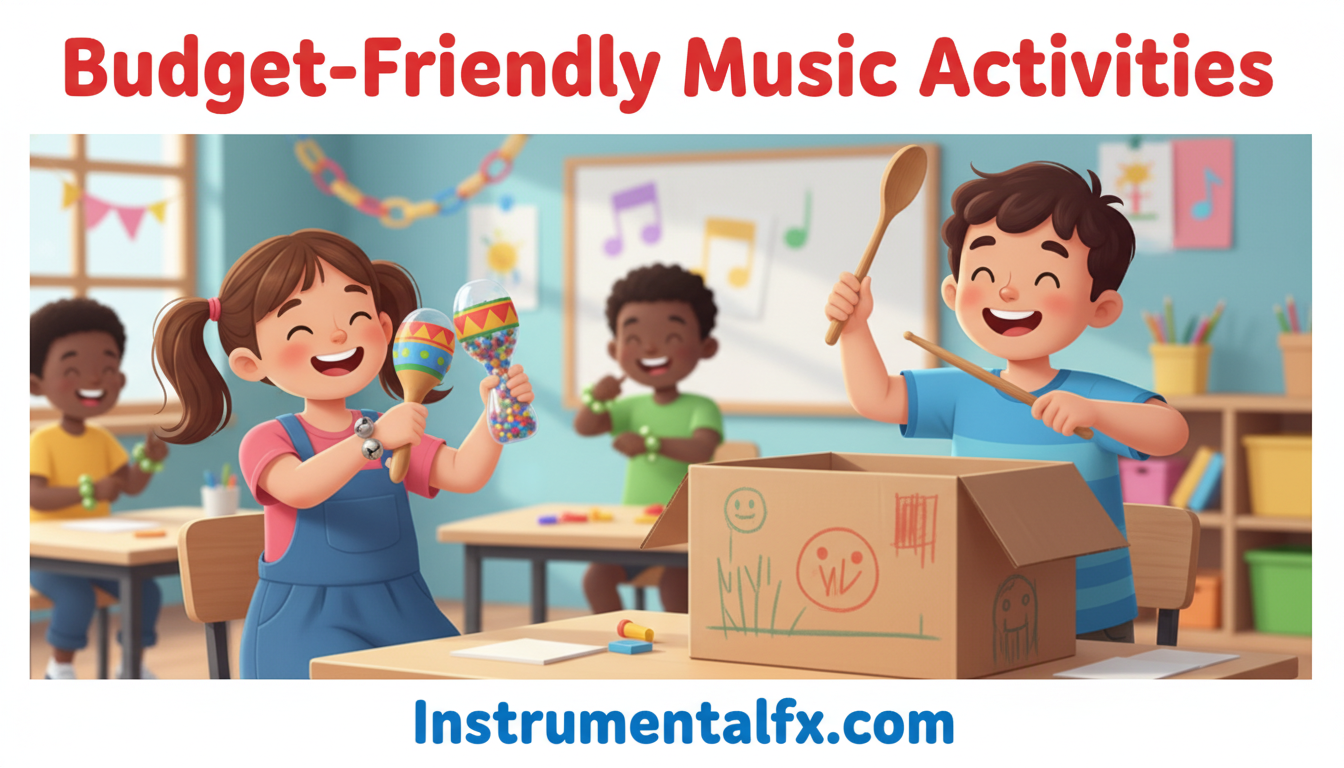
Make shakers from plastic bottles or containers filled with dried beans, rice, or beads. These cost almost nothing and work just as well as store-bought versions.
Create drums from coffee cans, oatmeal containers, or overturned pots. Add decorated paper or stickers to personalize. Wooden spoons become drumsticks.
Stretch rubber bands across tissue boxes for guitars. While they won’t play notes, they make sounds and teach string instrument concepts. Decorate with markers for personalization.
Free Music Resources
YouTube offers thousands of children’s action songs and movement videos free. Channels like Jack Hartmann, Super Simple Songs, and The Learning Station provide quality content at no cost.
Spotify and other streaming services have free versions with ads. Create playlists of children’s music, classical pieces, and various genres for different movement activities.
Public libraries offer free music CDs, DVDs, and sometimes instrument lending. Check out different music weekly to keep variety without purchasing. Many libraries have children’s music programs too.
Household Items as Props
Kitchen towels work as scarves for dancing. They’re free if you’re using existing items and washable after use. Colorful dishtowels are especially fun.
Paper plates become rhythm instruments when stapled together with beans inside. They’re throwaway if they break and cost pennies to make.
Plastic grocery bags tied to sticks make waving flags for marching. Old socks over hands become puppets that dance. Newspaper becomes magical material for tearing, crumpling, and dancing with.
Frequently Asked Questions
What is music and movement for preschool?
Music and movement for preschool combines musical activities with physical activity. It includes singing action songs, dancing, playing instruments, and participating in music-based games that promote development across physical, cognitive, and social-emotional domains.
Why is music and movement important for young children?
Music and movement activities develop gross and fine motor skills, enhance cognitive abilities like memory and pattern recognition, support language development, teach social skills like cooperation and turn-taking, and provide healthy outlets for emotional expression and energy release.
What are the best songs for preschool music time?
Classic songs include “Head Shoulders Knees and Toes,” “If You’re Happy and You Know It,” “The Hokey Pokey,” and “Wheels on the Bus.” Modern favorites include songs by Jack Hartmann, The Learning Station, and Laurie Berkner Band that combine education with movement.
How do I start music and movement in my preschool classroom?
Start with familiar songs children already know, keep initial activities short (5-10 minutes), model enthusiastic participation, and establish clear expectations for space and behavior. Begin with one music time daily, gradually adding more as children become comfortable.
What instruments are best for preschoolers?
Egg shakers, small hand drums, rhythm sticks, jingle bells, and tambourines work best for preschoolers. These instruments are easy to use, durable, safe, and produce immediate sound with simple actions. Start with shakers for youngest children.
How long should music and movement activities last?
For 2-year-olds: 3-5 minutes; 3-year-olds: 5-10 minutes; 4-year-olds: 10-15 minutes; 5-year-olds: 15-20 minutes. Multiple short sessions throughout the day work better than one long session for young children with limited attention spans.
Can music help with classroom behavior management?
Yes, music effectively manages behavior by providing transition cues, releasing energy appropriately, calming overstimulated children, focusing wandering attention, and creating predictable routines. Specific songs for specific times help children know expectations without constant verbal reminders.
What if I’m not musical or can’t sing well?
You don’t need musical talent to do music and movement with preschoolers! Use recorded music, speak-sing verses, focus on the movement aspect, and remember children aren’t judging your abilities. Your enthusiasm matters more than perfect pitch.
How do I adapt activities for different ages in mixed-age groups?
Offer options for complexity: simple movements for younger children, challenging variations for older ones. Partner younger with older children for support. Focus on each child doing their personal best rather than everyone doing the same thing.
Where can I find free music and movement resources in 2026?
YouTube channels (Jack Hartmann, Super Simple Songs), Spotify/streaming services, public library collections, Pinterest activity ideas, teacher blogs, and educational websites offer free resources. Many apps have free basic versions with quality children’s music and movement activities.
Conclusion
Music and movement for preschool is not just entertainment—it’s a foundational educational tool that supports development across all domains. When children sing, dance, play instruments, and participate in movement games, they’re building essential skills that prepare them for academic learning and life success.
The physical coordination, cognitive abilities, social skills, and emotional regulation developed through these activities create strong foundations for future growth.
The beauty of music and movement activities is their accessibility. You don’t need expensive equipment, special training, or perfect pitch to provide rich musical experiences for young children.
Simple action songs, basic instruments like shakers and drums, household items as props, and free online resources make implementation possible for any budget or setting.
Starting music and movement time in your preschool classroom or home is as easy as choosing one favorite song and moving to it together.


