


YouTube Music vs Spotify remains the most debated topic among music streaming enthusiasts in 2026. Both platforms dominate the industry with over 100 million songs, premium features, and competitive pricing, but they serve fundamentally different user needs.
Whether you’re choosing your first streaming service or considering a switch, understanding the key differences in pricing structures, audio quality, music discovery algorithms, and exclusive features will save you money while enhancing your listening experience.
This comprehensive 2026 comparison reveals everything you need to make the perfect choice for your specific requirements and budget.
Current Pricing Comparison 2026
Spotify raised prices in January 2026 making it the most expensive major streaming service. Individual Premium now costs $12.99 monthly, up from $11.99 in 2025.
YouTube Music maintains lower pricing at $10.99 monthly for individuals. This $2 difference adds up to $24 annually in savings over Spotify.
The real value proposition comes from YouTube Premium at $13.99 monthly. This bundle includes both YouTube Music and ad-free YouTube videos for just $3 more than music alone.
Individual Plan Breakdown
Spotify Individual Premium costs $12.99 per month in 2026. You get ad-free music, podcast access, and offline downloads with unlimited skips.
YouTube Music Premium costs $10.99 monthly as standalone. The subscription includes background play, offline listening, and ad-free music streaming.
YouTube Premium at $13.99 monthly represents exceptional value. You receive YouTube Music plus ad-free YouTube videos, making it cheaper than buying both separately.
Family Plan Cost Analysis
Spotify Family jumped to $21.99 monthly in 2026. The plan covers up to six people with separate accounts and personalized recommendations.
YouTube Music Family costs $22.99 monthly for six members. Each person gets individual premium access with independent libraries and playlists.
Both family plans cost roughly the same now. Your choice depends on whether you value Spotify’s social features or YouTube’s video content access.
Student Pricing Options
Spotify Student costs $6.99 monthly after January 2026 increases. Students get Hulu bundled free with their music subscription for added entertainment value.
YouTube Music Student runs $5.49 per month with verification. The lower price point makes it more budget-friendly for college students without additional perks.
Spotify’s Hulu bundle offers better overall value. Students effectively get two services for less than one standard premium subscription elsewhere.
Audio Quality Differences
Spotify Premium streams at up to 320 kbps using AAC codec. This represents the highest quality available on mainstream streaming platforms currently.
YouTube Music Premium maxes out at 256 kbps AAC streams. The difference is technically measurable but practically unnoticeable to most listeners.
Both free tiers offer lower quality. Spotify Free delivers 160 kbps on mobile while YouTube Music Free streams at 128 kbps consistently.
Lossless Audio Availability
Spotify announced lossless HiFi plans but hasn’t launched them. The feature remains in development without confirmed release dates for 2026.
YouTube Music doesn’t offer lossless streaming currently. All premium subscribers receive the standard 256 kbps maximum bitrate across all devices.
Neither platform competes with Apple Music or Tidal for audiophiles. If lossless quality matters critically, consider alternative streaming services instead.
Real-World Listening Experience
Most users can’t distinguish between 256 and 320 kbps. Standard headphones and earbuds don’t reveal the subtle quality differences during normal listening.
Spotify’s higher bitrate provides peace of mind. Audiophiles with premium equipment might notice slight clarity improvements in specific songs.
YouTube Music’s quality suffices for everyday use. Car audio, wireless speakers, and typical headphones deliver excellent sound at 256 kbps.
Music Library Size and Content
Both platforms boast over 100 million official licensed tracks. Major labels, independent artists, and most commercial releases appear on both services.
YouTube Music includes vast additional content beyond official releases. Live performances, remixes, covers, and user-uploaded content expand the effective library exponentially.
Spotify focuses on official studio recordings exclusively. This creates cleaner metadata and consistent quality but limits access to rare recordings.
Exclusive Content Differences
YouTube Music offers bootlegs, concert recordings, and fan uploads. Any audio from YouTube videos becomes accessible through the music app seamlessly.
Obscure remixes and DJ sets thrive on YouTube Music. EDM fans, electronic music lovers, and remix collectors find content unavailable elsewhere.
Spotify excels at podcast integration currently. Over 5 million podcasts complement music content with exclusive shows and creator partnerships.
Regional Music Availability
YouTube Music dominates in regional and traditional music. Indian classical, Bollywood oldies, and local language content appears more extensively.
African, Asian, and Latin American music libraries excel. YouTube’s user-upload feature fills gaps that official licensing doesn’t cover.
Spotify offers strong international coverage for official releases. Major label content and popular international artists appear reliably across regions.
Music Discovery and Algorithms
Spotify’s Discover Weekly drops every Monday with personalized recommendations. The algorithm analyzes listening habits to suggest 30 new songs weekly.
YouTube Music leverages your YouTube history for suggestions. Music video views, searches, and watch patterns inform music recommendations uniquely.
Both systems work well but differently. Spotify feels more focused on pure audio discovery while YouTube Music considers broader video consumption.
Radio and Playlist Generation
Spotify’s radio feature often disappoints advanced users. The algorithm plays safe, recycling familiar tracks rather than genuinely exploring new territory.
YouTube Music’s tuner feature offers unprecedented control. Sliders adjust artist variety, discovery level, and track popularity before stations even start.
The tuner transforms YouTube Music’s radio functionality. Users fine-tune exactly how adventurous or familiar they want algorithm-generated stations.
Personalized Playlist Quality
Spotify creates Daily Mixes across different genres. Each mix updates regularly based on recent listening with familiar favorites mixed with new suggestions.
Release Radar highlights new music from followed artists. Every Friday brings fresh releases tailored to your specific artist preferences.
YouTube Music generates mood-based endless playlists. The AI creates virtually unlimited playlists that adapt based on upvotes and downvotes continuously.
User Interface and Experience
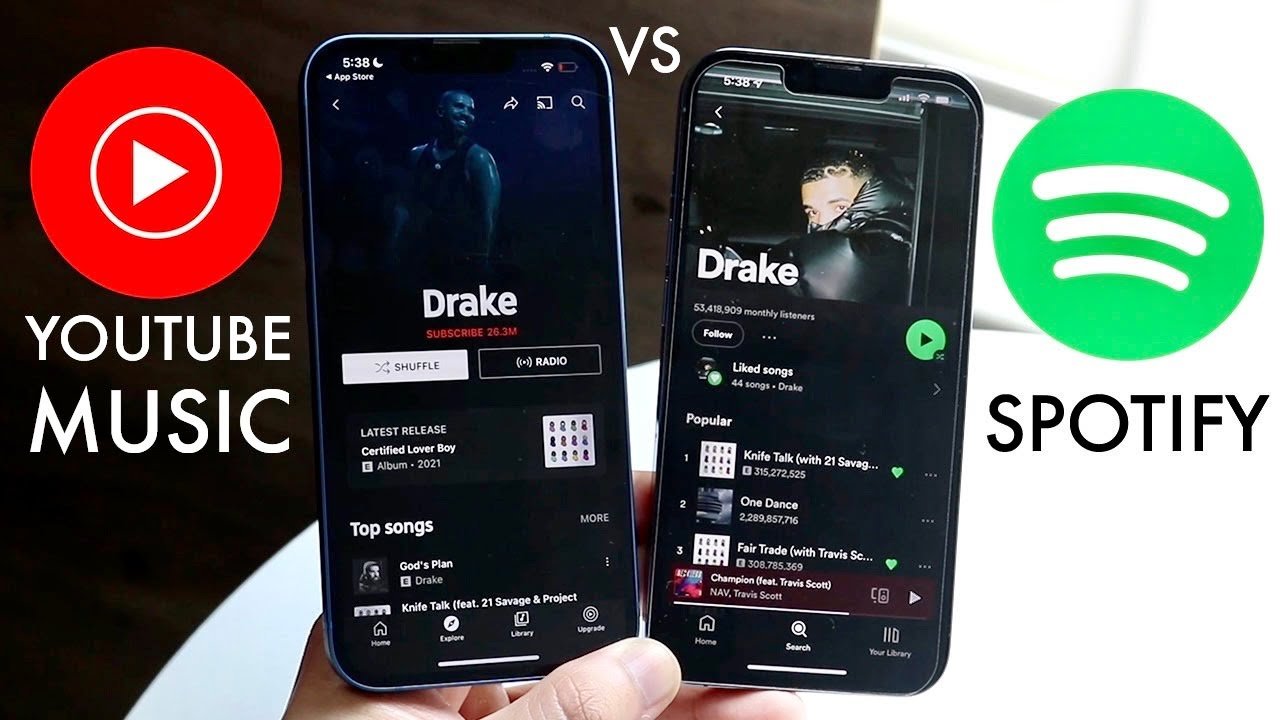
Spotify features a polished, intuitive dark interface. The card-based layout and consistent design make navigation feel natural across all devices.
Friend activity appears prominently on desktop. See what contacts are currently playing in real-time for social discovery and conversation starters.
YouTube Music feels less refined visually. The interface works fine but lacks the polish and attention to detail Spotify demonstrates.
Mobile App Comparison
Spotify’s mobile app excels in organization. Folder systems let you categorize playlists logically for easy navigation and management.
YouTube Music dumps all playlists in endless scrolls. Finding specific lists among 50+ playlists becomes tedious without folder organization options.
Both apps perform smoothly on modern devices. Load times, responsiveness, and general performance satisfy expectations across iOS and Android.
Desktop Experience
Spotify’s desktop app works offline entirely. Browse your library, access playlists, and manage music without active internet connectivity.
YouTube Music desktop is essentially a browser. The app won’t function without internet, limiting utility during connectivity issues.
Spotify’s dedicated app feels more professional. The standalone application provides better integration with system controls and keyboard shortcuts.
Social Features Comparison
Spotify dominates in social connectivity features. Collaborative playlists, friend activity feeds, and sharing capabilities create community experiences.
Follow friends to see their listening habits. Public playlists and profile pages encourage music sharing among connected users.
YouTube Music treats social features as afterthoughts. No collaborative playlists, limited sharing options, and minimal social integration exist.
Spotify Wrapped vs YouTube Recap
Spotify Wrapped arrives every December with detailed stats. Your top songs, artists, genres, and listening quirks become shareable social media content.
The experience includes playful graphics and surprising insights. Total minutes listened, niche genre discoveries, and audio auras create engaging shareable moments.
YouTube Music Recap provides a basic top 100 playlist. No fanfare, graphics, or detailed statistics accompany the year-end summary.
Collaborative Listening
Spotify Jam enables group listening sessions. Multiple Premium users synchronize playback across different locations for shared experiences.
Friends collaborate on playlist building together. Real-time editing lets multiple people add songs to shared playlists simultaneously.
YouTube Music lacks these social features entirely. Individual listening remains the only option without group session capabilities.
Offline Listening Capabilities
Spotify Premium allows offline downloads across devices. Playlists, albums, and podcasts download for listening without internet connectivity.
Download limits exist per device and total songs. Most users can download 10,000 songs across five devices maximum simultaneously.
YouTube Music offers unlimited offline downloads. Smart Downloads automatically cache up to 500 songs based on listening history.
Smart Download Features
YouTube Music’s Smart Downloads refresh automatically. The feature learns preferences and downloads fresh content overnight without manual management.
This works perfectly for commuters and travelers. Wake up with new music already cached based on your taste preferences.
Spotify requires manual download management. Select specific playlists or albums to download individually before traveling.
Third-Party Integrations
Spotify integrates with countless third-party services. Discord, Instagram, fitness apps, and smart home devices support Spotify natively.
Car integration through Android Auto and CarPlay excels. Spotify’s mature automotive interfaces provide excellent driving experiences.
YouTube Music integrations lag significantly behind. Fewer apps support YouTube Music compared to Spotify’s extensive ecosystem.
Smart Speaker Support
Both platforms work with major smart speakers. Google Assistant, Alexa, and Siri can control either service through voice commands.
YouTube Music naturally integrates with Google products. Nest speakers and Chromecast devices favor YouTube Music as default options.
Spotify maintains speaker partnerships broadly. Sonos, Bose, and most Bluetooth speakers include dedicated Spotify Connect support.
Free Tier Comparison
Spotify Free restricts mobile users to shuffle-only playback. You can’t select specific songs from albums or playlists on phones.
Six skips per hour limit exists on mobile. Desktop users get unlimited skips with on-demand playback minus downloads.
YouTube Music Free allows on-demand song selection. Choose any track freely but require screens stay on during playback.
Ad Experience on Free Plans
Spotify Free interrupts every few songs with ads. Audio advertisements range from 15-30 seconds between tracks periodically.
YouTube Music Free shows video ads occasionally. The experience mirrors regular YouTube with skippable and non-skippable video advertisements.
Neither free experience compares to premium. Ads, limitations, and reduced quality make paid subscriptions worthwhile investments.
Platform Availability
Spotify runs on virtually every platform imaginable. Windows, Mac, Linux, iOS, Android, web browsers, and countless smart devices support it.
Gaming consoles including PlayStation and Xbox feature Spotify. Integration lets you play music while gaming seamlessly.
YouTube Music covers major platforms comprehensively. Apps exist for iOS, Android, web browsers, and most smart TVs currently.
Cross-Device Synchronization
Spotify syncs seamlessly across all devices. Start listening on your phone, continue on desktop, and finish on speakers without interruption.
Handoff between devices works flawlessly. The currently playing track, queue, and position sync instantly across logged-in devices.
YouTube Music sync works adequately but less polished. Occasional delays or hiccups occur when switching between devices rapidly.
Value for Money Analysis
YouTube Premium at $13.99 provides dual services. Music streaming plus ad-free YouTube equals two subscriptions for one price effectively.
Heavy YouTube users gain enormous value. Hours of ad-free video content justify the cost before considering music benefits.
Spotify at $12.99 serves music-focused users better. If you rarely watch YouTube, paying extra for unused features wastes money.
Breaking Down Cost Per Feature
Spotify charges $12.99 for music and podcasts. The value depends entirely on how much you use both features regularly.
YouTube Music costs $10.99 standalone for just music. Add $3 for YouTube Premium to get videos included economically.
YouTube Premium users get YouTube Music free. The music service becomes a zero-cost bonus when subscribing primarily for videos.
Unique Features Each Platform Offers
Spotify’s AI DJ feature provides personalized commentary. The AI voice introduces songs and explains selections like a real radio DJ.
Lyrics display in real-time with scrolling text. Sing along with professionally transcribed, synchronized lyrics for most popular songs.
YouTube Music switches between audio and video seamlessly. Watch the music video or listen to audio-only without interrupting playback.
YouTube Music Exclusives
Access any YouTube video as audio-only. Turn tutorials, podcasts, or interviews into background listening through the music app.
Live concert uploads appear immediately available. Artists upload performances to YouTube making them instantly accessible in YouTube Music.
Remix culture thrives with user-generated content. Fan-made mashups, extended versions, and creative remixes expand beyond official releases.
Spotify Exclusive Features
Spotify Connect casts to compatible speakers. Control playback on any connected device from your phone seamlessly.
Group Session enables real-time collaborative listening. Friends share control over what plays next during parties or gatherings.
Enhanced playlists add recommended songs automatically. Spotify suggests additions to your playlists mixing new discoveries with your choices.
Privacy and Data Usage
Both platforms collect extensive listening data. Algorithms require usage information to generate personalized recommendations effectively.
Spotify shares minimal data with third parties. Privacy policies outline data collection clearly with opt-out options available.
YouTube Music ties to broader Google ecosystem. Data integrates across YouTube, Search, and other Google services comprehensively.
Customer Support Quality
Spotify offers email and community forum support. Premium users get priority responses compared to free tier users.
Live chat availability varies by region. Some countries access real-time chat while others rely on email exclusively.
YouTube Music support routes through Google Help. The general Google support infrastructure handles YouTube Music inquiries.
Artist Compensation Differences
Spotify pays between $0.003 to $0.005 per stream. Artist payouts vary based on subscription tier and listener location.
YouTube Music pays approximately $0.008 per stream. This higher rate benefits artists financially compared to Spotify streams.
Supporting artists through streaming matters. If artist compensation influences your choice, YouTube Music provides better per-stream rates.
Audiobook and Podcast Integration
Spotify invested heavily in podcast content. Exclusive shows, creator partnerships, and podcast discoverability rival dedicated podcast apps.
Joe Rogan, Call Her Daddy, and other exclusives exist. Major podcasters signed exclusive deals bringing content only to Spotify.
YouTube Music recently added podcast support. The feature remains newer and less developed than Spotify’s mature podcast ecosystem.
Audiobook Availability
Spotify Premium includes 15 hours monthly of audiobook listening. Thousands of titles complement music subscriptions at no additional cost.
YouTube Music doesn’t offer audiobooks currently. The platform focuses exclusively on music and podcast content.
Audiobook fans gain significant value from Spotify. The included hours eliminate separate audiobook subscription costs for moderate listeners.
Which Service for Different Users
Students on tight budgets should choose YouTube Music. The $5.49 student rate undercuts Spotify significantly for basic needs.
Families splitting costs find similar value either way. Both family plans cost approximately the same with minor feature differences.
Heavy YouTube watchers must choose YouTube Premium. The dual-service bundle provides unbeatable value when you use both regularly.
Best for Music Discovery
Adventurous listeners prefer YouTube Music’s tuner controls. The customization options enable precise discovery preferences impossible on Spotify.
Mainstream music fans enjoy Spotify’s curated approach. Discover Weekly and algorithm playlists work excellently for popular genres.
Both work well for most users ultimately. Personal preference determines which discovery style matches your listening habits better.
Best for Social Listeners
Spotify dominates social music experiences completely. Friend activity, collaborative playlists, and sharing features create community connections.
YouTube Music isolates users without social features. Choose Spotify if sharing and discovering music with friends matters.
Solo listeners won’t miss social elements. If you listen independently, YouTube Music’s weaknesses in this area become irrelevant.
Migration Between Services
Transferring playlists between platforms takes effort. Third-party tools like Soundiiz and TuneMyMusic enable playlist migration.
Rebuilding recommendations requires patience. Algorithms need weeks or months learning your preferences after switching services.
Downloaded content doesn’t transfer between services. You’ll lose offline music and must re-download everything on the new platform.
What You Lose Switching
Leaving Spotify means losing listening history. Your Wrapped statistics, listening insights, and historical data stay behind.
YouTube Music switchers abandon podcast libraries. Spotify’s exclusive podcasts and audiobook hours don’t transfer to competitors.
Consider these losses before switching impulsively. Make sure new platform benefits outweigh what you’re leaving behind.
Future-Proofing Your Choice
Spotify continues innovating with AI features. ChatGPT integration and AI DJ show commitment to cutting-edge technologies.
YouTube Music benefits from Google’s AI leadership. Expect continued improvements as Google leverages machine learning advancements.
Both platforms seem stable long-term. Neither shows signs of shutting down or reducing service quality anytime soon.
Regional Availability Issues
Spotify operates in 180+ countries globally. Most regions access full features though some podcast/audiobook restrictions exist.
YouTube Music availability mirrors YouTube Premium. Wherever YouTube Premium exists, YouTube Music follows with full functionality.
Check regional pricing before subscribing. Costs vary dramatically between countries based on local purchasing power.
Making Your Final Decision
Consider whether you watch YouTube extensively. If yes, YouTube Premium bundles music making it the obvious choice.
Music purists focused solely on audio prefer Spotify. Better social features, podcasts, and interface justify the higher cost.
Budget-conscious users should choose YouTube Music standalone. Save $2 monthly compared to Spotify without major feature sacrifices.
Frequently Asked Questions (FAQs)
Which Is Cheaper YouTube Music or Spotify
YouTube Music costs $10.99 monthly while Spotify jumped to $12.99 in 2026, making YouTube Music $2 cheaper for individual plans monthly.
Does YouTube Music Have Better Sound Quality
Spotify offers 320 kbps while YouTube Music streams at 256 kbps, though most listeners can’t distinguish the difference in practice.
Can I Get YouTube Music Free
Yes, YouTube Music offers an ad-supported free tier with on-demand playback, unlike Spotify Free which limits mobile users to shuffle.
Which Has More Songs Spotify or YouTube Music
Both have 100+ million official tracks, but YouTube Music includes user uploads, live performances, and remixes unavailable on Spotify.
Is YouTube Premium Worth It Over Spotify
Yes, if you watch YouTube regularly, paying $13.99 for YouTube Premium includes both YouTube Music and ad-free videos together.
Which Platform Pays Artists More
YouTube Music pays approximately $0.008 per stream while Spotify pays $0.003-$0.005, making YouTube Music better for artist compensation.
Can I Share Playlists Between YouTube Music and Spotify
Not directly, but third-party tools like Soundiiz and TuneMyMusic enable playlist transfers between different streaming platforms.
Which Service Has Better Recommendations
Spotify excels at mainstream music discovery while YouTube Music’s tuner feature offers more control over recommendation adventurousness.
Do Both Services Work Offline
Yes, premium subscribers on both platforms can download music for offline listening, though YouTube Music offers unlimited downloads.
Which Platform Is Better for Families
Both cost approximately $22 for six members, but Spotify offers better collaborative features while YouTube Music includes video access.
Conclusion
YouTube Music vs Spotify ultimately depends on your individual usage patterns and priorities. Spotify justifies its higher $12.99 price through superior social features, podcast integration, extensive third-party support, and the most polished user interface in streaming.
The platform excels for music purists who value collaborative playlists, friend activity feeds, and Spotify Wrapped’s annual insights. If you consume primarily music with occasional podcasts and appreciate discovering tracks through curated playlists and social connections, Spotify’s premium experience delivers consistent satisfaction despite recent price increases.
However, YouTube Music presents compelling arguments, especially for budget-conscious users and YouTube enthusiasts. At $10.99 standalone or $13.99 bundled with YouTube Premium, the value proposition becomes unbeatable for anyone who regularly watches YouTube videos.


