


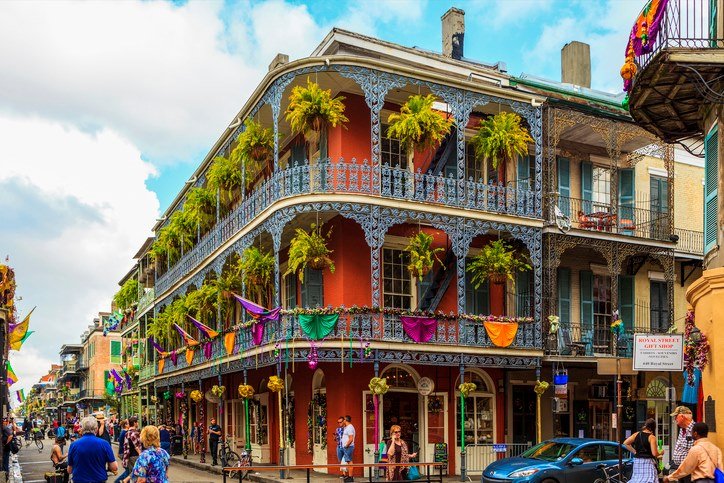
Why Is New Orleans Called the Big Easy is one of the most searched questions about this iconic American city. New Orleans, Louisiana, carries a nickname that feels as smooth and unhurried as the city itself.
The phrase “The Big Easy” rolls off the tongue with a laid-back charm that perfectly mirrors life along the Mississippi. But the real story behind this nickname is layered, disputed, and deeply rooted in African American culture, jazz history, and the city’s rebellious spirit.
What Does “The Big Easy” Actually Mean?
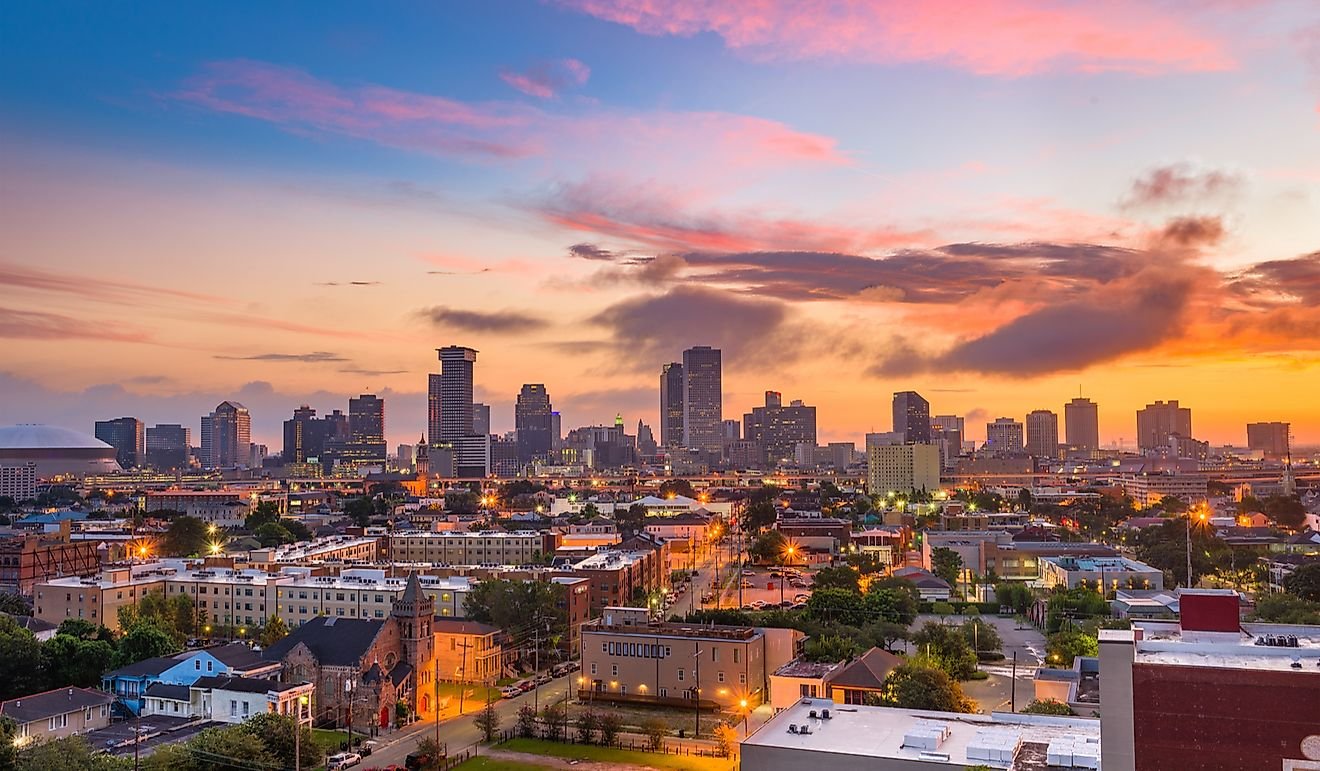
The phrase does not have a single, universally agreed-upon definition. At its core, it describes a city where life feels effortless, enjoyable, and unhurried.
Most historians and locals agree it contrasts directly with New York City’s nickname “The Big Apple,” which stands for ambition, hustle, and relentless energy. The Big Easy, by comparison, celebrates pleasure, community, and music.
The nickname captures the idea that in New Orleans, you do not need to fight for joy. It finds you on its own, through the music drifting from a bar on Frenchmen Street, the smell of beignets in the French Quarter, or the sound of a second-line parade rolling through the neighborhood.
The Four Main Origin Theories of the Nickname
No single theory has been proven beyond all doubt. Historians point to four main explanations, each with its own supporting evidence.
| Theory | Time Period | Key Figure |
|---|---|---|
| Big Easy Dance Hall, Gretna | Early 1900s | Buddy Bolden |
| African American Jazz Slang | Early–Mid 20th Century | Jazz Community |
| Betty Guillaud Newspaper Column | 1960s–1970s | Betty Guillaud |
| James Conway Crime Novel | 1970 | James Conway |
Each theory overlaps with the others in important ways. The truth is likely that the nickname evolved gradually through all four channels over several decades.
Theory 1: The Big Easy Hall in Gretna
The oldest documented root of the nickname traces back to a dance hall.
A dance hall called “The Big Easy Hall” operated in Gretna until it was destroyed by fire in 1911. This establishment was a cultural hub where famous cornet player Buddy Bolden performed.
Buddy Bolden is widely regarded as one of the founding fathers of jazz. His performances at this venue connected the name directly to the birth of a musical movement.
A 1911 article in the Times-Democrat reported on a fire that destroyed a building “known as ‘The Big Easy'” in Gretna. This is considered one of the earliest printed uses of the phrase.
The dance hall burned down, but the name did not. It lived on in the memories of the African American community that had built jazz culture in and around New Orleans.
Theory 2: African American Jazz Musicians and Slang
The second theory ties the nickname directly to the experience of Black musicians in early 20th century New Orleans.
The city has long been a haven for jazz and blues musicians who wanted a place to hone their craft. Legend has it that the earliest use of the Big Easy had to do with the fact that there were so many ways for a good musician to make a living in New Orleans.
From street corners to private parties, from nightclubs to parks, musicians could find work more easily in New Orleans than in any other American city.
The Big Easy may also refer to Black entertainers having an easier time landing gigs in New Orleans than other southern locales in the 19th century.
This is a crucial point. In an era of severe racial segregation across the South, New Orleans offered relatively more opportunities for Black performers. The city’s French Creole heritage and diverse cultural makeup created pockets of tolerance that were rare elsewhere.
A Newsweek magazine article from February 28, 1966 noted: “Life in ‘Big Easy,’ as the town’s Negro citizens sometimes call it, remained graciously indolent.” This is one of the earliest printed references to the phrase being used specifically by African Americans in New Orleans.
Theory 3: Betty Guillaud and the Newspaper Column
The third and most widely cited theory credits a Times-Picayune columnist.
In the late 1960s, Times-Picayune columnist Betty Guillaud sought to find a catchphrase to describe the unique lifestyle of New Orleans similar to the “Big Apple,” which refers to New York City. The phrase “Big Easy” was already in use by African-Americans.
Guillaud did not invent the phrase from nothing. She borrowed it from existing slang already circulating in New Orleans and used it in her column to draw a direct contrast with the busy, high-pressure lifestyle of New York.
Guillaud has admitted that she began to use “Big Easy” when New York’s nickname of “Big Apple” was re-popularized, and that occurred in the 1970s.
Her column gave the phrase a mainstream platform and helped it reach a wider audience beyond the jazz community.
Theory 4: James Conway’s Crime Novel
The fourth theory involves a crime novelist who heard the phrase in the streets.
James Conway, a crime novelist, used to work as a police reporter for the Times-Picayune in the mid-1960s. One day while walking to the criminal courthouse on Claiborne Avenue, he overheard two African-American men talking about “the big easy.” Conway was not sure what they were referencing but felt it was a wonderful phrase. It stuck with him, and two years later he chose it as his book title.
His 1970 novel brought the phrase into the world of published fiction. It planted the seed for what would become a major cultural moment later.
How a 1987 Film Made the Nickname Famous Nationwide
The single biggest factor in spreading the nickname to a national and global audience was a Hollywood movie.
References to New Orleans as the Big Easy increased dramatically since the release of a film of the same name in 1987. Set in New Orleans, the film introduced the culture and atmosphere of the city to many people who only knew it through travelogues.
The film starred Dennis Quaid and Ellen Barkin and was directed by Jim McBride. It was set against the backdrop of New Orleans’ jazz culture, street life, and Creole character.
The New Orleans nickname was popularized to many with the movie “The Big Easy,” directed by Jim McBride, written by Daniel Petrie Jr. and starring Dennis Quaid, Ellen Barkin, John Goodman, and Ned Beatty.
After 1987, the nickname was no longer just a local phrase or a literary reference. It became the way the entire country thought about New Orleans.
The Role of Jazz in Shaping the Big Easy Identity
Jazz is not just the soundtrack of New Orleans. It is one of the main reasons the city earned its famous nickname.
During the early 20th century, New Orleans was a central hub for jazz musicians, many of whom found the city’s relaxed pace and welcoming environment conducive to creativity and collaboration. Unlike the hustle and bustle of New York, often referred to as “The Big Apple,” New Orleans offered a laid-back atmosphere that allowed musicians to thrive.
Dixieland, also known as hot jazz or traditional jazz, is a musical genre that developed in New Orleans at the start of the 20th century. The local Original Dixieland Jass Band made their first recordings in New Orleans in 1917. They were the first band to record jazz commercially and the first to have a jazz hit.
Louis Armstrong, perhaps the most famous jazz musician in history, was born and raised in New Orleans. The city’s airport is named in his honor today.
The density of jazz venues, street performers, and music clubs meant a working musician could sustain themselves in New Orleans with far less struggle than in cities like Chicago or New York. This practical ease of musical life fed directly into the “Easy” part of the nickname.
Prohibition and New Orleans’ Refusal to Play by the Rules
One often overlooked theory connects the nickname to the city’s relationship with the Prohibition era.
Another possible origin of the name relates to the attitude of New Orleanians towards alcohol during Prohibition. The ban on alcohol consumption between 1920 and 1933 sought to curb social problems, corruption, and crime, but the Prohibition looked like it never happened in New Orleans.
While the rest of the country attempted to comply with the Eighteenth Amendment, New Orleans largely ignored it. Bars stayed open, jazz clubs kept pouring drinks, and the city’s nightlife continued as if nothing had changed.
Even during Prohibition, the city’s nightlife, jazz clubs, and social gathering spaces were lively. The city’s reputation as a place where enjoyment was not hard to find may have contributed to the “Easy” moniker.
This defiant, pleasure-first attitude became a core part of New Orleans’ identity, and the nickname reflects that spirit perfectly.
New Orleans Compared to New York: Big Easy vs. Big Apple
The contrast between these two nicknames tells you a great deal about how Americans understood these two cities.
| Feature | New Orleans (Big Easy) | New York City (Big Apple) |
|---|---|---|
| Lifestyle Pace | Slow, relaxed, unhurried | Fast, competitive, ambitious |
| Cultural Identity | Music, food, festivals | Finance, fashion, media |
| Primary Export | Jazz, Creole culture | Commerce, entertainment |
| Nickname Origin | African American slang | Jazz musician slang |
| Famous Neighborhood | French Quarter, Frenchmen St. | Manhattan, Broadway |
Both cities owe their most famous nicknames to African American communities. Interestingly, the “Big Apple” in reference to New York was first used by African Americans in New Orleans before it was picked up by a New York columnist to refer to the city of New York.
This is a remarkable piece of history. New Orleans did not just inspire its own nickname. It may have inspired New York’s nickname too.
Mardi Gras and the Big Easy Spirit
No discussion of the Big Easy nickname is complete without talking about Mardi Gras.
New Orleans is renowned for its festivals, most notably Mardi Gras. This annual celebration, characterized by elaborate parades, vibrant costumes, and an outpouring of revelry, exemplifies the city’s spirit of joy and leisure. The city’s ability to effortlessly blend everyday life with a constant celebration is why it earned the nickname The Big Easy.
Mardi Gras is not just one day. In New Orleans, the Carnival season begins on January 6th and builds to its crescendo on Fat Tuesday, the day before Ash Wednesday. The city transforms completely during this period.
Mardi Gras is a major celebration that dates back to 1699.
That is more than three centuries of continuous celebration, making it one of the oldest annual festivals in North America. It reinforces the idea that joy and festivity are not occasional in New Orleans. They are built into the very structure of the city’s calendar.
The French Quarter and the Lasting Culture of “Easy” Living
The French Quarter is ground zero for the Big Easy experience.
Named for the French colonists who originally settled New Orleans, the French Quarter is the oldest neighborhood in the city. Its iconic iron-lace balconies, narrow streets, and round-the-clock bars make it unlike anywhere else in America.
New Orleans has always moved to its own beat. The city’s resilient spirit, forged in the crucible of the Prohibition era, laid fertile ground for a distinctive identity.
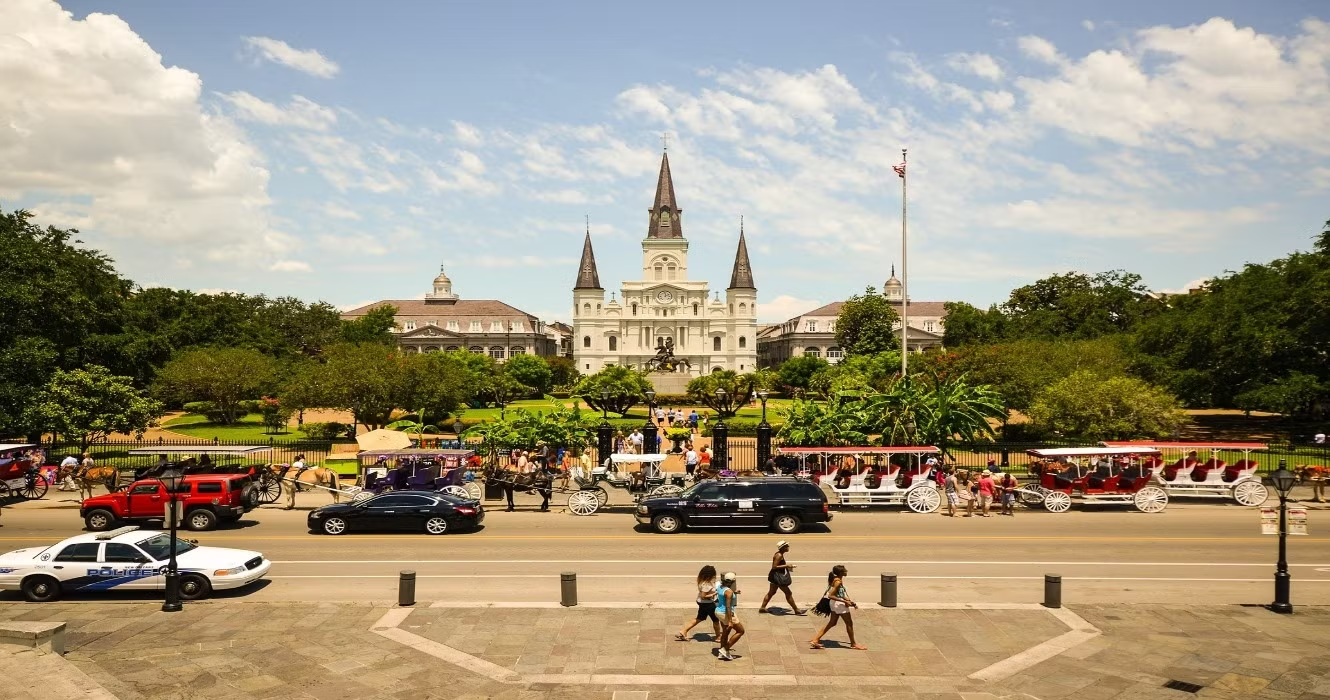
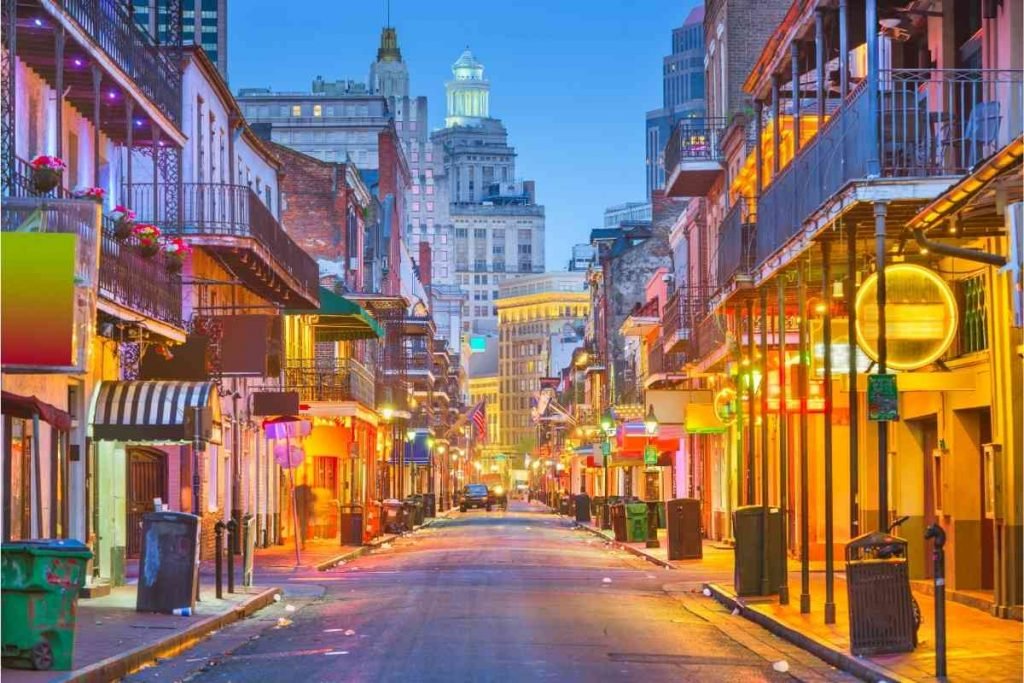
The French Quarter hosts Bourbon Street, one of the most famous nightlife corridors in the world. It also holds Jackson Square, the St. Louis Cathedral, and access to Frenchmen Street, where local musicians play every single night of the year.
This round-the-clock culture of music, food, and community is the living, breathing embodiment of the Big Easy nickname.
Do New Orleans Locals Actually Use the Nickname?
There is an interesting disconnect between the nickname’s global fame and its use among actual residents.
New Orleanians rarely refer to the city as “the Big Easy.” Locals like to say “New Or-leens” or “New Or-lee-ans.” Also, if giving someone their current location, they tend to use street names — “heading to bourbon,” “getting some beignets in the Quarter,” or “brunch on Canal.” The one thing they do not say is “Nawlins,” at least not today’s locals.
The name is primarily used by tourists, the media, and national marketing campaigns.
This gap between how outsiders see a city and how residents experience it is common in major cultural destinations. The nickname belongs more to the world’s imagination of New Orleans than to the everyday language of the people who live there.
New Orleans After Hurricane Katrina: The Resilient Big Easy
The Big Easy identity was tested severely in August 2005.
Hurricane Katrina made landfall on August 29, 2005, and caused catastrophic flooding when the city’s levee system failed. Over 1,800 people died. Entire neighborhoods were destroyed. Hundreds of thousands of residents were displaced.
Hurricane Katrina in 2005 tested the spirit of New Orleans profoundly. The city lost lives, neighborhoods, and billions of dollars in damage. Yet New Orleans rebuilt.
The city’s recovery was slow, painful, and incomplete for many communities. Yet the cultural identity that earned New Orleans its nickname proved resilient. Jazz Fest returned. Mardi Gras continued. Restaurants reopened. Musicians came back.
The Big Easy endured because its spirit was never contained in buildings or levees. It lived in people.
The Big Easy in Popular Culture
Beyond the 1987 film, the nickname has appeared throughout American pop culture in ways that keep reinforcing the association.
Travel magazines consistently rank New Orleans among the top domestic travel destinations in the United States. Food publications regularly name its restaurants among the country’s best. Music publications celebrate its ongoing role as a birthplace and incubator of American music genres.
Whatever its precise origin, the nickname resonates because it reflects how many people experience New Orleans. The city seems to move at its own pace — one where the music, the food, the neighborhoods, and the people all align under a rhythm that does not rush.
The nickname also appears in the names of businesses, sports teams, tourism campaigns, and local institutions throughout Louisiana. It has become self-reinforcing.
Other Nicknames for New Orleans
The Big Easy is not the only nickname the city carries. New Orleans has accumulated several over its long history.
| Nickname | Origin |
|---|---|
| The Big Easy | Jazz culture, African American slang |
| Crescent City | Shape of the Mississippi River bend |
| The Queen City of the South | Historical commercial prominence |
| The City That Care Forgot | Relaxed, pleasure-first attitude |
| NOLA | Abbreviation of New Orleans, Louisiana |
| Birthplace of Jazz | Musical heritage |
| The Paris of the South | French architecture and cuisine |
New Orleans took on the nickname “Crescent City” because of its location, built in a sharp curve around the Mississippi River. Joseph Holt Ingraham first coined the nickname in his 1835 book.
Each nickname captures a different facet of the same complex, layered city.
Why the Nickname Still Matters in 2026
In 2026, the Big Easy nickname remains deeply embedded in how the world sees New Orleans.
Tourism is one of Louisiana’s largest industries, and New Orleans is its crown jewel. The Big Easy brand draws millions of visitors every year to Jazz Fest, Mardi Gras, French Quarter Fest, and the city’s world-famous restaurant scene.
Jazz Fest, Mardi Gras, French Quarter Fest, and dozens of other events draw millions of visitors each year. The city’s culinary scene — blending French, Spanish, African, and Creole traditions — continues to earn international acclaim.
The nickname also carries historical weight. It reminds the world of the African American cultural contributions that built New Orleans into what it is. Jazz, Creole cuisine, second-line parades, and Mardi Gras Indian traditions all trace back to Black New Orleanians who shaped the city’s identity across centuries.
The Big Easy is not just a nickname. It is a tribute to a way of life that the world has never stopped wanting to experience.
Key Timeline of the Big Easy Nickname
| Year | Event |
|---|---|
| ~1900 | Big Easy Hall dance hall opens in Gretna |
| 1911 | Big Easy Hall destroyed by fire; first print reference found |
| 1917 | Original Dixieland Jass Band makes first jazz recordings in New Orleans |
| 1960s | Betty Guillaud begins using “Big Easy” in her Times-Picayune column |
| 1966 | Newsweek references “Big Easy” as a term used by African Americans in New Orleans |
| 1970 | James Conway publishes crime novel titled “The Big Easy” |
| 1987 | Film “The Big Easy” starring Dennis Quaid brings nickname to national fame |
| 2005 | Hurricane Katrina tests New Orleans; the Big Easy spirit endures |
| 2026 | The Big Easy remains one of the most recognized city nicknames in the world |
Frequently Asked Questions (FAQs)
Why is New Orleans called the Big Easy?
New Orleans earned this nickname through a mix of jazz culture, African American slang, relaxed lifestyle, and a legendary spirit of pleasure over hustle. Multiple theories trace the origin to the early 1900s.
Who coined the term “The Big Easy” for New Orleans?
No single person invented it. Columnist Betty Guillaud popularized it in her Times-Picayune column in the late 1960s and 1970s, but the phrase already existed in African American communities before that.
What is the oldest reference to the Big Easy nickname?
The oldest documented printed reference is a 1911 Times-Democrat article about a fire that destroyed a building called “The Big Easy” in Gretna, Louisiana, across the river from New Orleans.
Did the 1987 movie create the nickname?
No. The film “The Big Easy” starring Dennis Quaid popularized the nickname nationally, but the phrase had been in use for decades before the movie was made.
What does Buddy Bolden have to do with the Big Easy?
Buddy Bolden, one of jazz’s founding figures, regularly performed at the Big Easy Hall dance hall in Gretna around 1900 to 1911, directly connecting the name to jazz history.
Do people in New Orleans actually say “the Big Easy”?
Rarely. Locals typically use neighborhood names, street references, or just say “New Orleans.” The nickname is used more often by tourists, journalists, and national marketing campaigns.
Is the Big Easy the same as the French Quarter?
No. The French Quarter is a neighborhood within New Orleans. The Big Easy refers to the entire city and its overall culture, spirit, and lifestyle.
What other nicknames does New Orleans have?
New Orleans is also called the Crescent City, NOLA, The City That Care Forgot, The Queen City of the South, The Birthplace of Jazz, and The Paris of the South.
How did Prohibition contribute to the Big Easy nickname?
During Prohibition (1920–1933), New Orleans largely ignored the alcohol ban. Jazz clubs, bars, and social venues stayed open, reinforcing the city’s reputation as a place where pleasure was always within easy reach.
Why is the Big Easy nickname still relevant in 2026?
It drives tourism, shapes the city’s cultural branding, and honors the African American heritage that built New Orleans’ unique identity. Major annual events like Mardi Gras and Jazz Fest keep the Big Easy spirit alive every year.
Conclusion
Why Is New Orleans Called the Big Easy is a question with no single clean answer, and that feels exactly right for a city as layered as New Orleans.
The nickname grew out of a dance hall in Gretna, traveled through the jazz clubs of the early 20th century, lived quietly in African American slang for decades, was picked up by a newspaper columnist, was given a title by a crime novelist, and was finally broadcast to the world through a Hollywood film.
Every step of that journey reflects something true about New Orleans, a city where culture moves slowly, roots run deep, and nothing is ever forgotten.
In 2026, the Big Easy nickname continues to carry the weight of that history while inviting millions of visitors each year to come experience a city that has always known how to make life feel a little easier than everywhere else.


