


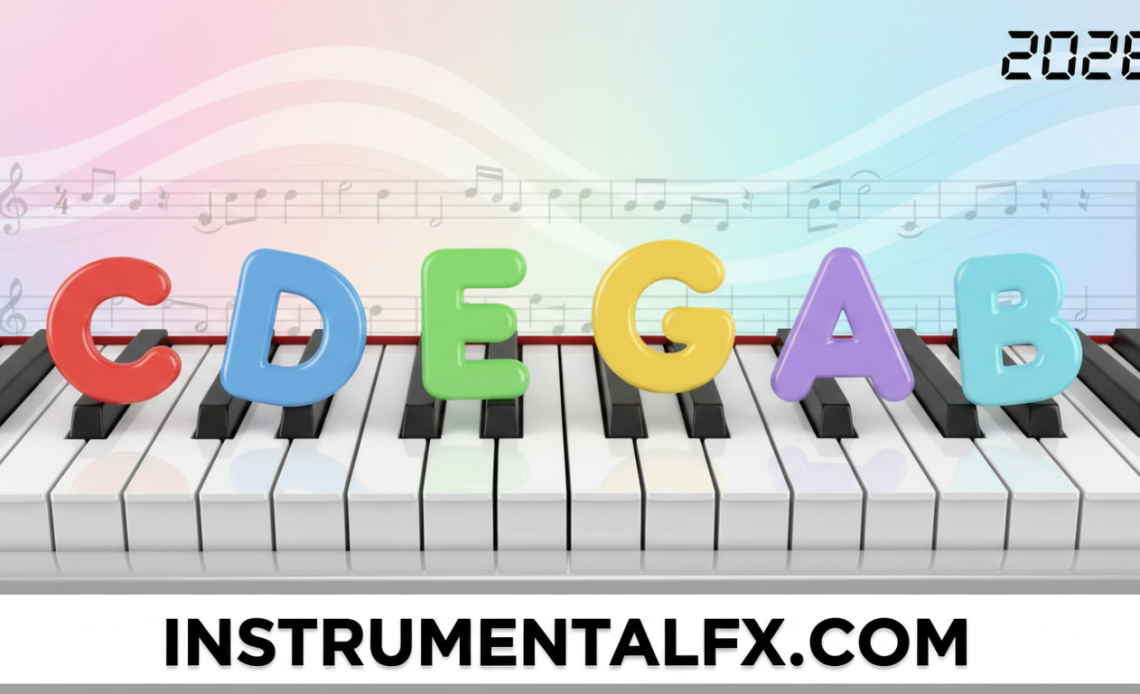
Easy piano sheet music with letters is the perfect learning tool for beginners who want to start playing piano immediately without first mastering traditional musical notation, featuring large note heads with letter names (A, B, C, D, E, F, G) printed directly inside each note for instant recognition and playability.
This innovative approach allows children, adults, and seniors to play recognizable songs like “Twinkle Twinkle Little Star,” “Mary Had a Little Lamb,” “Let It Be,” and popular Disney hits within their first practice session by matching letter names on the sheet music to labeled piano keys, building confidence and musical enjoyment while gradually developing sight-reading skills that transition smoothly to standard notation as abilities progress.
What is Easy Piano Sheet Music with Letters?
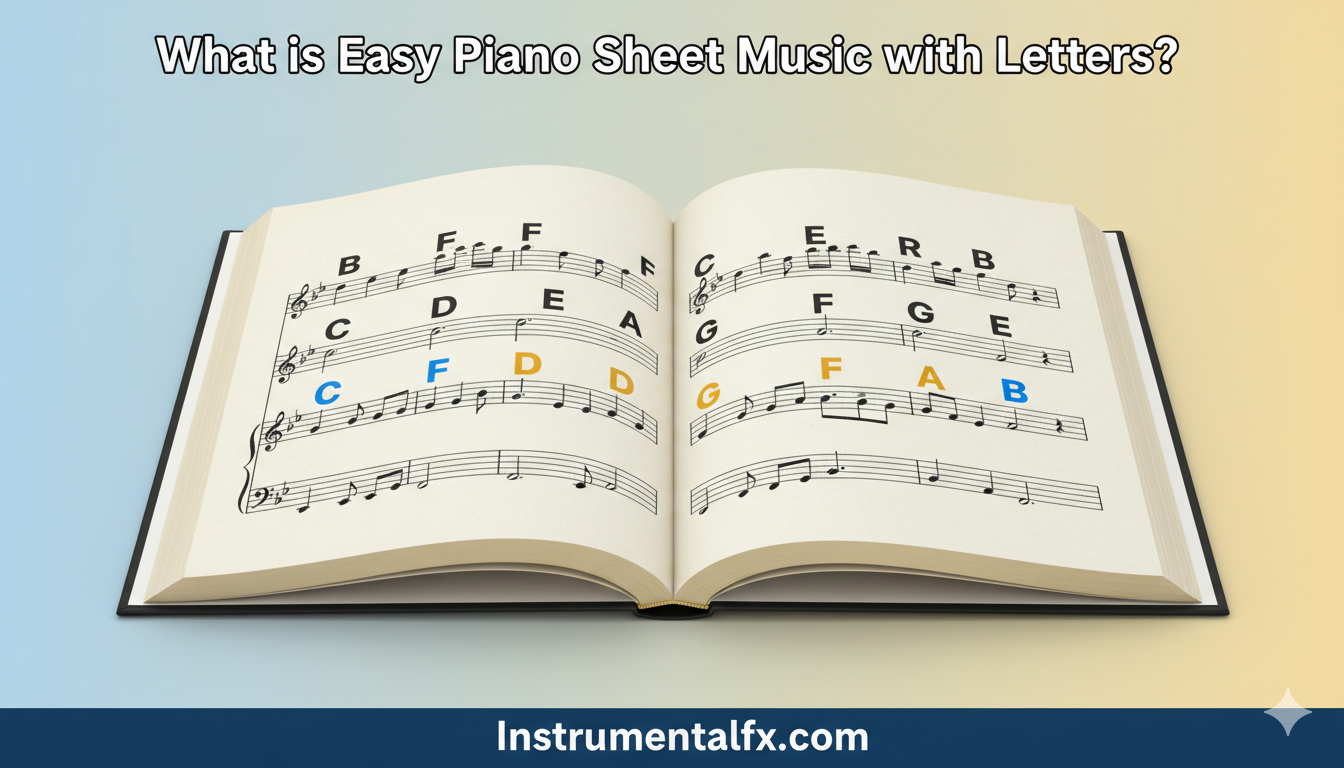
Easy piano sheet music with letters represents a simplified musical notation system designed specifically for absolute beginners. Instead of requiring learners to memorize which line or space represents which note, letters are printed directly inside the note heads.
Each note displays its corresponding piano key letter (A, B, C, D, E, F, or G). This eliminates the cognitive load of translating staff position to pitch during initial learning stages.
The letter notation system is also called “letter notes,” “note names,” or “piano letters.” Different publishers use slightly different terminology, but the concept remains the same.
This method allows complete novices to play recognizable melodies immediately. The sense of accomplishment from playing a complete song on day one motivates continued practice.
Easy piano sheet music with letters bridges the gap between wanting to play and actually playing. Traditional notation can be intimidating, but letters are familiar to everyone.
The system works for all ages—children as young as 4-5, teenagers, adults, and seniors. Anyone who can recognize letters can use this method successfully.
Most letter-based sheet music also includes the standard musical staff underneath or alongside. This dual presentation helps beginners gradually learn traditional notation while still using letters as support.
How Letter Notation Works
Letter notation assigns each piano key a letter name from A to G. After G, the pattern repeats at a higher pitch, creating the musical alphabet cycle.
Middle C is typically marked as “C” or “C4” to distinguish it from other C notes on the keyboard. This serves as the reference point for beginners.
Sheet music with letters prints the appropriate letter (C, D, E, F, G, A, or B) inside each note head. Some publishers use capital letters, while others use lowercase.
For black keys (sharps and flats), notation varies. Some use “C#” for C sharp or “Bb” for B flat, while others color-code black keys differently.
The rhythmic values (whole notes, half notes, quarter notes, eighth notes) are typically maintained. Letters tell you which key to press; note shape tells you how long to hold it.
Many beginner arrangements simplify rhythm as well, using primarily quarter notes and half notes. This reduces complexity while learning letter positions.
Some sheet music includes numbers alongside letters, indicating which finger to use (1=thumb, 2=index, 3=middle, 4=ring, 5=pinky). This teaches proper fingering from the start.
Benefits of Learning with Letter Notation
Immediate gratification is the primary benefit of easy piano sheet music with letters. Beginners can play recognizable songs in their very first session without weeks of theory study.
This early success builds confidence and motivation. Students who experience quick wins are significantly more likely to continue practicing and developing their skills.
Letter notation reduces cognitive overload for complete beginners. Learning piano simultaneously involves hand position, finger coordination, rhythm, dynamics, and note reading—letter notation simplifies one crucial element.
Children as young as 4-5 years old can start with letter notation. Traditional notation might be too abstract for very young students, but letters are already familiar.
Seniors and older adults often find letter notation less frustrating than traditional methods. Vision challenges or learning difficulties make large, clearly labeled notes much more accessible.
The method accommodates different learning styles. Visual learners benefit from the clear letter labels, while kinesthetic learners can immediately connect letter recognition to physical key pressing.
Letter notation doesn’t replace traditional music education—it supplements and facilitates it. Many students transition seamlessly to standard notation after building confidence with letters.
Popular Songs Available in Letter Notation
Children’s songs and nursery rhymes dominate beginner letter notation collections. “Mary Had a Little Lamb,” “Twinkle Twinkle Little Star,” “Row Row Row Your Boat,” and “Baa Baa Black Sheep” are universal starting points.
Christmas carols are extensively available with letter notes. “Jingle Bells,” “Silent Night,” “Deck the Halls,” “We Wish You a Merry Christmas,” and “Joy to the World” allow seasonal celebration.
Disney songs represent another massive category. “Let It Go” from Frozen, “A Whole New World” from Aladdin, “Circle of Life” from The Lion King, and “Beauty and the Beast” appeal across generations.
Classical music simplified for beginners includes Beethoven’s “Ode to Joy,” Mozart’s “Twinkle Variations,” Bach’s “Minuet in G,” and Pachelbel’s “Canon in D.”
Pop music hits are increasingly available in letter notation. Songs like “Happy Birthday,” “Happy” by Pharrell Williams, “Imagine” by John Lennon, and Beatles classics attract learners.
Hymns and spiritual songs like “Amazing Grace,” “Jesus Loves Me,” “This Little Light of Mine,” and “How Great Thou Art” serve religious and spiritual learners.
Movie themes including “Harry Potter,” “Star Wars,” “Pirates of the Caribbean,” and “Jurassic Park” motivate young learners interested in film music.
Where to Find Free Sheet Music with Letters
NoobNotes is one of the internet’s best free resources for letter notation. The website features hundreds of popular songs arranged with letter notes for piano, flute, recorder, and other instruments.
NoobNotes presents songs in simple letter sequences (C C G G A A G F F E E D D C). Users can read these letters and immediately play the melody.
Choose-Piano-Lessons.com offers free downloadable PDF sheets with color-coded letter notation. Different colors represent different octaves, helping learners distinguish between high and low versions of the same note.
LVK Music provides a collection of beginner songs with letters. Their website includes popular children’s songs, folk tunes, and easy classics formatted for immediate play.
Pinterest hosts thousands of letter notation sheets uploaded by teachers and music enthusiasts. Searching “piano sheet music with letters” or “easy piano songs with letters” yields extensive results.
YouTube channels like “Piano Tutorial Easy” and “Letter Note Player” provide video tutorials with on-screen letter notation. These animated tutorials show exactly when to press each lettered key.
Some teachers and homeschool websites offer free letter notation as educational resources. These are often formatted for printing and include instructions for parents and students.
Paid Resources for Letter Sheet Music
Musicnotes.com sells professionally arranged “Beginner Notes” sheet music. These premium arrangements feature large note heads with letters inside, clear formatting, and accurate musical content.
Prices at Musicnotes typically range from $5.99 to $9.99 per song. The quality is consistently high, with proper licensing and composer credits.
Amazon offers numerous books of easy piano sheet music with letters. Thomas Johnson’s “Easy Piano Songs For Kids: 40 Fun & Easy Piano Songs For Beginners” is a popular choice.
“Super Easy Christmas Piano Sheet Music for Beginners: 25 Classic Christmas Carols” with large print letter notes is another bestseller. These books typically cost $7-15.
Hal Leonard Publishing produces “Super Easy Songbook” series. These official songbooks feature Disney, pop, and classic songs with letter names inside each note head.
Teton Music specializes in beginner piano books with letters. Their collections include Disney hits, Beatles songs, pop favorites, and classical pieces arranged specifically for letter notation.
Etsy features handmade and custom letter notation sheets. Independent music teachers and arrangers sell unique arrangements, sometimes allowing customization for specific needs.
How to Use Piano Stickers with Letter Notation
Piano keyboard stickers provide a physical complement to letter notation sheet music. These removable stickers attach to piano keys, labeling each key with its corresponding letter.
Stickers are available for all keyboard sizes—37, 49, 54, 61, and 88 keys. Multi-color options help distinguish different octaves or note groups visually.
Application is simple: clean the keys, then carefully apply each sticker to the appropriate key. Most quality stickers remove cleanly without leaving residue.
With both stickers on the piano and letters in the sheet music, beginners create a direct visual connection. Look at the letter on the page, find that letter on the keyboard, press the key.
This dual-labeling system works particularly well for very young children (ages 4-6). The visual matching game aspect makes learning feel like play rather than work.
Adult beginners also benefit from stickers during the initial learning phase. The tactile and visual reinforcement accelerates memorization of key positions.
Most teachers recommend eventually removing stickers once key positions are memorized. The goal is to transition from dependence on labels to internalized knowledge.
Transitioning from Letters to Traditional Notation
Easy piano sheet music with letters serves as a bridge, not a permanent replacement for traditional notation. The ideal approach combines both methods for comprehensive learning.
Many letter notation books include both systems—letters inside note heads AND standard staff notation. This dual presentation allows gradual familiarization with traditional symbols.
As learners play using letters, they unconsciously absorb staff patterns. Over time, they notice that C sits on a specific ledger line, D in a specific space, and so on.
Teachers can gradually remove letter support, first covering half the letters, then three-quarters, then all. This scaffolded withdrawal builds independence systematically.
Rhythm notation typically appears standard even in letter-based sheet music. Students learn note values (whole, half, quarter, eighth notes) alongside letter identification.
Dynamic markings (loud/soft), articulation (staccato/legato), and expression appear in letter notation just as they do in traditional music. These elements transfer directly.
The timeline for transition varies by individual. Some students move to traditional notation after 6-8 weeks, others take 6-12 months. Patience and individual pacing are crucial.
Best Practices for Beginners
Start with the simplest songs—those using only 5-8 notes within a comfortable hand position. “Mary Had a Little Lamb” and “Hot Cross Buns” use just three notes each.
Practice identifying letter names on the keyboard before attempting to play from sheet music. Quiz yourself: “Where is C? Where is G? Where is F?”
Use the “middle C” landmark as your reference point. Middle C sits just left of the two black keys near the piano’s center. All other notes relate to this position.
Maintain proper hand position from the beginning. Curve fingers as if holding a ball, keep wrists level, and sit at the correct height and distance from the keyboard.
Practice hands separately before combining. Master the right-hand melody completely, then the left-hand accompaniment, then gradually bring hands together.
Don’t rush tempo. Play extremely slowly at first, prioritizing accuracy over speed. Speed develops naturally with repetition and muscle memory.
Use a metronome once basic notes are learned. Start at a very slow tempo (60 BPM or slower) and gradually increase as comfort and accuracy improve.
Teaching Children with Letter Notation
Children as young as 4-5 can begin piano with letter notation. At this age, traditional notation is too abstract, but letters are already familiar from alphabet learning.
Make it playful and game-like. “Find the C key!” “Can you play C-D-E going up the keyboard?” “Let’s play the ABC song using real ABCs!”
Use color-coding to enhance learning. Assign each note a color—C is red, D is orange, E is yellow, and so forth. Match these colors on both sheet music and keyboard stickers.
Keep practice sessions very short—5-10 minutes for young children. Multiple short sessions daily work better than one long frustrating session.
Celebrate small victories enthusiastically. When a child plays their first complete song, no matter how simple, make it a big deal with praise and perhaps a sticker reward.
Incorporate movement and physicality. Have children stand up and “be big” for high notes, crouch down and “be small” for low notes.
Connect music to things children love. If they love Frozen, start with “Let It Go.” If they love dinosaurs, find dinosaur-themed songs or create simple melodies about dinosaurs.
Adult Learners and Letter Notation
Adults often feel self-conscious starting piano as beginners. Letter notation provides a less intimidating entry point than traditional notation, reducing anxiety and embarrassment.
Many adults have attempted piano before and quit due to difficulty or frustration. Letter notation offers a fresh start with a different, more accessible approach.
Adults bring analytical thinking and determination that children may lack. They can understand the systematic nature of letter notation and progress deliberately through materials.
Time constraints affect adult learners—work, family, responsibilities limit practice time. Letter notation’s efficiency (immediate play rather than weeks of theory) fits busy schedules.
Vision considerations matter for older adults. Large print letter notation with clear, bold letters addresses presbyopia and other age-related vision changes.
Adults often have specific musical goals—playing for church, entertaining grandchildren, personal relaxation. Letter notation allows rapid progress toward these specific objectives.
Never underestimate adult learning capability. While children may have neural plasticity advantages, adults have discipline, motivation, and life experience that facilitate musical learning.
Understanding Note Duration in Letter Notation
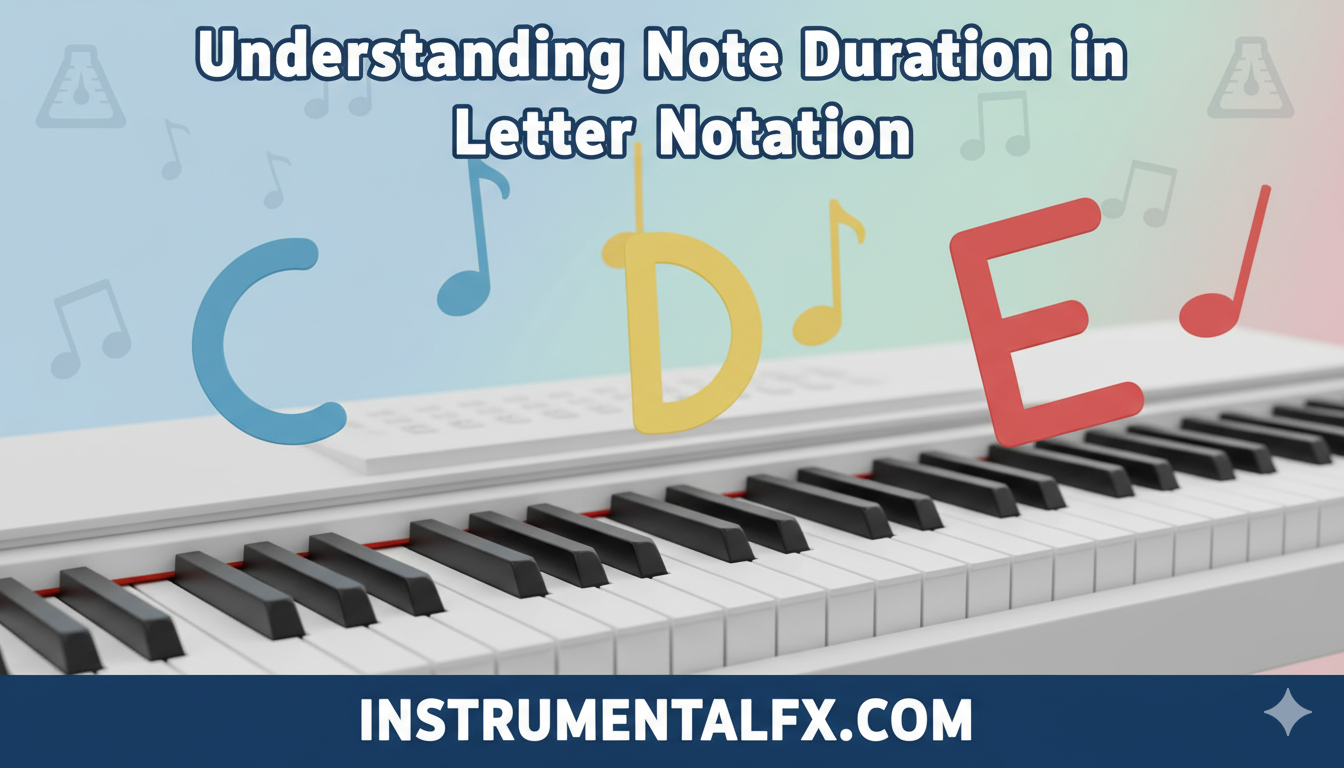
Even in simplified letter notation, understanding rhythm is essential. Notes have both pitch (which key to press) and duration (how long to hold it).
Whole notes appear as hollow ovals and last four beats. In 4/4 time, a whole note occupies an entire measure. Hold the key down while counting 1-2-3-4.
Half notes are hollow ovals with stems, lasting two beats. Two half notes fit in one measure of 4/4 time. Count 1-2, then play the next note on 3.
Quarter notes are filled-in ovals with stems, lasting one beat each. This is the most common note value in beginner music. One key press per count.
Eighth notes appear as filled-in ovals with flagged or beamed stems, lasting half a beat. Two eighth notes equal one quarter note. Count “1-and-2-and-3-and-4-and.”
Rests indicate silence—times when you don’t play anything. Whole rest (four beats), half rest (two beats), quarter rest (one beat), and eighth rest (half beat) all have distinct symbols.
Many beginner letter notation arrangements simplify rhythm significantly, using mostly quarter and half notes. This reduces cognitive load while learning letter positions.
Left Hand and Right Hand in Letter Notation
Most beginner letter notation starts with right hand only (RH). The right hand typically plays the melody—the part you sing or recognize.
Right hand uses fingers numbered 1-5, where 1 is the thumb, 2 is the index finger, 3 is middle, 4 is ring, and 5 is the pinky.
Left hand (LH) typically joins later, playing bass notes, chords, or simple accompaniment patterns. Starting with just right hand prevents overwhelming beginners.
When both hands appear in letter notation, they’re usually on separate staves. The upper staff (treble clef) shows right hand notes; lower staff (bass clef) shows left hand.
Some simplified notation uses different colors for each hand—right hand in blue, left hand in red, for example. This visual distinction helps learners track which hand plays what.
Coordination between hands develops gradually. Start by playing each hand separately many times, then combine them at a very slow tempo.
The brain must send different signals simultaneously to each hand. This coordination improves with practice and is one of piano playing’s most valuable cognitive benefits.
Creating Your Own Letter Notation
If you can’t find letter notation for a specific song, creating your own is possible. Start by finding or writing out the melody in traditional notation.
Identify each note’s letter name on the staff. Treble clef: the line notes are E-G-B-D-F (Every Good Boy Does Fine), and space notes are F-A-C-E (FACE).
Write the corresponding letter above or below each note on the traditional staff. Alternatively, use software or apps that convert traditional notation to letter notation.
For very simple songs, you can write out just the letter sequence. “Mary Had a Little Lamb” would be: E D C D E E E, D D D, E G G.
Apps like MuseScore allow you to input music and then edit note heads to include text. You can manually add letters to each note head before printing.
When creating notation for children, consider adding color-coding, finger numbers, and large print. These enhancements make your custom sheet music more effective.
Remember that creating and distributing copyrighted music, even in letter notation, may violate copyright law. Only create and share public domain or original compositions publicly.
Technology and Apps for Letter Notation
Simply Piano is a popular app that uses letter notation in its early levels. The app listens through your device’s microphone and provides real-time feedback on accuracy.
Flowkey offers interactive piano lessons with visual aids including letter names. Songs are presented with falling notes (like Guitar Hero) combined with traditional and letter notation.
YouTube channels like “Piano Tutorial Easy” provide video lessons with on-screen letter notation. The letters light up or change color when it’s time to play them.
Piano Marvel and Playground Sessions include beginner content with letter notation support. These subscription services offer structured curricula with gamification elements.
MuseScore software (free) allows you to create, edit, and share sheet music. You can add text to note heads manually to create custom letter notation.
Synthesia is a piano tutorial program that uses falling notes color-coded by pitch. While not strictly letter notation, it provides similar visual matching functionality.
Perfect Ear and other ear training apps include lessons on note identification. These help reinforce the connection between letter names and piano keys auditorily.
Common Mistakes and How to Avoid Them
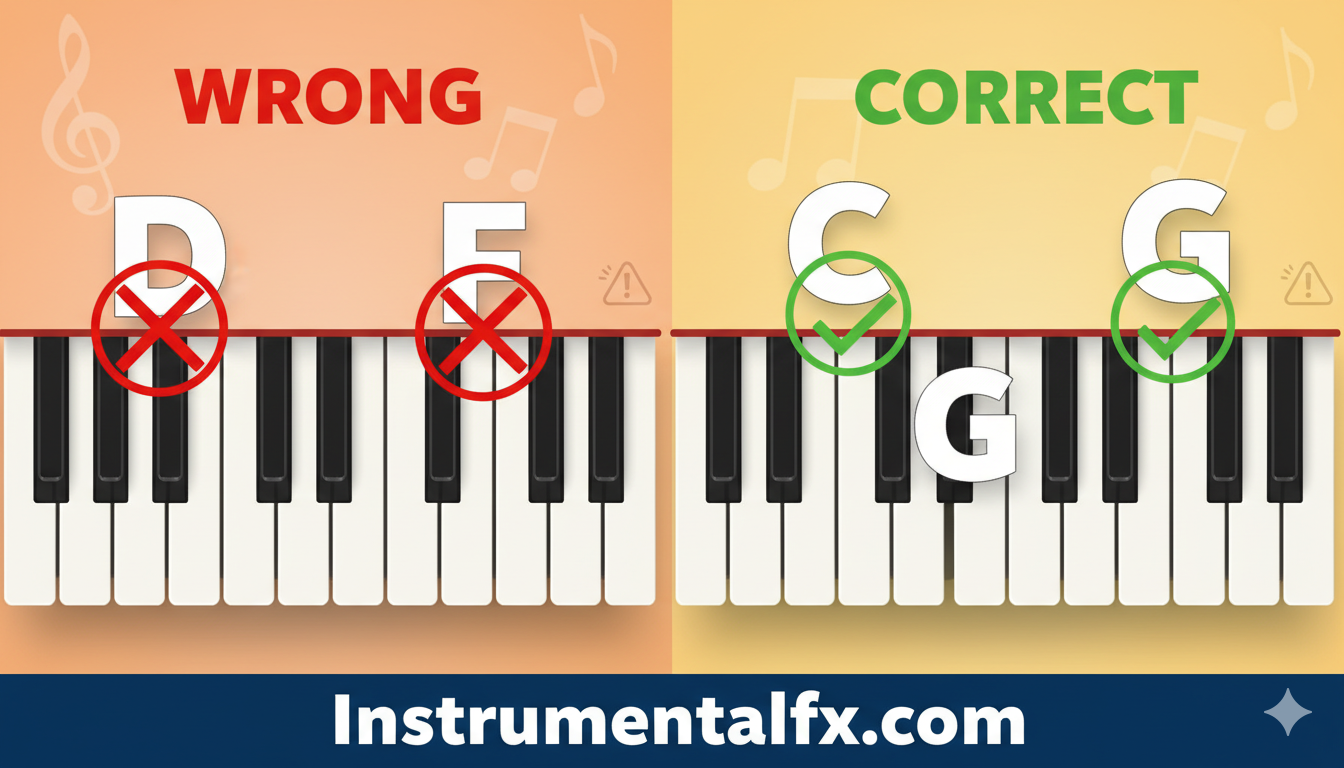
Becoming too dependent on letters is a common pitfall. While letters help initially, learners should gradually transition toward recognizing staff positions and intervals.
Using incorrect fingering undermines technique development. Even in simplified music, follow suggested finger numbers (1-5) to build proper hand position and movement patterns.
Playing too fast too soon leads to sloppy technique and ingraining mistakes. Always prioritize accuracy at slow tempos over speed with errors.
Neglecting rhythm in favor of just hitting the right notes creates musicality problems. Pay attention to note values, not just letter names.
Skipping rest symbols is another frequent error. Rests are part of the music—silence has musical value and should be observed accurately.
Ignoring dynamics (loud/soft markings) flattens musical expression. Even beginners should attempt basic dynamic contrast to develop musicality alongside technique.
Practicing without attention or focus wastes time. Short, focused practice sessions yield better results than long, distracted ones. Quality trumps quantity.
Frequently Asked Questions (FAQs)
What is easy piano sheet music with letters?
Easy piano sheet music with letters is simplified musical notation where letter names (A, B, C, D, E, F, G) are printed inside each note head. This allows beginners to immediately identify which piano key to press without first learning traditional staff notation.
Can adults learn piano using letter notation?
Yes, adults can successfully learn piano using letter notation as a starting point. Many adult beginners find letter notation less intimidating than traditional notation, allowing them to play recognizable songs immediately while gradually transitioning to standard music reading.
Where can I find free easy piano sheet music with letters?
Free letter notation is available on websites like NoobNotes.net, Choose-Piano-Lessons.com, Pinterest, and YouTube channels. These resources offer hundreds of popular songs arranged with letter notes for immediate play without purchasing sheet music.
Do professional pianists use letter notation?
Professional pianists eventually read traditional staff notation, but many began with letter notation as children. Letter notation serves as a learning tool and transition method, not a replacement for comprehensive music literacy at advanced levels.
How long should I use letter notation before switching to traditional notation?
Most learners transition from letter notation to traditional notation after 2-6 months, depending on age, practice frequency, and goals. Many use both simultaneously, gradually reducing reliance on letters as staff reading improves through practice and exposure.
Are piano keyboard stickers helpful for beginners?
Piano keyboard stickers complement letter notation effectively, especially for young children and visual learners. The labeled keys create a direct visual connection to letter notation on sheet music, though stickers should eventually be removed once positions are memorized.
What’s the best first song to learn with letter notation?
“Mary Had a Little Lamb” is the ideal first song, using only three notes (E, D, C) in a simple, recognizable melody. Other excellent beginner songs include “Hot Cross Buns,” “Ode to Joy,” and “Twinkle Twinkle Little Star.”
Can I learn piano without a teacher using letter notation?
Yes, self-teaching is possible with letter notation, especially with abundant online resources, YouTube tutorials, and instructional apps. However, a teacher provides personalized guidance, corrects technique issues, and accelerates progress beyond what self-study alone achieves.
Is letter notation suitable for children under 5 years old?
Children as young as 4-5 can begin with letter notation if they recognize letters and have sufficient finger dexterity. For children under 4, consider preparatory activities like singing, clapping rhythms, and general keyboard exploration.
Does letter notation work for all types of music?
Letter notation works best for simple melodies and beginner-level arrangements. Complex classical pieces, jazz with extended chords, or music requiring sophisticated interpretation eventually require traditional notation for accurate representation of all musical elements.
Conclusion
Easy piano sheet music with letters revolutionizes piano education by removing the initial barrier of traditional notation complexity, allowing absolute beginners of all ages—from 4-year-old children to seniors in their 70s and 80s—to experience the immediate joy and satisfaction of playing recognizable melodies like “Twinkle Twinkle Little Star,” “Let It Be,” Disney favorites, and Christmas carols within their very first practice session.
This innovative approach, featuring large note heads with letter names (C, D, E, F, G, A, B) printed directly inside each note, creates a direct visual connection between sheet music and keyboard labels, reducing cognitive overload while building confidence, motivation, and genuine musical enjoyment that sustains long-term learning commitment.
Available through free resources like NoobNotes and Choose-Piano-Lessons.com, paid collections from Musicnotes and Amazon, and supported by complementary tools including piano keyboard stickers, video tutorials, and interactive apps like Simply Piano and Flowkey, letter notation serves not as a permanent replacement for comprehensive music literacy but as an essential bridge that transitions learners smoothly toward traditional staff reading while accommodating diverse learning styles, age groups, and physical or cognitive needs.


