


Let it be piano sheet music is one of the most searched-for arrangements among beginner pianists learning this timeless Beatles classic written by Paul McCartney in 1970.
This iconic song features simple chord progressions in C Major with no sharps or flats, making it perfect for those just starting their piano journey.
Whether you’re looking for free PDF downloads, easy piano arrangements, or complete tutorials with chords and melody, “Let It Be” offers an accessible entry point into playing one of rock music’s most beloved ballads.
With various arrangements available from beginner to advanced levels, this guide will help you find the perfect sheet music and learn techniques to master this inspirational masterpiece.
Understanding “Let It Be” – Song Background
“Let It Be” was written by Paul McCartney and released by The Beatles in 1970. The song became one of the band’s most enduring and popular compositions in music history.
Paul McCartney composed this masterpiece after a dream about his mother, Mary McCartney. She had passed away when Paul was just 14 years old, making the song deeply personal.
The lyrics “Mother Mary comes to me, speaking words of wisdom” refer to his mother. The message of acceptance and peace during troubled times resonated with millions worldwide.
“Let It Be” was released as a single in March 1970 and became the title track of The Beatles’ final studio album. It reached number one in several countries.
The song features Paul McCartney on piano and vocals, with a gospel-influenced arrangement. The simple yet powerful piano part became iconic and instantly recognizable.
Musical characteristics include a slow tempo, straightforward chord progression, and emotional depth. These elements make it ideal for piano learners at various skill levels.
Why “Let It Be” is Perfect for Beginners
Let it be piano sheet music ranks among the best choices for beginner pianists. The song uses only five basic chords throughout the entire composition.
The five chords required are C Major, G Major, A Minor, F Major, and E Minor (or D Minor in some sections). All these chords use only white keys on the piano.
Being in C Major means no sharps or flats to worry about. This key signature is the easiest for beginners to navigate on the keyboard.
The tempo is slow and deliberate, giving beginners time to transition between chords. Rushing isn’t necessary, making practice more manageable and less frustrating.
The melody is simple and memorable, which helps with learning. When you know how the song should sound, it’s easier to identify and correct mistakes.
The chord progression follows the I-V-vi-IV pattern, one of the most common in pop music. Learning this pattern helps with hundreds of other popular songs.
The song provides immediate gratification – even with basic chord playing, it sounds recognizably like the original. This motivates beginners to continue practicing.
Key Signature and Tempo Details
Let it be piano sheet music is written in C Major, the most beginner-friendly key signature. C Major contains no sharps (#) or flats (♭), using only the white keys.
The original recording tempo sits around 73-76 BPM (beats per minute). This moderate slow tempo allows plenty of time for chord changes and melody playing.
Time signature is 4/4 (common time), meaning four beats per measure. This is the most standard time signature in Western music and easiest to count.
The song maintains a steady, meditative pace throughout. There are no tempo changes or accelerandos to complicate matters for beginner learners.
Dynamic markings in most beginner arrangements are minimal. Players typically start soft in verses and build slightly louder in choruses, following natural musical instinct.
The original key works well for most vocal ranges if you plan to sing along. Transposition isn’t necessary for beginners, though advanced arrangements may offer different keys.
Essential Chords Breakdown
- C Major Chord: The foundational chord consists of C-E-G played simultaneously. In right hand, use fingers 1-3-5 (thumb, middle, pinky) for root position.
- C Major can be played in different inversions. First inversion (E-G-C) and second inversion (G-C-E) appear frequently in let it be piano sheet music arrangements.
- G Major Chord: Comprises G-B-D notes played together. This is the V (five) chord in C Major and provides harmonic movement away from home base.
- A Minor Chord: Built with A-C-E notes, this is the vi (six) chord. A Minor adds emotional depth and is very easy on the piano.
- F Major Chord: Contains F-A-C notes. This IV (four) chord is crucial to the iconic progression and requires slightly more finger stretch for beginners.
- E Minor or D Minor Chord: E Minor (E-G-B) appears in some arrangements, while others use D Minor (D-F-A). Both work musically in different sections.
Learning these five chords unlocks “Let It Be” completely. Once mastered, you’ll have foundational knowledge applicable to countless other songs.
Chord Progression Pattern
The verse progression follows: C – G – Am – F – C – G – F – C. This eight-chord sequence repeats with slight variations throughout the song.
In Roman numeral analysis, this translates to: I – V – vi – IV – I – V – IV – I. This is one of pop music’s most beloved progressions.
The chorus maintains a similar pattern: Am – G – F – C, then C – G – F – C. The repetition makes memorization easier for beginners.
The bridge section introduces minimal variation, generally staying within the same chord family. Some arrangements add C/G (C chord with G in bass) for smoother transitions.
There’s a characteristic walkdown in the bass line from Am to F. The bass notes descend: A – G – F, creating melodic movement underneath held chords.
Another walkdown occurs from F to C: F – E – D – C in the bass notes. These walkdowns add professional polish to basic chord playing.
The famous ending features a chord riff with inversions: F – C – F – C – G – F – C. This creates the iconic organ-like sound from the original recording.
Right Hand Melody Notes
The melody begins with the notes G – G – A – G – F – E – C. These correspond to the opening lyrics “When I find myself in times of trouble.”
Paul McCartney’s melody sits comfortably in the middle register of the piano. Most notes fall between Middle C and the G above Middle C.
The melody often mirrors the chord tones, making it easier to find notes. When playing a C chord, the melody typically uses C, E, or G notes.
Beginners can start by playing melody only with right hand. Once comfortable, add left-hand chords, then eventually play both hands together.
The chorus melody ascends slightly: E – F – G – G – A. This creates the uplifting feeling during “Let it be, let it be, let it be, let it be.”
Rhythmically, most melody notes are quarter notes and half notes. There are no complex sixteenth-note runs or tricky syncopation to navigate.
The melody includes strategic rests and longer held notes. These give beginners time to reposition hands and prepare for the next phrase.
Left Hand Bass Line and Chords
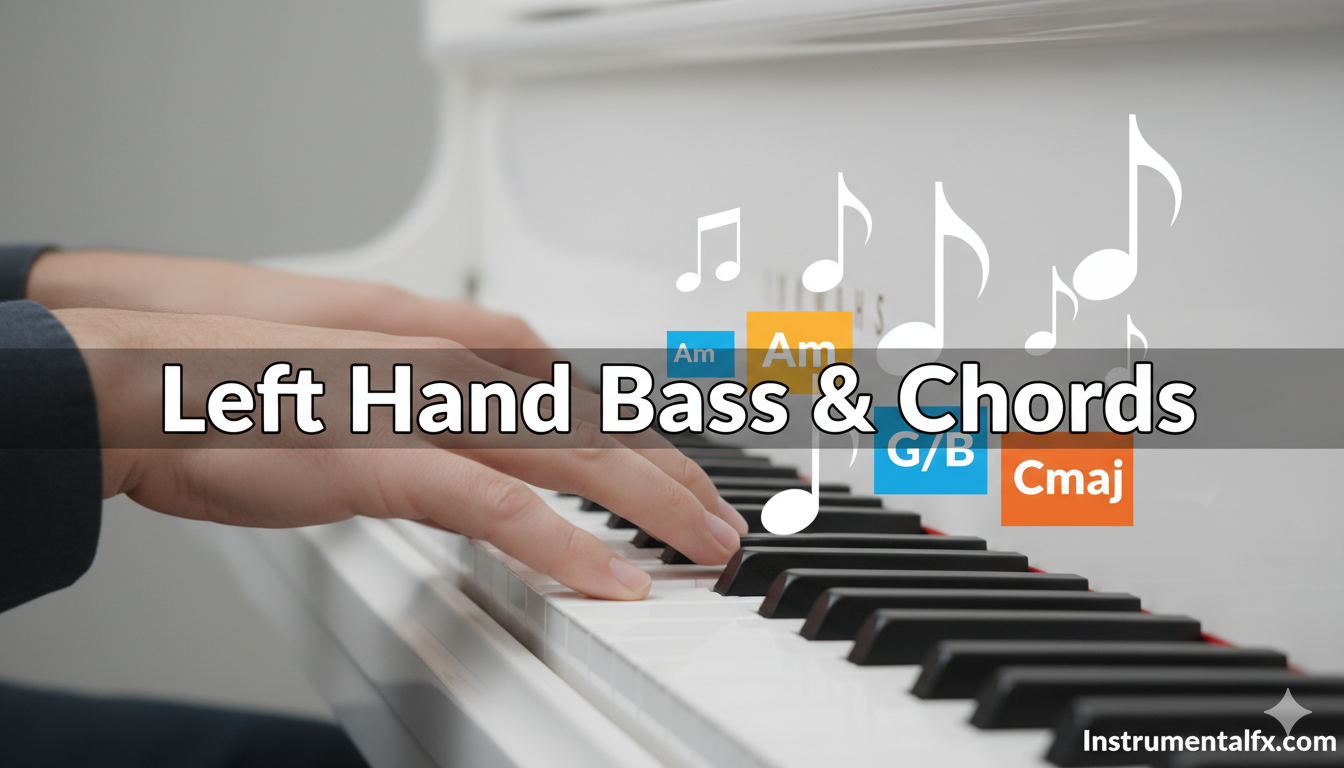
The left hand primarily plays single bass notes or octaves in beginner arrangements. More advanced versions incorporate full chord voicings with both hands.
For each chord, the left hand typically plays the root note. When playing C Major, the left hand plays a low C note (one or two octaves below Middle C).
Rhythm in left hand is simpler than right hand melody. Usually, bass notes are played on beats 1 and 3, creating a gentle pulse.
Some arrangements use a pattern: root note (beat 1), chord (beat 2), root note (beat 3), chord (beat 4). This creates fuller accompaniment sound.
The walkdowns mentioned earlier are primarily left-hand features. When the chord progression moves from Am to F, the bass descends A – G – F.
Advanced players can add fifth intervals in left hand. Instead of just C, play C and G together (root and fifth of the chord).
Octaves in the left hand create a fuller, more professional sound. Play the root note with pinky (finger 5) and thumb (finger 1) simultaneously.
Beginner-Friendly Arrangements
Easy piano arrangements simplify the original score for learning purposes. They typically feature block chords in right hand and single bass notes in left hand.
Level 1 arrangements might include only the chorus section. Starting with the most recognizable part provides quick motivation and satisfaction.
These simplified versions remove the complexity of inversions and voice leading. All chords stay in root position for maximum ease.
Hal Leonard publishes an “Easy Piano” edition specifically designed for beginners. This arrangement captures the song’s essence while being technically accessible.
Musicnotes offers a simplified version rated for Early Intermediate (Level 2B). This sits slightly above absolute beginner but isn’t intimidatingly difficult.
Free resources like IMSLP and MuseScore feature user-created easy arrangements. Quality varies, but many are excellent for beginner practice.
Some beginner books include simplified two-page versions. These truncated arrangements let you play the complete song without overwhelming page turns.
Intermediate Sheet Music Versions
Intermediate let it be piano sheet music incorporates the melody more fully. Right hand plays both chords and melodic phrases in proper rhythm.
These arrangements include chord inversions for smoother voice leading. Instead of jumping from root position C to root position G, you might use second inversion C to first inversion G.
The famous piano introduction becomes playable at intermediate level. This includes the iconic opening notes that immediately identify the song.
Left hand patterns become more sophisticated, incorporating arpeggiated chords. Instead of block chords, notes are played in sequence: C – E – G – E, creating movement.
Intermediate versions typically span 3-5 pages of music. They include verses, chorus, bridge, and sometimes the piano solo section.
Dynamic markings and expression indications appear more frequently. You’ll see crescendos, decrescendos, and phrasing marks to guide musical interpretation.
These arrangements may include the organ-style riff at the end. This requires understanding of chord inversions and precise timing between hands.
Advanced Piano Arrangements
Advanced let it be piano sheet music transcribes the original recording note-for-note. This includes all piano fills, the organ part, and Billy Preston’s soul-influenced embellishments.
These versions require strong technical skills including fast chord changes. Hand independence is crucial as right and left hands play complex, independent rhythms.
The piano solo section features elaborate melodic runs and chord embellishments. Advanced players can add their own improvisational elements here.
Jazz arrangements reimagine “Let It Be” with extended chords like C major 7, G7, and F major 9. These add harmonic sophistication beyond the original.
Classical adaptations transform the song into a concert piece. These feature elaborate introduction, development, and coda sections with virtuosic passages.
Four-hands (piano duet) arrangements divide the parts between two pianists. One plays the core accompaniment while the other handles melody and embellishments.
Concert transcriptions include full orchestration reduced for solo piano. Every string, brass, and woodwind part from the original recording is incorporated.
Where to Find Free Sheet Music
MuseScore.com offers free community-uploaded arrangements of “Let It Be.” Users can download PDF files or view interactive sheet music online.
The quality on MuseScore varies from simple chord charts to professional-quality transcriptions. Check ratings and reviews before downloading.
IMSLP (International Music Score Library Project) may have public domain arrangements. Since the original song is still under copyright, options are limited but growing.
8notes.com provides a simplified version for free with limited preview. Full access requires a subscription, but basic arrangements are accessible.
Sheetsfree.com has PDF versions available for download. These are often simplified lead sheets showing melody and chord symbols.
YouTube tutorials often include free sheet music links in video descriptions. Channels like “Sheet Music Boss” and “Piano Tutorial Easy” provide downloads.
Pinterest can be a source for finding free PDFs. However, be cautious about copyright – ensure any free sheet music is legally shared.
Recommended Paid Sheet Music Sources
Musicnotes.com offers professional-quality arrangements starting at $5.99. They provide instant PDF downloads, digital sheet music apps, and transposition tools.
Multiple difficulty levels are available on Musicnotes: Beginner Notes, Easy Piano, Piano/Vocal/Guitar, and Solo Piano. Each serves different skill levels and purposes.
Hal Leonard Corporation publishes official Beatles sheet music books. The “Let It Be” songbook includes the full album with professional engravings.
Sheet Music Plus carries extensive Beatles catalogs including various “Let It Be” arrangements. They offer digital downloads and physical book shipping.
OKTAV provides interactive sheet music with difficulty ratings from 1-100. Their arrangements include Piano Solo, Accompaniment, Leadsheet, and 4 Hands versions.
Amazon sells physical sheet music books including Beatles collections. These range from complete works to simplified easy piano editions.
J.W. Pepper specializes in educational music and carries arrangements suitable for students. Their catalog includes both digital and printed options.
Understanding Different Arrangement Types
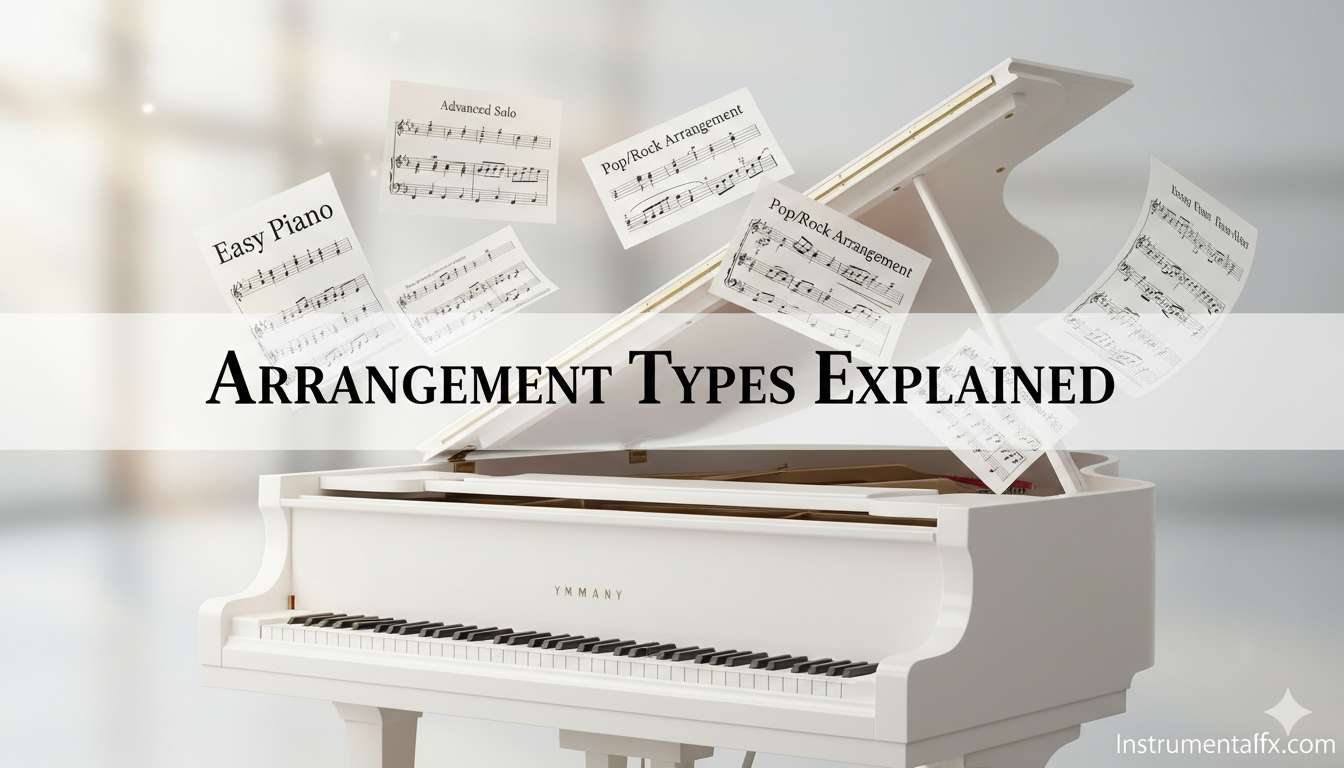
- Piano Solo: Contains both melody and accompaniment arranged for one player. This is the most common format for individual practice and performance.
- Piano/Vocal/Guitar (PVG): Includes piano part, vocal melody line with lyrics, and guitar chord diagrams. Ideal if you plan to sing while playing.
- Lead Sheet: Shows only melody line and chord symbols above the staff. Players improvise the accompaniment based on their skill level.
- Easy Piano: Simplified arrangement with basic rhythm and simpler left-hand patterns. Perfect for beginners or those wanting a quick learn.
- Accompaniment Only: Designed to support a singer or other instrument. The melody is omitted; only chords and harmonic support are provided.
- Four Hands (Piano Duet): Written for two pianists sharing one piano. One player (Primo) typically handles melody while the other (Secondo) plays accompaniment.
- Big Note Piano: Uses larger notation for easier reading. Particularly helpful for children or those with vision difficulties.
Step-by-Step Learning Process
- Week 1: Focus exclusively on learning the five required chords. Practice transitioning between C, G, Am, F, and Em/Dm until movements become automatic.
- Week 2: Learn the chord progression pattern for verses. Play only left-hand bass notes and right-hand block chords without worrying about rhythm yet.
- Week 3: Add basic rhythm to your chord playing. Start with simple whole notes, then progress to half notes for each chord.
- Week 4: Introduce the melody line in the right hand. Play melody alone initially, separate from chords, until you can play it smoothly.
- Week 5-6: Begin combining melody and chords. This requires hand independence – start slowly, perhaps even one measure at a time.
- Week 7-8: Work on transitions between sections (verse to chorus). Pay attention to the walkdowns and any tempo or dynamic changes.
- Week 9-10: Add expressive elements like dynamics, pedaling, and phrasing. Focus on making the music feel emotional rather than mechanical.
- Week 11-12: Play along with the original recording. This helps with timing, tempo consistency, and overall musicality.
Chord Inversion Techniques
Chord inversions allow smoother transitions between chords. Instead of jumping your hand across the keyboard, you can often move minimally by using inversions.
Root Position C: C-E-G (fingers 1-3-5). This is the standard chord voicing with the root (C) as the lowest note.
First Inversion C: E-G-C (fingers 1-2-5 or 1-3-5). The third (E) becomes the bass note while C moves to the top.
Second Inversion C: G-C-E (fingers 1-2-4 or 1-2-5). The fifth (G) is in the bass, creating yet another voicing option.
When moving from C to G, try using second inversion C (G-C-E) to root position G (G-B-D). Notice the G stays the same—only two fingers move!
The same inversion technique applies to all chords in “Let It Be.” Experiment to find the smoothest pathway between successive chords.
Many intermediate and advanced let it be piano sheet music editions indicate specific inversions. These are chosen to minimize hand movement and create smooth voice leading.
Common Beginner Mistakes to Avoid
- Playing Too Fast: Beginners often rush through the song. “Let It Be” requires a slow, contemplative tempo—resist the urge to speed up.
- Neglecting the Left Hand: Many focus only on right-hand melody while left hand becomes inconsistent. Both hands deserve equal attention during practice.
- Ignoring Fingering Suggestions: Sheet music includes fingering numbers for good reason. Using consistent, proper fingering creates muscle memory and prevents awkward hand positions.
- Not Using the Pedal Properly: The sustain pedal enhances the song beautifully but must be used correctly. Lift pedal when chords change to avoid muddiness.
- Practicing Only Hands Together: Always practice hands separately first. This builds confidence and accuracy before combining both hands.
- Poor Posture: Sitting too low, too high, or too far from the piano creates tension. Maintain straight back, relaxed shoulders, and arms parallel to floor.
- Skipping Difficult Sections: Don’t always start from the beginning. Isolate challenging measures and practice them specifically until they improve.
Proper Pedaling Techniques
The sustain pedal (right pedal) is essential for creating “Let It Be’s” lush, connected sound. Proper pedaling transforms choppy playing into flowing music.
Basic Pedal Technique: Press the pedal down immediately AFTER playing the chord or note, not before or simultaneously. This prevents blurring previous sounds.
Legato Pedaling: As you play the next chord, press the new notes THEN lift and immediately re-press the pedal. This creates seamless connection without muddiness.
Pedal Changes: In “Let It Be,” change pedal with each chord change. When moving from C to G, press G chord, then change the pedal.
Some sections benefit from longer pedaling. During sustained moments or chord buildups, you might hold pedal across multiple measures.
Half-Pedaling: Advanced technique where pedal is only pressed halfway down. This creates subtle sustain without overwhelming resonance.
The left pedal (soft pedal or una corda) isn’t typically necessary for this song. It can add intimacy in quiet sections if desired.
Practice pedaling separately from note-playing initially. Play a chord, then practice foot motion without coordinating with hands yet.
Reading Sheet Music Basics
Let it be piano sheet music uses standard musical notation. The grand staff consists of treble clef (right hand) and bass clef (left hand) connected by a brace.
- Treble Clef: Right-hand notes are written here. The curl of the clef circles the G line (second line from bottom).
- Bass Clef: Left-hand notes appear here. The two dots of the clef surround the F line (second line from top).
- Time Signature: 4/4 appears at the beginning, indicating four beats per measure. The top 4 shows four beats; bottom 4 shows quarter note gets one beat.
- Key Signature: C Major has no sharps or flats, so the key signature area remains empty. This appears immediately after the clef symbols.
- Note Values: Whole notes (○) = 4 beats, half notes (♩) = 2 beats, quarter notes (♪) = 1 beat, eighth notes (♫) = 1/2 beat.
- Rests: Silence is notated with rest symbols. Whole rest (━) = 4 beats, half rest (━) = 2 beats, quarter rest (𝄽) = 1 beat.
- Dynamics: Markings like p (piano/soft), mp (mezzo-piano/moderately soft), mf (mezzo-forte/moderately loud), f (forte/loud) guide volume.
Chord Symbol Notation
Lead sheets and PVG arrangements include chord symbols above the staff. These letter-name symbols indicate which chords to play without showing exact voicing.
C = C Major chord (C-E-G). When just a letter appears, it always indicates major chord.
Am = A Minor chord (A-C-E). The lowercase “m” indicates minor quality.
C/G = C chord with G in the bass. The slash notation shows the bass note differs from the root.
Cmaj7 or CM7 = C Major 7th chord (C-E-G-B). Advanced arrangements may include these extended chords.
Gsus4 = G suspended 4th chord (G-C-D). The 4th (C) replaces the 3rd (B) temporarily.
F/E = F chord with E bass note. This creates the walkdown effect during chord transitions.
Chord symbols allow flexibility in voicing. You can play the indicated chord in root position, inversion, or spread across octaves.
Practice Tips for Faster Learning
- Practice Daily: Even 15-20 minutes daily proves more effective than one long weekly session. Consistency builds muscle memory faster.
- Slow Practice: Use a metronome starting at 40-50 BPM. Only increase tempo when you can play perfectly at the slower speed.
- Hands Separate: Always practice right hand alone, then left hand alone, before attempting hands together. This reduces cognitive overload.
- Small Sections: Break the song into 4-8 measure chunks. Master each section before connecting them together.
- Record Yourself: Use a smartphone to record practice sessions. Listening back reveals mistakes you don’t notice while playing.
- Mental Practice: Away from the piano, visualize playing the song. This cognitive rehearsal strengthens neural pathways without physical practice.
- Vary Practice: Don’t always start at the beginning. Practice the ending, middle section, or challenging transitions first some days.
- Play Musically: Even during slow practice, incorporate dynamics and phrasing. Mechanical practice creates mechanical performance.
Playing with Expression and Dynamics
“Let It Be” communicates deep emotion—peace, acceptance, comfort. Technical accuracy alone doesn’t capture this essence; expressive playing does.
The verses should feel intimate and gentle. Start with softer dynamics (p or mp) to create a personal, confessional atmosphere.
Build slightly toward the chorus. Increase volume to mezzo-forte (mf), giving the “let it be” refrain more conviction and hope.
The bridge section (if your arrangement includes it) can peak emotionally. This is where you might reach forte (f) for maximum impact.
Rubato: Slight tempo flexibility adds expressiveness. You might slow down slightly at phrase endings, then resume tempo for the next phrase.
Phrasing: Think of musical phrases like sentences in speech. “Breathe” between phrases by lifting hands slightly, creating natural separation.
Touch: Vary how you press keys—sometimes with more weight (full arm), sometimes lighter (fingers only). This creates tonal color variation.
Listen to Paul McCartney’s original piano recording repeatedly. Notice his phrasing, dynamics, and emotional delivery to inform your own interpretation.
Singing While Playing
Many learn “Let It Be” specifically to accompany their singing. This requires coordination between voice and hands.
Start by mastering the piano part alone completely. Only add singing once your hands operate on autopilot without conscious thought.
Sing the melody first while playing only left-hand bass notes. This establishes timing between voice and accompaniment.
The melody mostly aligns with strong beats, making coordination easier. Syllables usually fall on beats 1, 2, 3, or 4 rather than between beats.
Breathe between musical phrases, not in the middle of phrases. Plan breathing spots during piano interludes or longer notes.
If playing and singing simultaneously proves difficult, simplify the piano part. Play only bass notes and basic chords rather than intricate melody.
Record yourself singing along with just piano chords. Listen back to ensure you’re staying in tune and in rhythm.
Transposing to Different Keys
While let it be piano sheet music is traditionally in C Major, you might need to transpose for your vocal range or to practice theory.
Common Transpositions: G Major (one sharp), F Major (one flat), or D Major (two sharps) work well for different voices.
Musicnotes and similar services offer instant transposition. With one click, you can view the sheet music in any key.
Manual transposition requires understanding intervals. If the original melody starts on C, transposing up to G Major means starting on G instead.
All chord relationships remain the same when transposing. If the progression is I-V-vi-IV in C, it’s I-V-vi-IV in any other key.
Transposing helps develop music theory understanding. It reinforces how chord progressions work independent of specific keys.
Digital keyboards often feature transpose functions. You can play in C Major while the keyboard transposes output to another key automatically.
Using Digital Tools and Apps
Musicnotes App allows viewing purchased sheet music on tablets. Features include playback, highlighting, annotations, and automatic page turns.
Skoove offers interactive piano lessons including “Let It Be.” The app listens to your playing and provides real-time feedback on accuracy.
flowkey provides step-by-step tutorials for “Let It Be.” The app displays falling notes (like Guitar Hero) synchronized with traditional sheet music.
Simply Piano includes “Let It Be” in its song library. The app offers beginner-friendly arrangements with game-like learning elements.
YouTube tutorials from channels like HDpiano, Piano Tutorial Easy, and Pianote offer free video lessons. These demonstrate proper technique and hand positions.
MuseScore software allows editing and customizing sheet music. You can simplify arrangements, change keys, or create your own versions.
Slow Downer apps like Amazing Slow Downer or Anytune let you slow the original Beatles recording. Practice along at 50% or 75% speed before full tempo.
Performance Preparation Tips
Once you’ve learned “Let It Be,” you might perform for friends, family, or in recitals. Preparation ensures confident performance.
- Memorization: While not required, memorizing the piece allows you to focus on expression rather than reading. Memorize small sections progressively.
- Performance Practice: Simulate performance conditions during practice. Play straight through without stopping, even if you make mistakes.
- Record a Full Performance: Use your phone to record a complete run-through. Watch it to identify areas needing improvement before the actual performance.
- Manage Nerves: Deep breathing exercises before performing help calm anxiety. Accept that minor imperfections are normal and acceptable.
- Dress Rehearsal: Practice in performance clothing and environment if possible. This helps identify any physical restrictions from formal attire.
- Have a Recovery Plan: If you make a mistake, don’t stop. Continue playing—most audiences won’t notice small errors if you keep going confidently.
- Start Strong: The introduction sets the tone. Practice the opening measures extra to ensure you begin with confidence.
Frequently Asked Questions (FAQs)
Is “Let It Be” piano sheet music suitable for complete beginners?
Yes, “Let It Be” is excellent for beginners because it’s in C Major with no sharps or flats and uses only five basic chords. Easy piano arrangements simplify the original further, making it accessible from your first few months of piano lessons.
What chords do I need to know to play “Let It Be” on piano?
You need five chords: C Major, G Major, A Minor, F Major, and E Minor (or D Minor depending on arrangement). All these chords use only white keys, making them perfect for beginner pianists learning chord-based playing.
Where can I find free “Let It Be” piano sheet music?
Free arrangements are available on MuseScore.com, 8notes.com (limited), and Sheetsfree.com. YouTube tutorials often include free downloads in video descriptions, though quality and legality vary—always verify proper licensing.
What is the difficulty level of “Let It Be” for piano?
Beginner arrangements rate as Level 1-2 (Elementary), while original transcriptions reach Level 5-6 (Intermediate to Advanced). Easy piano versions are playable within 3-6 months of lessons, making it an ideal early learning piece.
How long does it take to learn “Let It Be” on piano?
With consistent daily practice, beginners can play a simplified version in 2-4 weeks. Learning the complete arrangement with melody, chords, and proper technique typically requires 2-3 months for those with 6-12 months of piano experience.
What key is “Let It Be” piano sheet music written in?
“Let It Be” is written in C Major, which has no sharps or flats. This is the easiest key for beginners because you only use white keys, making it perfect for learning chord progressions and melody simultaneously.
Can I play “Let It Be” and sing at the same time?
Yes, the song is designed for singing while playing piano. Start by mastering the accompaniment alone, then add vocals gradually—begin with simple left-hand bass notes before adding full right-hand melody to make coordination easier.
What tempo should I play “Let It Be” at?
The original tempo is approximately 73-76 BPM (beats per minute). Beginners should start much slower (40-50 BPM) using a metronome, gradually increasing speed only after achieving accuracy and smooth transitions at slower tempos.
Are there different arrangements of “Let It Be” sheet music?
Yes, multiple arrangement types exist: Easy Piano, Piano/Vocal/Guitar, Piano Solo, Lead Sheet, Four Hands (duet), and advanced transcriptions. Choose based on your skill level and whether you plan to sing or play solo.
Do I need to use the pedal when playing “Let It Be”?
While not absolutely required for beginners, the sustain pedal greatly enhances the song’s flowing, connected quality. Learn basic pedaling technique—press pedal after playing each chord and change pedal with each chord change for best results.
Conclusion
Let it be piano sheet music remains one of the most rewarding pieces for pianists at every skill level, from absolute beginners taking their first steps into chord-based playing to advanced performers seeking expressive classical arrangements of this Beatles masterpiece.
The song’s accessibility through its C Major key signature, five simple chords (C, G, Am, F, and Em/Dm), and slow, meditative tempo makes it the perfect entry point for new pianists while offering enough depth for sophisticated interpretation by experienced musicians.
Whether you download free beginner arrangements from MuseScore, purchase professional transcriptions from Musicnotes or Hal Leonard, or follow interactive tutorials on platforms like Skoove and flowkey, the journey of learning “Let It Be” provides essential skills in chord progressions, inversions, pedaling, and expressive playing that transfer to countless other songs.


