


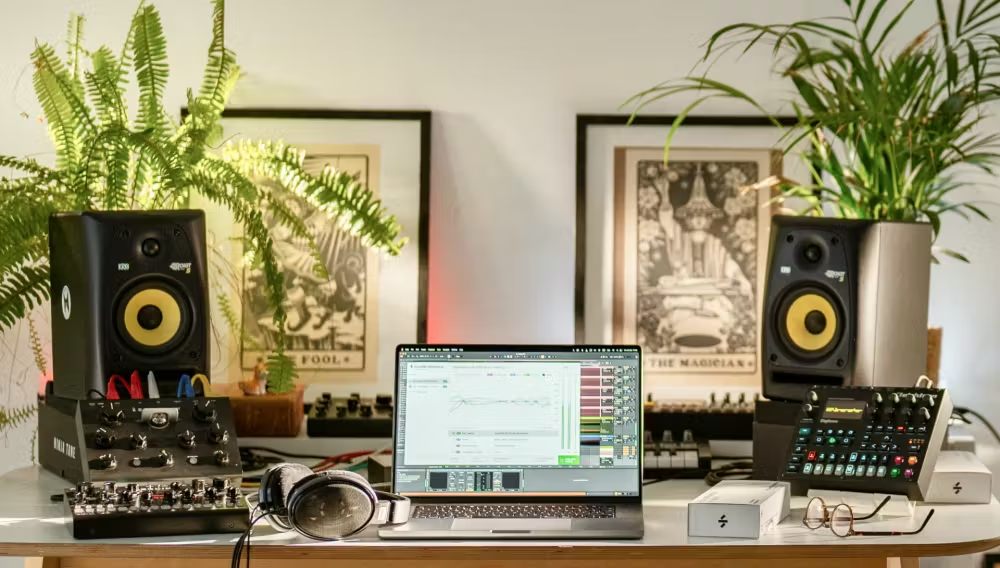
Audio producers obsess over room acoustics, monitor calibration, and vintage microphones. But what happens when a physical emergency strikes during a late-night recording session? Discover why independent studio owners in Mississauga are finally treating standard first aid and CPR training as critical, non-negotiable studio infrastructure.
Building a home recording studio is an absolute labor of love. You spend thousands of hours researching the perfect audio interface and arguing on forums about analog preamps. You meticulously glue acoustic panels to your walls just to trap those muddy bass frequencies. You treat your gear like absolute royalty.
Mississauga has a massive, thriving music production scene. With major educational hubs like Metalworks Institute nearby and a dense network of independent beatmakers, the city is packed with professional-grade home studios. But in the obsessive pursuit of the perfect vocal take, producers frequently ignore their actual physical environment.
A recording studio is essentially a tiny, airtight box packed with high-voltage electronics. Booking a session for C2C First Aid Mississauga should literally be on your startup checklist right next to buying a backup hard drive. Let’s look at why medical readiness is actually a critical piece of modern studio infrastructure.
What Are the Real Dangers Inside a Soundproof Box?
By design, a great recording studio is completely isolated from the outside world. You build “rooms within rooms” and install heavy, airtight doors with weather stripping just to keep the street noise out.
But physical isolation works both ways. If a client suddenly suffers a severe asthma attack or a cardiac event inside your vocal booth, nobody outside that room can hear them calling for help. You are entirely on your own.
As the studio owner, you are legally and morally responsible for the people in your space. If a rapper or a voiceover artist collapses onto the floor, you cannot just stand there frozen in shock. Knowing how to immediately open their airway or start high-quality chest compressions is the only way to bridge the gap until an ambulance actually arrives.
How Do Long Tracking Sessions Break the Body?
Audio engineering is basically an endurance sport. It is incredibly common to work a twelve-hour tracking session running entirely on black coffee, nicotine, and terrible takeout food.
When you push a client’s vocal cords to the absolute limit for hours on end, deep physical exhaustion sets in. Severe dehydration and sudden fainting (syncope) are very real threats in a hot, poorly ventilated vocal booth.
First aid training teaches you how to recognize the early physical signs of distress. You learn to spot when a client is pushing too hard, allowing you to call for a break and offer water before they actually hit the floor. It is about proactive harm reduction. Ultimately, keeping your artists healthy leads to vastly better recording sessions anyway.
Why Is Safety Gear Now Considered Core Studio Infrastructure?
If you are willing to spend two thousand dollars on a vintage vocal microphone, you should be willing to spend a hundred dollars on a proper trauma kit. Safety gear is just another piece of studio infrastructure.
Many independent producers think a first aid kit is just a box of cheap bandages for paper cuts. A professional workplace kit is totally different. It contains heavy pressure dressings, burn gels, and a CPR pocket mask.
If a session musician accidentally slices their hand open on a broken guitar string, you need to stop that bleeding immediately. A sterile pressure dressing keeps the wound clean and keeps blood off your highly expensive mixing console. You protect your client, and you protect your gear.
Can Electrical Shocks Actually Happen in Modern Studios?
Absolutely. Studios are absolute nests of electrical wiring. While modern gear is generally very safe, independent studios often use older, vintage equipment.
Faulty grounding on a vintage 1970s guitar amplifier or an ungrounded tube microphone can easily deliver a severe, potentially fatal electrical shock to a musician holding a guitar. The risk multiplies if they are sweating heavily from performing.
Standard first aid teaches you how to handle electrical emergencies safely. You learn the critical rule of never touching a shock victim with your bare hands until you have safely cut the main breaker power. Jumping in blindly can instantly turn one victim into two.
How Does First Aid Help With Studio Anxiety?
Recording is a highly vulnerable process. When an artist steps up to the microphone, they are putting their entire soul on display. That intense vulnerability often triggers severe performance anxiety.
It is not uncommon for artists to suffer massive panic attacks during high-pressure sessions. They might start hyperventilating, feeling dizzy, and complaining of chest pain. To an untrained producer, a severe panic attack looks terrifyingly similar to a real heart attack.
Modern first aid courses cover the basics of managing shock, hyperventilation, and extreme panic. You learn how to calmly de-escalate the situation. You practice grounding the client, speaking softly, and regulating their breathing patterns until the panic totally subsides. It makes you a much better, more empathetic producer.
What Are Mississauga’s Top Music Schools Teaching About Liability?
Mississauga is a major educational hub for audio engineering. Schools like Metalworks are churning out highly skilled producers every single year. These institutions are starting to shift how they teach studio management.
They are teaching students that running a commercial studio means running a real business. If you are charging clients an hourly rate to record in your basement, your home is legally considered a commercial workplace.
That specific legal classification introduces massive liability. If a client trips over a loose XLR cable and shatters their wrist, you can be sued. Having a certified first aider on site and maintaining a documented safety protocol proves that you run a professional, legally compliant operation. It shields your small business from devastating lawsuits.
Why Is Blended Learning the Ultimate Workflow Hack for Producers?
We all know the music industry does not operate on a standard nine-to-five schedule. Producers are notorious night owls. Asking a busy mix engineer to wake up at 8:00 AM on a Saturday to sit in a stuffy medical classroom is a terrible pitch.
This is exactly why the blended learning format has completely taken over the safety training industry. It is the absolute perfect educational model for busy creatives.
You can complete all the required medical reading and theoretical quizzes online. You can literally study how to identify a stroke or treat a thermal burn on your laptop while waiting for a massive Pro Tools session to bounce down.
Once the digital theory is 100% finished, you just pop into a local facility for a highly condensed, fast-paced physical skills session. You practice your chest compressions on a dummy for a couple of hours, get certified by a live instructor, and go right back to mixing. It totally removes the friction from getting certified.
If you are looking for first aid training near the busy Cooksville neighborhood, right off the bustling intersection of King Street and Hurontario Street, or other creative hubs close to our facility, then you may reach out to Coast2Coast First Aid/CPR – Mississauga in that area. For more info and articles like this .
Frequently Asked Questions
- Is a home recording studio legally considered a commercial workplace?
Yes. If you are actively charging clients money to record, mix, or master in your physical space, it is a commercial environment. This means you are legally liable for the physical safety of your guests, making basic first aid training a highly recommended layer of legal protection.
- Can an electrical shock from a guitar amp actually stop a human heart?
Yes. Faulty grounding on vintage guitar amplifiers or ungrounded microphones can deliver a severe electrical shock that disrupts the heart’s natural rhythm. Training teaches you to never touch the victim until you have safely cut the main electrical breaker.
- Do I need to buy a massive industrial first aid kit for a small studio?
You do not need a massive trauma kit, but you should have a basic WSIB-compliant workplace kit easily accessible. It should heavily feature sterile bandages, burn gel, and a CPR pocket mask to protect yourself during rescue breathing.
- How does first aid training address severe panic attacks?
Recording can trigger intense performance anxiety. Modern first aid courses cover the basics of managing shock, hyperventilation, and extreme panic. You learn how to calmly de-escalate the situation, ground the patient, and regulate their rapid breathing.
- How long does a standard CPR certification course actually take?
For busy producers, blended learning is the fastest route. You can knock out the online reading modules in a few hours while exporting a mixdown. The physical, in-person skills evaluation at a training center usually only takes about two to three hours to complete.
- What should I do if an artist starts choking on food during a session?
If they cannot cough, speak, or breathe, you must act instantly. Stand behind them, make a tight fist just above their belly button, grab it with your other hand, and pull inward and upward with extreme force. These abdominal thrusts physically pop the trapped food out.
- Does standard first aid cover hearing loss or acoustic trauma?
While first aid focuses heavily on life-threatening trauma and cardiac events, it does cover the basics of managing shock and head injuries. Producers usually mitigate acoustic trauma naturally by maintaining safe monitor levels and offering earplugs during loud live-room tracking.
- Should I keep an automated external defibrillator (AED) in my home studio?
While it is an expensive investment for a home studio, having an AED is the ultimate safety net. If you regularly host older clients or run a high-traffic commercial facility, keeping an AED on the wall drastically increases survival rates for sudden cardiac arrests.
- How long does a Canadian first aid certificate legally stay valid?
A standard first aid and CPR certificate issued by a recognized Canadian provider is valid for exactly three years from the date you complete the course. You must take a recertification class before it officially expires to keep your skills sharp.
- Can I get sued if I crack a client’s rib while performing CPR?
In Canada, you are heavily protected by the Good Samaritan Act. If you voluntarily provide life-saving assistance without expecting payment, you are shielded from legal liability. Cracking a rib is actually incredibly common and usually indicates you are pushing deep enough to pump blood.

