


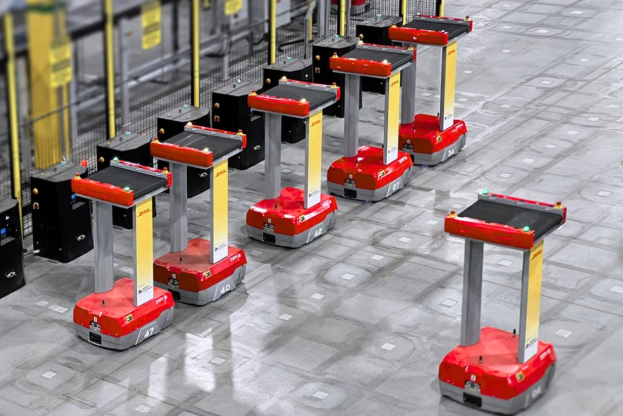
India’s quick commerce model depends on fulfilment operations that can move high-frequency orders from inventory to dispatch with minimal delay, putting intense pressure on sorting, picking, packing, and dispatch workflows. Automated sorter technology is becoming an important part of this infrastructure because it can direct items and orders towards the correct destinations without relying entirely on manual movement and sorting.
India’s warehouse automation landscape is increasingly incorporating conveyor and sortation systems alongside robotics, ASRS, WMS, and other technologies as operators seek faster throughput and more efficient warehouse operations. Up to 300% improvement in order fulfilment speed is reported with automated picking and sortation systems, highlighting the importance of faster internal movement for high-velocity fulfilment.
Automated Sortation as the Link Between Order Processing and Dispatch
An automated sorter creates a continuous flow between picking, packing, consolidation, and dispatch by directing orders or items towards their intended destinations. This reduces dependence on manual sorting at critical handoff points, helping quick commerce facilities in India maintain a smoother flow as order activity fluctuates throughout the day.
Sortation becomes particularly valuable when multiple orders are being processed simultaneously, and each order needs to reach the correct dispatch lane, rider zone, or downstream process without unnecessary handling. 78% of warehouses experience labour shortages that drive operational costs up by 15–25%, making repetitive sorting activity an important area for automation.
- Order routing: Items can be directed towards defined destinations according to the fulfilment flow.
- Continuous movement: Sorting can continue while other warehouse activities take place in parallel.
- Fewer handoffs: Defined routes can reduce unnecessary movement between processing stages.
For in-depth information, download Addverb’s Whitepaper – Flexible Sortation Use Cases for Smart Warehouse Operations.
Faster Order Movement Across High-Velocity Quick Commerce Operations
Quick commerce requires fulfilment processes to keep pace with rapid order creation, making the speed and consistency of internal material movement directly relevant to delivery expectations. An automated sorter can continuously divert items to appropriate destinations while other warehouse activities continue in parallel, reducing interruptions between picking and dispatch.
The technology shifts repetitive sorting activity from manual handling towards automated material flow, helping maintain throughput when order volumes increase rapidly. This becomes particularly relevant where multiple orders are prepared simultaneously, and products must move through consolidation or dispatch processes without creating avoidable queues that can affect downstream fulfilment activity.
| Quick commerce requirement | Role of sortation |
| Rapid order creation | Keeps items moving towards destinations |
| Multiple simultaneous orders | Separates items into defined flows |
| Faster dispatch cycles | Reduces delays at sorting handoffs |
| Variable order volumes | Maintains structured material movement |
Reducing Manual Handling and Sorting Errors in Dark Stores
Manual sorting creates additional touchpoints where items can be misplaced, mixed between orders, or delayed before dispatch. An automated sorter establishes defined product and order flows, improving consistency between picking, consolidation, packing, and dispatch activities without depending entirely on repetitive manual identification.
This matters in dark stores in India because inaccurate or delayed order consolidation can affect fulfilment efficiency as well as the customer experience. When products from different picking activities converge for final order preparation, structured sortation can create clearer destinations and reduce unnecessary handling before orders move towards dispatch.
Making Limited Dark Store Space Work Harder
Quick commerce relies on hyperlocal fulfilment facilities positioned close to demand, making efficient use of available warehouse space an important operational consideration. Sortation can organise material movement through defined lanes and destinations, reducing unnecessary movement across already busy fulfilment areas while helping different stages of the process remain connected.
The combination of conveyor and sortation systems with other warehouse automation technologies is increasingly being used to improve throughput and optimise warehouse space. This is particularly relevant in Indian facilities where every movement needs to be planned around limited operating areas, multiple order flows, and the need to keep picking, packing, and dispatch activities moving without avoidable congestion.
Supporting the Shift from Manual to Automated Quick Commerce Fulfilment
India’s warehousing sector is moving towards greater adoption of automation as e-commerce and quick commerce increase expectations around fulfilment speed, inventory visibility, and throughput. Sortation can complement conveyors, mobile robots, and warehouse software by creating a structured flow for items after they are picked and packed.
A material handling and automation approach brings these processes into a more connected operating environment, where automated movement can work alongside other fulfilment technologies rather than functioning as an isolated stage. After deploying Addverb’s robotic sortation solutions, Lenskart reduced order consolidation time from 2–3 days to 2.5 hours and is now handling 150,000 orders per day at 99.99% accuracy.
How Addverb’s Sortation Solutions Enable Quick Commerce Fulfilment
Addverb’s sortation solutions, including Zippy and SortIE, are designed to organise the movement of individual items and orders to their required destinations within high-velocity fulfilment operations. By automating the sorting stage, these solutions can separate and route items according to defined destinations, helping connect picking and packing activities with order consolidation and dispatch without relying on manual sorting at every handoff.
This makes sortation particularly relevant where large numbers of orders need to be processed simultaneously. Addverb’s solutions can create defined sorting flows that direct items towards the appropriate order, lane, or dispatch destination, helping reduce mixing and unnecessary rehandling. In quick commerce environments, where orders move through fulfilment at high frequency, automated sorting provides greater consistency at the point where multiple item flows need to be separated and consolidated for dispatch.
Conclusion
Automated sorters are becoming an important part of the infrastructure required to keep quick commerce fulfilment operations moving at the required pace. By automating repetitive sorting and creating more consistent material flow, sortation technology connects picking and packing activity with the final dispatch process.
As quick commerce continues to expand in India, automated sortation can help fulfilment operations pursue greater speed, accuracy, and operational consistency. Addverb’s sortation solutions provide a relevant technology layer for facilities seeking more organised movement between fulfilment activities and dispatch, particularly as order volumes and operational demands continue to increase.

