


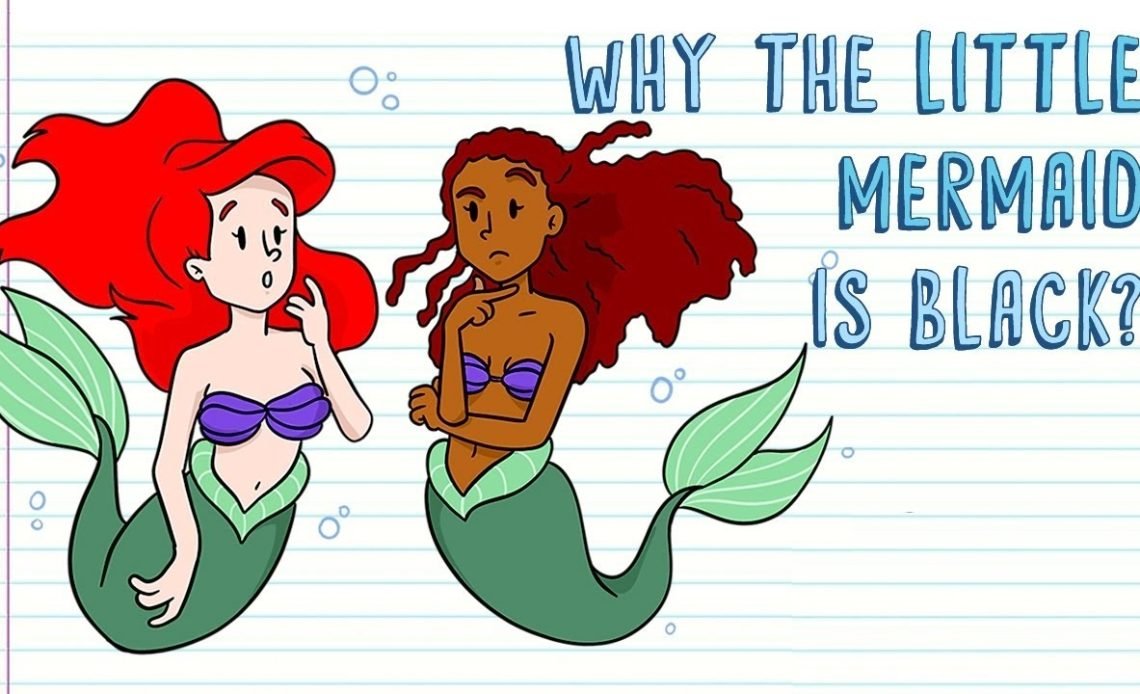
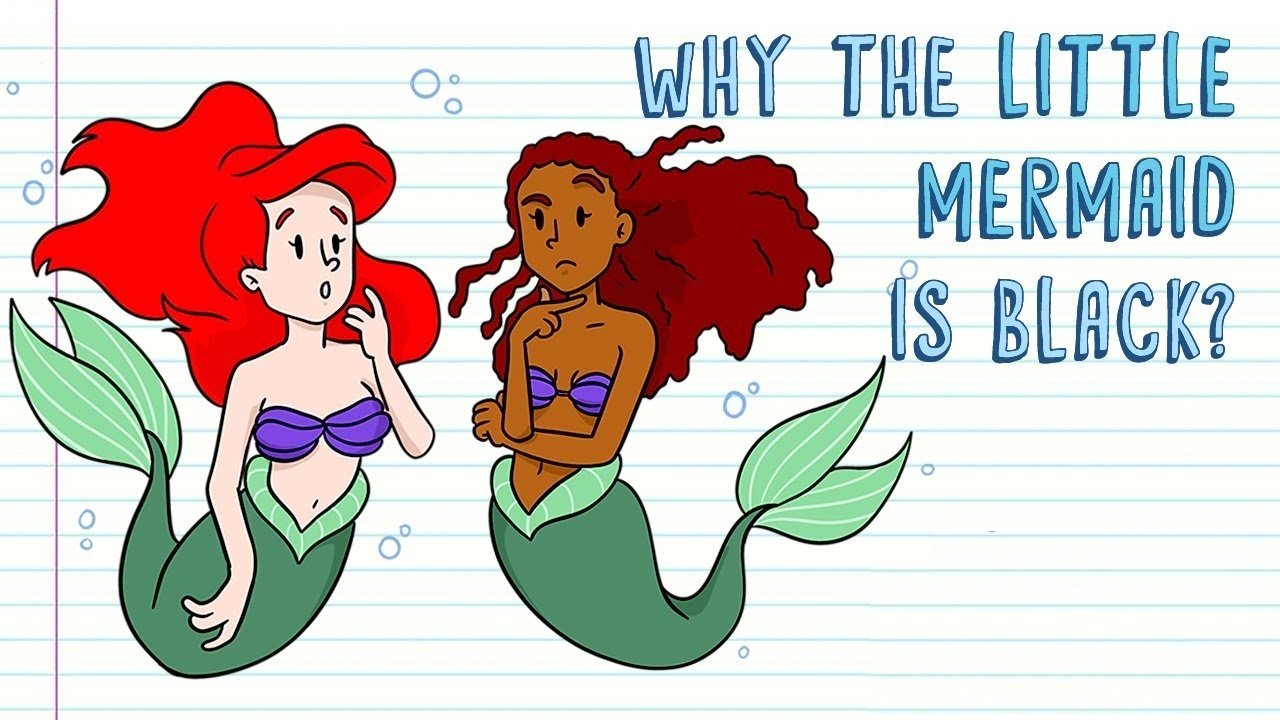
Why is the Little Mermaid Black is one of the most searched questions since Disney announced its live-action remake in 2019.
Singer and actress Halle Bailey was cast as Ariel, making her the first Black actress to play the iconic Disney mermaid princess in a major theatrical release.
The decision sparked both enormous celebration and ugly online backlash.
Who Is Halle Bailey?
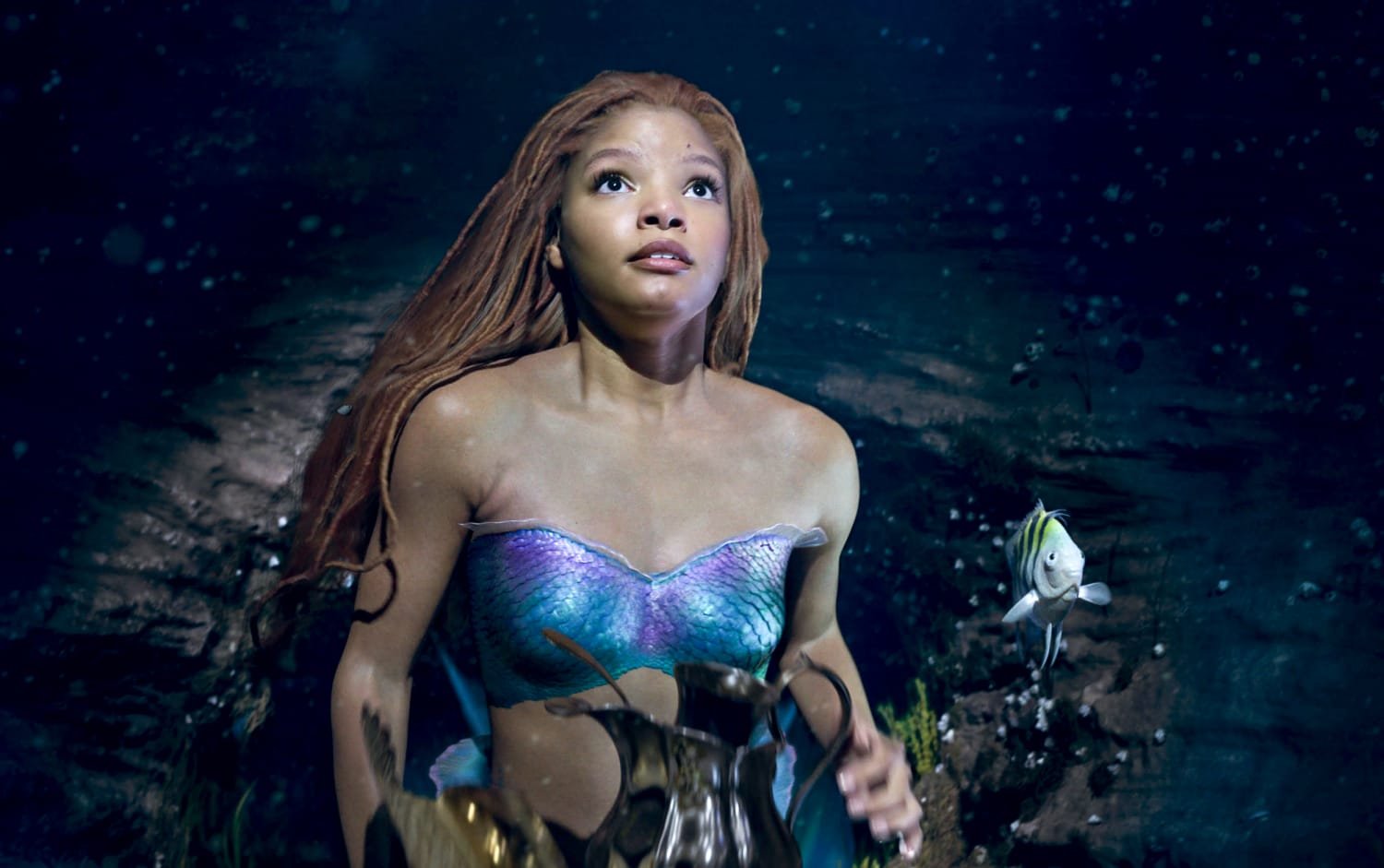
Halle Bailey is an American singer, songwriter, and actress born on March 27, 2000, in Atlanta, Georgia. She rose to fame as one half of the R&B duo Chloe x Halle alongside her sister Chlöe Bailey, signed to Beyoncé’s Parkwood Entertainment label.
The duo earned two Grammy nominations and built a loyal following for their vocal harmonies and original sound. By the time Disney cast Bailey as Ariel, she was already a recognized talent in the music world with a strong presence in the entertainment industry.
Her debut as a solo lead in a major studio film came with the 2023 live-action remake of The Little Mermaid, where her vocal performance received widespread critical praise.
Why Was Halle Bailey Cast as Ariel?
The casting decision came down to one thing: talent. Director Rob Marshall and the production team auditioned actresses of every ethnicity before selecting Bailey.
Marshall later told Entertainment Weekly that there was no agenda behind the choice. His team was simply looking for an actress who could be “incredibly strong, passionate, beautiful, smart, clever” with “a great deal of fire and joy.”
Marshall described the moment he heard Bailey perform during the audition process: she sang “Part of Your World” and left him in tears. He said she “immediately set the bar so high that no one surpassed it.”
The role required extraordinary vocal ability, emotional depth, physical expressiveness, and a quality that felt otherworldly. Bailey delivered all of it. Her race was not the reason she was hired — her exceptional talent was.
When Was the Casting Announced?
Disney officially announced in July 2019 that Halle Bailey had been cast as Ariel in the live-action remake of The Little Mermaid.
When the announcement was made, racist insults and comments immediately flooded the internet, spawning the hashtag #NotMyAriel. The backlash intensified further when Disney released the first look of the remake in September 2022, with YouTube hiding its dislike counter on the official trailer after it accumulated more than 1.5 million dislikes.
Despite the noise online, Disney stood firmly behind their casting decision throughout the entire process.
What Does the Original Story Say About Ariel’s Race?
This is one of the most important and overlooked facts in the entire debate. The original Little Mermaid story was written by Danish author Hans Christian Andersen and published in 1837.
The original story describes the mermaid’s skin as “clear and delicate as a rose-leaf” and her eyes as “blue as the deepest sea.” The word “white” is never used to describe her appearance as a mermaid. The word “pale” is also absent from her description.
Ariel is a fictional, mythical creature. Mermaids do not exist. There is no biological or historical reason a mermaid must belong to any specific human racial group.
As one expert put it: “The whole premise of the movie is mythical. There’s no such thing as a mermaid. What would the mermaid’s skin color be? Because it’s fiction, it can look like whatever the human mind can imagine.”
The claim that Ariel is “canonically white” is simply not supported by the original source material.
The 1989 Animated Film vs. the 2023 Live-Action Remake
The white, red-haired Ariel that most people picture comes from the 1989 Disney animated film, not from Hans Christian Andersen’s original fairy tale.
Disney has always adapted and reinterpreted its source material. The 1989 animated film changed many elements of the original dark, tragic story — including giving it an entirely different ending. Adapting a character’s appearance in 2023 is no different from every other creative choice Disney has made across its entire history.
This was also not the first time Disney recast a character originally depicted as white with a Black actress. Its 1997 remake of “Cinderella” starred Brandy, a Black actress, in the titular role. Disney first introduced a Black princess in 2009, with Tiana in “The Princess and the Frog.”
| Film | Original Character | Recast Actor | Year |
|---|---|---|---|
| The Little Mermaid (live-action) | Ariel (white in 1989 animation) | Halle Bailey (Black) | 2023 |
| Cinderella (TV remake) | Cinderella (depicted as white) | Brandy (Black) | 1997 |
| The Princess and the Frog | New original character | Anika Noni Rose (Black) | 2009 |
| Percy Jackson & the Olympians | Annabeth Chase (described as white) | Leah Jeffries (Black) | 2023 |
| Spider-Man: Homecoming | Mary Jane Watson (depicted as white) | Zendaya (biracial) | 2017 |
The Online Backlash: What Actually Happened
When the trailer dropped in September 2022, a coordinated wave of negative reactions hit every platform. The response was racially motivated in large part.
Within 48 hours of the trailer being released on YouTube, it received 1.5 million dislikes. In response, YouTube disabled the dislike button on the trailer and deleted many of the negative and racialized comments. The backlash spawned trending hashtags including #NotMyAriel and #StopRaceSwapping.
The film also fell prey to review bombing on IMDB — when internet trolls post multiple negative reviews to harm a title’s rating. IMDB issued a rare warning to viewers that it had altered its rating system to account for “unusual voting activity.”
Bailey herself was subjected to personal racist attacks and online harassment that continued from the casting announcement through and beyond the film’s release.
How Halle Bailey Responded to the Backlash
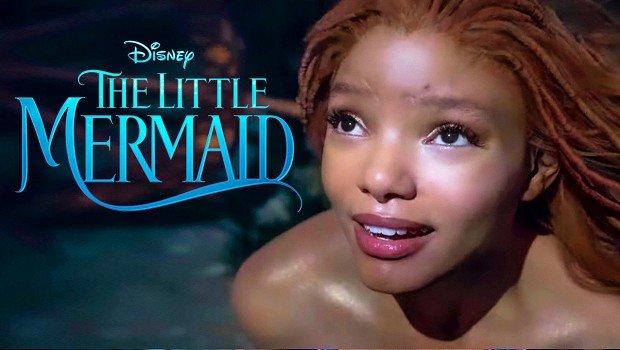
Bailey handled the situation with extraordinary grace and maturity. She refused to engage with the hatred and instead focused on what the role meant for the broader community.
Bailey told The Face magazine: “As a Black person, you just expect it and it’s not really a shock anymore. I know people are like, ‘It’s not about race.’ But now that I’m her… People don’t understand that when you’re Black there’s this whole other community. It’s so important for us to see ourselves.”
She credited mentor Beyoncé for advice that helped her navigate the storm: never read the comments. That single piece of guidance helped Bailey stay grounded while the debate raged around her.
Three years after the film’s release, Bailey described the experience as “a beautiful experience” that taught her to “listen to myself and the good voices inside.” She added that it was “actually freeing to be in the middle of this conversation where so many different opinions were coming in.”
The Role of Representation: Why It Matters
The casting of a Black actress as Ariel was not just a commercial decision. For millions of Black and brown children — especially girls — it was a cultural moment.
Videos of young Black girls joyously reacting to the film’s trailer went viral across social media. Bailey reflected on those moments: “Seeing the babies’ reactions and them saying, ‘Wow, she looks like me’ is so special and powerful and healing to the inner-child in me.”
Eleven-year-old Leah Murphy of Michigan said seeing Bailey as Ariel made her feel that she too could break barriers. “It makes me feel inspired. It makes me think I can do this, I can do it without anyone stopping me.” Murphy aspires to own a hotel chain.
Experts note that animated movies are often a child’s first exposure to media and film, and the representation of people of color in media influences how they feel about race as they mature, according to research by the nonprofit Common Sense.
Representation in media is not a frivolous issue. It shapes how children see themselves and what they believe is possible for their own lives.
Disney’s History of Diverse Casting
Disney’s choice to cast Bailey was part of a broader, years-long effort to diversify its storytelling and reflect the full range of its global audience.
The studio has been intentional about introducing characters of different backgrounds into its princess lineup, acknowledging that its early films were heavily weighted toward white European fairy tale characters.
For African American women in Hollywood, the historical pattern of roles has been deeply limited. The first African American woman to win an Oscar was Hattie McDaniel for playing a maid in Gone With the Wind. This historical context explains why a Black woman in a starring Disney princess role carries such weight for the community.
Disney’s live-action remake slate has consistently pushed toward diverse casting across multiple franchises and properties, not just The Little Mermaid.
Box Office Performance: Did the Controversy Hurt the Film?
Despite the coordinated backlash campaign, the film performed very well where it mattered most.
The Little Mermaid brought in $117.5 million at the US box office in its opening weekend — the fifth-best Memorial Day weekend opening in history. On Rotten Tomatoes, 95% of audiences gave the film a positive score.
The film ultimately grossed over $569 million worldwide, with critics and audiences praising Bailey’s performance, particularly highlighting her emotional depth, vocal range, and chemistry with co-stars including Jonah Hauer-King as Prince Eric and Javier Bardem as King Triton.
The film did struggle in some international markets. In China, it earned just $3.6 million in its first 10 days — the worst performance of any Disney live-action adaptation in that market. South Korea also returned disappointing numbers. Sources attributed the poor performance there largely to the racial backlash against Bailey’s casting.
| Market | Box Office Result | Notes |
|---|---|---|
| United States (opening weekend) | $117.5 million | 5th-best Memorial Day opening ever |
| Worldwide total | $569.6 million | Positive overall result |
| China | ~$3.6 million (10 days) | Worst Disney live-action performance in market |
| South Korea | ~$4.4 million | Below expectations |
| Rotten Tomatoes audience score | 95% | Strongly positive |
| Rotten Tomatoes critics score | 67% | Mixed-to-positive |
Critical Reception: What Did Critics Say?
Bailey’s personal performance was almost universally celebrated by film critics, even when the film itself received mixed reviews.
Variety wrote that “Halle Bailey is all the reason that any audience should need to justify Disney revisiting this classic.” Critics from Black publications were particularly enthusiastic, with one reviewer from Geeks of Color noting that Bailey’s “angelic vocals are paired perfectly with her curious and determined depiction of Ariel.”
The consensus was clear: Bailey’s casting was not a risk that backfired. It was a success. Her performance was the film’s strongest element.
Colorblind Casting and Hollywood’s Evolving Standards
The Little Mermaid controversy is part of a much larger conversation happening across Hollywood about colorblind casting — the practice of casting actors based purely on performance ability regardless of race.
Mermaids are fictional creatures. Their race is not essential to their character. The assumption that a fictional mermaid must default to being white reveals an unconscious bias that has historically shaped which bodies are seen as neutral, universal, or default in popular media.
There is a documented double standard in Hollywood casting debates. When white actors play roles originally conceived for characters of color — such as Liam Neeson playing the canonically Middle Eastern Ra’s Al Ghul in Batman Begins — there is rarely comparable public outrage. The anger tends to flow in one direction.
This double standard is exactly why the Little Mermaid casting conversation matters beyond a single film.
The Impact on Young Black Girls: Real Stories
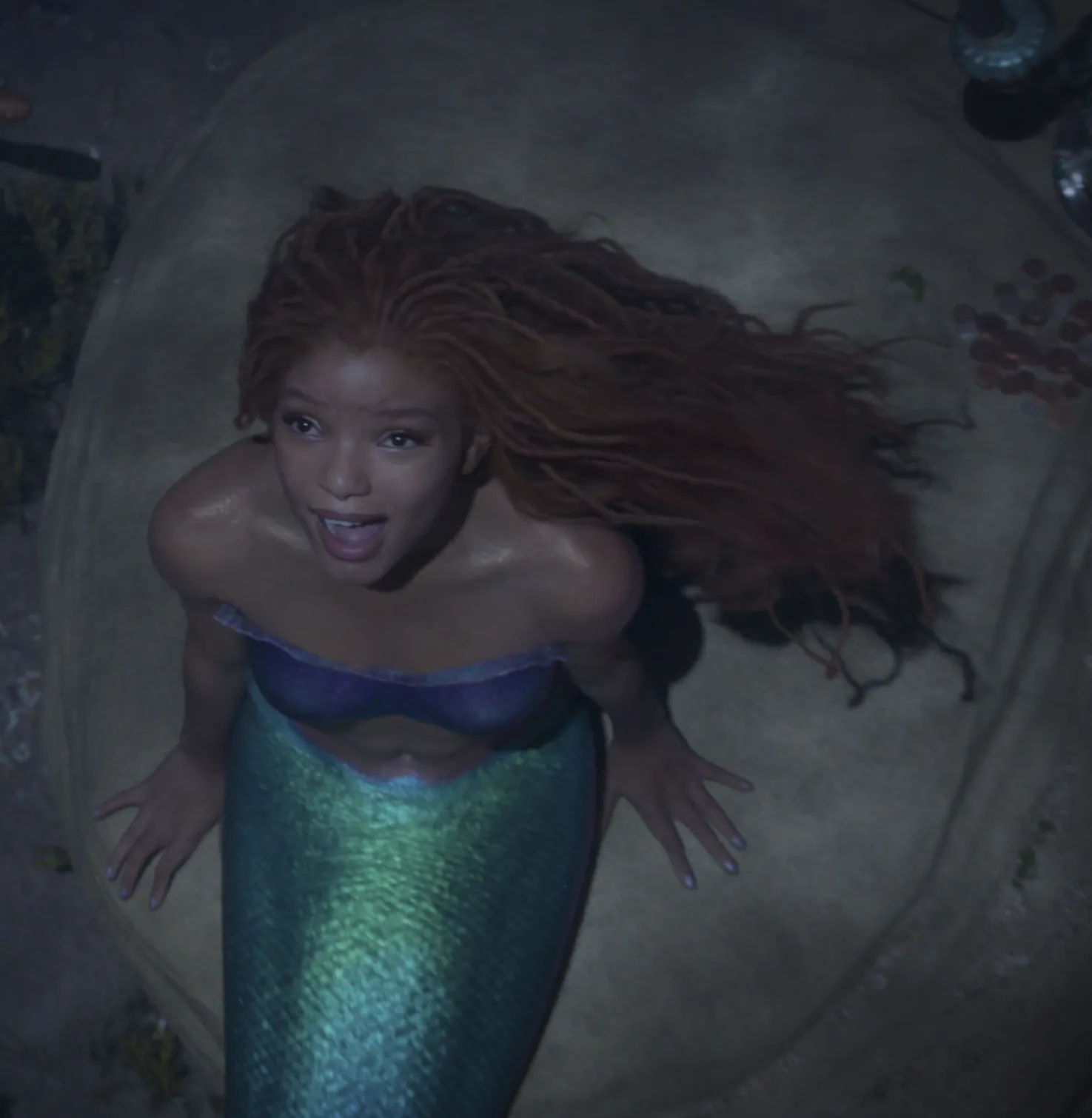
The cultural impact of Bailey’s casting went far beyond box office numbers or critical reviews. It landed in the real, daily lives of children.
Takiyah Wallace, founder of Brown Girls Do Ballet, said the excitement around the film reminded her of the reason she created her youth ballet group. Many young Black and brown girls had never seen themselves as ballerinas, just as many had rarely seen themselves as Disney princesses.
Bailey herself shared words from her grandparents who told her: “You don’t understand what this is doing for us, for our community, for all the little Black and brown girls who are going to see themselves in you.” Those words carried the weight of generations.
The viral reaction videos of small Black girls watching the trailer for the first time — eyes wide, hands over mouths, suddenly seeing someone who looked like them as a Disney princess — circulated for months and continue to be shared years later.
What Halle Bailey Has Said Looking Back in 2026
Three years after the film’s release, with the benefit of distance, Bailey has reflected openly on the entire experience.
Bailey described the experience as transformative, both professionally and personally. She said the polarized discourse around her casting ultimately reinforced her sense of self and taught her to trust her inner voice over the noise of external opinion.
Bailey noted the casting experience as “a catalyst for personal growth.” She has since moved forward with new projects, including the romantic comedy You, Me and Tuscany alongside Regé-Jean Page, released in April 2026, marking her evolution as an actress into more grounded adult roles.
Her journey from the announcement in 2019 through the film’s release in 2023 and beyond has become one of the most discussed stories about representation, resilience, and identity in modern Hollywood.
Key Facts Summary
| Topic | Detail |
|---|---|
| Actress cast as Ariel | Halle Bailey |
| Casting announced | July 2019 |
| Film release date | May 26, 2023 |
| Director | Rob Marshall |
| Original story author | Hans Christian Andersen (1837) |
| Race mentioned in original story | Not specified — “white” never used for mermaid |
| Film’s worldwide gross | $569.6 million |
| US opening weekend | $117.5 million |
| Viral backlash hashtag | #NotMyAriel |
| Bailey’s mentor’s advice | Beyoncé: “Never read the comments” |
Frequently Asked Questions (FAQs)
Why is the Little Mermaid Black in the 2023 movie?
Disney cast Halle Bailey after auditioning actresses of every ethnicity. Director Rob Marshall chose her purely based on her extraordinary vocal talent and performance ability.
Was Ariel always white in the original story?
No. The word “white” is never used to describe Ariel as a mermaid in Hans Christian Andersen’s 1837 original story. The character’s race was never specified in the source material.
Who decided to cast a Black actress as Ariel?
Director Rob Marshall made the final casting decision after an extensive worldwide audition process. He has repeatedly stated there was no racial or political agenda — it was about finding the best performer.
How did people react to Halle Bailey being cast as Ariel?
Reactions were split. Many celebrated the historic casting and the representation it offered Black and brown children. Others responded with racist backlash, including the viral hashtag #NotMyAriel and coordinated review bombing.
Did the controversy affect the film’s box office?
In the US, the film opened to $117.5 million — a massive success. It struggled in China and South Korea, where analysts linked the poor performance directly to racist backlash against Bailey’s casting.
What did Halle Bailey say about the racist backlash?
Bailey said that as a Black person, she had learned to expect racism and focused instead on the joy the role brought to Black and brown children who finally saw themselves reflected in a Disney princess.
Is colorblind casting common in Hollywood?
It is becoming more common, though debates around it remain ongoing. The Little Mermaid is one of the most prominent recent examples of a legacy white character being recast with a Black lead actress.
How did Halle Bailey’s performance review?
Her performance was almost universally praised by critics. Variety, The Mary Sue, and multiple Black entertainment publications called her vocal performance one of the best elements of the entire film.
What was the #NotMyAriel hashtag about?
It was a racist campaign by people who objected to a Black actress playing Ariel. It originated after the 2019 casting announcement and resurfaced when the trailer dropped in 2022, spreading widely on X (formerly Twitter) and Instagram.
Has Halle Bailey spoken about the experience in 2026?
Yes. In April 2026 interviews promoting her new film You, Me and Tuscany, Bailey described The Little Mermaid experience as “freeing” and said it taught her to trust herself and block out external noise.
Conclusion
The question of why the Little Mermaid is Black has a clear and straightforward answer: Halle Bailey earned the role because she was the best performer in an open, talent-based audition process that considered actresses of every ethnicity.
The original Hans Christian Andersen story never specified Ariel’s race, and the character is a fictional creature with no biological connection to any human racial group.
The outrage that followed was not rooted in story accuracy — it was rooted in the discomfort many people feel when characters they grew up associating with whiteness are reimagined to reflect a broader world.


