


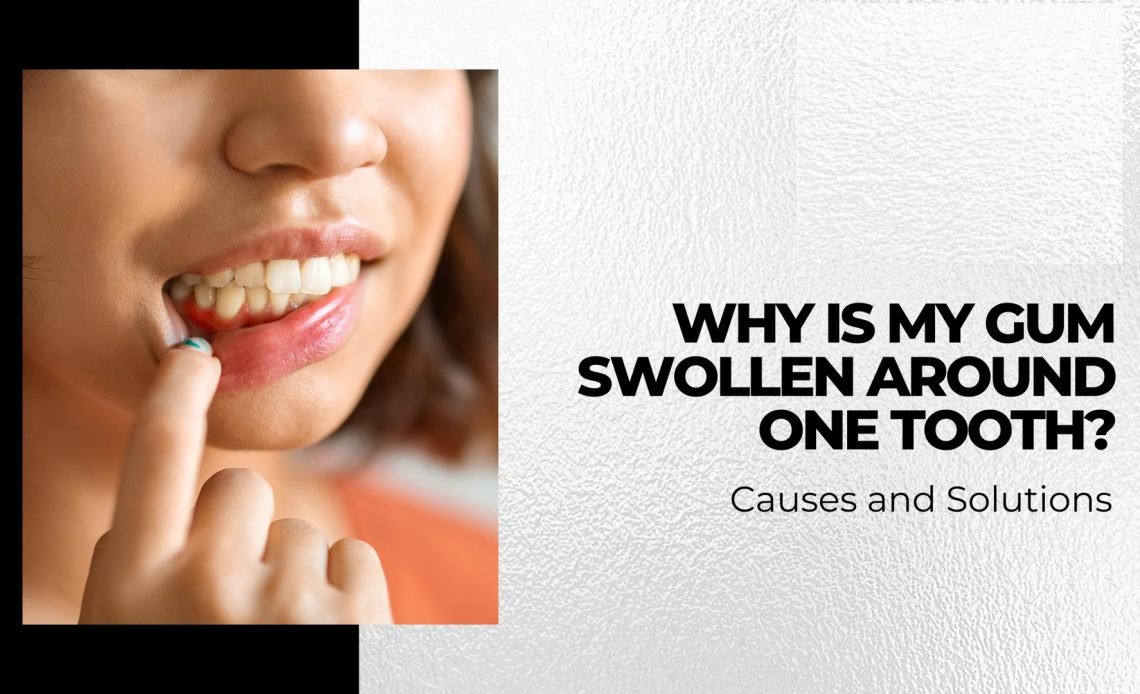
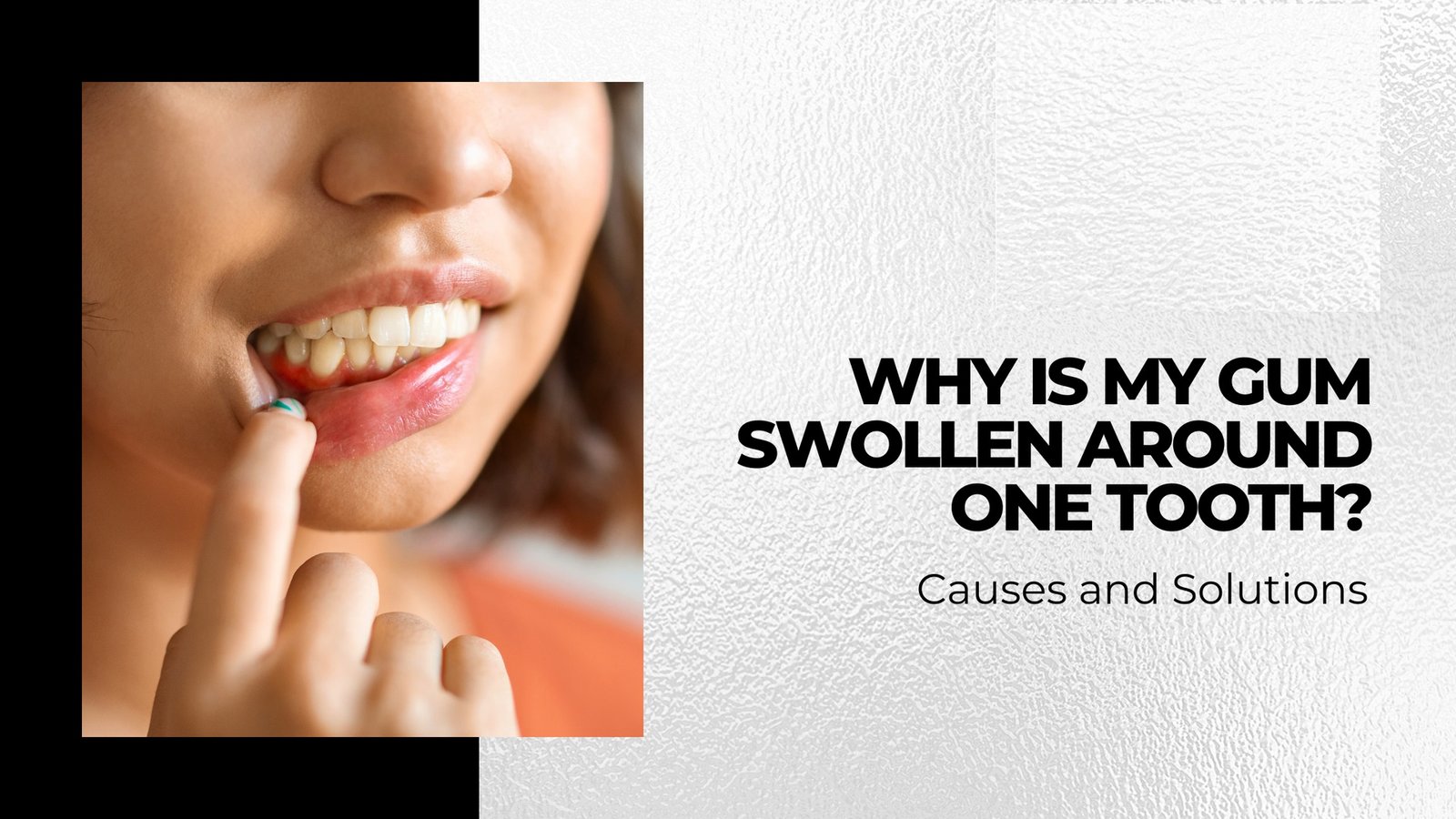
Why is my gum swollen around one tooth? This is one of the most common dental questions people ask in 2026 — and for good reason. Localized gum swelling around a single tooth can be uncomfortable, confusing, and even alarming.
The good news is that most causes are treatable, especially when caught early.
What Does It Mean When Your Gum Is Swollen Around Just One Tooth?
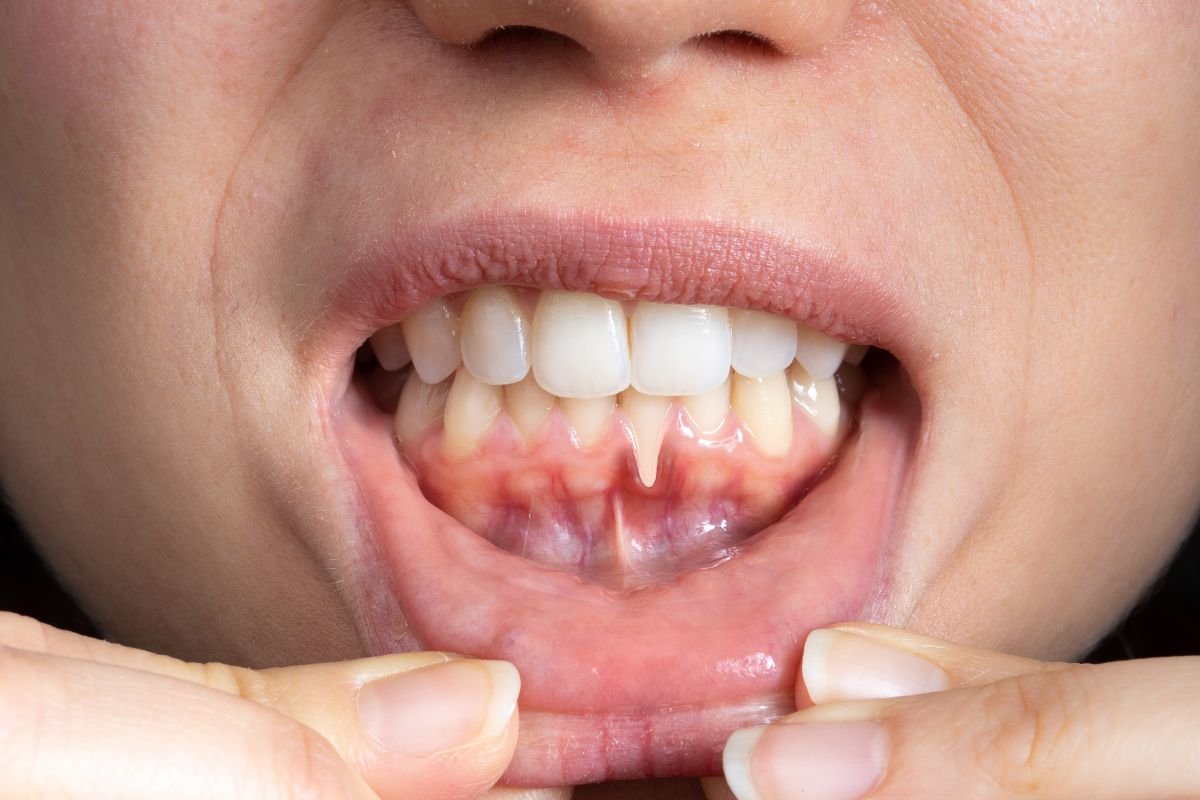
When only one area of your gum puffs up, it almost always points to a localized problem in that exact spot. It is not general gum disease spreading everywhere — something specific is happening around that tooth.
Your body sends blood and immune cells to fight infection or irritation. That reaction causes the gum tissue to become red, puffy, tender, and sometimes shiny. The single-tooth pattern is actually a helpful clue for your dentist.
Understanding why your gum is swollen around one tooth helps you act faster and get the right treatment before the problem gets worse.
Top 9 Causes of Swollen Gum Around One Tooth
1. Trapped Food and Poor Oral Hygiene
Food particles — especially hard bits like popcorn hulls, seeds, or meat fibers — can wedge between the tooth and the gum line.
When debris stays there, bacteria multiply rapidly. This bacterial activity irritates the soft gum tissue, triggering redness and swelling around that one spot.
Simple, consistent brushing and flossing usually resolves this within a day or two. If it keeps happening in the same spot, visit your dentist to rule out a deeper issue.
2. Gingivitis (Early Gum Disease)
Gingivitis is the first and most reversible stage of gum disease. It develops when plaque — a soft, sticky bacterial film — builds up along the gum line.
The gums react by becoming inflamed, swollen, and prone to bleeding. You may notice your gum is swollen around one tooth if plaque is concentrated in that area.
The encouraging news is that gingivitis can be fully reversed with improved brushing, flossing, and a professional cleaning. Left alone, it advances to something far more serious.
3. Periodontitis (Advanced Gum Disease)
If gingivitis goes untreated, it progresses to periodontitis. At this stage, the infection moves below the gum line and attacks the bone and ligaments holding the tooth.
The gums begin to pull away from the tooth, forming deep pockets that trap more bacteria. You may notice one area is worse than others, making one tooth look especially puffy.
Periodontitis requires professional treatment — scaling and root planing, medications, or in severe cases, surgery. Nearly 46% of adults over age 30 show some signs of gum disease.
4. Dental Abscess (Tooth Abscess or Gum Abscess)
A dental abscess is a pocket of pus caused by a bacterial infection. It is one of the most urgent reasons your gum may be swollen around one tooth.
There are two main types. A periapical abscess starts inside the tooth pulp and travels to the tip of the root. A periodontal abscess forms in the gum tissue itself, usually as a result of advanced gum disease.
Signs of an abscess include throbbing pain, a bad or salty taste in the mouth, fever, and visible swelling. This requires immediate dental attention — an abscess will not resolve on its own and can spread to the jaw, neck, and beyond.
5. Pericoronitis (Wisdom Tooth Swelling)
Pericoronitis is a specific type of gum swelling that occurs around a partially erupted tooth — most often a wisdom tooth.
When a wisdom tooth only partially breaks through the gum, a flap of tissue called an operculum covers part of the tooth. Food, bacteria, and debris easily collect under this flap, causing infection and significant swelling.
Pericoronitis is most common in people aged 20 to 29. Symptoms include pain in the back of the mouth, bad breath, difficulty swallowing, and sometimes fever. Treatment ranges from antibiotics and irrigation to extraction of the wisdom tooth.
6. Tooth Decay Reaching the Pulp
When tooth decay advances through the enamel and dentin and reaches the inner pulp chamber, bacteria invade the nerve tissue.
This infection spreads through the root and into the surrounding bone, causing swelling of the gum around that specific tooth. The area becomes tender, and you may feel a continuous dull ache.
Treatment at this stage usually involves a root canal to remove infected tissue. Catching decay early with regular checkups prevents it from ever reaching this point.
7. Gum Injury or Trauma
A blow to the mouth, biting down too hard on something, or even aggressive brushing can bruise or tear the delicate gum tissue around one tooth.
Injured gums swell as part of the natural healing response. This type of swelling usually improves within a few days with gentle care.
If swelling from an injury does not improve within a week, or if it gets worse, see your dentist to rule out infection setting in on top of the trauma.
8. Ill-Fitting Dental Restorations
A crown, filling, or dental bridge that does not fit correctly can create constant pressure and friction against the gum tissue.
Over time, this mechanical irritation causes localized inflammation around just that tooth. The gum may also develop a pocket where bacteria accumulate.
Your dentist can adjust or replace the restoration. Once the fit is corrected, the gum tissue usually heals within a few weeks.
9. Hormonal Changes
Hormonal fluctuations during pregnancy, puberty, menopause, or menstruation can make gum tissue more sensitive and reactive to bacteria.
This can cause swelling even when plaque levels are low. Pregnancy gingivitis, for example, can cause one or more areas of the gum to become noticeably puffy.
Maintaining excellent oral hygiene during hormonal changes is especially important. Your dentist may recommend more frequent cleanings during pregnancy.
Causes at a Glance — Quick Reference Table
| Cause | Pain Level | Urgency | Common Treatment |
|---|---|---|---|
| Trapped food / poor hygiene | Mild | Low | Brush, floss, rinse |
| Gingivitis | Mild to moderate | Medium | Professional cleaning |
| Periodontitis | Moderate | High | Scaling and root planing |
| Dental abscess | Severe | Very High | Drainage, antibiotics, root canal |
| Pericoronitis | Moderate to severe | High | Antibiotics, extraction |
| Tooth decay into pulp | Moderate to severe | High | Root canal, filling |
| Gum injury / trauma | Mild | Low | Rest, saltwater rinse |
| Ill-fitting restoration | Mild | Medium | Adjustment or replacement |
| Hormonal changes | Mild | Low to Medium | Improved hygiene, monitoring |
Swollen Gum Around One Tooth With No Pain — Is That Normal?
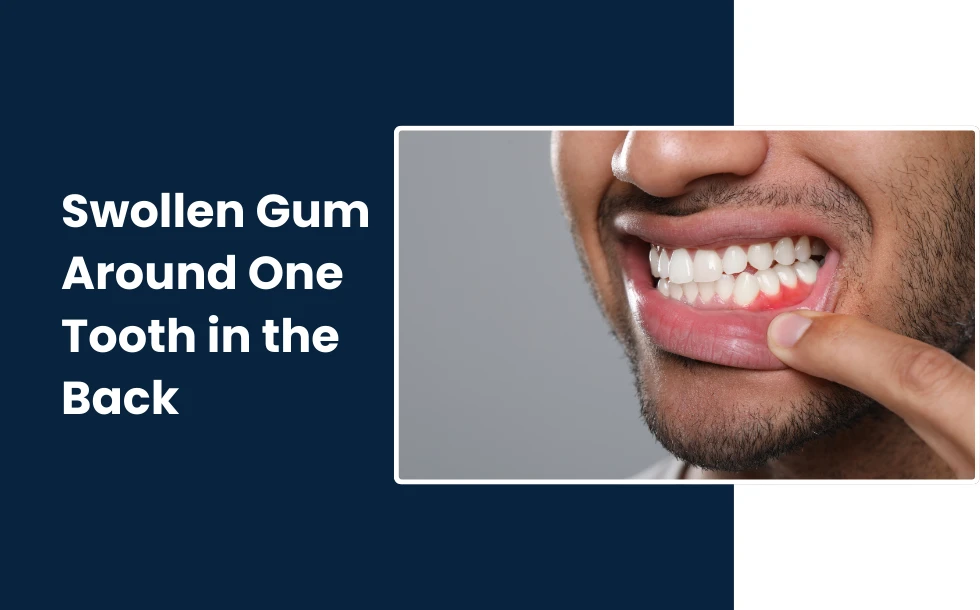
Many people are confused when their gum is swollen around one tooth but there is no pain. This does not mean everything is fine.
Early gingivitis, mild food impaction, or a developing abscess in its early stages can all cause visible swelling without discomfort. The absence of pain does not rule out an underlying problem.
Swelling without pain is your body’s early warning sign. Do not wait for it to hurt before you act. If puffiness around one tooth lasts more than a week, book a dental appointment.
Swollen Gum Around One Tooth Overnight — Why Does It Happen Suddenly?
Waking up to sudden swelling around one tooth is unsettling. It usually means an infection or irritation that was quietly building has suddenly become noticeable.
Common overnight triggers include a trapped food particle that was not removed, a small abscess that has begun to swell, or pericoronitis flaring up while you slept. Reduced saliva production during sleep also means bacteria are less controlled.
If you wake up to sudden, painful gum swelling — especially with fever, bad taste, or facial swelling — treat it as a dental emergency and call your dentist the same day.
Swollen Gum Around One Tooth in the Back — Molar and Wisdom Tooth Problems
Back molars and wisdom teeth are harder to clean because toothbrush bristles often do not reach them effectively. This makes swollen gum around one back tooth especially common.
The most frequent causes for back-tooth swelling include plaque buildup on back molars, pericoronitis around an erupting wisdom tooth, and dental abscesses in hard-to-see areas. Because these spots are less visible, the problem is often noticed later.
Using interdental brushes, a water flosser, and angling your toothbrush properly toward the back teeth makes a significant difference in preventing localized back-tooth swelling.
At-Home Treatments for Swollen Gum Around One Tooth
These home remedies can help reduce mild swelling while you wait to see a dentist. They do not replace professional care but can provide meaningful relief.
Warm Saltwater Rinse Dissolve half a teaspoon of salt in 8 ounces of warm water. Rinse gently for 30 seconds, two to three times daily. Salt water reduces bacteria, soothes irritated tissue, and draws out fluid that contributes to swelling.
Cold Compress Apply a cold pack or a bag of frozen peas wrapped in a cloth to the outside of your cheek for 15 minutes at a time. Cold reduces inflammation and numbs the area temporarily.
Over-the-Counter Pain Relief Ibuprofen (an NSAID) is particularly effective for gum-related swelling because it is both a pain reliever and an anti-inflammatory. Take as directed on the label. Do not place aspirin directly against the gum tissue.
Antibacterial Mouthwash A chlorhexidine or antibacterial mouthwash can reduce bacterial load around the swollen area. Use once or twice daily as directed — avoid overuse, as it may stain teeth with long-term use.
Improved Brushing and Flossing Gently brush twice a day with a soft-bristle toothbrush held at a 45-degree angle to the gum line. Floss carefully around the affected tooth to remove any trapped debris.
What to Avoid Avoid smoking, sugary foods, very hard or acidic foods, and skipping oral hygiene. All of these can make gum swelling significantly worse.
Professional Dental Treatments for Swollen Gum
When home remedies are not enough, your dentist has several effective treatment options depending on the underlying cause.
Scaling and Root Planing (Deep Cleaning) For gum disease-related swelling, a dental hygienist removes plaque and tartar from above and below the gum line using special instruments. Root surfaces are smoothed to prevent bacteria from re-attaching.
Antibiotics If a bacterial infection or abscess is present, your dentist may prescribe oral antibiotics (commonly amoxicillin, metronidazole, or penicillin). Antibiotics reduce the infection but must be combined with dental treatment to address the source.
Abscess Drainage For a dental abscess, the dentist makes a small incision to drain the pus, then cleans and disinfects the area. This gives immediate relief from painful pressure.
Root Canal Treatment When infection has reached the inner pulp of the tooth, a root canal removes the infected tissue, cleans the root canals, and seals them. This saves the tooth while eliminating the source of swelling.
Tooth Extraction If a tooth is too damaged to save, or if a wisdom tooth is causing recurrent pericoronitis, extraction is the definitive solution. Modern extractions with local anesthesia are far more comfortable than many people expect.
Operculectomy For pericoronitis, a minor surgical procedure can remove the gum flap (operculum) covering the partially erupted tooth. This eliminates the space where bacteria collect. However, the tissue can sometimes regrow.
Professional Treatments Summary Table
| Treatment | When It Is Used | Recovery Time |
|---|---|---|
| Scaling and Root Planing | Gingivitis, periodontitis | 1–2 weeks |
| Antibiotics | Bacterial infection, abscess | 7–14 days (course) |
| Abscess Drainage | Dental or gum abscess | A few days |
| Root Canal | Pulp infection, severe abscess | 1–2 weeks |
| Tooth Extraction | Severe decay, wisdom tooth | 3–7 days |
| Operculectomy | Pericoronitis, wisdom tooth flap | 1–2 weeks |
What Your Dentist Will Do During the Examination
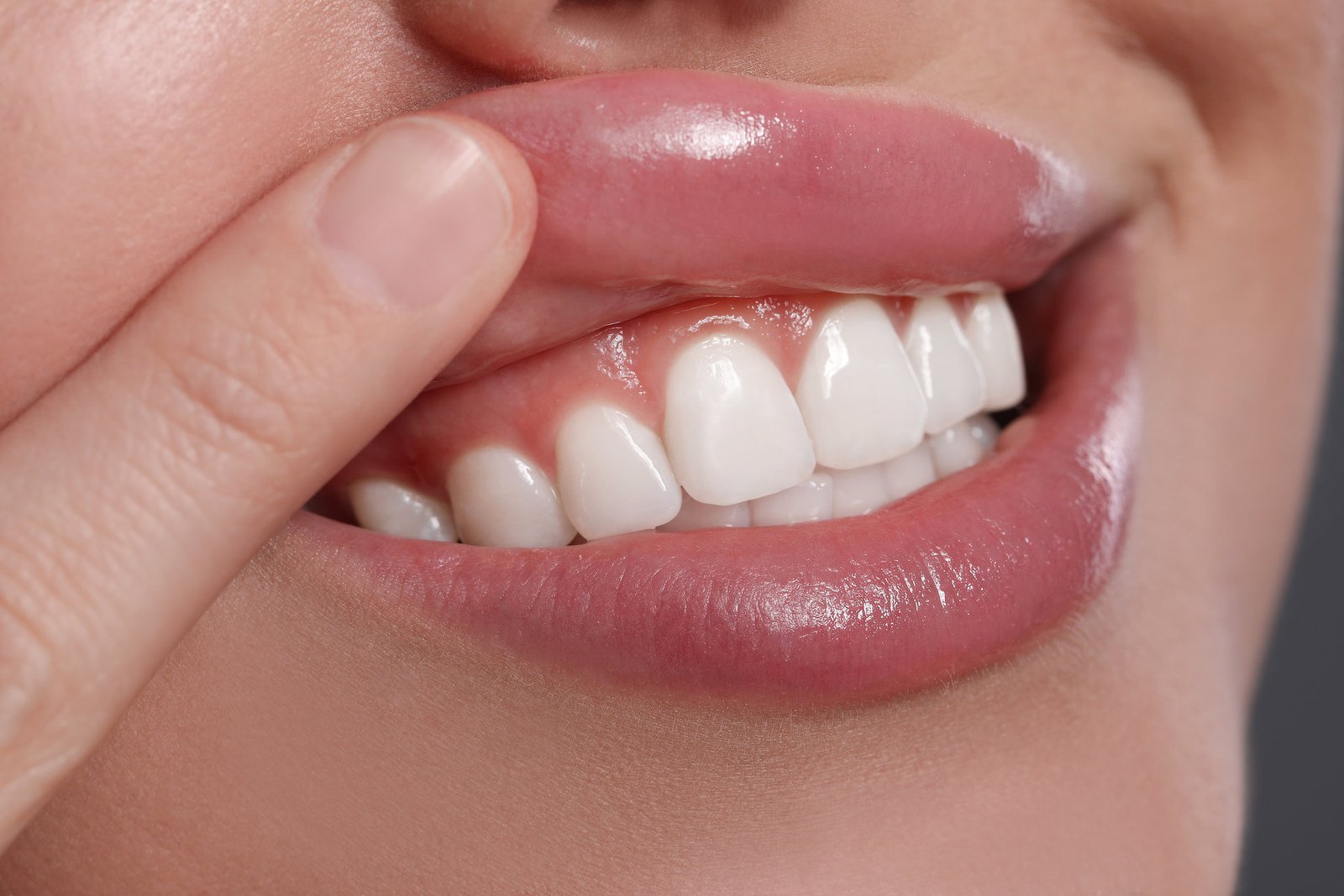
Young woman showing healthy gums, closeup view
When you visit for a swollen gum around one tooth, your dentist will follow a systematic approach to find the exact cause.
Clinical Visual Exam — The dentist inspects the swollen area for redness, pus, lesions, and overall oral hygiene. They check whether swelling is localized or spreading.
Dental X-Rays — X-rays reveal what cannot be seen by the naked eye: bone loss, abscesses at the root tip, decay between teeth, and impacted wisdom teeth.
Periodontal Probing — A small probe measures the depth of gum pockets around the affected tooth. Healthy pockets measure 1–3 mm. Deeper pockets indicate gum disease.
Bacterial Testing — In some cases, your dentist may swab the area to identify specific bacteria and choose the right antibiotic.
Medical History Review — Certain medications (blood pressure drugs, anticonvulsants, immunosuppressants) and medical conditions (diabetes, pregnancy) directly affect gum health. Always inform your dentist about your full health history.
How Long Does Swollen Gum Around One Tooth Last?
The duration depends entirely on the cause and how quickly treatment begins.
Mild swelling from a trapped food particle may resolve within one to two days once the debris is removed and oral hygiene is improved. Gingivitis-related swelling usually improves within one to two weeks of professional cleaning and better home care.
An abscess or pericoronitis requires professional treatment and may take one to two weeks to fully resolve after drainage or antibiotic therapy. Swelling related to a root canal or extraction typically subsides within three to seven days post-procedure.
See a dentist if your swollen gum lasts more than one week, gets worse, or is accompanied by pain, fever, pus, or facial swelling.
How to Prevent Swollen Gum Around One Tooth
Prevention is far easier than treatment. These steps significantly reduce your risk of localized gum swelling.
Brush twice daily using a soft-bristle toothbrush held at a 45-degree angle to the gum line. Spend two full minutes brushing all surfaces including the backs of your back molars.
Floss once daily to remove food and plaque from between teeth and just below the gum line — the area your toothbrush cannot reach. A water flosser is an excellent alternative or complement.
Use antibacterial mouthwash once daily. Products containing chlorhexidine or essential oils reduce bacterial levels around the gum line.
Eat a balanced diet low in sugar and refined carbohydrates. Bacteria in your mouth feed on sugar and produce acids that damage enamel and inflame gums.
Quit smoking — tobacco significantly impairs blood flow to gum tissue, delays healing, and masks the early signs of infection. Smokers are up to three times more likely to develop gum disease.
Visit your dentist every six months for professional cleaning and examination. Many serious dental problems — including abscesses and early periodontitis — are discovered and stopped at routine checkups before they cause significant swelling or pain.
Warning Signs That Require Emergency Dental Care
Most cases of swollen gum around one tooth are not emergencies. But some symptoms demand same-day attention.
Go to a dentist or emergency room right away if you experience:
- Swelling spreading to your jaw, cheek, or neck
- Fever above 101°F (38.3°C) alongside gum swelling
- Difficulty swallowing or breathing
- Pus visibly draining from the gum
- Severe throbbing pain that does not respond to over-the-counter medication
- Swollen lymph nodes under your jaw
These signs may indicate a spreading infection (cellulitis) that can, in rare but serious cases, become life-threatening if bacteria enter the bloodstream.
Frequently Asked Questions (FAQs)
Why is my gum swollen around one tooth but there is no pain?
Swelling without pain can happen in early gingivitis, mild food impaction, or a slow-developing abscess. The lack of pain does not mean the problem is minor — see a dentist if swelling lasts more than a week.
Can a swollen gum around one tooth go away on its own?
Minor swelling from trapped food or irritation may resolve with improved brushing and flossing in a day or two. However, swelling caused by infection, an abscess, or gum disease will not disappear without professional treatment.
How do I reduce gum swelling around one tooth fast?
Rinse with warm saltwater, apply a cold compress to your cheek, and take ibuprofen as directed. These provide temporary relief, but you still need to see a dentist if the cause is not resolved.
Is swollen gum around one tooth a sign of cancer?
Rarely. Gum cancer (oral cancer) can cause localized swelling, but it is uncommon. Benign growths called epulis are more likely. Any unexplained lump or swelling that persists for more than two to three weeks should be evaluated by a dentist.
Can a swollen gum around one tooth spread to other teeth?
Yes. If the underlying cause — such as gum disease or a spreading abscess — is not treated, the infection can move to adjacent teeth and even enter the bloodstream. Early treatment prevents this.
What antibiotic is used for swollen gum around one tooth?
Dentists commonly prescribe amoxicillin, metronidazole, or penicillin depending on the type and severity of infection. Always take the full prescribed course and never take antibiotics without a prescription.
Why is my gum swollen around one tooth after a filling or crown?
A new or adjusted restoration can temporarily irritate the gum tissue. Swelling usually subsides within a week. If it persists, the restoration may need to be refitted — contact your dentist.
Can stress cause gum swelling around one tooth?
Stress weakens the immune system, making it harder for your body to fight off oral bacteria. Stressed individuals are more likely to neglect oral hygiene and experience bruxism (teeth grinding), both of which contribute to localized gum inflammation.
Should I go to the emergency room for a swollen gum?
Go to an emergency room if you have fever, facial swelling, difficulty swallowing or breathing, or severe pain that cannot be controlled. For swelling without these symptoms, call a dentist the next working day.
How many times should I see the dentist if I have recurring swollen gums?
If your gum is swollen around one tooth repeatedly, schedule an appointment as soon as it recurs — do not wait for your routine checkup. Recurring swelling signals an unresolved underlying cause that needs proper diagnosis and treatment.
Conclusion
A swollen gum around one tooth is your mouth asking you to pay attention. Whether the cause is a simple piece of trapped food, early gingivitis, a developing abscess, or a wisdom tooth complication, acting quickly makes every outcome better. Most causes are completely treatable — and when caught early, many are even reversible.
Start with good oral hygiene at home: brush twice daily with a soft toothbrush, floss every day, and rinse with an antibacterial mouthwash. If swelling lasts more than one week, worsens, or comes with pain, fever, or pus, do not wait.
Contact your dentist for a full evaluation including X-rays and periodontal probing. Early professional care not only resolves your current swollen gum around one tooth — it protects all your teeth, your gums, and your long-term health for years to come.


