


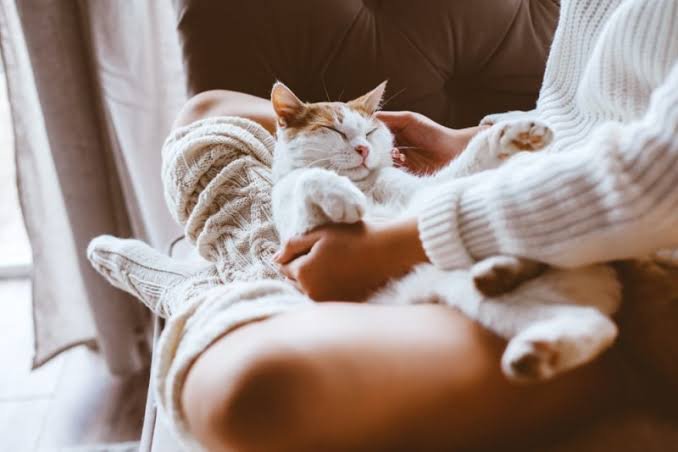
Why Does My Cat Lay on My Feet? You sit down, and within minutes your cat has curled up right on top of your feet again. It happens so often it starts to feel like more than coincidence, and it is.
Why Does My Cat Lay on My Feet?
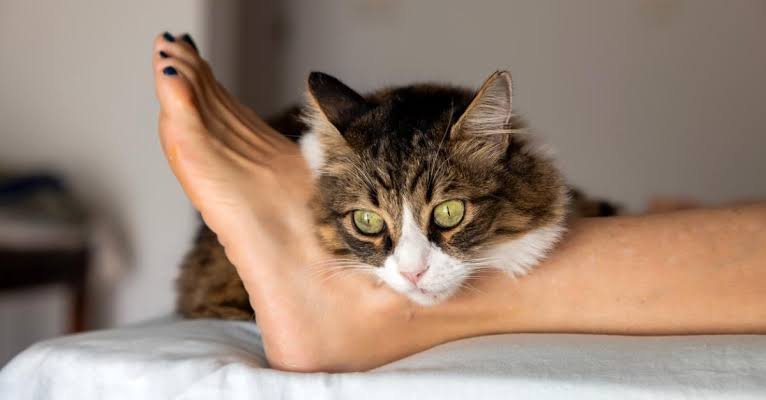
Cats lay on your feet mainly for warmth, safety, and closeness to someone they trust. Your feet offer steady body heat, a familiar scent, and an easy way for your cat to stay near you without being fully in your lap.
What This Behavior Actually Means
This is not random. It is a habit rooted in feline instinct, comfort-seeking, and social bonding with their favorite person.
Cats are highly deliberate about where they rest, and choosing your feet over an empty couch cushion is a meaningful choice.
The Main Reasons Cats Lay on Your Feet
1. Seeking Warmth
Cats run warmer than humans, with a normal body temperature between about 100.5 and 102.5 degrees Fahrenheit. Your feet radiate steady heat, especially under blankets or socks, making them an easy heat source.
Older cats and thinner cats often seek this out even more, since they have less body fat to retain warmth on their own.
2. Feeling Safe and Protected
Lying near your feet keeps your cat close enough to feel your presence without full body contact. This proximity gives a sense of security, especially in a multi-pet or busy household.
3. Wanting to Protect You
Some cats treat resting near your feet as a watch position. Since you are most vulnerable while asleep or relaxed, your cat may be quietly keeping guard nearby.
4. Affection and Bonding
Lying on your feet is a low-pressure way for a cat to stay physically connected to you. It signals trust, since cats generally avoid close contact with anyone they do not feel safe around.
5. Scent and Familiarity
Your feet carry your unique scent more strongly than most other surfaces you touch. Cats rely heavily on scent to feel oriented, so resting near a strong, familiar scent is naturally comforting.
6. Marking Territory
Resting on or near you allows a cat to leave its scent through subtle rubbing. This reinforces its sense of ownership over both you and the surrounding space.
7. Comfort From Rhythm and Movement
The rise and fall of your breathing, or slight foot movement, can have a calming effect similar to a heartbeat. Kittens experience this kind of rhythmic comfort early in life with their mother.
8. Cooler Spot in the Room
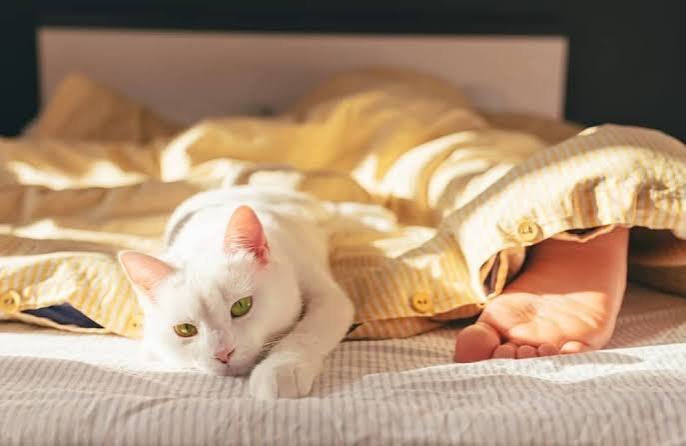
If your body or blankets run hot, your feet at the edge of the bed or couch may simply be the coolest nearby spot. Some cats prefer this over direct body contact for temperature reasons alone.
Warmth vs Affection vs Protection: Quick Comparison
| Motivation | Typical Sign | Common Timing |
|---|---|---|
| Warmth-seeking | Curls tightly, prefers colder months | Winter, air-conditioned rooms |
| Affection and bonding | Purring, kneading, staying nearby often | Relaxed evenings, quiet time |
| Protective instinct | Positioned facing the room or door | Nighttime, sleep hours |
| Territory marking | Rubbing against feet before lying down | Anytime, especially multi-pet homes |
Does This Behavior Change With Age?
Older cats often increase this behavior as their ability to regulate body temperature declines. Kittens may do it less consistently, since they are still developing preferred sleeping spots.
When Foot-Lying Behavior Is Worth Watching
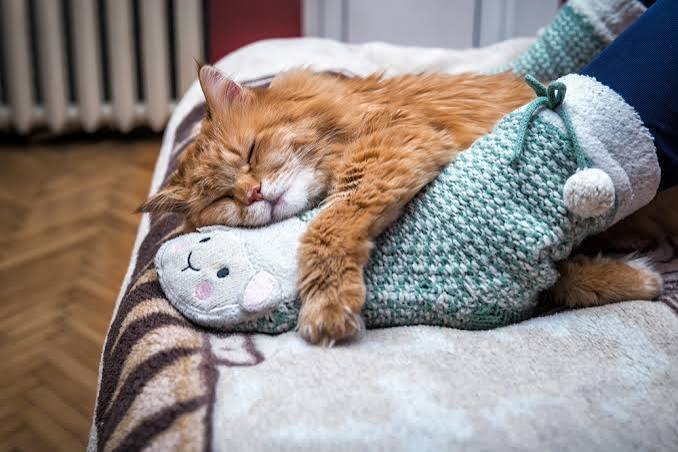
Occasional foot-lying is completely normal and healthy. Pay closer attention if you also notice:
- A sudden increase in clinginess with no clear trigger
- Signs of pain, limping, or reluctance to move
- Hiding combined with unusual neediness
- Changes in appetite alongside the new behavior
A vet visit is the safest way to rule out illness if clinginess appears suddenly and out of character.
Mistakes to Avoid
- Assuming every case is purely medical without considering normal bonding behavior
- Ignoring a sudden behavior change just because it seems affectionate
- Moving your cat away roughly, which can reduce trust over time
Expert Tips
Veterinary behaviorists note that most foot-lying is a blend of warmth-seeking and trust, not a single isolated cause. Watching when and how often it happens, especially alongside other body language, gives the clearest picture of your own cat’s motivation.
Also Read:
- Do You Need a Curling Stabilizer? What to Know Before Buying
- How Playground Surfacing Improves Safety and Accessibility
- How Toronto Event Planners Are Choosing Photo Booths for Social Sharing
- First Class vs Business Class: A Cost-Benefit Breakdown for Finance and Travel Managers
- Why Do My Feet Burn at Night? 9 Possible Causes 2026
- Why Is My Tongue Itchy? Common Causes & Treatments 2026
- Why Are MRIs So Expensive? The Real Cost Explained 2026
- How Cashless Health Insurance Is Transforming Patient Experience
- How the Best Personal Training Studios in Singapore Use Data
- How Care Patterns Help During Steps to Report Suspected Nursing Home Abuse
- Portable Space Heaters vs Fan Heaters: Pros and Cons
- From Hair Care Idea To Business: How Bo International Supports Startup Brands
- How Stack-Up Symmetry Affects Warpage and Assembly Yield in 12-Layer PCBs
- Corrosion-Resistant Flexible Couplings: The Quiet Upgrade That Prevents Expensive Failures
- How Insurance Responses Can Affect a Houston, TX Auto Accident Claim
- The Investigation Steps a Premises Liability Lawyer May Take After an Injury
- Does Being a Loan Guarantor Affect Your CIBIL Score
- Do You Need Legal Help After a Truck Accident? Here’s What to Know
- What to Know Before Using a Currency Exchange Service in Hyderabad
- 430+ Trendy Roblox Username Ideas for Boys & Girls
- 1000+ Trendy Instagram Usernames Ideas for Girls (2024)
- Letflix Review – Features, How It Works and Safe to Use?
- Download Gayatri Mantra Best Ringtone Mp3/M4R
- Grand Theft Auto: San Andreas – Theme Song Download
- Randy Orton – Voices WWE Theme Song Download
Frequently Asked Questions (FAQs)
Why does my cat lay on my feet instead of my lap?
Feet offer steady warmth and closeness without the full-body contact some cats find overwhelming, making it a comfortable middle ground.
Is it normal for a cat to sleep on your feet every night?
Yes. Many cats consistently choose feet as a preferred resting spot due to warmth, scent, and trust, and it is considered normal behavior.
Does my cat lay on my feet because it’s cold?
Often, yes. Cats run warmer than humans and seek out heat sources, and your feet are a convenient, steady one.
Is my cat protecting me by lying on my feet?
Some cats do treat this as a watch position, staying alert near you while you are most vulnerable, such as during sleep.
Why does my older cat lay on my feet more than before?
Older cats often lose some ability to regulate their own body temperature, so they seek external warmth sources like feet more frequently.
Does lying on my feet mean my cat trusts me?
Yes. Cats generally avoid close contact with people or animals they do not feel safe around, so this closeness reflects trust.
Why does my cat only lay on my feet at certain times of day?
Timing often lines up with when a room is coolest or when you are most relaxed, both of which make feet a more appealing spot.
Can territorial marking explain this behavior?
Yes. Cats can rub against your feet before lying down to leave their scent, reinforcing a sense of ownership over the space.
Should I be worried if my cat suddenly starts lying on my feet constantly?
A sudden, out-of-character increase in clinginess, especially with other symptoms like limping or appetite changes, is worth mentioning to a vet.
Why does my cat prefer my feet over my partner’s feet?
Cats often form a stronger bond with one household member, and that preference frequently shows up in where they choose to rest.
Do kittens lay on feet the same way adult cats do?
Kittens can, but the behavior often becomes more consistent as cats mature and settle into preferred resting spots.
Does my cat’s breed affect this behavior?
Breed can influence general affection levels, but foot-lying is seen across nearly all breeds and is more about individual personality.
Why does my cat lay on my feet when I’m sick?
Cats are sensitive to changes in scent, temperature, and behavior, and some respond by staying closer to you during illness.
Is it bad to move my cat off my feet?
It is not harmful, but doing so gently rather than abruptly helps maintain your cat’s trust and comfort around you.
Does this behavior mean my cat is anxious?
Not necessarily. While anxious cats may seek closeness for comfort, most foot-lying is simply a sign of warmth-seeking and normal bonding.
Conclusion
Why does my cat lay on my feet comes down to a mix of warmth, trust, and instinct. Your feet offer steady heat, a familiar scent, and just the right amount of closeness without overwhelming contact.
In most cases, this behavior is a sign of a strong, comfortable bond rather than anything to worry about. If it changes suddenly or comes with other symptoms, a quick vet check is the safest next step.


