


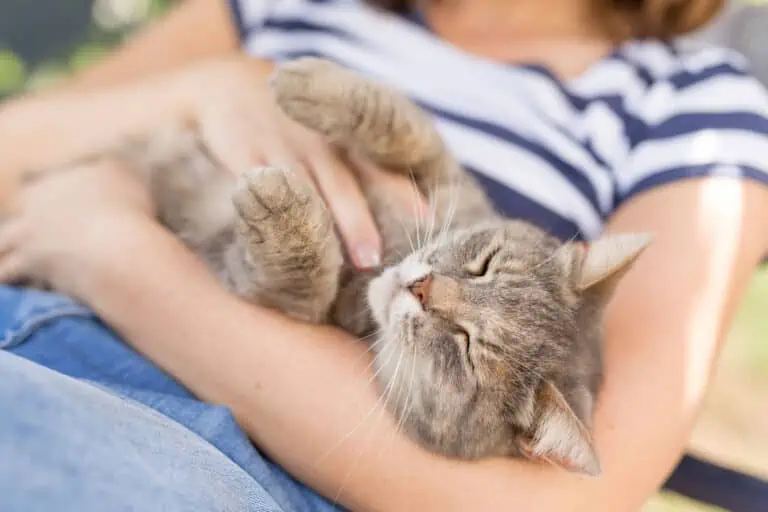
Why does my cat bite me when I pet her? It usually happens because she’s overstimulated, in pain, scared, or simply communicating in the only language she knows — her teeth.
One minute she’s purring and leaning into your hand, and the next she’s grabbing your wrist with a quick nip. It’s confusing, sometimes painful, and it can make you feel like you did something wrong.
The truth is, this is one of the most common behaviors cat owners deal with, and it almost never means your cat hates you.
Understanding Why Cats Bite When Being Petted
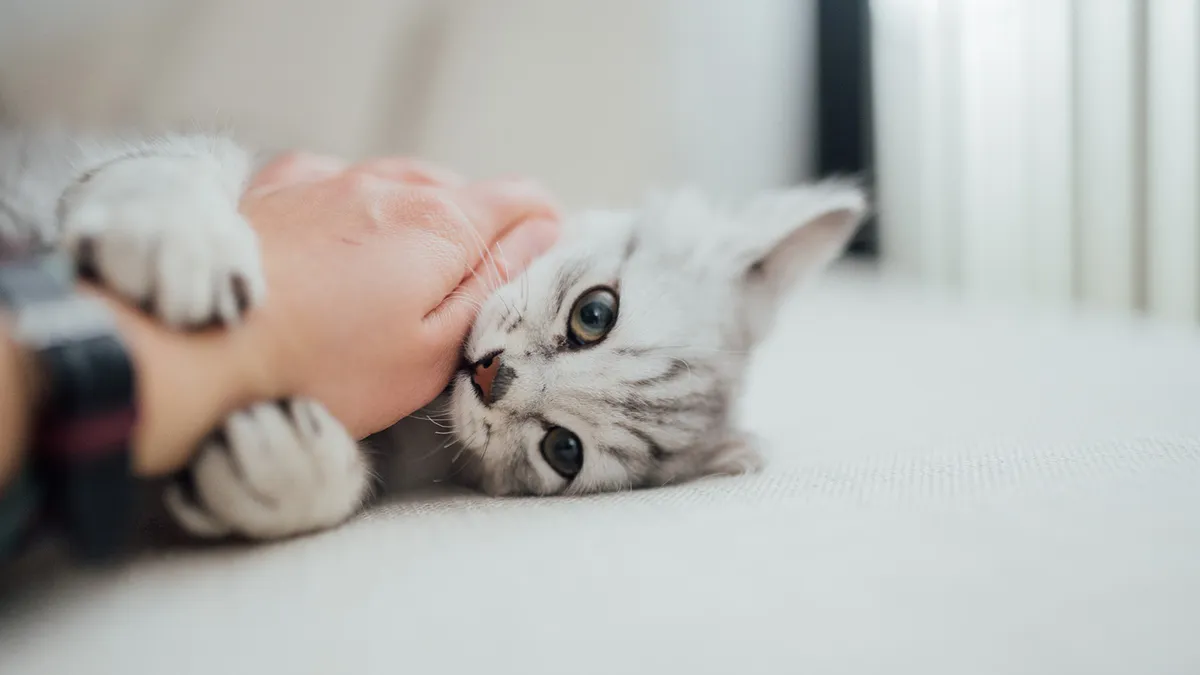
Cats don’t have hands to push you away or words to say “stop.” Biting is often their clearest signal.
This doesn’t make it acceptable, but it does make it explainable. Once you understand the cause, the behavior stops feeling random.
Most petting bites fall into a handful of categories: overstimulation, pain, fear, poor socialization, redirected energy, or simple affection. We’ll walk through each one.
It also helps to remember that biting sits on a spectrum. A soft mouth grab is very different from a hard bite that breaks skin, and the two rarely share the same cause.
Context matters more than the bite itself. The same nip can mean “I love you” in one moment and “back off” in another, depending on posture, timing, and location on the body.
Why Every Cat Is a Little Different
Not every cat reaches her petting limit at the same speed. Some cats can be stroked for ten minutes straight, while others reach their threshold in under a minute.
Age, breed tendencies, past experiences, and even the weather or time of day can shift how tolerant a cat feels on any given day.
A cat who was recently adopted, rehomed, or exposed to a stressful event may have a much shorter fuse than usual until she settles in.
Because of this variation, there’s no universal number of pets that’s “safe.” Watching her individual signals matters far more than counting strokes.
Petting-Induced Aggression (Overstimulation)
The single most common answer to “why does my cat bite me when I pet her” is overstimulation, also called petting-induced aggression.
Cats have a much lower tolerance for prolonged touch than dogs do. What starts as pleasant contact can quickly become too much sensory input for her nervous system.
Repetitive stroking, especially along the back or near the tail, builds up static-like sensitivity in the skin. Eventually, she reaches a threshold and reacts.
Think of it like a friendly pat on the back that turns annoying if it doesn’t stop. Your cat feels the same way about extended petting sessions.
The bite is rarely meant to injure you. It’s a clear, physical “that’s enough” after her patience has run out.
Researchers believe overstimulation happens because repeated touch keeps firing the same nerve endings until the sensation shifts from pleasant to irritating.
This is why a cat can go from purring to biting in a matter of seconds, with very little middle ground in between the two states.
Some cats are more prone to this than others simply because of how densely packed their nerve endings are, particularly along the spine and near the base of the tail.
Love Bites vs. Aggressive Bites
Not every nip is a warning. Cats also give gentle “love bites” that mean something completely different from a defensive or overstimulated bite.
Learning to tell the two apart helps you respond correctly instead of overreacting to an affectionate gesture.
| Feature | Love Bite | Aggressive/Overstimulation Bite |
|---|---|---|
| Pressure | Light, rarely breaks skin | Firm, may break skin |
| Body language | Relaxed, slow blinking, purring | Tense body, flattened ears, tail flicking |
| Timing | During calm, happy moments | After extended petting or sudden triggers |
| Warning signs | Little to none | Twitching skin, dilated pupils, freezing |
| Best response | Gently redirect to a toy | Stop touching and give space immediately |
Love bites are often leftover behavior from kittenhood, when nibbling was part of grooming and bonding with littermates.
Mother cats groom kittens with their mouths, and gentle nibbling is a natural extension of that same care. Adult cats sometimes carry this instinct into how they treat their favorite humans.
If your cat only nibbles during calm, affectionate moments and never draws blood, there’s usually nothing to worry about. It’s simply her version of a hug.
The safest response to a love bite is to stay still and calm rather than pulling your hand away quickly, since sudden motion can accidentally trigger a harder, more instinctive bite.
Pain-Related Biting
If your cat suddenly starts biting when she never did before, pain is one of the first things to rule out.
Conditions like arthritis, dental disease, skin infections, or old injuries can make normal touch uncomfortable or even sharply painful.
A cat in pain may tolerate petting in most areas but snap the moment you touch a sore spot, such as the hips, lower back, or jaw.
Sudden behavior changes are always worth a veterinary visit. Cats are excellent at hiding pain, and biting is often the only clue you get.
Senior cats are especially prone to pain-related biting, since arthritis and joint stiffness tend to build gradually and can go unnoticed for months.
Dental pain is another commonly overlooked cause. A cat with a cracked tooth or gum disease may flinch or bite when touched near the face or jaw, even during normal affection.
If you notice your cat pulling away from a specific spot every single time, take note of the exact location. That detail is genuinely useful information for your veterinarian.
Fear and Defensive Biting
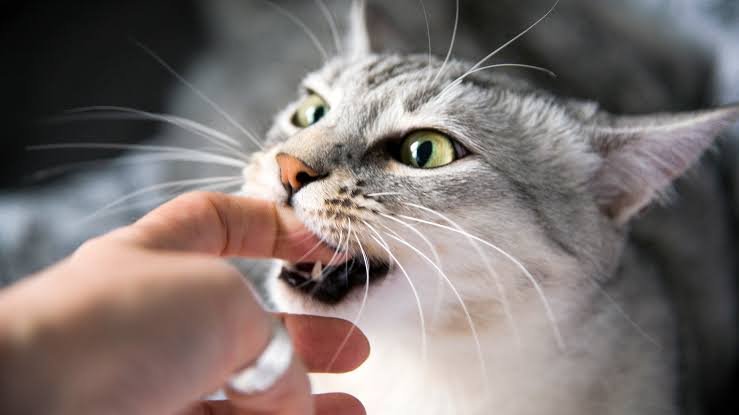
A frightened cat will almost always show warning signs before biting, though they can be easy to miss if you’re not paying attention.
Flattened ears, hissing, a puffed tail, or a low crouch usually appear first. If you continue to approach or pet her in this state, a bite is likely.
Loud noises, unfamiliar visitors, recent stressful events, or a history of rough handling can all make a cat more prone to fear-based biting.
Trying to comfort a scared cat with petting often backfires. Space and quiet, not touch, are what she needs in that moment.
Fear-based bites tend to be faster and harder than overstimulation bites, since they’re driven by a genuine survival instinct rather than mild annoyance.
Cats who were rescued from difficult situations, or who had limited human contact early in life, may carry this heightened fear response longer than cats raised in calm, consistent homes.
Building trust with a fearful cat takes time and shouldn’t be rushed. Letting her approach you, rather than reaching for her first, tends to work far better than persistence.
Poor Socialization as a Kitten
Kittens learn “bite inhibition” from their mother and littermates during play. A kitten separated too early may never fully learn how gentle is gentle enough.
This can carry into adulthood as a cat who bites harder or more frequently than average during handling, simply because she was never taught otherwise.
The good news is that bite inhibition can still be improved in adult cats through consistent, gentle redirection over time.
Orphaned kittens or those bottle-fed by humans are especially at risk of missing this lesson, since much of it comes from rough-and-tumble play with siblings.
If you adopted a kitten alone, introducing supervised playtime with a gentle, well-socialized adult cat can sometimes help fill in that missing piece of feline etiquette.
Patience is key here. A cat who never learned soft mouth control as a kitten can still improve significantly with consistent, calm handling as an adult.
Play Aggression During Petting
If you catch your cat mid-play and reach out to pet her, she may treat your hand like part of the game.
This is especially common in kittens and young cats with high energy and few outlets for their natural hunting instincts.
Play bites tend to come with pouncing, a swishing tail, and dilated pupils — all signs she’s in “hunt mode” rather than relaxed cuddle mode.
Kittens under a year old are the most common culprits here, since they’re still developing impulse control and have abundant energy looking for an outlet.
Using wand toys and interactive play sessions daily can redirect this hunting energy away from hands and feet, which also happen to be the most tempting moving targets in the house.
Never use your hands as a toy during play, even with young kittens. It teaches them that biting skin is an acceptable part of the game.
Redirected Aggression
Sometimes a cat is worked up over something entirely unrelated to you, like a bird outside the window or another animal in the home.
If you pet her while she’s still aroused from that trigger, she may redirect that tension onto your hand through a bite.
This isn’t personal. Giving her time to calm down before initiating contact usually solves the problem.
Redirected aggression can last anywhere from a few minutes to several hours after the original trigger, depending on how intense the stimulus was.
Signs that your cat is still worked up include a puffed tail, wide eyes, and restless pacing around the room or windowsill.
If you’re unsure whether she’s calm enough for petting, wait it out. A cat who’s still aroused from a trigger rarely settles instantly just because you approach her.
Nighttime and Crepuscular Biting
Cats are crepuscular, meaning they’re naturally most active at dawn and dusk rather than during the day or deep into the night.
If your cat nips your feet or hands while you’re trying to sleep, it’s often an invitation to play rather than aggression.
Scheduling an active play session in the evening can help burn off that energy before bedtime.
A short, vigorous play session about thirty minutes before you go to sleep can noticeably reduce nighttime nipping for many cats.
Feeding a small meal right after that play session can also help, since it mimics the natural hunt-eat-groom-sleep cycle cats follow in the wild.
If nighttime biting persists despite these changes, closing the bedroom door and providing a comfortable space elsewhere is a reasonable long-term solution.
Multi-Cat Households and Biting Behavior
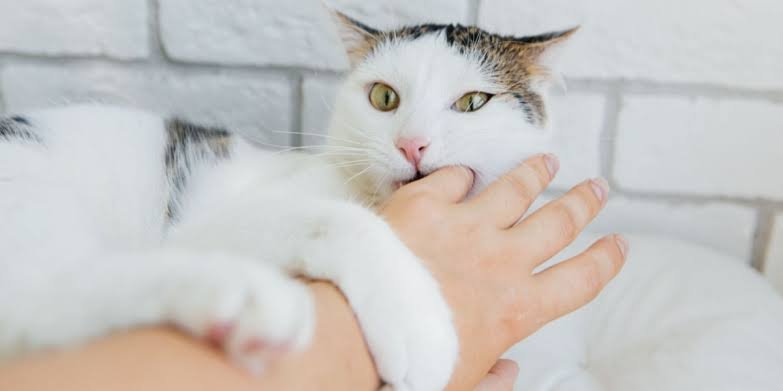
Cats living with other cats sometimes carry extra tension into petting sessions, especially if there’s unresolved conflict between household pets.
A cat who feels she needs to compete for attention or resources may bite sooner during petting than a cat in a single-pet home.
Giving each cat individual, predictable one-on-one time can reduce this competitive edge and make petting sessions calmer for everyone involved.
How to Read Your Cat’s Warning Signs
Learning your cat’s body language is the single best tool for preventing bites before they happen.
| Warning Sign | What It Means |
|---|---|
| Tail flicking or swishing | Rising irritation or overstimulation |
| Flattened or rotated ears | Fear, annoyance, or defensiveness |
| Dilated pupils | Overstimulation, fear, or play arousal |
| Skin twitching or rippling | Sensory overload building up |
| Sudden stillness or freezing | About to react, often a bite |
| Growling, hissing, or spitting | Clear fear or defensive aggression |
Once you recognize these cues, you can stop petting a few seconds before she’d otherwise need to bite to make her point.
It helps to watch your cat during calm, non-petting moments too, so you learn what her relaxed baseline looks like before comparing it to signs of tension.
Every cat has a slightly different “tell.” Some flick only the very tip of the tail, while others go completely still right before a bite.
Keeping a mental note of your own cat’s specific pattern is far more useful than any generic checklist, since her signals are unique to her.
How to Stop Your Cat From Biting When Petted
Managing petting-induced aggression comes down to reading her limits and respecting them consistently over time.
Keep sessions short. Many cats prefer several short bursts of affection over one long, continuous petting session.
Focus on preferred zones. Most cats enjoy being touched around the head, cheeks, and chin far more than the belly, tail, or lower back.
Stop at the first sign. The moment you see tail flicking or skin twitching, pause. Let her decide whether to re-engage.
Never punish a bite. Yelling, tapping her nose, or spraying water can damage trust and may increase anxiety-driven aggression.
Offer alternatives. Keep a toy nearby so play energy or overstimulation has somewhere else to go besides your hand.
Build a routine. Cats often feel calmer with predictable interactions, so petting her around the same times each day can lower overall stress.
Track her patterns. Keeping a simple mental log of when and where bites happen can reveal triggers you hadn’t noticed before, like always biting after belly touches.
Involve the whole household. Make sure everyone who interacts with her, including children, understands and respects the same warning signs and limits.
The Consent Testing Method
Consent testing is a simple way to let your cat control the interaction instead of guessing when she’s had enough.
Hold your hand a couple of inches from her head and wait. If she leans in, she’s inviting contact.
Pet for a few seconds, then pause again. If she nudges your hand for more, continue. If she doesn’t, stop and let her walk away.
This method builds trust over time and dramatically reduces the odds of a surprise bite.
Consent testing works because it shifts control back to your cat, removing the feeling of being cornered or forced into contact she isn’t ready for.
Over weeks of consistent practice, many cats become noticeably more relaxed during petting, since they learn that you’ll always respect a “no thanks.”
This technique is especially useful for shy or previously mishandled cats who need extra reassurance that touch is always optional, never forced.
Common Myths About Cats Biting When Petted
A lot of misinformation circulates about why cats bite, and clearing up a few myths can change how you approach the behavior.
Myth: cats who bite are simply “mean” or untrainable. In reality, biting is almost always a communication attempt, not a personality flaw.
Myth: punishing a bite teaches a cat not to do it again. In practice, punishment usually increases fear and can make biting worse, not better.
Myth: only poorly socialized cats bite during petting. Even well-adjusted, affectionate cats can reach an overstimulation threshold and nip without any deeper issue.
When to See a Veterinarian
A vet visit is worth scheduling if biting appears suddenly, worsens over time, or comes with other behavior changes.
Signs like hiding, reduced appetite, limping, or resistance to being picked up often point to an underlying medical cause.
Any bite that breaks the skin should also be cleaned promptly and monitored, since cat bites carry a real risk of infection.
A basic behavioral exam can also rule out anxiety disorders or cognitive changes in older cats, both of which can influence how they respond to touch.
Don’t hesitate to ask your vet about referral to a certified feline behaviorist if biting continues despite medical clearance and consistent handling changes at home.
Bringing a short video of the biting episodes to your appointment can help your vet spot patterns you might miss while it’s happening in real time.
Focus Keyword Usage and Content Notes
This guide is written to match how real cat owners search: conversational, specific, and centered on the exact frustration of being bitten mid-pet.
Related terms woven throughout include petting-induced aggression, overstimulation, love bites, bite inhibition, consent testing, and cat body language, matching how top-ranking competitor content covers this topic.
Why Does My Cat Bite Me When I Pet Her? — Quick Summary Table
| Cause | Common Trigger | Fix |
|---|---|---|
| Overstimulation | Long or repetitive petting | Shorter sessions, watch for cues |
| Pain | Touching a sore area | Vet checkup |
| Fear | Loud noise, stranger, past trauma | Give space, avoid forcing contact |
| Poor socialization | Early separation from littermates | Gentle, consistent training |
| Play arousal | Mid-play petting | Redirect to toys |
| Redirected aggression | Unrelated trigger (bird, noise) | Wait for her to calm down |
Frequently Asked Questions (FAQs)
Why does my cat bite me when I pet her but seem happy?
She’s likely reached her overstimulation threshold. Cats often enjoy petting only up to a point, then bite to signal “enough.”
Is it normal for cats to bite gently when petted?
Yes, gentle nips called love bites are normal and usually signal affection or playfulness, not aggression.
How do I know if my cat’s bite is a warning?
Watch for tail flicking, flattened ears, or skin twitching beforehand. These signs mean a bite is likely coming.
Should I punish my cat for biting me while petting?
No, punishment increases fear and can worsen biting. Stop petting instead and give her space to calm down.
Can pain cause my cat to bite when I pet her?
Yes, arthritis, dental disease, or injuries can make touch painful, leading to sudden or out-of-character biting.
Why does my cat bite my hand and then lick it?
This mix of biting and licking often mimics grooming behavior, which is typically a sign of trust and affection.
How can I stop petting-induced aggression?
Keep sessions short, stick to preferred areas like the head and chin, and stop at the first warning sign.
Do kittens grow out of biting during petting?
Many do with proper socialization and gentle correction, though some adult cats retain a lower petting tolerance permanently.
Where do cats prefer to be petted to avoid biting?
Most cats prefer the head, cheeks, and chin, and are more likely to bite when touched on the belly or tail.
When should I take my cat to the vet for biting?
See a vet if biting starts suddenly, worsens, or is paired with other changes like hiding, limping, or appetite loss.
Conclusion
So, why does my cat bite me when I pet her? In most cases, it comes down to overstimulation, pain, fear, or simply a cat who never fully learned bite inhibition as a kitten.
None of these reasons mean she doesn’t love you — they mean she’s communicating in the only way she has.
Learning her specific warning signs, keeping petting sessions short, and using consent testing can prevent the vast majority of surprise bites.
If the behavior appears suddenly or seems out of character, a veterinary visit is always worth it to rule out pain or illness. With patience and a little observation, most cats and their owners settle into a rhythm where petting stays a bonding moment instead of a battle.


