


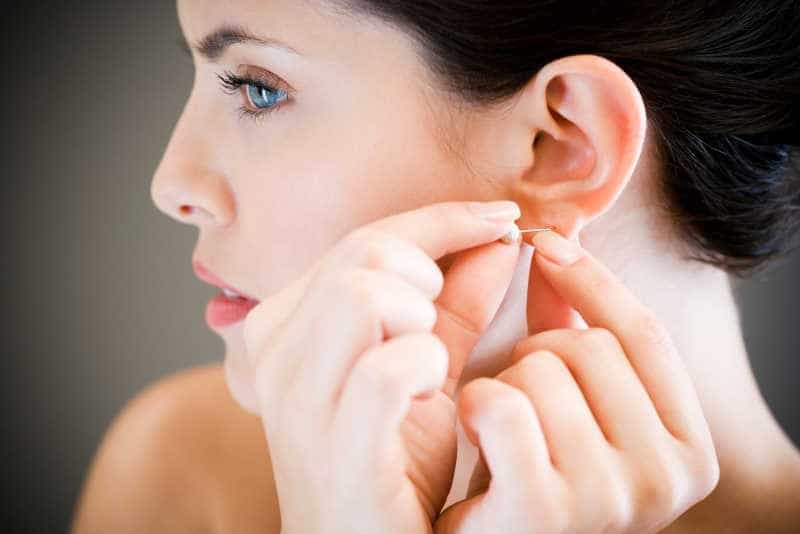
Why do my earrings smell is one of the most common — and least talked about — piercing concerns people deal with.
If you have ever taken off your earrings and caught a funky, cheesy odor coming from the posts or your earring holes, you are not alone.
This smell is extremely common, mostly harmless, and completely fixable.
It is caused by a mix of dead skin cells, natural oils, sweat, and bacteria that collect in the low-airflow space around your piercing.
What Is That Smell Coming From My Earrings
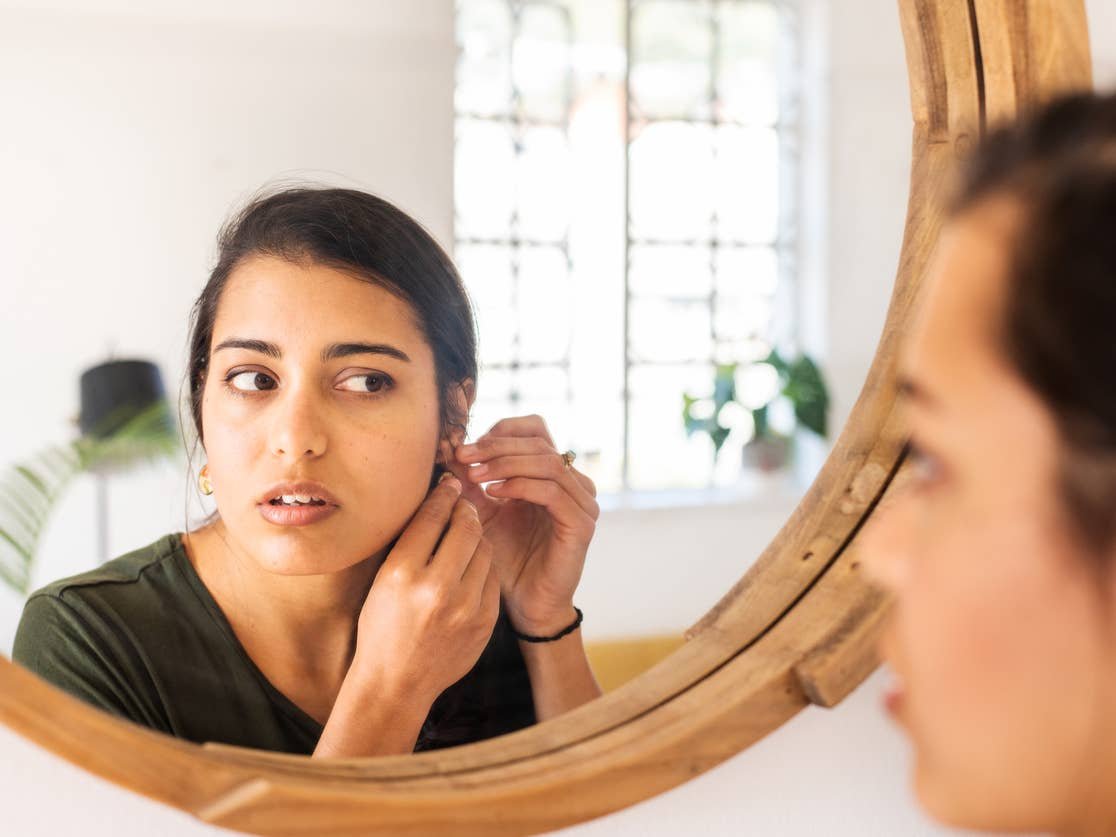
The smell has a nickname in piercing communities — ear cheese. It is an accurate, if unpleasant, description.
Ear cheese is a waxy, sometimes brownish-gray residue that collects on earring posts, backs, and inside the piercing hole. It smells similar to stale cheese because it contains many of the same types of bacteria found in actual cheese.
This buildup is made up of dead skin cells, sebum (your skin’s natural oil), sweat, product residue, and bacteria. It is a completely natural biological process, not a sign that something has gone seriously wrong.
Why Earring Holes Create the Perfect Environment for Odor
Piercing holes are warm, moist, low-airflow spaces. That combination makes them ideal environments for bacterial growth and organic buildup.
Unlike open skin, a piercing channel does not shed dead cells as efficiently. Cells accumulate inside and around the hole, mixing with sebum and sweat that the surrounding skin naturally produces.
Add earring backs that press tightly against the lobe and trap everything in place, and you have the ideal conditions for odor to develop quickly — even with reasonable hygiene habits.
The Main Reasons Why Your Earrings Smell
There is rarely just one cause. Earring odor is almost always the result of several factors working together.
Dead Skin Cell Buildup
Your skin constantly sheds and renews itself. Around a piercing hole, those shed cells do not fall away as easily as they do on smooth, open skin.
They accumulate inside and around the piercing channel, mixing with oils and moisture to create the gunk that produces the smell.
This process happens to everyone with pierced ears, regardless of how clean they are. The difference is how quickly the buildup develops and how often it gets cleaned away.
Sebum and Natural Skin Oils
Sebum is the oily substance your skin produces to stay moisturized and protected. Your ears produce it continuously, and it collects around earrings and inside piercing holes.
When sebum mixes with dead skin cells, sweat, and bacteria, the combination creates that signature funky odor.
People with naturally oilier skin tend to notice earring smell more quickly because their sebum production is higher. Hot weather and physical activity also increase sebum output and speed up odor development.
Bacteria on the Skin Surface
Bacteria naturally live on your skin. They are not harmful under normal conditions, but when they are given an enclosed, moist, protein-rich environment like a piercing hole, they multiply and break down organic matter.
This bacterial breakdown process produces volatile compounds that are responsible for the cheesy smell. The more time passes between cleanings, the more bacteria accumulate and the stronger the odor becomes.
Poor Cleaning Habits
Infrequent cleaning is the single most controllable cause of earring odor. When earrings and piercing holes are not cleaned regularly, buildup accelerates rapidly.
Many people wash their face and hair routinely but forget that the area around their piercing holes needs the same attention. The ears are an easy spot to overlook in a daily hygiene routine.
Wearing the same pair of earrings for weeks without removing or cleaning them is one of the fastest ways to develop a persistent odor problem.
Cheap or Low-Quality Earring Metals
The material your earrings are made from plays a significant role in how much they smell.
Cheap metals — particularly nickel, brass, and low-quality alloys — react with sweat and skin oils through a process called oxidation. This reaction causes discoloration on the skin and contributes directly to odor.
Nickel is one of the most common metal allergens. When skin reacts to nickel, it produces increased discharge and moisture around the piercing, creating even more favorable conditions for bacterial growth and smell.
Tight Earring Backs
Tight butterfly backs, rubber backs, and flat-back earrings that press snugly against the earlobe restrict airflow to the piercing area.
Without any air circulation, moisture gets trapped against the skin. Bacteria thrive in that trapped moisture, and buildup accumulates faster than it would in a better-ventilated space.
Loosening earring backs slightly and opting for designs that allow a small gap between the back and the lobe significantly reduces odor.
Hair Products, Makeup, and Skincare
Hairspray, dry shampoo, serums, sunscreen, and foundation all contain ingredients that can settle around earrings and on the posts and backs.
These residues mix with sebum, sweat, and skin cells to create a thicker, harder-to-clean buildup. Silicones and oils in particular cling to metal surfaces and trap bacteria.
Shielding earrings during styling sessions and rinsing the lobe area after using products helps reduce this type of buildup significantly.
Sleeping With Earrings In
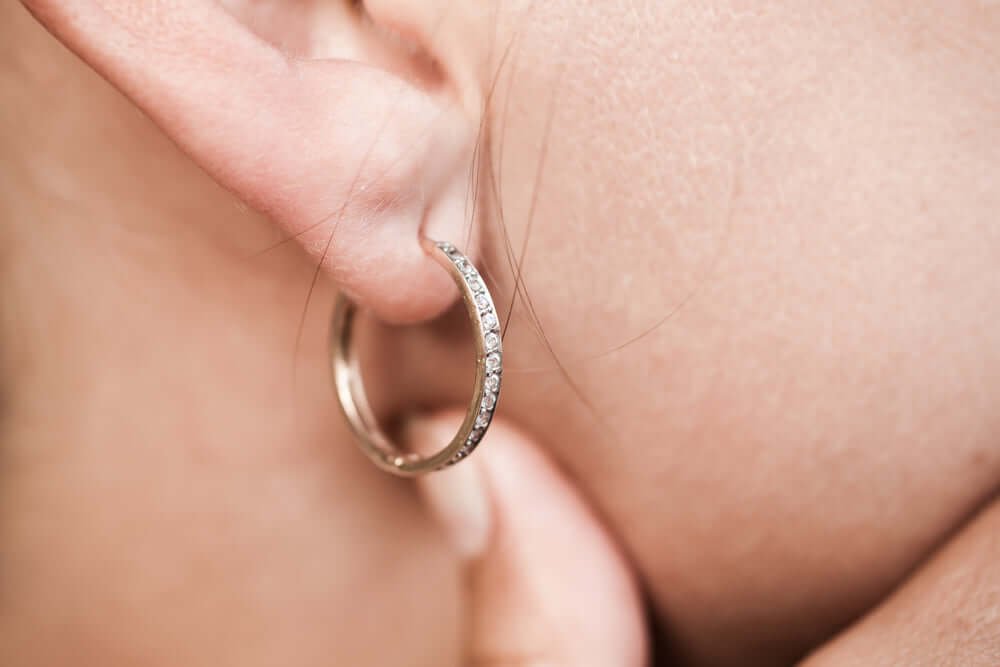
Wearing earrings overnight compresses the backing against the lobe for hours. In that compressed position, sweat and sebum accumulate without any opportunity to evaporate.
The warmth of sleep combined with the pressure of the backing against the skin creates a miniature breeding ground for bacteria every single night.
Removing earrings before bed — for healed piercings — is one of the most effective habits for controlling odor.
New or Healing Piercings
Fresh piercings produce lymph fluid as part of the healing process. This fluid dries into a white or yellowish crust around the jewelry.
This crust is normal and expected. However, if it is not cleaned away regularly, it harbors bacteria and can contribute to both odor and delayed healing.
People with new piercings often notice stronger smells in the first few months precisely because the healing process produces more biological material than a fully healed piercing does.
Stretched or Gauged Ears
Stretched piercings (gauges) have a larger surface area inside the hole, which means more space for dead cells, sebum, and bacteria to accumulate.
The smell from gauged ears can be more pronounced and more persistent than from standard earring holes. The material of the jewelry matters especially here — porous materials like wood or low-quality silicone trap bacteria more readily than surgical steel or titanium.
Normal Earring Odor vs. Infection: How to Tell the Difference
Knowing the difference between harmless buildup odor and an actual infection is essential. The signs are distinct if you know what to look for.
| Feature | Normal Odor (Ear Cheese) | Infection |
|---|---|---|
| Smell | Mild to moderate, cheesy or musty | Strong, sharp, or foul |
| Appearance | Gray or brown waxy residue | Yellow or green pus |
| Pain | None or very mild | Throbbing, persistent pain |
| Redness | None | Visible redness and warmth |
| Swelling | None | Noticeable swelling in the lobe or around the hole |
| Discharge | Minimal waxy buildup | Active liquid discharge |
| Fever | No | Possible with spreading infection |
| Response to cleaning | Improves quickly | Does not improve with cleaning |
Mild odor with no other symptoms is almost always just buildup. If the smell is accompanied by pain, redness, swelling, or discharge that does not clear up with proper cleaning, see a doctor or professional piercer.
Signs Your Smelly Earring Hole Might Be Infected
According to dermatologists, certain symptoms alongside odor indicate a piercing infection that needs medical attention.
Watch for these warning signs:
- Redness that spreads beyond the immediate piercing hole
- Warmth or throbbing in the earlobe that does not resolve
- Swelling that increases rather than decreases with time
- Yellow or green discharge coming from the hole
- Crust that reforms rapidly even after thorough cleaning
- The piercing hole closing around or embedding the jewelry
- Fever, swollen lymph nodes near the jaw, or systemic symptoms
If you notice a combination of these signs, do not try to remove the earring yourself during an active infection — this can trap the infection inside the tissue. See a doctor or dermatologist promptly.
Metal Allergies and Earring Smell
A metal allergy — most commonly to nickel — causes the skin around the piercing to produce more moisture and inflammatory discharge.
This extra discharge mixes with bacteria and dead cells, creating a more intense odor than normal buildup alone would produce. Skin reactions also mean more shedding of skin cells around the hole.
Symptoms that suggest a metal allergy alongside odor include:
- Persistent itching inside or around the piercing hole
- Rash, redness, or skin thickening around the lobe
- The odor returns very quickly even after thorough cleaning
- Skin discoloration or a greenish tint around the earring post
Switching to hypoallergenic earring materials resolves allergy-related odor in most cases within a few weeks.
Best Earring Materials to Prevent Smell
Choosing the right metal is one of the most effective long-term strategies for controlling earring odor.
| Metal | Odor Risk | Notes |
|---|---|---|
| Implant-grade titanium | Very low | Best option for sensitive ears and fresh piercings |
| Solid 14k or 18k gold | Very low | Hypoallergenic, does not react with skin |
| Surgical steel (316L) | Low | Widely available, affordable, good for healed piercings |
| Sterling silver (925) | Low to moderate | Can tarnish; clean regularly |
| Niobium | Very low | Excellent for metal-sensitive skin |
| Gold-plated base metal | Moderate | Plating wears off, exposing reactive metal below |
| Nickel alloys | High | Most common cause of allergic reaction and odor |
| Brass | High | Reacts with sweat and skin oils quickly |
| Cheap fashion jewelry | Very high | Unknown alloy content, high oxidation risk |
For anyone dealing with persistent earring odor, upgrading to titanium or solid gold is the single most impactful change they can make to their jewelry choices.
How to Clean Your Earrings Properly
Cleaning both the earrings themselves and the piercing holes is essential. Both parts need attention — cleaning only one without the other gives incomplete results.
Step-by-Step Earring Cleaning Routine
For healed piercings and earrings:
Remove the earrings completely. This gives you access to the full post and back, and lets the piercing hole breathe while you clean.
Wash the earrings with mild liquid soap and warm water. Use a soft toothbrush or cotton swab to reach into grooves, around the post, and inside the butterfly back. Rinse thoroughly.
Wipe the metal posts with 70% isopropyl alcohol using a cotton pad. This kills remaining bacteria on the jewelry surface. Allow the earrings to dry completely before reinserting them.
For the piercing holes:
Clean around the piercing hole using sterile saline solution on a cotton pad. Gently wipe away any crust or residue. Never use undiluted alcohol or hydrogen peroxide directly on the skin inside the piercing — these are too harsh and damage healing tissue.
Tea tree oil diluted in a carrier oil (a few drops in coconut or jojoba oil) applied with a cotton swab has natural antibacterial properties and leaves a pleasant scent that combats odor for several days. Always patch-test before using on your skin.
Pat the area dry completely after cleaning. Moisture left behind encourages bacterial regrowth.
How Often to Clean Earrings
| Situation | Recommended Cleaning Frequency |
|---|---|
| New or healing piercing | Twice daily with saline solution |
| Healed piercing, daily wear | Clean earrings and lobes at least weekly |
| Healed piercing, occasional wear | Clean earrings before and after each wear |
| After sweating or swimming | Clean earrings and lobes the same day |
| After using hair products | Rinse lobe area and wipe posts promptly |
Consistency matters far more than the specific product used. A simple, regular routine prevents buildup from ever reaching the odor-producing stage.
How to Clean Earring Holes That Already Smell
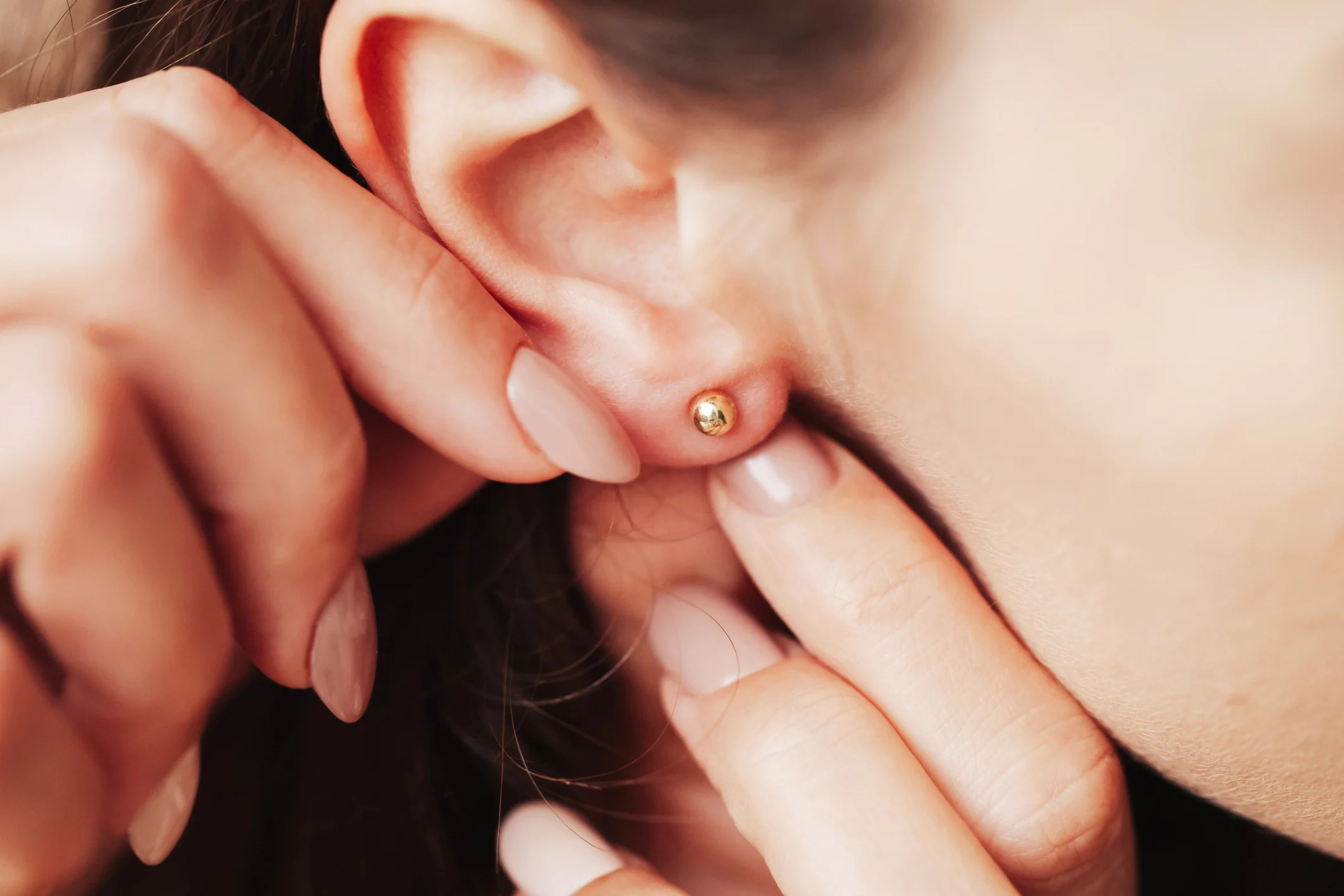
If your piercing holes already have a noticeable odor, these steps reset the baseline.
Start by removing your earrings and soaking them in warm soapy water for 5–10 minutes. While they soak, wash your hands, then gently clean around the piercing hole with a saline-soaked cotton pad.
Use a cotton swab to carefully clean just inside the front of the piercing hole — do not probe deeply. Rinse and pat dry completely.
Clean the soaked earrings with a soft brush, wipe the posts with isopropyl alcohol, and let them air dry on a clean tissue for at least 10 minutes before putting them back in.
Repeat this process daily for the first week. After that, drop to a weekly maintenance routine. Most people see a dramatic reduction in odor within 3–5 days of consistent cleaning.
Natural Home Remedies for Earring Smell
Several household items work well for managing earring odor between deeper cleaning sessions.
Salt water rinse: Mix half a teaspoon of non-iodized sea salt in a cup of warm distilled water. Apply to the lobe with a cotton ball. Salt is a natural antimicrobial and draws out moisture from tissue.
Tea tree oil: A few drops diluted in a carrier oil applied around the piercing reduces bacteria and leaves a fresh scent. Its antibacterial properties are well-documented and it is safe for external skin use when properly diluted.
Baking soda soak: Mix a small amount of baking soda with water to form a paste. Apply to earrings, let sit for 5 minutes, scrub gently, and rinse. Baking soda neutralizes odor-causing acids in bacterial waste products.
Hydrogen peroxide (3%, diluted): Useful for cleaning the earrings themselves, not the skin. Mix equal parts hydrogen peroxide and water. Soak earrings briefly, rinse, and dry.
White vinegar: Effective for removing mineral deposits and oxidation from metal surfaces. Soak earrings for a few minutes, scrub gently, rinse completely, and dry. Do not use on skin.
Lifestyle Habits That Make Earring Smell Worse
Some daily habits contribute directly to faster buildup and stronger odor. Changing them makes a noticeable difference.
Working out with earrings in: Sweat during exercise dramatically increases moisture and sebum production around the piercing. Removing earrings before gym sessions — or cleaning them immediately after — prevents post-workout odor spikes.
Hot and humid climates: Heat increases sweating and sebum production. People in warmer climates need to clean their earrings more frequently than those in cooler environments.
High-sugar diet: Research shows that diet affects sebum composition. High-sugar and high-refined-carb diets alter the skin’s microbiome and increase volatile compound production — which includes the compounds that make earring odor worse.
Dehydration: When the body is dehydrated, sweat becomes more concentrated with waste products. This makes sebum and sweat-related odor more intense around piercings.
Touching earrings with unwashed hands: Every time you touch your earrings with your fingers, you transfer new bacteria, oils, and debris to the metal and the piercing site. This is one of the fastest ways to introduce odor-causing bacteria.
When to See a Doctor About Earring Smell
Most earring odor resolves with cleaning and better hygiene habits. See a doctor or dermatologist if:
- The smell is strong and does not improve after 5–7 days of consistent cleaning
- You notice any discharge other than minor waxy buildup
- Redness, swelling, or pain accompanies the odor
- You suspect a metal allergy that is not resolving
- The piercing hole shows signs of embedding or closing around the jewelry
- You develop fever, swollen lymph nodes, or skin that feels hot to the touch beyond the immediate lobe area
A dermatologist can confirm whether a reaction is allergic or infectious and prescribe appropriate treatment. Do not ignore a smell that keeps returning despite good hygiene — it is your body signaling that something needs attention.
Preventing Earring Smell Long-Term
Prevention is far easier than dealing with persistent odor. These habits keep piercings fresh consistently.
Let your ears breathe regularly. Remove earrings when you are at home and not going out. The lobe benefits from airflow and the break reduces moisture accumulation significantly.
Rotate your earring collection. Wearing the same pair every day accelerates buildup on that specific pair and in that specific piercing hole. Switching pairs every few days gives each piercing time to air out.
Always dry your ears thoroughly after showering, washing hair, or swimming. Trapped moisture is one of the primary causes of bacterial growth around piercings.
Replace earring backs regularly. Rubber and silicone backs accumulate bacteria particularly efficiently and are difficult to fully sanitize. Replace them every few months.
Store clean earrings in a clean, dry jewelry box or holder. Storing them loosely in a drawer exposes them to dust and bacteria that will transfer directly to your piercing holes.
Choose earring styles wisely. Flat-back labret studs and other minimal-contact back designs allow better airflow than traditional butterfly backs and significantly reduce buildup.
Earring Smell in Children and Newly Pierced Ears
Children with newly pierced ears are particularly prone to earring odor because their piercings are healing and producing more lymph fluid.
The healing period for standard lobe piercings is typically 6–8 weeks. During this time, twice-daily cleaning with sterile saline solution is essential.
Parents should check children’s earring holes daily during healing — not just for smell, but for signs of redness, swelling, or crust that does not resolve with cleaning.
After healing is complete, switching to hypoallergenic gold or titanium earrings greatly reduces the likelihood of ongoing odor problems in children.
Frequently Asked Questions (FAQs)
Why do my earrings smell like cheese?
The cheesy smell comes from a mixture of dead skin cells, sebum, sweat, and bacteria that accumulate in the low-airflow environment around your piercing hole — the same bacteria family that gives certain cheeses their sharp scent.
Is it normal for earring holes to smell?
Yes, mild earring odor is completely normal and extremely common among people with pierced ears. It becomes a concern only when the smell is very strong or accompanied by pain, redness, swelling, or pus.
How do I get rid of the smell from my earring holes fast?
Remove earrings, clean them with mild soap, warm water, and isopropyl alcohol, then clean the piercing holes with sterile saline solution. Most people notice a significant reduction in odor within 3–5 days of consistent daily cleaning.
Can cheap earrings cause my piercing to smell more?
Yes. Low-quality metals like nickel and brass react with skin oils and sweat, causing oxidation and increased skin irritation — both of which contribute directly to stronger and more persistent odor.
Should I remove my earrings at night to reduce smell?
Yes, for healed piercings. Removing earrings overnight gives the skin time to breathe, reduces moisture buildup from sleep sweat, and dramatically slows the rate at which odor-causing bacteria accumulate.
Can a smelly earring hole mean infection?
Sometimes. Normal odor improves with cleaning and has no other symptoms. An infected piercing smells more strongly and is accompanied by redness, swelling, pain, increasing discharge, or a hole that feels hot to the touch.
What is the best metal to prevent earring smell?
Implant-grade titanium and solid 14k or 18k gold are the best choices for preventing odor. They are hypoallergenic, do not react with skin, and do not harbor bacteria as readily as cheaper metals.
How often should I clean my earrings?
For daily-wear earrings in healed piercings, clean at minimum once per week. For new or healing piercings, clean twice daily with sterile saline. After sweating heavily or using hair products, clean the same day.
Can hair products make my earrings smell worse?
Yes. Sprays, gels, serums, and dry shampoos contain silicones and oils that coat the earring post and settle around the piercing hole, trapping bacteria and accelerating odor-causing buildup.
Why do my earring holes still smell even after cleaning?
Persistent odor after cleaning usually means either a metal allergy is causing extra skin discharge, the cleaning routine is not consistent enough, or an early-stage infection is present. Switching to hypoallergenic metals and seeing a dermatologist if the issue continues are the best next steps.
Conclusion
Why do my earrings smell is a question almost every person with pierced ears asks at some point.
The answer is simple: it is a natural result of dead skin cells, sebum, sweat, and bacteria accumulating in a warm, low-airflow environment that does not get cleaned as regularly as other parts of the body.
The good news is that earring odor is almost always harmless, entirely preventable, and easy to fix with the right routine.
Clean your earrings and piercing holes at least once a week, choose hypoallergenic metals like titanium or solid gold, let your ears breathe regularly, and pay attention to signs of infection.
With a consistent approach to piercing hygiene in 2026, smelly earrings become a problem of the past rather than an ongoing source of embarrassment or concern.


