


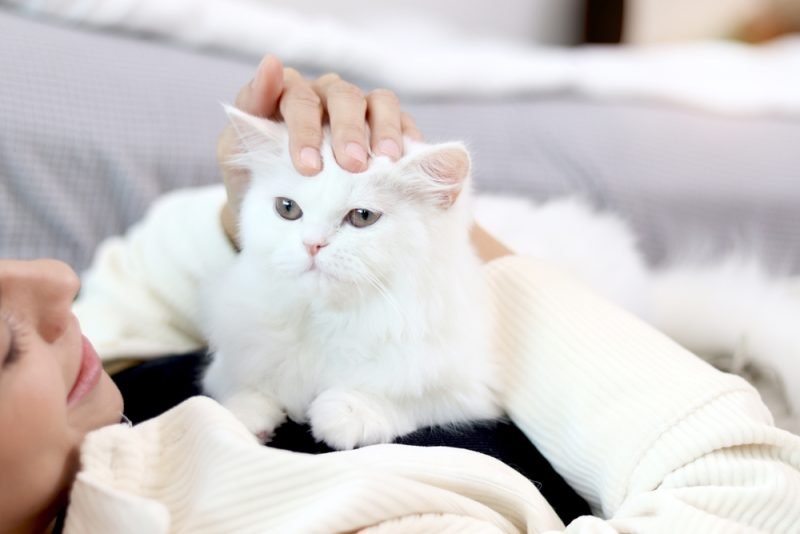
Why do cats sleep on your chest is one of the most searched cat behavior questions online, and the answer is warmer and more meaningful than most people expect.
If your cat regularly climbs onto your chest at night or during a nap, it is not a random habit or an act of inconvenience.
It is a deeply instinctive behavior rooted in trust, warmth, emotional bonding, and survival instinct.
What Happens When a Cat Sleeps on Your Chest
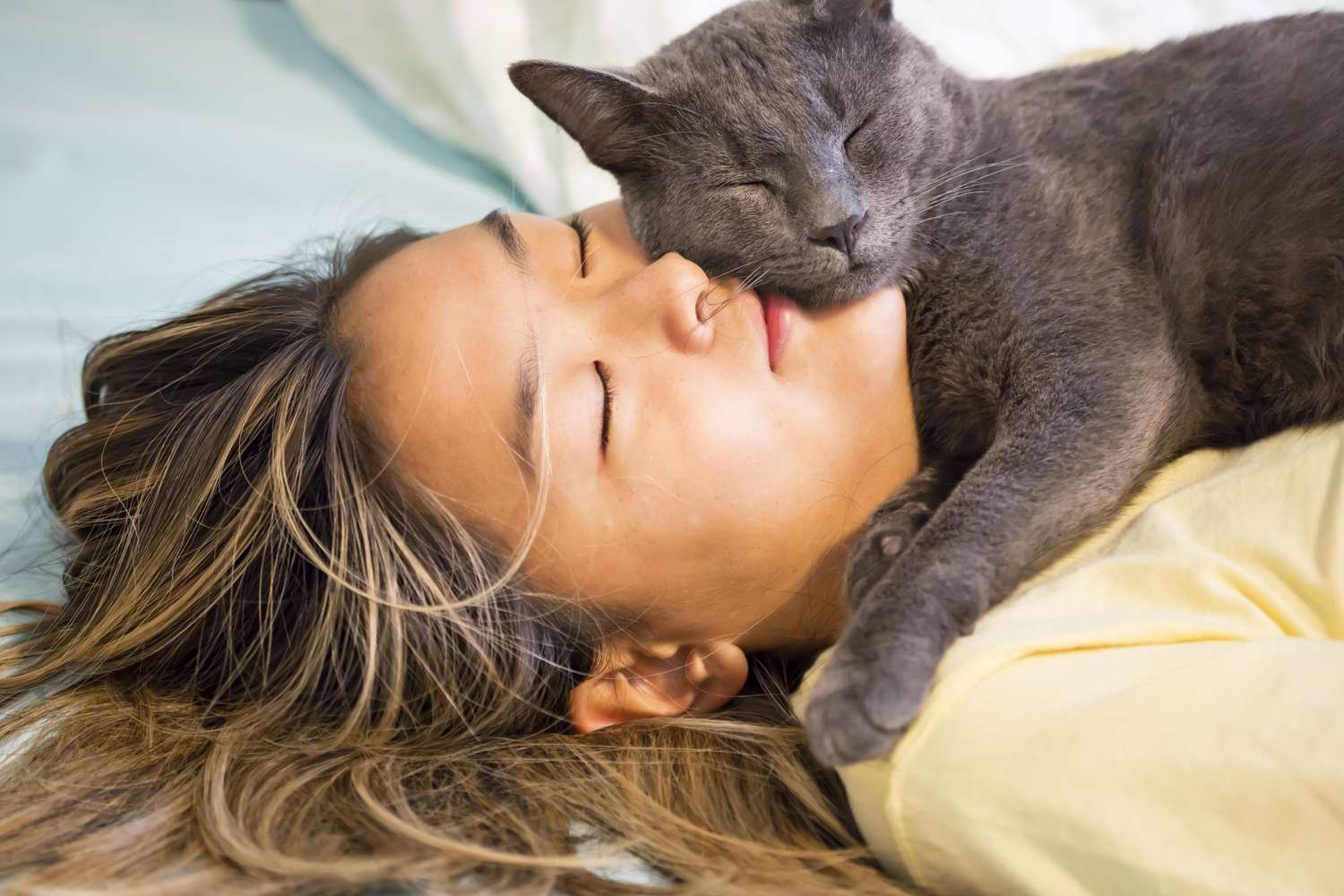
When your cat settles onto your chest, several things happen at once. They feel the rise and fall of your breathing, hear your heartbeat, absorb your body heat, and pick up your familiar scent.
Each of these sensory inputs plays a role in why cats find the human chest so appealing. It is not just one reason. It is a combination of physical comfort, emotional safety, and instinctive behavior all working together at the same time.
Why Your Chest Specifically
Cats can sleep anywhere. They choose warm, elevated, safe spots by instinct. Your chest offers all three while also including the heartbeat, scent, and movement that remind cats of deeply comforting early experiences.
The chest is also one of the warmest parts of the human body. The face and chest radiate significantly more heat than the legs or arms. For a creature that maintains a normal body temperature between 99.5°F and 102.5°F, finding an efficient source of warmth is a biological priority.
1. Warmth and Body Heat
The most straightforward reason why cats sleep on your chest is warmth. Cats are warm-blooded animals that expend energy maintaining their higher body temperature, and they instinctively seek out external heat sources to make that job easier.
Your chest is essentially a living, breathing heat pad. The warmth from your body reduces the energy your cat needs to spend staying warm, making sleep easier and more restorative for them.
This behavior becomes more pronounced in cold weather, during winter months, or in homes without adequate heating. Breeds with short or fine coats, like Siamese, Oriental shorthairs, and hairless breeds like the Sphynx, are particularly driven to seek human body heat because they have less insulation of their own.
Which Cats Seek Heat the Most
| Cat Type | Heat-Seeking Tendency |
|---|---|
| Sphynx (hairless) | Very high — no coat insulation |
| Siamese and Orientals | High — short, fine coats |
| Kittens | High — less efficient at thermoregulation |
| Senior cats | High — metabolism slows with age |
| Short-haired domestic cats | Moderate |
| Long-haired breeds (Maine Coon, Ragdoll) | Lower — well insulated |
2. Trust and Emotional Security
Cats sleep up to 16 hours a day, and they are at their most physically vulnerable while asleep. A sleeping cat cannot detect threats, cannot run, and cannot defend itself. The spot where a cat chooses to sleep is therefore a strong statement about where it feels safest.
When a cat chooses to sleep directly on your chest, it is making one of the strongest trust statements it is capable of. It is telling you that your presence makes it feel protected enough to fully let its guard down.
This kind of trust is not given freely. Cats are naturally cautious animals. They will not sleep on a person they are uncertain about or uncomfortable with. If your cat sleeps on you regularly, you are genuinely in their inner circle.
3. The Sound of Your Heartbeat
Cats are highly sensitive to rhythmic sounds. The steady, consistent thump of a human heartbeat is thought to be one of the most calming sounds in their sensory world, and there is a reason for that rooted in early development.
As newborn kittens, they spent their early weeks pressed against their mother, surrounded by warmth, her scent, and the steady sound of her heartbeat. That heartbeat was associated with safety, nourishment, and comfort during the most vulnerable period of their lives.
When an adult cat sleeps on your chest and hears your heartbeat, it may trigger those same deep associations. Research published in Current Biology confirms that cats form secure attachment bonds with their owners that parallel the bonds human infants form with caregivers.
4. Bonding and Affection
Cats do not show affection the way dogs do. They do not wag their tails, jump up excitedly, or seek constant attention. Their expressions of love are quieter, more deliberate, and more meaningful when they do occur.
Sleeping on your chest is one of the most direct and unambiguous ways a cat expresses affection. It requires physical proximity, vulnerability, and a willingness to be close. A cat that settles on you and purrs while you rest is communicating love in one of the deepest ways it knows how.
Certified cat behaviorist Lauren Parsch explains that while some cats are simply more physically affectionate than others, the act of chest sleeping consistently reflects a positive emotional bond between the cat and the person they choose.
5. Your Scent Provides Comfort
Cats rely heavily on scent to navigate their world. Their sense of smell is roughly 14 times stronger than a human’s, and familiar scents are deeply tied to their sense of safety and territory.
Your body has a unique scent that your cat has memorized through repeated close contact. That scent is associated with feeding, play, comfort, and safety. When your cat rests on your chest, they are surrounding themselves with that familiar scent, which actively lowers their stress levels and makes deep sleep easier.
This is the same reason your cat may nap on your worn clothing or favorite blanket when you are not home. Your scent alone is enough to provide comfort.
6. Scent Marking and Territory
Cats are territorial animals that use scent to claim ownership of their environment. They have scent glands on their cheeks, forehead, chin, and paws. When a cat rubs against objects or people, they are depositing pheromones that carry their unique scent signature.
When your cat sleeps on your chest, they are also marking you. Their pheromones mix with your scent, creating a blended signature that communicates to other animals that you belong to them.
This is not possessiveness in a negative sense. In the feline world, scent marking a person or place indicates deep inclusion and belonging. By marking you, your cat is placing you firmly within their social group, which in a single-cat household means you are their entire world.
7. Breathing Rhythm and Meditative Comfort
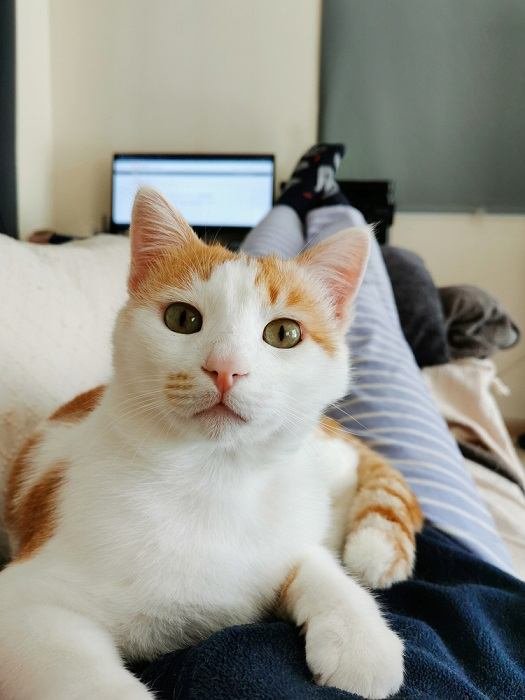
Beyond the heartbeat, the rhythmic rise and fall of your chest while breathing creates a gentle, rocking-like motion that cats find extremely soothing.
This steady physical movement mirrors the motion of being nestled against a mother cat during early kittenhood. It provides a sense of gentle, continuous reassurance that helps cats settle into deep, restful sleep.
Some behaviorists compare this to the way humans find rocking, swinging, or repetitive movement meditative and calming. The body perceives the rhythm as a signal that all is well and safe.
8. Your Cat Is Seeking Emotional Reassurance
If your cat suddenly begins sleeping on your chest more than usual, it could be a signal that something in their environment is causing stress or anxiety.
Cats respond to upheaval, change, or uncertainty by seeking closeness with their trusted person. Moving to a new home, changes in household routine, a new pet, a new baby, or even a disruption in their usual schedule can cause a cat to become more clingy and seek extra physical contact.
Increased chest sleeping accompanied by other signs like hiding, over-grooming, changes in appetite, or excessive vocalization suggests your cat may need additional reassurance and environmental support. A visit to the vet can rule out any health-related causes.
9. Your Cat Senses Your Emotions
Cats are more emotionally perceptive than many people realize. They can detect changes in human mood through subtle shifts in scent, body language, vocal tone, and behavior.
When you are stressed, sad, unwell, or emotionally low, your cortisol levels rise and your behavior changes in ways your cat notices. Many cat owners report that their cat chooses to sleep on them specifically on days when they are not feeling well, physically or emotionally.
This behavior is believed to be a form of feline comfort-giving. Your cat senses that something is different and responds by staying close, offering their warm presence and purring as a form of support.
10. Kitten Imprinting and Early Attachment
Cats that were well-socialized during the critical developmental window between two and nine weeks old, particularly those handled frequently by humans, are much more likely to be physically affectionate as adults.
This early imprinting creates a foundation of comfort with human contact that persists throughout life. A cat that slept in close proximity to humans as a kitten is far more likely to seek out that same physical closeness as an adult.
Similarly, cats that were weaned too early may seek out the warmth and heartbeat of a human chest as a substitute for the comfort they missed from their mother, engaging in behaviors like kneading while lying on you.
11. Attention Seeking
Sometimes the explanation is refreshingly simple. Cats are smart, observant creatures that quickly learn what works to get what they want.
If your cat has discovered that climbing onto your chest when you are lying down reading, watching television, or trying to sleep reliably gets your attention, they will repeat that behavior. Chest sleeping is one of the most effective ways a cat can interrupt what you are doing and redirect your focus to them.
This does not mean the behavior lacks affection. It just means your cat has also figured out the practical benefits of their preferred cuddling spot.
The Science: Health Benefits of Cat Sleeping on Your Chest
The cozy habit of letting your cat sleep on your chest is not just emotionally rewarding. Research suggests it carries real physiological benefits for humans as well.
Purring Frequency and Healing
Cats purr at frequencies between 25 and 150 Hz. Remarkably, this range overlaps with the therapeutic frequencies used in medical treatment for bone fractures, tissue repair, pain reduction, and inflammation management.
A 2006 study by Fauna Communications found that domestic cat purr frequencies cover ranges associated with bone growth, wound healing, muscle repair, tendon repair, and joint mobility. The vibrations produced during purring while a cat rests on your chest are transmitted directly into your body.
Cardiovascular Benefits
Regular interaction with a purring cat has been associated with measurable cardiovascular benefits. Research suggests that cat owners have a 40% lower risk of heart attack compared to non-cat owners.
The mechanism involves the stress-reducing effect of petting and hearing a purring cat, which activates the parasympathetic nervous system, slows heart rate, and lowers blood pressure. Having a cat sleep on your chest while you rest places you in sustained contact with those calming vibrations.
Oxytocin and Emotional Bonding
Physical contact with a purring cat triggers the release of oxytocin, the bonding hormone associated with feelings of warmth, trust, and connection. Oxytocin also lowers cortisol, the primary stress hormone, creating a measurable shift in emotional state.
This is the same hormonal mechanism at work when humans bond with infants or close friends through physical touch. The chest-sleeping habit creates a positive hormonal feedback loop that strengthens the bond between you and your cat over time.
Summary of Health Benefits
| Benefit | Mechanism |
|---|---|
| Lower blood pressure | Stress reduction through purring and warmth |
| Reduced cortisol (stress hormone) | Petting and contact triggers relaxation response |
| Oxytocin release | Physical touch and emotional bonding |
| Improved sleep quality | Rhythmic purring acts as calming white noise |
| Lower heart attack risk | Sustained stress reduction over time |
| Potential tissue and bone healing | Purring vibrations at therapeutic frequencies |
| Reduced anxiety and depression | Companionship, contact, emotional support |
Is It Safe to Let Your Cat Sleep on Your Chest?
For most healthy adults, letting a cat sleep on the chest poses no meaningful health risk. However, there are some situations where caution is appropriate.
Allergies
If you have a cat allergy, close overnight contact with your cat significantly increases allergen exposure. Cat dander and saliva are the primary allergen sources. If you experience sneezing, watery eyes, nasal congestion, or skin reactions, keeping your cat off your chest and washing bedding frequently is advisable.
Sleep Disruption
Cats are crepuscular, meaning they are most active at dawn and dusk. A cat sleeping on your chest may shift, wake you up, or want to move during the night. For light sleepers, this can meaningfully affect sleep quality.
If you find your sleep is being disrupted, providing a warm, comfortable alternative sleeping spot nearby can satisfy your cat’s need for closeness without requiring direct contact.
Safety Around Infants
Cats should never be allowed to sleep on or near infants or very young babies. Cats are attracted to the warmth of a baby’s body and breath, and an unsupervised cat near a sleeping infant poses a serious suffocation risk. Always keep cats out of the nursery at night.
Parasites and Hygiene
If your cat has fleas, ticks, worms, or any active infection, close sleeping contact with a human is not advisable until treatment is complete. Keeping your cat on a regular parasite prevention program and scheduling routine veterinary check-ups addresses this concern proactively.
What to Do if Your Cat’s Chest Sleeping Becomes Disruptive
If you enjoy the habit but find it occasionally inconvenient, there are gentle ways to redirect your cat without damaging the bond between you.
Create an Alternative Sleep Spot
Place a heated cat bed, soft blanket, or cat pillow right next to you on the bed. Many cats will accept this alternative once they realize it offers similar warmth and closeness without being directly on top of you.
Use a Consistent Gentle Redirect
If your cat climbs onto your chest at a time that does not work for you, gently move them to the designated alternative spot rather than removing them from the bed entirely. Consistency teaches them where the acceptable close-sleeping zone is.
Enrich Their Environment
A cat that is well-stimulated during waking hours through play, interactive toys, and environmental enrichment is less likely to seek excessive nighttime closeness out of boredom or anxiety.
Does Your Cat Only Sleep on You
If your cat only sleeps on one specific person in a multi-person household, it is a strong indicator of a primary attachment bond. Cats form clear preferences based on who feeds them most consistently, who engages them in play most often, and who respects their signals when they want space.
The person your cat chooses for chest sleeping is typically the person they feel most deeply bonded to and safest with. It is, in the language of cats, the highest compliment they can offer.
Cat Sleeping Positions on Your Chest and What They Mean
| Position | Likely Meaning |
|---|---|
| Curled ball on your chest | Maximum comfort and warmth-seeking |
| Stretched out flat on you | Deep trust, fully relaxed |
| Facing toward your face | Bonding, seeking your scent and attention |
| Back to your face, facing outward | Guarding behavior, watching for threats |
| Kneading while lying on you | Kittenhood comfort behavior, strong affection |
| Purring loudly | Contentment, self-soothing, emotional bonding |
Frequently Asked Questions (FAQs)
Why do cats sleep on your chest specifically?
Your chest combines warmth, heartbeat rhythm, familiar scent, and the gentle motion of breathing. These sensory inputs remind cats of the comfort and safety they felt as kittens, making it an irresistibly soothing spot.
Does it mean my cat loves me if they sleep on my chest?
Yes, strongly. Cats only sleep in positions of vulnerability on people they fully trust and feel bonded to. Chest sleeping is one of the clearest signs of feline affection and secure attachment.
Is it healthy to let your cat sleep on your chest?
For most adults, yes. It can lower blood pressure, reduce stress hormones, improve sleep quality, and trigger oxytocin release. The main exceptions are severe allergies, sleep disruption, or any active parasite issue.
Why does my cat suddenly sleep on my chest when I’m sick?
Cats can detect physical and emotional changes in their owners through scent and behavior. When you are unwell, your body temperature often rises slightly and your behavior shifts, prompting your cat to move closer as a form of comfort and monitoring.
Can letting my cat sleep on my chest affect my sleep quality?
It can go either way. Many people find a purring cat improves sleep quality. However, cats are active at dawn and dusk, so movement and activity during the night can wake light sleepers. A nearby cat bed can offer a middle-ground solution.
Why does my cat knead my chest before sleeping on it?
Kneading is a kitten behavior triggered by nursing. Adult cats that knead on a person’s chest are expressing deep comfort and contentment. It is a sign your cat associates you with the safety and warmth of their mother.
Is it safe for my cat to sleep on my chest every night?
For healthy adults with no allergies, it is generally safe. Maintain regular vet visits, keep your cat on parasite prevention, and wash bedding regularly to minimize any hygiene concerns from nightly contact.
Why does my cat only sleep on one person’s chest in the house?
Cats form primary attachment bonds based on consistent feeding, positive interaction, and who makes them feel safest. The person they choose for chest sleeping is typically their primary bonded person.
What does it mean when my cat stares at my face while lying on my chest?
Slow blinking and gazing at your face while lying on you are both signs of trust and affection in feline body language. Your cat is essentially expressing contentment and love while staying close to the person they feel safest with.
How do I stop my cat from sleeping on my chest without hurting their feelings?
Gently move them to a warm, soft alternative spot right next to you rather than pushing them away completely. Consistency over a few weeks trains most cats to accept the nearby alternative while still feeling close to you.
Conclusion
Why do cats sleep on your chest comes down to a beautiful combination of instinct, trust, warmth, and love. Your chest is the warmest, most familiar, most comforting place in your cat’s entire world.
It offers the rhythm of a heartbeat that reminds them of their earliest feelings of safety, the scent that tells them they are home, and the steady warmth that makes sleep effortless and restorative.
When your cat chooses to sleep on you, they are not just picking the warmest spot in the room.
They are choosing the being they trust most in their world and offering their most vulnerable, relaxed, and loving self in return. The science backs this up too.
A purring cat on your chest actively reduces stress, lowers blood pressure, and releases hormones that strengthen your bond.
Embrace it, enjoy it, and know that your cat’s favorite nap spot says everything about how much they love you.


