


Viva La Vida piano sheet music has become one of the most sought-after resources for pianists worldwide since Coldplay released this iconic anthem in 2008.
Whether you’re a beginner taking your first steps into piano playing or an advanced musician seeking complex arrangements, finding the right sheet music for this Grammy-winning masterpiece is essential.
This comprehensive guide explores everything you need to know about Viva La Vida piano arrangements, including where to find quality sheet music, understanding the song’s musical structure, mastering different difficulty levels, and learning techniques to play this beloved song authentically.
With arrangements available in multiple keys and difficulty levels, pianists of all skill levels can experience the joy of performing this timeless classic.
Understanding Viva La Vida – The Song Background
Viva La Vida translates to “Long Live Life” in Spanish. The song was released as the lead single from Coldplay’s fourth studio album “Viva la Vida or Death and All His Friends” in 2008.
The track became Coldplay’s first number-one single on both the UK Singles Chart and the US Billboard Hot 100. This commercial success cemented its status as one of the band’s most recognizable songs.
In 2009, Viva La Vida won the Grammy Award for Song of the Year. The recognition highlighted the song’s exceptional songwriting and universal appeal.
The song was written by all four Coldplay members: Chris Martin, Jonny Buckland, Guy Berryman, and Will Champion. Brian Eno served as producer, adding his unique atmospheric touch.
The lyrics tell the story of a king who has lost his kingdom. Chris Martin drew inspiration from historical figures and themes of power, downfall, and redemption.
The orchestral arrangement features prominent strings and timpani. These classical elements give the song its majestic, anthem-like quality that translates beautifully to piano.
The original recording includes contributions from violinist Davide Rossi. His string arrangements add dramatic flair that piano players often try to capture in their performances.
Musical Structure and Key Information
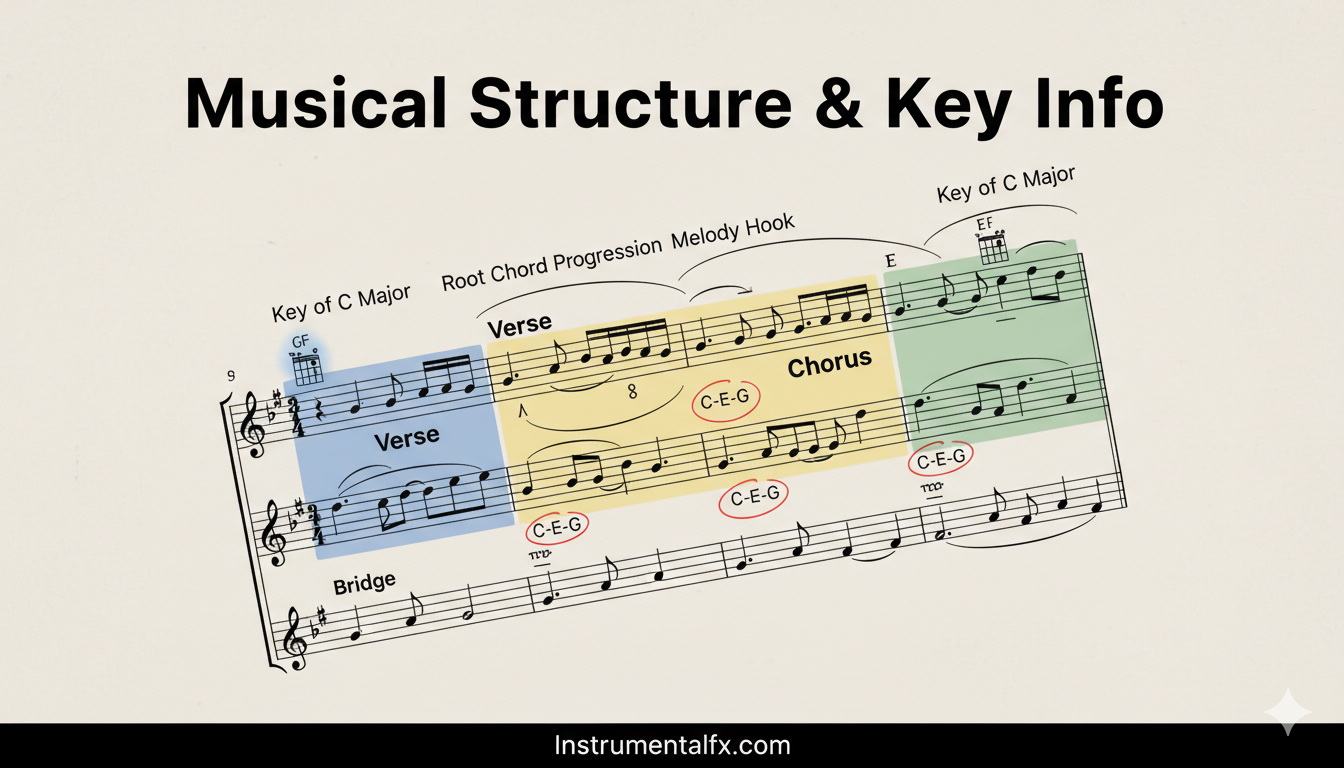
Viva La Vida is originally composed in the key of Ab Major. This key gives the song its bright, triumphant character that resonates with listeners.
The original key uses four flats: Ab, Bb, Db, and Eb. For beginners, this can present challenges when reading sheet music for the first time.
Many piano arrangements transpose the song to C Major or G Major. These keys are more beginner-friendly, using fewer accidentals and simpler fingering patterns.
The chord progression is relatively simple: Db – Eb – Ab – Fm (in the original key). This four-chord pattern repeats throughout most of the song with variations.
When transposed to C Major, the chord progression becomes: F – G – C – Am. This simpler progression makes the song accessible to early intermediate players.
The song is in 4/4 time signature, also known as common time. This straightforward rhythmic structure helps beginners maintain steady tempo.
The tempo marking is approximately 138-140 beats per minute (BPM). While this is moderately fast, beginners can practice at slower tempos and gradually increase speed.
The song structure follows a conventional pop format: Intro – Verse – Chorus – Verse – Chorus – Bridge – Chorus – Outro. Understanding this structure helps when practicing specific sections.
Difficulty Levels Explained
Super Easy Arrangements
Super easy arrangements simplify both hands to basic quarter notes and half notes. These versions eliminate complex rhythms and reduce hand movement across the keyboard.
Melody lines are often simplified to single notes rather than chords. The left hand typically plays simple bass notes or basic two-note intervals.
These arrangements are perfect for absolute beginners with less than six months of piano experience. They focus on note reading and hand coordination without overwhelming complexity.
Super easy versions may omit certain melodic embellishments. While not as rich-sounding, they provide a satisfying entry point for new pianists.
Easy/Beginner Arrangements
Easy arrangements introduce basic chord shapes in the left hand. The right hand plays the melody with occasional two-note intervals for harmonic depth.
These versions maintain the song’s recognizable melody while keeping technical demands manageable. Fingering is straightforward with minimal position changes.
Beginner arrangements suit players with 6-18 months of piano experience. They require basic understanding of major and minor chords and simple rhythm patterns.
The tempo can be reduced to 100-110 BPM for practice. As confidence builds, players gradually increase speed toward the original tempo.
Intermediate Arrangements
Intermediate versions incorporate fuller chord voicings and more complex rhythmic patterns. The left hand plays broken chords or arpeggiated accompaniment patterns.
The right hand includes octaves, fuller chords, and melodic embellishments. These arrangements more closely resemble the original orchestral recording.
These are designed for pianists with 2-4 years of experience. They require hand independence, basic pedaling technique, and comfortable reading of both clefs.
Intermediate arrangements often include the iconic string motifs. Capturing these elements requires good finger control and dynamic awareness.
Advanced Arrangements
Advanced versions feature complex arrangements that fully capture the orchestral richness. Both hands work across the full keyboard range with elaborate voicings.
These arrangements include countermelodies, harmonic fills, and sophisticated pedaling techniques. They may incorporate jazz harmonies or classical-style variations.
Advanced versions require solid technique including octave passages, rapid arpeggios, and simultaneous melody and accompaniment in one hand. Experience of 5+ years is recommended.
Some advanced arrangements add improvisation sections or extended introductions. These creative elements allow skilled pianists to personalize their performance.
Where to Find Viva La Vida Piano Sheet Music
Free Sheet Music Resources
MuseScore is one of the largest free sheet music repositories. The platform hosts numerous user-created arrangements of Viva La Vida at various difficulty levels.
MuseScore allows you to download sheet music in PDF or MIDI format. You can also play along with the interactive score that highlights notes as they should be played.
Multiple arrangers have contributed versions ranging from super easy to advanced. Reading user reviews and difficulty ratings helps select the appropriate arrangement.
8notes.com offers free piano sheet music for popular songs. While the selection may be limited, quality arrangements are available for personal use.
IMSLP (International Music Score Library Project) focuses on public domain works. While Viva La Vida isn’t public domain, some arrangements may be available under Creative Commons licenses.
YouTube descriptions often include links to free sheet music. Many piano tutorial creators share simplified arrangements alongside their video lessons.
Premium/Paid Sheet Music Platforms
Musicnotes.com is a leading digital sheet music retailer. Their official Viva La Vida arrangement (SKU: MN0065480) is professionally arranged for Piano/Vocal/Guitar.
The Musicnotes version is in the original Ab Major key and is transposable. Premium members can access different keys, making it adaptable to various skill levels.
Musicnotes offers a free mobile app with playback features. The app displays scrolling sheet music, allows tempo adjustment, and includes practice loops for difficult sections.
Sheet Music Plus (SheetMusicPlus.com) offers multiple arrangements. Their catalog includes easy piano versions, intermediate arrangements, and advanced solo piano adaptations.
Prices on premium platforms typically range from $4.99 to $7.99 per arrangement. This investment ensures professional-quality notation and legal, properly licensed music.
Hal Leonard publishes official Coldplay sheet music books. These collections often include Viva La Vida alongside other popular Coldplay songs.
Virtual Piano (VirtualPiano.net) offers interactive sheet music. Users can play along using their computer keyboard, making it accessible without an actual piano.
Music Learning Apps
La Touche Musicale is an interactive piano learning app. It offers Viva La Vida with letter notes, waiting for you to play correct notes before progressing.
The app provides separate tutorials for right hand, left hand, and both hands together. Visual aids and video demonstrations make learning intuitive.
OnlinePianist offers animated piano tutorials. Their Viva La Vida lesson includes beginner and pro versions with adjustable playback speed.
HDpiano provides comprehensive video lessons. Their medium-difficulty Viva La Vida tutorial breaks down the song section by section with detailed instruction.
Flowkey is a popular piano learning app with interactive sheet music. The app listens through your device’s microphone and provides real-time feedback.
Simply Piano by JoyTunes includes popular songs in its curriculum. While song availability varies by region, Viva La Vida appears in many versions.
Reading the Sheet Music – Key Components
Treble Clef (Right Hand)
The treble clef, also called G clef, governs the right hand part. In Viva La Vida, the right hand primarily carries the melody.
The opening melody begins on the notes E and G. These notes establish the iconic melodic motif that repeats throughout the song.
In the original Ab Major key, the melody frequently uses notes Ab, Bb, C, Db, and Eb. Familiarity with these scale degrees helps with sight-reading.
The right hand occasionally plays chords rather than single notes. These chordal sections add harmonic richness during chorus sections.
Dynamic markings in the treble clef indicate volume changes. Viva La Vida benefits from expressive dynamics that mirror the song’s emotional journey.
Bass Clef (Left Hand)
The bass clef, or F clef, indicates the left hand part. In Viva La Vida arrangements, the left hand provides harmonic foundation.
Beginner arrangements feature simple bass notes on beats one and three. This basic pattern establishes the chord progression without complexity.
Intermediate arrangements include broken chord patterns or arpeggios. The left hand moves more actively, creating rhythmic momentum.
Advanced arrangements may include bass lines that mirror string bass parts. These walking bass lines add movement between chord changes.
The left hand often plays in the lower register of the piano. Proper balance between hands ensures melody clarity while maintaining harmonic support.
Chord Symbols
Many arrangements include chord symbols above the staff. These guitar-style chord names (like Db, Eb, Ab, Fm) guide accompaniment.
Understanding chord symbols helps when improvising or creating your own arrangement. They indicate the harmonic structure independent of specific voicings.
In C Major transpositions, chord symbols change to F, G, C, and Am. These simpler chords are easier for beginners to understand and remember.
Chord symbols enable bass players or guitarists to accompany you. This makes Viva La Vida accessible for ensemble performances.
Some jazz-influenced arrangements may show extended chords like Db/F or Ab/Eb. These slash chords indicate specific bass notes under standard chords.
Tempo and Time Signature
The 4/4 time signature appears at the beginning of the sheet music. This means four quarter-note beats per measure, the most common time signature in popular music.
The tempo marking indicates approximately 138-140 BPM. A metronome set to this speed helps maintain the energetic feel of the original.
Some arrangements mark tempo as “Moderately” or “With energy.” These verbal descriptions guide the emotional character beyond just numerical tempo.
Beginners should start at 60-80 BPM, focusing on accuracy. Speed increases naturally as muscle memory develops and reading fluency improves.
Ritardando markings may appear near the song’s ending. These indicate gradual slowing, adding dramatic conclusion to the performance.
Dynamics and Expression Marks
Piano (p) and forte (f) markings indicate soft and loud passages respectively. Viva La Vida benefits from clear dynamic contrast between verses and choruses.
Crescendo and decrescendo marks show gradual volume changes. The buildup toward each chorus typically features crescendo for dramatic impact.
Accent marks (>) emphasize particular notes. In Viva La Vida, accents often highlight the strong downbeats, reinforcing the song’s rhythmic drive.
Legato phrases indicate smooth, connected playing. The melody benefits from legato touch, creating the flowing, anthem-like quality.
Staccato markings may appear in accompaniment patterns. Short, detached notes add rhythmic clarity and prevent muddy sound in faster sections.
Learning Techniques for Viva La Vida
Hands Separate Practice
Begin by learning the right hand melody completely on its own. Play through the entire piece focusing solely on melody accuracy and fingering.
Practice the right hand until you can play it from memory. This deep familiarity allows you to shift attention to left hand coordination later.
Next, learn the left hand accompaniment independently. Focus on smooth chord changes and consistent rhythm without worrying about melody.
Use a metronome during hands-separate practice. Maintaining steady tempo in each hand individually ensures better coordination when combining them.
Most piano teachers recommend spending 70% of practice time on hands-separate work. This foundation makes hands-together playing significantly easier.
Slow Practice with Metronome
Set your metronome to 50-60 BPM initially. This slow tempo allows your brain to process note reading and fingering simultaneously.
Play with strict rhythmic accuracy even at slow tempos. Developing precise timing at slow speeds translates to clean playing at faster tempos.
Increase tempo in small increments of 5-10 BPM. Don’t rush the process; consistent slow practice builds solid technique faster than struggling at performance tempo.
If you make repeated mistakes at a certain tempo, reduce speed. Playing correctly at slower tempo is always better than playing incorrectly at faster tempo.
The metronome click should fall on every quarter note beat. This steady reference point helps internalize the 4/4 time signature.
Chunking Method
Divide the piece into small sections of 2-4 measures. Master each chunk before moving to the next one.
Learn the first chunk thoroughly with both hands. Once comfortable, add the next chunk, then practice both chunks together.
Continue this process throughout the piece. This systematic approach prevents the overwhelming feeling of learning an entire song at once.
Pay special attention to transitional measures between chunks. These connecting points often present coordination challenges.
The verse, chorus, and bridge each form natural chunks. Within these larger sections, break down further into manageable phrase lengths.
Difficult Passage Isolation
Identify specific measures that cause problems. These trouble spots deserve focused, repetitive practice separate from the rest of the piece.
Practice difficult passages at very slow tempo. Break down complex rhythms into simpler components before attempting them as written.
Use varied rhythms to practice difficult passages. Playing with dotted rhythms or triplet subdivisions improves control and accuracy.
Isolate hand coordination challenges. If one particular spot struggles with hand independence, practice that measure 20-30 times daily.
Return to problem sections at the start of each practice session. Fresh concentration tackles technical challenges more effectively than tired, end-of-practice attempts.
Musical Expression Development
Once notes and rhythms are secure, focus on musical expression. Viva La Vida’s emotional impact relies heavily on dynamic contrast and phrasing.
Listen repeatedly to Coldplay’s original recording. Notice how dynamics build from soft verses to powerful choruses.
Experiment with different pedaling approaches. The sustain pedal adds richness but requires careful timing to avoid muddy sound.
Practice singing along while playing. This connection between voice and instrument improves musical phrasing and natural expression.
Record yourself playing and listen critically. Hearing your own performance reveals areas needing more expressive development.
Common Challenges and Solutions
Hand Coordination Issues
Many pianists struggle with playing different patterns in each hand simultaneously. This is normal, especially for intermediate players tackling Viva La Vida.
Practice hands separately until each part feels completely automatic. Muscle memory in each hand individually enables better coordination together.
Start hands-together practice at extremely slow tempo. Speed should be slow enough that coordination feels easy and natural.
Use visualization before playing. Mentally picture both hands’ movements before attempting the passage physically.
Practice in front of a mirror occasionally. Visual feedback helps identify tension or awkward movements that hinder smooth coordination.
Tempo Maintenance
Rushing through easy sections and slowing during difficult parts is common. Consistent tempo requires conscious effort and metronome practice.
Record yourself playing with a metronome. Listening back reveals tempo inconsistencies you might not notice while playing.
Tap your foot to the beat while playing. This physical connection to rhythm helps maintain steady tempo.
Count aloud during practice. Verbalizing “1-2-3-4” reinforces rhythmic accuracy and prevents rushing or dragging.
Mark challenging sections where tempo tends to falter. Give these spots extra metronome practice at gradually increasing speeds.
Finger Stretches and Reach
Some chord voicings in intermediate and advanced arrangements require wide hand spans. Not all pianists have large hands, but technique helps.
Relax your hand and wrist completely. Tension reduces effective reach; relaxed muscles allow maximum stretch.
Roll or break chords if necessary. Playing chord notes slightly staggered (bottom to top) sounds nearly simultaneous but requires less stretch.
Adjust voicings by moving notes up or down an octave. This personalized arrangement accommodates your specific hand size.
Build hand flexibility through daily stretching exercises. Gradual improvement in reach develops over weeks and months of consistent practice.
Reading Accidentals in Ab Major
The four flats in Ab Major (Ab, Bb, Db, Eb) challenge beginners accustomed to C Major. Careful attention to key signature prevents mistakes.
Write note names under difficult passages temporarily. This visual aid helps during initial learning, then remove it as fluency improves.
Practice Ab Major scales and arpeggios daily. Familiarity with the key’s fingering patterns makes reading sheet music easier.
Consider learning a transposed version in C or G Major first. Once the piece is familiar, transitioning to the original key becomes easier.
Use colored pencils to highlight accidentals. Visual cueing helps train your eye to notice sharps and flats automatically.
Pedaling Technique
The sustain pedal adds richness to Viva La Vida but requires precise timing. Improper pedaling creates muddy, unclear sound.
Use the “legato pedaling” technique: press the pedal after playing the note, not before. This prevents sound overlap between chord changes.
Change pedal with each chord change in the left hand. Clean pedaling maintains harmonic clarity.
Practice pedaling separately as a distinct skill. Play simple chord progressions focusing exclusively on pedal timing.
Listen critically for clarity. If bass notes blur together, you’re changing pedal too late or holding it through chord changes.
Performance Tips
Building Confidence
Memorize the piece gradually, section by section. Memory frees you from sheet music and allows more expressive, confident performance.
Perform for friends or family regularly. Frequent low-stakes performances build comfort with playing for others.
Record video performances for self-evaluation. Watching yourself reveals both strengths to celebrate and areas needing improvement.
Visualize successful performance before playing. Mental rehearsal activates similar brain pathways as physical practice.
Remember that mistakes happen to everyone. Recovery and continuation matter more than perfection.
Stage Presence
Maintain good posture at the piano. Sit upright with relaxed shoulders and arms positioned comfortably over the keys.
Make eye contact with your audience before beginning. This connection engages listeners emotionally from the start.
Take a moment of silence before starting. This pause builds anticipation and allows you to center your focus.
Move expressively but not excessively. Subtle body language conveys the music’s emotion without becoming distracting.
End with hands remaining on the keyboard momentarily. This professional touch allows the final chord to resonate fully before applause.
Dealing with Performance Anxiety
Practice performing in the actual performance space if possible. Familiarity with the environment reduces anxiety.
Develop a pre-performance routine. Consistent preparation rituals create psychological comfort and readiness.
Use deep breathing techniques before performing. Slow, deep breaths calm the nervous system and reduce physical tension.
Focus on communicating the music’s emotion rather than technical perfection. This shift in mindset reduces pressure.
Accept nervous energy as normal and even helpful. Moderate anxiety enhances focus and performance intensity.
Arranging Your Own Version
Simplification Techniques
To create a simpler arrangement, reduce chord voicings to root and fifth. This creates a thinner texture that’s easier to play while maintaining harmonic function.
Replace complex rhythms with simpler note values. Eighth notes can become quarter notes; sixteenth note passages can be simplified to eighths.
Transpose to an easier key if needed. C Major or G Major typically present fewer reading challenges than the original Ab Major.
Eliminate decorative notes and grace notes. Focus on the essential melody and harmony, removing embellishments.
Reduce hand movement by keeping both hands in mid-register positions. This minimizes position changes that challenge beginners.
Adding Complexity
For more advanced arrangements, add extended chords like ninths or thirteenths. These jazz-influenced harmonies create sophisticated color.
Incorporate countermelodies in the left hand. During melody rests, the accompaniment can feature melodic fragments.
Add introductory or ending sections. Original compositions that precede or follow the main song create a unique arrangement.
Include modulations to different keys. Key changes add drama and interest to the harmonic structure.
Experiment with different time signatures in sections. Converting a verse to 3/4 time creates unexpected variation.
Creating Lead Sheets
Write out the melody in standard notation. Add chord symbols above the staff to indicate harmony.
Include lyrics beneath the melody if desired. This creates a complete reference for vocal accompaniment.
Mark key sections like intro, verse, chorus, and bridge. Clear labels help performers navigate the song structure.
Indicate the original key and tempo. This information allows other musicians to perform your arrangement accurately.
Lead sheets are particularly useful for ensemble performance. Other instruments can create their own parts based on your melody and chords.
Playing with Other Musicians
Piano and Vocals
The piano/vocal arrangement is Viva La Vida’s most popular format. The piano provides full harmonic and rhythmic support for a singer.
Learn to adjust dynamics to support the vocalist. Soft verses allow the voice to shine; fuller choruses create powerful climaxes.
Practice listening while playing. Awareness of the singer’s timing and dynamics allows responsive accompaniment.
Establish clear communication about tempo and key before starting. Agreement on these basics prevents mid-performance confusion.
Use the introduction to set tempo clearly. The pianist establishes the rhythmic feel that the singer follows.
String Quartet Accompaniment
Viva La Vida’s original orchestration features prominent strings. Combining piano with string quartet creates rich, authentic sound.
The piano can take a more rhythmic role while strings carry melody. This distribution prevents overcrowding in the melodic range.
Alternatively, double the string melodies on piano. This reinforcement creates powerful unison passages.
Balance volume carefully between piano and strings. The piano can easily overpower strings if not played with restraint.
Rehearse transitions between sections thoroughly. Clear communication ensures tight ensemble playing.
Full Band Arrangement
In a band context, the piano often plays a supporting harmonic role. Guitar and bass handle some accompaniment duties.
Focus on sustained chords and melodic fills rather than constant playing. Space in the piano part prevents cluttered sound.
The piano can feature during the introduction and bridge. These solo moments showcase the instrument’s melodic capabilities.
Use the higher register of the piano to cut through the band mix. Middle and low ranges can get lost beneath guitars and drums.
Listen to the full band balance during rehearsals. Adjust your volume and voicing based on what the overall mix needs.
Digital Tools and Resources
Sheet Music Apps
forScore is a professional-grade digital sheet music app for iPad. It offers annotation tools, set lists, and Bluetooth page-turning capability.
Musicnotes Sheet Music Player displays purchased sheet music digitally. The app includes playback, transposition, and tempo adjustment features.
MuseScore app accompanies the website. Upload your own arrangements or download community arrangements directly to your mobile device.
Newzik provides collaborative features for ensembles. Multiple musicians can annotate and synchronize their parts in real-time.
MIDI and Playback Tools
Musescore software generates MIDI playback from sheet music. Hearing the arrangement helps identify mistakes in notation or understanding.
Synthesia displays falling notes on a virtual keyboard. Import MIDI files of Viva La Vida to see which keys to press in real-time.
GarageBand and other DAWs can import MIDI files. Adjust tempo, add accompaniment tracks, or create full production versions.
Practice Apps
Metronome apps like Pro Metronome offer customizable click tracks. Set complex patterns or accent certain beats for targeted practice.
Recording apps capture practice sessions. Listening back reveals progress and areas needing improvement.
Slow-downer apps like Anytune reduce tempo without changing pitch. Slow down reference recordings to hear exactly what’s being played.
Ear training apps improve interval recognition. Better aural skills accelerate learning songs by ear alongside sheet music.
Legal Considerations
Copyright Basics
Viva La Vida is protected by copyright owned by Coldplay and their publishers. The song remains under copyright protection until 70 years after the songwriter’s death.
Downloading free sheet music from unauthorized sources may violate copyright law. Ensure the website has proper licensing or uses Creative Commons arrangements.
Personal use of copyrighted sheet music is generally permissible. Learning at home doesn’t require additional licensing.
Public performance of copyrighted music requires licensing. Venues typically hold blanket licenses covering most popular songs.
Purchasing Licensed Music
Buying sheet music from Musicnotes, Sheet Music Plus, or Hal Leonard supports creators. These purchases include legal performance rights for personal use.
Educational institutions can purchase special licenses. These allow classroom use and student performances under specific terms.
Professional performances may require performance rights. ASCAP, BMI, or SESAC collect royalties on behalf of songwriters and publishers.
Creating Arrangements
Creating your own arrangement of Viva La Vida is legal for personal use. However, distributing or selling arrangements requires permission from copyright holders.
Many free arrangements on MuseScore exist in legal gray areas. While shared for educational purposes, they may not have official authorization.
If you create an exceptional arrangement, consider contacting Hal Leonard. They facilitate officially licensed user arrangements through their ArrangeMe platform.
Historical Context and Cultural Impact

Viva La Vida topped charts in 36 countries worldwide. This unprecedented success made it one of the most popular songs of 2008-2009.
The music video, directed by Huse Monfaradi, features historical and revolutionary imagery. These visuals reinforce the song’s themes of power and downfall.
The song has been covered by countless artists across genres. From classical orchestras to heavy metal bands, Viva La Vida’s appeal transcends musical boundaries.
It remains one of Coldplay’s signature songs at concerts. The audience singalong during live performances demonstrates its enduring popularity.
The song introduced many young musicians to piano playing. Its accessible melody and recognizable sound make it a gateway piece for beginners.
Frequently Asked Questions
What is the original key of Viva La Vida?
Viva La Vida is originally in Ab Major, using four flats (Ab, Bb, Db, Eb). Many beginner arrangements transpose it to C Major or G Major for easier reading.
Where can I download free Viva La Vida piano sheet music?
MuseScore.com offers multiple free user-arranged versions at various difficulty levels. You can download in PDF or MIDI format for personal use and practice.
What difficulty level is Viva La Vida on piano?
The difficulty ranges from super easy (absolute beginners) to advanced depending on the arrangement. Most intermediate arrangements suit pianists with 2-4 years of experience.
What are the chords in Viva La Vida?
In the original key: Db – Eb – Ab – Fm. Transposed to C Major: F – G – C – Am. This four-chord progression repeats throughout the song.
How long does it take to learn Viva La Vida on piano?
Beginners typically need 2-4 weeks for simple arrangements with daily practice. Intermediate players might master fuller versions in 1-2 weeks depending on complexity.
Can I play Viva La Vida without reading sheet music?
Yes, you can learn by watching video tutorials with letter notes or by ear. However, reading sheet music improves overall musicianship and helps with future songs.
What tempo should I practice Viva La Vida?
Start at 60-80 BPM for accurate learning. The original tempo is 138-140 BPM, which you can gradually work toward as you build muscle memory and confidence.
Does Viva La Vida require pedal on piano?
Pedal enhances the sound but isn’t strictly necessary for basic arrangements. Intermediate and advanced versions benefit greatly from proper legato pedaling technique.
Can I legally perform Viva La Vida publicly?
Personal performance is fine, but public venues need performance licenses (usually through ASCAP/BMI/SESAC). Most concert halls and restaurants already hold these blanket licenses.
What’s the best arrangement for early intermediate pianists?
Look for versions marked “Easy Piano” or “Early Intermediate” that use simple chord voicings in the left hand and melody with occasional intervals in the right hand.
Conclusion
Viva La Vida piano sheet music offers endless possibilities for pianists at every skill level, from those taking their first steps to advanced musicians seeking complex interpretations.
This comprehensive guide has explored the song’s musical structure in Ab Major, identified where to find quality sheet music both free and paid, and provided detailed learning techniques to master this beloved Coldplay anthem.
Whether you choose a super easy arrangement to build confidence or an advanced version that captures the orchestral richness, the journey of learning Viva La Vida develops essential piano skills including hand coordination, tempo maintenance, expressive playing, and sight-reading proficiency.
The resources available in 2026—from interactive apps like La Touche Musicale to premium platforms like Musicnotes—make learning more accessible than ever.


