


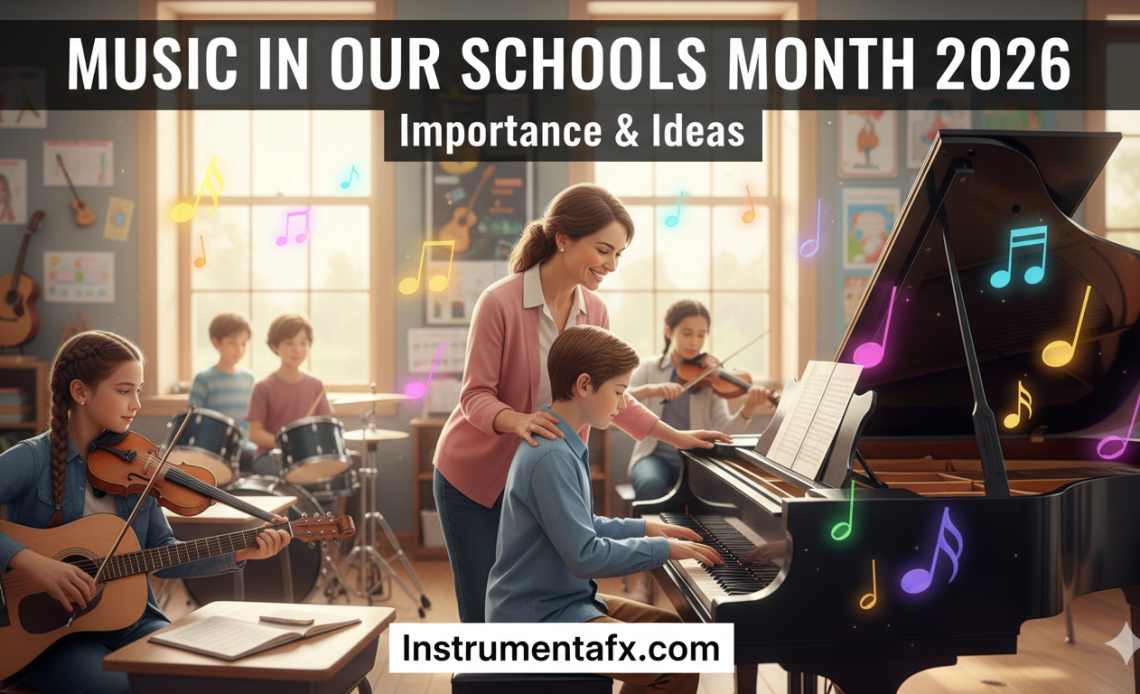
Music in Our Schools Month serves as a vital celebration every March, dedicated to highlighting the transformative power of music education in schools nationwide.
This annual observance, officially designated by the National Association for Music Education (NAfME), brings together educators, students, and communities to showcase the incredible value that music programs bring to young learners.
As we approach 2026, celebrating over 40 years of this tradition, the importance of advocating for quality music education has never been more critical in shaping well-rounded, creative, and academically successful students.
What Is Music in Our Schools Month?
Music in Our Schools Month (MIOSM) represents a nationwide celebration held every March since 1985. The initiative was created by NAfME to raise awareness about the critical role music education plays in child development.
The celebration started small in 1973 as a single-day event in New York. Over the decades, it evolved into a month-long observance that now reaches schools and communities across America and beyond.
MIOSM reminds everyone that schools are where all children should access quality music education. The month provides an ideal platform for music teachers to showcase their programs and demonstrate the lasting impact music has on students of all ages.
The History Behind Music in Our Schools Month
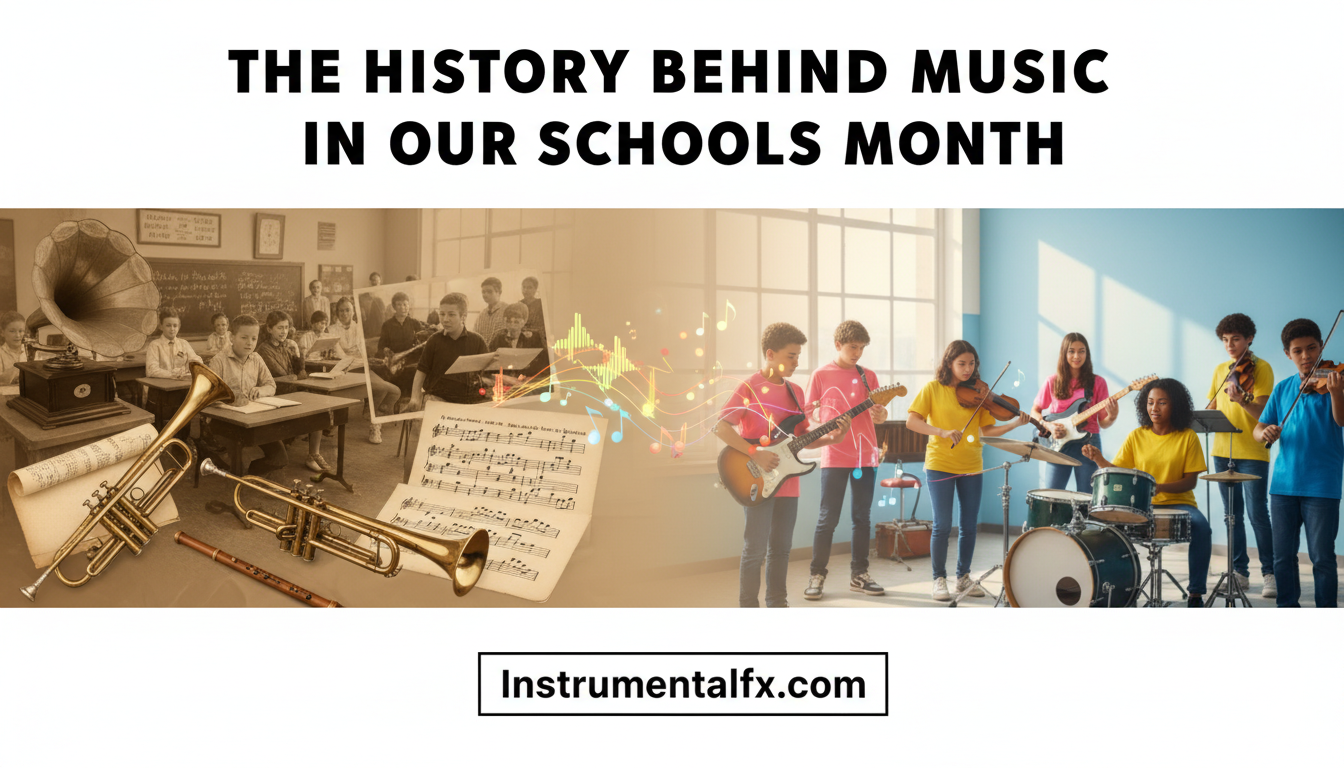
The journey of MIOSM began on March 14, 1973, when New York held the first Music in Our Schools Day. This single-day advocacy event was sponsored by multiple educational organizations including the New York State Education Department’s Bureau of Music Education.
The response was overwhelmingly positive. Music educators requested more time to prepare and showcase student achievements, leading to the expansion into a full month.
In 1985, NAfME officially designated March as Music in Our Schools Month nationally. The celebration has grown exponentially since then, with participation from elementary, middle, and high schools across the country.
Each year features a unique theme that guides activities and celebrations. Past themes have included “Music Makes Me,” “Music Connects Us,” and “All Music, All People,” each emphasizing different aspects of music education’s value.
Why Music in Our Schools Month Matters
Music education significantly impacts student development beyond just learning to play instruments or sing. Research consistently demonstrates that musical training enhances cognitive abilities, academic performance, and social-emotional skills.
Students who participate in music programs show improved language development and literacy skills. The connection between rhythm patterns and mathematical concepts helps strengthen computational abilities.
Music education also builds confidence and self-esteem. When students perform in front of audiences, they develop public speaking skills and learn to overcome nervousness through preparation and practice.
Furthermore, music provides a creative outlet for self-expression. In an increasingly test-focused educational environment, music classes offer students opportunities to explore their artistic abilities and develop their unique voices.
Benefits of Music Education for Students
Cognitive Development
Musical training activates multiple brain regions simultaneously. This neural activity strengthens memory, attention span, and problem-solving capabilities that transfer to other academic subjects.
Students who study music often demonstrate higher standardized test scores. The discipline required to master an instrument or vocal technique translates into better study habits and time management skills.
Social and Emotional Growth
Participating in ensembles teaches valuable collaboration skills. Students learn to listen to others, blend their sound, and work toward common goals—essential life skills beyond the classroom.
Music provides emotional regulation tools. Creating or listening to music helps students process feelings, reduce stress, and develop healthy coping mechanisms for challenging situations.
Cultural Awareness
Music education exposes students to diverse cultural traditions and historical periods. Learning about different musical styles fosters appreciation for cultural diversity and global perspectives.
Through studying composers and musical movements, students gain insights into how music reflects societal values, historical events, and human experiences across time and geography.
How Schools Celebrate Music in Our Schools Month
Concerts and Performances
Schools organize special concerts showcasing student talent and hard work. These performances might feature choir groups, instrumental ensembles, or combined presentations involving multiple grade levels.
Many schools invite parents, community members, and local officials to attend these concerts. The events demonstrate the quality of music education happening daily in classrooms and rehearsal spaces.
Community Engagement
Music programs extend beyond school walls during MIOSM. Students visit senior centers to perform, collaborate with local musicians, or participate in community-wide singalongs that bring people together through music.
Some schools partner with shopping centers or public spaces to hold flash mob performances. These surprise concerts capture attention and create memorable moments that advocate for music education’s value.
Cross-Curricular Integration
Teachers from different subjects collaborate to highlight music’s connections to other disciplines. Math teachers might explore rhythm fractions, while history teachers connect musical eras to historical events being studied.
Science classes can investigate the physics of sound and acoustics. Language arts instructors might analyze song lyrics as poetry or have students write original compositions exploring literary themes.
Morning Announcements and Campaigns
Many schools incorporate music-themed content into daily announcements throughout March. This might include musical jokes, trivia questions, composer birthdays, or interesting facts about instruments and music history.
Creating a consistent presence through announcements keeps music education visible to all students, not just those enrolled in music classes. It reinforces that music belongs to everyone.
Creative Ideas to Celebrate Music in Our Schools Month 2026
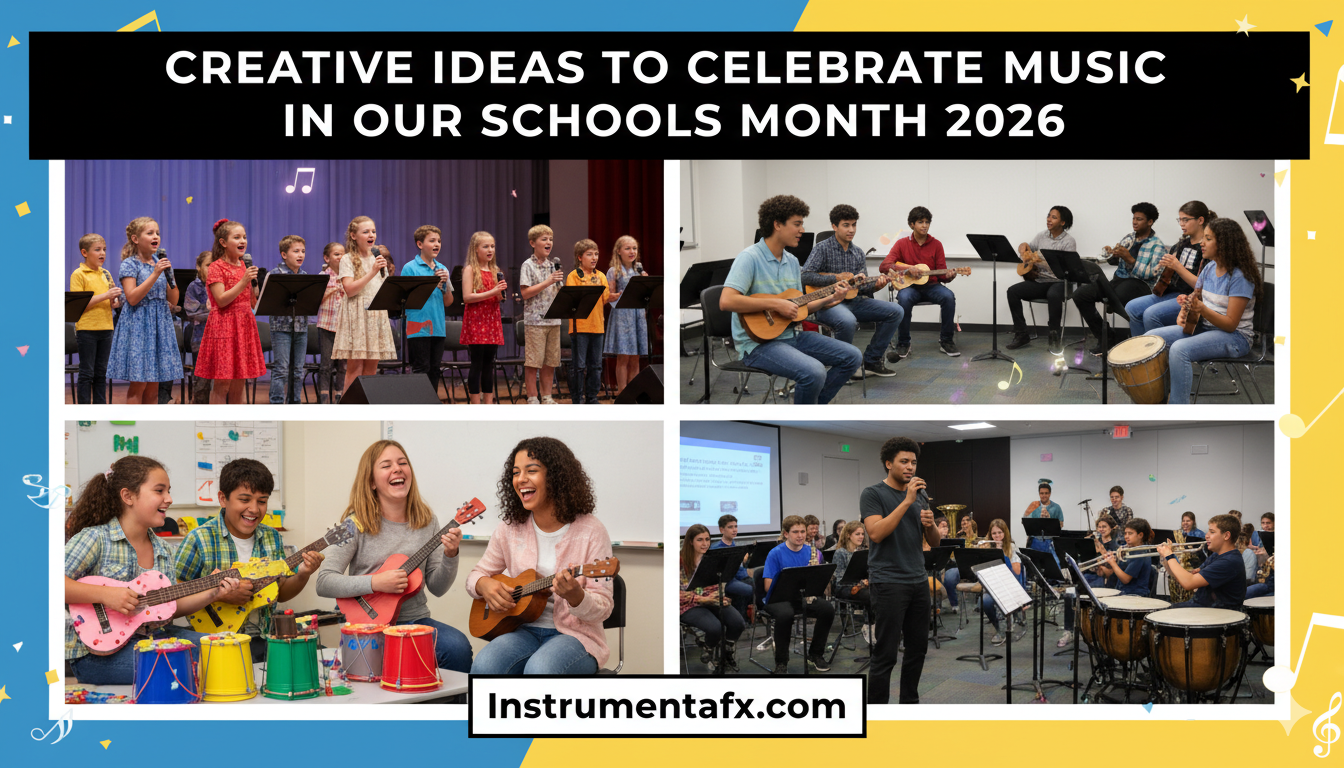
March Music Madness Bracket
Inspired by basketball’s March Madness, create a tournament-style bracket where students vote on their favorite songs. The bracket can feature themes like decades, genres, Disney music, or original versus cover versions.
Classroom teachers can participate by selecting songs from their graduation years or birth decades. Display the bracket prominently in hallways where students can track voting progress throughout the month.
Remember to pre-screen all song choices for school-appropriate content. Focus on music and lyrics rather than music videos to keep attention on the art itself.
Bulletin Board Displays
Design eye-catching bulletin boards celebrating music education’s importance. Include quotes from famous musicians, celebrities who participated in school music programs, or student testimonials about their music experiences.
Create interactive displays where students add their own musical stories or favorite instruments. These boards serve as visual advocacy tools that administrators, visitors, and students see daily.
Collaborate with art teachers to design posters, banners, and decorative elements. This partnership demonstrates how creative subjects naturally complement and enhance each other.
Student Music Programs and Assemblies
Organize special assemblies or evening programs showcasing student performances. These events can follow specific themes related to the annual MIOSM focus or highlight the diverse repertoire students have learned.
Include script segments where students explain what music education means to them. Personal testimonials create powerful advocacy moments that resonate with audiences beyond any statistics or arguments.
Consider recording these performances to share with school boards, community organizations, or on social media platforms. Documentation provides evidence of program quality and student growth.
Musical Instrument Showcase
Host instrument petting zoos where students can try different instruments. This hands-on experience introduces younger students to various instrument families and might inspire future music participation.
Invite local musicians or high school students to demonstrate instruments and answer questions. Seeing older role models perform motivates younger students and creates mentorship connections.
Display homemade instruments students created in classes. This activity combines creativity with scientific exploration of how instruments produce sound through vibration and amplification.
Dress-Up Days
Organize themed dress-up days celebrating different musical eras. Students might dress as 1960s British Invasion fans, 1980s punk rockers, or 1990s grunge musicians, learning about music’s cultural influence.
Coordinate with history or social studies teachers to provide context about these musical movements. Understanding music’s role in social change deepens students’ appreciation for music’s power.
Alternatively, students could dress as favorite musicians or composers. Research projects about these figures’ lives and contributions add educational depth to the fun costume day.
Music Trivia Games
Create daily trivia competitions with questions spanning music history, theory, instruments, and composers. Award small prizes to students who submit correct answers, building excitement around music knowledge.
Include age-appropriate questions for different grade levels. Elementary students might identify instrument families while older students tackle more complex music theory or history questions.
Use technology platforms for digital participation if available. Online quiz tools make collecting and processing responses easier while engaging tech-savvy students through familiar formats.
Family Engagement Activities
Send home activities encouraging families to make music together. These might include singing specific songs, creating homemade instruments, or sharing favorite family music traditions.
Distribute questionnaires asking parents about their own music education experiences. Collecting these stories creates community connections and reminds families that music impacts generations.
Host family music nights where parents and students perform together. These intergenerational events build community while demonstrating that music education benefits extend beyond childhood.
Social Media Campaigns
Launch social media initiatives highlighting daily music moments, student performances, or fun facts about the music program. Use school-appropriate platforms to reach wider community audiences.
Create hashtags specific to your school’s MIOSM celebration. Encourage students, parents, and community members to share their music stories and experiences using these tags.
Feature “Monday Musical Jokes,” “Tuesday World Records,” “Wednesday Quotes,” “Thursday Fun Facts,” and “Friday Trivia” to maintain consistent engagement throughout the month.
Collaborative Art Projects
Work with art teachers to create large collaborative murals or collages combining visual and musical elements. Students might illustrate favorite songs, create portraits of musicians, or design abstract representations of music concepts.
Display these artworks prominently during March and consider keeping them as permanent school decorations. They serve as lasting reminders of the creative energy surrounding MIOSM celebrations.
Host opening receptions for these art displays with live student music performances. Combining art forms demonstrates how creative expression enriches educational experiences.
Lunchroom Music Themes
Coordinate with cafeteria staff to rename menu items with musical themes during March. Creative names like “Harmonic Ham Sandwiches,” “Polka Potatoes,” or “Fruit Cup Forte” add playful musical awareness to daily routines.
Play age-appropriate background music during lunch periods. Vary genres throughout the week to expose students to diverse musical styles they might not encounter otherwise.
Create table tents with music facts or composer information for students to read during meals. These casual learning opportunities reinforce that music education happens everywhere, not just in music class.
Advocacy Activities for Music in Our Schools Month
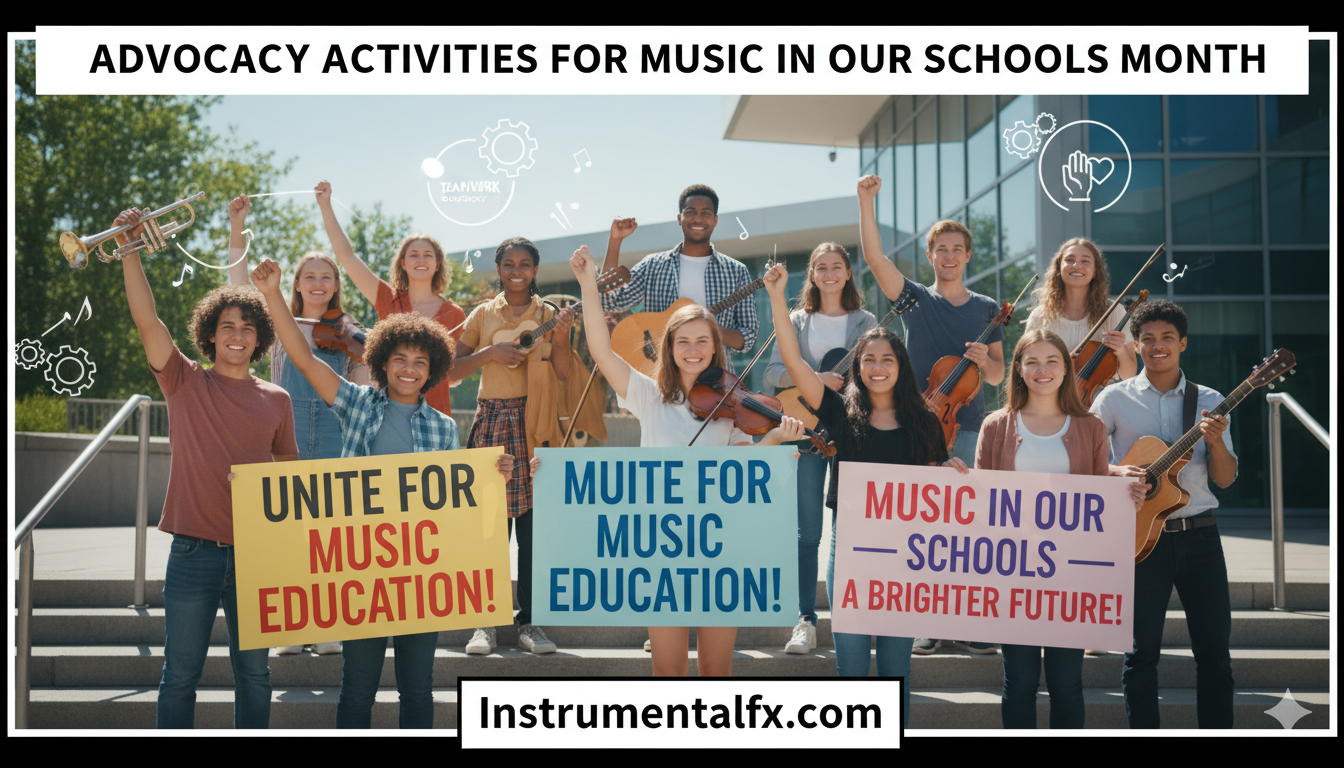
Meeting with School Administrators
Schedule meetings with principals and district administrators during March to discuss music program needs and successes. Come prepared with student achievement data, parent feedback, and program documentation.
Invite administrators to observe classes or attend performances. Firsthand experience seeing engaged students learning music concepts creates stronger advocacy than any written report.
Request proclamations from local government officials recognizing MIOSM. These official documents legitimize music education’s importance and can be displayed prominently throughout the school.
Parent Communication
Send newsletters or emails explaining MIOSM’s significance and highlighting program achievements. Include specific examples of skills students develop through music education that transfer to other areas.
Share research findings about music education’s benefits. Many parents may not realize how musical training enhances academic performance, cognitive development, and social-emotional growth.
Invite parents to volunteer or attend events throughout March. Direct involvement creates invested advocates who understand program value from personal experience.
Community Partnerships
Reach out to local businesses for partnerships or sponsorships supporting music programs. Many community organizations value educational initiatives and welcome opportunities to contribute.
Coordinate performances at community events like farmers markets, civic meetings, or cultural festivals. Visibility outside school walls demonstrates music education’s broader community value.
Connect with local media outlets for coverage of MIOSM activities. Newspaper articles, radio interviews, or television features raise public awareness about music education’s importance.
Student-Led Advocacy
Empower students to become music education advocates. Teach them to articulate how music classes benefit their learning, creativity, and personal growth.
Have students create advocacy materials like posters, videos, or presentations. Student voices carry unique authenticity and emotional impact that resonates with decision-makers.
Organize student performances for school board meetings or community forums. Decision-makers need to see and hear the direct results of music education investments.
Music in Our Schools Month Theme for 2026
Each year, NAfME announces a specific theme guiding MIOSM celebrations and activities. The 2026 theme will be revealed in late 2025, providing direction for schools planning their March observances.
Past themes have emphasized music’s unifying power, its impact on individual identity, and its universal nature. Whatever 2026’s theme may be, it will reflect current conversations about music education’s role in student development.
Schools should incorporate the annual theme into decorations, programs, and activities. This alignment with the national celebration creates cohesion and connects local efforts to the broader advocacy movement.
Resources for Planning Music in Our Schools Month
NAfME Official Resources
The National Association for Music Education provides comprehensive materials for MIOSM planning. Their website offers downloadable graphics, lesson plans, advocacy toolkits, and promotional materials teachers can customize.
NAfME releases sample proclamations and resolutions schools can present to local officials. These templates simplify the process of securing official recognition for MIOSM in communities.
The organization also offers merchandise including posters, buttons, and t-shirts featuring each year’s theme. These items help create visual cohesion and excitement around the celebration.
Lesson Plan Ideas
Numerous online platforms share MIOSM-specific lesson plans aligned with music education standards. These resources help teachers integrate theme-related content into existing curriculum without major disruptions.
Lessons might focus on composer studies, music history explorations, or creative composition projects. Activities should challenge students while remaining age-appropriate and engaging.
Consider lessons that produce tangible products students can share with families. Take-home projects extend music education’s reach beyond the classroom into home environments.
Digital Tools and Platforms
Technology offers innovative ways to enhance MIOSM celebrations. Virtual performance platforms allow students to create and share recordings with wider audiences.
Interactive music theory apps and games provide supplementary learning opportunities students can access at home. These tools reinforce classroom concepts through enjoyable, self-paced practice.
Social media management tools help organize and schedule daily posts throughout March. Consistent online presence maintains visibility and engagement with the school community.
Overcoming Challenges During Music in Our Schools Month
Time Constraints
Many music teachers face packed schedules making additional MIOSM planning difficult. Focus on one or two key activities rather than attempting everything suggested.
Recruit parent volunteers or enlist student leadership help for event planning and execution. Delegation spreads workload while creating broader community investment in music education.
Begin preparations early—ideally in January or February. Advance planning reduces March stress and allows time for securing necessary permissions, materials, or partnerships.
Budget Limitations
Creative MIOSM celebrations don’t require significant funding. Many successful activities use existing resources or rely on donated materials from community supporters.
Virtual celebrations eliminate costs associated with printed materials or physical decorations. Digital platforms offer free options for showcasing student work and communicating with families.
Partner with other teachers to share expenses and resources. Collaborative planning creates richer experiences while dividing financial burdens among multiple budgets.
Engaging Reluctant Administrators
Some administrators may view MIOSM as optional rather than essential. Provide concrete data showing music education’s impact on standardized test scores, attendance, and student behavior.
Frame MIOSM activities as opportunities enhancing school culture and community relations. Principals value initiatives that generate positive attention and strengthen school reputation.
Invite administrators to participate directly—perhaps performing with a teacher ensemble or speaking at student concerts. Personal involvement often transforms skeptics into enthusiastic supporters.
How Different Grade Levels Can Celebrate
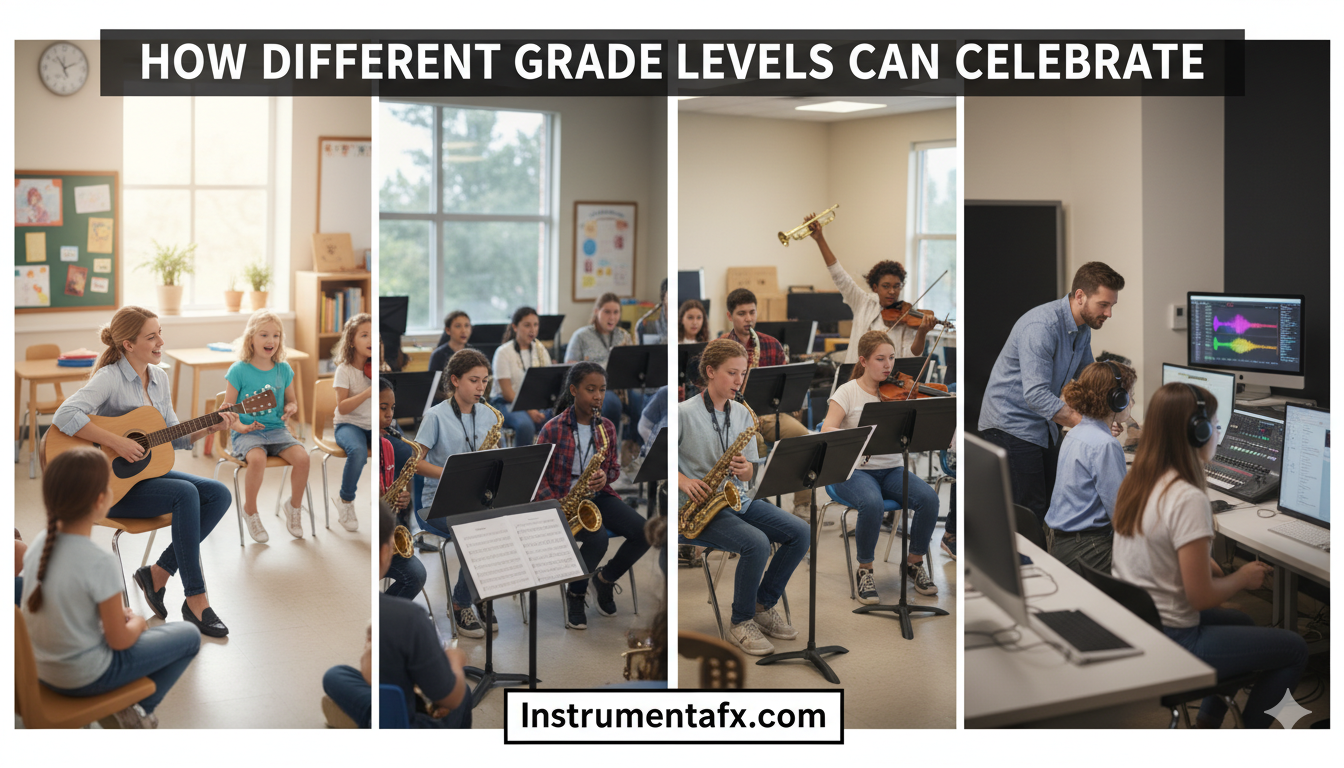
Elementary School Activities
Young students enjoy hands-on musical activities like creating homemade instruments from household items. These projects combine creativity with scientific exploration of sound production.
Organize musical storytelling sessions where students act out stories with instrument sound effects. This activity develops listening skills, sequencing abilities, and collaborative performance techniques.
Host singalong assemblies featuring age-appropriate songs students know and love. Group singing builds community while demonstrating music’s unifying power across diverse student populations.
Middle School Activities
Pre-teens respond well to technology-integrated projects like composing original music using digital audio workstations. These activities honor their growing independence while teaching valuable creative skills.
Create music video projects where students select appropriate songs and choreograph movements or create visual elements. Collaborative projects develop teamwork alongside artistic expression.
Organize student-led concerts where middle schoolers plan every aspect—from repertoire selection to stage management. This ownership develops leadership skills and program investment.
High School Activities
Older students can tackle complex advocacy projects like presenting to school boards or creating documentary videos about music education’s impact on their lives.
Partner with community organizations for service learning projects. High schoolers might teach music lessons to younger students or organize fundraising concerts benefiting local charities.
Connect music studies to career exploration by inviting professional musicians, music therapists, or sound engineers for informational sessions. Real-world connections motivate students considering music-related futures.
Impact of Music in Our Schools Month on Student Achievement
Research consistently shows students involved in music programs demonstrate higher academic achievement across subjects. The cognitive skills developed through musical training—pattern recognition, memory, attention to detail—transfer directly to classroom learning.
Music participation correlates with improved attendance and lower disciplinary incidents. Students connected to school through ensemble membership or performance opportunities feel greater belonging and engagement.
Longitudinal studies indicate music students graduate at higher rates and pursue post-secondary education more frequently. The discipline, time management, and collaborative skills learned through music education serve students throughout their lives.
Beyond measurable outcomes, music education enriches students’ quality of life. The ability to create, appreciate, and understand music provides lifelong joy, stress relief, and cultural connection.
Teacher Self-Care During Music in Our Schools Month
MIOSM can feel overwhelming for music teachers already managing heavy teaching loads and numerous performance demands. Prioritize self-care to avoid burnout during this busy period.
Set realistic goals for what you can accomplish. Remember that even simple celebrations effectively advocate for music education—perfection isn’t necessary.
Delegate responsibilities to colleagues, parent volunteers, or capable students. Building support systems distributes workload while creating shared ownership of celebration success.
Schedule downtime for yourself during March. The excitement of MIOSM shouldn’t come at the expense of your physical or mental health.
Building Year-Round Music Advocacy
While MIOSM provides concentrated advocacy opportunities, effective music education support requires year-round effort. Maintain consistent communication with administrators about program needs and student achievements.
Document successes throughout the year with photos, videos, and student work samples. This ongoing collection simplifies MIOSM planning while providing evidence supporting budget requests.
Cultivate relationships with parents, community members, and local organizations invested in music education. These connections provide support networks extending far beyond March.
Celebrate small victories regularly. Every student concert, successful audition, or proud performance moment contributes to building strong, sustainable music programs.
The Future of Music in Our Schools Month
As education evolves, so too will MIOSM celebrations. Technology offers exciting possibilities for virtual collaboration connecting students across geographic boundaries to share musical experiences.
Growing recognition of music education’s role in social-emotional learning positions music programs as essential wellness supports for students. MIOSM celebrations increasingly emphasize these holistic benefits.
The COVID-19 pandemic demonstrated music education’s resilience and adaptability. Future MIOSM observances will likely incorporate hybrid models blending in-person and digital elements.
Advocacy efforts continue expanding beyond traditional school settings to include after-school programs, community music schools, and online learning platforms. MIOSM represents all forms of accessible music education for young people.
Frequently Asked Questions
What is Music in Our Schools Month?
Music in Our Schools Month is an annual celebration held every March since 1985, designated by NAfME to raise awareness about the importance of music education for all children and showcase the value school music programs bring to students.
When did Music in Our Schools Month start?
The observance began as a single-day event in New York on March 14, 1973. It expanded into a month-long national celebration in 1985 when NAfME officially designated March as Music in Our Schools Month.
Why is Music in Our Schools Month important?
MIOSM provides opportunities to advocate for music programs, demonstrate student achievements, engage communities, and remind decision-makers that all children deserve access to quality music education that enhances cognitive, social, and emotional development.
How can teachers celebrate Music in Our Schools Month?
Teachers can organize concerts, create bulletin boards, host music trivia games, coordinate cross-curricular activities, plan March Music Madness brackets, send family engagement activities home, and launch social media campaigns highlighting their programs.
What resources are available for Music in Our Schools Month?
NAfME provides official resources including downloadable graphics, lesson plans, advocacy toolkits, sample proclamations, promotional materials, and merchandise. Many education websites also offer free MIOSM activity ideas and templates.
Can parents participate in Music in Our Schools Month?
Absolutely! Parents can attend performances, volunteer for events, complete family music activities sent home, share their own music experiences with classes, and advocate for music programs with school administrators and local officials.
What are the benefits of music education?
Music education enhances cognitive development, improves academic achievement, builds social-emotional skills, increases cultural awareness, develops discipline and time management, boosts confidence, and provides creative outlets for self-expression and stress relief.
How does music education impact student achievement?
Students in music programs typically show higher standardized test scores, improved attendance, better behavior, enhanced memory and attention skills, stronger language development, and greater likelihood of graduating and pursuing post-secondary education.
What activities work well for elementary students during MIOSM?
Elementary students enjoy creating homemade instruments, participating in singalong assemblies, trying different instruments at petting zoos, making musical collages, playing music bingo games, and engaging in musical storytelling with sound effects.
How can schools advocate for music programs year-round?
Schools should maintain consistent communication with administrators, document student achievements throughout the year, cultivate community partnerships, celebrate regular successes, connect music to academic standards, and empower students to share how music education benefits their learning and lives.
Conclusion
Music in Our Schools Month 2026 represents more than just a calendar observance—it embodies a nationwide commitment to ensuring every child accesses the transformative power of music education.
As we celebrate over four decades of this important tradition, the need for strong advocacy grows increasingly urgent. Budget pressures and shifting educational priorities threaten to marginalize arts programs despite overwhelming evidence of their value.
The activities, ideas, and strategies outlined throughout this guide provide practical tools for making March 2026 a meaningful celebration in your school community.
Whether organizing grand concerts or implementing simple daily trivia games, every effort contributes to the larger mission of preserving and strengthening music education.
Remember that effective advocacy happens through consistent, passionate demonstration of music programs’ impact on students’ academic achievement, personal growth, and future success.


