



Listen to the Music chords are among the most iconic guitar progressions in classic rock history, offering guitarists a perfect blend of funky rhythm and memorable melody.
This timeless Doobie Brothers hit features Music chords that challenge intermediate players while remaining accessible to dedicated beginners willing to master essential techniques.
Learning Listen to the Music chords requires understanding bar chords, slash chords, and 16th-note strumming patterns that create the song’s signature groove.
Whether you’re jamming with friends or performing solo, mastering Listen to the Music chords will elevate your guitar playing and expand your classic rock repertoire with authentic sound and style.
About “Listen to the Music” by The Doobie Brothers

Listen to the Music chords come from a song written by Tom Johnston, the Doobie Brothers’ lead vocalist and guitarist. Released in 1972 on the album Toulouse Street, it became one of the band’s signature songs.
Tom Johnston reportedly wrote the song in just minutes, inspired by music’s power to unite people and create community. The message was simple yet profound: let music bring joy and connection to our lives.
The song reached No. 11 on the Billboard Hot 100, cementing its place in rock history. Its enduring popularity makes Listen to the Music chords essential learning for any guitarist interested in classic rock.
What Makes Listen to the Music Chords Special
It stand out because they combine multiple guitar techniques into one cohesive groove. The progression uses standard major and minor chords alongside more advanced slash chords that create harmonic depth.
The funky 16th-note rhythm pattern gives Music chords their distinctive feel. This rhythmic complexity separates casual players from those who truly master the song’s groove and pocket.
Additionally, This incorporate both open position and bar chord shapes. This combination challenges players to move fluidly across the fretboard while maintaining consistent rhythm and timing throughout.
Essential Chord Shapes for Listen to the Music
E Major Chord (Hendrix-Style)
The E major chord in Listen to the Music chords uses a higher neck position that Jimi Hendrix popularized. Place your first finger on the 7th fret of the D string, third finger on the 9th fret of the G string, and fourth finger on the 9th fret of the B string.
This voicing creates a brighter, more articulate sound than open position E chords. The thumb wraps over the neck to mute the low E string, giving you better control over the chord’s sonic character.
Practice transitioning smoothly to and from this E chord shape, as it appears throughout Listen to the Music chords progression. Speed will develop with consistent, focused practice sessions.
A/C# Slash Chord
The A/C# chord represents one of the most important Music chords shapes. This first inversion A chord places the third (C#) in the bass, creating a smooth walking bassline effect.
To play A/C#, place your first finger on the 4th fret of the A string, second finger on the 6th fret of the D string, third finger on the 6th fret of the G string, and fourth finger on the 6th fret of the B string.
This slash chord creates the signature riff when alternating with the E chord. The progression from E to A/C# demonstrates sophisticated chord movement that defines Listen to the Music character.
C# Minor Chord
C#m appears prominently in the Music chords during the chorus section. While traditionally taught as a bar chord at the 4th fret, you can simplify it for easier playing.
Place your first finger on the 4th fret of the B string, second finger on the 5th fret of the D string, third finger on the 6th fret of the G string, and fourth finger on the 6th fret of the A string. This alternative fingering avoids the full bar.
The C#m chord adds emotional depth to Listen to the Music chords progression. Its minor quality contrasts beautifully with the surrounding major chords, creating harmonic interest.
B Major Bar Chord
B major is a crucial bar chord in Music chords that challenges many guitarists. At the 7th fret, bar your first finger across all six strings while forming an A-shape with remaining fingers.
Your second finger goes on the 8th fret of the D string, third finger on the 9th fret of the G string, and fourth finger on the 9th fret of the B string. Keep your thumb low on the back of the neck for leverage.
This movable chord shape appears throughout rock music. Mastering it within Listen to the Music prepares you for countless other songs using similar progressions.
A Major Bar Chord
The A major chord in Listen to the Music chords uses the same shape as B major, just shifted down two frets to the 5th position. Maintain the same finger placement pattern for consistency.
This chord often alternates with A7 in the progression, adding bluesy flavor. The ability to switch between A and A7 smoothly demonstrates advanced chord control.
Practice the transition from B to A slowly, ensuring each note rings clearly. Clean chord changes define professional-sounding Music chords execution.
A7 Chord
A7 appears throughout Listen to the Music chords, adding dominant seventh tension that resolves beautifully. From the A major bar chord shape, simply lift your fourth finger while maintaining the bar.
This creates the characteristic bluesy sound that permeates the song. The A7 chord functions as a dominant chord, pulling strongly toward resolution in E major.
Listen carefully to when A versus A7 appears in the recording. Understanding this distinction makes your Listen to the Music chords playing more authentic and musically informed.
F# Major Chord
F# major adds brightness to the Music chords progression. This movable bar chord sits at the 2nd fret, using the same shape as B and A major chords.
Bar across the 2nd fret with your first finger, then form the major chord shape with fingers 2, 3, and 4. The F# chord creates harmonic movement that drives the progression forward.
This chord demonstrates how movable shapes work across the fretboard. Understanding this concept within Listen to the Music chords accelerates your overall guitar learning dramatically.
D/E Slash Chord
The D/E chord appears in the bridge section of Listen to the chords, creating suspended tension. This slash chord places an E bass note under a D major triad.
Position it like the E major Hendrix-style chord but two frets lower at the 5th position. The E in the bass remains while the upper structure shifts, creating unique harmonic color.
D/E chords are common in rock music for building tension before resolution. Mastering this within Listen to the Music chords expands your understanding of advanced chord voicings.
Understanding the Chord Progression
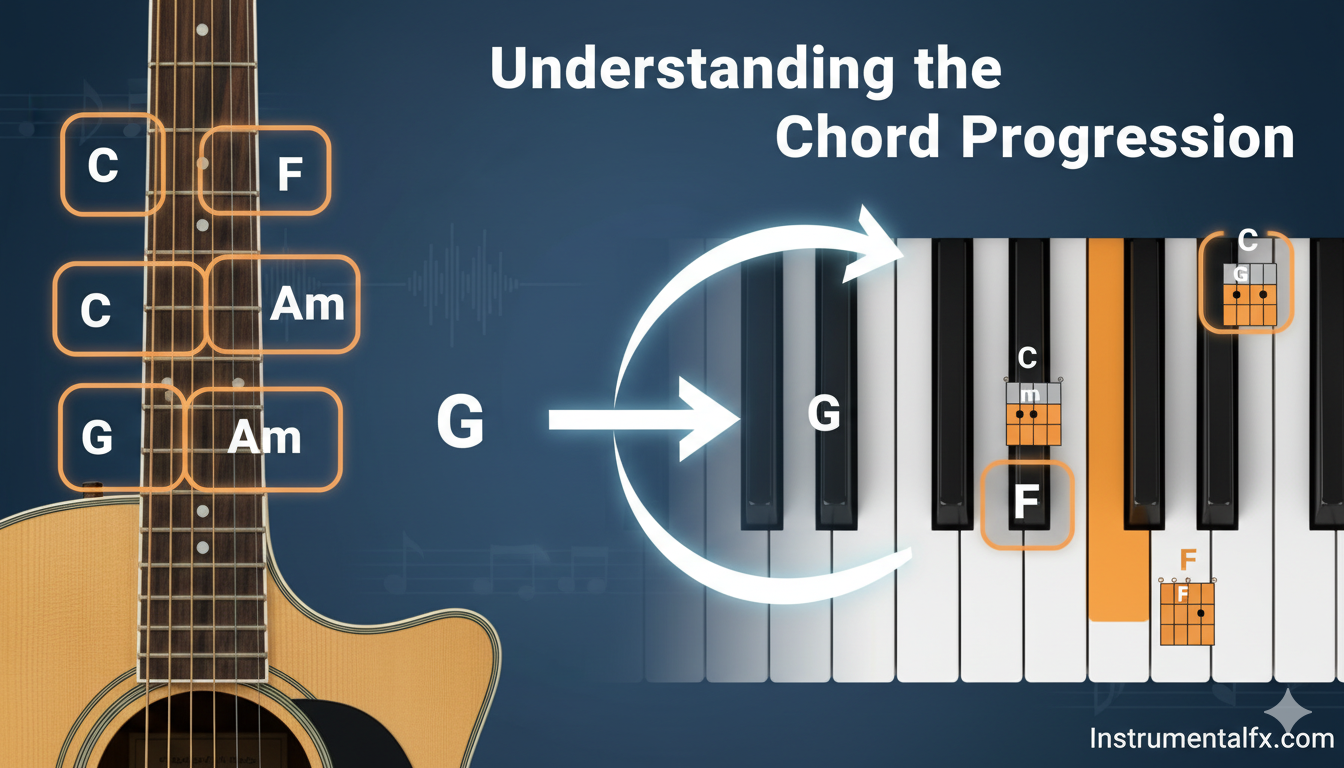
Intro and Verse Progression
Listen to the Music chords begin with an alternating E and A/C# pattern that establishes the song’s groove. This I-IV movement in E major creates an uplifting, positive feeling.
The verse continues this pattern while adding vocal melody over the top. The rhythm guitar maintains consistent 16th-note strumming that drives the entire section forward.
Pay attention to how the chords support the lyrics. Each chord change happens at meaningful moments in the vocal line, demonstrating thoughtful songwriting within Listen to the Music.
Pre-Chorus Section
The pre-chorus introduces C#m and B chords, adding harmonic variety to Listen to the Music chords. This section builds energy leading into the memorable chorus.
The progression moves: C#m – B – A – A7, creating a descending bass line that pulls toward resolution. This harmonic movement generates momentum and emotional impact.
Practice this section slowly, focusing on clean chord transitions. The pre-chorus determines whether Listen to the Music chords sound amateur or professional when performed.
Chorus Progression
The chorus features the famous “Oh, oh, oh, listen to the music” refrain over C#m and A chords. This simple two-chord progression creates maximum impact through repetition and melody.
After three repetitions of C#m-A, the progression shifts to F#7-A, adding dominant seventh tension. This variation prevents the chorus from becoming monotonous despite its simplicity.
The chorus demonstrates how effective Music chords can be with minimal complexity. Sometimes the most powerful music comes from simple ideas executed perfectly.
Bridge Section
The bridge introduces D/E, creating fresh harmonic color within Listen to the Music chords. This section provides contrast before returning to familiar verse and chorus material.
The D/E chord creates unresolved tension that makes the return to E major feel like coming home. This compositional technique keeps listeners engaged throughout the song.
Understanding how the bridge functions within Music teaches valuable lessons about song structure and arrangement for guitarists and songwriters.
Mastering the Strumming Pattern
Understanding 16th Note Rhythm
Listen to the Music chords require a 16th-note strumming feel that defines the song’s funky character. In 4/4 time, each beat divides into four equal parts, creating sixteen notes per measure.
Count 16th notes using the syllables: “1 e & a 2 e & a 3 e & a 4 e & a.” This counting system helps maintain consistent timing while playing Listen to the Music chords.
Your strumming hand should move continuously down-up-down-up in even motion. However, you won’t strike the strings on every motion—this is where the groove comes from.
Basic Strumming Motion
Develop the right-hand motion by practicing the continuous down-up pattern without worrying about which strums hit the strings. This establishes the internal clock for Listen to the Music chords.
Downstrokes occur on “1 e & a” and upstrokes happen between. The key is maintaining even motion regardless of whether your pick contacts the strings.
This technique creates the pocket that makes Listen to the Music chords groove properly. Rhythmic consistency matters more than perfect notes when learning this song.
Applying Muted Scratches
Listen to the Music chords incorporate muted string scratches between actual chord hits. Lightly touch the strings with your fretting hand to create percussive “chick” sounds.
These scratches happen on specific upstrokes within the 16th-note pattern. They add rhythmic complexity and funk to the basic chord progression.
Practice alternating between full chord strums and muted scratches slowly. Gradually increase tempo while maintaining the distinction between each sound for authentic Listen to the Music chords groove.
Developing the Pocket
The pocket refers to where notes sit within the rhythmic grid. Listen to the Music chords require tight pocket playing where every note lands precisely.
Play along with the original recording to internalize the exact timing. Notice how the guitar sits slightly behind the beat in some sections, creating laid-back groove.
Record yourself playing Listen to the Music chords and compare with the original. This self-assessment reveals timing issues that need correction for professional-sounding results.
Practice Strategies
Start practicing Listen to the Music chords at 50% tempo using a metronome. Focus on accuracy over speed, ensuring every chord rings clearly.
Isolate difficult transitions and practice them repeatedly. The E to A/C# change particularly deserves focused attention within Listen to the Music chords.
Gradually increase tempo by 5 BPM increments once you achieve consistent accuracy. This methodical approach builds muscle memory that allows effortless playing at full speed.
Music Theory Behind Listen to the Music Chords
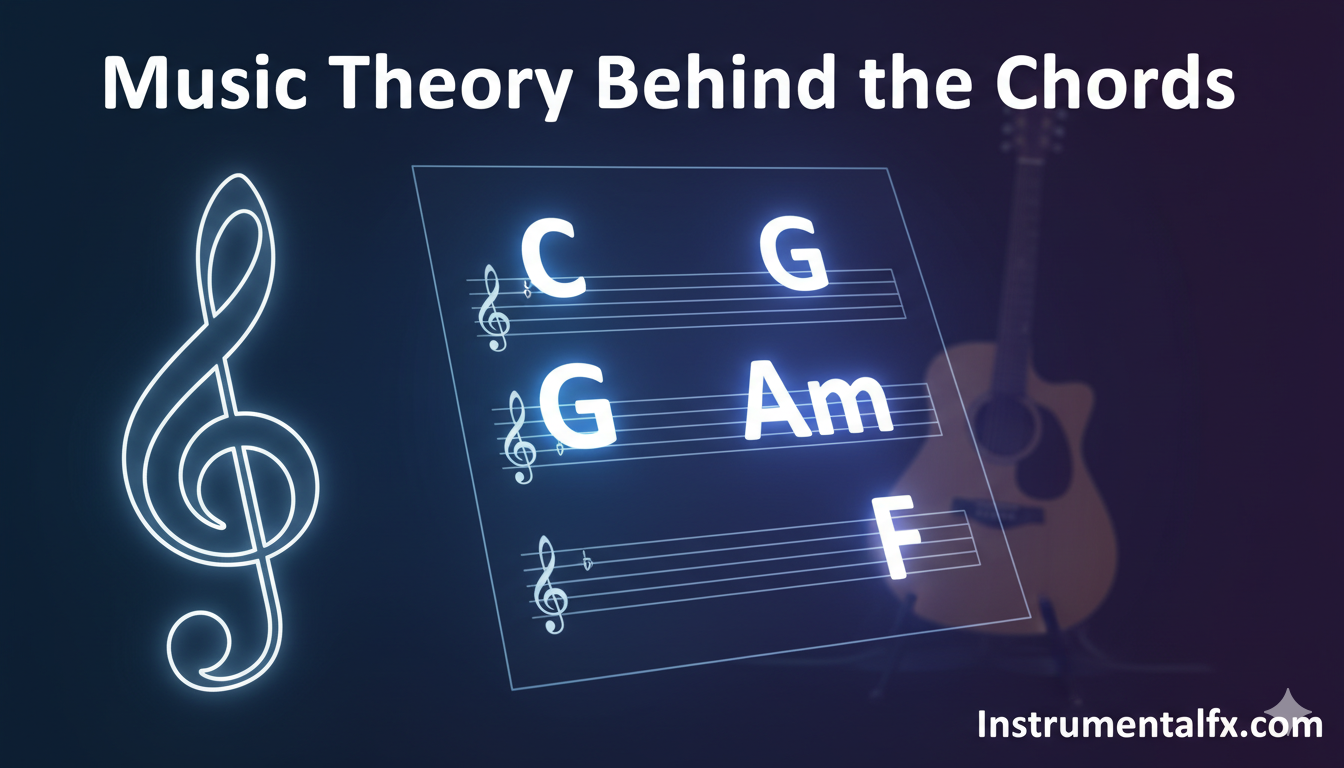
Key of E Major
Listen to the Music chords are written in E major, a guitar-friendly key. The E major scale contains the notes: E, F#, G#, A, B, C#, D#.
Understanding the key helps you comprehend why certain Listen to the Music chords appear in the progression. Each chord relates specifically to the E major scale.
The tonic chord (E) provides stability, subdominant (A) creates movement, and dominant (B) generates tension. These relationships drive the harmonic progression forward throughout the song.
Diatonic Chord Functions
In E major, each scale degree produces a specific chord quality. The I chord (E) is major, ii (F#m) is minor, iii (G#m) is minor, IV (A) is major, V (B) is major, vi (C#m) is minor, and vii° (D#dim) is diminished.
Listen to the Music chords primarily uses I, IV, V, and vi chords. This diatonic approach creates familiar, pleasant harmonies that audiences immediately connect with.
The F# major chord represents a borrowed chord from outside the diatonic system. This non-diatonic chord adds color and interest to the otherwise straightforward Listen to the Music chords progression.
Slash Chord Function
Slash chords like A/C# and D/E create bass movement while maintaining harmonic function. The A/C# chord is still fundamentally an A chord, but the inverted bass creates melodic interest.
These voicings make Listen to the Music chords sound more sophisticated than basic triads. The bass line walks smoothly between chord roots rather than jumping.
Understanding slash chords opens up advanced voicing possibilities across your entire playing. This concept extends far beyond just Listen to the Music chords into all musical genres.
Dominant Seventh Function
The A7 and F#7 chords in Listen to the Music chords serve dominant function, creating tension that resolves satisfyingly. Dominant sevenths contain tritone intervals that pull toward resolution.
A7 contains the notes A-C#-E-G, where the G pulls downward to F# in the E major chord. This voice leading creates smooth, logical harmonic movement.
Recognizing dominant function in Listen to the Music chords helps you understand chord progressions in countless other songs. This theoretical knowledge accelerates your musical growth exponentially.
Modal Mixture
The D/E chord introduces modal mixture into Listen to the Music chords. This technique borrows from parallel minor or other modes to add harmonic color.
D major comes from E Mixolydian mode, which contains a flatted seventh scale degree. This creates the characteristic rock sound heard throughout the bridge section.
Modal mixture appears frequently in rock music. Understanding it within Listen to the Music chords provides theoretical foundation for analyzing similar songs in your repertoire.
Playing Techniques for Authentic Sound
Hammer-Ons and Pull-Offs
Listen to the Music chords often incorporate hammer-ons and pull-offs to embellish basic chord shapes. These techniques add fluidity and expressiveness to your playing.
Hammer-ons involve fretting a note without picking, using only finger pressure to sound it. Pull-offs are the opposite—removing a finger to sound a lower note.
Practice these techniques slowly on individual strings before incorporating them into full Listen to the Music chords. Clean execution requires finger strength and precise timing.
Palm Muting Technique
Palm muting creates percussive, muted string sounds within Listen to the Music chords strumming pattern. Rest your picking hand’s palm lightly on the strings near the bridge.
This technique allows you to control the sustain and attack of each note. Varying palm mute pressure creates dynamic range within the rhythm guitar part.
Alternate between fully open chords and palm-muted strums to add rhythmic interest. This variation keeps Listen to the Music chords engaging throughout the entire song.
Dynamics and Accents
Playing Listen to the Music chords effectively requires dynamic control beyond just hitting strings. Certain beats within each measure receive emphasis through harder strums.
Typically, beats 1 and 3 receive slight accents in 4/4 time. However, funk-influenced music like this often emphasizes the “and” of beats, creating syncopation.
Listen carefully to the original recording to identify which strums deserve accent. Replicating these dynamics makes your Listen to the Music chords sound more authentic and professional.
Rhythmic Precision
Tight rhythmic precision separates good from great Listen to the Music chords playing. Every note should land exactly where intended within the 16th-note grid.
Practice with a metronome, gradually increasing tempo only when you achieve consistent accuracy. Record yourself to identify timing issues you might not hear while playing.
Rhythmic discipline developed through Listen to the Music chords transfers to all your guitar playing. This skill is arguably more important than knowing many chords or scales.
Common Mistakes to Avoid
Rushing the Tempo
Many guitarists rush when playing Listen to the Music chords, especially during challenging transitions. This destroys the laid-back groove essential to the song’s character.
Use a metronome religiously during practice to develop internal timing. If you can’t play it slowly and accurately, you can’t play it fast and accurately.
The original recording sits around 100 BPM. Start at 60-70 BPM and work up gradually while maintaining perfect timing throughout all Listen to the Music chords.
Poor Chord Transitions
Sloppy transitions between Listen to the Music chords create rhythmic gaps that disrupt groove. Every chord should connect seamlessly to the next without hesitation or buzzing strings.
Practice transitioning between two chords repeatedly, finding the most efficient finger movements. Sometimes unconventional fingerings work better than textbook approaches.
Visualize the next chord shape while playing the current one. This mental preparation allows fingers to move decisively rather than searching for positions.
Inconsistent Strumming
The 16th-note feel in Listen to the Music chords demands absolute consistency in your strumming hand motion. Irregular motion creates uneven rhythm that sounds unprofessional.
Lock your wrist and forearm motion into the continuous down-up pattern. Your hand should move like a metronome regardless of which strums contact strings.
Film yourself playing to identify strumming inconsistencies. Sometimes issues invisible to your ear become obvious when watching your technique on video.
Incorrect Chord Voicings
Using wrong voicings ruins the authentic sound of Listen to the Music chords. The specific shapes and positions matter for replicating the original recording’s tone.
Pay particular attention to the higher-neck E chord and slash chords. Open position substitutions won’t capture the intended harmonic color and voice leading.
Reference chord diagrams carefully and compare your sound with the recording. Small fingering differences create surprisingly large tonal variations in Listen to the Music chords.
Neglecting Music Theory
Many guitarists learn Listen to the Music chords by rote without understanding underlying theory. This limits your ability to transpose, improvise, or modify the progression.
Study why each chord appears where it does in the progression. Understanding function allows you to apply similar concepts to other songs and keys.
Theory knowledge transforms you from someone who copies to someone who creates. Even basic understanding dramatically improves your musicianship when learning Listen to the Music chords.
Tips for Learning Listen to the Music Chords Faster
Break the Song into Sections
Don’t attempt to learn all Listen to the Music chords simultaneously. Divide the song into intro, verse, pre-chorus, chorus, and bridge sections.
Master each section individually before combining them. This focused approach builds confidence and prevents overwhelm when tackling complex arrangements.
Spend entire practice sessions on challenging sections. The pre-chorus and chorus transitions often require extra attention when learning Listen to the Music chords.
Use Slow-Downer Software
Technology helps when learning Listen to the Music chords by allowing you to slow the original recording without changing pitch. Apps like Transcribe! or Amazing Slow Downer work excellently.
Loop difficult sections repeatedly at reduced tempo. This reveals subtleties in the recording that pass unnoticed at full speed.
Gradually increase playback speed as you develop comfort. Soon you’ll play along with the original tempo confidently throughout all Listen to the Music chords.
Practice Daily in Short Sessions
Consistent daily practice beats occasional long sessions when learning Listen to the Music chords. Even 15-20 focused minutes daily produces better results than weekly marathon practices.
Your brain consolidates motor patterns during sleep. Daily practice ensures continuous improvement as neural pathways strengthen with each repetition.
Set realistic goals for each practice session. “Master the verse progression” is more achievable than “learn the entire song today” when working on Listen to the Music chords.
Play Along with the Recording
Playing Listen to the Music chords along with the original recording trains your ear and timing simultaneously. This method ensures you internalize the proper feel.
Start by playing just root notes or bass lines while listening. Gradually add full chords as you become comfortable with timing and structure.
Record yourself playing along to identify where your performance diverges from the original. This comparison reveals specific areas needing improvement in your Listen to the Music chords execution.
Study Live Performances
Watch live performances of Listen to the Music to see how professionals approach these chords. YouTube contains numerous Doobie Brothers concerts featuring the song.
Notice how Tom Johnston’s strumming hand moves and how he positions his fingers. Visual learning complements audio learning when mastering Listen to the Music chords.
Live versions often include extended solos and variations. These performances teach how to keep Listen to the Music chords interesting over longer durations.
Performance Tips for Listen to the Music Chords

Tune Your Guitar Properly
Listen to the Music chords require standard tuning: E-A-D-G-B-E from low to high. Ensure precise tuning before every practice session and performance.
Use a reliable digital tuner rather than tuning by ear initially. Even slightly out-of-tune strings make Listen to the Music chords sound wrong regardless of technique.
Check tuning between songs during performances. Temperature and playing cause strings to drift, especially when using the vigorous strumming this song demands.
Choose the Right Guitar
Listen to the Music chords work on both acoustic and electric guitars, though the original features electric. A Stratocaster or similar guitar captures the authentic tone.
For acoustic performances, use a guitar with bright, clear tone that cuts through without excessive bass. The chord voicings can become muddy on certain acoustic models.
Experiment with different guitars to find what sounds best for your Listen to the Music chords interpretation. The right instrument makes the song easier and more enjoyable to play.
Adjust Your Action and Setup
Proper guitar setup dramatically affects playability when learning Listen to the Music chords. Bar chords require moderate to low action for comfortable fretting.
If your guitar fights you during bar chords, consider professional setup. Small adjustments to action, intonation, and relief make huge differences.
Well-maintained guitars respond better to the techniques required for Listen to the Music chords. Invest in your instrument’s setup for optimal playing experience.
Develop Performance Confidence
Listen to the Music chords become easier when you stop worrying about mistakes. Confidence comes from thorough preparation meeting performance opportunity.
Practice performing the entire song without stopping, even when mistakes occur. This builds ability to recover gracefully rather than derailing completely.
Remember that audiences rarely notice small errors if you maintain groove and energy. Confident delivery of Listen to the Music chords matters more than perfection.
Variations and Improvisation
Capo Considerations
While Listen to the Music chords are written in E major, you can use a capo to change keys or simplify chord shapes. Capo 2nd fret allows playing in D shapes while sounding in E.
However, the original voicings and positions create specific tone unavailable when using capo substitutions. Consider whether ease or authenticity matters more for your situation.
Experiment with capo positions to find vocal range that suits your voice. Listen to the Music chords adapt well to transposition while maintaining the essential character.
Adding Melodic Embellishments
Once you master basic Listen to the Music chords, add melodic embellishments within chord shapes. Hammer-ons, pull-offs, and single-note runs increase musical interest.
Study how session guitarists approach similar songs. Small additions between chords create professional polish without overplaying or losing the groove.
Embellishments should enhance rather than distract from Listen to the Music chords foundation. Always serve the song rather than showcasing technique unnecessarily.
Creating Solo Sections
The E major pentatonic scale works perfectly for improvising solos over Listen to the Music chords. Use the notes E-F#-G#-B-C# anywhere on the fretboard.
Box patterns at the 12th fret provide easy access to this scale. Practice licks and phrases that outline the chord changes rather than playing random notes.
Listen to the guitar solo in the original recording for inspiration. Tom Johnston’s solo demonstrates how to build tension and release over the chord progression.
Frequently Asked Questions
What are the main chords used in Listen to the Music?
The main Listen to the Music chords are E, A/C#, C#m, B, A, A7, F#, and D/E. These eight chords create the entire song structure including intro, verses, chorus, and bridge sections.
Is Listen to the Music suitable for beginners?
Listen to the Music chords are best suited for intermediate players who already know bar chords and basic 16th-note strumming. Dedicated beginners can learn it but should expect several weeks of focused practice to master the techniques.
What tuning is required for Listen to the Music chords?
Listen to the Music uses standard tuning (E-A-D-G-B-E). No alternate tunings or capo are required to play the song exactly as recorded by The Doobie Brothers.
How fast should I play Listen to the Music chords?
The original recording sits at approximately 100 beats per minute. Start practicing Listen to the Music chords at 60-70 BPM and gradually increase speed while maintaining accuracy and groove.
What’s the hardest part of learning Listen to the Music chords?
The 16th-note strumming pattern with muted scratches presents the biggest challenge for most players. The combination of precise rhythm, chord transitions, and dynamic control requires dedicated practice to master.
Can I play Listen to the Music chords on acoustic guitar?
Yes, Listen to the Music chords work on acoustic guitar though the original uses electric. Choose a bright-toned acoustic and consider using a pick for the percussive strumming the song requires.
What key is Listen to the Music in?
Listen to the Music is in the key of E major. All the chords relate to the E major scale, with occasional borrowed chords adding harmonic color to the progression.
How long does it take to learn Listen to the Music chords?
Most intermediate guitarists can learn the basic Listen to the Music chords in 2-4 weeks of regular practice. Mastering the groove, timing, and authentic feel may take several months of consistent work.
Are there easier versions of Listen to the Music chords?
You can simplify Listen to the Music chords using open position shapes in different keys or with a capo. However, these substitutions won’t capture the original’s specific tone and voice leading.
What strumming pattern is used in Listen to the Music?
Listen to the Music uses a 16th-note strumming pattern in 4/4 time with muted scratches. The continuous down-up motion creates the funky groove while selective string contact generates the rhythmic complexity.
Conclusion
Listen to the Music chords represent a perfect blend of accessible chord progressions and challenging rhythm techniques that define classic rock guitar.
Mastering these chords develops essential skills including bar chords, slash chords, and complex strumming patterns that transfer to countless other songs in your repertoire.
Through dedicated practice of Listen to the Music chords, you’ll develop timing precision, finger strength, and rhythmic sophistication that elevate your overall guitar playing.
Whether performing for audiences or jamming with friends, this Doobie Brothers classic showcases your abilities while celebrating music’s power to bring people together.
Keep practicing, stay patient with the learning process, and soon Listen to the Music chords will flow naturally from your fingers with authentic groove and professional confidence.


