


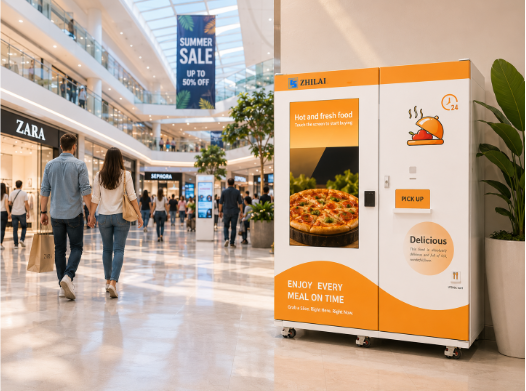
As businesses continue looking for ways to provide convenient meal services while controlling operating costs, hot food vending machines are becoming an increasingly practical solution. Hospitals, manufacturing plants, universities, office buildings, and transportation hubs often need to serve people outside traditional cafeteria hours, but extending food service usually requires additional staff, kitchen resources, and higher daily expenses.
A commercial hot food vending machine offers an alternative by combining refrigerated storage, automated heating, self-service ordering, and remote management into a single unattended solution. However, choosing the right equipment involves much more than comparing specifications or purchase prices. The machine should support long-term operations, reliable food quality, and efficient management across different deployment environments.
This guide highlights the key factors commercial buyers should evaluate before investing in a hot food vending machine.
Understand Where the Machine Will Be Used
The first step is understanding the operating environment.
Different locations generate different customer behaviors. A hospital may need continuous meal service for doctors and nurses working overnight, while a factory often experiences concentrated demand during shift changes. University campuses usually require meal availability throughout the day and evening, and airports or railway stations need equipment capable of serving travelers with unpredictable schedules.
These operating conditions influence machine capacity, replenishment frequency, menu planning, and installation requirements. Selecting equipment without considering the actual service environment often leads to unnecessary operating costs or reduced customer satisfaction.
Refrigeration and Heating Should Work Together
Food quality depends on both storage and preparation.
Commercial hot food vending machines should maintain refrigerated storage between 1°C and 4°C, helping preserve prepared meals before purchase. Once a customer completes payment, the selected meal should automatically move to the heating chamber, where microwave heating follows preset cooking parameters before dispensing.
The goal is not simply to heat food quickly. Consistent temperature control and reliable heating performance help maintain meal quality while supporting food safety and reducing unnecessary waste. Businesses serving pizzas, burgers, sandwiches, pasta, rice meals, or other ready-to-eat foods should ensure the machine supports different heating programs suitable for various menu items.
Capacity Should Match Daily Demand
One common misconception is that a larger machine always provides greater value.
In reality, capacity should match expected customer traffic. A machine with insufficient capacity requires frequent replenishment and may miss sales opportunities during busy periods. On the other hand, an oversized machine may occupy unnecessary floor space and increase inventory costs.
Commercial buyers should evaluate expected meal sales, peak ordering periods, menu variety, and available installation space before selecting a configuration. A properly sized machine helps improve operational efficiency while maintaining product availability throughout the day.
Smart Management Can Reduce Operating Costs
Managing one vending machine is relatively straightforward. Managing multiple machines across different locations is a very different task.
Modern commercial vending equipment should include cloud-based management that allows operators to monitor inventory, equipment status, sales performance, and low-stock alerts remotely. Instead of checking every machine manually, operators can schedule replenishment based on real-time operating data.
For businesses planning to expand their unattended food service network, centralized management can significantly improve efficiency while reducing labor requirements.
For example, modern commercial solutions such as ZHILAI’s Hot Food Vending Machine provide cloud-based management that supports remote inventory monitoring, sales analytics, equipment status tracking, and low-stock notifications, helping operators manage multiple locations more efficiently.
Flexible Payment Creates a Better Customer Experience
Customer expectations continue to evolve.
Most users now prefer fast, contactless transactions rather than cash payments. Supporting multiple payment methods—including credit cards, QR payments, Apple Pay, Google Pay, and other digital payment options—helps reduce waiting time while improving overall convenience.
For businesses operating internationally, flexible payment compatibility also makes deployment easier across different regions and customer groups.
Evaluate the Supplier, Not Just the Equipment
The vending machine itself is only one part of a successful project.
Commercial buyers should also evaluate the manufacturer’s production capabilities, technical support, software updates, customization services, and after-sales support. Choosing an experienced supplier can reduce long-term operating risks while making future expansion much easier.
OEM and ODM capabilities may also be important for businesses planning to develop their own vending brand or integrate equipment into existing food service operations. A supplier capable of providing hardware customization together with software support offers greater flexibility as operational requirements continue to evolve.
Final Thoughts
Hot food vending machines are becoming an important part of modern self-service food service. By combining refrigerated storage, intelligent microwave heating, cloud-based management, and cashless payment technologies, they help businesses extend meal availability while reducing labor requirements and improving operational efficiency.
However, selecting the right solution requires careful evaluation of operating environment, refrigeration performance, machine capacity, remote management capabilities, payment flexibility, and long-term supplier support rather than focusing only on purchase price.
Manufacturers such as ZHILAI have developed commercial hot food vending solutions for hospitals, universities, factories, office buildings, and transportation hubs, helping operators provide reliable 24/7 meal service while simplifying day-to-day management.
Explore the complete ZHILAI Hot Food Vending Machine solution to learn more about product specifications, cloud management capabilities, and OEM/ODM customization options for your next commercial food service project.

