


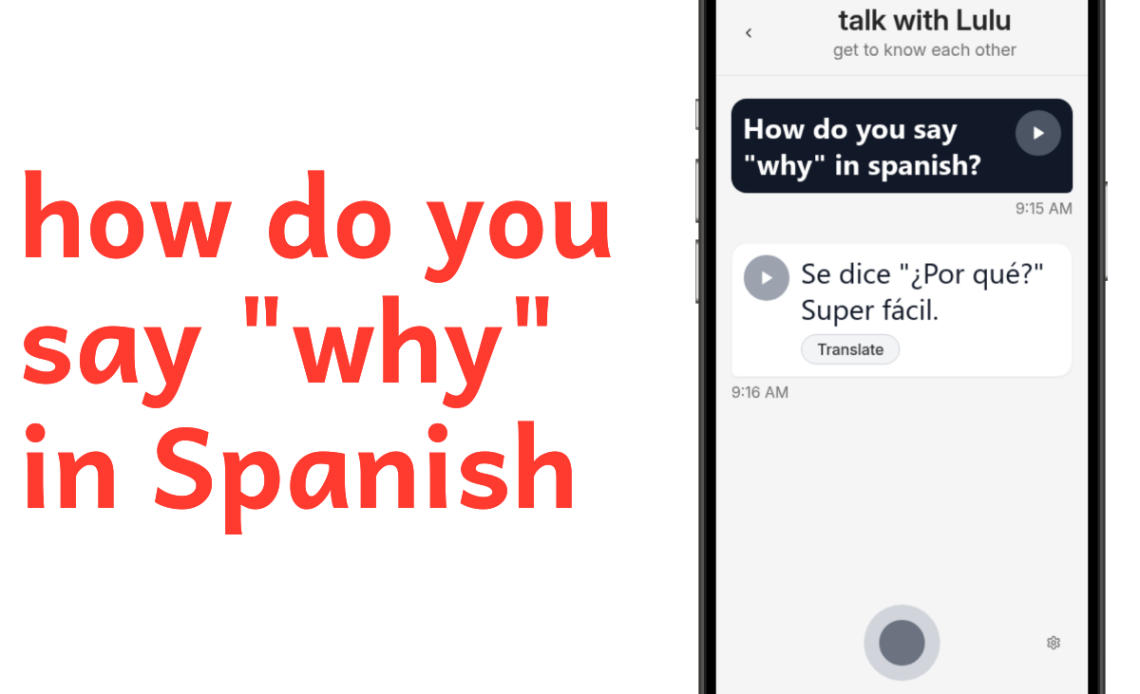
How do you say why in Spanish? The short answer is “por qué,” but Spanish actually has four look-alike versions of this word, plus a dozen other phrases native speakers use to ask or explain “why.” If you have only ever learned “por qué” in a classroom, you are missing half the picture.
The Quick Answer: “Por Qué”

The most direct translation of “why” in Spanish is por qué, written as two words with an accent mark on “qué.”
It is used to ask a question, just like “why” in English.
For example: ¿Por qué estudias español? means “Why do you study Spanish?”
This is the version taught in every beginner textbook, and it is the one you will use 90% of the time when forming a question.
How To Pronounce “Por Qué”
“Por qué” is pronounced “pohr-keh,” with stress on the second syllable.
The accent mark on “qué” is not optional — it signals that the word is being used as a question word.
Without the accent, the spelling changes meaning entirely, which we will cover next.
Listening to native speakers say short phrases like “¿por qué no?” a few times will help the rhythm stick faster than reading it silently.
Por Qué vs Porque vs Porqué vs Por Que (At a Glance)
Spanish has four near-identical spellings that confuse even native speakers sometimes. The difference comes down to spacing and accent marks, and each one has its own job in a sentence.
Here is the full comparison before we break each one down individually.
| Form | Word Type | Meaning | Example |
|---|---|---|---|
| Por qué | Question word | “Why?” | ¿Por qué llegaste tarde? |
| Porque | Conjunction | “Because” | Llegué tarde porque había tráfico. |
| Porqué | Noun | “The reason” | No entiendo el porqué de su decisión. |
| Por que | Preposition + relative pronoun | “For which” | Esta es la razón por que no vine. |
1. Por Qué — Asking “Why”
“Por qué” always introduces a question, whether it is a direct question with question marks or an indirect one inside a sentence.
It is two separate words, and “qué” always carries the accent.
Example: No sé por qué se fue tan temprano. (I don’t know why he left so early.)
2. Porque — Answering “Because”
“Porque” is one word, no accent, and it answers a “why” question.
Think of “por qué” and “porque” as a matching question-and-answer pair, the same way English pairs “why” with “because.”
Example: ¿Por qué estudias español? Porque quiero viajar. (Why do you study Spanish? Because I want to travel.)
3. Porqué — The Noun “The Reason”
“Porqué” is also one word, but it carries an accent and functions as a noun meaning “the reason” or “the motive.”
Because it is a noun, it needs an article in front of it, like “el porqué” or “un porqué.”
Example: Quiero saber el porqué de tu enojo. (I want to know the reason for your anger.)
4. Por Que — “For Which”
“Por que” is the rarest of the four. It is two words with no accent, and it usually means “for which” or “so that.”
You will see it mostly in formal or written Spanish, often followed by a relative clause.
Example: Esta es la razón por que no vine. (This is the reason for which I didn’t come.)
Para Qué vs Por Qué — Which One Should You Use
Spanish learners often mix up “por qué” and “para qué” because both can translate to “why” in English.
The real difference is about cause versus purpose, and once you see it laid out, it clicks quickly.
| Phrase | Focus | Translates To | Example |
|---|---|---|---|
| Por qué | The cause behind something | “Why” (what caused this) | ¿Por qué llegaste tarde? |
| Para qué | The purpose or goal | “Why” / “What for” | ¿Para qué estudias español? |
“Por qué” looks backward at a cause: what made this happen?
“Para qué” looks forward at a goal: what is this for, or what do you hope to achieve?
A useful trick: if you could rephrase the English question as “what for,” reach for “para qué” instead of “por qué.”
How To Ask “Why” In Spanish — Example Sentences
Asking “why” in everyday conversation almost always uses “por qué,” paired with question marks at both ends of the sentence in written Spanish.
Here are common patterns you will hear constantly.
| Spanish | English |
|---|---|
| ¿Por qué no vienes? | Why aren’t you coming? |
| ¿Por qué lloras? | Why are you crying? |
| ¿Por qué no? | Why not? |
| ¿Por qué te fuiste? | Why did you leave? |
| ¿Por qué no los dos? | Why not both? |
Notice that the upside-down question mark (¿) always opens a question in Spanish — a detail learners often forget when typing quickly.
9 Ways To Say “That’s Why” Or “For This Reason” In Spanish

Once you move past asking “why” and want to explain or state a reason, Spanish offers far more variety than just “porque.” These phrases let you sound more natural and less repetitive.
1. Por Eso
“Por eso” is the most common casual way to say “that’s why” or “for that reason.”
Example: No estudié, por eso no aprobé el examen. (I didn’t study, that’s why I didn’t pass the exam.)
2. Por Esta Razón
“Por esta razón” means “for this reason” and sounds slightly more formal than “por eso.”
Example: Por esta razón, no le gusta visitar otros países. (For this reason, he doesn’t like visiting other countries.)
3. Por Lo Cual
“Por lo cual” translates to “therefore” or “which is why,” and it usually refers back to something already mentioned.
Example: Había una sequía, por lo cual no hay muchas manzanas este año. (There was a drought, which is why there aren’t many apples this year.)
4. Por Ese Motivo
“Por ese motivo” means “for that motive” or “for that reason,” and it is common in storytelling or explaining a cause.
Example: No tenía las llaves, por ese motivo no pude entrar. (I didn’t have the keys, that’s why I couldn’t get in.)
5. Esa Es La Causa
“Esa es la causa” literally means “that is the cause,” used when pointing directly at the source of a problem.
Example: Tenía gripe. Esa es la causa de mi ausencia. (I had the flu. That’s the cause of my absence.)
6. Con El Objetivo De
“Con el objetivo de” means “with the goal of” or “with the aim of,” and it explains the purpose behind an action.
Example: Estudiaré con el objetivo de aprobar el examen. (I will study with the goal of passing the exam.)
7. A Fin De Que
“A fin de que” means “in order that” or “so that,” and it connects an action to its intended outcome.
Example: Hago ejercicio a fin de que pierda grasa. (I exercise in order to lose fat.)
8. Por Ese Sentido
“Por ese sentido” translates loosely to “in that sense,” used to clarify the reasoning behind a statement.
Example: Es por ese sentido que ha mejorado la situación. (It’s in that sense that the situation has improved.)
9. El Cómo Y Por Qué
“El cómo y por qué” means “the how and why,” used when discussing the full explanation behind something.
Example: No me interesa el cómo y por qué de tu decisión. (I’m not interested in the how and why of your decision.)
How To Say “Why Not” In Spanish
“Why not” in Spanish is simply “¿por qué no?” — the same structure as “why,” with “no” added at the end.
Example: ¿Por qué no vamos al cine? (Why don’t we go to the movies?)
If someone offers two options and you want both, the classic phrase is “¿por qué no los dos?” meaning “why not both?”
Bonus: “Why” As An Exclamation, Not A Question
English sometimes uses “why” as a surprised exclamation, like “Why, I’ve won the lottery!” — and Spanish has its own equivalents for this rarer use.
Words like “anda,” “toma,” and “vamos” can capture that same burst of surprise, even though none of them translate literally to “why.”
Example: ¡Anda! ¡Me gané la lotería! (Why, I won the lottery!)
This usage is far less common than asking a real question, but recognizing it helps when reading dialogue-heavy Spanish content like novels or shows.
Informal And Casual Ways To React With “Why” Or Surprise
Not every “why” moment is a formal question. Spanish speakers also use shorter, casual expressions to react with surprise or confusion.
“¿Cómo?” literally means “how,” but in casual speech it often works like “what?” or “how come?” when reacting to surprising news.
“¿Qué pasa?” means “what’s going on,” and friends use it the way English speakers might casually ask “why” something is happening.
These are not direct substitutes for “por qué,” but they fill the same emotional space in relaxed conversation.
Regional Differences You Should Know
“Por qué,” “porque,” “porqué,” and “por que” are used identically across Spain and Latin America — the spelling rules do not change by region.
What does shift slightly is tone and pace. Spanish speakers in Spain tend to speak faster and drop syllables more, so “por qué” can sound clipped compared to the slower, clearer pronunciation common in Mexico or Colombia.
Phrases like “por ese motivo” and “por lo cual” appear more in written or formal Latin American Spanish, while “por eso” is universally casual everywhere.
Common Mistakes English Speakers Make With Por Qué
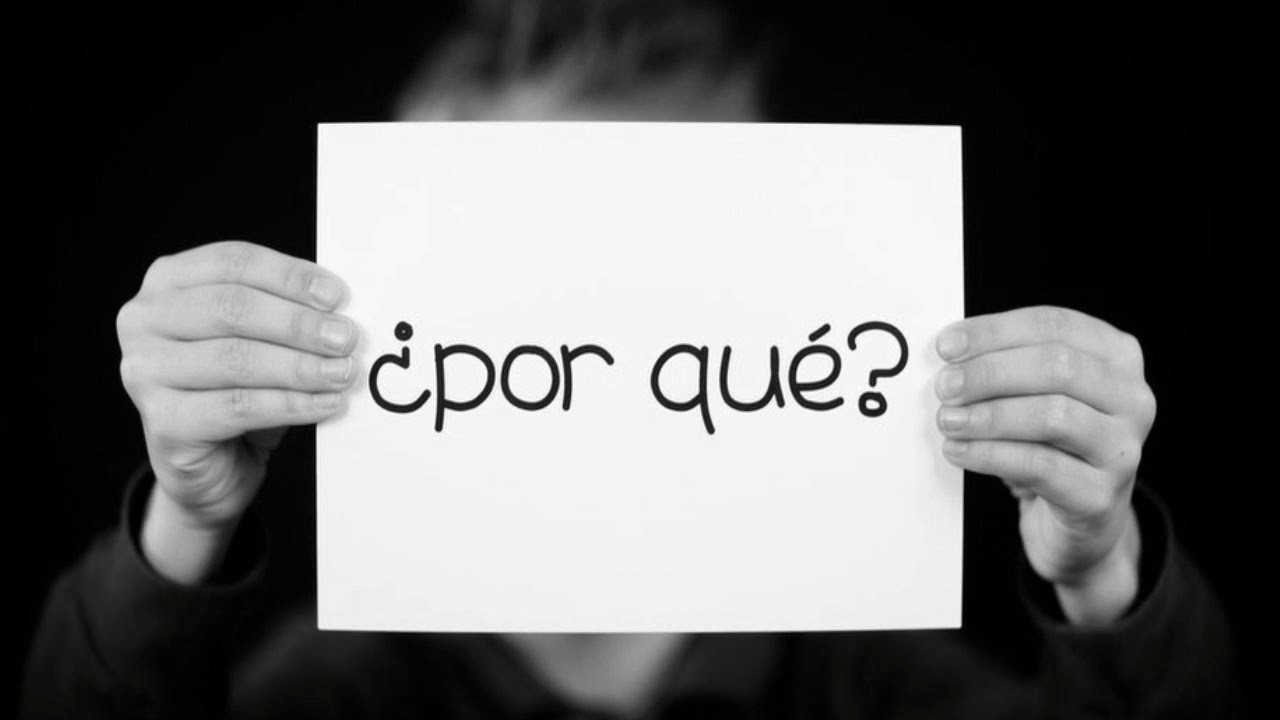
The most frequent mistake is dropping the accent mark on “qué,” which silently turns a question word into the conjunction “porque.”
Another common error is treating “por qué” and “para qué” as interchangeable, when they actually highlight cause versus purpose.
Learners also forget that “porqué” the noun needs an article in front of it, while “porque” the conjunction never does.
Finally, many beginners only learn “porque” for “because” and never discover “por eso,” “por esta razón,” or “por ese motivo,” which makes their Spanish sound repetitive.
A smaller but common slip is typing “porque” when you meant the noun “porqué,” especially on a phone keyboard that does not flag the missing accent.
Memory Tricks To Lock In The Differences
If spelling rules alone are not sticking, a few memory tricks can speed things up considerably.
Think of “por qué” as two words asking one question, the same way “why” stands alone as a question word in English.
For “porque,” picture it as one solid word giving one solid answer, the way “because” answers “why” in a single breath.
For “porqué,” remember that nouns in Spanish usually need an article, so if “el” or “un” sits right before the word, it is almost certainly the noun form.
“Por que,” the rarest of the four, mostly shows up in formal writing, so casual learners can deprioritize it until reading skills improve.
Por Qué In Real Conversations
Textbook examples are useful, but hearing how these words show up in everyday back-and-forth conversation makes them stick faster.
Here are a few short exchanges that mirror how native speakers actually talk.
| Spanish Exchange | English Meaning |
|---|---|
| A: ¿Por qué estás tan callado? B: Porque estoy cansado. | A: Why are you so quiet? B: Because I’m tired. |
| A: ¿Por qué no me llamaste? B: Por eso, se me olvidó el teléfono. | A: Why didn’t you call me? B: That’s why, I forgot my phone. |
| A: No entiendo el porqué de tu decisión. B: Te lo explico luego. | A: I don’t understand the reason for your decision. B: I’ll explain it later. |
| A: ¿Para qué necesitas el carro? B: Para ir al trabajo. | A: What do you need the car for? B: To go to work. |
Reading these exchanges aloud, switching roles each time, trains your brain to react with the right “por qué” variant instead of pausing to translate.
Why These Four Words Confuse Even Native Speakers
Even fluent Spanish speakers occasionally mix up “porqué” and “por que” in writing, especially in casual texting where accents get skipped entirely.
The confusion usually disappears in speech because all four versions sound almost identical when spoken quickly.
It only becomes a real problem in writing, where a missing accent mark can change a question into a statement, or a noun into a conjunction.
This is exactly why schools in Spanish-speaking countries spend real classroom time drilling these four spellings well into the teenage years.
Quick Practice Exercise
Before moving to the FAQ section, try translating these five sentences using what you just learned. Cover the right column first if you want a real test.
| English | Spanish (Your Answer Should Match) |
|---|---|
| Why are you laughing? | ¿Por qué te ríes? |
| I don’t know the reason for the delay. | No sé el porqué del retraso. |
| I’m staying home because it’s raining. | Me quedo en casa porque está lloviendo. |
| That’s why I called you. | Por eso te llamé. |
| What do you study Spanish for? | ¿Para qué estudias español? |
If four or five matched, you have a solid grip on the core differences already. If not, scroll back up to the comparison table and reread the four short sections.
Por Qué Cheat Sheet — Quick Reference Table
Keep this table handy while practicing; it summarizes everything covered above in one place.
| You Want To Say | Use This | Word Count |
|---|---|---|
| Ask “why?” | Por qué | 2 words, accent on qué |
| Answer “because” | Porque | 1 word, no accent |
| Say “the reason” (noun) | Porqué | 1 word, accent |
| Say “for which” (formal) | Por que | 2 words, no accent |
| Say “why not?” | Por qué no | 3 words |
| Say “that’s why” (casual) | Por eso | 2 words |
| Say “for this reason” (formal) | Por esta razón | 3 words |
| Ask “what for?” / purpose | Para qué | 2 words, accent on qué |
Frequently Asked Questions (FAQs)
1. How do you say why in Spanish?
The standard translation is “por qué,” written as two words with an accent on “qué.” It is used to ask questions.
2. What is the difference between por qué and porque?
“Por qué” asks a question (“why”), while “porque” answers it (“because”). The spelling and accent mark are the only visual difference.
3. Is porqué one word or two?
“Porqué” is one word with an accent, functioning as a noun meaning “the reason.” It is different from “por qué,” the two-word question form.
4. How do you say why not in Spanish?
“Why not” translates to “¿por qué no?” Simply add “no” after the question word, just like in English.
5. What does para qué mean compared to por qué?
“Para qué” asks about purpose or goal (“what for”), while “por qué” asks about cause (“what made this happen”). Both can translate loosely to “why.”
6. What is the most casual way to say “that’s why” in Spanish?
“Por eso” is the most common casual phrase for “that’s why” or “for that reason,” used constantly in everyday conversation.
7. Does por qué change between Spain and Latin America?
No, the spelling and grammar stay identical across every Spanish-speaking country. Only pronunciation speed and regional accent vary slightly from place to place.
8. How do you pronounce por qué?
It is pronounced “pohr-keh,” with stress falling on the second syllable. The accent mark on “qué” is the visual reminder that it functions as a question word.
9. Can porque ever mean “why” instead of “because”?
No, “porque” without an accent always means “because.” If you intend “why,” you need the accented two-word form “por qué.”
10. What is a formal way to explain “why” something happened?
“Por esta razón” or “por ese motivo” both work well in formal writing to mean “for this reason” or “for that reason.”
Conclusion
Learning how to say why in Spanish starts with “por qué,” but real fluency comes from knowing its three look-alike cousins — porque, porqué, and por que — plus natural alternatives like por eso and por ese motivo. Each version has a specific job: asking, answering, naming a reason, or connecting formal clauses.
Once the accent-mark rule clicks, the rest becomes pattern recognition rather than memorization. Practice by asking yourself simple questions throughout the day and answering them out loud using a different phrase each time.
Mixing in words like para qué, por esta razón, and por lo cual will make your Spanish sound noticeably more natural and less textbook. These small swaps are often what separate intermediate learners from speakers who sound genuinely comfortable in conversation.
Keep the cheat sheet above nearby, repeat the example sentences aloud, and quiz yourself with the practice exercise whenever you need a refresher. Within a few weeks, “por qué” and its variations will feel automatic instead of confusing, and you will reach for the right one without translating in your head first.


