


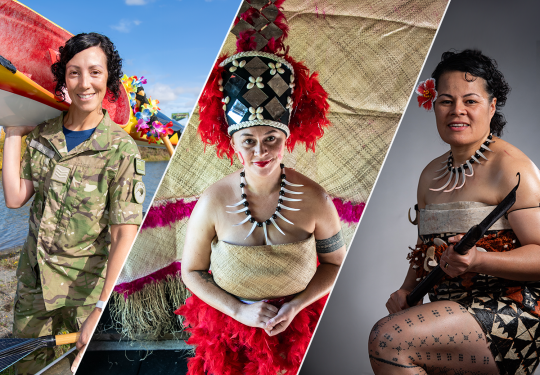
Why are Samoans so strong is one of the most searched questions about Pacific Islander athletes, and the answer goes far deeper than just size. Samoans are consistently dominant in the NFL, rugby, wrestling, and weightlifting.
Their extraordinary physical strength comes from a powerful mix of ancient genetics, warrior culture, traditional diet, and a lifestyle built around physical service.
The Science Behind Samoan Strength
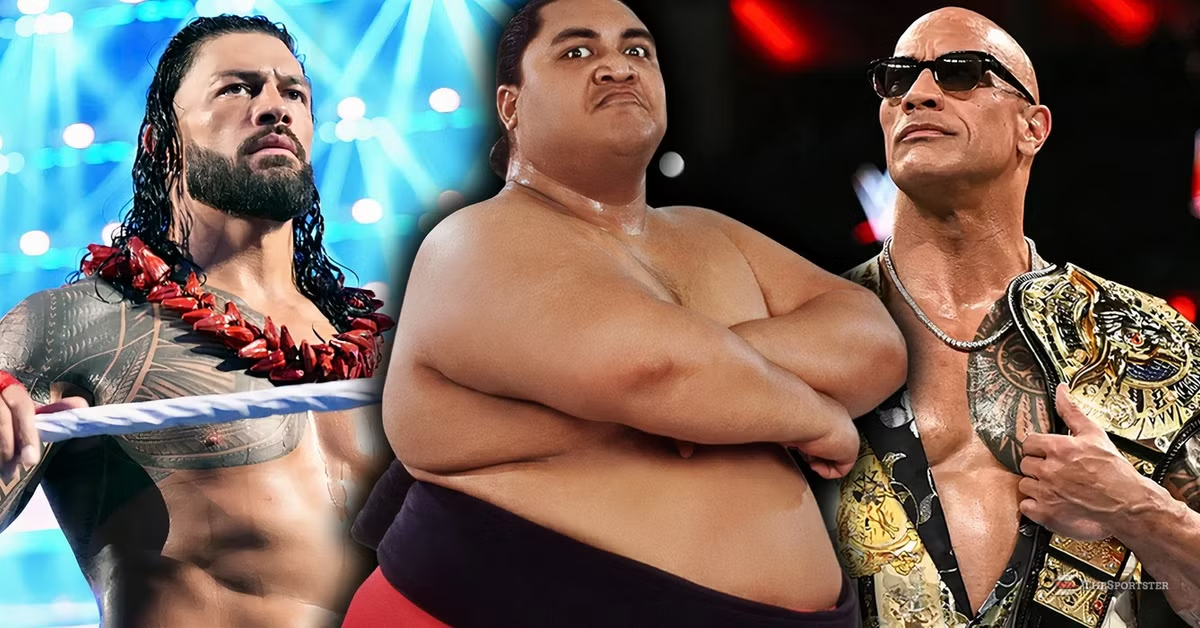
Samoan strength is not a myth or a stereotype. It is a documented, measurable reality that scientists, sports coaches, and anthropologists have studied for decades.
Three core pillars drive this phenomenon — genetics, traditional diet, and cultural values. Each one amplifies the others, creating a population uniquely built for physical power.
Samoan Genetics: The Foundation of Physical Power
The CREBRF Gene Variant
One of the most significant genetic discoveries linked to Samoan strength is the CREBRF gene variant. This variant is found in approximately 26% of Samoans and was identified by researchers at Brown University after studying the genomes of over 5,000 Samoans.
The CREBRF gene causes cells to store energy more efficiently, essentially running the body like a fuel-conserving engine. During the ancient Pacific voyages, this was a survival advantage — carriers could survive longer on scarce food while maintaining the muscle mass needed for ocean labor.
This same gene today helps explain both the remarkable athletic builds seen in Samoan athletes and some of the metabolic health challenges facing Samoan communities in modern food environments.
Lower Myostatin Expression
Research suggests that Polynesian populations, including Samoans, may have genetic baselines that favor lower myostatin expression. Myostatin is the protein that limits muscle growth in the human body.
Lower myostatin levels mean less natural restriction on how much muscle the body builds. This is a significant biological advantage, especially for athletes in contact sports and strength disciplines.
Fast-Twitch Muscle Fiber Composition
Research published in the American Journal of Physical Anthropology indicates that Polynesian populations show higher proportions of Type II, or fast-twitch, muscle fibers. These are the fibers responsible for explosive power, sprinting, and heavy lifting.
Samoans also tend to have shorter limb segments relative to torso length. This structural feature improves mechanical leverage, which is a direct advantage in powerlifting and contact sports like rugby and American football.
Higher Bone Density
Higher average bone density is another documented feature of Samoan physiology. Denser bones support larger muscle attachment points and contribute to the large-framed, broad-shouldered build that is characteristic of many Samoans.
Standard BMI measurements actually overestimate obesity risk in Polynesian populations because a significant portion of higher body mass is lean muscle and bone, not fat. Samoan bodies are built differently at a structural level.
| Genetic Trait | Effect on Strength |
|---|---|
| CREBRF gene variant (~26%) | Efficient energy storage, muscle preservation |
| Lower myostatin expression | Reduced limits on natural muscle growth |
| Higher Type II muscle fibers | Greater explosive power and sprinting ability |
| Higher bone density | Stronger muscle attachment, larger frame support |
| Shorter limb-to-torso ratio | Improved mechanical leverage in lifting |
The Evolutionary History Behind Samoan Strength
3,500 Years of Pacific Voyaging
The ancestors of the Samoan people were among the greatest maritime navigators in human history. Over 3,500 years ago, their ancestors sailed vast stretches of open ocean in outrigger canoes, navigating by stars, wind, and wave patterns.
These voyages could last weeks or months with limited food and water. The physical demands were extreme. Natural selection favored bodies that could generate maximum muscle while running on minimal fuel.
Those who survived carried those genetic advantages forward, generation after generation.
Island Life Built Physical Strength Daily
After settling the Pacific islands, Samoans continued living in demanding physical environments. Farming, fishing, building traditional homes, and navigating inter-island waters all required sustained physical labor every day.
Strength was not a hobby or a gym goal. It was a survival requirement built into every aspect of daily life. This ongoing physical pressure reinforced the genetic traits that made Samoans strong over thousands of years.
Fa’a Samoa: The Cultural Engine of Samoan Strength
What Is Fa’a Samoa?
Fa’a Sāmoa means “The Samoan Way.” It is the cultural system that has governed Samoan life for thousands of years, organizing family, community, religion, and physical service into a unified way of life.
Within this system, the concept of tautua, which means service, is central to Samoan identity. Physical contribution to family and community is not optional — it is how a person earns respect and defines their place in society.
Tautua: Service Through Physical Labor
In traditional Samoan life, tautua was expressed through intense physical work. Fishing required hours of rowing and hauling nets. Agriculture required clearing, planting, and harvesting taro in tropical conditions. Building and maintaining the traditional open-sided fale required heavy timber work.
Preparing a traditional umu, the underground earth oven, for a large community feast required sustained physical labor from the whole village. Children grew up in this environment, developing strength through participation in family and village work from an early age.
The idea of exercising for its own sake would have seemed unnecessary in traditional Samoan life because physical work was so completely woven into ordinary existence.
Warrior Heritage and Cultural Pride in Strength
Samoans also carry a strong warrior heritage. Historically, warrior skill and physical dominance were respected qualities that carried status in Samoan communities. Strong, capable men and women were valued as protectors and providers.
This cultural reverence for physical strength continues today. In Samoa, being big and strong is celebrated, which motivates young Samoans to pursue athletic development and reinforces participation in contact sports from an early age.
The Traditional Samoan Diet: Fuel for Strength
Core Foods That Built the Samoan Physique
The traditional Samoan diet was built entirely around whole foods that supported an active, physically demanding lifestyle. There was no processed food, no refined sugar, and no empty calories.
| Traditional Food | Nutritional Benefit |
|---|---|
| Taro (talo) | Complex carbs, fiber, potassium, sustained energy |
| Breadfruit (ulu) | Complex carbs, vitamins, fiber |
| Fresh ocean fish | High-quality complete protein, omega-3 fatty acids |
| Coconut | Healthy fats, energy-dense calories |
| Pork | Protein, B vitamins, iron |
| Taro leaves (palusami) | Micronutrients, calcium, folate |
How the Diet Supported Muscle Growth
The complex carbohydrates from taro and breadfruit fueled sustained physical work without causing rapid blood sugar spikes. The fresh fish provided high-quality protein for muscle maintenance and repair. The coconut contributed energy-dense fats for caloric sufficiency.
This combination, eaten regularly alongside hours of daily physical activity, naturally supported the development of dense muscle mass and physical endurance. Children growing up on this diet were already building the physical foundation for elite athletic performance.
Modern Dietary Shifts and Health Challenges
The arrival of colonization brought dramatic changes to the Samoan diet. Cheap imported processed foods, refined carbohydrates, and high-sugar products replaced traditional whole foods in many communities. The CREBRF gene, which evolved to store energy during scarcity, now interacts with a calorie-abundant modern food environment in ways that increase health risks.
This explains why Samoan communities face some of the highest rates of obesity-related illness in the world, even as Samoan athletes continue to dominate elite sports. The gene has not changed. The food environment changed rapidly.
Samoan Athletes Dominating World Sports
NFL Dominance: Per Capita Numbers That Shock the World
American Samoa has a population of just over 55,000 people. Despite this tiny population, it consistently produces NFL players at a rate that no other location on earth can match. Samoans are estimated to be up to 56 times more likely to play in the NFL than non-Samoan Americans.
This statistic is staggering. It is not explained by chance or coincidence. It is the direct product of genetics, culture, diet, and the deep integration of sport into Samoan community life.
Famous Samoan Athletes
| Athlete | Sport | Achievement |
|---|---|---|
| Troy Polamalu | NFL (Pittsburgh Steelers) | Pro Football Hall of Famer |
| Junior Seau | NFL (San Diego Chargers) | Pro Football Hall of Famer |
| Dwayne “The Rock” Johnson | WWE / Entertainment | Global icon of Samoan strength |
| Jordan Mailata | NFL (Philadelphia Eagles) | Eagles starting offensive tackle |
| Ele Opeloge | Weightlifting | First Samoan Olympic medalist (Beijing 2008) |
| Nia Jax | WWE Wrestling | Multiple-time champion |
| Roman Reigns | WWE Wrestling | Record-setting Universal Champion |
Rugby and International Sports
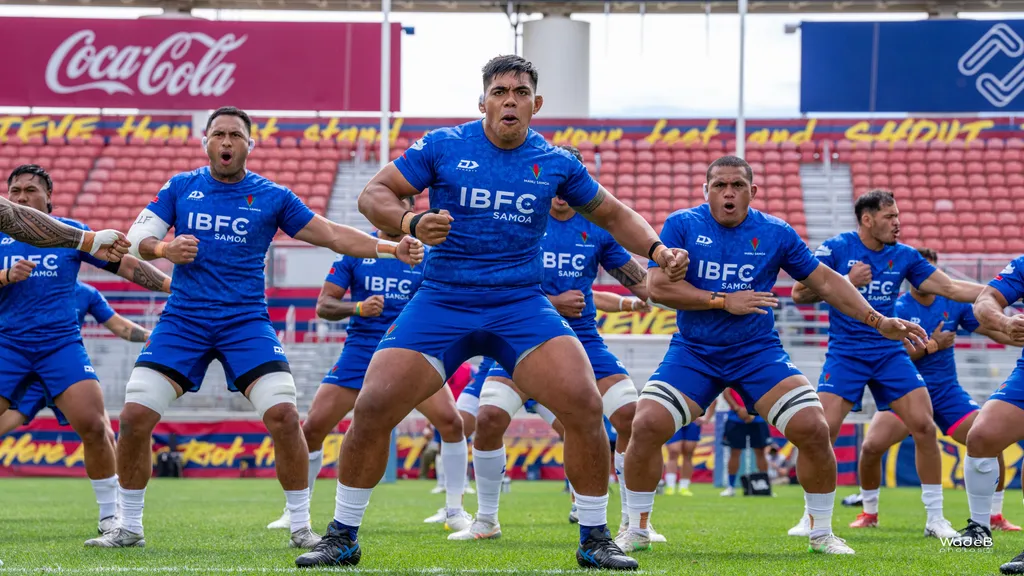
In rugby, Samoans and Polynesian athletes are wildly overrepresented at the elite international level relative to their global population. The Samoa national rugby team regularly competes against and defeats nations with populations many times larger.
The Anoa’i wrestling dynasty, originating from a single Samoan family, produced over a dozen internationally famous professional wrestlers, including members who became some of the biggest stars in WWE history. This one family’s dominance illustrates how Samoan cultural cohesion and athletic genetics compound across generations.
Why Samoan Children Develop Strength Early
Physical Activity From Childhood
Samoan children are not sent to the gym to build strength. They build it through daily participation in family and community life. Carrying, fishing, farming, dancing traditional dances like the siva and sasa, swimming in ocean waters, and playing rugby from early ages all contribute.
These activities stimulate growth hormone release and promote musculoskeletal development during the critical growth years. By the time a young Samoan enters organized athletics, the physical foundation is already well developed.
Sports Culture and Role Models
Samoans also grow up with a rich tradition of athletic role models. Seeing fellow Samoans succeed in the NFL, rugby, wrestling, and strength sports motivates future generations to train harder and take their natural builds seriously as athletic assets.
Coaches frequently scout youth rugby and football tournaments in Samoan communities, creating structured pathways that reward and channel physical development into elite competition.
Samoan Physique Characteristics
Frame, Size, and Body Composition
Samoans typically have light brown skin, larger body frames, broader builds, and a naturally heavier body composition compared to many other ethnic groups. Adult Samoan men often stand between 5’10” to 6’1″ with substantial body mass that includes significant lean muscle and bone.
The combination of larger frame, higher bone density, and fast-twitch muscle fiber prevalence creates a physique that is naturally aligned with the physical demands of contact sports and strength disciplines.
How Samoan Physique Differs From Other Ethnic Groups
The structural differences in Samoan bodies go beyond simple size. Shorter limb-to-torso ratios improve leverage in power movements. Higher bone density creates stronger structural foundations. Greater natural muscle mass means a higher baseline from which training can build.
These are not superficial differences. They are physiological characteristics shaped by thousands of years of selection pressure across the Pacific.
Myostatin, Hormones, and Muscle Science
The Role of Myostatin in Limiting Muscle Growth
In most humans, the protein myostatin actively limits how much muscle the body will build. It acts as a natural brake on muscle growth to prevent the body from building more muscle than it needs to sustain.
Evidence suggests Samoans may carry genetic variants that result in lower myostatin activity. Less myostatin means less restriction on muscle growth, which allows the body to build and retain more lean muscle mass naturally, even without intense structured training.
Hormonal and Endocrine Factors
Population differences in hormone profiles, including growth hormone and testosterone levels, as well as metabolic set points, can also influence muscle and bone development. These endocrine factors are complex and interact with nutrition, physical activity, and genetics.
Research in this area is still developing, but the combination of hormonal profiles, genetic variants, and lifestyle factors all contribute to the distinctive physical capacity seen in Samoan populations.
Comparing Samoan Strength to Other Polynesian Groups
Samoans share their Polynesian heritage with Tongans, Fijians, Hawaiians, and Maori people of New Zealand. All these groups share some of the same genetic traits and physical characteristics, including larger body frames and higher muscle mass compared to global averages.
Tongans and Samoans are frequently compared in contact sports, with both groups producing elite-level players in rugby and American football far out of proportion to their population sizes.
The shared evolutionary history of Pacific voyaging, island farming, and warrior culture created similar physical traits across Polynesia, though Samoans have been particularly prominent in international sport due to their deep connection to American Samoa and the US military presence that opened pathways to American football.
The Intersection of Genetics and Modern Training
What Happens When Samoan Genetics Meet Structured Training
Jordan Mailata, the Philadelphia Eagles offensive tackle, is a modern example of what happens when Samoan genetics meet organized strength training. Born in Sydney to Samoan parents, Mailata grew up playing rugby but had no formal strength training until his late teens.
When NFL scouts noticed him, his raw size and power were immediately apparent. His body responded rapidly to structured training in ways that surprised even experienced coaches. Coaches attributed his development not just to coaching, but to a genetic and cultural foundation that made his body uniquely receptive to strength development.
Natural Strength Versus Trained Strength
It is important to note that not every individual of Samoan descent will be exceptionally strong. Genetics provide a predisposition, but actual strength depends on lifestyle, training, nutrition, and personal effort.
What genetics do provide is a higher starting point and a more favorable response to training. Samoan athletes often respond faster to structured strength programs, build muscle more readily, and maintain higher baseline strength levels than athletes from populations without these genetic advantages.
Common Myths About Samoan Strength
Myth: All Samoans Are Naturally Huge
Not every Samoan is an exceptionally large or strong individual. Population trends show higher averages in muscle mass and power output, but individuals vary widely. Genetics set a range of possibilities, and lifestyle determines where within that range a person lands.
Myth: Samoan Strength Is Only About Size
Size is one factor. But the real drivers of Samoan athletic dominance include fast-twitch fiber composition, bone density, cultural work ethic, early physical development, and genetic variants that affect both muscle growth and energy metabolism.
Myth: Modern Samoan Obesity Contradicts Their Strength
The same CREBRF gene that helped ancestors survive Pacific voyages now interacts differently with modern processed food environments. Obesity and elite strength can coexist in the same population when genetics are the same but the food environment has dramatically changed. These are not contradictions. They are two outcomes of the same biology in different contexts.
Key Takeaways: Why Are Samoans So Strong
- The CREBRF gene variant found in 26% of Samoans promotes efficient energy storage and muscle preservation
- Lower myostatin expression allows greater natural muscle development
- Higher proportions of Type II fast-twitch muscle fibers enable explosive power
- Greater bone density creates a stronger structural foundation
- Traditional diets of taro, fish, breadfruit, and coconut supported muscle growth naturally
- Fa’a Samoa and tautua (service culture) created lifelong physical conditioning
- 3,500 years of Pacific voyaging created evolutionary pressure favoring strength
- American Samoa produces NFL players at up to 56 times the rate of non-Samoan Americans
- Sport culture, warrior heritage, and role models drive early athletic development
10 Frequently Asked Questions
Why are Samoans so strong compared to other ethnicities?
Samoans carry specific genetic variants including the CREBRF gene and lower myostatin expression combined with a warrior culture, traditional whole-food diet, and lifelong physical labor that create exceptional natural strength.
Is Samoan strength genetic or cultural?
It is both working together. Genetics provide the physical blueprint while Fa’a Samoa and tautua service culture provide the motivational engine that activates and maximizes that genetic potential throughout life.
What is the CREBRF gene and how does it affect Samoan strength?
The CREBRF gene variant, found in roughly 26% of Samoans, promotes efficient energy storage and muscle preservation. It evolved as a survival advantage during long Pacific ocean voyages on scarce food supplies.
Why are Samoans so good at football and rugby?
Samoans have larger frames, higher bone density, fast-twitch muscle fiber prevalence, and a cultural background that builds physical toughness from childhood, making their bodies naturally suited for contact sports.
How does the traditional Samoan diet support muscle growth?
Traditional Samoan foods including taro, fish, breadfruit, and coconut provide complex carbohydrates, high-quality protein, and healthy fats that naturally fueled sustained physical labor and muscle development.
Are all Samoans physically strong?
Not every individual Samoan will be exceptionally strong. Genetics provide a favorable predisposition, but actual strength depends on diet, lifestyle, training, and individual effort.
Why do Samoans dominate the NFL per capita?
American Samoa produces NFL players at up to 56 times the rate of non-Samoan Americans due to a combination of favorable genetics, strong sports culture, early physical conditioning, and deep community investment in athletic development.
What is Fa’a Samoa and how does it contribute to strength?
Fa’a Samoa means The Samoan Way. It is the cultural system that made physical service through farming, fishing, and building a daily requirement, naturally developing community-wide physical strength as a byproduct.
Do Samoans have higher bone density than other groups?
Yes. Higher average bone density is a documented feature of Polynesian physiology. This supports larger muscle attachment points and contributes to the large-framed physical appearance common in Samoans.
Why do some Samoans have obesity if they are so strong?
The same CREBRF gene that helped ancestors survive on scarce food now promotes fat storage in modern high-calorie food environments. Elite athletic strength and population-level obesity can coexist when the genetic code is the same but the food environment has changed dramatically.
Conclusion
Why are Samoans so strong is a question with a rich, layered answer rooted in thousands of years of evolutionary history, cultural tradition, and genetic advantage. The CREBRF gene variant, lower myostatin expression, higher bone density, and fast-twitch muscle fiber prevalence all create a biological foundation that sets Samoans apart. The traditional diet of taro, fish, breadfruit, and coconut fueled generations of physically demanding daily life. Fa’a Samoa and the concept of tautua made physical service to family and community a lifelong practice that built strength as a natural byproduct.
The result is a population that punches far above its weight in elite sports, producing NFL players, Olympic weightlifters, and professional wrestlers at rates that astonish the world. Samoan strength is not a coincidence. It is the product of ancient biology meeting a culture that has always honored physical power, communal service, and resilience. Understanding it means understanding one of the most remarkable stories in human physical development.


