

Peace in Christ sheet music is one of the most sought-after Christian worship songs for pianists, vocalists, and church choirs worldwide.
Composed by Nik Day and selected as the 2018 Mutual Theme Song by The Church of Jesus Christ of Latter-day Saints, this beautiful hymn delivers a powerful message of hope, strength, and faith through Christ.
Whether you’re a beginner learning basic chords or an advanced musician looking for complex arrangements, this guide provides everything you need to download, learn, and perform this inspiring piece. From free PDF downloads to step-by-step playing instructions, we’ll help you master this beloved song in 2026.
About Peace in Christ Song
“Peace in Christ” was written and composed by Nik Day in 2017. The song was officially released in 2018 as part of the youth theme for that year.
The song’s message is based on the scripture from Doctrine and Covenants 19:23: “Learn of me, and listen to my words; walk in the meekness of my Spirit, and you shall have peace in me.” This powerful verse became the foundation for the entire composition.
The lyrics beautifully express how Christ offers peace during life’s storms. The song reminds us that even when there’s no peace on earth, we can find peace in Christ by learning of Him, feeling His love, and listening to His words.
Composer Background – Nik Day
Nik Day is a talented Christian music artist who specializes in writing inspirational and worship music. He has created numerous songs that inspire faith and spiritual growth.
His composition “Peace in Christ” became his most popular work. The song touched hearts worldwide and was adopted by millions of church members and Christian music lovers.
Nik Day’s musical style blends contemporary pop elements with traditional hymn structures. This makes his music appealing to both young and older audiences. His ability to create meaningful worship music has made him a respected figure in Christian music circles.
Where to Find Peace in Christ Sheet Music
Official Church Website
The Church of Jesus Christ of Latter-day Saints offers the official sheet music on their website at churchofjesuschrist.org. This is the most authoritative source for the original arrangement.
The official version includes piano accompaniment and vocal melody. It’s free to download for personal and church use. The copyright notice states that the song may be copied for incidental, noncommercial home or church use.
MuseScore Platform
MuseScore.com hosts multiple arrangements of “Peace in Christ.” Users have uploaded various versions including piano solo, piano and violin, and choir arrangements.
These arrangements range from beginner to advanced levels. You can download them in PDF or MIDI format for free. The interactive scores allow you to listen before downloading.
Some popular MuseScore arrangements include a simplified version by clarsen6 and an intermediate arrangement by erlenejd. Each version offers different difficulty levels to match your skill.
Sacred Sheet Music Website
SacredSheetMusic.org features several community-created arrangements. Carter Larsen’s piano solo version has been viewed over 22,000 times and downloaded more than 7,000 times.
Amber Gurr created an SAB (Soprano, Alto, Bass) choir arrangement. This version is perfect for small church choirs who want three-part harmony.
The website allows free downloads for personal and church use. All arrangements respect the original copyright while offering fresh interpretations.
Special Musical Numbers
SpecialMusicalNumbers.com offers an easy beginner version arranged by W. Michael Boyd. This simplified arrangement is perfect for young pianists or those just starting to learn.
The easy version simplifies the piano interlude section. This makes it more accessible for youth pianists to play as accompaniment while others sing.
The Red Headed Hostess
The Red Headed Hostess website sells a professional arrangement by Hilary Weeks. While not free, this version offers high-quality sheet music with a licensing system.
One license allows you to use it for yourself or your household. Additional licenses can be purchased if you want to distribute copies to your choir or class.
Types of Sheet Music Arrangements Available
Piano Solo Arrangements
Piano solo versions allow you to play the entire song on piano without vocals. These arrangements combine the melody with harmonies and bass lines.
Difficulty levels range from late beginner to advanced. Beginner versions simplify chord progressions and reduce hand stretches. Advanced versions include more complex harmonies and embellishments.
Piano solos are perfect for prelude music, postlude music, or personal meditation time. They capture the song’s peaceful essence through instrumental performance alone.
Piano and Vocal (Lead Sheet)
The standard piano and vocal arrangement includes the melody line with lyrics plus piano accompaniment. This is the most common format for this song.
The piano part supports the vocalist with chords and rhythmic patterns. The vocal line clearly shows the melody and all the words.
This arrangement works well for solo performances in church services, devotionals, or special musical numbers. The singer can perform while accompanying themselves or with a separate pianist.
Choir Arrangements (SATB, SAB)
Choir versions arrange the song for multiple voice parts. SATB arrangements include Soprano, Alto, Tenor, and Bass parts for full mixed choirs.
SAB arrangements (Soprano, Alto, Bass) work for smaller choirs or groups without tenor singers. These three-part harmonies still create beautiful full sound.
Choir arrangements often include piano accompaniment to support the singers. Some versions add optional violin or cello parts for enhanced instrumentation.
Instrumental Arrangements
Some arrangements feature instruments beyond piano. Piano and violin combinations are particularly popular for this song.
The violin adds a soaring melodic line above the piano foundation. This creates an emotionally powerful performance perfect for weddings, funerals, or special worship services.
Other instrumental options might include cello, flute, or guitar accompaniment. Each instrument brings its own character to the song’s message of peace.
Understanding the Sheet Music Format
Key Signature
The original “Peace in Christ” is written in B-flat major. This key has two flats (B-flat and E-flat) in the key signature.
B-flat major is a comfortable vocal key for most singers. It sits in a moderate range that’s not too high or too low.
Some arrangements transpose the song to different keys. Common alternatives include C major (for beginners with no sharps or flats) and G major (for a brighter sound).
Time Signature
The song uses 4/4 time signature, also called “common time.” This means four beats per measure with a quarter note receiving one beat.
The steady 4/4 rhythm creates a flowing, peaceful feel. This matches the song’s message perfectly and makes it easy to follow.
The tempo is moderate, neither too fast nor too slow. This allows the meaningful lyrics to be clearly heard and contemplated.
Chord Progressions
The main chords used include B-flat, E-flat, A-flat, and C minor 7. These chords create the song’s warm, comforting harmonic foundation.
The chord progression follows traditional patterns that sound familiar and pleasing. This makes the song easier to learn and remember.
For guitarists, these chords can be played with or without a capo. Using a capo on the 3rd fret and playing in G major shapes makes it easier for beginners.
How to Download Peace in Christ Sheet Music
Free PDF Downloads
Many websites offer free PDF downloads of “Peace in Christ” sheet music. Always verify that downloads respect copyright laws for personal and church use.
To download from MuseScore, create a free account and click the download button. Choose PDF format for printing or MIDI format for digital playback.
From the official church website, navigate to the media library and search for “Peace in Christ.” The official version downloads directly as a PDF file.
MIDI Files
MIDI files allow you to hear the song played digitally. These files can be imported into music software like GarageBand, FL Studio, or MuseScore.
MIDI files help you learn the song by hearing each part separately. You can slow down the tempo to practice difficult sections.
Many sheet music platforms offer both PDF and MIDI downloads together. This gives you the visual score and the audio playback for comprehensive learning.
Print Quality Considerations
When downloading sheet music, ensure the PDF is high resolution for clear printing. Low-quality scans can be difficult to read, especially for small notes.
Print on standard 8.5″ x 11″ paper or A4 size paper. Use heavier paper (24 lb or higher) for music that will be used frequently.
Consider using a three-hole punch and binder to organize your sheet music. This keeps pages together and prevents them from getting lost or damaged.
Learning to Play Peace in Christ on Piano
For Beginners
Start with the simplified “easy version” arrangements. These versions reduce complex chords to basic triads and simplify rhythmic patterns.
Practice hands separately first. Learn the right-hand melody until you can play it from memory. Then add the left-hand accompaniment.
Focus on the main sections before tackling the piano interlude. The verses and chorus use repetitive patterns that are easier to master.
Use a metronome to maintain steady tempo. Start slowly at 60 beats per minute and gradually increase speed as you gain confidence.
For Intermediate Players
Intermediate pianists can handle the standard arrangement with full chords and moderate difficulty passages. Work on smooth transitions between chord changes.
Pay attention to dynamics (loud and soft playing). The song should start gently, build during the chorus, and return to softness for verses.
Practice the piano interlude section separately. This instrumental break often contains the most challenging passages with runs and arpeggios.
Add expression through rubato (slight tempo flexibility) and pedaling. Use the sustain pedal to connect chords smoothly while avoiding muddy sound.
For Advanced Players
Advanced musicians can add embellishments and improvisations to the basic arrangement. Create your own variations while respecting the song’s peaceful character.
Experiment with different voicings of chords. Spread chords across both hands or use jazz-influenced chord extensions like 9ths and 13ths.
Consider creating your own arrangement that showcases your technical abilities. Add flourishes, modulations, or reharmonizations that enhance the emotional impact.
Vocal Performance Tips
Understanding the Lyrics
The lyrics tell a story of finding peace through Christ. Each verse introduces different aspects of how Christ provides comfort and strength.
Verse 1 speaks of learning about Christ and feeling His love. Verse 2 describes Christ as our hope and shelter in life’s storms.
The bridge takes us on a journey walking with Christ through the streets of Galilee. It reminds us to mend broken hearts and dry tear-filled eyes.
Understanding the meaning helps you sing with authentic emotion. Let the words touch your heart before you try to touch others’ hearts.
Vocal Range Requirements
The melody spans approximately one octave and a third. The lowest note is around F3 and the highest note reaches around A4 or B-flat 4.
This range is comfortable for most sopranos, altos, and even some tenors. Baritones and basses may need to transpose down a few steps.
If the key is too high or low for your voice, don’t struggle. Use a different arrangement in a more suitable key or have your accompanist transpose.
Breathing and Phrasing
Take breaths at natural phrase endings, typically at commas and ends of lines. Don’t break in the middle of important words or phrases.
Support longer phrases with proper breath control. Use your diaphragm to maintain steady airflow throughout each musical phrase.
The song’s moderate tempo allows for comfortable breathing. Plan your breath marks during practice so you’re not caught without air during performance.
Emotional Expression
Sing with sincerity and conviction. This is a worship song that should come from your heart, not just your voice.
Start softly and intimately, as if sharing a personal testimony. Build intensity during the chorus to express confidence and faith.
Return to gentleness for the bridge section. The words about walking with Christ and helping others call for tenderness.
Using Peace in Christ in Church Services
As a Congregational Hymn
While not in the official hymnbook, many congregations sing “Peace in Christ” together. Provide printed lyrics or project them on a screen.
Choose a key that works for the average congregation member. C major or B-flat major work well for group singing.
Have the pianist play through the melody once as an introduction. This helps people learn the tune before singing.
As a Special Musical Number
“Peace in Christ” makes an excellent special musical performance. Solo vocalists can perform it with piano or instrumental accompaniment.
Small ensembles or duets also work beautifully. Two or three voices singing in harmony add richness without requiring a full choir.
Consider performing it during sacrament services, youth devotionals, or special meetings. The message fits many worship contexts.
For Youth Programs
This song was specifically chosen as a youth theme song. It resonates powerfully with teenagers and young adults facing modern challenges.
Youth choirs can perform choir arrangements during youth conferences or stake activities. The message empowers young people to seek peace through faith.
Young pianists can accompany while peers sing. This gives youth opportunities to develop musical talents while serving.
Copyright and Legal Considerations
Official Copyright Information
“Peace in Christ” is © 2017 by Intellectual Reserve, Inc. All rights reserved. This means the song is protected by copyright law.
However, the copyright notice specifically states: “This song may be copied for incidental, noncommercial home or church use.” This notice must appear on each copy made.
This generous permission allows churches and individuals to use the song freely. You can make copies for your choir, class, or worship service without purchasing licenses.
Permitted Uses
You may copy the sheet music for church choirs and worship services.
Essentially, any noncommercial religious use is allowed. This includes online sharing for worship purposes, as long as the copyright notice is included.
Restricted Uses
You cannot sell copies of the sheet music or charge for downloads. Commercial use requires permission from Intellectual Reserve, Inc.
You cannot modify the song and claim it as your own original work. Arrangements should credit both Nik Day as composer and Intellectual Reserve, Inc. as copyright holder.
You cannot use the song in commercial recordings or productions without proper licensing. Professional recordings require different permissions.
Creating Your Own Arrangement
Transposing to Different Keys
Transposing means moving the entire song to a different key. This adjusts the pitch to suit different voice ranges or instruments.
To transpose, move every note up or down by the same interval. If transposing from B-flat to C, move everything up one whole step.
Music notation software like MuseScore, Finale, or Sibelius can transpose automatically. Simply select all notes and choose your desired key.
Simplifying for Beginners
Remove complex chords and use basic triads. Replace chord extensions with simple root position chords.
Simplify rhythms by removing syncopation. Convert sixteenth notes to eighth notes and reduce hand independence requirements.
Reduce the range to keep both hands closer to middle C. This prevents large hand position shifts that challenge beginners.
Adding Complexity for Advanced Players
Add chord extensions like 7ths, 9ths, and suspended chords. These create richer harmonies for sophisticated listeners.
Include arpeggios and scale runs during interludes. Add trills, mordents, and other ornamentations to showcase technical skill.
Experiment with reharmonization by changing chord progressions. Maintain the melody but explore different harmonic pathways.
Digital Tools for Learning

Music Notation Software
MuseScore is free, open-source software for viewing, editing, and creating sheet music. It supports playback, transposition, and exporting to multiple formats.
Finale and Sibelius are professional-level programs. They offer more advanced features but require purchase. Both can import MIDI files and export publication-quality PDFs.
Flat.io is a web-based notation tool. No download required—just open your browser and start editing sheet music online.
Piano Learning Apps
Simply Piano and Flowkey connect to your keyboard via MIDI or use your device’s microphone. They provide real-time feedback as you practice.
These apps can display “Peace in Christ” sheet music and guide you through learning. They highlight which notes to play and wait for correct notes before advancing.
La Touche Musicale offers AI-powered piano learning. You can import sheet music and learn through interactive lessons.
YouTube Tutorials
Many musicians have created tutorial videos teaching “Peace in Christ.” These videos show hand positions, fingerings, and performance techniques.
Watch tutorials multiple times, pausing to practice difficult sections. Slow down playback speed to see exactly how each passage is played.
Some channels offer separate right-hand and left-hand tutorials. This helps you learn each part individually before combining them.
Audio Transcription Tools
PianoConvert uses AI to transcribe piano music from YouTube videos or audio files. Upload a performance and receive sheet music in PDF, MIDI, and XML formats.
While not perfect, AI transcription has improved significantly. It works best for clear recordings with minimal background noise.
Use transcription tools to create your own arrangements from performances you love. Start with the AI output and refine it manually.
Performance Preparation Checklist
Practice Schedule
Begin preparation at least 3-4 weeks before your performance. Practice 20-30 minutes daily rather than long sessions once weekly.
- 1st Week : Learn notes and basic rhythms hands separately.
- 2nd Week: Combine hands and work on tempo.
- 3rd Week: Add dynamics, expression, and polish difficult passages.
- 4th Week: Perform complete run-throughs and address any remaining issues.
Equipment and Setup
Ensure the performance piano is properly tuned. An out-of-tune piano distracts from the song’s message.
Adjust the bench height so your arms are parallel to the floor. Proper posture prevents fatigue during longer performances.
If using amplification for vocals, test sound levels beforehand. Balance the piano volume with the vocal volume.
Managing Performance Anxiety
Practice performing for family or friends before the actual event. This simulates performance pressure in a safe environment.
Use deep breathing techniques before performing. Take slow, deep breaths to calm nerves and center your focus.
Remember that you’re sharing a message of peace. Focus on that message rather than on yourself, which reduces anxiety.
Alternative Versions and Covers
Hilary Weeks Version
Hilary Weeks created her own arrangement of “Peace in Christ.” Her version features different instrumentation and vocal styling.
Her interpretation brings a softer, more intimate quality. The arrangement includes strings and subtle percussion.
Sheet music for Hilary Weeks’ version is available through The Red Headed Hostess website. It includes both the vocal melody and piano reduction.
Instrumental Covers
Various artists have created instrumental versions using piano, violin, cello, and guitar. These instrumental renditions work beautifully for meditation and background music.
Piano solo covers range from simple to virtuosic. Some pianists add improvised sections that expand beyond the original composition.
String quartet arrangements create a classical feel. The interweaving of violin, viola, and cello parts adds depth and richness.
Contemporary Arrangements
Some artists have modernized the song with contemporary Christian music production. These versions include drums, bass, and electric instruments.
Modern arrangements appeal to younger audiences familiar with contemporary worship styles. The core message remains while the musical presentation evolves.
Acoustic arrangements feature guitar instead of piano. These create a more casual, intimate atmosphere perfect for smaller gatherings.
Teaching Peace in Christ to Others
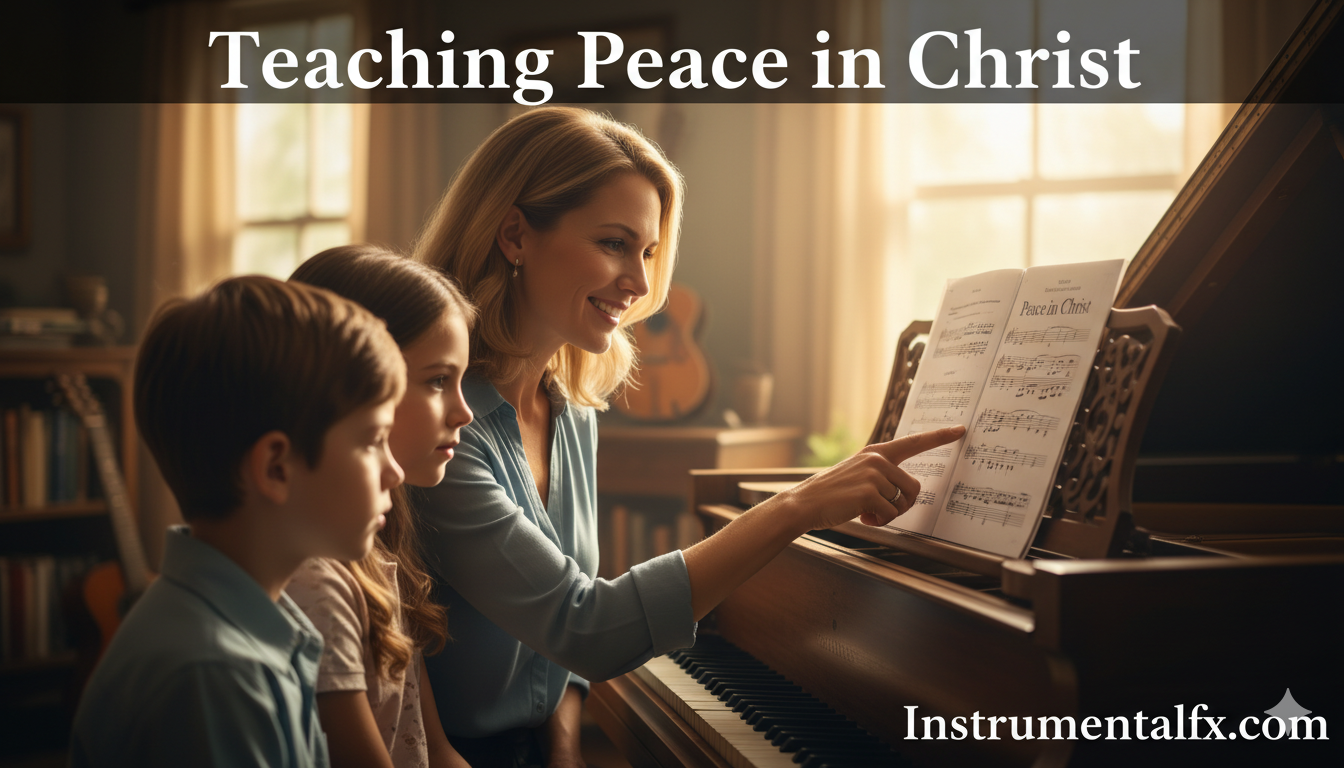
For Piano Teachers
Select arrangement difficulty based on student level. Beginners need simplified versions; advanced students can handle the full arrangement.
Break the song into manageable sections. Teach verse, chorus, and bridge separately before combining them.
Use the song to teach musical concepts like chord progressions, dynamics, and emotional expression. It’s an excellent teaching tool beyond just learning notes.
For Choir Directors
Distribute sheet music at least two weeks before the first rehearsal. This allows singers to familiarize themselves with the melody and lyrics.
Start by teaching the melody to all voice parts. Once everyone knows the tune, introduce harmony parts gradually.
Use sectional rehearsals for complex harmonies. Work with sopranos, altos, and basses separately before bringing parts together.
Record rehearsals and share them with choir members. They can practice their parts at home by listening to recordings.
For Music Ministers
Introduce the song to your congregation by sharing its background and message. Explain the scripture connection and the composer’s intent.
Project lyrics on screens for congregational singing. Use large, easy-to-read fonts so everyone can participate.
Consider creating a rotation of different arrangements. Alternate between piano solo, choir version, and congregational singing to maintain interest.
Frequently Asked Questions (FAQs)
Where can I download Peace in Christ sheet music for free?
You can download free Peace in Christ sheet music from the official Church of Jesus Christ website (churchofjesuschrist.org), MuseScore.com, or SacredSheetMusic.org. These sources offer PDF downloads for personal and church use with proper copyright notices included.
What key is Peace in Christ written in?
The original Peace in Christ is written in B-flat major with two flats (B-flat and E-flat). However, various arrangements transpose the song to other keys like C major or G major to accommodate different vocal ranges and skill levels.
Is Peace in Christ sheet music copyright protected?
Yes, Peace in Christ is copyrighted by Intellectual Reserve, Inc. (© 2017). However, the copyright allows free copying for incidental, noncommercial home or church use, meaning you can legally use it for worship services and personal practice.
What difficulty level is Peace in Christ for piano?
Peace in Christ piano sheet music comes in multiple difficulty levels. Beginner versions simplify chords and rhythms, intermediate versions follow the standard arrangement, and advanced versions include complex harmonies and embellishments for experienced pianists.
Can I use Peace in Christ sheet music in my church service?
Absolutely! The copyright explicitly permits noncommercial church use. You can perform it in services, make copies for choir members, and use it for worship purposes as long as you include the required copyright notice on all copies.
Who composed Peace in Christ?
Peace in Christ was composed by Nik Day in 2017. The song was selected as the 2018 Mutual Theme Song for youth members of The Church of Jesus Christ of Latter-day Saints and has since become popular in Christian worship worldwide.
Are there choir arrangements of Peace in Christ available?
Yes, multiple choir arrangements exist including SATB (four-part) and SAB (three-part) versions. These can be found on MuseScore, SacredSheetMusic.org, and other Christian music sites, offering free downloads for church choirs.
Can I transpose Peace in Christ to a different key?
Yes, you can transpose Peace in Christ to any key that suits your vocal range or instrumental needs. Music notation software like MuseScore makes transposition easy, or you can manually transpose the chords if playing by ear.
Is there a simplified version for beginner piano students?
Yes, several simplified versions exist specifically for beginners. SpecialMusicalNumbers.com offers an easy version arranged by W. Michael Boyd, and MuseScore has late-beginner arrangements that reduce technical difficulty while maintaining the song’s beauty.
What is the scripture reference for Peace in Christ?
Peace in Christ is based on Doctrine and Covenants 19:23 which states: “Learn of me, and listen to my words; walk in the meekness of my Spirit, and you shall have peace in me.” This scripture formed the 2018 Mutual Theme.
Conclusion
Peace in Christ sheet music offers musicians of all skill levels an opportunity to share a powerful message of hope, comfort, and faith through beautiful music.
Whether you’re searching for a simple beginner arrangement to learn basic piano skills or an advanced version to showcase your musical talents, numerous free and accessible options exist online.
From the official Church website to community platforms like MuseScore and SacredSheetMusic.org, finding the perfect arrangement for your needs has never been easier in 2026.
The song’s generous copyright permissions allow free use for personal worship and church services, making it truly accessible to everyone who wants to learn and perform it.


