


Mia and Sebastian’s theme sheet music remains one of the most sought-after piano pieces in 2026, captivating musicians worldwide with its hauntingly beautiful melody.
Composed by the Academy Award-winning Justin Hurwitz for the critically acclaimed film “La La Land,” this romantic theme has become a staple in piano repertoires across all skill levels.
Whether you’re a beginner taking your first steps into movie music or an advanced pianist looking to master this emotional piece, finding the right arrangement and understanding its nuances is essential.
This comprehensive guide explores everything about Mia & Sebastian’s Theme sheet music, from where to find quality arrangements to detailed playing techniques that will help you bring this beloved melody to life.
Understanding Mia & Sebastian’s Theme
The composition stands as one of Justin Hurwitz’s most recognizable works from the 2016 film “La La Land.” The piece captures the essence of the characters’ relationship through its tender, waltz-like structure. Written in 3/4 time signature, the theme reflects the bittersweet romance between Mia and Sebastian.
The original key is A Major, though various arrangements transpose it to different keys for accessibility. The melody interweaves between both hands, creating a conversation-like dialogue that mirrors the film’s narrative. This compositional choice makes the piece particularly expressive and emotionally resonant.
Justin Hurwitz crafted this theme to be both simple enough to be memorable and complex enough to convey deep emotion. The piece appears multiple times throughout the film’s soundtrack, including in “Late for the Date” and during the film’s emotional epilogue. This recurring motif helps tie the entire narrative together musically.
Where to Find Mia & Sebastian’s Theme Sheet Music
Finding authentic and high-quality sheet music is crucial for proper learning and performance. Multiple reputable sources offer various arrangements suited to different skill levels. Let’s explore the most reliable options available in 2026.
Official Sheet Music Publishers
Musicnotes.com offers officially licensed arrangements from Hal Leonard, the primary publisher of La La Land music. Their digital platform provides instant PDF downloads with interactive features. You can transpose the sheet music to different keys directly through their interface, making it adaptable to your comfort level.
MuseScore.com features both official licensed versions and community-created arrangements. The platform allows you to view, play, and download sheet music in PDF and MIDI formats. Their official versions are professionally transcribed and vetted for accuracy, ensuring you’re learning the correct notes and rhythms.
Hal Leonard Corporation publishes the complete La La Land songbook, which includes Mia & Sebastian’s Theme along with nine other pieces from the film. This physical book offers high-quality print and professional arrangements by Phillip Keveren and other renowned arrangers.
Digital Sheet Music Platforms
Virtual Sheet Music provides intermediate-level arrangements with interactive features. Their version includes tempo adjustment tools and practice aids that help you gradually build up speed. The platform also offers playback functionality so you can hear how the piece should sound before attempting it yourself.
Playground Sessions offers an interactive learning experience specifically designed for Mia & Sebastian’s Theme. Their arrangement includes hand demonstrations, real-time feedback, and adjustable tempo controls. This makes it particularly useful for self-taught pianists who benefit from visual guidance.
Sheet Music Plus stocks multiple arrangements ranging from easy piano to advanced concert versions. They offer both digital downloads and physical sheet music shipping. Their catalog includes piano solo, piano/vocal/guitar, and even orchestral arrangements for those interested in ensemble performances.
Free Sheet Music Resources
MuseScore Community hosts numerous user-submitted arrangements of varying difficulty. While these aren’t officially licensed, many are accurate transcriptions created by talented musicians. Always verify the accuracy by comparing with the original recording before committing to learning from free sources.
IMSLP (International Music Score Library Project) occasionally features La La Land arrangements, though availability varies. This platform focuses primarily on public domain works, so newer arrangements appear less frequently but are worth checking periodically.
Piano-focused blogs and websites like ThePianoNotes.com often share simplified arrangements and tutorials. These resources are particularly helpful for beginners who need visual aids and simplified notation alongside the standard sheet music.
Difficulty Levels and Arrangements Available
Mia & Sebastian’s Theme sheet music comes in multiple difficulty levels, each tailored to specific skill sets. Understanding which arrangement matches your current ability ensures an enjoyable learning experience without frustration or boredom.
Beginner Level Arrangements
Beginner versions simplify the melody to single-note sequences in the right hand with basic chord progressions in the left. These arrangements typically stay in one position, minimizing hand movement across the keyboard. The tempo is slower, around 60-70 BPM, allowing new pianists to focus on note accuracy and rhythm.
Simple arrangements often include finger numbering above each note, helping beginners develop proper technique from the start. The left hand usually plays whole notes or half notes, providing a steady harmonic foundation. These versions make the iconic melody accessible to those with just 6-12 months of piano experience.
Some beginner arrangements use a simplified key signature, often C Major instead of the original A Major. This reduces the number of sharps students must navigate, making sight-reading easier for novices still learning key signatures.
Early Intermediate Arrangements
Early intermediate versions introduce more movement between hand positions while maintaining a manageable tempo. The right hand begins to incorporate simple octave jumps and basic melodic embellishments. Left-hand patterns become slightly more complex, moving from block chords to broken chord patterns like Alberti bass.
These arrangements typically include some pedaling instructions, teaching students how to create the flowing, romantic sound essential to this piece. Dynamic markings become more specific, encouraging expressive playing rather than mechanical note-reading.
The tempo increases to 70-80 BPM, closer to the film version’s emotional pacing. Students with 1-2 years of consistent practice usually find these arrangements appropriately challenging yet achievable.
Intermediate Level Arrangements
Standard intermediate arrangements represent the most popular versions of Mia & Sebastian’s Theme. These stay relatively faithful to the original recording while remaining accessible to pianists with solid fundamentals. The right hand features the complete melody with grace notes and gentle embellishments.
Left-hand accompaniment patterns become more sophisticated, incorporating arpeggios and varied rhythmic figures that add depth to the harmonic texture. Both hands frequently play together in counterpoint, creating the dialogue effect that makes this piece so emotionally compelling.
Pedaling becomes crucial at this level, with specific markings indicating when to depress and release the sustain pedal. Proper pedaling creates the seamless, flowing quality characteristic of the theme’s romantic sound. The arrangement includes nuanced dynamic changes from pianissimo to mezzo-forte, requiring control and sensitivity.
Advanced Arrangements
Advanced versions of Mia & Sebastian’s Theme incorporate complex harmonizations and extended techniques. These arrangements often add bass line variations, intricate inner voices, and sophisticated chord substitutions that expand the harmonic palette beyond the original recording.
The right hand might include extended arpeggios, double notes, and challenging interval jumps that demand technical precision. Left-hand patterns span larger ranges, sometimes requiring octave stretches and rapid position changes. Some advanced arrangements incorporate elements from other La La Land themes, creating medleys or variations.
Tempo reaches or exceeds 80 BPM, matching the film’s original recording. These versions require strong sight-reading skills, excellent hand independence, and refined dynamic control. They’re suitable for pianists with 5+ years of experience or those preparing for recitals and performances.
Piano/Vocal/Guitar Arrangements
For those who want to sing along or accompany vocalists, piano/vocal/guitar (PVG) arrangements include melody line, lyrics, piano accompaniment, and guitar chord symbols. While primarily instrumental, these versions sometimes include vocal cues from the film’s dialogue or from “City of Stars,” which shares thematic material.
PVG arrangements balance the piano part’s complexity with the need to support a vocalist. The piano often simplifies during vocal sections and embellishes during instrumental interludes. These arrangements work well for collaborative performances and musical theater contexts.
Key Signature and Time Signature Explained
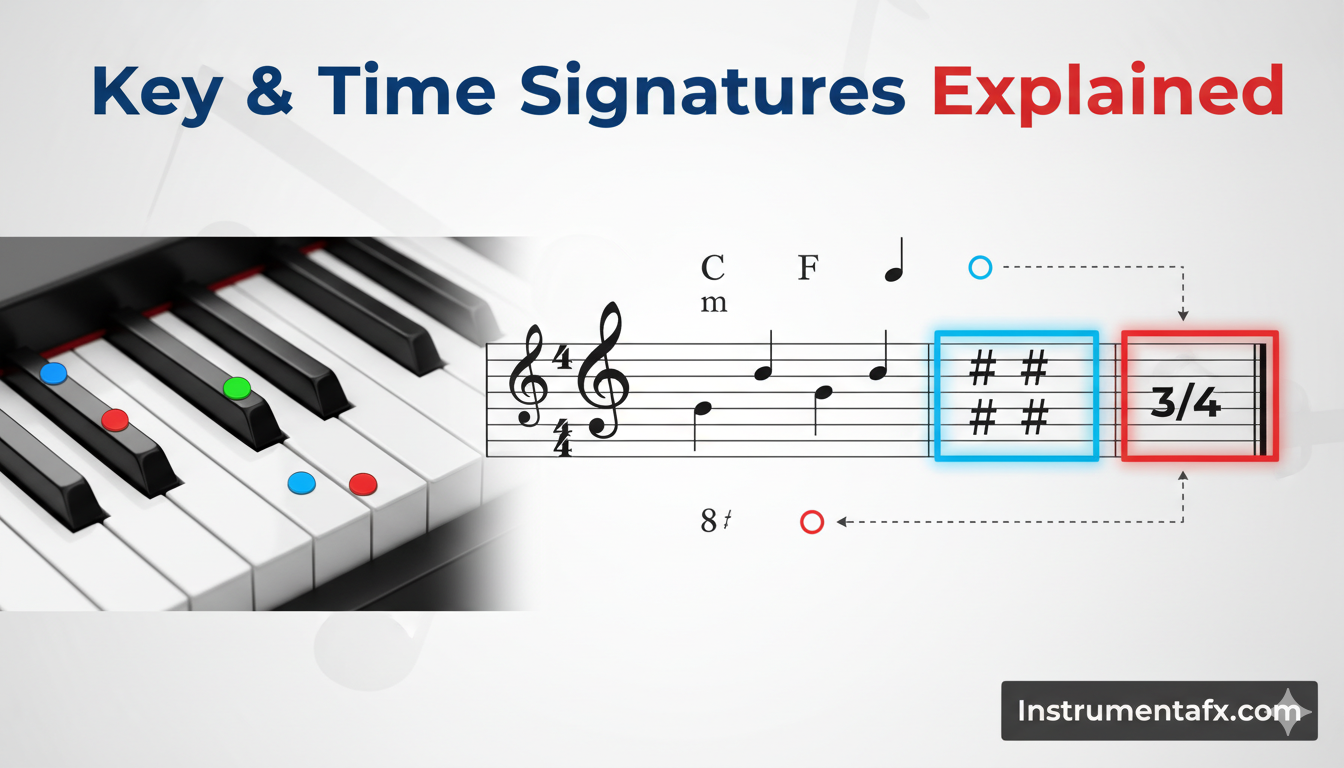
Understanding the musical structure of Mia & Sebastian’s Theme helps pianists interpret the piece more effectively and make informed decisions about which arrangement to choose.
A Major Key Signature
The original composition is written in A Major, which contains three sharps: F♯, C♯, and G♯. This key creates a bright, optimistic quality that matches the theme’s romantic character. A Major is considered a relatively easy key for pianists since it sits comfortably under the hands.
When playing in A Major, your hand naturally falls on white keys for most scale degrees, with strategic placement for the sharps. This ergonomic advantage makes the key feel natural despite having three accidentals. Many pianists find A Major easier than keys with more sharps or any flats.
Some arrangements transpose the piece to C Major (no sharps or flats) for absolute beginners. While this simplifies reading, it changes the tonal color slightly. Advanced players sometimes transpose to D Major or E Major for different performance contexts or to match specific vocal ranges when accompanying singers.
3/4 Time Signature (Waltz Time)
Mia & Sebastian’s Theme is written in 3/4 time, commonly known as waltz time. Each measure contains three quarter-note beats, with the first beat receiving slight emphasis. This creates the gentle, swaying rhythm that gives the piece its romantic, dance-like quality.
Playing in 3/4 requires thinking in groups of three rather than the more common four-beat patterns. Count “one-two-three, one-two-three” while playing, emphasizing beat one subtly. This natural pulse helps maintain the piece’s flowing character and prevents it from sounding too rigid or mechanical.
The waltz rhythm connects thematically to the film’s dance sequences and the nostalgic, old-Hollywood feeling the movie evokes. Understanding this rhythmic foundation helps you interpret the piece with appropriate style and emotion.
Tempo Markings
The tempo marking typically indicates “Moderately slow” or “♩ = 80,” meaning 80 quarter-note beats per minute. This moderate pace allows the melody to breathe while maintaining forward momentum. Rushing diminishes the romantic quality, while dragging makes it feel lethargic.
Many pianists start practicing at 60 BPM and gradually increase speed as comfort grows. The emotional delivery is more important than perfect tempo adherence. Some performers take slight liberties with tempo, slowing during particularly tender moments and returning to tempo during transitional passages.
Using a metronome during practice helps maintain consistent rhythm, but always remember that musicality trumps mechanical precision. The best performances balance technical accuracy with heartfelt interpretation.
Technical Aspects of Playing the Theme
Mastering Mia & Sebastian’s Theme requires attention to specific technical elements that bring out the piece’s emotional depth and maintain its flowing, romantic character.
Hand Position and Fingering
Proper fingering is essential for smooth transitions and melodic flow. Standard arrangements include suggested fingerings, but you may need to adjust based on your hand size. The right hand primarily uses fingers 1-5 (thumb through pinky) for melodic passages, with occasional position shifts.
Left-hand accompaniment patterns often use finger 5 for bass notes, with fingers 1-3 handling chord tones above. When playing broken chord patterns, use consecutive fingers (5-3-1 or 5-2-1) rather than skipping to maintain evenness. Practice hands separately first, ensuring each hand’s fingering feels natural before combining them.
Pay special attention to thumb crossings and position changes. These transitions should be seamless, with no rhythmic hiccups or accents where they don’t belong. Mark your score with fingering that works for your hands, even if it differs from the published suggestions.
Pedaling Techniques
The sustain pedal is crucial for creating Mia & Sebastian’s Theme’s signature sound. Use “syncopated pedaling” (also called “legato pedaling”), where you depress the pedal immediately after striking notes, not with them. This technique connects sounds smoothly without muddiness.
Change the pedal with each chord change to maintain harmonic clarity. In faster passages, you might pedal once per measure or even every two measures if the harmony stays consistent. Listen carefully—if the sound becomes muddy or indistinct, you’re pedaling too much.
Practice pedaling exercises separately from learning the notes. Play simple chord progressions while focusing solely on pedal timing and release. This builds muscle memory specifically for pedaling, making it automatic when you add complex note patterns.
Dynamics and Expression
Dynamic variation transforms this piece from notes on a page into an emotional experience. The opening typically starts piano (soft), building gradually to mezzo-forte (moderately loud) during the middle section. The piece often ends with a gentle diminuendo (gradual decrease in volume) back to piano or pianissimo.
Pay attention to phrase shaping—each melodic phrase should have a natural arc, swelling slightly in the middle and tapering at the end. This mimics natural speech patterns and breathing, making the music feel organic. Avoid playing at one constant dynamic level, which sounds mechanical and emotionless.
Look for expressive markings like crescendo (gradually louder), diminuendo (gradually softer), and specific dynamic indicators (pp, p, mp, mf, f, ff). These aren’t mere suggestions—they’re essential to conveying the composer’s intended emotion. Recording yourself helps identify where your dynamics might be too subtle or exaggerated.
Voicing and Balance
When both hands play simultaneously, balance the volume so the melody (usually in the right hand) stands out clearly above the accompaniment. The left hand should provide support without overshadowing the tune. This requires conscious control, as our dominant hand naturally plays louder.
Practice the melody hand alone at full volume, then add the accompaniment hand at about 70% of that volume. This 30% difference creates appropriate separation. In passages where the melody shifts to the left hand, reverse this balance. Always ask: “What should the listener hear most clearly?”
Inner voices (notes between the melody and bass) should be even softer, creating harmonic richness without distraction. Advanced players can bring out different voices at different times, creating a conversation between musical lines.
Rubato and Tempo Flexibility
“Rubato” means “robbed time”—slightly stretching or compressing tempo for expressive effect. Mia & Sebastian’s Theme benefits from subtle rubato, particularly at phrase endings and during emotional peaks. Slow down slightly as phrases conclude, then gently return to tempo at the start of new phrases.
Too much rubato sounds indulgent and loses the piece’s structural integrity. Too little sounds rigid and academic. Find the balance by listening to Justin Hurwitz’s original recording and noting where he takes liberties with timing. Professional pianists use rubato sparingly but effectively.
Practice with a metronome to establish the baseline tempo, then gradually incorporate expressive timing. Record your practice sessions to evaluate whether your rubato enhances the music or disrupts its flow.
Common Mistakes and How to Avoid Them
Even experienced pianists encounter challenges when learning Mia & Sebastian’s Theme. Recognizing common pitfalls helps you avoid frustration and develop proper technique from the start.
Rushing Through the Piece
The moderate tempo and flowing nature of this theme can lead pianists to play too quickly. Rushing destroys the romantic, contemplative mood. Many students rush because they’re not comfortable with the notes yet and want to reach the end quickly.
Solution: Use a metronome starting at 50-60 BPM, well below performance tempo. Increase speed by only 5 BPM increments once you can play three consecutive times without errors. Remember that slower, accurate practice builds faster, accurate performance.
Ignoring Dynamics
Playing all notes at the same volume makes the piece sound flat and boring. The emotional impact comes from carefully crafted dynamic contrasts. Many pianists focus so intensely on hitting correct notes that they neglect volume variation.
Solution: Once you can play the notes accurately, dedicate separate practice sessions exclusively to dynamics. Play through marking each dynamic change with exaggerated contrast. Recording yourself reveals whether your dynamics are actually noticeable or too subtle.
Incorrect Pedaling
Over-pedaling creates a muddy sound where harmonies blur together. Under-pedaling makes the piece sound choppy and disconnected. Finding the right balance takes practice and careful listening.
Solution: Practice difficult passages without any pedal first, ensuring notes are truly connected through finger legato. Then add pedal sparingly, changing it with each harmony. Record yourself and listen specifically for clarity—if you can’t distinguish individual notes, you’re pedaling too much.
Neglecting the Left Hand
Many pianists obsess over the right-hand melody while treating the left-hand accompaniment as an afterthought. However, the left hand creates the harmonic foundation and contributes significantly to the piece’s emotional texture.
Solution: Practice the left hand alone until it’s as secure as your right hand. Play the accompaniment patterns at various dynamics and tempos. When combining hands, occasionally bring the left hand forward dynamically to hear how it supports and enhances the melody.
Poor Fingering Choices
Using inconsistent or illogical fingering leads to stumbling, especially at faster tempos. Changing fingering each time you play makes muscle memory impossible to develop.
Solution: Determine fingering during your first practice session and write it in your score. Use the same fingering every single time you practice. Even if your fingering differs from the published suggestion, consistency is more important than following someone else’s preference.
Not Listening to the Original
Trying to learn this piece without hearing Justin Hurwitz’s original recording is like learning a foreign language without ever hearing native speakers. You’ll miss crucial interpretative nuances and stylistic elements.
Solution: Listen to the La La Land soundtrack version multiple times before learning. Pay attention to phrasing, tempo variations, dynamic changes, and overall emotional character. Return to the recording periodically throughout your learning process to ensure you’re staying true to the piece’s intended sound.
Practice Strategies for Different Skill Levels
Effective practice makes the difference between struggling through this piece and performing it beautifully. Tailor your approach to your current skill level for optimal results.
Beginner Practice Approach
Week 1-2: Learn the right-hand melody one phrase at a time. Practice each 4-8 measure section until you can play it three times perfectly before moving to the next section. Use very slow tempo (40-50 BPM).
Week 3-4: Add the left-hand accompaniment, practicing hands separately at first. Once each hand is secure individually, combine them at very slow tempo. Focus on playing correct notes with proper rhythm, not speed or expression.
Week 5-6: Begin working on smooth hand coordination. Gradually increase tempo by 5 BPM each week. Add basic dynamics (soft vs. loud) without worrying about subtle gradations. Introduce simple pedaling on long notes.
Week 7-8: Polish the piece by refining transitions between sections. Work on playing from memory if comfortable. Record yourself to identify remaining problem areas. Aim for consistent tempo and accurate notes throughout.
Intermediate Practice Approach
Week 1: Sight-read through the entire piece slowly to get an overview. Identify challenging sections and mark them in your score. Practice difficult passages in isolation, working them to mastery before incorporating into full run-throughs.
Week 2: Focus on technical refinement—perfect fingering, smooth position changes, clean pedaling. Practice challenging measures at various tempos using rhythmic variations (dotted rhythms, staccato, accent patterns) to build security.
Week 3: Work on dynamic shaping and phrase contours. Practice each phrase multiple times with different dynamic interpretations to find what sounds most musical. Begin incorporating rubato and tempo flexibility.
Week 4: Put the piece together, playing complete run-throughs while recording yourself. Listen critically, noting areas that need more work. Perform for friends or family to build confidence and identify which sections break down under performance pressure.
Advanced Practice Approach
Week 1: Learn notes and fingering quickly since your sight-reading skills are developed. Focus immediately on interpretive decisions—where to emphasize inner voices, how much rubato to use, which dynamic shadings best convey emotion.
Week 2: Experiment with different interpretative approaches. Try the piece with more rubato versus stricter tempo, with bolder dynamics versus more subtle, with different pedaling patterns. Develop your personal interpretation rather than merely copying the recording.
Week 3: Polish technical execution to professional standards. Every note should speak clearly, every phrase should flow naturally, every dynamic change should be deliberate and controlled. Work on consistency—you should be able to play perfectly three times in a row.
Week 4: Prepare for performance by practicing in various conditions. Play with distractions, play when tired, play immediately after warming up versus cold. Build mental endurance by playing the piece multiple times in succession. Visualize perfect performances away from the piano.
Practice Tips for All Levels
Practice in short, focused sessions rather than marathon attempts. Four 15-minute focused sessions yield better results than one unfocused hour. Your brain consolidates learning during rest periods between practice sessions.
Always practice slowly first, even if you’ve played the piece many times. Starting slowly engages mindful practice and prevents errors from becoming habitual. Speed comes naturally once accuracy is established.
Record yourself regularly using your phone or computer. Listening back reveals issues you can’t notice while playing. Compare your recordings to the original soundtrack to identify areas for improvement.
Practice mentally when away from the piano. Visualize your hands playing, hear the music in your mind, think through fingerings. Mental practice strengthens neural pathways and improves actual performance.
Set specific goals for each practice session. “I will perfect measures 12-16” is more effective than “I will practice for 30 minutes.” Goal-directed practice keeps you focused and provides clear progress markers.
Understanding the Musical Context
Appreciating Mia & Sebastian’s Theme’s place within La La Land and film music history enriches your interpretation and performance.
The Theme’s Role in La La Land
This melody appears multiple times throughout the film’s 128-minute runtime, each time revealing different facets of Mia and Sebastian’s relationship. Its first appearance comes early in the film during a chance encounter. Later, it develops fully during their romantic date at Griffith Observatory.
The theme serves as a musical through-line, reminding viewers of the central romance even during scenes focused on other plot elements. Justin Hurwitz intentionally created a melody simple enough to be remembered immediately yet sophisticated enough to support the film’s emotional depth.
The piece’s recurrence in the epilogue, played in various styles and settings as we see what might have been, demonstrates the theme’s versatility. This same melody works in jazz, classical, and pop contexts, speaking to its strong melodic construction.
Justin Hurwitz’s Compositional Style
Hurwitz, who won Academy Awards for both Best Original Score and Best Original Song for La La Land, studied at Harvard University with composer Corky Siegel. His style blends classical Hollywood romanticism with contemporary sensibilities and jazz influences.
The composer creates memorable melodies rooted in traditional harmonic progressions while incorporating unexpected twists that feel fresh. His music pays homage to the Golden Age of Hollywood musicals while remaining distinctly modern. Mia & Sebastian’s Theme exemplifies this balance—it could fit in a 1950s musical but sounds contemporary.
Hurwitz builds his scores from piano foundations, creating hundreds of piano demos before orchestrating. This piano-centric approach means his piano arrangements sound complete and satisfying, not like reduced versions of orchestral pieces. The solo piano effectively conveys his intended emotion without needing additional instruments.
Historical Context and Influence
La La Land deliberately evokes classic Hollywood musicals like “Singin’ in the Rain” and “An American in Paris.” The film’s music, including Mia & Sebastian’s Theme, channels composers like George Gershwin and Leonard Bernstein who bridged jazz, classical, and popular styles.
The waltz rhythm connects to countless romantic themes throughout film history, from “Moon River” to “Beauty and the Beast.” Hurwitz acknowledges these influences while creating something original. His theme has since influenced other film composers seeking that balance between nostalgia and innovation.
The piece’s popularity has made it a standard in piano recitals, weddings, and YouTube covers. Its accessibility to intermediate pianists while remaining musically substantial has secured its place in modern piano repertoire alongside other beloved film themes.
Performance Tips and Interpretative Choices
Moving beyond technical accuracy to create a moving performance requires attention to interpretative nuances and performance psychology.
Developing Your Interpretation
While respecting the composer’s intentions, you should develop a personal connection to the piece. What emotions does this theme evoke for you? How does it relate to your own experiences of love, loss, or dreams? Your personal connection will unconsciously influence your interpretation in positive ways.
Study multiple performances by different pianists on YouTube or streaming platforms. Notice how professional pianists make different choices—where they add rubato, which notes they emphasize, how they shape phrases. Don’t copy anyone directly, but let these varied interpretations inform your own choices.
Consider the piece’s narrative. The opening might represent the initial spark of attraction—gentle, tentative, hopeful. The middle section could embody the relationship’s growth—more confident, passionate, expansive. The ending might suggest bittersweet acceptance—tender, resigned, nostalgic. Let this emotional arc guide your dynamic and tempo choices.
Managing Performance Anxiety
Even professional musicians experience nervousness before performances. The key is channeling that energy productively rather than letting it undermine your playing. Physical symptoms like sweaty hands, racing heart, and shaky fingers are normal stress responses.
Preparation is the best anxiety antidote. If you’ve practiced thoroughly and can play the piece perfectly multiple times at home, you’ll trust your muscle memory during performance. Under-prepared performances always generate more anxiety than well-prepared ones.
Practice performing in low-stakes situations before your actual performance. Play for family members, record yourself pretending it’s a real performance, or perform for friends via video call. Each mock performance desensitizes you to performance pressure.
Use deep breathing before and during performance. Take slow, deep breaths before you sit at the piano, and breathe naturally during brief pauses in the music. Proper breathing oxygenates your brain and reduces stress hormones.
Stage Presence and Presentation
Your physical presence matters in performance. Sit with good posture—back straight but not rigid, feet flat on the floor, shoulders relaxed. Position yourself on the bench so you can comfortably reach all keys without stretching or crowding.
Before playing the first note, take a moment to settle yourself. Look at the keyboard, take a breath, and consciously relax your shoulders and hands. This brief pause mentally separates you from external distractions and focuses your attention on the music.
During the performance, let your face and body express the music’s emotion naturally. Pianists who look engaged and moved by the music create more powerful performances than those who appear robotic or tense. However, avoid exaggerated or theatrical gestures that distract from the music.
After the final note, keep your hands on the keys for a moment, allowing the music to resonate and decay naturally. This pause lets the audience absorb the ending emotionally rather than rushing to applaud. Then lift your hands, take a breath, and acknowledge your audience.
Recording and Sharing Your Performance
Many pianists today share performances via YouTube, Instagram, or TikTok. If recording at home, use the best microphone available and position it appropriately. Phone cameras work surprisingly well if positioned correctly—about 3-4 feet away, slightly elevated, capturing both you and the piano.
Natural lighting is preferable to harsh artificial lights. Record during the day near windows if possible. Test your recording setup with a short clip before attempting the full piece to ensure good audio and video quality.
Play multiple takes and choose the best one—even professional recordings involve multiple attempts. However, don’t obsess over perfection. Slight imperfections in amateur recordings are acceptable and often more endearing than sterile, edited versions.
If sharing online, include relevant information in your description: the piece title, composer, and your skill level or years of experience. Engage positively with comments, thanking viewers for encouragement and accepting constructive criticism gracefully.
The Sheet Music Market in 2026
Understanding the current landscape of digital and physical sheet music helps you make informed purchasing decisions and access the best resources.
Digital vs. Physical Sheet Music
Digital sheet music has largely dominated the market since the early 2020s. Instant access, searchability, and environmental benefits make digital formats appealing to most musicians. Platforms like Musicnotes, Sheet Music Direct, and MuseScore offer hundreds of thousands of titles for immediate download.
However, physical sheet music maintains loyal adherents. Many pianists prefer the tactile experience of flipping pages, the absence of screen glare, and not depending on devices that can fail or need charging. Physical books also make thoughtful gifts for music students.
Hybrid approaches are common—purchasing digital files but printing them at home on high-quality paper. This combines digital convenience with physical usability. Some musicians maintain digital libraries for reference while keeping physical copies of pieces they’re actively learning.
Pricing and Value
Individual sheet music pieces typically range from $3.99 to $7.99 for digital downloads. Complete songbooks like the La La Land collection cost $15-$30 depending on the number of songs and arrangement complexity. Physical books generally cost $5-$10 more than equivalent digital products due to printing and shipping expenses.
Subscription services like Musicnotes Pro and Sheet Music Plus Unlimited offer all-you-can-download access for monthly fees around $10-$20. These make sense for musicians learning multiple pieces regularly but aren’t cost-effective if you only occasionally need new sheet music.
Free sources exist but come with caveats. User-uploaded arrangements may contain errors or copyright issues. Always verify free sheet music against recorded versions to ensure accuracy before investing practice time in potentially incorrect transcriptions.
Legal and Ethical Considerations
Copyright protection extends to sheet music arrangements even when the underlying composition is public domain. Downloading or photocopying copyrighted sheet music without paying constitutes piracy, harming composers and publishers who depend on these sales for income.
Most contemporary sheet music, including Mia & Sebastian’s Theme, remains under copyright protection. The standard copyright term is the creator’s lifetime plus 70 years. Justin Hurwitz’s work won’t enter public domain until many decades from now.
Sharing paid sheet music with others, posting it publicly online, or making multiple copies for a class or ensemble violates copyright law. Purchase enough legal copies for each user or obtain proper licensing. Supporting creators through legal purchases ensures they can continue producing quality music.
Additional Resources and Learning Tools
Beyond sheet music itself, numerous resources can accelerate your learning and deepen your understanding of Mia & Sebastian’s Theme.
Video Tutorials and Lessons
YouTube hosts countless tutorials for this piece across all difficulty levels. Search for “Mia and Sebastian’s Theme piano tutorial” to find step-by-step lessons. Quality varies significantly, so preview several before committing to following one.
Look for tutorials that match your skill level—beginner, intermediate, or advanced. The best tutorials explain not just which notes to play but why certain fingerings work best, how to achieve proper sound, and what the piece should express emotionally.
Synthesia-style tutorials (where colorful bars fall onto piano keys) work well for visual learners but shouldn’t replace traditional notation reading. Use these as supplementary tools while developing proper sheet music reading skills.
Slow-Motion Performances
Many pianists upload slow-motion performances specifically for learning purposes. These videos show exactly how fingers move, when pedaling occurs, and how hands coordinate. Watching at 0.5x or 0.25x speed reveals details impossible to catch at performance tempo.
Use these videos to verify your fingering choices and hand positions. Compare professional pianists’ approaches to confirm your technique aligns with established practices. Slow-motion viewing also helps identify preparation movements that enable smooth transitions.
Interactive Learning Apps
Apps like Simply Piano, Flowkey, and Piano Marvel offer interactive lessons that listen to your playing and provide real-time feedback. These work best when paired with traditional instruction rather than as standalone learning methods.
Some apps include Mia & Sebastian’s Theme in their song libraries with guided lessons that break down the piece section by section. They’re particularly helpful for beginners who benefit from structured, gamified learning approaches.
However, apps can’t replace human teachers who provide personalized feedback, correct bad habits before they become ingrained, and adapt instruction to your unique learning style and goals.
Sheet Music Annotation Tools
Digital annotation apps like forScore and Newzik let you mark up digital sheet music with fingerings, dynamic notes, and practice reminders. These tools sync across devices, letting you access annotated scores on tablets during lessons or practice.
Even if using physical sheet music, develop a consistent annotation system. Use pencil (never pen) to mark fingerings, circle problem spots, and note technical reminders. Annotations should clarify without cluttering—too many markings become distracting rather than helpful.
Color-coding can help: one color for fingering changes, another for dynamic reminders, a third for pedaling. Whatever system you develop, use it consistently across all your sheet music for maximum effectiveness.
Music Theory Resources
Understanding the theory behind Mia & Sebastian’s Theme enhances your interpretation and makes learning faster. Study resources on:
Harmonic progression: Why do these specific chords follow each other? How do they create the emotional effect?
Melodic construction: What makes this melody memorable? How do the intervals and rhythms work together?
Form and structure: How is the piece organized? Where are phrases, sections, and climaxes?
Books like “The Complete Idiot’s Guide to Music Theory” or online courses on platforms like Coursera provide accessible theory education. Even basic theory knowledge dramatically improves your musical understanding and performance.
Mia & Sebastian’s Theme in Different Musical Contexts
This versatile theme adapts to various musical settings beyond solo piano, demonstrating its strong melodic and harmonic foundation.
Piano Duet Arrangements
Four-hand piano arrangements let two pianists share the joy of performing this theme together. The primo (higher) part typically carries the melody while the secondo (lower) part provides harmonic and rhythmic support. These arrangements work wonderfully for teacher-student performances or pianists of equal ability.
Duet versions often expand the harmonic texture beyond what one pianist can play alone, creating fuller, more orchestral sound. They’re excellent for recitals and provide valuable ensemble experience that improves your sense of timing and musical collaboration.
When playing duets, both partners must develop strong independent rhythm since you can’t rely solely on each other for timing. Practice with a metronome together, and consider recording audio of one part to practice with when your partner isn’t available.
Piano and Violin Arrangements
String arrangements pair beautifully with this romantic theme. The violin carries the melody while the piano provides harmonic foundation and counter-melodies. This instrumentation evokes the classic sonata tradition while maintaining the piece’s modern, cinematic quality.
Piano-violin versions require careful balance—the piano must support without overpowering the violin’s delicate tone. Pianists should play slightly softer than usual, letting the violin sing above. Close attention to the violinist’s breathing and phrasing helps create unified, musical performances.
These arrangements work wonderfully for weddings, recitals, and other events where varied instrumentation adds interest. They’re also excellent for collaborative musicians seeking repertoire that showcases both instruments equally.
Jazz Interpretations
Given La La Land’s jazz influences, many musicians create jazz interpretations of Mia & Sebastian’s Theme. These arrangements incorporate swing rhythms, improvised sections, and jazz harmonies like extended chords (9ths, 11ths, 13ths) and altered dominants.
Jazz versions offer advanced pianists opportunities to explore harmonic substitution and rhythmic variation while maintaining the theme’s recognizable melody. They work in both solo and ensemble contexts, particularly with bass and drums adding rhythmic drive.
Learning jazz arrangements develops improvisational skills and harmonic understanding that benefits all your piano playing. Even if you primarily play classical music, exploring jazz interpretations expands your musical vocabulary and creative thinking.
Orchestral and Ensemble Versions
Full orchestral arrangements of Mia & Sebastian’s Theme appear in concert programs and pops orchestra performances. String sections carry the melody with lush harmonies while woodwinds and brass add color and dramatic emphasis. These versions showcase the theme’s symphonic potential.
For pianists, studying orchestral scores reveals how different instruments voice the same harmonies you play on piano. This knowledge informs your playing—you might emphasize certain notes that would be played by violins, or bring out inner voices that represent woodwind parts.
Concert band and wind ensemble arrangements also exist, making this theme accessible to school and community bands. These versions prove the melody’s versatility across different instrumental families and musical traditions.
The Emotional Impact and Storytelling Through Music

Great performances transcend technical accuracy to tell emotional stories. Understanding how to convey feeling through Mia & Sebastian’s Theme separates competent playing from truly moving performances.
Connecting with the Narrative
Even if you haven’t seen La La Land, understanding the story deepens your interpretation. Mia and Sebastian are dreamers—an aspiring actress and a jazz musician—who fall in love while pursuing their ambitions in Los Angeles. Their relationship provides support and inspiration but ultimately requires sacrifices.
The theme represents their connection, their dreams, and the bittersweet recognition that sometimes love and ambition pull in different directions. When you play, channel these complex emotions—hope mixed with uncertainty, joy tinged with impending loss, passionate connection shadowed by inevitable separation.
Imagine specific scenes or create your own narrative. Perhaps the opening represents their first meeting, the middle section their growing love, and the ending their parting. This story arc informs your dynamic choices and tempo variations, creating a coherent emotional journey.
Using Silence and Space
Music exists not just in the notes but also in the spaces between them. Brief pauses at phrase endings give the melody room to breathe and the listener time to absorb emotional content. Don’t rush through these moments—let them speak.
The sustain pedal creates ambient sound that fills silence without actual notes. Proper pedaling means some resonance continues even during rests, maintaining the piece’s flowing character while allowing melodic clarity. This balance between sound and silence creates tension and release.
Think of silence as punctuation in written language. Commas create brief pauses, periods create longer ones. Musical phrases work similarly—slight ritardandos (slowing) before new phrases function like commas, while longer pauses between major sections act like periods separating paragraphs.
Dynamics as Emotional Language
Dynamics communicate emotion more directly than perhaps any other musical element. A sudden piano (soft) passage after forte (loud) can represent vulnerability or introspection. Gradual crescendos build anticipation and emotional intensity.
Map out your dynamic plan before memorizing the piece. Decide where the emotional peak occurs and build your dynamics toward that moment. Everything before should gradually intensify, everything after should gradually release. This creates satisfying emotional arc that listeners follow instinctively.
Avoid random dynamic changes that don’t serve the narrative. Every change in volume should have emotional justification—why is this phrase softer? What feeling does this crescendo represent? Intentional dynamics create powerful performances; arbitrary ones confuse listeners.
Touch and Tone Production
How you strike keys dramatically affects emotional communication. Gentle, caressing touch produces warm, tender tone perfect for Mia & Sebastian’s Theme. Aggressive, percussive touch would contradict the piece’s romantic character.
Experiment with different ways of pressing keys—fingers can push down, press softly, or strike quickly. Each produces different tonal qualities. This theme generally benefits from pressing firmly but gently, creating singing tone without harsh attack.
Advanced technique involves “voicing”—making certain notes within chords louder than others. In a three-note chord, bringing out the top note emphasizes melody, while emphasizing the bottom note strengthens harmonic foundation. This subtle control adds sophistication to your performance.
Overcoming Specific Technical Challenges
Certain passages in Mia & Sebastian’s Theme present recurring challenges for pianists. Targeted strategies help you overcome these obstacles efficiently.
The Opening Measures
The piece’s first few measures set the emotional tone and require immediate control and musicality. Many pianists rush this opening from nervousness or excitement. The opening should feel settled, confident, and tender—like someone taking a deep breath before sharing something meaningful.
Practice the opening in isolation, playing it 10-20 times in succession. Focus on consistent tempo, even tone, and immediate connection to the piece’s emotional character. The opening measures should become so automatic that performance nerves can’t derail them.
Start with your hands already positioned over the correct keys. Taking time to find notes after you’ve begun undermines the opening’s impact. Mental practice helps—visualize and hear the opening away from the piano until you can “play” it perfectly in your mind.
Hand Crossing and Position Changes
Some intermediate and advanced arrangements include passages where hands cross or move rapidly between keyboard registers. These transitions feel awkward initially and can trip up otherwise solid performances.
Practice transitions in isolation, moving hands between positions without playing notes. Build muscle memory for the physical movement separate from musical concerns. Then add notes slowly, ensuring smooth transitions without rhythmic hesitation.
Look ahead in the music to prepare for position changes before they arrive. Your eyes should read several beats ahead of what you’re currently playing, giving your brain time to prepare movements. This anticipation prevents surprised, jerky transitions.
Maintaining Tempo Through Difficult Passages
Complex sections tempt pianists to slow down, disrupting the piece’s flow. While some rubato is stylistic, unintended tempo changes from technical difficulty sound amateurish and break emotional engagement.
Isolate difficult passages and practice them at various tempos. Use a metronome to build security at slow speeds first. Once you can play a passage perfectly at 60 BPM five times in a row, increase to 65 BPM. Gradual tempo building creates solid technical foundation.
If a section repeatedly breaks down at performance tempo, your chosen tempo may exceed your current ability. There’s no shame in performing slightly slower until your technique develops. Musical, controlled playing at 75 BPM beats choppy, mistake-filled playing at 85 BPM.
Memory Slips and Recovery
Memory slips happen to everyone, even professionals. The key is recovering gracefully rather than stopping completely. Develop backup strategies for moments when memory fails during performance.
Practice “recovery spots”—specific measures where you could jump back in if you lose your place. Usually, the beginning of major sections or repeated phrases work well. Know these spots so well that you can start from them mid-piece without hesitation.
If you forget the next notes during performance, keep your hands moving in the established rhythm and harmony even if you must improvise momentarily. Most audiences won’t notice brief deviations if you maintain the piece’s character and quickly return to the written music.
Memorization improves through multiple practice methods: hands separately, starting from different points in the piece, playing while visualizing the score, and teaching sections to others. The more ways you know the music, the more secure your memory becomes.
Health Considerations for Pianists
Physical health directly impacts your ability to learn and perform Mia & Sebastian’s Theme. Smart practice habits prevent injury and extend your playing life.
Hand and Wrist Care
Piano playing shouldn’t cause pain. If you experience discomfort, you’re likely using excessive tension or poor technique. Keep wrists relatively level with forearms—extreme up or down angles strain tendons. Fingers should curve naturally, not collapse or hyperextend at joints.
Take regular breaks during practice sessions. Five minutes of rest every 20-30 minutes of playing prevents overuse strain. During breaks, gently stretch fingers, wrists, and forearms. Simple stretches maintain flexibility and reduce injury risk.
If you develop persistent pain, stop playing and consult a medical professional familiar with musicians’ injuries. Early intervention prevents serious conditions like tendinitis or carpal tunnel syndrome that could sideline you for months.
Posture and Alignment
Poor posture creates tension throughout your body, affecting performance quality and risking injury. Sit at bench height where your forearms are roughly parallel to the floor when hands are on keys. Your feet should rest flat on the floor or a footstool.
Keep your back straight but not rigid—imagine a string pulling the crown of your head toward the ceiling. Shoulders should be relaxed and level, not hunched toward your ears. Periodically check in with your body during practice to release accumulated tension.
Consider investing in an adjustable piano bench if you share the instrument with others of different heights. Proper ergonomic setup matters more than many players realize and becomes increasingly important as playing hours accumulate.
Hearing Protection
Pianos, especially grands, can produce sound levels that damage hearing over time. If you practice multiple hours daily in a small room, consider the cumulative effect on your ears. Taking breaks and practicing at moderate volume most of the time protects your hearing.
Musicians’ earplugs (different from construction earplugs) reduce volume while maintaining frequency balance, letting you hear music accurately while protecting your ears. Brands like Etymotic and Eargasm make affordable options designed specifically for musicians.
Mental Health and Stress Management
The pressure to master difficult pieces can create stress and anxiety, especially for perfectionists. Remember that piano should bring joy, not only stress. If practice consistently feels like punishment, reassess your approach and goals.
Set realistic expectations based on your current skill level and available practice time. Progress happens gradually through consistent effort, not dramatic leaps. Celebrate small victories—playing a difficult measure correctly or maintaining consistent tempo through a challenging section.
If piano-related stress affects your overall wellbeing, consider working with a teacher who emphasizes enjoyment alongside improvement, or take a brief break to rediscover why you love playing music in the first place.
Building a Repertoire Around This Theme
Once you’ve mastered Mia & Sebastian’s Theme, consider related pieces that develop similar skills and musical sensibilities.
Other La La Land Pieces
The complete La La Land songbook contains nine pieces total, each offering different technical and musical challenges:
“City of Stars” shares thematic material with Mia & Sebastian’s Theme and works beautifully as a complementary piece. It’s slightly easier than the main theme, making it accessible to intermediate players.
“Audition (The Fools Who Dream)” is the emotional centerpiece of the film’s vocal numbers. Piano arrangements require strong left-hand independence and dynamic control.
“Another Day of Sun” opens the film with upbeat energy. This piece develops different skills—rhythmic precision, articulation, and playing with driving momentum rather than gentle romanticism.
“Start a Fire” offers jazz-influenced rhythms and harmonies, expanding your stylistic range beyond the classical-leaning main theme.
Learning multiple pieces from the same film creates cohesive recital programs and deepens your connection to the source material. You’ll notice how Justin Hurwitz develops motifs across different songs, creating musical unity.
Similar Film Themes for Piano
“Comptine d’un autre été” from Amélie (Yann Tiersen) shares the romantic, bittersweet character of Mia & Sebastian’s Theme. The flowing arpeggios develop left-hand technique while the memorable melody provides expressive opportunities.
“The Heart Asks Pleasure First” from The Piano (Michael Nyman) offers similar difficulty level and emotional depth. Its minimalist repetitive structure creates hypnotic, moving effect.
“Nuvole Bianche” by Ludovico Einaudi, while not from film originally, appears in numerous movie trailers and shares the contemporary classical-meets-popular style. It’s excellent for developing dynamic control and sustained melodic playing.
“Married Life” from Up (Michael Giacchino) tells an emotional story through simple, elegant melody. Like Mia & Sebastian’s Theme, it proves that straightforward musical ideas, executed beautifully, create powerful emotional impact.
“The Secret Garden” from The Secret Garden (various composers have created versions) offers similar waltz-like character and romantic sensibility.
Classical Pieces for Further Development
Chopin’s Nocturnes, particularly Op. 9 No. 2 in E-flat Major, develop the lyrical, singing quality essential for Mia & Sebastian’s Theme. They teach rubato, voicing, and romantic expression while challenging technique.
Debussy’s “Clair de Lune” shares impressionistic harmony and flowing character. It’s more difficult technically but develops pedaling skills and tonal sensitivity to expert levels.
Satie’s Gymnopédies offer minimal, meditative character that requires exquisite dynamic control and sustain pedal mastery—skills directly transferable to La La Land themes.
Schumann’s “Träumerei” (Dreaming) from Kinderszenen develops similar romantic expression within shorter form, making it more accessible while still musically substantial.
These classical pieces provide technical and musical foundations that enhance your playing of contemporary film music while exposing you to piano literature’s incredible breadth and depth.
Teaching Mia & Sebastian’s Theme to Students
If you’re a piano teacher, this piece offers valuable teaching opportunities across multiple skill levels.
Choosing the Right Arrangement
Match arrangement difficulty precisely to student ability. Over-challenging students causes frustration and potential injury from excessive tension. Under-challenging risks boredom and missed learning opportunities.
Observe students playing other pieces at their current level before assigning Mia & Sebastian’s Theme. If they struggle with their current repertoire, choose a simpler arrangement. If they’re cruising through current pieces, challenge them with the next level up.
Consider offering this piece as reward after completing less exciting but technically important exercises. The motivation to learn beloved film music can inspire students to work through scales, arpeggios, and etudes with renewed purpose.
Lesson Planning and Progression
Week 1: Introduce the piece by playing the original recording and discussing the film’s story. Assign learning the first section (typically 8-16 measures) hands separately. Ensure students understand time signature, key signature, and any unfamiliar notation.
Week 2: Review hands-separate work and begin combining hands on the opening section. Diagnose any technical issues (fingering problems, tension, rhythm inaccuracies) early before bad habits form. Assign the next section for hands-separate practice.
Weeks 3-4: Continue section-by-section learning while maintaining previously learned sections. Begin discussing musicality—where to crescendo, how much rubato is appropriate, what the piece should express emotionally.
Weeks 5-6: Focus on playing complete run-throughs, identifying sections that break down under pressure. Polish problematic passages while continuing to add expressive elements. Introduce appropriate pedaling technique.
Weeks 7-8: Prepare for performance or recording. Practice mock performances during lessons, work on performance anxiety management, and finalize interpretive decisions. Consider recording the student’s progress to document achievement and motivate continued growth.
Addressing Common Student Challenges
Students who rush: Record their playing so they hear the rushing objectively. Practice with metronome, starting very slowly. Discuss how rushing diminishes the romantic character.
Students with weak left hand: Assign left-hand-only practice, sometimes having them play the accompaniment louder than they would in performance to build strength and confidence.
Students who play mechanically: Encourage them to listen to multiple professional recordings. Discuss the story and emotions. Sometimes having students choreograph movements or create visual imagery helps them connect emotionally.
Students who give up easily: Break the piece into tiny, manageable sections. Celebrate each small victory. Sometimes students need to experience success on shorter, easier pieces before tackling longer works like this theme.
Performance Opportunities
Create low-pressure performance opportunities through studio recitals, informal gatherings, or recording sessions. Many students discover this piece sounds different (and better) when performed for others, providing motivation to polish and perfect.
Consider group performances where multiple students play different arrangements of the same theme—a beginner version, intermediate version, and advanced version in succession. This demonstrates progression while letting everyone participate meaningfully.
Virtual recitals via Zoom or YouTube have become increasingly popular and reduce performance anxiety for some students who feel less nervous playing at home than on stage.
Frequently Asked Questions (FAQs)
Where can I download Mia & Sebastian’s Theme sheet music legally?
You can legally download Mia & Sebastian’s Theme sheet music from Musicnotes.com, Sheet Music Plus, and Virtual Sheet Music for $3.99-$7.99. These official sources provide professionally transcribed, licensed arrangements in PDF format with instant access after purchase.
What is the difficulty level of Mia & Sebastian’s Theme for piano?
The difficulty varies by arrangement—beginner versions suit players with 6-12 months experience, intermediate versions work for 1-3 years of study, and advanced arrangements challenge 5+ year pianists. Most popular versions fall into the intermediate category, requiring solid rhythm, hand coordination, and pedaling skills.
Is Mia & Sebastian’s Theme in the public domain?
No, Mia & Sebastian’s Theme remains under copyright protection as it was composed by Justin Hurwitz in 2016 for La La Land. The composition won’t enter public domain until 70 years after the composer’s death, so downloading free unauthorized copies violates copyright law.
What key is Mia & Sebastian’s Theme written in?
The original composition is written in A Major, which contains three sharps (F♯, C♯, G♯). Some beginner arrangements transpose it to C Major (no sharps or flats) for easier reading, while other versions use different keys to accommodate various skill levels and vocal ranges.
How long does it take to learn Mia & Sebastian’s Theme?
Beginners typically need 8-12 weeks, intermediate players 4-6 weeks, and advanced pianists 2-3 weeks to learn the piece comfortably. Timeline depends on practice consistency, prior experience with similar pieces, and your target performance quality—basic accuracy versus polished, memorized performance.
What time signature is Mia & Sebastian’s Theme?
The piece is written in 3/4 time signature (waltz time), with three quarter-note beats per measure. The first beat receives slight emphasis, creating the gentle, swaying rhythm that gives the theme its romantic, dance-like quality throughout the entire piece.
Can beginners play Mia & Sebastian’s Theme?
Yes, simplified beginner arrangements make this theme accessible to novice pianists with 6-12 months of experience. These versions feature single-note melodies in the right hand with simple chord accompaniment in the left, slower tempo, and basic dynamics while preserving the recognizable tune.
Do I need a piano or can I learn on a keyboard?
You can learn on a 61-key or larger keyboard with weighted keys and a sustain pedal. The piece doesn’t require a full 88-key piano, though weighted keys help develop proper technique. The sustain pedal is essential for creating the flowing, romantic sound characteristic of this theme.
What pedaling technique works best for this piece?
Use syncopated (legato) pedaling where you press the pedal immediately after striking notes, not with them. Change pedal with each chord change to maintain clarity. For this romantic piece, generous pedaling creates flowing sound, but over-pedaling muddies the harmonies, so listen critically and adjust accordingly.
Are there versions of Mia & Sebastian’s Theme for other instruments?
Yes, arrangements exist for piano/vocal/guitar, violin and piano, cello and piano, flute, guitar, and full orchestra. Piano solo remains most popular, but duet versions and ensemble arrangements let multiple musicians perform this beloved theme together in various instrumental combinations.
Conclusion
Mia & Sebastian’s theme sheet music continues to inspire pianists worldwide in 2026, offering an accessible yet emotionally rich piece that bridges film music and classical piano repertoire.
Whether you’re downloading your first arrangement from Musicnotes.com or polishing an advanced version for recital performance, this theme rewards dedicated practice with profound musical satisfaction.
The piece’s enduring popularity stems from Justin Hurwitz’s masterful composition—a melody simple enough for intermediate pianists yet sophisticated enough to challenge advanced players seeking nuanced interpretation.
From understanding the waltz-like 3/4 time signature and A Major key to mastering pedaling techniques and expressive dynamics, learning this piece develops essential piano skills applicable across your entire repertoire.


