


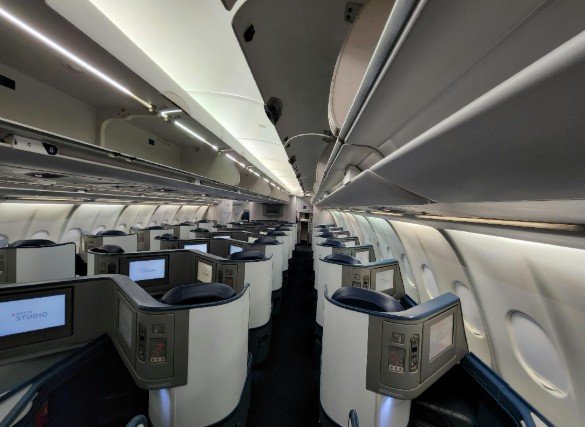
Flying is often sold as the exciting start of a trip. On a two-hour hop, perhaps. On long-haul flights, it is usually more about finding room for your knees, avoiding an armrest battle, and arriving with enough energy to function. That is where premium economy flights have found their audience. They sit between Economy and Business Class, offering a noticeable comfort upgrade without the kind of price that can rival the holiday itself.
It is not luxury. You will still be sitting upright, sharing a cabin and counting down the hours until landing. But for many travelers, a wider seat, extra legroom, and deeper recline are enough to make an overnight journey far more manageable.
The appeal is obvious on routes where sleep matters. Landing in New York, Tokyo, or Singapore after ten hours in a cramped seat can make the first day feel like a write-off. Premium Economy will not turn you into a well-rested traveler, but it may stop you from starting the trip already exhausted.
What Premium Economy actually gives you
Premium Economy is not identical across airlines. One carrier may offer a genuinely spacious seat with decent recline and upgraded service. Another may offer standard economy with a better meal tray and a more ambitious name.
Still, most premium economy seats include a few familiar improvements:
- more legroom and seat width than Economy;
- deeper recline and a larger seat pitch;
- a quieter, smaller cabin;
- upgraded meals or drinks on some routes;
- Extra checked baggage and priority boarding are available, depending on the fare.
The seat is the real reason people pay more. Extra baggage is useful, and priority boarding is pleasant, but neither helps much if you spend ten hours unable to find a comfortable position.
| What you are paying for | What it changes on a long flight |
| More legroom | Less pressure on knees and easier movement |
| Wider seat | More personal space |
| Better recline | A better chance of resting |
| Smaller cabin | Less noise and a calmer atmosphere |
Do not judge Premium Economy by the cabin name alone. Check the aircraft type, seat map, and recent passenger photos. The same airline can offer very different experiences depending on the route.
Why more travelers are paying for it
The real comparison is usually not Premium Economy versus Business Class. It is about whether the upgrade is worth paying for instead of staying in Economy Class.
That calculation changes with flight length. On a three-hour daytime route, spending heavily for a larger seat may feel unnecessary. On an overnight 10-hour journey, the same upgrade can be easier to justify, particularly if you have a meeting, family event, or packed sightseeing schedule after arrival.
A simple way to look at it is to divide the upgrade cost by the number of flight hours. An extra £180 on a 10-hour flight works out at £18 per hour. Not cheap, but some travelers will see it as a fair price for more rest and less stiffness.
Premium Economy also makes sense for taller passengers, couples, and anyone who flies long distance more than once a year. It is a middle ground: clearly better than Economy Class, but still within a budget that lives in the real world.
Premium Economy vs. Business Class: The Honest Comparison
The phrase “premium economy vs. business class” can be misleading because these cabins solve different problems.
Premium Economy improves the experience of sitting on a plane for a long time. Business class changes the experience altogether.
On most long-haul routes, Business Class means a lie-flat bed, more privacy, better food, lounge access, and priority treatment before the flight even begins. Premium Economy gives you more room, more recline, and a quieter environment, but you are still sleeping in a seat.
The honest comparison is simple:
- Premium Economy reduces discomfort.
- Business Class creates comfort.
That matters when deciding where to spend your money. If you want to arrive genuinely rested, Business Class remains in another category. If you simply want to avoid feeling folded into a suitcase for half a day, Premium Economy can do the job.
Booking tip: Premium Economy varies more than many travelers expect, so look beyond the airline’s marketing photos before you book. A practical review such as this one from nextleveloftravel.com can help you see what the seat, cabin, and service are actually like on a real journey.
When Premium Economy Is Worth Booking
Premium Economy tends to work best when you are flying overnight, when the journey is at least eight or nine hours, or when you need to be reasonably alert after arrival.
Be more cautious on short daytime flights. A better airport hotel, an extra night at your destination, or a memorable dinner may offer more value than a slightly roomier seat for three hours.
Before paying extra, check a few details:
- Look at the exact aircraft, not just the route. Seat layouts can vary.
- Verify what the fare includes. Lower fares may not include flexible changes, extra baggage, or seat selection.
- Do not choose bulkhead seats blindly. They may offer space, but hand luggage often has to go overhead.
- Compare both directions. An affordable outbound upgrade can be paired with an overpriced return fare.
A Practical Upgrade, Not a Status Symbol
The popularity of Premium Economy flights comes down to one obvious fact: Economy can be tolerable for short trips, but long-haul flights expose every small inconvenience.
Premium Economy does not erase those problems. It softens them enough to matter.
For travelers who cannot justify Business Class but want more than basic Economy Class, that middle ground has real value. Check the seat, compare the upgrade cost, and ask one practical question: will this make the first day of the trip noticeably better?
When the answer is yes, Premium Economy can be money well spent.

