


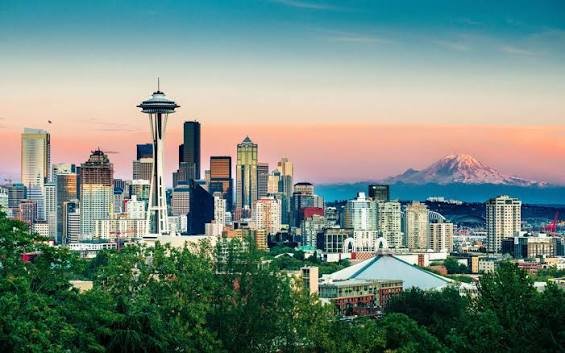
Why is Seattle called the Emerald City is a question many visitors and even longtime residents still ask today.
Unlike nicknames rooted in old folklore, this one has a surprisingly modern and official origin story.
The Short Answer
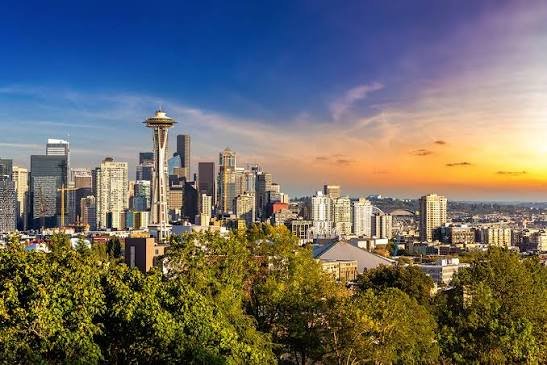
Seattle is called the Emerald City because of its lush, evergreen forests, parks, and year-round greenery.
The nickname was officially created in 1982 through a tourism contest organized by the Seattle-King County Convention and Visitors Bureau.
It has no connection to actual emerald gemstones or mines, since none exist in the region.
How The Emerald City Nickname Began
In the summer of 1981, Seattle’s Convention and Visitors Bureau launched a contest to find a fresh marketing slogan.
The bureau wanted a nickname that could work both as a tourism tagline and as a visual logo for the city.
This contest invited the public to submit their own suggestions, generating strong interest from residents and outsiders alike.
The Winning Contest Entry
Several contest entries independently suggested “The Emerald City” as a fitting nickname for Seattle.
The winning submission came from Sarah Sterling-Franklin, a writer based in California, during the 1981–1982 contest period.
As her prize, she received two vacations, one trip to Seattle and another to Acapulco, for submitting the winning name.
Why This Nickname Was Chosen
The judges selected “Emerald City” because it captured Seattle’s lush, green landscape in a simple and memorable way.
Unlike some nickname ideas, it worked well visually, allowing the tourism bureau to build an entire marketing logo around the concept.
This combination of visual appeal and geographic accuracy made it stand out among the many contest submissions received.
Seattle’s Nicknames Before Emerald City
Before 1982, Seattle was known by several other nicknames that reflected different periods of its history and development.
These included “Queen City,” “Gateway to Alaska,” “Gateway to the Orient,” “City of Flowers,” and “Jet City.”
Each of these earlier names told a different part of Seattle’s economic and cultural story over the decades.
Seattle’s Historical Nicknames Table
| Nickname | Time Period | Reason |
|---|---|---|
| Queen City | Starting 1869 | From a pamphlet calling it “Future Queen City of the Pacific Northwest” |
| Gateway to Alaska | Klondike Gold Rush Era | Seattle served as a departure point for gold rush travelers |
| Gateway to the Orient | Early 20th Century | Reflected trade connections with Asian markets |
| City of Flowers | Early 1900s | Related to local flower festivals and gardens |
| Jet City | Mid 20th Century | Nod to Boeing’s large aerospace presence in the city |
| Emerald City | Since 1982 | Official tourism contest winner reflecting year-round greenery |
The Jet City Era
Before becoming the Emerald City, Seattle was most commonly known as “Jet City” due to Boeing’s massive aerospace presence.
In the 1970s, Boeing and other aerospace companies began cutting jobs significantly, leading to a major economic downturn in the region.
This period was so difficult that a famous billboard appeared reading, “Will the last person leaving Seattle turn out the lights?”
Why Seattle Needed A New Image
Following the Boeing job losses, city officials recognized the need for a fresh, positive identity to attract tourism and business.
The economic decline had left Seattle with a somewhat negative public image during the late 1970s and early 1980s.
This context explains why the Convention and Visitors Bureau prioritized finding an upbeat, marketable new nickname for the city.
The Real Reason Behind The Green Nickname
Seattle’s abundant greenery comes from its unique climate, positioned between the Puget Sound and the Cascade Mountains.
This location provides mild, wet winters and relatively cool, dry summers, creating ideal conditions for evergreen trees to thrive.
Species like Douglas firs, Western hemlocks, and Western red cedars keep the region lush and green for most of the year.
The Role Of Mountains In Seattle’s Climate
The Olympic Mountains to the west help shield Seattle from the heaviest winter rains along the Pacific coast.
Meanwhile, the Cascade Mountains to the east protect the city from extreme heat and cold common in continental climates.
This natural mountain barrier creates the temperate, balanced climate responsible for Seattle’s signature year-round greenery.
Connection To Washington’s Evergreen State Nickname
Seattle’s Emerald City nickname closely aligns with Washington State’s own well-known nickname, “The Evergreen State.”
Both nicknames highlight the same abundant evergreen tree population found throughout the region.
This connection reinforces how deeply intertwined Seattle’s identity is with the broader natural landscape of Washington State.
Debunking The Wizard Of Oz Myth
A common misconception is that Seattle’s nickname connects directly to the fictional Emerald City from “The Wizard of Oz.”
While the magical imagery of that story may have added appeal, it was not the direct inspiration behind the contest decision.
The nickname’s true origin lies in Seattle’s actual green landscape, not in fictional storytelling or film references.
Debunking The Emerald Mine Myth
Another common myth suggests Seattle’s nickname relates to hidden emerald deposits or gemstone mines within the region.
In reality, there are no emerald mines or natural emerald deposits located in or around Seattle.
The nickname is purely symbolic, referring to the city’s greenery rather than any literal gemstone connection.
Common Myths Versus Facts Table
| Myth | Fact |
|---|---|
| Connected to emerald mines | No emerald deposits exist in the Seattle region |
| Inspired by The Wizard of Oz | Based on real greenery, not fictional imagery |
| An old historical nickname | Created deliberately in 1982 through a modern contest |
| Reflects a single tree type | Reflects overall lush parks, forests, and greenbelts |
Seattle’s Parks And Greenbelts
Seattle contains numerous parks and greenbelts that visually reinforce its Emerald City identity throughout the year.
Popular green spaces include Discovery Park and the Washington Park Arboretum, both rich with diverse plant life.
These urban green spaces contribute significantly to the city’s lush appearance, supporting its nickname beyond just surrounding forests.
Seasonal Changes In Seattle’s Greenery
Interestingly, Seattle’s greenery is not equally vivid throughout the entire year, contrary to popular assumption.
Summer months actually bring less rainfall, causing many lawns to dry out and fade to a brownish color.
However, evergreen trees remain green year-round, ensuring the city still visually justifies its nickname even during drier months.
Why Lawns Turn Brown In Summer
Many Pacific Northwest residents intentionally allow their lawns to dry out during summer rather than using excessive water.
This practice reflects strong environmental values common throughout Washington State, prioritizing water conservation over maintaining green lawns.
Despite this seasonal browning, the region’s forests and evergreen trees maintain the city’s overall green reputation.
Media’s Role In Popularizing The Nickname
Beyond the original contest, local media played a significant role in spreading and reinforcing the Emerald City nickname.
News articles, promotional materials, and tourism campaigns consistently used the term throughout the 1980s and beyond.
This repeated exposure helped cement “Emerald City” as Seattle’s primary nickname in public consciousness over time.
The Original Emerald City Logo
Following the 1982 contest win, the Convention and Visitors Bureau developed an official logo built around the Emerald City concept.
This logo was used extensively in tourism marketing materials throughout the following decades to promote the city.
The original logo was eventually retired in 2001, though the nickname itself has remained widely used ever since.
Other Cities That Share The Nickname
Seattle is not the only city to use “Emerald City” as a nickname for marketing or identity purposes.
Eugene, Oregon, and Greenville, North Carolina, also use similar Emerald City branding for their own local reasons.
Both cities highlight their own abundant greenery, though Seattle remains the most widely recognized city associated with this nickname.
Why Seattle’s Version Is Most Famous
Seattle’s Emerald City nickname has achieved far greater national recognition compared to other cities using similar branding.
This is largely due to Seattle’s prominence as a major U.S. city, along with decades of consistent tourism marketing efforts.
The city’s genuine, visible greenery also helps reinforce the nickname’s credibility compared to smaller cities with less name recognition.
Seattle’s Other Modern Nicknames
Beyond Emerald City, Seattle is also informally known by nicknames like “Rain City” and “Coffee Capital of the World.”
These nicknames reflect other well-known aspects of Seattle’s identity, including its famous rainfall patterns and thriving coffee culture.
Together, these nicknames paint a fuller picture of Seattle’s diverse reputation beyond just its greenery.
Tourism Impact Of The Emerald City Branding
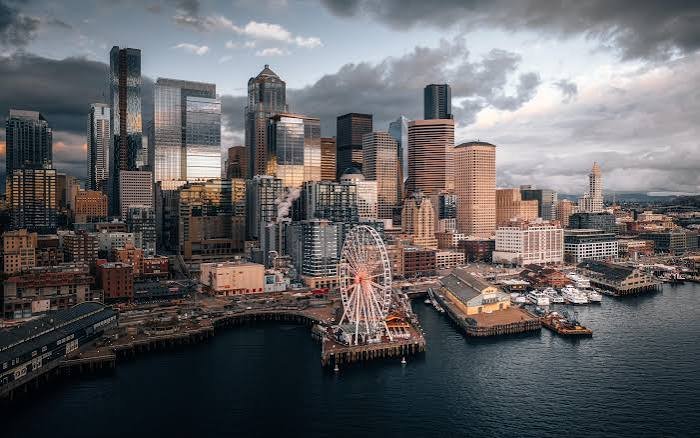
The Emerald City nickname has played a significant role in shaping Seattle’s tourism marketing strategy for decades.
It offers a positive, nature-focused identity that appeals to travelers seeking outdoor beauty alongside urban city experiences.
This branding continues to influence how Seattle promotes itself to both domestic and international visitors today.
Why This Nickname Still Matters In 2026
Even decades after its creation, the Emerald City nickname remains central to how people perceive and describe Seattle.
It continues to appear in tourism materials, local branding, and everyday conversations about the city’s identity.
This lasting relevance shows how effective the original 1982 marketing contest truly was in shaping public perception.
Cultural Identity Beyond Marketing
Over time, the Emerald City nickname has evolved beyond pure marketing into a genuine part of Seattle’s cultural identity.
Residents often use the term with pride, associating it with the city’s natural beauty and environmental consciousness.
This deeper cultural adoption demonstrates how a deliberately created nickname can become authentically meaningful over several decades.
Why Fans And Visitors Still Search This Question
Many people continue searching for the origin of Seattle’s nickname due to common confusion with fictional or mineral-based explanations.
This curiosity is often driven by pop culture references to “The Wizard of Oz” or assumptions about hidden natural resources.
Clarifying the true, straightforward origin helps satisfy this ongoing curiosity among travelers and trivia enthusiasts alike.
The Broader Marketing Strategy Behind The Contest
The 1981 contest was part of a larger effort by Seattle’s tourism officials to reposition the city’s national image.
Rather than relying solely on industrial or aerospace associations, officials wanted to emphasize the region’s natural beauty and livability.
This strategic shift reflected a broader trend among American cities during the era, moving toward nature-focused and lifestyle-driven branding.
How The Contest Was Publicized
The Convention and Visitors Bureau promoted the naming contest through local newspapers, radio stations, and community outreach efforts.
This widespread publicity ensured strong public participation, generating a diverse pool of nickname suggestions from across the country.
The inclusive nature of the contest helped build early public buy-in for whatever name was eventually chosen.
Why A California Writer Won The Contest
Interestingly, the winning entry came not from a Seattle local but from Sarah Sterling-Franklin, a writer based in California.
This detail highlights how Seattle’s reputation for greenery was recognizable even to people living outside the immediate region.
Her outside perspective may have helped capture a description that resonated broadly with both locals and visitors alike.
The Prize And Its Symbolism
Sterling-Franklin’s prize included two vacations, one to Seattle itself and another to the international destination of Acapulco.
This prize structure cleverly tied the contest’s outcome back to tourism, reinforcing the campaign’s core promotional purpose.
It also symbolized the contest’s dual goal of celebrating Seattle while encouraging broader tourism engagement nationally.
Seattle’s Economic Recovery In The 1980s
Following the difficult Boeing layoffs of the 1970s, Seattle’s economy began gradually recovering throughout the early 1980s.
The introduction of a fresh, positive nickname coincided with broader efforts to diversify the local economy beyond aerospace manufacturing.
This combination of economic recovery and rebranding helped set the stage for Seattle’s continued growth in later decades.
How Emerald City Fit Seattle’s Growing Tech Identity
As Seattle later became home to major technology companies, the Emerald City nickname continued to complement its evolving reputation.
The nickname’s association with nature and livability appealed to a growing workforce seeking both career opportunities and quality of life.
This blend of natural beauty and economic opportunity has remained a core part of Seattle’s identity ever since.
Comparing Emerald City To Other Green City Nicknames
Many cities around the world use nature-based nicknames to highlight environmental features unique to their region.
Compared to similar nicknames elsewhere, Seattle’s Emerald City branding stands out due to its official contest origin and strong tourism backing.
This distinct, documented history sets Seattle apart from cities where similar nicknames evolved more informally over time.
The Role Of Environmental Identity In Seattle’s Branding
Seattle’s environmental consciousness, reflected in practices like allowing lawns to naturally brown in summer, ties closely to its Emerald City identity.
This connection reinforces a broader narrative of sustainability and respect for the region’s natural resources among residents.
Such values continue to shape Seattle’s public image well beyond simple marketing terminology.
Why The Nickname Has Endured For Decades
Unlike many marketing campaigns that fade over time, the Emerald City nickname has remained relevant for more than four decades.
Its continued use in tourism materials, local media, and everyday conversation demonstrates the strength of its original conceptual design.
This endurance reflects how effectively the name captured something both visually striking and factually accurate about the city.
Lessons From Seattle’s Rebranding Success
Seattle’s rebranding journey offers a useful case study for other cities considering how to reshape their public image.
It shows that a nickname rooted in genuine, verifiable characteristics of a place tends to endure far longer than purely invented marketing terms.
This lesson continues to influence how modern cities approach tourism branding and civic identity campaigns today.
Final Thoughts On The Nickname’s Origin
Seattle’s Emerald City nickname stands as a rare example of a deliberately created marketing term evolving into genuine cultural identity.
Its combination of accurate geography, strong tourism promotion, and decades of consistent media use has cemented its place in the city’s history.
As Seattle continues to grow, the Emerald City nickname remains a fitting and enduring symbol of its natural beauty and civic pride.
Key Facts Summary
Seattle earned its Emerald City nickname in 1982 through an official tourism contest, not through historical folklore.
The name reflects real, year-round greenery from evergreen trees, parks, and surrounding forested mountains.
It has no connection to emerald mines or “The Wizard of Oz,” despite common public misconceptions.
Quick Summary Before FAQs
Seattle’s Emerald City nickname was deliberately created to rebrand the city during a challenging economic period in the early 1980s.
Its lasting popularity comes from both effective marketing and the city’s genuinely lush, evergreen landscape.
Below are the most frequently asked questions about Seattle’s Emerald City nickname, answered briefly for quick reading.
Frequently Asked Questions (FAQs)
Why is Seattle called the Emerald City?
It refers to the city’s lush, evergreen forests and parks, chosen through an official 1982 tourism contest.
Does the nickname relate to The Wizard of Oz?
No, it is based on real greenery, not on the fictional Emerald City from the movie or book.
Are there emerald mines in Seattle?
No, there are no emerald deposits or mines in the Seattle region at all.
Who created the Emerald City nickname?
The Seattle-King County Convention and Visitors Bureau organized the 1981–1982 contest that created the name.
Who submitted the winning nickname entry?
Sarah Sterling-Franklin, a writer from California, submitted the winning “Emerald City” entry.
What was Seattle called before Emerald City?
It was previously known as Queen City, Gateway to Alaska, City of Flowers, and Jet City.
Is Seattle green all year round?
Mostly yes, due to evergreen trees, though lawns can turn brown during drier summer months.
Do other cities use the Emerald City nickname?
Yes, Eugene, Oregon, and Greenville, North Carolina, also use similar Emerald City branding locally.
Is the original Emerald City logo still used?
No, the original 1982 logo was retired in 2001, though the nickname remains widely used.
Why was a new nickname needed in the 1980s?
Seattle needed a positive new image after economic decline caused by major Boeing job losses in the 1970s.
Conclusion
Seattle’s Emerald City nickname tells a fascinating story of deliberate rebranding rather than old folklore or fictional inspiration. Created through an official 1982 tourism contest, the name was chosen specifically to reflect the city’s lush, evergreen landscape and abundant natural beauty.
Despite common myths linking it to “The Wizard of Oz” or hidden emerald mines, the true origin remains grounded in Seattle’s real geography and climate.
Positioned between the Puget Sound and the Cascade Mountains, the city enjoys a temperate climate that supports year-round greenery, making the nickname both accurate and enduring. Decades later, “Emerald City” continues to shape Seattle’s public identity, tourism marketing, and cultural pride, proving that a well-chosen nickname can become a genuine part of a city’s lasting legacy.


