


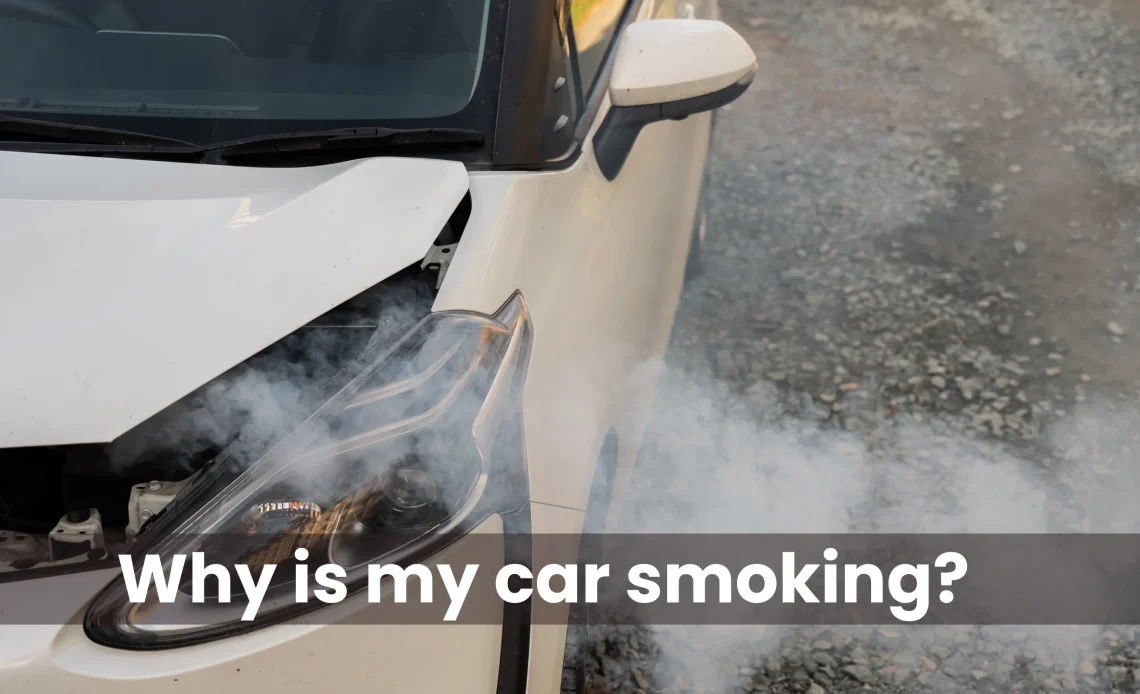
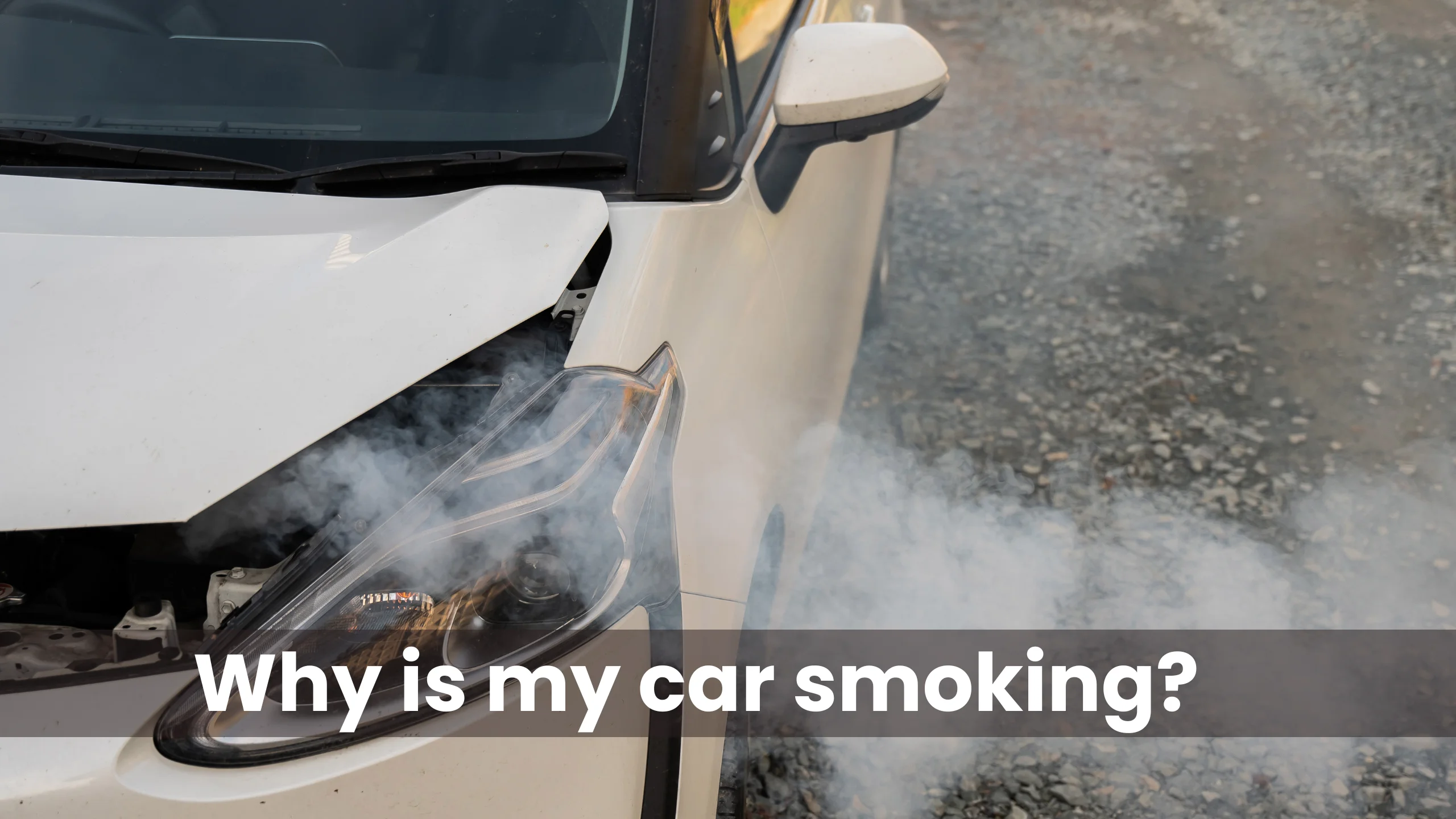
Why is my car smoking is one of the most alarming things a driver can experience. The moment you see smoke rising from your hood or tailpipe, your first instinct is to panic.
But not all smoke means the same thing. The color, thickness, and smell of the smoke are all clues that point to very different problems.
What Does It Mean When Your Car Is Smoking?
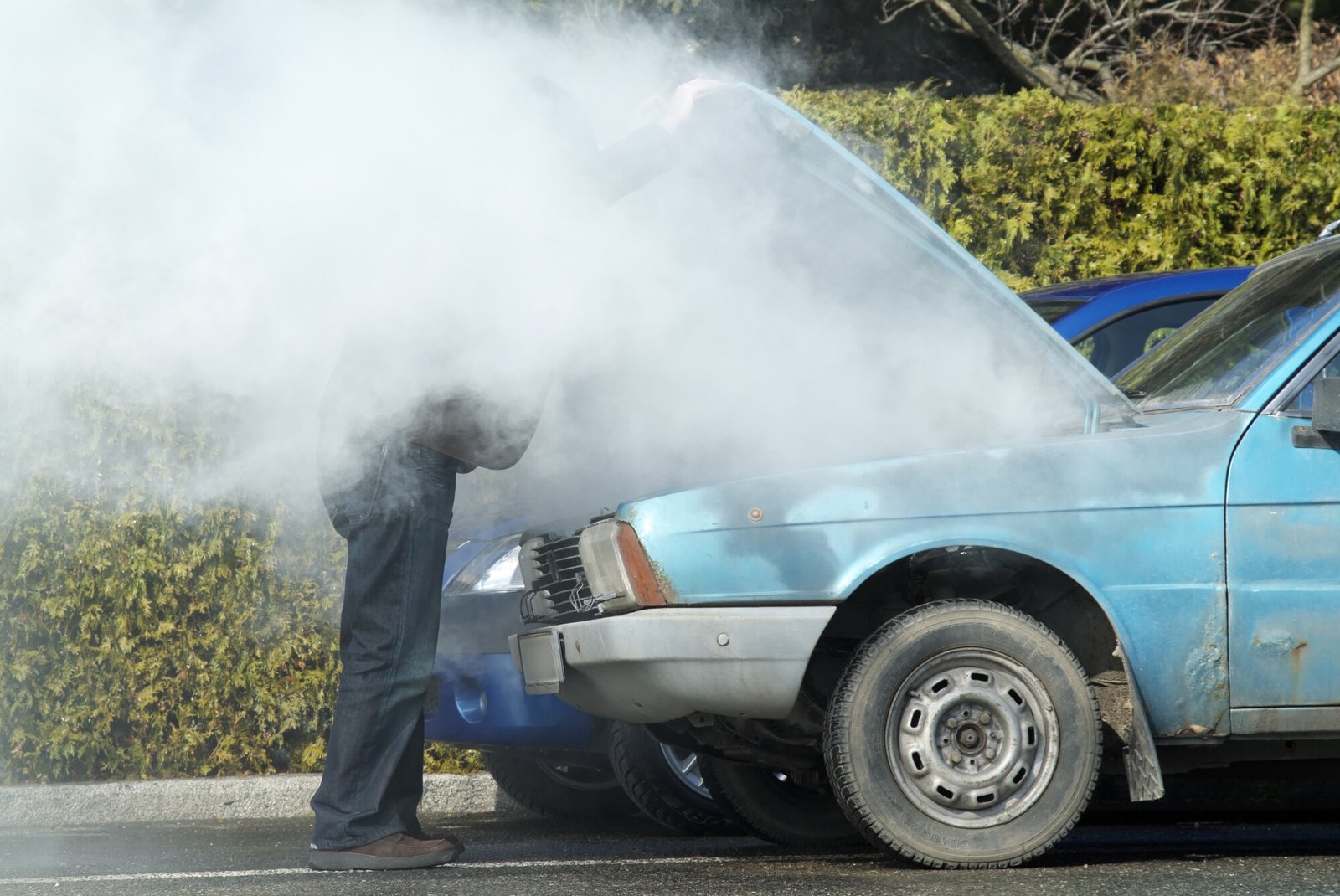
Car smoke is your engine trying to communicate a problem. Modern cars are so clean that visible emissions are almost always a red flag.
The location matters just as much as the color. Smoke from under the hood is different from smoke coming out of the tailpipe. Both need attention, but for different reasons.
Before panicking, ask yourself three things: What color is the smoke? Where is it coming from? Does it go away after the engine warms up?
Smoke Color Chart at a Glance
| Smoke Color | Most Likely Cause | Urgency Level |
|---|---|---|
| Thin White | Condensation (harmless) | Low |
| Thick White | Coolant leak / blown head gasket | Very High |
| Blue / Gray | Burning oil | High |
| Black | Rich fuel mixture / excess fuel | Medium-High |
| White with sweet smell | Coolant burning in combustion chamber | Very High |
| Black with plastic smell | Electrical wiring burning | High |
White Smoke From Car: What It Really Means
White smoke is the most common and also the most misunderstood type of car smoke.
There are two completely different situations that produce white smoke. One is totally harmless. The other is a serious engine emergency.
Thin White Smoke on a Cold Morning
If you start your car on a cold day and see thin, wispy white vapor from the tailpipe that disappears within a minute or two, you have nothing to worry about.
This is just condensation. Overnight, moisture builds up inside the exhaust system. When the engine starts, heat turns that moisture into steam, which looks like white smoke.
As the exhaust system warms up, the vapor disappears completely. This is completely normal behavior and requires no repair.
Thick White Smoke That Does Not Go Away
Thick, billowing white smoke that continues after the engine is fully warmed up is a serious warning sign.
This almost always means coolant is leaking into the combustion chamber and being burned along with fuel. The result is dense white smoke with a slightly sweet smell.
The most common causes are a blown head gasket, a cracked engine block, or a warped cylinder head. These are all expensive repairs that get worse the longer you ignore them.
If you see thick white smoke, stop driving immediately. Pull over safely and call for a tow.
White Smoke With a Sweet Smell
A sweet, almost syrupy smell coming from your exhaust alongside white smoke is almost always coolant burning inside the engine.
The head gasket, which sits between the cylinder head and the engine block, seals coolant and oil from mixing. When it fails, coolant seeps into the combustion chamber and burns.
Check the underside of your oil filler cap. If you see a creamy, light-brown or milky residue, coolant is mixing with your oil. This is a blown head gasket until proven otherwise.
White Smoke Causes Summary
- Blown head gasket (most common serious cause)
- Cracked engine block
- Damaged or warped cylinder head
- Broken radiator hoses
- Damaged fuel injectors
- Condensation (harmless, morning only)
Head Gasket Replacement Cost
Head gasket repair is one of the most expensive jobs on a car. Expect to pay anywhere from $1,000 to $2,500 depending on your vehicle make and the extent of damage.
Catching it early makes a huge difference. A car driven with a blown head gasket can develop a cracked block, which often means the engine needs full replacement.
Black Smoke From Car: What Is Causing It?
Black smoke from the exhaust means your engine is burning too much fuel. This is called a rich fuel mixture.
In a healthy engine, fuel and air mix in a precise ratio before combustion. When there is too much fuel or not enough air, the excess fuel does not burn completely. It exits the exhaust as sooty black smoke.
Main Causes of Black Smoke
Clogged air filter — The most simple and cheapest fix. A dirty air filter restricts airflow into the engine, creating a rich mixture. Replacing an air filter costs $20–$30 and takes 10 minutes.
Faulty fuel injectors — Injectors that leak or stay open too long dump excess fuel into the combustion chamber. This causes black smoke, poor fuel economy, and rough idling.
Bad fuel pressure regulator — Controls how much fuel is sent to the injectors. A failed regulator can cause too much fuel to be delivered.
Malfunctioning MAF sensor — The mass airflow sensor tells the engine computer how much air is coming in. A dirty or broken MAF sensor sends wrong readings, causing the computer to inject too much fuel.
Faulty oxygen sensor — The O2 sensor monitors exhaust gases and adjusts the fuel mixture. A dead sensor causes the engine to run rich and produce black smoke.
Bad ignition timing — When the spark fires at the wrong time, fuel does not burn completely and exits as black smoke.
Black Smoke vs Black Smoke With Plastic Smell
Regular black smoke from the tailpipe smells like gasoline. It is a fuel and combustion problem.
Black smoke with a burning plastic or electrical smell is something completely different. This means electrical wiring is burning somewhere in the vehicle. This is dangerous and can lead to a car fire.
If you smell burning plastic or see black smoke coming from inside the cabin or under the dash, pull over immediately, turn off the engine, and get out of the car.
Blue or Gray Smoke: Your Engine Is Burning Oil
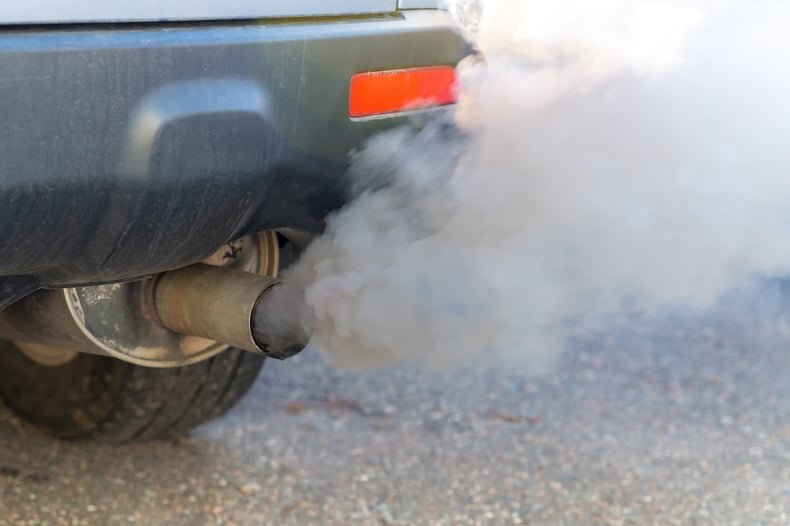
Blue or gray-tinged smoke from the exhaust is a clear sign that engine oil is entering the combustion chamber and being burned along with fuel.
Oil should never enter the combustion chamber. When it does, it produces a distinctive blue or gray smoke that often has a bitter, acrid smell.
What Causes Blue Smoke?
Worn piston rings — Piston rings seal the combustion chamber from the crankcase below. When they wear out, oil slips past into the chamber and burns. This is most noticeable during acceleration.
Damaged valve seals — Valve stem seals prevent oil from dripping down the intake and exhaust valves into the combustion chamber. Worn seals cause blue smoke especially on startup, after the car has been sitting.
Clogged PCV valve — The positive crankcase ventilation valve regulates pressure inside the engine. When it clogs, pressure builds up and forces oil into the combustion chamber. This is a cheap fix. A PCV valve often costs under $20 and takes 30 minutes to replace.
Too much oil in the engine — Overfilling the oil past the maximum mark causes excess oil to get into areas it should not be. The fix is simply draining some oil back to the correct level.
Faulty turbocharger seal — On turbocharged engines, a blown turbo seal allows oil to be sucked into the intake and burned. Gray smoke in turbocharged cars often points here first.
Blue Smoke at Startup vs While Driving
| When You See It | What It Likely Means |
|---|---|
| Only at startup | Worn valve seals — oil drips in while parked |
| During acceleration | Worn piston rings — oil pushed in under pressure |
| Constantly | Severe engine wear or clogged PCV valve |
| On deceleration | Valve guide wear or vacuum-related oil leak |
If you notice blue smoke, check your oil level immediately. If it is dropping fast between oil changes, oil is being consumed internally. This will get worse over time and can lead to complete engine failure.
Smoke From Under the Hood (Not the Exhaust)
Smoke rising from under the hood rather than from the tailpipe is a different situation entirely.
This type of smoke almost always means a fluid is dripping onto a hot surface. The exhaust manifold, engine block, and other components run extremely hot and will vaporize any liquid that touches them.
Common Causes
Oil spill on engine — After an oil change, if oil is accidentally spilled on the engine or exhaust manifold, it will smoke off as the engine heats up. This usually clears up on its own after a few minutes.
Oil leak from gasket or seal — A leaking valve cover gasket, front main seal, or other gasket can drip oil onto the hot exhaust. This produces blue-gray smoke from under the hood with a burning oil smell.
Coolant leak onto engine — A burst radiator hose spraying coolant onto a hot engine produces wispy white steam. Coolant smoke has a distinctive sweet smell and can feel slightly oily if rubbed between your fingers.
Burning electrical wiring — Less common but dangerous. Burning wires produce a sharp, acrid smell. Look for flickering lights or electrical malfunctions alongside the smoke.
What to Do When Smoke Comes From Under the Hood
Turn off the engine immediately. Do not open the hood if you suspect a fire — opening it feeds oxygen to the flames.
Let the engine cool completely before inspecting anything. If smoke keeps coming or you see flames, get away from the car and call emergency services.
Smoke When Accelerating vs At Idle
The timing of when smoke appears gives you additional diagnostic clues.
Smoke Only When Accelerating
Black smoke during hard acceleration usually means a rich fuel mixture that worsens under engine load.
Blue smoke only during acceleration points to worn piston rings. The increased pressure inside the cylinders during acceleration pushes oil past the rings.
If the car feels sluggish, hesitates, or has poor fuel economy alongside the smoke, the problem is almost certainly fuel-related.
Smoke Only at Idle
Blue or gray smoke at idle that clears up when driving can indicate a vacuum leak pulling oil into the intake manifold.
A clogged PCV valve can also cause idle-only smoke as crankcase pressure has nowhere to go except back into the engine.
Smoke Right After Startup
Thin white vapor right at startup on a cold day is condensation and normal.
Blue smoke right at startup that clears up quickly usually means worn valve seals. Oil drips down through the valves while the car is parked, and burns off as soon as the engine fires.
Is It Safe to Drive a Smoking Car?
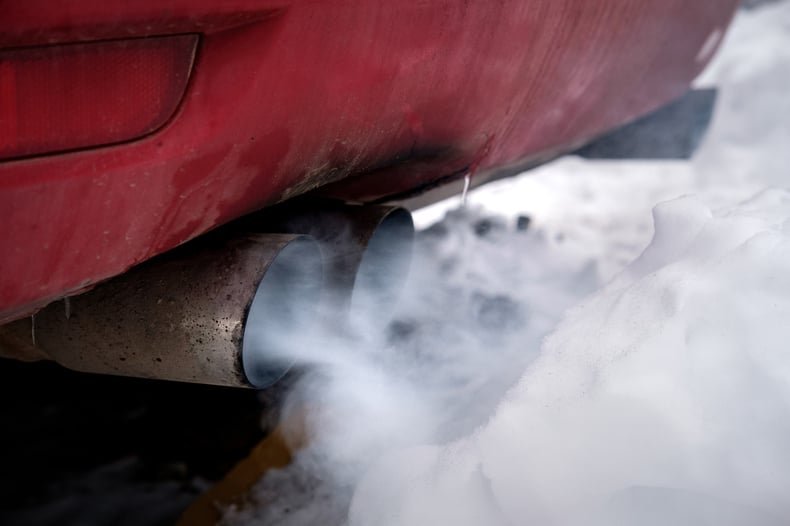
The honest answer depends entirely on the color and cause of the smoke.
Thin white vapor on a cold morning — Yes, safe to drive. It is just condensation.
Thick white smoke — No. Stop driving immediately. You risk overheating the engine and turning a $1,500 repair into a $5,000 engine replacement.
Blue or gray smoke — Drive with caution to a shop, but do not ignore it. Check oil level first. If oil is critically low, do not drive at all.
Black smoke — Generally safe for short distances, but get it checked soon. It is wasting fuel and can damage the catalytic converter and O2 sensors over time.
Any smoke with burning plastic smell — Stop the car. Get out. This could be an electrical fire.
Repair Cost Guide for Smoking Cars
| Problem | Estimated Repair Cost |
|---|---|
| New air filter | $20–$50 |
| PCV valve replacement | $20–$80 |
| Fuel injector cleaning | $50–$150 |
| MAF sensor replacement | $150–$400 |
| Valve seal replacement | $500–$1,500 |
| Head gasket replacement | $1,000–$2,500 |
| Piston ring replacement | $1,500–$4,000 |
| Engine block repair or replacement | $3,000–$10,000+ |
Getting a diagnostic as soon as you notice smoke can save you thousands. Most shops charge $80–$150 for a diagnostic check that pinpoints the exact cause.
How to Prevent Car Smoke Problems
Prevention is far cheaper than repair. These habits keep your engine smoke-free.
Change your oil on schedule — Dirty, degraded oil breaks down and burns more easily. Follow your manufacturer’s oil change interval, usually every 5,000–7,500 miles.
Check coolant levels regularly — Low coolant is often the first warning sign before a full head gasket failure. Check the coolant reservoir monthly, especially before long trips.
Replace the air filter every 12,000–15,000 miles — A clean air filter is one of the cheapest ways to prevent rich fuel mixtures and black smoke.
Use the correct oil weight — Using oil that is too thin for your engine can lead to oil burning and blue smoke. Check your owner’s manual for the recommended viscosity.
Do not ignore warning lights — The check engine light often illuminates before visible smoke appears. Address it early and the repair is almost always cheaper.
Get regular coolant flushes — Old, acidic coolant degrades hoses and gaskets. A coolant flush every 2–3 years keeps the entire cooling system healthy.
What to Do When You See Car Smoke: Step-by-Step
Step 1 — Stay calm. Note the color, thickness, and where the smoke is coming from.
Step 2 — If the smoke is thin white vapor on a cold morning, monitor it. If it clears within 2 minutes, you are fine.
Step 3 — If smoke is thick, persistent, or any color other than thin white, pull over safely as soon as possible.
Step 4 — Turn off the engine. Do not open the hood if you see or smell anything that suggests fire.
Step 5 — Check your gauges. Is the temperature gauge in the red? The oil pressure light on? Is the check engine light illuminated?
Step 6 — If the engine is overheating or oil pressure is lost, do not restart the car. Call for a tow.
Step 7 — Once the engine has cooled (minimum 30 minutes), check the coolant level and oil level. This gives you basic diagnostic information for the mechanic.
Step 8 — Call a mechanic and describe the smoke color, when it appeared, and any smells or warning lights.
Smoke From Diesel Cars vs Petrol Cars
Diesel engines naturally produce slightly more visible exhaust than petrol engines, especially when cold or under hard acceleration.
White smoke from a diesel on startup in cold weather is very common and usually normal. It is unburned fuel vapor from cold combustion. It should clear up once the engine warms up.
Persistent white smoke from a diesel engine can indicate a faulty injector, low compression, or glow plug failure in addition to the same coolant leak causes found in petrol engines.
Black smoke from a diesel under heavy acceleration is more acceptable than in a petrol car, but excessive black smoke indicates a dirty air filter, bad injectors, or a boost pressure problem (turbocharger issue).
Blue smoke from a diesel has the same meaning as in petrol cars — engine oil is being burned.
Frequently Asked Questions (FAQs)
Why is my car smoking but not overheating?
Smoke without overheating usually means oil or fluid is dripping onto a hot surface. It could be a minor oil leak onto the exhaust manifold. Check for leaks under the hood and monitor your oil level.
Is white smoke from exhaust dangerous?
Thin white vapor on cold mornings is harmless condensation. Thick white smoke that persists after warmup is very dangerous — it usually signals a coolant leak or blown head gasket requiring immediate attention.
What does blue smoke mean in a car?
Blue smoke means your engine is burning oil. The most common causes are worn piston rings, damaged valve seals, or a clogged PCV valve. Check your oil level and get a mechanic to inspect it soon.
Can I drive my car if it is smoking?
It depends on the smoke color. Thin white vapor in cold weather is fine. Thick white, blue, or black smoke means you should stop driving or at minimum get to a shop immediately to avoid major engine damage.
Why is my car smoking from the hood?
Smoke from under the hood is usually fluid burning on hot engine parts. Common causes include a small oil leak, a spilled coolant hose, or residual oil from a recent service. Check for leaks once the engine cools.
What does black smoke from a car mean?
Black smoke means the engine is burning too much fuel. The most common causes are a clogged air filter, bad fuel injectors, a faulty MAF sensor, or a failing oxygen sensor. It reduces fuel economy and can damage the catalytic converter.
How much does it cost to fix a smoking car?
Cost varies widely. A clogged air filter costs $20–$50 to fix. A blown head gasket costs $1,000–$2,500. Getting a diagnostic check ($80–$150) first is the best way to know what you are dealing with before committing to repairs.
Why does my car smoke when I accelerate?
Black smoke during acceleration usually means a rich fuel mixture under load. Blue smoke during acceleration points to worn piston rings that allow oil into the combustion chamber when cylinder pressure rises.
What does car smoke smell like?
White smoke from coolant has a sweet smell. Blue smoke from burning oil has a bitter, acrid odor. Black smoke smells like raw gasoline. Burning electrical wiring smells like melting plastic. The smell helps confirm the color diagnosis.
Can a bad oil change cause my car to smoke?
Yes. If oil is spilled on the engine during an oil change, it will smoke as it burns off the hot surfaces. This is usually harmless and clears up within a few minutes of driving. Overfilling the oil can also cause blue smoke.
Conclusion
If your car is smoking, the color of that smoke is the most important clue you have. Thin white vapor on a cold morning is nothing to worry about. But thick white smoke, blue smoke, or persistent black smoke all point to real mechanical problems that will only get worse with time.
White smoke almost always means a coolant issue, blue smoke means burning oil, and black smoke means a fuel problem. Act quickly, identify the color, check your fluid levels, and get a mechanic involved before a small fix turns into an engine rebuild.
Regular maintenance — oil changes, coolant checks, and air filter replacements — is the single best way to make sure you never have to ask why your car is smoking in the first place. When in doubt, pull over. Your engine will thank you.


