


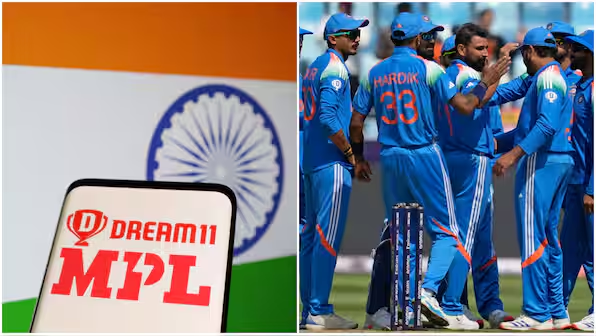
Indian cricket does not move in a straight line. It pulses. One month it is all about a five-day grind in Hyderabad, the next it is sixes raining in Ahmedabad, then suddenly everyone is watching a Super Over in a World Cup game. That rhythm does not just shape TV schedules and office banter. It quietly rewires how Indians play, bet, and engage with online gaming across the year.
Seasonal swings in India’s cricket calendar
The Indian cricket calendar is now a layered stack of commitments: home Tests, away tours, the IPL, women’s cricket, domestic tournaments, and ICC events squeezed into whatever space remains. Each block creates its own digital aftershock.
When India host a marquee Test series, interest builds slowly. Fans follow squads, practice games, and selection debates. Search trends for scorecards, session-by-session analysis, and long-form commentary rise. Online gaming during these stretches tends to lean towards strategy-heavy formats, fantasy contests that reward patience, and prediction markets that span multiple days rather than a single innings.
The IPL flips that pattern. For two months, evenings are carved into three-hour windows. Every ball can swing a match, and every match can swing a mini-league or a betting slip. Short-format tournaments compress attention, and that compression spills into gaming behaviour: more in-play decisions, more micro-markets, more second-screen activity.
ICC tournaments sit somewhere in between. They bring global narratives and neutral-venue conditions, but for Indian users they still feel like national events. Peaks in traffic to cricket content, fantasy platforms, and real-money gaming apps often mirror India’s fixtures rather than the tournament as a whole.
From marquee tournaments to nightly gaming habits
What happens on the field filters directly into how people play online. A packed April-May with IPL fixtures means more consistent daily engagement. Users log in at roughly the same time, build routines around toss updates, team news, and last-minute changes.
During these periods, platforms that combine match context with gaming angles tend to see deeper engagement. Fans are not just looking for odds or points tables; they want a place where cricket-focused gaming choices sit alongside form guides, venue trends, and basic explanations of markets. That blend of sport-first storytelling and gaming literacy is what keeps casual users from feeling overwhelmed when the schedule is relentless.
Outside the IPL window, behaviour becomes more spiky. A Sunday ODI against Pakistan or a World Cup knockout can trigger a surge in sign-ups and first-time deposits. But the quieter weeks between tours often see users drift towards casino-style games, card formats familiar from Diwali gatherings, or casual fantasy contests built around domestic cricket.
How formats shape digital play
Not all cricket is consumed the same way, and that matters for online gaming:
- Test cricket: Longer matches encourage slower, more analytical play. Users are more likely to explore session-based predictions, top batter markets, or series scorelines. The pace allows for research, reflection, and mid-match adjustments.
- T20 leagues and franchise tournaments: Here, everything is compressed. Users chase powerplay runs, boundary counts, and player performance in tiny windows. In-play markets thrive, and fantasy line-ups are tweaked right up to the toss.
ODIs sit awkwardly in the middle. On big days, they behave like T20s in terms of attention and gaming intensity. On low-profile tours, they can feel like background noise, with engagement drifting towards other formats or even other sports.
Across all of this, one constant is the need for reliable daily match details. Whether someone is building a fantasy XI or checking how a rain interruption might affect a chase, they lean on fixtures, probable XIs, and live updates to make decisions that feel informed rather than random.
Payments, second screens and small stakes
The rise of UPI has quietly removed a major friction point. Deposits and withdrawals that once felt clunky now happen in seconds. That speed changes behaviour. Small-stake, high-frequency play becomes more common, especially during dense parts of the calendar like the IPL or a World Cup.
Second-screen culture adds another layer. Many Indian fans now watch matches on TV while tracking fantasy scores, live markets, or community chats on their phones. That dual focus rewards platforms that keep interfaces clean and context-rich: clear odds, simple contest structures, and quick access to recent form or head-to-head numbers.
Typical patterns during a busy cricket month include:
- Short, frequent sessions: Users log in before the toss, at innings breaks, and in the final overs.
- Micro-decisions: Instead of one big pre-match bet, users spread smaller stakes across overs, players, and milestones.
- Social influence: Office groups, family WhatsApp chats, and college circles often nudge people towards specific contests or markets.
When the calendar thins out, those same users may still open their apps, but they are more likely to explore evergreen games that do not depend on a live match.
What the next cycle could look like
With more bilateral series, expanding women’s cricket, and the possibility of new franchise leagues, India’s cricket calendar is not getting lighter. That means online gaming trends will keep evolving around three big themes.
First, context will matter more than ever. Users will gravitate towards platforms that help them make sense of a crowded schedule, whether that is through simple explainer content, form snapshots, or integrated views of upcoming fixtures and scorelines.
Second, responsible play will become a bigger talking point. As cricket fills more days of the year, the line between casual fun and unhealthy patterns can blur. Clear limits, transparent odds, and easy-to-understand rules will be crucial in keeping gaming sustainable for regular fans.
Third, localisation will deepen. Regional language coverage, state-specific fan cultures, and different comfort levels with formats will shape how people engage with both cricket and gaming. A fan in Chennai following the TNPL may not behave the same way as someone in Mumbai locked into every IPL double-header.
In the end, the calendar is the quiet architect. It decides when India switches on the floodlights, when evenings are built around a chase, and when fans have a rare week to breathe. Online gaming simply flows into the gaps, rising and falling with every new fixture list that drops.

