


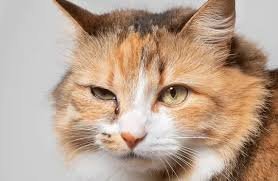
Why does my cat have eye boogers is something almost every cat owner has wondered, especially after noticing crusty or gooey buildup in the corners of their cat’s eyes.
The short answer is that cat eyes produce a film of tears containing water, oils, mucus, and antibodies to protect the eye from dust, debris, and bacteria.
During sleep, those tear components collect in the corners of the eyes and dry into what most people call eye boogers.
A small amount of this is completely normal. But when the discharge becomes excessive, changes color, or comes with other symptoms, it can signal something that needs attention.
What Are Cat Eye Boogers Exactly?
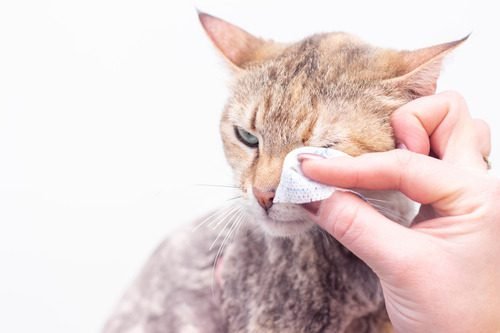
Cat eye boogers are the dried or semi-dried discharge that collects in the inner corner of a cat’s eyes. The technical term for this discharge is ocular discharge, and excessive tearing is called epiphora.
Cats produce a tear film at all times to keep the eye moist, clean, and protected. When they sleep, that tear film is not being spread across the eye by blinking, so its components — mucus, proteins, oils, and dead cells — settle and collect at the corner of the eye.
When exposed to air, that collected material dries into the crust most owners recognize as eye boogers, eye gunk, eye goop, or sleep.
Is It Normal for Cats to Have Eye Boogers?
Yes, small amounts of eye discharge are completely normal in cats. Veterinary ophthalmologists confirm that a mild, grayish or slightly brownish crust after waking is expected and should not cause concern.
What is not normal is discharge that continues throughout the day, appears in large amounts, changes color to yellow or green, smells unusual, or comes paired with redness, squinting, or pawing at the eye.
Normal eye boogers are typically small in volume, clear to pale brown in color, and appear mainly after sleep. Anything beyond that warrants a closer look.
Why Does My Cat Have Eye Boogers? The Main Causes
Multiple things can cause a cat to produce more eye discharge than usual. Some are minor and resolve on their own. Others require veterinary care. Here is a full breakdown of the most common causes.
Feline Upper Respiratory Infection
The most common cause of excessive eye boogers in cats is a feline upper respiratory infection (URI), commonly called cat flu. These infections are caused most often by feline herpesvirus (FHV-1) or feline calicivirus.
Alongside eye discharge, affected cats typically show sneezing, nasal discharge, coughing, lethargy, and loss of appetite. The eye discharge with URI is often clear at first and may turn yellow or green if a secondary bacterial infection develops.
URIs are highly contagious between cats. A cat that was exposed to other cats at a shelter, boarding facility, or cattery is especially vulnerable.
Conjunctivitis (Pink Eye)
Conjunctivitis is the most common eye problem in cats. It refers to inflammation of the conjunctiva, the pink tissue lining the inside of the eyelids.
It is not a diagnosis on its own — it is a symptom. Conjunctivitis can be caused by bacterial infection, viral infection, allergies, dust, or foreign material. Affected cats often show redness, swelling of the eyelid lining, and increased discharge.
Most cats will experience at least one episode of conjunctivitis in their lifetime. While it often clears up on its own, cases involving significant pain, colored discharge, or swelling should be evaluated by a vet.
Allergies and Environmental Irritants
Just like people, cats can be allergic to dust, pollen, mold, cigarette smoke, certain cleaning products, and even some ingredients in their food. These allergens trigger an immune response that includes increased tear production.
Environmental irritants that do not cause a full allergy response can also stimulate excessive tearing. Dusty litter, air fresheners, candles, and smoke are common household culprits.
When both eyes are producing excess clear discharge simultaneously, allergies are often the likely explanation. A vet visit is still recommended to rule out other causes and identify the specific trigger.
Breed-Related Anatomy
Flat-faced breeds such as Persians, Himalayans, Exotic Shorthairs, and British Shorthairs are genetically predisposed to excessive eye discharge. This is because their facial structure — called brachycephalic anatomy — affects how their tear ducts function.
In these breeds, the tear ducts are shorter, kink more easily, or are partially blocked by the flattened facial structure. Instead of draining normally into the nose, tears overflow continuously onto the face.
This ongoing overflow is called epiphora, and it creates the persistent reddish-brown tear stains that owners of flat-faced cats are very familiar with. For these breeds, daily gentle eye cleaning is typically a standard part of grooming rather than a sign of illness.
Corneal Ulcers and Eye Injuries
A corneal ulcer is an open sore on the surface of the eye. Cats can develop corneal ulcers from scratches during fights with other cats, from foreign material under the eyelid, or from chronic herpesvirus infections.
Signs of a corneal ulcer include intense squinting, holding the eye partially or fully closed, sensitivity to light, redness, and a clear or mucoid discharge. The ulcer itself may not be visible to the naked eye, but vets can diagnose it using a fluorescent stain that glows under blue light.
Corneal ulcers can progress to serious complications rapidly. A cat showing the above symptoms should be seen by a vet promptly — this is not a wait-and-see situation.
Blocked Tear Ducts
The nasolacrimal duct is the channel that drains tears from the eye into the nose. When this duct becomes blocked or narrowed, tears have nowhere to go and overflow onto the face instead.
Blocked tear ducts can result from chronic infection, inflammation, scar tissue, or in flat-faced breeds, simply from anatomy. They can also be compressed by dental disease — because the duct runs close to the roots of the upper canine teeth, a severe tooth root abscess can press on it and disrupt drainage.
A vet can diagnose a blocked tear duct and may be able to flush it clear under sedation. Dental disease related to the blockage would also need separate treatment.
Dry Eye (Keratoconjunctivitis Sicca)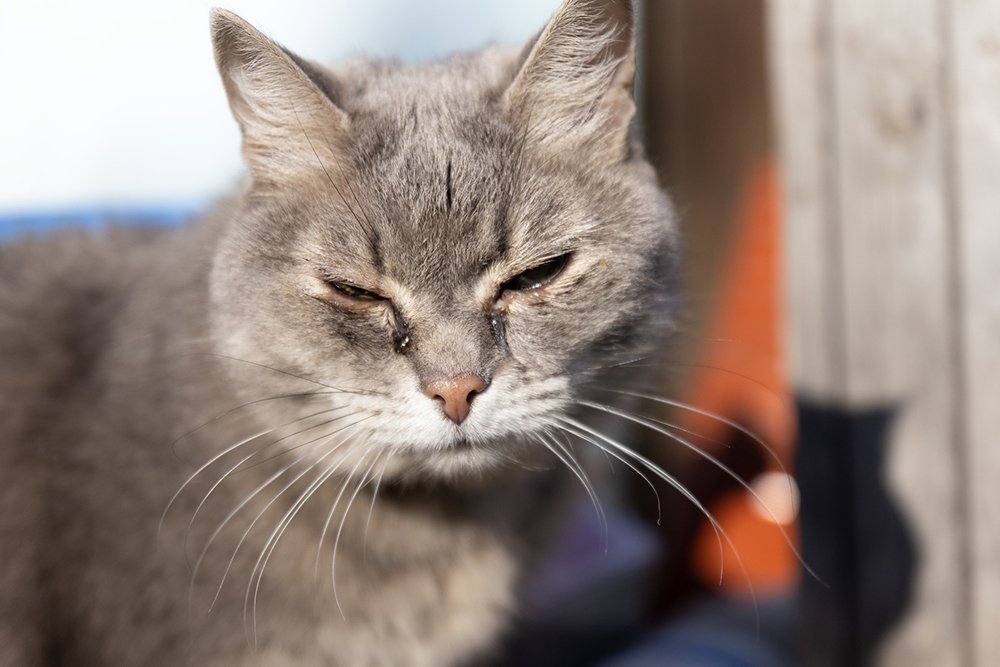
Dry eye is a condition where the tear glands do not produce enough of the watery component of tears. This might seem counterintuitive — a cat with dry eye still produces discharge, but it is thick, stringy, and mucoid rather than watery because the lubricating layer of tears is insufficient.
Without adequate tear film, the eye becomes inflamed, irritated, and prone to infections and ulcers. Cats with dry eye typically have dull-looking eyes, mucoid discharge, and frequent squinting.
Dry eye is treated with medications that stimulate tear production and replace the tear film to protect the cornea from further damage.
Uveitis
Uveitis refers to inflammation inside the eye, specifically of the uvea — the middle layer of the eye containing the iris, ciliary body, and choroid. It is a serious condition that can cause significant pain and lead to blindness if left untreated.
Causes include infections (bacterial, viral, and fungal), trauma, tumors, diabetes, and high blood pressure. Signs include a change in eye appearance, cloudiness, redness, squinting, and varying amounts of discharge.
Uveitis requires urgent medical attention. If a cat shows sudden changes in the appearance of one or both eyes, a same-day vet visit is strongly recommended.
Entropion
Entropion is a condition where the eyelid rolls inward, causing the eyelashes or eyelid skin to rub constantly against the surface of the eye. It is very uncomfortable and produces continual watery eyes.
Over time, the friction makes cats prone to secondary bacterial infections, turning the discharge from clear to yellow or green. Entropion is often congenital — cats are usually born with the condition.
Mild cases may be managed with cleaning and medication. Severe or chronic cases typically require corrective surgery to reposition the eyelid.
What the Color of Cat Eye Boogers Tells You
The color of the discharge is one of the most useful indicators of what is happening with your cat’s eyes. Here is a color guide used by most vets as a starting point.
| Discharge Color | What It May Indicate | Action Needed |
|---|---|---|
| Clear, watery | Normal, allergies, mild irritant, epiphora | Monitor; vet visit if persistent |
| Pale yellow or tan (dry, crusty) | Normal dried mucus and tears | None if small amount |
| Yellow or green, thick | Bacterial infection, URI, conjunctivitis | Vet visit soon |
| Brown, dry and crusty | Normal tear pigments (porphyrins), infection | Monitor; vet if excessive |
| Reddish-brown staining | Epiphora (tear overflow), common in flat-faced breeds | Daily cleaning; vet if worsening |
| White or gray, stringy | Possible dry eye (KCS) | Vet visit |
| Bloody or blood-tinged | Trauma, severe infection, ulcer, serious condition | Emergency vet visit |
This color guide helps owners make an initial assessment, but it does not replace a professional veterinary diagnosis.
One Eye vs Both Eyes: Why It Matters
Whether one or both eyes are affected often points in different directions. This distinction helps narrow down the cause.
If both eyes are producing excess discharge simultaneously, it often points to a systemic cause — an infection like URI, an allergy, or a condition affecting the whole body.
If only one eye is affected, the cause is more likely to be localized — a scratch, a foreign object under the eyelid, a blocked tear duct on that side, or an injury. One-eye discharge is more likely to be a physical problem specific to that eye.
| Pattern | More Likely Cause |
|---|---|
| Both eyes affected equally | URI, allergy, systemic infection, breed anatomy |
| One eye only, suddenly | Scratch, foreign body, injury, localized infection |
| One eye chronically | Blocked tear duct, entropion, congenital issue |
| Worsening quickly in one eye | Corneal ulcer, uveitis — urgent care needed |
Breeds Most Prone to Cat Eye Boogers
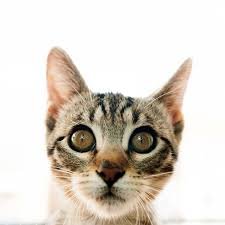
Certain breeds are significantly more likely to have ongoing eye discharge due to their facial structure. Owners of these breeds should expect routine eye cleaning as a standard part of care.
| Breed | Reason for Eye Discharge | Management |
|---|---|---|
| Persian | Brachycephalic, kinked tear ducts | Daily cleaning required |
| Himalayan | Same as Persian | Daily cleaning required |
| Exotic Shorthair | Flat face, shallow eye sockets | Regular cleaning |
| British Shorthair | Slightly flat face | Occasional cleaning |
| Ragdoll | Can be prone to epiphora | Monitor and clean as needed |
| Scottish Fold | Folded ears affect facial anatomy | Regular monitoring |
| Burmese | Prominent eyes | Clean as needed |
Long-haired flat-faced breeds have the highest grooming demands around the eye area because fur and ongoing moisture create conditions where bacteria and yeast can thrive on the skin beneath the eyes.
How to Clean Cat Eye Boogers at Home
For normal, routine eye boogers, safe gentle cleaning at home is appropriate and recommended. Here is the correct step-by-step method used by vets.
Step 1: Gather the Right Supplies
Use sterile saline solution, warm distilled water, or a vet-approved pet eye wipe. Never use human eye drops, baby wipes, hydrogen peroxide, or any product not specifically formulated for use near a cat’s eyes.
Cotton balls or clean gauze pads are ideal. Use a fresh cotton ball for each eye to avoid transferring anything from one eye to the other.
Step 2: Soften the Discharge First
For hard, crusty discharge, do not try to scrape or pull it off dry. Place the moistened cotton ball gently against the crust and hold it there for five to ten seconds.
The warmth and moisture will soften the crust, making it much easier to remove without discomfort or skin irritation. Forcing it off dry can cause pain and may damage the delicate skin around the eye.
Step 3: Wipe in the Right Direction
Always wipe from the inner corner of the eye outward toward the ear. Never wipe inward toward the eye — this pushes debris directly onto the eyeball and can cause irritation or introduce infection.
Use gentle, light pressure. The skin around a cat’s eye is sensitive. One smooth outward wipe per pass is better than rubbing back and forth.
Step 4: Do Not Touch the Eye Itself
The eye surface should never be wiped directly. Clean only the surrounding skin and the corner of the eye. If discharge is deep inside the eye itself, that is a job for a veterinarian.
Use a separate, fresh cotton ball for the other eye to avoid cross-contamination between eyes.
What Not to Use When Cleaning Cat Eyes
Several common household products are unsafe near a cat’s eyes and should never be used regardless of how convenient they seem.
| Product | Why It Is Unsafe |
|---|---|
| Human eye drops | Contain ingredients not formulated for cats — can cause harm |
| Baby wipes | Contain fragrances, soaps, and moisturizers that burn eyes |
| Hydrogen peroxide | Severely damaging near eye tissue |
| Alcohol-based wipes | Extremely irritating and painful |
| Tap water (repeatedly) | Chlorine and minerals can cause irritation over time |
| Cotton swabs (Q-tips) | Too rigid and pointed — risk of injury |
Always consult a vet before using any medication or product inside or directly on a cat’s eye.
When to See a Vet for Cat Eye Boogers
Most owners want a clear, practical answer to this. Here is a straightforward guide to when a vet visit is necessary versus when home monitoring is appropriate.
A vet visit should happen soon if the discharge is yellow, green, or brown and thick, if the eye is red or visibly swollen, if the cat is squinting or holding the eye shut, if there is pawing or rubbing at the eye, if discharge continues throughout the day rather than just after sleep, or if a kitten or newly adopted cat is showing any level of discharge.
A vet visit is urgent or emergency-level if the discharge is bloody or blood-tinged, if the eye has suddenly changed in appearance, if the cat is in visible pain and will not open the eye, or if there is cloudiness or a visible change in the eyeball itself.
Routine clear discharge from a known brachycephalic breed with no other symptoms, or small dry pale-brown crust after sleep in an otherwise healthy cat, can generally be monitored and cleaned at home.
| Discharge Type | Urgency Level |
|---|---|
| Small pale-brown crust after sleep | Normal — clean at home |
| Clear watery overflow in Persian/Himalayan | Routine — clean daily |
| Yellow or green, thick and sticky | See vet soon (within 24–48 hours) |
| Sudden single-eye squinting with discharge | See vet promptly |
| Bloody, severe, or eye appearance changes | Emergency — vet same day |
How to Prevent Excessive Eye Boogers
While some causes are not preventable, several practical steps reduce the likelihood of excessive or recurring eye discharge.
Keep the home environment clean and low in dust and airborne irritants. Use low-dust cat litter. Avoid burning strong-scented candles or using aerosol sprays near cats. Run an air purifier if allergies are suspected.
Keep vaccinations current. The core feline vaccines protect against feline herpesvirus and calicivirus, the two most common causes of URI-related eye discharge. Vaccination does not prevent infection entirely but significantly reduces the severity of symptoms.
For cats prone to discharge, particularly flat-faced breeds, establish a daily or twice-daily gentle cleaning routine. Keeping the skin around the eyes dry prevents skin infections and tear staining from becoming severe.
If food allergies are suspected as a contributor to eye discharge, a vet-guided elimination diet trial can identify the trigger. Switching to a high-quality diet free of common allergens sometimes reduces watery eyes in sensitive cats.
Feline Herpesvirus and Eye Boogers: A Lifelong Connection
Feline herpesvirus (FHV-1) deserves its own mention because it is extremely common and has a direct, lifelong relationship with eye discharge. Studies suggest the majority of cats are exposed to FHV-1 at some point, and many carry it permanently.
Like human cold sores, FHV-1 remains dormant in the nervous system after the initial infection. It reactivates during stress, illness, or immune suppression, causing outbreaks that frequently include eye discharge, conjunctivitis, and respiratory symptoms.
Stress triggers include moving to a new home, introduction of a new pet, changes in routine, boarding, and veterinary visits. Keeping chronic herpesvirus cats calm and stress-free is an important part of managing their eye health long-term.
Summary: All Causes of Cat Eye Boogers at a Glance
| Cause | Type of Discharge | Other Signs |
|---|---|---|
| Normal sleep mucus | Small, pale, dry crust | None |
| Upper respiratory infection | Clear to yellow-green | Sneezing, nasal discharge, lethargy |
| Conjunctivitis | Watery to sticky | Redness, swelling, squinting |
| Allergies | Clear, watery, both eyes | Sneezing, itching |
| Brachycephalic anatomy | Reddish-brown overflow | Tear staining, no other signs |
| Corneal ulcer | Clear to mucoid, one eye | Severe squinting, pain |
| Blocked tear duct | Overflow and staining | May be related to dental disease |
| Dry eye | Thick, stringy, mucoid | Dull eye, frequent squinting |
| Uveitis | Variable | Eye appearance change, pain |
| Entropion | Watery, can turn yellow | Constant squinting, eye rubbing |
| Foreign body in eye | Sudden severe discharge | Pawing, squinting, emergency |
Frequently Asked Questions (FAQs)
Why does my cat have eye boogers every morning?
Cats naturally accumulate small amounts of dried tear mucus overnight during sleep. A small pale-brown crust in the inner corner of the eye each morning is completely normal and needs only gentle cleaning.
What color of cat eye discharge should make me worry?
Yellow, green, or thick brown discharge is a sign of infection and warrants a vet visit soon. Bloody or sudden significant discharge in any color is an emergency requiring same-day veterinary care.
Can I use human eye drops to clean my cat’s eye boogers?
No. Human eye drops contain ingredients not formulated for cats and can cause harm. Use only sterile saline, warm distilled water, or a vet-approved pet eye wipe to clean around the eyes.
Why does my Persian cat always have eye boogers?
Persian cats have a flat-faced brachycephalic skull structure that causes their tear ducts to be poorly positioned or kinked. Tears overflow onto the face instead of draining normally, creating ongoing discharge and tear staining that requires daily cleaning.
Should I be worried if only one of my cat’s eyes has discharge?
Single-eye discharge is more likely to indicate a localized issue such as a scratch, foreign body under the eyelid, or blocked tear duct on that side. A sudden onset of single-eye squinting with discharge warrants a prompt vet visit.
What causes reddish-brown tear stains around my cat’s eyes?
Reddish-brown staining is caused by porphyrins, which are iron-containing molecules found in tears. When tears overflow and sit on the fur, porphyrins oxidize and leave behind rust-colored staining. This is especially common in flat-faced breeds and light-coated cats.
Can cat eye boogers be caused by allergies?
Yes. Environmental allergens like dust, pollen, mold, and smoke can cause increased tearing and clear watery eye discharge in both eyes. A vet can help identify whether allergies are the cause and recommend management steps.
Is feline herpesvirus connected to recurring eye discharge?
Yes. Feline herpesvirus is a leading cause of recurring eye discharge and conjunctivitis in cats. It stays dormant in the nervous system and reactivates during stress, causing repeated flare-ups throughout a cat’s life.
How do I safely clean my cat’s eye boogers at home?
Moisten a clean cotton ball with warm water or sterile saline. Gently hold it against the dried discharge for several seconds to soften it, then wipe outward from the inner corner toward the ear. Use a fresh cotton ball for each eye and never touch the eye surface directly.
When should I take my cat to the vet for eye discharge?
See a vet soon if the discharge is yellow, green, or thick, if the eye is red, swollen, or the cat is squinting or pawing at it, if the discharge appears throughout the day, or if a kitten is affected. Seek emergency care for bloody discharge or sudden changes in eye appearance.
Conclusion
Why does my cat have eye boogers is one of the most practical questions a cat owner can ask, and the answer spans a wide range from completely harmless to urgently important.
Small amounts of pale, crusty discharge after sleep are a normal part of feline biology.
The tear film that protects your cat’s eyes produces mucus, oils, and proteins that dry into the familiar crust during rest.
When that discharge becomes excessive, changes to yellow or green, affects only one eye suddenly, or comes with redness, squinting, or pain, it is the body signaling that something needs attention.
Flat-faced breeds need daily cleaning as standard care. All cats benefit from a clean, low-dust environment, current vaccinations, and an owner who knows the difference between normal and concerning.
When in doubt, a call or visit to your vet is always the right move for your cat’s eye health.


