


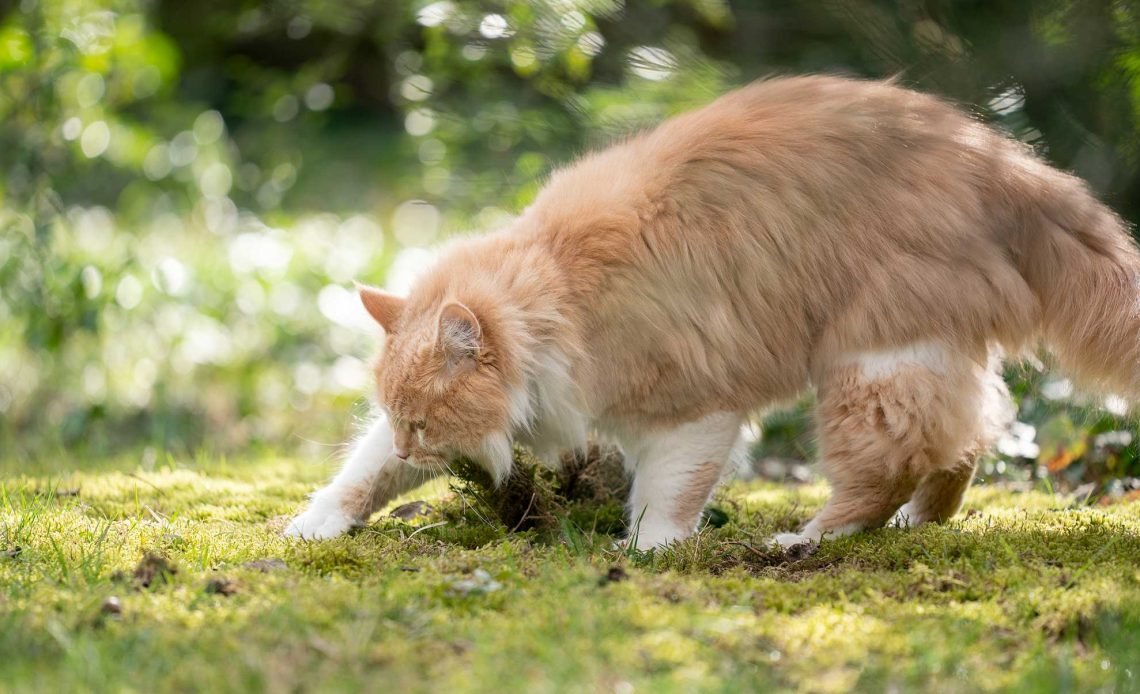
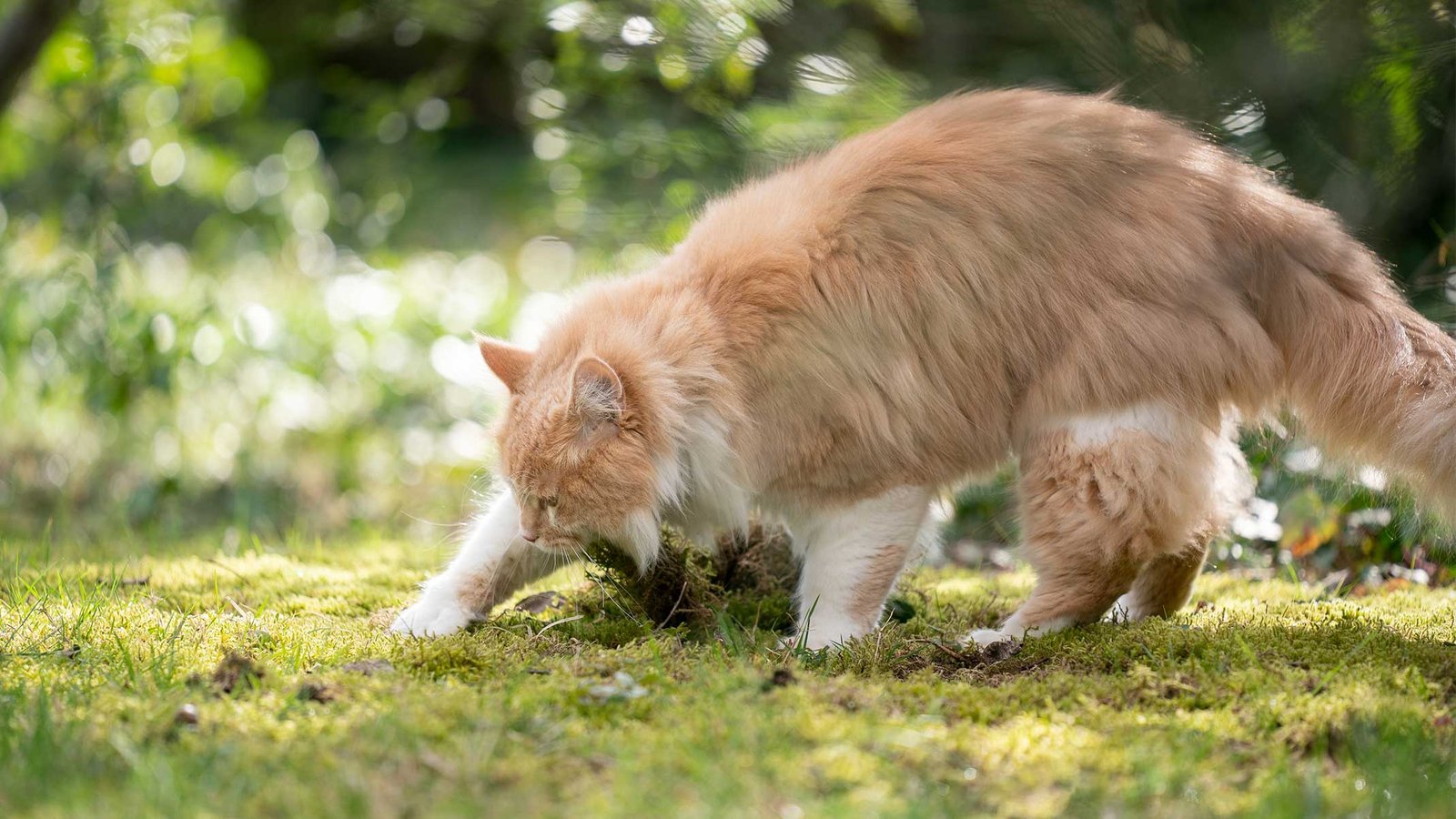
Why do cats cover their poop is a question almost every cat owner has asked at some point.
You watch your cat scratch around in the litter box, carefully burying every trace of what they just left behind, and it looks so deliberate — because it is.
Understanding why cats bury their waste reveals fascinating truths about predator instincts, social hierarchy, disease prevention, and communication.
The Evolutionary Roots of Poop-Covering Behavior
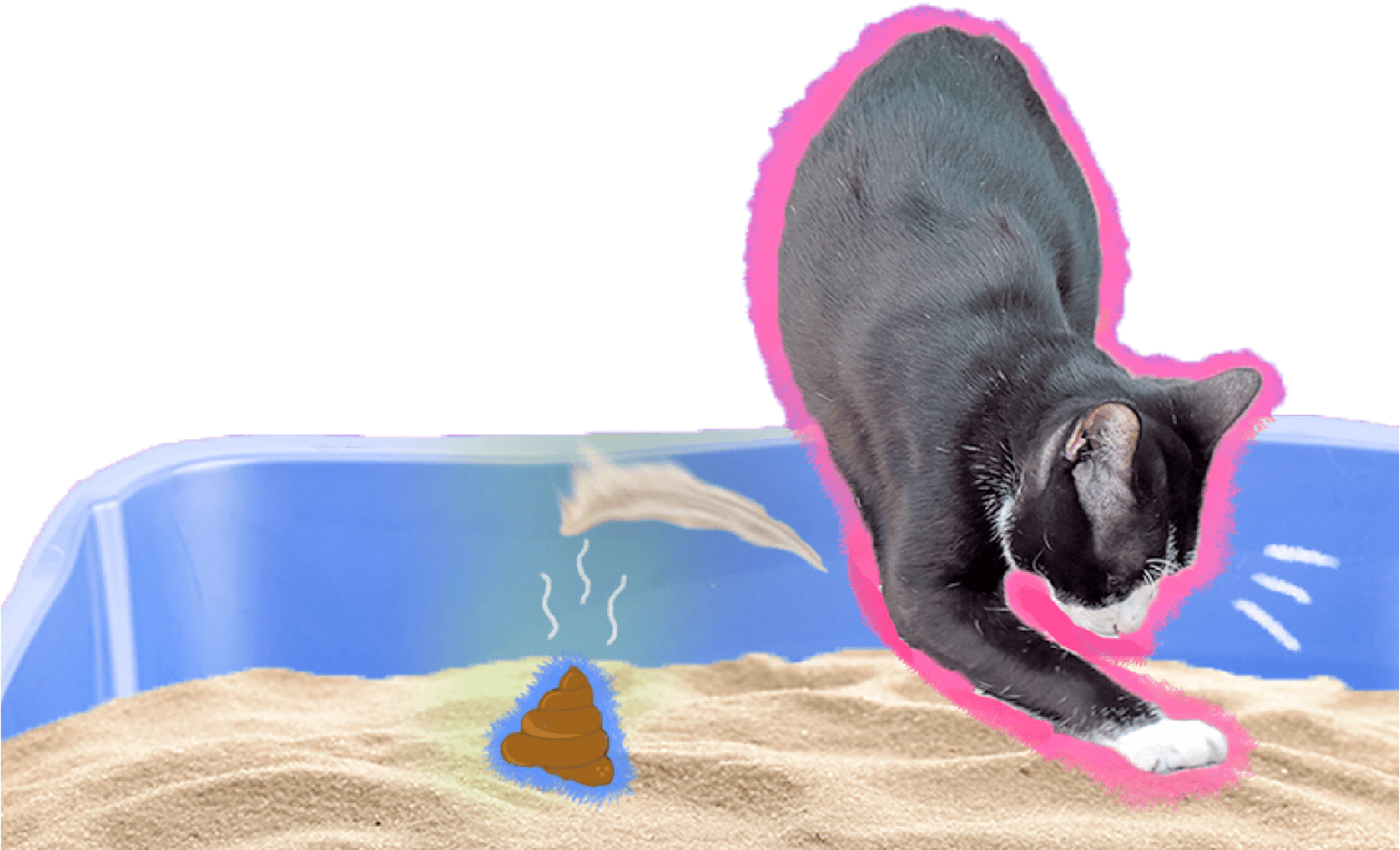
To fully understand why cats cover their poop today, you have to go back thousands of years to their wild ancestors.
The African Wildcat — Where It All Started
Domestic cats are descended from the African wildcat (Felis lybica), a small predator that roamed the deserts and grasslands of North Africa and the Middle East. These wildcats lived in a world full of larger predators — wolves, jackals, eagles, and rival felines — all of whom could track them by scent.
Covering their waste was one of the primary ways wildcats stayed invisible to threats. By burying poop and urine in dirt or sand, they reduced the olfactory trail that could give away their location.
Why Small Cats Bury — But Big Cats Don’t
Here is a fascinating twist in the science. Large apex predators like lions, tigers, and leopards typically do not bury their waste. They leave it exposed as a deliberate territorial declaration. They have no predators to hide from, so there is no reason to conceal their scent.
Smaller wild cat species — including the African wildcat — are both predator and prey. They must hunt while simultaneously avoiding being hunted. Burying waste became a survival strategy: eliminate the scent trail and eliminate the danger.
Your indoor cat inherited this same programming. Even though there is no lion lurking behind your sofa, the biological instruction to bury waste is still running in the background of your cat’s brain.
DNA Hardwiring — Not Learned Behavior
Cat behavior specialists, including renowned expert Pam Johnson-Bennett, describe poop-covering as hardwired behavior. Even cats that have never lived outdoors, never encountered a predator, and were hand-raised from birth will still instinctively cover their waste in the litter box.
This is a key distinction from learned behavior. Your cat does not cover their poop because you trained them to. They do it because millions of years of natural selection made it automatic.
Reason 1: Hiding From Predators — The Survival Instinct
The single most important reason why cats cover their poop is predator avoidance. This is the foundational driver behind the entire behavior.
How Scent Reveals a Cat’s Presence
Animal waste carries an enormous amount of biological information. Predators use the scent of poop to locate prey, track movements, and identify the species, size, health, and diet of the animal that left it behind. A pile of uncovered cat feces is essentially a navigation beacon broadcasting a cat’s exact location.
In the wild, this information can be fatal. A smaller cat that leaves its waste uncovered is effectively leaving a trail of arrows pointing directly to where it sleeps, hunts, and raises its young.
Burying as Erasing the Trail
By covering their waste with dirt, sand, or litter, cats eliminate this scent signal. The covering material absorbs and neutralizes odor molecules, making the waste dramatically harder for a predator to detect.
Certified cat behavior consultant Joey Lusvardi explains this perfectly: predators that might turn a cat into lunch are clued in by the scent, so covering their tracks is a literal survival strategy, not a quirk.
Why Indoor Cats Still Do It
Your cat does not need to assess whether a predator is present before deciding to cover their poop. The instinct fires automatically, regardless of environment. Think of it as a biological default setting that never gets switched off just because the environment changed.
This is why even fully indoor cats that have lived their entire lives in an apartment with no exposure to the outdoors will still reliably scratch around in their litter box after every use.
Reason 2: Social Hierarchy and Dominance Signaling
The second major reason cats cover their poop is social — and this one reveals a lot about where your cat sees itself in the household pecking order.
Dominant Cats Leave It Uncovered on Purpose
In both wild cat groups and multi-cat domestic households, dominant cats frequently leave their waste uncovered as a deliberate territorial statement. By leaving their scent fully exposed, a dominant cat is communicating unmistakably to every other cat in the area: this territory is mine.
The exposed poop functions like a flag planted in the ground. It broadcasts the dominant cat’s presence, reinforces their claim to the space, and serves as a social warning to subordinate animals.
Subordinate Cats Bury to Show Respect
Cats lower in the social hierarchy cover their waste as a form of submission. By concealing their scent, subordinate cats effectively communicate that they are not challenging the dominant individual’s claim to the territory. It is a feline version of keeping a low profile.
According to PetMD’s veterinary team, domestic cats descended from wild cats in social groups still retain this hierarchical behavior. When your domestic cat covers their poop, part of what they are doing is showing respect to you as the most dominant member of the household.
What This Means in Multi-Cat Homes
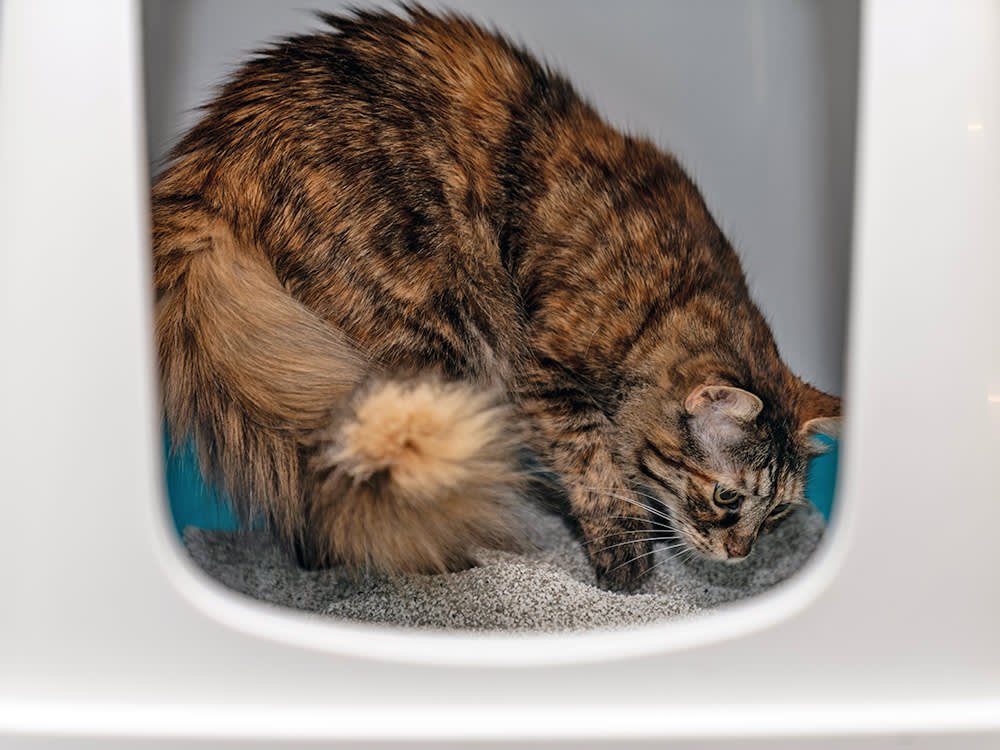
In households with multiple cats, the covering-versus-not-covering pattern can reveal social dynamics. If one cat consistently leaves waste uncovered and another cat always buries theirs, you are likely watching a dominant-subordinate relationship play out in the litter box.
Introducing a new cat can trigger uncovering behavior as the resident cat reasserts territorial dominance. This is normal and usually resolves as the social structure stabilizes.
| Behavior | What It Signals | Common Trigger |
|---|---|---|
| Always covers poop | Subordinate status, security, clean instinct | Normal domestic behavior |
| Stops covering poop suddenly | Health issue, stress, or dominance assertion | New pet, illness, litter box change |
| Never covers poop | Possible dominance signaling or learned preference | Multi-cat tension, early weaning |
| Excessive scratching after | Litter box dissatisfaction or strong instinct | Wrong litter type, box too small |
| Scratching outside the box | Misplaced covering instinct, box aversion | Dirty box, wrong location |
Reason 3: Hygiene and Disease Prevention
The third major reason cats cover their poop is one that benefits not just the individual cat but their entire social group: disease control.
Feces Carries Parasites and Pathogens
Animal waste is a vector for bacteria, parasites, and viruses. In the wild, exposure to feces from multiple animals significantly increases the risk of spreading intestinal parasites like roundworms and hookworms, as well as bacterial infections.
By burying their waste, cats prevent other animals from coming into direct contact with it. This reduces the risk of pathogen transmission throughout the group. Over time, cats that buried their waste were healthier and more likely to survive and reproduce — reinforcing the behavior genetically.
Cleanliness as an Instinct
Cats are among the cleanest mammals relative to body size. They spend between 30% and 50% of their waking hours grooming. Their instinct for bodily cleanliness extends naturally to their environment.
Burying waste keeps the immediate living area free from the smell and contamination of decomposing feces. This matters to a cat not just biologically but sensory-wise — a cat’s nose is between 14 and 40 times more sensitive than a human’s. Living near uncovered waste would be intensely unpleasant for an animal with that olfactory sensitivity.
Why Litter Box Placement Matters
The disease-prevention instinct also explains why cats resist using a litter box placed next to their food and water bowls. Their biological programming treats eating areas and elimination areas as separate, non-overlapping zones.
Certified cat behavior consultant Joey Lusvardi specifically notes that placing a litter box near food can discourage a cat from using the box properly, because the cat instinctively does not want to contaminate its food source.
Reason 4: Scent Concealment for Hunting
The fourth reason cats cover their poop connects back to the other half of their dual nature as both predator and prey: concealing their scent makes them more effective hunters.
How Scent Affects Hunting Success
Cats are ambush predators. They rely on stealth and surprise to catch prey, including birds, rodents, and small reptiles. Many of the animals cats hunt have an acute sense of smell and use airborne odor cues to detect danger.
A cat that smells strongly of its own waste is broadcasting its presence to every prey animal within range. Uncovered feces creates a persistent scent signal that can travel hundreds of yards downwind, alerting prey long before the cat gets close enough to pounce.
Burying as Pre-Hunt Preparation
By burying their waste, wild cats removed this competitive disadvantage. A concealed scent meant they could approach prey more closely before being detected, improving their strike success rate.
Even though your house cat is unlikely to be hunting field mice, this predatory logic is still baked into their instincts. The act of covering poop is, at least in part, preparation for a hunt that may never come.
The Dual Predator-Prey Problem
What makes cats unique among predators is that they must simultaneously hide their scent from prey they want to catch and from predators that want to catch them. Burying waste solves both problems at once — it makes a cat harder to detect from above and below in the food chain.
This dual selective pressure is why the behavior became so deeply embedded. Natural selection reinforced poop-covering from two directions simultaneously, making it one of the most consistent and automatic behaviors in the entire feline behavioral repertoire.
Reason 5: Territorial Marking and Communication
The fifth reason cats cover their poop reveals that the act of covering — or deliberately not covering — is itself a sophisticated form of communication.
Scent as a Language
Cats communicate extensively through scent. Their bodies contain scent glands in their paws, face, cheeks, tail base, and anal region. Every time a cat interacts with its environment — walking, rubbing, scratching, or eliminating — it is leaving behind scent information that other cats can read in detail.
Fecal scent carries information about the depositing cat’s identity, sex, reproductive status, diet, health, and social standing. Other cats that encounter this scent can read all of this information without the cats ever meeting face to face.
Covering as a Social Statement
When a cat covers their poop, they are reducing the reach of this message. A subordinate cat buries its waste to minimize its territorial footprint — to say, in effect, I am here but I am not challenging anyone.
A dominant cat that leaves waste uncovered is doing the opposite — maximizing the reach of its scent signal and actively broadcasting its presence and authority.
In feral cat colonies, researchers have observed that dominant males frequently leave feces uncovered in prominent locations along territorial boundaries. This behavior functions similarly to how they use urine spraying: as a scent boundary marker.
What Happens When a New Cat Enters the Home
When a new cat is introduced to a household, existing cats often change their covering behavior as part of the territorial renegotiation process. You may see cats that always covered their poop suddenly stop, or vice versa, as they establish a new social order.
This is completely normal and should stabilize within a few weeks. Providing separate litter boxes for each cat — plus one extra, following the n+1 rule — helps reduce territorial competition over shared bathroom spaces.
Why Some Cats Don’t Cover Their Poop
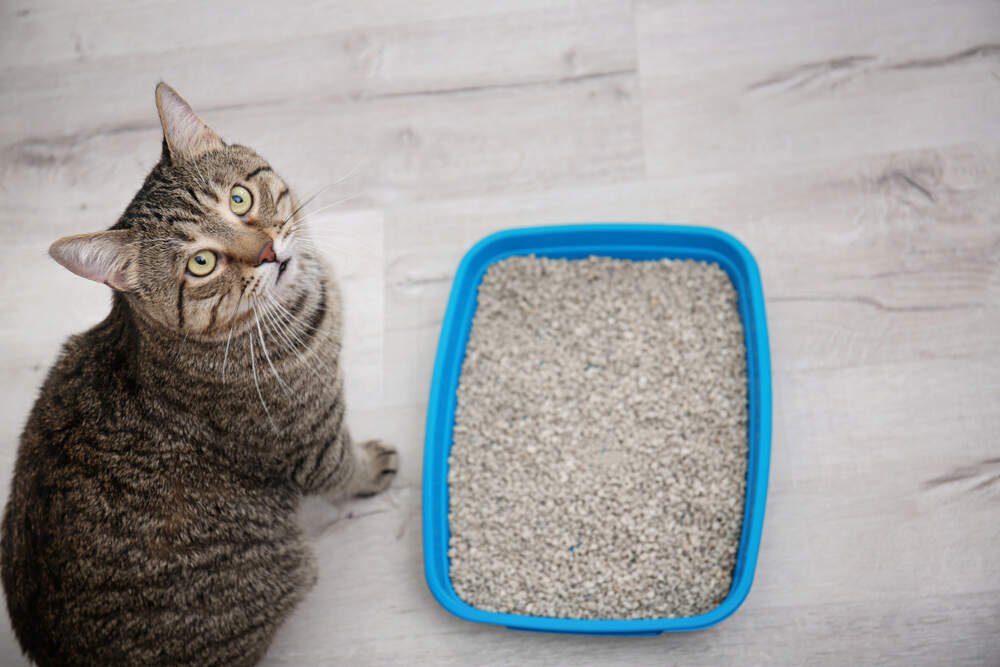
Understanding why cats cover their poop also requires understanding the common reasons some cats do not — because changes in this behavior can signal real problems.
Normal Reasons for Not Covering
| Reason | Details |
|---|---|
| Dominance assertion | Cat is signaling territorial authority |
| Kitten learning phase | Kittens learn from observing their mother |
| Early weaning | Cats separated from mothers early may not learn the behavior |
| Breed tendencies | Some breeds are less fastidious than others |
| Feeling overly secure | A cat that feels no threat may not feel the urge |
Kittens typically learn poop-covering behavior by observing their mothers. Cats separated from their mothers very early in life may never fully develop this habit because they missed the critical observational learning window.
Health-Related Reasons for Stopping
When a cat that has always covered their poop suddenly stops, health problems are often the cause. This behavioral change deserves attention.
Arthritis and joint pain are among the most common culprits. The act of digging and scratching in a litter box requires the cat to crouch, shift weight, and extend its limbs. For a cat with arthritic hips, knees, or spine, this is genuinely painful. The cat eliminates and then exits the box as quickly as possible to avoid discomfort.
Gastrointestinal problems including diarrhea, constipation, and inflammatory bowel disease can make litter box use urgent and uncomfortable. The cat has no patience or energy to cover after a painful or hurried elimination.
Upper respiratory infections that reduce a cat’s sense of smell may lower their motivation to bury. If they cannot smell the waste strongly, the instinctive trigger to cover it may not fire with full intensity.
Urinary tract infections cause pain and urgency during urination. Cats experiencing UTIs may rush to exit the box and skip covering behavior entirely.
If your cat suddenly stops covering after a long history of doing so, schedule a veterinary appointment. The behavioral change is often the first visible symptom of an underlying medical condition.
Litter Box Problems That Cause Skipping
Sometimes the issue is not the cat — it is the litter box setup. Cats are particular about their bathroom conditions.
Box too small: If a cat cannot turn around comfortably, they cannot perform the covering ritual properly.
Box too dirty: Cats will avoid spending extra time in a dirty box. They eliminate and leave immediately. Scoop at minimum once daily and fully replace litter weekly.
Wrong litter type: Cats have texture and scent preferences. Many prefer fine-grained, unscented clumping litter that feels similar to natural sand or soil — the substrate their wild ancestors used. Heavily scented litters can be aversive to cats whose sense of smell is many times more sensitive than ours.
Too little litter depth: Cats need approximately two to three inches of litter depth to dig and cover effectively. Too little and the covering motion is frustrated.
Wrong location: A litter box in a high-traffic, noisy, or poorly lit location makes cats rush through bathroom use without performing their normal covering ritual.
How to Support Your Cat’s Natural Covering Behavior
Creating the right litter box environment encourages your cat’s natural instincts and keeps the behavior consistent.
Litter Box Setup Best Practices
| Factor | Recommendation |
|---|---|
| Box size | At least 1.5 times the length of your cat from nose to tail base |
| Litter depth | 2 to 3 inches minimum |
| Litter type | Unscented, fine-grained clumping litter preferred by most cats |
| Cleanliness | Scoop at least once daily, full change weekly |
| Number of boxes | One per cat plus one extra (the n+1 rule) |
| Location | Quiet, low-traffic, accessible at all times |
| Proximity to food | Never next to food or water bowls |
| Covered vs open | Try both — individual cats have strong preferences |
Choosing the Right Litter
Most cats prefer unscented clumping litter with a fine grain texture. This mimics the natural soil and sand that their ancestors used outdoors. Clumping litter also makes covering more effective because it holds together under the cat’s paws and creates a solid barrier over the waste.
Heavily perfumed litters may seem like a good idea for odor control, but they can actually discourage cats from using the box because the artificial scent overwhelms their sensitive noses.
When to Try a Different Box Style
Some cats prefer open litter boxes where they can see their surroundings while eliminating — this connects to their survival instinct of wanting a clear escape route. Others prefer covered boxes for privacy. Experiment with both if your cat shows avoidance behavior.
Top-entry boxes can deter cats with arthritis or mobility issues. If your cat is older or has been diagnosed with joint problems, use a low-sided box with a single entrance step.
When Behavior Changes Warrant a Vet Visit
Behavioral changes around litter box use should never be ignored. Here are the specific signs that mean it is time to call your veterinarian.
Urgent Warning Signs
If your cat suddenly stops covering their poop and also shows any of these additional behaviors, see a vet promptly:
- Loss of appetite or reduced food interest
- Low energy, hiding, or unusual withdrawal
- Vocalizing or yowling when using the litter box
- Straining during elimination
- Visible blood in stool or urine
- Diarrhea or constipation lasting more than 48 hours
- Changes in frequency of litter box visits
A single change in covering behavior without other symptoms is less urgent but still worth monitoring. A pattern of changes alongside other behavioral or physical symptoms points to a veterinary issue that needs assessment.
Wild Cats vs. Domestic Cats — Covering Behavior Compared
| Cat Type | Covers Poop? | Reason |
|---|---|---|
| African wildcat (ancestor) | Yes | Predator avoidance, survival |
| Feral domestic cat | Usually yes | Retained wild instinct |
| Indoor domestic cat | Usually yes | Hardwired instinct from ancestors |
| Dominant outdoor tom | Often no | Territorial marking |
| Lions, tigers, leopards | No | Apex predators with no need to hide |
| Dominant male feral cat | Often no | Territorial boundary marking |
| Submissive cat in multi-cat home | Yes | Social deference |
Frequently Asked Questions (FAQs)
Why do cats cover their poop in the litter box?
Cats cover their poop due to deeply hardwired survival instincts inherited from wild ancestors who buried waste to hide their scent from predators and competitors. The behavior is automatic, not trained, and serves hygiene, territorial, and social communication purposes.
Do all cats cover their poop?
No. While most domestic cats cover their poop, some — particularly dominant cats — intentionally leave it uncovered as a territorial signal. Kittens separated from their mothers early and cats with health problems may also skip covering.
Why did my cat suddenly stop covering its poop?
A sudden change most often signals a health issue such as arthritis, a gastrointestinal problem, or a urinary tract infection making litter box use painful. It can also indicate litter box dissatisfaction or a territorial response to a new pet.
Why do dominant cats leave their poop uncovered?
Dominant cats leave waste uncovered deliberately to broadcast their territorial claim through scent. Exposed feces sends a clear message to other cats: this space belongs to me, and I have nothing to hide from.
Is it normal for kittens not to cover their poop?
Yes, it is completely normal. Kittens learn covering behavior by watching their mothers. Those separated from their mothers early may not develop the habit reliably until they mature or are gently guided through the routine.
Does the type of litter affect whether a cat covers their poop?
Absolutely. Most cats prefer fine-grained, unscented clumping litter that mimics natural soil and sand. Heavily scented or coarse litter can discourage covering behavior because it feels wrong under their paws or overwhelms their sensitive noses.
Why do big cats like lions not cover their poop?
Lions and other apex predators have no predators hunting them, so they have no need to conceal their scent. They leave waste exposed as a deliberate territorial marker. Only smaller wild cats that must hide from larger predators evolved the burying instinct.
How many litter boxes should I have for multiple cats?
Follow the n+1 rule: one litter box per cat plus one extra. In a two-cat home, provide three boxes in different locations. This reduces territorial competition and gives each cat a private option, supporting natural covering behavior.
Can scratching outside the litter box be related to covering behavior?
Yes. Some cats scratch at the floor, wall, or surrounding area outside the box in a misplaced covering attempt. This usually means the box is too small, too dirty, or the cat is frustrated with the litter depth or texture.
When should I take my cat to the vet about litter box behavior?
See a vet promptly if your cat suddenly stops covering and also shows loss of appetite, low energy, hiding, pain vocalizations, straining during elimination, blood in stool or urine, or changes in bathroom frequency.
Conclusion
Why do cats cover their poop is ultimately a story about millions of years of feline survival strategy. The five key reasons — predator avoidance, social hierarchy, disease prevention, hunting concealment, and scent communication — all trace back to the same source: the African wildcat ancestors who had to hide in plain sight in a world full of dangers.
Your domestic cat carries all of that ancient programming into your living room every single day.
When they scratch around in the litter box, they are not just being tidy — they are following instructions written deep in their DNA.
Understanding this behavior helps you provide the right litter box environment, recognize when something has changed, and respond appropriately when behavioral shifts signal a health problem.
A cat that covers their poop consistently is telling you they feel safe, healthy, and at home. That is exactly what every cat owner wants to hear.


