


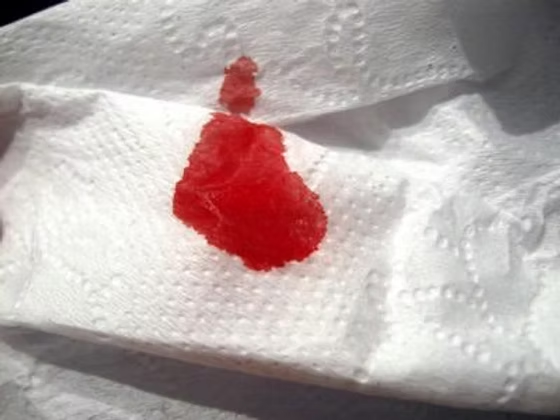
Why do hemorrhoids bleed after pooping? This is one of the most common and alarming questions people face when they spot bright red blood on toilet paper.
Hemorrhoids are swollen blood vessels inside the rectum or around the anus, and bleeding is their most classic symptom.
The good news is that hemorrhoid bleeding is rarely dangerous, but it should never be ignored.
What Are Hemorrhoids? A Quick Overview
Hemorrhoids, also called piles, are cushions of blood vessels, connective tissue, and muscle located in the anal canal. Everyone has them — they are a normal part of the body.
Problems begin when these cushions become swollen, enlarged, or inflamed. When that happens, they are commonly called “having hemorrhoids” and symptoms like bleeding, itching, and discomfort begin.
Hemorrhoids affect roughly 75% of people at some point in their lives. Adults between ages 45 and 65 are most commonly affected.
Internal vs External Hemorrhoids — What Is the Difference?
Not all hemorrhoids are the same. Their location determines how they behave and whether they bleed or cause pain.
| Feature | Internal Hemorrhoids | External Hemorrhoids |
|---|---|---|
| Location | Inside the rectum | Under skin around the anus |
| Pain | Usually painless | Often painful |
| Bleeding | Common, bright red | Less common |
| Visibility | Not visible unless prolapsed | Often visible or felt |
| Main symptom | Painless rectal bleeding | Itching, swelling, pain |
Internal hemorrhoids sit above the dentate line, where there are fewer nerve endings. This is why they bleed without causing pain, which can make the bleeding especially startling.
External hemorrhoids develop below the dentate line, where nerve endings are dense. They tend to cause more pain and itching, and bleed less often unless irritated or thrombosed.
Why Do Hemorrhoids Bleed After Pooping? The Real Cause
Hemorrhoids bleed because the swollen blood vessels sit very close to the surface of the anal lining. When stool passes over them, even gentle pressure can cause tiny tears.
The tissue of an enlarged hemorrhoid is fragile. Even a normally formed stool can scrape or rupture it during a bowel movement, releasing bright red blood.
Straining makes this significantly worse. When you push hard to pass stool, pressure builds up in the rectal veins, forcing them to expand further and increasing the risk of rupture and bleeding.
The Main Triggers That Cause Hemorrhoid Bleeding
Several everyday habits and conditions directly contribute to hemorrhoid bleeding. Understanding your triggers is the first step toward stopping the bleeding.
Straining During Bowel Movements
Straining is the number one cause. It pushes extra pressure onto already swollen veins, making them more likely to tear.
Even a few minutes of heavy straining each day is enough to keep hemorrhoids inflamed and bleeding repeatedly.
Constipation and Hard Stools
Hard, dry stools require more effort to pass. As they move through the anal canal, they physically scrape and damage hemorrhoidal tissue.
Chronic constipation is one of the biggest long-term drivers of hemorrhoid bleeding.
Chronic Diarrhea
Frequent loose stools irritate and inflame the anal lining. The repeated friction from multiple daily bowel movements keeps hemorrhoids raw and prone to bleeding.
Sitting Too Long on the Toilet
Spending extended time on the toilet — especially with a phone or book — allows gravity and pressure to engorge the rectal veins. This increases swelling and the risk of bleeding.
Pregnancy and Childbirth
Pregnancy increases abdominal pressure on the rectal veins throughout all three trimesters. Pushing during labor can cause new hemorrhoids or worsen existing ones, often triggering bleeding.
Low Fiber Diet
A diet low in fiber results in harder, smaller stools that are more difficult to pass. Low fiber intake directly links to increased constipation and hemorrhoid symptoms.
Heavy Lifting
Lifting heavy weights creates a sudden spike in intra-abdominal pressure. This pressure transfers directly to the anal veins, which can rupture fragile hemorrhoidal tissue.
Obesity
Excess body weight puts constant, chronic pressure on the pelvic and rectal veins. This sustained pressure makes hemorrhoids more likely to enlarge and bleed.
What Does Hemorrhoid Blood Look Like?
The color and amount of blood gives important clues about the source and severity.
| Blood Appearance | Likely Meaning |
|---|---|
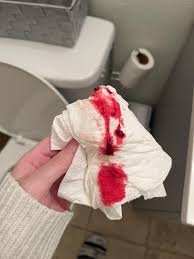
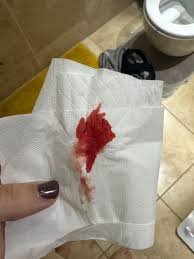
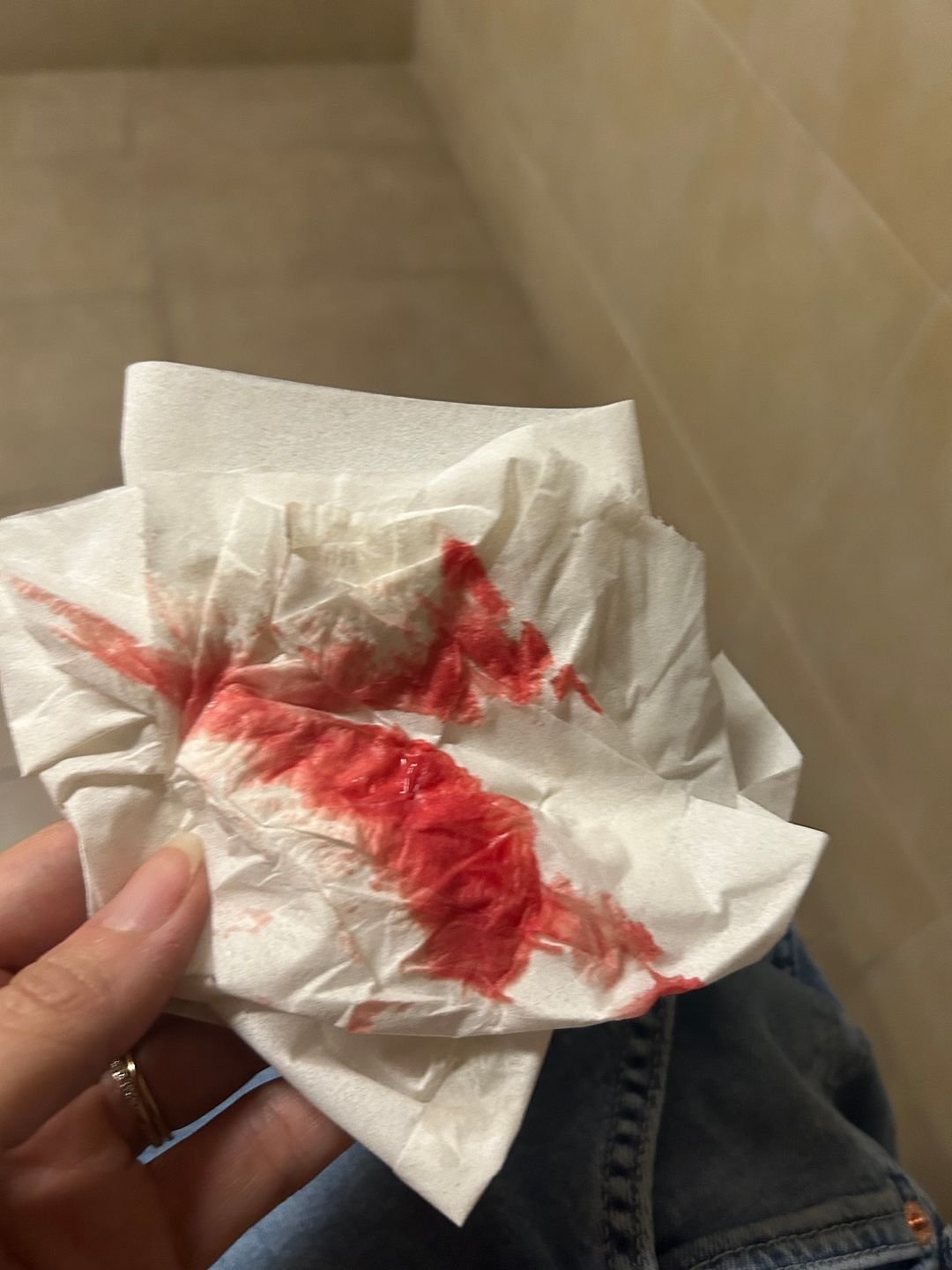
| Bright red on toilet paper | Classic hemorrhoid bleeding |
| Bright red dripping into toilet bowl | Internal hemorrhoid, likely Grade II or higher |
| Blood coating the outside of stool | Hemorrhoid near the anal opening |
| Dark red or maroon blood mixed in stool | Possible higher GI tract issue — see a doctor |
| Large amounts of blood | Seek immediate medical care |
Hemorrhoid blood is almost always bright red because it comes from arteries very close to the surface. Dark or tarry blood usually signals a problem higher up in the digestive tract and requires urgent evaluation.
The 4 Grades of Internal Hemorrhoids and How They Bleed
Doctors classify internal hemorrhoids into four grades based on how far they prolapse. Each grade has a different bleeding pattern.
Grade I
Hemorrhoids are visible on anoscopy but do not prolapse outside the anus. Bleeding during bowel movements is the main symptom. No tissue protrudes.
Grade II
Hemorrhoids prolapse during straining or bowel movements but return inside on their own. Bleeding can occur during and after pooping.
Grade III
Hemorrhoids prolapse and do not retract on their own — they must be pushed back manually. Bleeding, discomfort, and mucus discharge are common.
Grade IV
Hemorrhoids remain permanently prolapsed and cannot be pushed back. Risk of strangulation is high. Significant pain and heavy bleeding may occur.
Grades I and II respond well to home care. Grades III and IV usually require medical or surgical treatment.
Thrombosed Hemorrhoids — When Bleeding Gets Serious
A thrombosed hemorrhoid develops when blood pools inside the swollen vessel and forms a clot. This is a more serious complication that changes the bleeding pattern significantly.
Thrombosed external hemorrhoids appear as a painful, firm, bluish-purple lump near the anus. They cause sudden, severe pain.
If the clot stretches the surrounding skin and the tissue breaks down, heavy bleeding can follow. The best window for treatment of a thrombosed hemorrhoid is within 72 hours of clot formation, before the tissue is permanently damaged.
How to Stop Hemorrhoid Bleeding at Home
Most bleeding hemorrhoids can be managed at home with the right approach. Home treatment works best for mild to moderate symptoms.
Sitz Baths
Soaking in warm water (around 104°F or 40°C) for 10–15 minutes, two to three times daily, reduces inflammation and soothes the area. This is one of the most reliably effective home remedies.
Increase Fiber Intake
Adding 25–35 grams of fiber per day softens stools and makes them easier to pass. Good fiber sources include fruits, vegetables, legumes, and psyllium husk supplements.
Drink More Water
Adequate hydration keeps stools soft. Aim for at least 8 glasses of water per day, more if you are physically active or in a hot climate.
Apply Cold Compresses
An ice pack wrapped in a cloth and applied to the anal area for 10–15 minutes can reduce swelling and calm acute bleeding.
Use Gentle Wiping Techniques
Harsh wiping with rough toilet paper keeps hemorrhoids irritated. Switch to unscented, moistened wipes or rinse with water after each bowel movement.
Over-the-Counter Treatments
Creams and ointments containing hydrocortisone, witch hazel, or lidocaine can temporarily reduce itching, swelling, and discomfort. They do not cure hemorrhoids but provide short-term relief.
Avoid Prolonged Toilet Sitting
Set a goal of spending no more than 5 minutes on the toilet at a time. Get up and return later if you feel you are not ready.
Medical Treatments for Bleeding Hemorrhoids
When home remedies fail or bleeding persists, medical procedures offer more permanent solutions.
| Procedure | How It Works | Best For |
|---|---|---|
| Rubber Band Ligation | A band cuts off blood supply to the hemorrhoid | Grade I–III internal hemorrhoids |
| Sclerotherapy | Chemical injection shrinks the hemorrhoid | Grade I–II hemorrhoids |
| Infrared Coagulation | Heat destroys the blood supply | Small internal hemorrhoids |
| Electrocoagulation | Electrical current creates scar tissue | Grade I–II internal hemorrhoids |
| Hemorrhoidectomy | Surgical removal of the hemorrhoid | Grade III–IV, large or thrombosed |
| Stapled Hemorrhoidopexy | Staples reposition prolapsed tissue | Grade II–III prolapsed hemorrhoids |
Rubber band ligation is the most commonly used in-office procedure in the United States. It has a low complication rate and requires no general anesthesia.
Hemorrhoidectomy has the lowest recurrence rate — under 5–10% — compared to over 50% for conservative management alone.
Foods That Help Reduce Hemorrhoid Bleeding
Diet plays a huge role in preventing and reducing hemorrhoid bleeding. The right foods keep stools soft and reduce straining.
High-Fiber Foods to Eat More Of
Whole grains like oats, brown rice, and whole wheat bread add bulk to stools without hardening them. Fruits such as prunes, apples, and pears are excellent natural stool softeners.
Legumes including lentils, black beans, and chickpeas provide both soluble and insoluble fiber that supports bowel regularity.
Foods to Limit or Avoid
Spicy foods can irritate the anal lining and worsen inflammation. Alcohol and caffeine promote dehydration, which leads to harder stools.
Processed foods low in fiber — white bread, fast food, chips — contribute to constipation and increased straining.
Lifestyle Changes That Prevent Hemorrhoid Bleeding
Long-term prevention requires consistent daily habits, not just short-term fixes during a flare-up.
Exercise Regularly
Thirty minutes of moderate cardiovascular exercise daily stimulates healthy bowel function. Walking, swimming, or cycling can reduce constipation and lower the chronic pressure on rectal veins.
Respond to Bowel Urges Promptly
Ignoring the urge to use the bathroom allows stools to dry out in the colon, making them harder to pass. Always go when you feel the urge.
Avoid Heavy Straining
If a bowel movement takes effort, add more fiber and water to your diet rather than forcing it. A footstool that raises your feet (like a Squatty Potty) can reduce strain by putting your colon in a more natural position.
Manage Your Weight
Even modest weight loss reduces pressure on the pelvic veins. This alone can significantly decrease how often hemorrhoids bleed.
When to See a Doctor for Hemorrhoid Bleeding
Hemorrhoid bleeding is usually harmless, but certain signs require prompt medical evaluation.
See a doctor if you experience:
- Bleeding that lasts more than one week despite home care
- Heavy bleeding or blood clots in the toilet
- Dark red, maroon, or black blood in your stool
- Severe pain that does not improve
- Fever, chills, or unusual fatigue alongside bleeding
- A painful, firm, bluish lump near the anus (possible thrombosed hemorrhoid)
- Any rectal bleeding if you are over 40 years old or have a family history of colorectal cancer
Rectal bleeding can occasionally signal colorectal cancer, inflammatory bowel disease, anal fissures, or diverticular disease. A doctor can rule these out quickly with a simple examination or colonoscopy.
Can Hemorrhoids Stop Bleeding on Their Own?
Mild hemorrhoid bleeding often stops on its own within a few days with rest, a better diet, and reduced straining. Grade I and Grade II hemorrhoids frequently resolve without medical treatment.
However, if the underlying causes — constipation, poor diet, prolonged toilet sitting — are not addressed, bleeding will return. The hemorrhoid tissue remains swollen and vulnerable each time you have a bowel movement.
Repeat bleeding over weeks or months is a strong signal that the condition needs more than home care.
Hemorrhoid Bleeding vs Anal Fissure Bleeding — How to Tell the Difference
Both conditions cause bright red rectal bleeding, but they feel very different.
| Feature | Hemorrhoid Bleeding | Anal Fissure Bleeding |
|---|---|---|
| Pain during pooping | Usually none (internal) | Sharp, severe pain |
| Pain after pooping | Mild if external | Can last hours |
| Blood appearance | On toilet paper, in bowl | On stool surface or paper |
| Feeling of tearing | No | Yes, often described as razor-like |
| Common trigger | Straining, constipation | Constipation, large stools |
An anal fissure is a small tear in the lining of the anus. It causes intense, burning pain during and after a bowel movement, which is the key difference from most hemorrhoid bleeding.
Hemorrhoid Bleeding During Pregnancy — Special Considerations
Pregnancy significantly increases the risk of hemorrhoids and bleeding. The growing uterus places sustained pressure on the rectal veins throughout the third trimester.
Pushing during labor is an intense straining event that can trigger or worsen hemorrhoids immediately after delivery. Postpartum hemorrhoid bleeding is very common in new mothers.
Safe management during pregnancy includes sitz baths, high-fiber diet, stool softeners approved by your OB-GYN, and avoiding prolonged sitting. Most pregnancy-related hemorrhoids improve within weeks after delivery.
Summary — Key Facts About Hemorrhoid Bleeding
- Hemorrhoid bleeding is bright red and usually appears on toilet paper or in the toilet bowl
- Internal hemorrhoids bleed without pain; external ones cause pain but bleed less often
- Straining, constipation, and low fiber intake are the top causes
- Grade I and II hemorrhoids often respond to home care
- Grades III and IV usually need medical treatment
- Bleeding lasting more than a week, or heavy bleeding, requires a doctor visit
- Diet, hydration, and exercise are the most powerful long-term preventive tools
Frequently Asked Questions (FAQs)
Why do hemorrhoids bleed every time I poop?
Hemorrhoids bleed with each bowel movement when the swollen tissue is still inflamed and fragile. Stool passing over irritated vessels tears the surface repeatedly until the underlying swelling is reduced.
Is it normal for hemorrhoids to bleed a lot?
A few drops of bright red blood is common and expected with hemorrhoids. Heavy bleeding, large clots, or blood that soaks toilet paper is not normal and requires a doctor’s evaluation.
How long does hemorrhoid bleeding last?
Mild hemorrhoid bleeding typically stops within 3 to 7 days with proper home care. Bleeding that persists beyond one week needs medical attention.
Can hemorrhoids bleed without pooping?
Hemorrhoids can occasionally bleed spontaneously, especially if they are severely inflamed or thrombosed. However, bleeding most commonly happens during or immediately after a bowel movement.
Does hemorrhoid bleeding mean it is getting worse?
Not necessarily. Bleeding can occur even with Grade I hemorrhoids. However, more frequent or heavier bleeding often indicates the hemorrhoid is worsening or not healing, which warrants a doctor visit.
What color is hemorrhoid blood?
Hemorrhoid blood is almost always bright red be cause it comes from surface-level blood vessels very close to the anal lining. Dark red or black blood usually indicates a problem higher in the digestive tract.
Can I use toilet paper if my hemorrhoid is bleeding?
Rough wiping with dry toilet paper worsens hemorrhoid bleeding. Switch to moistened, unscented wipes or gently rinse the area with water instead of wiping aggressively.
Can straining once cause hemorrhoid bleeding?
Yes. A single episode of intense straining can rupture fragile hemorrhoidal tissue and trigger bleeding, especially if the hemorrhoid was already inflamed. Avoiding straining is critical to recovery.
Do hemorrhoids bleed more in the morning?
There is no evidence that hemorrhoids bleed more at a specific time of day. Bleeding is triggered by bowel movements and straining, not the time of day.
When should I go to the ER for hemorrhoid bleeding?
Go to the emergency room if you experience heavy, uncontrolled rectal bleeding, blood clots, dizziness, weakness, or signs of significant blood loss. These symptoms may indicate a more serious condition.
Conclusion
Why do hemorrhoids bleed after pooping? The answer lies in their anatomy — swollen, fragile blood vessels that sit directly in the path of passing stool. Every episode of straining, constipation, or hard stool puts those vessels at risk of tearing and bleeding.
The good news is that most hemorrhoid bleeding is manageable with consistent lifestyle changes, a high-fiber diet, proper hydration, and targeted home treatments. Mild cases often resolve within days.
Persistent or heavy bleeding, however, is a clear signal to seek medical care.
Modern treatments like rubber band ligation and hemorrhoidectomy offer highly effective, long-term solutions for cases that do not respond to home care.
Understanding the cause of bleeding is the most powerful tool you have — because when you know why it happens, you can take the right steps to stop it and prevent it from coming back.


