


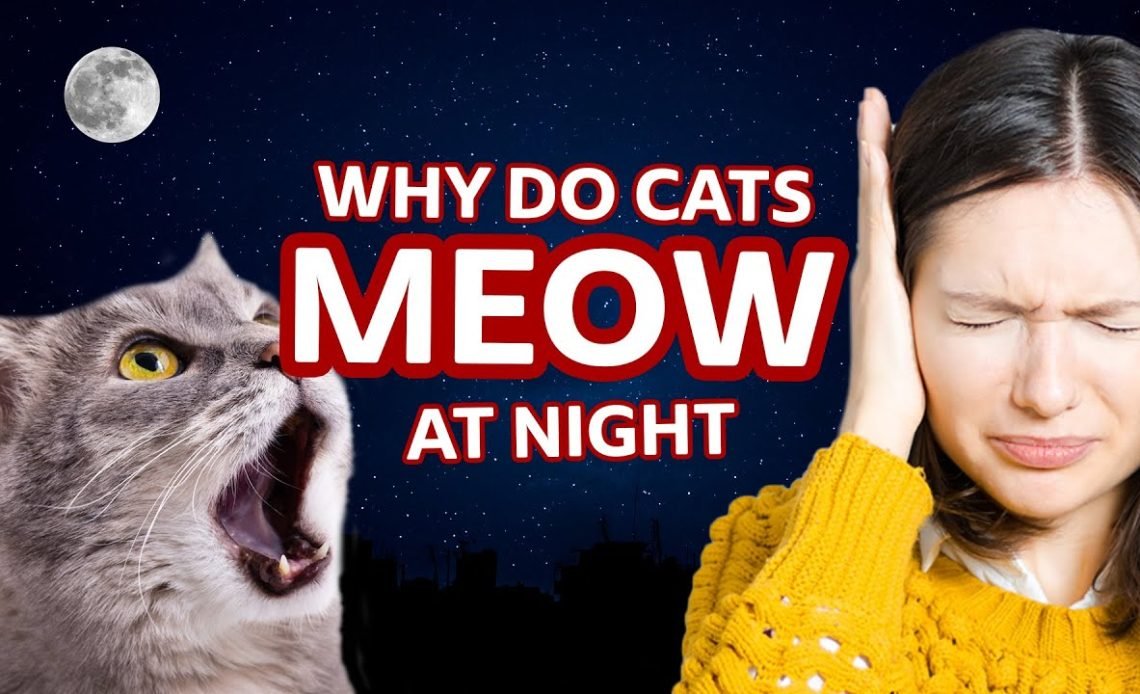
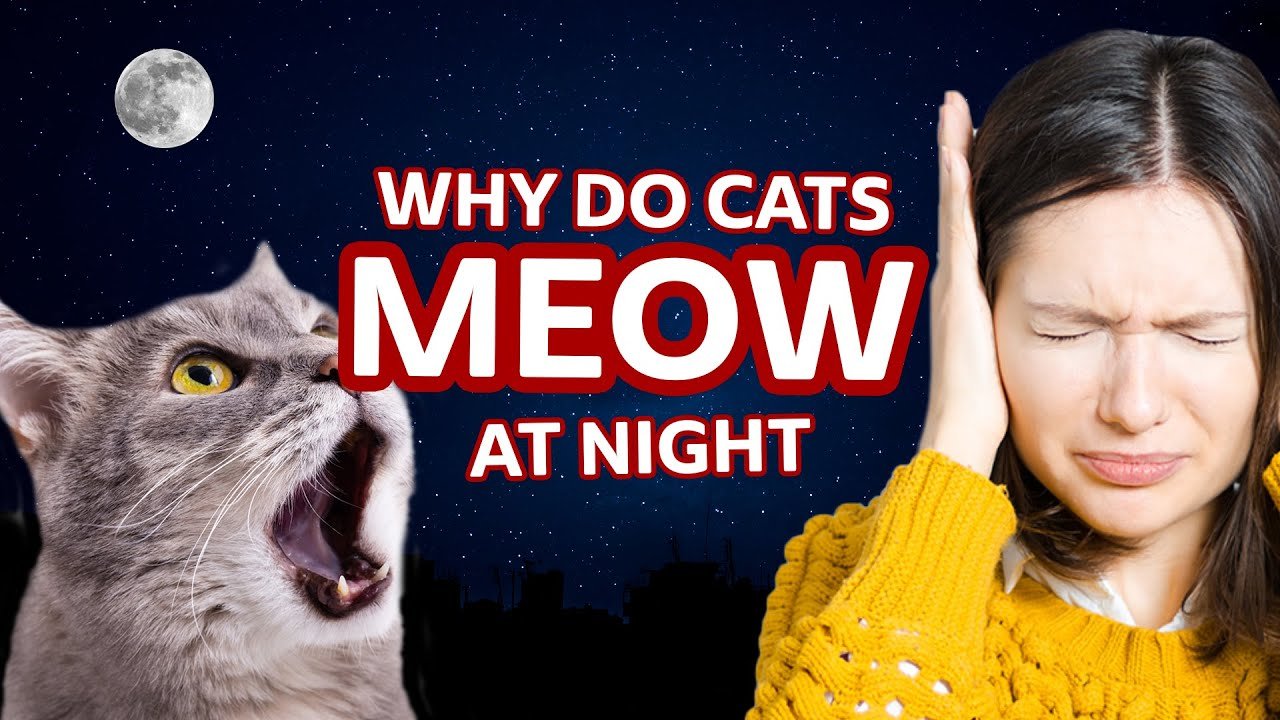
Why do cats meow at night, especially right when you’re finally falling asleep? It’s one of the most common complaints cat owners search for, and the reasons range from completely harmless to medically important. Some cats meow at night simply because they’re naturally more active during those hours.
Others are bored, hungry, lonely, or trying to get your attention. In older cats, nighttime meowing can also signal pain, illness, or cognitive decline.
Quick Summary: Common Reasons Cats Meow at Night
Before going into detail, here’s a fast overview of the most common causes, their typical signs, and what to do about them.
| Possible Cause | Common Sign | What To Do |
|---|---|---|
| Crepuscular activity | Active at dawn/dusk, calm by day | Increase evening play |
| Boredom or loneliness | Meows when alone, follows you | Add toys, enrichment |
| Hunger or thirst | Meows near food bowl | Feed before bed, automatic feeder |
| Attention-seeking | Stops meowing once petted | Set boundaries, daytime attention |
| Unspayed female in heat | Loud yowling, restless pacing | Spay/neuter consultation |
| Hyperthyroidism or kidney disease | Weight loss despite eating | Vet visit, bloodwork |
| Cognitive dysfunction (senior cats) | Confusion, meowing at walls | Vet visit, senior wellness exam |
| Pain or injury | Meowing when moving or touched | Vet visit promptly |
Is It Normal for Cats to Meow at Night?
Cats are crepuscular by nature, meaning they’re naturally most active at dawn and dusk rather than fully nocturnal. This biological rhythm explains why so many cats seem to come alive right as their owners are winding down.
Some occasional nighttime vocalizing is completely normal and not a cause for concern. However, frequent, loud, or sudden meowing that’s new for your cat is worth paying closer attention to.
If the behavior is new, intense, or paired with other changes, it usually means something specific is driving it. The sections below break down exactly what that might be.
Common Natural Reasons Cats Meow at Night
Many cases of nighttime meowing come down to instinct rather than illness. Here are the most frequent natural explanations.
Crepuscular Activity
Cats evolved to hunt at dawn and dusk, when their prey is most active. This instinct doesn’t disappear just because your cat lives indoors with a regular food supply.
That’s why many cats seem full of energy right as you’re heading to bed. It’s simply their internal clock following an ancient hunting pattern.
Boredom and Lack of Stimulation
A cat that doesn’t get enough mental or physical activity during the day often becomes restless once the house quiets down. Nighttime meowing becomes their way of asking for entertainment.
This is especially common in indoor-only cats without access to climbing structures or toys. More daytime enrichment usually reduces this behavior significantly.
Hunger or Thirst
Cats naturally prefer to eat several small meals throughout the day and night rather than one or two large ones. An empty bowl at bedtime is a simple, common trigger for meowing.
If your cat tends to vocalize near the kitchen or food bowl, hunger is likely the cause. A small meal before bed often solves this quickly.
Attention-Seeking
Some cats have simply learned that meowing gets a response, whether that’s petting, talking, or even just you getting out of bed. This becomes a reliable, repeated strategy over time.
If the meowing stops the moment you interact with your cat, attention-seeking is almost certainly the reason. Consistent boundaries help break this pattern.
Loneliness
Cats that spend most of the day alone may seek extra connection once their owner is finally home and still. This is more common in single-cat households with busy owners.
Adding more quality interaction time before bed can ease this loneliness. Some owners also find that a second cat companion helps.
Behavioral and Environmental Causes
Beyond instinct, several lifestyle and environmental factors can directly trigger or worsen nighttime meowing.
Stress and Routine Changes
Cats are highly sensitive to changes in their environment, including moving homes, new pets, new furniture, or a shifted schedule. Stress often shows up as increased vocalization, especially at night.
If the meowing started right after a household change, this is likely the connection. Giving your cat time and consistency usually helps them settle.
Outdoor Noises
Cats have far more sensitive hearing than humans, picking up sounds like passing animals, wind, or cars that we don’t even notice. These noises can trigger alert meowing or yowling at night.
Closing blinds, using white noise, or moving your cat’s resting area away from windows can help. This is a simple fix for noise-sensitive cats.
Unspayed Females in Heat
An unspayed female cat in heat will often yowl loudly and persistently, especially at night. This is a hormonal, instinctual behavior tied to mating signals.
Spaying resolves this completely and also prevents unwanted litters. A vet consultation can confirm timing and recovery details.
Learned Vocal Habits
If meowing has ever resulted in food, attention, or play, even occasionally, your cat learns to repeat it. Over time, this becomes a strong, automatic nighttime habit.
Breaking this pattern requires consistency from everyone in the household. Even one person responding occasionally can keep the habit alive.
Medical Causes of Night Meowing
While many causes are harmless, certain medical conditions specifically increase nighttime vocalization, especially in middle-aged and senior cats.
Hyperthyroidism
An overactive thyroid speeds up metabolism dramatically, often leading to restlessness, increased appetite, and frequent meowing, especially at night. This condition is common in cats over eight years old.
Weight loss despite a strong appetite is a classic accompanying sign. A simple thyroid blood test can confirm the diagnosis.
Kidney Disease
Chronic kidney disease can cause discomfort, increased thirst, and disorientation, all of which may increase nighttime vocalization. This condition is especially common in senior cats.
Increased litter box visits and weight loss often appear alongside the meowing. Bloodwork and urinalysis are the standard diagnostic tools.
High Blood Pressure (Hypertension)
Cats with hypertension, often linked to kidney disease or thyroid issues, can experience anxiety-like symptoms, including increased meowing. This condition can also affect vision and lead to confusion.
A vet can measure blood pressure during a routine visit. Catching this early helps prevent more serious complications.
Pain or Illness
Arthritis, dental pain, or injuries can all cause a cat to vocalize more, especially at night when distractions are minimal. Pain-related meowing often sounds different, more urgent or strained.
Watch for limping, reduced jumping, or sensitivity to touch. A vet exam can pinpoint the specific source of discomfort.
Cognitive Dysfunction Syndrome (CDS)
CDS is the feline equivalent of dementia and primarily affects senior cats. Confusion, disorientation, and meowing at walls or empty rooms are hallmark signs.
This condition tends to develop gradually and worsen over time. While it can’t be cured, medication and environmental adjustments can ease symptoms.
Hearing Loss
Cats with hearing loss often meow louder without realizing it, since they can no longer judge their own volume. This is especially common in senior cats.
If your cat’s meow has become noticeably louder over time, hearing decline could be the explanation. A vet can assess hearing as part of a senior wellness exam.
Senior Cats and Night Meowing
Sudden or increased nighttime meowing in a senior cat deserves closer attention than the same behavior in a younger cat. Aging cats are more prone to thyroid issues, kidney disease, and cognitive decline.
If your older cat suddenly seems more vocal at night, don’t assume it’s just “getting older.” A vet checkup can rule out treatable medical causes early.
Routine senior wellness exams, often recommended twice yearly, help catch these issues before they progress. Early treatment usually leads to better quality of life for your cat.
Kitten Meowing at Night – Is This Normal?
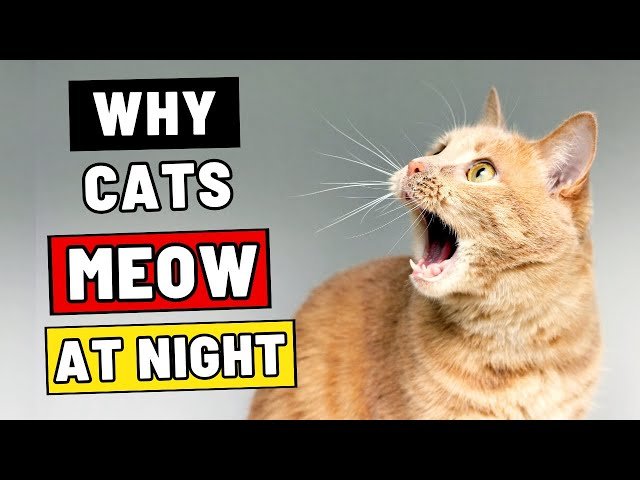
Kittens have enormous amounts of energy and are still learning the household routine. It’s completely normal for a healthy kitten to be more vocal and active at night.
As long as your kitten is eating, growing, and playing normally during the day, nighttime meowing is usually just excess energy. Daytime play sessions can help redirect that energy before bedtime.
That said, if a kitten seems distressed, isn’t eating, or has other symptoms, a vet visit is the safer choice. Young kittens can decline quickly if something is genuinely wrong.
Warning Signs: When Night Meowing Needs a Vet Visit
Most cases of nighttime meowing are harmless and behavioral. But certain combinations of symptoms mean it’s time to stop guessing and book an appointment.
| Symptom Combination | Possible Concern | Urgency Level |
|---|---|---|
| Meowing + weight loss despite eating | Hyperthyroidism | See vet soon |
| Meowing + increased thirst/urination | Kidney disease, diabetes | See vet soon |
| Meowing + confusion or disorientation | Cognitive dysfunction syndrome | Schedule a checkup |
| Meowing + limping or sensitivity to touch | Pain, arthritis, injury | See vet promptly |
| Meowing + loud yowling, restlessness (unspayed) | Heat cycle | Schedule spay consultation |
| Meowing only, no other symptoms | Behavioral or instinctual | Try home solutions first |
How Vets Diagnose the Cause of Night Meowing
When you bring in a cat that meows excessively at night, your vet will typically start with a full physical exam and a detailed history of the behavior. They’ll ask about onset, frequency, and any other recent changes.
Bloodwork is often the next step, checking thyroid levels, kidney function, and blood pressure. This helps rule out the most common medical causes quickly.
In senior cats, your vet may also evaluate for signs of cognitive dysfunction syndrome through behavior questionnaires. This combination of tests usually identifies the cause efficiently.
How to Stop a Cat From Meowing at Night
Once medical causes are ruled out or treated, there’s a lot you can do at home to reduce nighttime meowing. Here are the most effective strategies.
Daytime Play and Enrichment
Tiring your cat out during the day with interactive toys, wand chases, or climbing structures helps burn off excess energy. A well-stimulated cat is far less likely to meow at night.
Aim for at least two short play sessions spread across the day. Consistency matters more than the length of each session.
Feed Before Bedtime
A small meal right before you go to sleep can prevent hunger-driven meowing overnight. Cats naturally settle down better with a satisfied stomach.
Automatic feeders can also dispense small meals during the night without requiring you to wake up. This works especially well for hunger-driven vocalizing.
Stick to a Routine
Cats thrive on predictability, and an inconsistent schedule can actually increase nighttime restlessness. Feeding, playing, and settling at the same times each day builds a stable rhythm.
Over a few weeks, a consistent routine often reduces excessive meowing noticeably. Predictability genuinely helps cats feel more secure.
Don’t Reward Night Meowing
Responding to every meow, even just by talking or getting up, reinforces the behavior over time. Consistency from everyone in the household is essential here.
Instead, try to ignore the meowing during designated sleep hours, as long as you’ve ruled out medical causes. The behavior typically fades once it stops being rewarded.
Provide a Cozy, Stimulating Sleep Space
A comfortable resting spot away from windows and outdoor noise can reduce alert-driven meowing. Some cats also do well with a heated bed or a perch near a quiet area.
Adding a few toys nearby gives your cat something to do if they wake up restless. This small change can make a noticeable difference.
Consider a Companion
For lonely or under-stimulated cats, a second cat can provide company and play during the night. This isn’t the right fit for every household, but it works well for social cats.
A gradual, supervised introduction is important for a smooth transition. Your vet or a behaviorist can offer guidance specific to your cat.
Address Medical Issues First
If your cat is older or the meowing started suddenly, rule out medical causes before trying behavioral fixes. Treating an underlying condition often resolves the meowing entirely.
This step is especially important for cats showing other symptoms like weight loss or confusion. Skipping it can delay necessary treatment.
Use Calming Aids
Pheromone diffusers, calming treats, or anxiety wraps can help reduce stress-related meowing. These tools work well alongside routine and environmental changes.
Always check with your vet before introducing any new calming product. Some options work better for specific triggers than others.
Block Outdoor Stimuli
If outdoor sounds or movement are triggering your cat’s meowing, closing blinds or using white noise machines can help. Reducing sensory triggers often calms noise-sensitive cats quickly.
This is a low-effort fix worth trying before more involved solutions. Many owners see results within just a few nights.
Best Tools and Products to Reduce Night Meowing
Several practical products can support the strategies above and make managing nighttime meowing easier.
| Product Type | Why It Helps | What To Look For |
|---|---|---|
| Automatic feeder | Prevents hunger-driven meowing overnight | Programmable timed meals |
| Interactive toys | Burns energy before bedtime | Wand toys, puzzle feeders |
| Pheromone diffuser | Eases stress-related vocalizing | Veterinary-recommended brands |
| White noise machine | Blocks outdoor noise triggers | Adjustable volume, steady sound |
| Cat tree or perch | Provides enrichment and a cozy resting spot | Stable, away from windows if noise-sensitive |
Are Some Cat Breeds More Vocal at Night?
Breed can play a real role in how much a cat meows, regardless of the time of day. Some breeds are simply wired to be more talkative than others.
Siamese, Bengal, and Sphynx cats are well known for being especially vocal, including overnight. If you have one of these breeds, extra patience and enrichment may be needed to manage nighttime noise.
This doesn’t mean quieter breeds never meow at night, just that vocal breeds may need more proactive management. Knowing your cat’s natural temperament helps set realistic expectations.
Common Myths About Cats Meowing at Night
A few misconceptions about nighttime meowing tend to circulate among cat owners. Clearing these up helps you respond to the real cause faster.
Myth: All Night Meowing Is Just Attention-Seeking
While attention is a common cause, medical issues like hyperthyroidism or kidney disease can also drive nighttime vocalizing. Ruling out health causes first is always the safer approach.
Myth: Cats Are Fully Nocturnal
Cats are actually crepuscular, meaning they’re most active at dawn and dusk rather than throughout the entire night. This distinction matters when timing play and feeding schedules.
Myth: Ignoring the Meowing Always Works
Ignoring works well for learned attention-seeking behavior, but it won’t resolve a medical issue. If ignoring doesn’t reduce the meowing within a couple of weeks, a vet visit is the next step.
Myth: Senior Cats Just Get Noisier With Age
Increased vocalization in senior cats is often linked to a specific, treatable cause like thyroid disease or cognitive dysfunction. It shouldn’t be dismissed as a normal part of aging without a vet check.
Frequently Asked Questions (FAQs)
Why does my cat meow at night for no reason?
It’s rarely truly “no reason.” Common explanations include hunger, boredom, attention-seeking, or natural crepuscular activity patterns.
Why is my senior cat suddenly meowing at night?
Sudden nighttime meowing in older cats is often linked to hyperthyroidism, kidney disease, or cognitive dysfunction syndrome. A vet visit is the best next step.
Is it normal for kittens to meow at night?
Yes, kittens have high energy levels and are still adjusting to household routines. This is usually normal as long as eating and growth stay on track.
Can hunger cause my cat to meow at night?
Yes, cats naturally prefer small, frequent meals, so an empty bowl at night can trigger meowing. Feeding before bed or using an automatic feeder often helps.
Does spaying or neutering stop night meowing?
For unspayed females in heat, spaying typically resolves heat-related yowling completely. It won’t necessarily stop meowing caused by other factors like boredom.
Why does my cat meow at 3am specifically?
This timing often aligns with a cat’s natural crepuscular activity window. Increasing evening play sessions can help shift their energy earlier.
Can stress make my cat meow more at night?
Yes, changes like moving, new pets, or routine disruptions can increase stress-related vocalizing. Giving your cat time and consistency usually helps them settle.
Should I ignore my cat’s meowing at night?
Once medical causes are ruled out, ignoring learned attention-seeking meowing is generally effective. Just be sure to first confirm there’s no underlying health issue.
What health problems cause cats to meow at night?
Hyperthyroidism, kidney disease, hypertension, pain, and cognitive dysfunction syndrome are the most common medical causes. All are diagnosed through a vet exam and bloodwork.
When should I take my meowing cat to the vet?
If meowing is paired with weight loss, confusion, increased thirst, or pain, see a vet promptly. If meowing is the only symptom, you can try home solutions for a couple of weeks first.
Conclusion
So, why do cats meow at night? As you’ve seen, the answer ranges from natural crepuscular instincts and simple boredom to medical conditions like hyperthyroidism, kidney disease, or cognitive dysfunction syndrome. Most healthy cats that meow at night simply need more daytime enrichment, a consistent routine, and a small meal before bed.
However, sudden or unusual meowing, especially paired with weight loss, confusion, or signs of pain, should never be ignored. These combinations often signal an underlying health issue that needs professional attention.
The good news is that with the right diagnosis and a few lifestyle adjustments, most cats settle into quieter, more restful nights again. If you’ve tried the solutions above and your cat is still meowing excessively, don’t wait too long before scheduling a vet visit. Catching the cause early is always the safest path forward for your cat’s long-term health and your own sleep.


