


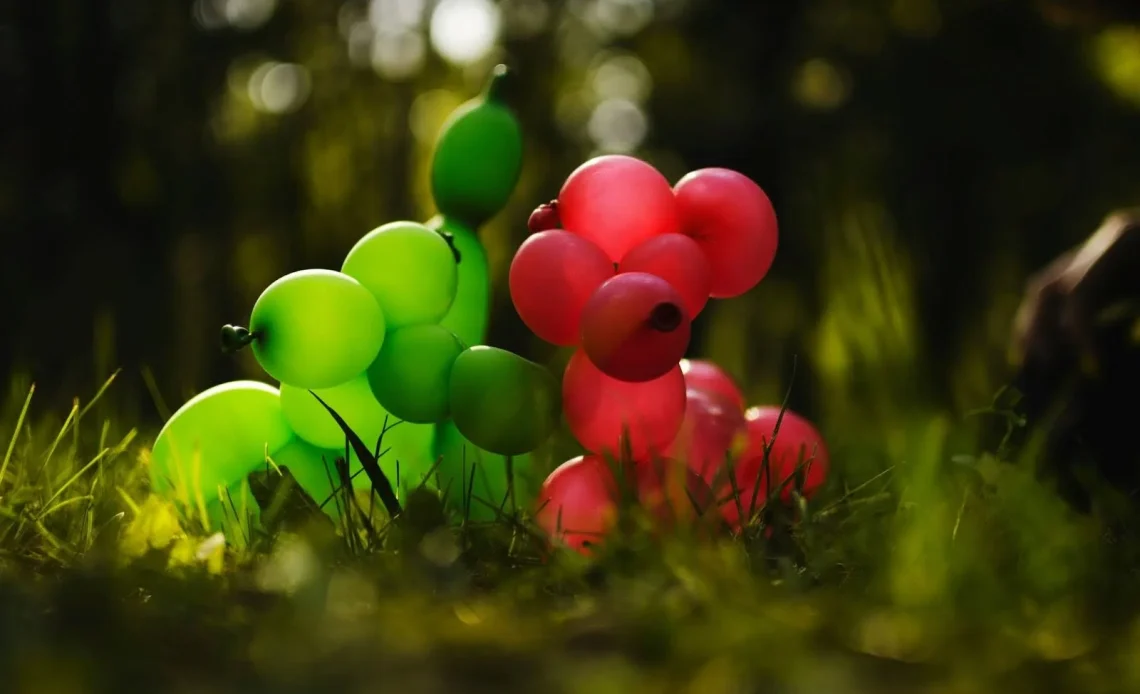
Why do balloons pop on grass? It usually comes down to one simple thing: sharp, stiff grass blades meeting tightly stretched latex. The moment an inflated balloon presses down on a lawn, tiny points in the grass concentrate enormous pressure on one small spot.
Add summer heat, an overinflated balloon, or a few dry seed heads, and that small spot is all it takes. Most people blame “bad luck” or cheap balloons, but the real cause is almost always avoidable.
What Really Happens When a Balloon Touches Grass?
A balloon is a thin sheet of stretched rubber holding back a lot of internal air pressure. Every point on its surface pulls evenly against every other point.
When something sharp presses into that stretched surface, the pressure stops being even. The material at that single spot gets pulled apart instead of staying balanced.
That uneven pull is exactly what makes a tiny poke turn into a sudden, loud pop instead of just a small dent.
Why Do Balloons Pop on Grass? The Real Science
There isn’t just one reason balloons pop outdoors. It’s usually a combination of small factors working together at the same time.
Sharp Grass Blade Tips
Grass blades look soft, but many varieties end in a stiff, narrow point. That point acts like a tiny needle against stretched rubber.
Dry or recently mowed grass is often worse, since cut edges and seed heads turn into miniature spikes.
Stress Concentration on Stretched Latex
A fully inflated balloon is already under serious internal tension. Even a small amount of extra pressure from one point can break the surface.
This is why the same blade of grass that does nothing to a loose balloon will pop one that’s blown up tight.
Sun and Heat Damage (Photodegradation)
Direct sunlight breaks down the polymer chains inside latex through ultraviolet exposure. This process is called photodegradation, and it weakens the material over time.
A sun-damaged balloon often looks chalky or faded. That dull texture is a clear warning sign it could pop at any moment.
Overinflation
Balloons blown up to their absolute limit have very little stretch left in reserve. The rubber is already thin and tight before it even touches anything.
Heat makes trapped air expand further, pushing an already overinflated balloon past its breaking point.
Dry, Brittle Grass and Debris
Dead grass, twigs, gravel, and small thorns hide easily in a lawn. These hard or sharp objects do far more damage than living grass blades alone.
A quick walk-through of the setup area before placing balloons can catch most of these hidden hazards.
Temperature Shock (Cold to Hot)
Moving balloons from an air-conditioned room straight into hot sunlight causes the air inside to expand rapidly. That sudden change in pressure can pop a balloon almost instantly.
Letting balloons adjust gradually in shade first helps the internal pressure settle before full sun exposure.
Quick Summary: Top Causes of Balloons Popping on Grass
| Cause | Why It Happens |
|---|---|
| Sharp grass tips | Concentrate pressure on one stretched spot |
| Overinflation | Leaves no room for expansion |
| UV sun exposure | Breaks down latex polymer chains |
| Heat expansion | Trapped air pushes outward harder |
| Sudden temperature change | Causes rapid internal pressure shift |
| Hidden debris in grass | Sharp twigs, thorns, or gravel puncture latex |
Common Myths About Balloons Popping on Grass
Plenty of explanations get passed around at parties, but not all of them hold up under closer inspection.
Myth: Static Electricity Pops Balloons
Static electricity can make a balloon stick to hair or fabric, but it rarely generates enough force to puncture stretched latex on its own.
The real culprit in most “static” stories is actually a sharp grass tip or rough surface nearby.
Myth: All Grass Pops Balloons Equally
Soft, freshly watered grass is far gentler than dry, recently cut grass full of stiff seed heads and stubble.
Lawn condition matters just as much as the fact that it’s grass in the first place.
Myth: Only Cheap Balloons Pop
Even premium balloons will pop if they’re overinflated and pressed against something sharp. Quality reduces risk, but it doesn’t eliminate it completely.
Proper handling matters just as much as the balloon brand you choose for your event.
Latex vs. Foil vs. Air-Filled: Which Pops Easiest?
Not every balloon type reacts to grass the same way. Material and fill type both play a major role in durability outdoors.
| Balloon Type | Risk on Grass | Why |
|---|---|---|
| Latex (helium-filled) | High | Floats low, drifts into grass and debris |
| Latex (air-filled) | Medium | Stays in place but still touches ground |
| Foil/Mylar | Low | Less porous, more puncture-resistant |
| Double-stuffed latex | Medium-Low | Thicker wall resists small punctures |
The Biggest Mistake People Make (Avoid This Mistake)
The single biggest mistake is inflating balloons to their absolute maximum and then setting them directly on bare, untreated grass.
This combination removes the balloon’s stretch reserve and exposes it to every sharp surface at the same time.
Simply underinflating slightly and adding a barrier beneath the balloons prevents the vast majority of grass-related pops.
How to Stop Balloons from Popping on Grass
Use a Protective Barrier
Place a tarp, picnic mat, plastic tablecloth, or even flattened cardboard between balloons and the lawn. This single step blocks most sharp contact points.
It also keeps balloons cleaner and easier to reposition during setup.
Follow the 90% Inflation Rule
Avoid blowing balloons up to their absolute limit. Leaving about 10% of stretch in reserve gives the material room to expand safely in heat.
This small adjustment dramatically reduces popping without changing the look of your decor.
Choose Light Colors
Dark balloons absorb more heat from sunlight, which speeds up internal pressure buildup. Lighter colors stay cooler and last noticeably longer outdoors.
If color matters for your theme, save darker balloons for shaded areas of the setup.
Let Balloons Acclimate to Outdoor Temperature
Give balloons 15 to 30 minutes in the shade before moving them into direct sun. This allows internal pressure to adjust gradually.
Skipping this step is a common reason balloons pop almost immediately after setup begins.
Mow and Prep the Lawn First
Cut the grass a day or two early so sharp seed heads have time to dry down and soften slightly.
Rake away clippings, twigs, and any visible debris before bringing balloons anywhere near the area.
Use Air-Filled Instead of Helium
Air-filled balloons on a frame stay put and rarely drag along the ground. Helium balloons drift and bump into grass repeatedly throughout the event.
For ground-level arches, columns, and garlands, air-filled designs are almost always the safer choice.
Try Double-Stuffing
Placing one balloon inside another adds thickness to the latex wall. This extra layer resists small punctures from grass and debris far better.
It takes slightly more time to prepare but noticeably extends how long balloons survive outdoors.
Pick High-Quality Balloons
Professional-grade latex is thicker and more consistent than bargain balloons. Fewer thin spots mean fewer unexpected pops during setup or the event itself.
The extra upfront cost is often worth it for outdoor installations that need to last for hours.
Best Balloon Types for Grass and Outdoor Events
| Balloon Type | Best Use Case |
|---|---|
| Air-filled latex arches | Long-lasting ground decor, low wind risk |
| Foil/Mylar shapes | Centerpieces, accents near grass edges |
| Double-stuffed latex | Garlands needing extra durability |
| Helium latex bouquets | Elevated displays, away from the ground |
Step-by-Step: Setting Up Balloons Safely on Grass
- Mow and clear the lawn at least a day before the event to soften sharp grass tips.
- Lay down a tarp, mat, or tablecloth across the entire setup footprint.
- Inflate balloons to about 90% of their full size, never to the absolute maximum.
- Let balloons rest in the shade for 15 to 30 minutes before moving them into sunlight.
- Position air-filled designs on frames rather than letting loose balloons rest directly on grass.
- Check periodically during the event for new debris like fallen twigs or insects.
How Weather Affects Balloons on Grass
Heat and Direct Sun
Rising temperatures cause trapped air to expand, increasing internal pressure throughout the day. Balloons set up in early morning shade tend to last much longer.
Moving displays out of peak afternoon sun, even briefly, can noticeably extend their lifespan.
Wind
Strong gusts push balloons against frames, poles, or the ground repeatedly. Repeated friction wears down weak spots until one finally gives way.
Securing balloons firmly and adding extra weight to bases helps reduce this kind of wind-driven damage.
Rain and Wet Grass
Light moisture can actually soften grass tips slightly, making wet lawns marginally gentler than bone-dry ones.
However, standing water and mud bring their own risks, including hidden debris and unstable footing for balloon frames.
Balloon Arches and Garlands on Grass: Special Tips

Use sturdy steel base plates for arches so the structure’s weight, not the balloon’s surface, touches the ground directly.
Wrap any metal poles or frames in tape or modeling balloons. Bare metal absorbs heat and can scorch nearby latex.
Keep the lowest row of balloons slightly elevated off the grass whenever the design allows for it.
Tools and Products That Help
| Tool or Product | Purpose |
|---|---|
| Plastic tablecloth or tarp | Barrier between balloons and grass |
| Steel base plates | Stable, elevated support for arches |
| Double-stuffing kit | Extra latex thickness for durability |
| Hand pump with gauge | Consistent, controlled inflation level |
| Foil balloon accents | Puncture-resistant decorative pieces |
Indoor vs. Outdoor Balloon Lifespan
Balloons kept indoors, away from sun and sharp surfaces, can often last several days without any issues at all.
Outdoors, especially on grass in direct sun, that same balloon may only last a few hours under tough conditions.
Knowing this difference helps with timing setup so balloons look their best exactly when guests arrive.
When Balloons Are Most Likely to Pop on Grass
Midday sun, freshly mowed dry grass, and overinflated balloons together create the highest-risk combination for popping.
Early morning or late afternoon setups, paired with proper inflation, dramatically lower the overall risk throughout the event.
Frequently Asked Questions (FAQs)
1. Why do balloons pop on grass more than other surfaces?
Grass blades often have stiff, sharp tips that concentrate pressure on stretched latex. Smooth surfaces don’t create that same point of stress.
2. Does helium make balloons pop faster on grass?
Helium itself doesn’t cause popping, but helium balloons float and drift, increasing contact with sharp grass and debris.
3. Can sunlight alone make a balloon pop?
Yes, prolonged UV exposure breaks down latex through photodegradation, making balloons brittle enough to pop without any contact at all.
4. Is static electricity really the cause of grass popping?
No, static electricity rarely generates enough force to puncture latex. Sharp grass tips are the more likely real cause.
5. Do foil balloons pop on grass too?
Foil balloons are far less likely to pop on grass since the material is thicker and less porous than latex.
6. Does overinflating really make that much difference?
Yes, overinflated balloons have almost no stretch left in reserve, making them far more sensitive to small punctures.
7. Should I mow the lawn before a balloon party?
Yes, mowing a day or two early softens sharp seed heads and removes debris that could puncture balloons.
8. Are dark-colored balloons more likely to pop outside?
Yes, dark colors absorb more heat from sunlight, speeding up internal pressure buildup and increasing pop risk.
9. What’s the best barrier to use under balloons on grass?
A plastic tablecloth, tarp, or picnic mat works well as a simple, affordable barrier between balloons and grass.
10. Can wet grass help prevent balloons from popping?
Slightly damp grass can be gentler than dry grass, but standing water and hidden debris bring their own separate risks.
Conclusion
Balloons pop on grass for a clear, avoidable reason: sharp blade tips meet tightly stretched latex that has no room left to give. Add summer heat, direct sunlight, or an overinflated balloon into the mix, and even a soft-looking lawn becomes a real risk for outdoor decorations.
The good news is that almost every cause on this list has a simple fix. Using a protective barrier, following the 90% inflation rule, choosing light colors, and prepping the lawn beforehand will save the vast majority of balloons at any outdoor event.
Static electricity and “bad luck” rarely deserve the blame they usually get. With a little preparation, the right balloon types, and smart placement away from direct ground contact, your outdoor balloon decor can stay full, bright, and intact from setup through the very last guest leaving the party in 2026.


