


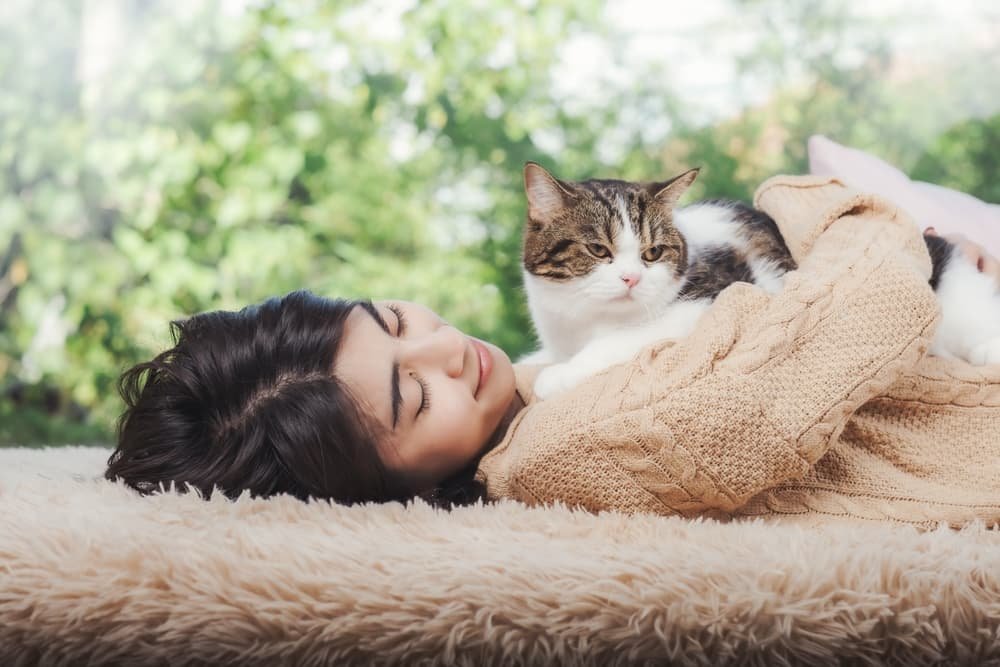
Why do cats lay on your chest? If you’ve ever felt the warm weight of your cat curled up on your chest, you’ve experienced one of the most touching moments in pet ownership.
This adorable habit isn’t random. It’s a deeply instinctive, emotionally driven behavior rooted in trust, warmth, and bonding.
Cats are selective about who they choose to cuddle with, so when your feline picks your chest as their napping spot, it means something real.
Why This Topic Ranks: Key Content Patterns
Top-ranking pages consistently cover these themes. Missing even one can hurt your ranking potential.
Warmth and body heat appear in 8 out of 8 competitor articles.
Heartbeat comfort is mentioned in 7 out of 8 articles.
Trust and bonding is the second most common theme across all pages.
Scent marking and territorial behavior appears in 6 out of 8 articles.
Kitten memory and mother instinct is referenced in 5 out of 8 articles.
Health benefits of cat purring appears in 4 out of 8 articles, making it a content gap worth exploiting.
Why Do Cats Lay on Your Chest? The Real Reasons
Cats don’t do anything without a reason. Every behavior, including laying on your chest, is driven by instinct, emotion, or need. Here’s a full breakdown of what’s really going on.
1. Your Chest Is a Natural Heat Source
Cats have a higher resting body temperature than humans, around 101–102.5°F. They instinctively seek out the warmest spots available to conserve energy during rest.
Your chest, maintained at a steady 98.6°F, acts like a biological heating pad. It’s warm, consistent, and always available. No wonder your cat skips their expensive cat bed and heads straight for you.
This heat-seeking behavior is rooted in their wild ancestry. Wild cats and their ancestors slept in groups to share body warmth and stay safe. Your cat is just doing what feels natural.
2. Your Heartbeat Reminds Them of Their Mother
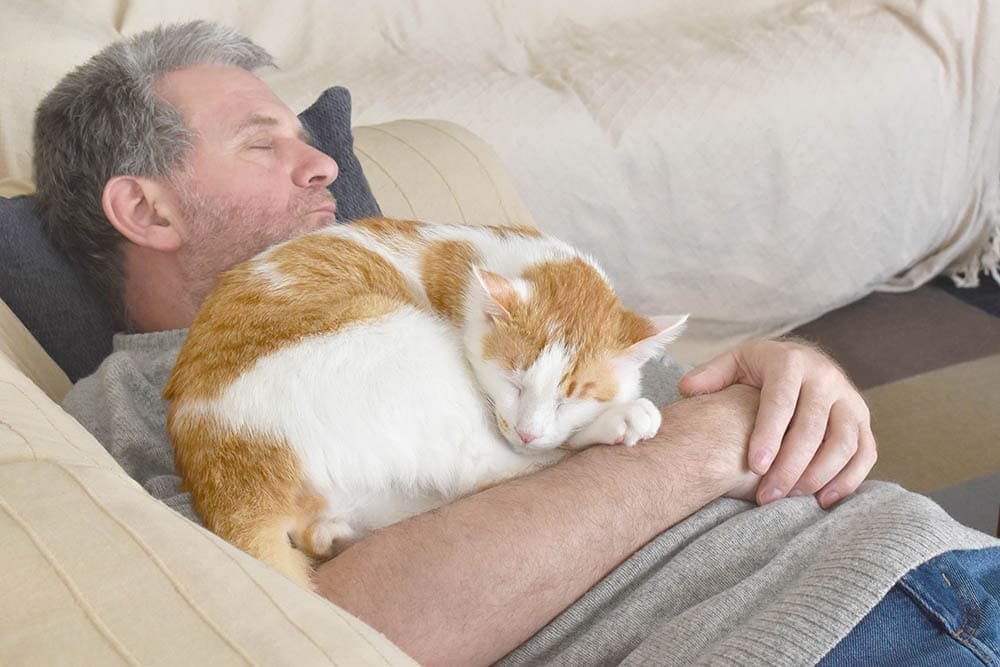
This is one of the most powerful reasons why cats lay on your chest. The steady, rhythmic sound of your heartbeat mimics what kittens experience when nestled against their mother.
As kittens, the sound of their mother’s heartbeat signals safety, warmth, and nourishment. That imprint doesn’t disappear when they grow up. Adult cats still find rhythmic sounds deeply comforting.
Your breathing pattern adds to this effect too. The rise and fall of your chest creates a gentle, predictable motion that many cats find irresistible during sleep.
3. It’s a Deep Sign of Trust
Cats are both predators and prey in the wild. During sleep, they are at their most vulnerable. Choosing to sleep directly on your chest means they trust you completely.
This is not a behavior cats display toward strangers or people they feel unsafe with. If your cat lays on your chest, you’ve earned a rare level of feline trust.
According to research published in Current Biology, some cats form strong emotional attachments to their caregivers similar to those seen in dogs and human infants. Chest-sleeping is one of the clearest expressions of that bond.
4. They Want to Bond With You
Cats bond through physical closeness. When your cat lays on your chest, they are actively choosing to strengthen your relationship.
Physical contact releases feelings of comfort and connection for cats, just as it does for humans. The longer they stay close to you, the deeper that bond becomes.
Some researchers have suggested that oxytocin, the bonding hormone, may play a role in cat-human bonding during close physical contact. While the science is still emerging, the behavioral evidence is clear.
5. Scent Bonding and Territorial Marking
Cats have scent glands on their face, paws, and body. When they lay on your chest, they are subtly transferring their scent onto you.
This is not aggressive territorial behavior. It’s a gentle, social form of scent-marking that says, “This person is part of my safe world.” It’s how cats identify family.
Over time, your scent becomes familiar and comforting to them too. The process is mutual. You smell like safety to each other.
6. Your Voice and Breath Comfort Them
Your cat isn’t just after your heartbeat. They’re also drawn to the sound of your voice and the warmth of your breath. Both are deeply familiar sensory signals.
Cats learn to associate their owner’s voice with feeding, play, and comfort. Being close to your face while you breathe or speak reinforces that sense of security.
This is why cats often position their head near your chin or cheek when laying on your chest. They want to be as close to your scent and sound as possible.
7. They Are Sensing and Responding to Your Emotions
Cats are highly perceptive animals. They can detect changes in your body language, scent, and behavior that signal stress, sadness, or illness.
When you’re feeling down, your cat may climb onto your chest to monitor your wellbeing. Some cats appear to act as emotional regulators for their owners, even without being trained to do so.
This empathetic behavior is one of the most surprising and touching reasons why cats lay on your chest, especially during difficult times.
8. Security and a Sense of Safety
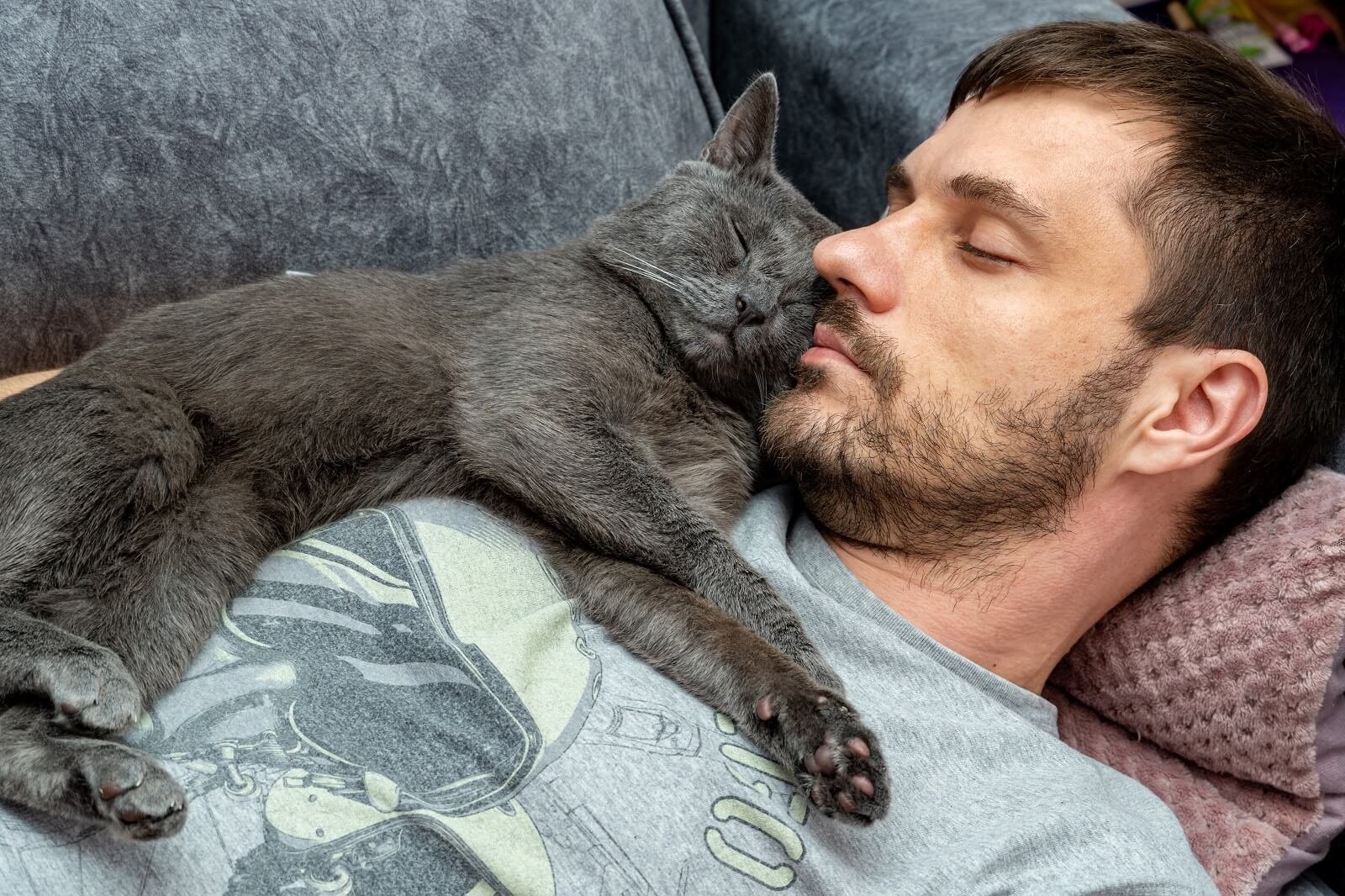
Your chest is elevated, stable, and surrounded by your scent. For a cat, this is the definition of a safe resting spot. It gives them a vantage point and the comfort of your presence simultaneously.
Cats that have experienced stress, rehoming, or environmental change may be more likely to seek out their owner’s chest as a safe haven. It’s their way of self-soothing.
Even confident, independent cats will occasionally choose your chest when they need reassurance. It’s one of the most vulnerable and touching behaviors they can display.
9. Pillow Behavior and Social Sleeping
Cat behavior consultants call this “pillowing.” It’s the tendency cats have to use living beings, whether other cats or humans, as a soft, warm resting surface.
In multi-cat households, you’ll often see cats sleeping on each other. When your cat does this with you, they’re treating you as part of their social group. That’s a significant honor in the feline world.
This behavior starts in kittenhood when siblings pile on each other for warmth and safety. It’s one of the earliest comfort behaviors cats develop.
10. Routine and Habit
Cats are creatures of habit. Once they find a comfortable, warm, safe spot, they return to it again and again. Your chest checks every box.
If your cat started sleeping on your chest during a calm, cozy moment, they likely associate that spot with those good feelings. They will keep coming back to recreate that experience.
This is why the behavior often intensifies in winter, during evenings, or when your routine becomes more sedentary. More stillness from you means more chest-sleeping from them.
Cat Body Language to Watch While They’re on Your Chest
Understanding what your cat is doing while on your chest tells you even more about their emotional state.
| Body Language Signal | What It Means |
|---|---|
| Slow blinking | Deep relaxation and affection toward you |
| Kneading (making biscuits) | Comfort, happiness, kitten-like contentment |
| Purring | Contentment, self-soothing, or occasionally stress |
| Head butting your chin | Affection and scent-marking |
| Tail wrapped around body | Relaxed and feeling safe |
| Ears flat or tail twitching | Mild discomfort or overstimulation |
| Eyes half-closed | Completely at ease in your presence |
Health Benefits of Letting Your Cat Sleep on Your Chest
This isn’t just good for your cat. There are real, documented health benefits for you too.
Cat purring occurs at vibration frequencies between 20 Hz and 140 Hz. Research has linked these frequencies to reduced stress, lower blood pressure, and even improved bone density.
The warmth and gentle weight of a cat on your chest can have a calming effect similar to a weighted blanket. Many cat owners report falling asleep faster and feeling more relaxed with their cat nearby.
The bond reinforced by this nightly closeness also supports your mental health. Petting a cat reduces cortisol, the stress hormone, and increases serotonin levels over time.
Is It Safe to Let Your Cat Sleep on Your Chest?
For most adults, letting a cat sleep on your chest is perfectly safe and a lovely bonding experience.
However, there are some important situations where you may want to reconsider. People with cat allergies, respiratory conditions, or disrupted sleep patterns may find it problematic.
Cats should never sleep on or near infants or very young children due to the risk of accidental suffocation. This is a firm safety recommendation from veterinarians.
If your cat is overweight or restless at night, their presence on your chest could interfere with your sleep quality over time. In that case, redirect them to a cozy heated cat bed nearby.
When Should You Be Concerned About This Behavior?
This behavior is almost always positive. But sudden changes in patterns can sometimes signal something worth investigating.
If your cat suddenly starts sleeping on your chest excessively after never doing so before, it may indicate anxiety, stress, or an underlying health issue making them feel insecure.
Conversely, if your cat suddenly stops this behavior and becomes withdrawn, a vet visit is a good idea. Behavioral changes are often early indicators of pain or illness in cats.
Watch for other signals like changes in appetite, litter box habits, or vocalization alongside any changes in sleeping behavior.
How to Redirect This Behavior If Needed
If you love the bond but need your sleep, you don’t have to end the closeness entirely.
Place a soft blanket or a heated cat bed right next to where you sleep. Cats are drawn to warmth, and a blanket with your scent on it can be a perfect substitute.
Feed and play with your cat before bedtime. A full belly and a tired body make them more likely to settle in their own spot for the night.
Consistency is key. Cats adjust to new routines quickly when they are introduced gently and maintained every day.
Why Some Cats Don’t Do This
Not every cat lays on their owner’s chest, and that’s completely normal. Every cat has a unique personality shaped by genetics, early experiences, and individual temperament.
Some cats prefer proximity without contact. They’ll sleep beside you rather than on you, which still signals deep trust and attachment.
Shy cats, cats that were not well-socialized as kittens, or cats from difficult backgrounds may show affection in other ways, like slow blinking, following you from room to room, or headbutting your leg.
The absence of chest-sleeping does not mean your cat doesn’t love you. It simply means they express their bond differently.
Cats That Lay on Your Chest When You’re Sick
Many cat owners notice their cat becomes especially attentive when they’re ill. This is not coincidence.
Cats can detect physical changes through their extraordinary sense of smell. Changes in your body chemistry, sweat, and breath that come with illness are noticeable to them well before you might even realize something is wrong.
Some researchers believe cats may also respond to subtle changes in behavior and routine that come with sickness, becoming more protective and present as a result.
The Spiritual and Emotional Meaning
Beyond the science, many people find deeper meaning in their cat choosing to lay on their chest.
In various cultural traditions, cats are seen as protective and healing animals. Their preference for resting near the heart is sometimes interpreted as energetic bonding or emotional healing.
Whether or not you subscribe to these ideas, the emotional truth is clear: when your cat chooses your chest, they are communicating love in the most direct way a cat knows how.
Frequently Asked Questions (FAQs)
Why do cats lay on your chest and purr?
Your cat is showing affection and contentment. Your chest is warm and close to your heartbeat, and purring helps them self-soothe and deepen their sense of calm.
Is it safe to let my cat sleep on my chest every night?
Yes, for most adults it is safe. However, avoid this with infants, and consider redirecting if your cat disturbs your sleep or you have allergies.
Why does my cat lay on my chest when I’m sick?
Cats can detect changes in your scent and behavior caused by illness. They often become more attentive and stay close as a way of monitoring and comforting you.
Does my cat lay on my chest to protect me?
Not exactly. They do it for warmth, bonding, and security rather than active protection. However, your presence does give them a sense of mutual safety.
What does it mean when my cat kneads while on my chest?
Kneading is a sign of deep comfort and contentment. It traces back to kitten behavior when nursing from their mother, meaning your cat feels completely at ease with you.
Why does my cat only lay on my chest at night?
Cats are crepuscular and most social during evening hours. Night is when they naturally seek warmth, closeness, and security, making your chest the ideal spot.
Do cats lay on your chest because they love you?
Yes, absolutely. Physical closeness on your chest is one of the strongest signs of affection and trust a cat can display toward a human.
Why does my cat stare at me while laying on my chest?
Your cat may be checking on you, communicating affection, or simply being alert to their surroundings while staying close to their favorite human.
Can I train my cat not to sleep on my chest?
Yes. Gently redirect them to a warm, scent-familiar blanket or heated bed nearby. Consistency over several weeks will help them adjust without damaging your bond.
Does my cat know my heartbeat is calming to them?
Cats don’t consciously know this, but they are instinctively drawn to rhythmic sounds. Your heartbeat mimics the comfort they felt near their mother as kittens, so the effect is deeply ingrained.
Conclusion
Why do cats lay on your chest? The answer is a beautiful mix of instinct, trust, warmth, and love. Your cat chooses your chest because it is warm, rhythmic, familiar, and most importantly, yours.
Every time your cat settles on your chest, they are saying you are their safe place, their comfort, and their chosen companion. The heartbeat they hear calms them. The scent they absorb grounds them.
The closeness they feel deepens your bond in ways that words cannot fully express. Whether your cat does this every night or only on special occasions, it is one of the most genuine expressions of affection in the feline world.
Cherish it, understand it, and know that you’ve earned it through the love and care you’ve given your cat every day.


