


10 Reasons Why Voting Is Important because it is the most direct way every citizen can shape the future of their country.
In a world where policies on healthcare, education, taxes, and human rights are decided by elected officials, sitting out an election means handing that power to someone else. Every ballot cast is a voice heard.
Whether it is a local school board race or a national presidential contest, your vote carries real weight.
Why Voting Is Important: The Big Picture
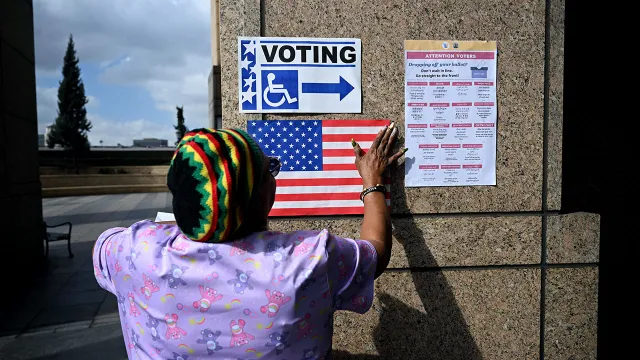
Voting is not just a political act. It is a social contract between citizens and the government they choose to live under. When large numbers of people vote, elected officials are forced to represent a wider, more accurate cross-section of society.
When people stay home, the opposite happens. Low voter turnout allows narrow interest groups and extreme political factions to hold disproportionate power over policy decisions that affect everyone.
According to the University of Connecticut’s School of Social Work, elected officials give more attention and more resources to individuals and communities that actually vote. That is not a theory. It is a documented pattern in resource allocation across every level of government.
Reason 1: Your Vote Directly Shapes Government Policy
Every law passed, every budget approved, and every regulation signed into effect traces back to elected officials. Those officials were put in office by voters.
When you vote, you are not just picking a person. You are choosing the direction of policy on healthcare, education, immigration, housing, climate, and taxes. If you do not vote, someone else makes that choice for you.
Local elections especially determine how your tax dollars are spent in your own neighborhood. Roads, schools, public transit, and emergency services are all shaped by who you elect at the city and county level.
Reason 2: Every Vote Has the Potential to Decide an Election
Many people believe a single vote cannot change anything. History proves otherwise.
In New Mexico, just two votes out of 14,000 cast changed the outcome of a state representative race. Across the country, local elections are routinely decided by margins of fewer than 100 votes. Even in larger elections, close margins are far more common than people assume.
The probability that your vote could influence an outcome is higher than it looks, especially at the local and state level where fewer people participate.
| Election Type | Average Margin of Victory | Likelihood of Close Race |
|---|---|---|
| Presidential | Millions of votes | Low (swing states decide it) |
| U.S. Senate | Tens of thousands | Moderate |
| State Legislature | Hundreds to thousands | High |
| Local/City Council | Dozens to hundreds | Very High |
| School Board | Can be single digits | Extremely High |
Reason 3: Voting Protects Your Rights
Rights are not permanent. They can be expanded, restricted, or taken away by elected officials and judges they appoint.
In 2022, the U.S. Supreme Court overturned Roe v. Wade, eliminating a federal right that had existed for nearly 50 years. That decision was shaped by justices appointed by elected presidents and confirmed by elected senators. Voting is the mechanism that controls who fills those seats.
Voting rights themselves are also under constant legal pressure. Since 2020, dozens of states have passed laws making it harder to vote through stricter ID requirements, reduced early voting windows, and cuts to mail-in ballot access. The only way to counter those moves is to vote out the officials behind them.
Reason 4: Voting Is an Act of Civic Responsibility
Democracy does not run on its own. It requires participation to function. A government elected by a small fraction of eligible voters is not truly representative of the population.
Civic responsibility is the shared obligation citizens accept in exchange for the rights and protections a democratic society provides. Voting is the most basic and most powerful expression of that responsibility.
As scholar E.J. Dionne puts it, saying everyone has a civic duty to vote is a way of saying that everybody should be invited into the experiment of self-government. When people sit out elections, that invitation goes unanswered.
Reason 5: Local Elections Have the Most Direct Impact on Daily Life
Most people focus on presidential races. But local elections shape everyday life far more directly.
School board members decide what your children are taught and how education budgets are spent. City council members determine zoning, housing policy, and local taxes. Sheriffs and district attorneys control how laws are enforced in your community. These officials are elected by sometimes just a few hundred votes.
A 2022 report from the NAACP Legal Defense Fund noted that over 30% of voters do not complete their entire ballot, skipping down-ballot races entirely. Those skipped races often have the biggest impact on community life.
Reason 6: Voting Gives Marginalized Communities a Voice
Communities that vote consistently receive more attention, more funding, and better policy representation than those that stay home.
Historically, marginalized groups including racial minorities, women, and low-income citizens were actively denied the right to vote. People marched, faced violence, and died to secure that right. Today, voting suppression still exists through systemic barriers, but the act of voting itself remains a form of political resistance and empowerment.
When minorities and underrepresented communities vote in large numbers, elected officials must respond to their priorities. When they stay home, those priorities are ignored.
Reason 7: Elections Shape Economic Policy and Your Financial Future
The Supreme Court hears Merrill v. Milligan, the Alabama redistricting case at the U.S. Supreme Court in Washington, D.C., on October 4, 2022. (photo by Allison Shelley for LDF)
The people you vote into office decide fiscal policy. That includes tax rates, minimum wage laws, healthcare subsidies, student loan policy, retirement benefits, and social security structures.
Every working person is affected by these decisions. The elected Congress and president determine how much payroll tax you pay, what Medicare services you receive, and what cost-of-living adjustments are made to social security benefits.
Voting is one of the most direct ways any individual can have input on economic decisions that shape their financial security across their entire lifetime.
Reason 8: Voting Holds Elected Officials Accountable
Officials who face no accountability govern for themselves and their donors, not for the public. Regular elections create a cycle of accountability that forces leaders to respond to voters’ needs or risk losing their positions.
In healthy democracies where voter turnout is high, elected officials are more motivated to listen, compromise, and deliver on their promises. Low turnout removes that pressure entirely.
Accountability through elections is what separates representative democracy from authoritarianism. Without it, government power concentrates and citizens lose leverage entirely.
Reason 9: Voting Shapes the Next Generation’s Future
Policy decisions made in today’s elections will affect people for decades. Climate legislation passed now determines what kind of environment future generations inherit. Education budgets approved today shape the quality of schools children will attend for years. Healthcare laws enacted this term will govern access to care for millions of future patients.
Voting is not just about your current needs. It is about leaving future generations a better political landscape than the one you inherited. Every ballot cast is part of a longer story about the kind of country being built.
Reason 10: Voting Keeps Democracy Itself Alive
Democracy is not guaranteed. It requires constant renewal through participation. Countries where voter turnout drops dramatically tend to experience democratic backsliding, where authoritarianism, corruption, and erosion of rights become more common.
High voter participation sends a signal that citizens are engaged, informed, and invested in the outcome of governance. It strengthens the legitimacy of elections and makes the overall system more resilient against manipulation, interference, and extremism.
When people vote in large numbers across every election cycle, from local school boards to national offices, democracy functions the way it was designed to. When they stop, democracy weakens.
Key Statistics on Voting and Voter Turnout
| Statistic | Data |
|---|---|
| U.S. voter turnout in 2020 | 66.8% (highest since 1900) |
| U.S. voter turnout in midterms (avg.) | 40 – 50% |
| Local election turnout (avg.) | 15 – 27% |
| Voters who skip down-ballot races | Over 30% |
| New Mexico race decided by | 2 votes out of 14,000 |
| States that restricted voting since 2020 | At least 14 |
| Countries with compulsory voting turnout | 80%+ consistently |
How Voting Affects Key Policy Areas
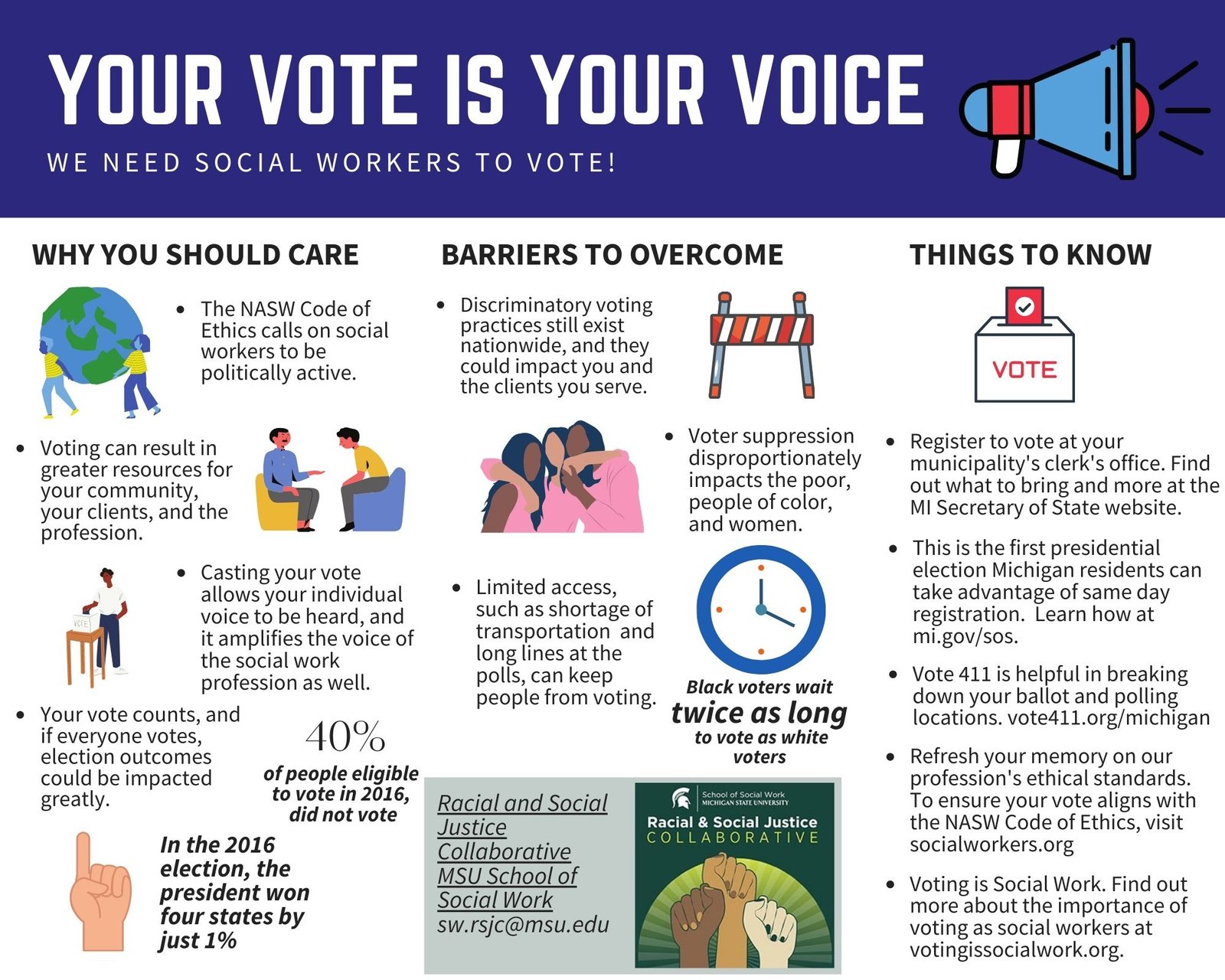
Understanding what is actually on the line in every election makes the importance of voting concrete rather than abstract.
Healthcare
Every level of elected government influences healthcare access. Congress determines Medicare and Medicaid funding. State legislators decide whether to expand Medicaid. Local officials shape public health budgets. Who you vote for determines how accessible and affordable healthcare is for you and your family.
Education
School board members control curriculum, staffing, and local education budgets. State legislators fund public universities and set teacher pay standards. Federal officials influence student loan policy and Pell Grant availability. Every one of these officials is elected.
Climate and Environment
Climate legislation is passed or blocked by elected officials. Environmental regulations are enforced or gutted based on which administration is in power. Local planning commissions, which are often elected or appointed by elected officials, approve or deny industrial projects that affect air and water quality in your community.
Immigration
Immigration law is federal, but enforcement is shaped by who occupies the White House and controls Congress. State and local elections determine whether a city becomes a sanctuary city or cooperates with federal immigration enforcement. Voting shapes all of it.
Criminal Justice
District attorneys, sheriffs, and judges are frequently elected positions. They determine how laws are enforced, who gets prosecuted, what charges are pursued, and what sentences are recommended. These are arguably the most direct points of impact between elected government and the lives of everyday people.
Common Reasons People Do Not Vote (And Why They Are Wrong)
Many eligible voters stay home for reasons that do not hold up under scrutiny.
“My vote doesn’t matter.” It does, especially in local elections where margins are razor thin. Two votes decided a New Mexico state legislative race. Dozens of city council races are won or lost by fewer than 100 votes every election cycle.
“Both candidates are the same.” They rarely are. Even when presidential candidates feel similar, down-ballot differences in school boards, judges, and local commissions are often stark.
“I don’t know enough to vote.” Voter guides, candidate websites, and nonpartisan resources like Ballotpedia make research straightforward. You do not need to know everything. You just need to be informed enough to make a choice.
“The system is corrupt anyway.” Low turnout is exactly what bad actors rely on. High participation is the most effective antidote to corruption and special interest capture of elections.
Frequently Asked Questions (FAQs)
Why is voting important in a democracy?
Voting is how citizens choose who governs them and what policies are enacted. Without it, democracy cannot function as a representative system accountable to the people.
Does my single vote really make a difference?
Yes. Local and state elections are frequently decided by margins of just a few votes. Your vote is statistically most powerful in these races, which also have the most direct impact on your daily life.
Why is it important to vote in every election, not just presidential ones?
Local and midterm elections shape laws, budgets, and officials that affect daily life more directly than presidential policy. Skipping them gives outsized power to a small, engaged minority.
What happens when people stop voting?
Low voter turnout allows narrow interest groups and extreme political factions to gain disproportionate power. Accountability weakens, and policies tend to shift away from the interests of the general population.
Is voting a right or a civic duty?
It is both. Voting is a legally protected right in democratic nations, and it is also a civic responsibility that sustains the democratic system all other rights depend on.
How does voting affect local communities?
Local officials elected by voters control school funding, zoning, policing, public transit, and community services. Voting in local elections directly determines how these resources are allocated.
Can young people really influence election outcomes?
Absolutely. Young voters are an increasingly powerful bloc. When young people vote in high numbers, candidates are forced to address issues like climate, student debt, housing, and job security.
Why do some people not vote, and what can be done?
Common barriers include voter registration complexity, lack of information, apathy, and systemic suppression. Voter education, automatic registration, and expanded early voting all help increase participation.
What is voter suppression and why does it matter?
Voter suppression refers to laws or tactics designed to make it harder for certain groups to vote. It matters because it undermines democratic representation and concentrates power in the hands of fewer people.
How can I prepare to vote in the 2026 elections?
Register early, check your local registration deadlines, research candidates using nonpartisan voter guides, and confirm your polling location or mail-in ballot options well before Election Day.
Conclusion
Voting is the single most accessible and powerful act of political participation available to every eligible citizen.
The 10 reasons why voting is important outlined in this article are not abstract ideals.
They are rooted in documented patterns of how government actually responds to voters, how elections are decided by small margins, and how rights are won and lost through the electoral process.
Every election, from the local school board to the U.S. Senate, presents an opportunity to shape the policies, leaders, and direction of the community and country you live in.
Staying home does not keep you neutral. It hands your voice to someone else.
In 2026 and in every election year that follows, the choice to vote is a choice to matter. It is a choice to honor the generations who fought for the right, to protect the rights of those who cannot vote, and to build the kind of future that reflects your values.
Democracy only works when its citizens do. Show up. Vote. Make it count.


