


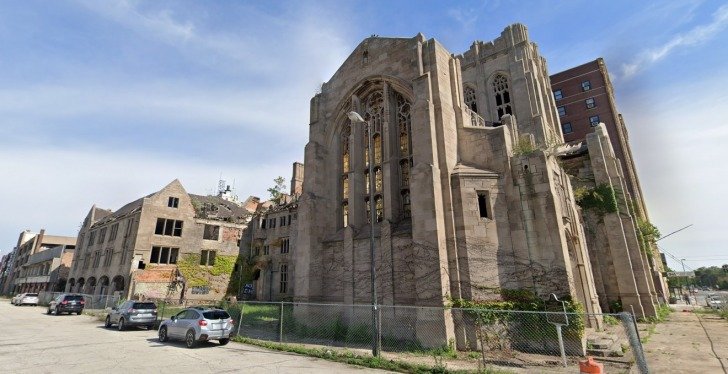
Why is Gary, Indiana so dangerous? This is one of the most searched questions about the American Midwest, and the answer is far more complex than just high crime numbers.
Gary, Indiana has carried the label of “Murder Capital of the United States” since the early 1990s.
Behind that title lies a decades-long story of industrial collapse, systemic racism, deep poverty, and government neglect.
A City Built on Steel: The Origins of Gary, Indiana
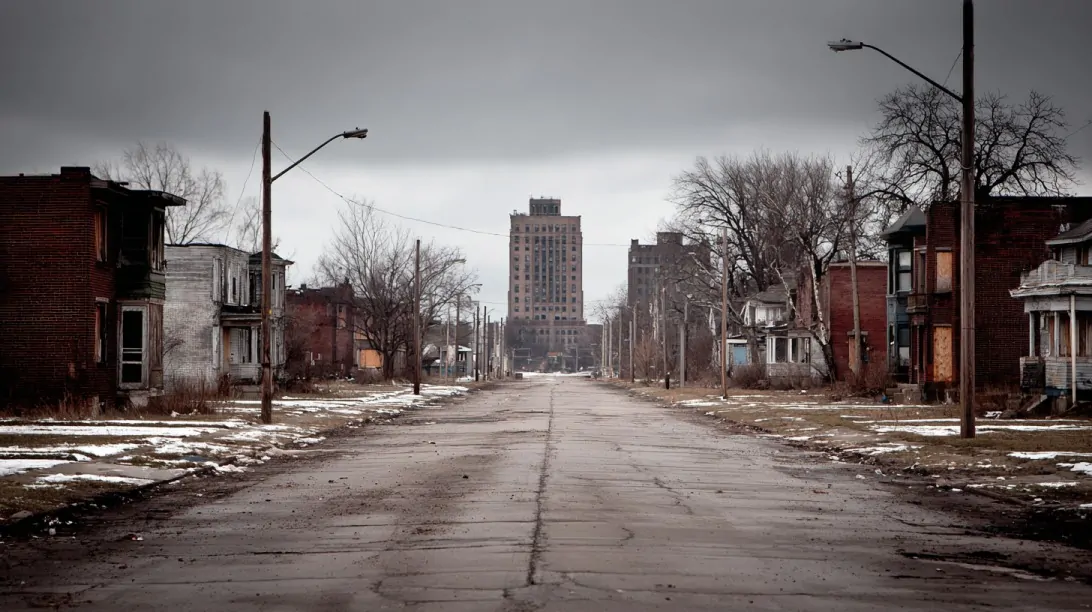
Gary, Indiana was founded in 1906 by the U.S. Steel Corporation. It was not built organically — it was engineered as a company town to support the Gary Works steel mill, the largest steel complex in North America.
The city was named after Elbert Henry Gary, the founding chairman of U.S. Steel. Workers flooded in from across the country and around the world, and for decades the city thrived.
By the 1950s, Gary had over 200,000 residents and earned the nickname “The Magic City.” Neighborhoods were lively, businesses were booming, and the city was one of the fastest-growing in the Midwest.
The Peak Years: What Gary Looked Like at Its Best
At its industrial peak in the 1970s, the Gary steel mill employed over 32,000 workers. Downtown was lined with theaters, restaurants, shops, and community spaces.
Gary was also the birthplace of the Jackson 5 — the family that produced global superstar Michael Jackson. The city had cultural pride, economic strength, and a growing middle class.
For Black workers who migrated north during the Great Migration, Gary’s steel jobs were a direct pathway to economic stability and homeownership.
The Collapse of the Steel Industry: When Everything Fell Apart
The first signs of trouble came in 1971, when the first round of mass layoffs hit Gary’s factories. Foreign competition, particularly from Japan and Germany, undercut American steel prices dramatically.
Automation also eliminated thousands of jobs that human workers had once held. By the late 1970s and into the 1980s, factory closures accelerated and the job losses became catastrophic.
U.S. Steel, which had once employed over 30,000 workers in Gary, currently employs around 3,700 at Gary Works. That single statistic illustrates the scale of economic destruction the city endured.
White Flight and Racial Segregation: A Crisis Within a Crisis
As the economy deteriorated, white residents began leaving Gary in large numbers. This “white flight” stripped the city of its tax base and concentrated poverty among its Black population.
Historically, Black residents in Gary had already been confined to specific neighborhoods by racist housing laws, redlining, and racial prejudice. When white residents left, Black families were left behind in a city with crumbling infrastructure and shrinking opportunity.
As one longtime resident put it plainly: “Racism killed Gary. The whites left Gary, and the blacks couldn’t.”
Redlining — the federal government’s practice of marking Black neighborhoods as ineligible for housing loans — had systematically depressed property values for decades. When disinvestment hit, these communities had no financial cushion.
Population Collapse: A City Losing Itself
Gary’s population peaked at approximately 178,000–200,000 in the 1950s. Today, the city has roughly 66,000–69,000 residents, meaning it has lost more than half its population over seven decades.
| Year | Estimated Population |
|---|---|
| 1950 | ~178,000 |
| 1970 | ~175,000 |
| 1990 | ~116,000 |
| 2000 | ~102,000 |
| 2010 | ~80,000 |
| 2020 | ~69,000 |
| 2026 | ~66,000 (est.) |
This population decline created a devastating feedback loop. Fewer residents meant less tax revenue. Less revenue meant worse schools, roads, and public services. Worse services drove even more people away.
Over 13,000 Abandoned Structures: The Physical Face of Decline
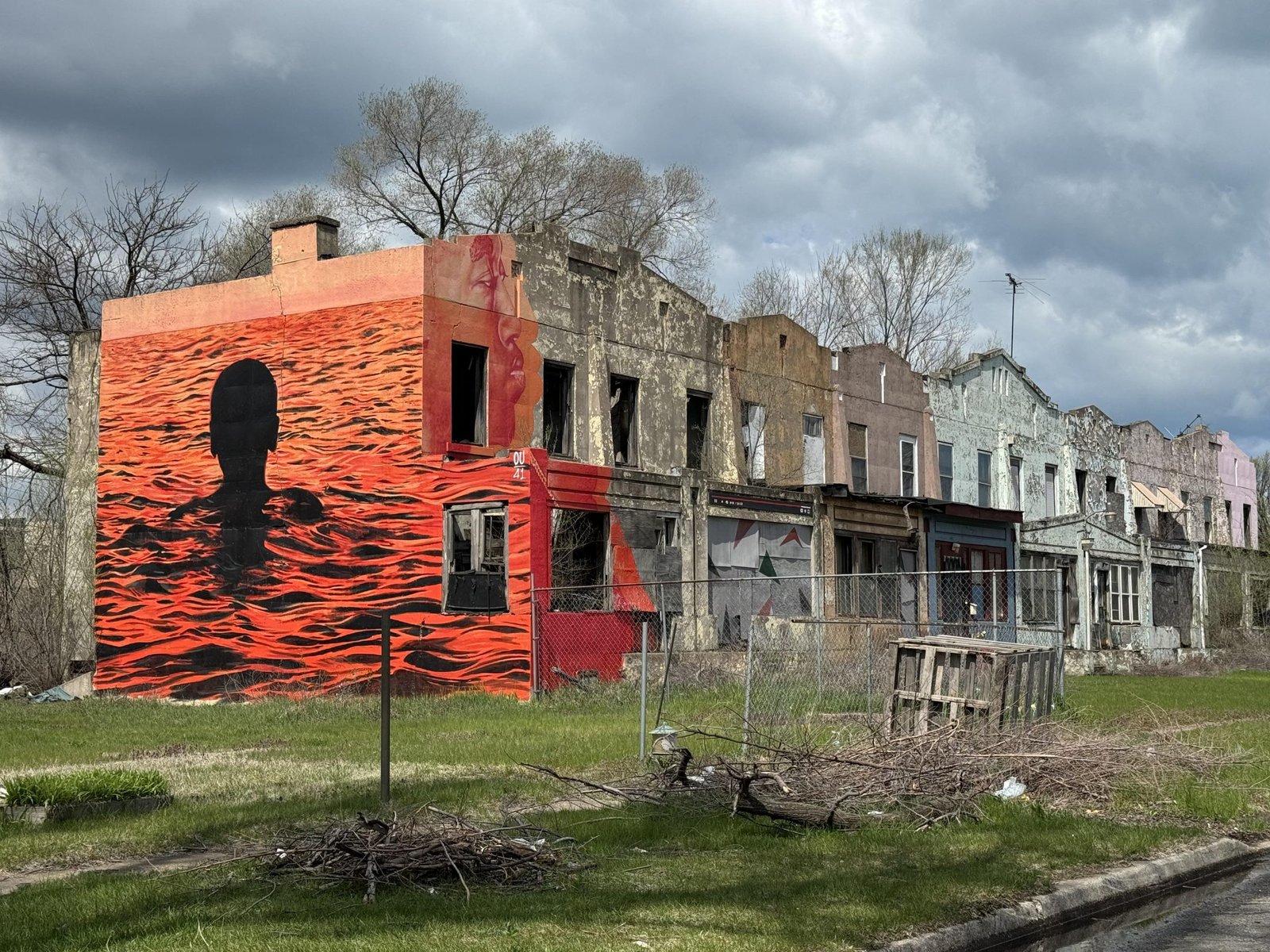
Gary today has over 13,000 abandoned structures within city limits. Empty churches, shuttered storefronts, collapsed auditoriums, and hollow train stations are scattered across the urban landscape.
These abandoned buildings are not just visual symbols of decay. They actively contribute to crime by providing cover and space for illegal activity.
The most iconic example is City Methodist Church, which once served over 3,000 congregants before closing in 1975. Today it is a roofless ruin visited by urban explorers from across the country.
Why Is Gary, Indiana So Dangerous: The Crime Reality in Numbers
Gary’s crime rate tells a stark story. According to NeighborhoodScout’s analysis of FBI data, Gary has a crime rate of 34 per 1,000 residents — one of the highest in the entire country.
| Crime Metric | Gary, Indiana |
|---|---|
| Overall crime rate (per 1,000) | 34 |
| Chance of becoming a crime victim | 1 in 30 |
| Violent crime chance | 1 in 118 |
| Property crime chance | 1 in 40 |
| % of Indiana communities with lower crime | 98%+ |
| Crime rate vs national average | 242% above |
Within Indiana, more than 98% of all communities have a lower crime rate than Gary. Your chance of becoming a victim of violent or property crime in Gary is 1 in 30.
The Murder Capital Years: 1993–1995
The question “why is Gary, Indiana so dangerous” became national headline news in the early 1990s. In 1993, Gary recorded 110 murders among a population of just over 100,000 — a rate three times higher than Chicago’s at that time.
By 1994 to 1995, Gary officially ranked as the most dangerous city in the entire United States. In 1995 alone, with a population of 115,269, the city reported over 3,000 crimes, including 129 murders.
These numbers did not happen in a vacuum. They were the direct result of mass unemployment, poverty, and a drug trade that filled the economic vacuum left by the collapse of the steel industry.
Poverty as the Root Cause of Gary’s Crime Problem
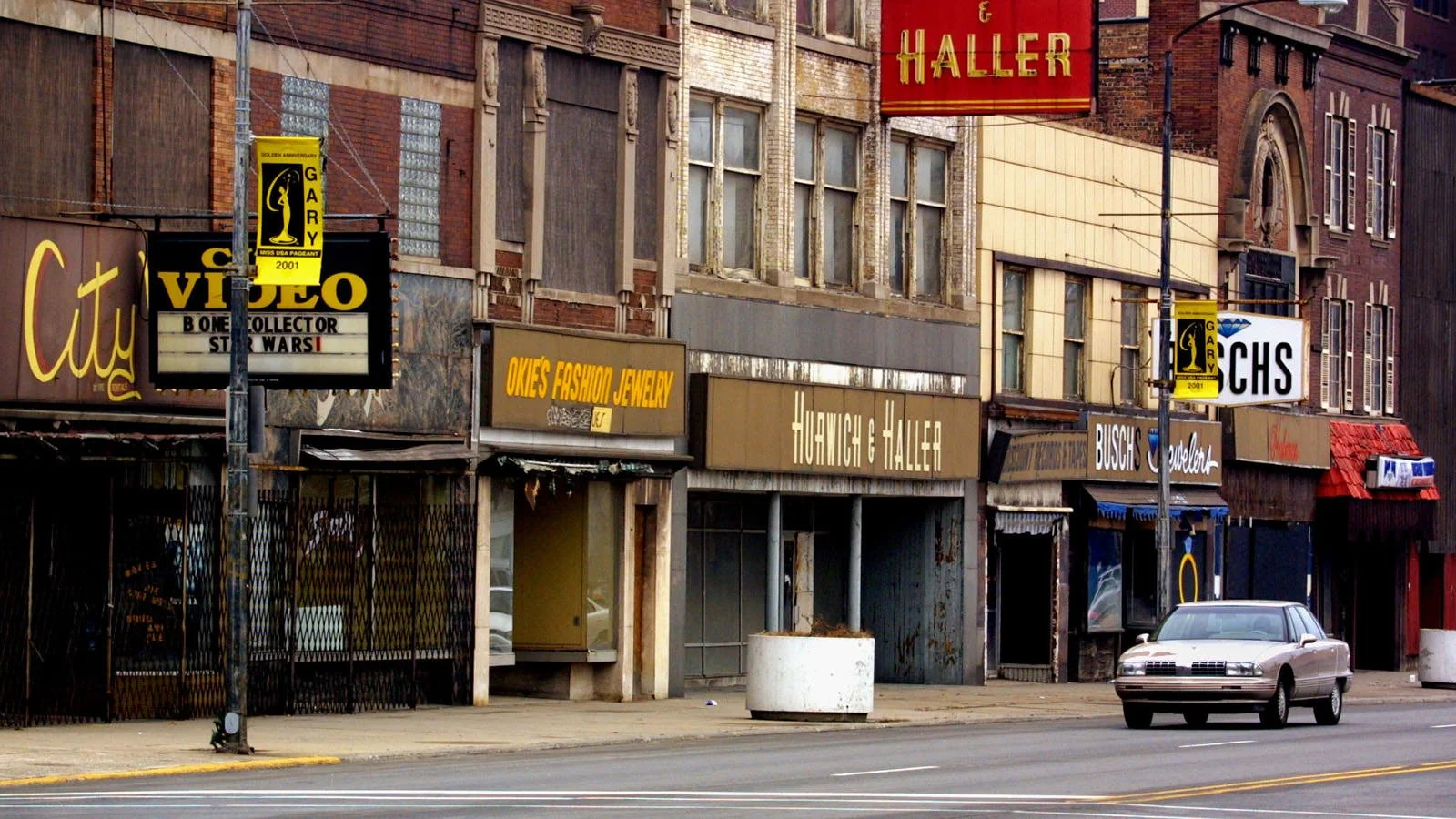
Gary’s crime problem is not random — it is a direct consequence of generational poverty and economic abandonment.
| Economic Indicator | Gary, Indiana |
|---|---|
| Median household income | $31,936 |
| Poverty rate | 32.9% |
| Unemployment rate | 13.0% |
| National poverty average | ~12.5% |
When nearly one in three residents lives below the poverty line and the unemployment rate sits at 13%, the conditions for crime become almost inevitable. Lack of legitimate economic opportunity pushes people toward illegal alternatives.
Drug Trafficking and Gang Activity: Filling the Economic Vacuum
As factories closed and legitimate jobs evaporated, drug trafficking networks moved into Gary’s neighborhoods. Gang activity grew steadily through the 1980s and 1990s.
Young men with no jobs, no prospects, and no realistic alternatives found a different kind of economy on the streets. Illegal guns became common in this underground market.
The connection between drug markets, gang territory disputes, and gun violence became the defining feature of Gary’s crime landscape for decades — and continues to shape it today.
Underfunded Police and the Accountability Cycle
Gary’s collapsing tax base directly starved its public services. The police department became chronically understaffed, and schools were severely underfunded.
When a police force cannot respond effectively, clearance rates for violent crimes drop. When murders and assaults go unsolved, offenders face no accountability — and violence escalates.
This cycle plagued Gary for decades and remains a challenge, though recent investments are beginning to break it.
Which Neighborhoods in Gary Are Most Dangerous?
Crime in Gary is not evenly distributed. It is heavily concentrated in specific neighborhoods, particularly in the eastern sections of the city.
| Neighborhood Area | Crime Risk (Chance of Victimization) |
|---|---|
| Most dangerous (east neighborhoods) | 1 in 14 |
| Citywide average | 1 in 30 |
| Safer west side neighborhoods | 1 in 23 |
Miller Beach, Gary’s easternmost neighborhood near the Indiana Dunes, is considered one of the more livable areas. Glen Park on the south side also has a more stable residential character compared to the downtown core.
Is Gary Still the Most Dangerous City in Indiana in 2026?
This is where the story gets more nuanced. Gary is no longer consistently ranked as Indiana’s most dangerous city.
Recent crime analyses have placed South Bend at the top of Indiana’s most dangerous cities list. Terre Haute ranks second due to high property crime, and Evansville comes in third.
Gary still ranks among the highest per capita for violent crime in the state, but it no longer dominates every list the way it did in the 1990s. Rankings vary depending on methodology — some weigh violent crime more heavily, others use different per capita formulas.
Signs of Progress: Gary’s Crime Is Actually Dropping
The most important and underreported story about Gary, Indiana in 2026 is that crime has been falling significantly. In 2025, Gary recorded just 24 homicides — the lowest annual total since at least 1970, down from 38 the previous year and far below the 129 recorded in 1995.
In the first half of 2025 alone, homicides fell by 55% compared to the same period in 2024.
| Crime Metric | 2024 | 2025 (H1) | Change |
|---|---|---|---|
| Homicides (H1) | 20 | 9 | -55% |
| Non-fatal shootings (H1) | 75 | 55 | -26% |
| Firearms seized (full year) | ~261 | 369 | +41.4% |
| Federal violent offender prosecutions | baseline | +25% | +25% |
What Law Enforcement Is Doing Differently
Gary has built a multi-agency enforcement approach that is producing real results. The Gary Police Department now works closely with the ATF, U.S. Attorney’s Office, Indiana State Police, and the Lake County Prosecutor’s Office.
In 2025, 369 firearms were seized — a 41.4% increase over the previous year. Federal prosecutions of violent offenders increased by 25%. A Homicide Task Force formed in 2023 has improved clearance and conviction rates substantially.
The department’s homicide clearance rate in the first half of 2025 reached 88%, which surpasses the national average. This means fewer killers are walking free, which reduces the cycle of retaliatory violence.
Community Programs Working Alongside Policing
Beyond law enforcement, community organizations are working to address crime at its roots. Local institutions like Edgewater Health and Geminus Corporation have expanded mental health and addiction services.
Job training programs through WorkOne Northwest Indiana and the Gary Job Corps Center are creating alternatives for young adults who might otherwise be drawn into cycles of violence and poverty.
Violence interrupters — community members who mediate conflicts before they turn deadly — are active in Gary’s most affected neighborhoods.
The Hard Rock Casino: New Investment in an Old City
The opening of the Hard Rock Casino in Gary represents one of the most significant economic investments the city has seen in decades. It has brought jobs, tourism, and tax revenue to a city that desperately needed all three.
Improvements to the South Shore Line, the commuter rail connecting Gary to Chicago, are also underway. City leaders hope that better transit will attract Chicago commuters priced out of the city.
Nonprofit and private investors are putting money into affordable housing, solar energy projects, and educational programs aimed at the next generation of Gary residents.
Gary vs Other Rust Belt Cities: Not an Isolated Case
Gary’s decline is not unique. It is a case study in what happens when a single-industry city loses its economic engine, combined with racial segregation and government disinvestment.
Cities like Detroit, Flint, and East St. Louis followed nearly identical trajectories. The common thread is deindustrialization colliding with systemic inequality, with no adequate policy response from federal or state governments.
Understanding why Gary, Indiana is so dangerous means understanding that crime is almost always the visible symptom of deeper economic and social wounds — not the cause of them.
What the Total Cost of Crime in Gary Looks Like
Crime does not just cost lives. It costs money in ways that trap communities in cycles of poverty. According to CrimeGrade estimates for 2025, the total projected cost of crime in Gary was approximately $79,330,422.
That translates to roughly $1,151 per resident or $2,953 per household per year. When intangible costs like trauma, suffering, and long-term psychological harm are factored in, the true cost is far higher.
The People Who Never Left: Gary’s Resilient Community
Behind the statistics and headlines are approximately 66,000–69,000 people who still call Gary home. Many are long-time residents whose families have lived there for generations.
On any given day in Gary, you can see kids riding bikes past murals celebrating Black history, elders tending community gardens, and neighbors looking out for each other. Life in Gary is not glamorous, but it is real and it is resilient.
“It isn’t a city that is abandoned, it’s a city that was abandoned,” as one historian put it. That distinction matters enormously.
Is It Safe to Visit Gary, Indiana?
Visitors should exercise the same caution they would in any urban area with elevated crime. The areas around the Hard Rock Casino, Miller Beach near the Indiana Dunes, and the South Shore Line stations are generally safer zones.
Avoid the downtown core and eastern neighborhoods after dark. Travel with a companion, stay aware of your surroundings, and do your research before visiting specific areas.
Gary’s most iconic sites — including the ruins of City Methodist Church — attract thousands of urban explorers annually, but always with appropriate caution and ideally with a local guide.
Frequently Asked Questions (FAQs)
Why is Gary, Indiana so dangerous?
Gary became dangerous primarily due to the collapse of its steel industry in the 1970s–80s, which triggered mass unemployment, poverty, white flight, and a drug economy that filled the vacuum left by vanishing jobs.
Was Gary, Indiana the most dangerous city in America?
Yes. From 1993 to 1995, Gary ranked as the murder capital of the United States, recording 110 murders in 1993 and 129 murders in 1995 among a population of just over 100,000.
What is the crime rate in Gary, Indiana in 2026?
Gary’s overall crime rate is approximately 34 per 1,000 residents — about 242% above the national average. Your chance of becoming a crime victim is roughly 1 in 30.
Is Gary, Indiana still dangerous today?
Yes, Gary remains a high-crime city, but significant improvements have occurred. In 2025, homicides hit a 50-year low of just 24 — a dramatic drop from the 129 recorded in 1995.
What caused the decline of Gary, Indiana?
The collapse of the U.S. steel industry, foreign competition, automation, racial segregation, white flight, redlining, and sustained government disinvestment all combined to destroy Gary’s economic foundation over several decades.
What is the safest neighborhood in Gary, Indiana?
Miller Beach on Gary’s east side near the Indiana Dunes and Glen Park on the south side are generally considered the most livable and relatively safer neighborhoods within the city.
Is Gary, Indiana still the most dangerous city in Indiana?
No. Recent crime analyses place South Bend as Indiana’s most dangerous city. Gary still ranks among the highest per capita for violent crime but no longer holds the top spot consistently.
What is Gary, Indiana known for besides crime?
Gary is the birthplace of Michael Jackson and the Jackson 5. It is also home to the largest steel mill complex in North America, the Gary Works facility operated by U.S. Steel.
What is being done to reduce crime in Gary?
Multi-agency law enforcement partnerships involving the ATF, Indiana State Police, and the U.S. Attorney’s Office have seized hundreds of illegal firearms. Community programs, violence interrupters, and job training initiatives are addressing root causes.
Is it worth visiting Gary, Indiana?
Gary has unique appeal for history enthusiasts and urban explorers. The Hard Rock Casino, Miller Beach, and the Indiana Dunes nearby offer legitimate visitor attractions. Exercise normal urban caution during your visit.
Conclusion
Why is Gary, Indiana so dangerous? The full answer spans over a century of industrial ambition, racial injustice, economic collapse, and political failure. Gary was built on steel, stripped of its economy, and left behind when the industry moved on.
Crime was not the cause of Gary’s decline — it was the symptom of everything that collapsed underneath.
But 2026 Gary is not 1995 Gary. Homicides reached their lowest level in over 50 years in 2025.
Law enforcement partnerships are seizing record numbers of illegal weapons. Community programs are investing in people.
The Hard Rock Casino and South Shore Line improvements are bringing outside money back in.
Gary’s people — predominantly Black, working-class, and deeply rooted — never stopped fighting for their city. What Gary has always needed is the same sustained investment and political attention that built it in 1906.
The story of Gary, Indiana is ultimately a story about what America does, and fails to do, for its most vulnerable cities. Progress is real. The road ahead is long. But Gary is still standing.


