


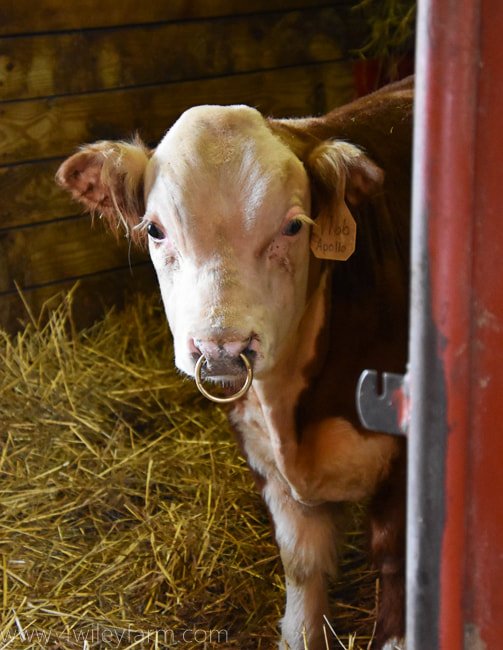
Why do bulls have nose rings is one of the most searched animal behavior questions online, and the answer goes far deeper than farming tradition.
The bull nose ring is a precision safety tool built around thousands of years of livestock management, nerve biology, and handler protection.
A fully grown bull can weigh over 500 kg (1,100 lbs) and can kill or severely injure a person in seconds.
The nose ring gives farmers a reliable, low-force control point that works with the animal’s own anatomy rather than against it.
The Simple Answer — Why Bulls Have Nose Rings
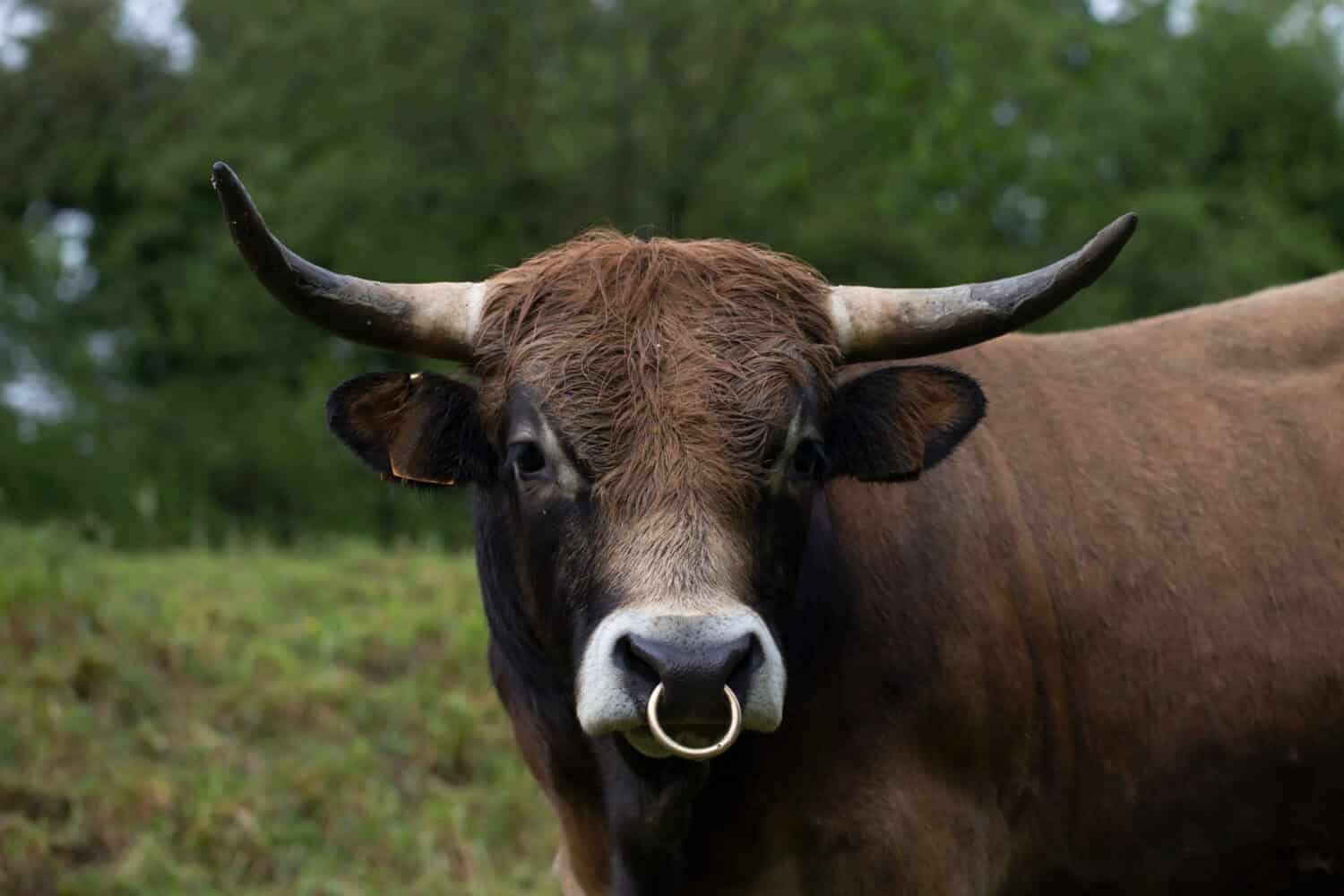
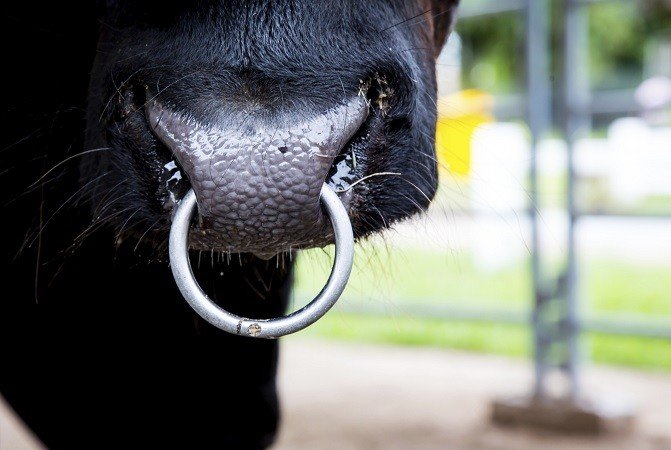
The nasal septum — the soft tissue between a bull’s two nostrils — is one of the most nerve-dense areas on the animal’s body.
When a handler applies even gentle pressure to a ring placed through this tissue, the signal travels immediately to the bull’s brain. The animal instinctively moves away from the pressure rather than fighting it.
That single biological fact is the foundation for everything. A 500 kg animal responds to a few pounds of pressure at the nose because of how that specific anatomy is wired — not because the handler is stronger.
The Science Behind It — Nasal Septum Sensitivity
The nasal septum contains a high concentration of nociceptors — sensory nerve endings that detect pressure, temperature, and pain.
When the ring is pulled gently, these receptors fire a strong signal. The brain interprets it as discomfort and tells the body to relieve the pressure by moving in the direction the handler is guiding.
This is the same principle used in pressure-and-release horsemanship with horses. The animal learns that following the handler’s direction removes the discomfort. It is not about pain — it is about the precision and immediacy of the signal.
The head controls the body. When a handler redirects a bull’s nose, the shoulders and hips follow. This is why the nose is the most effective single control point for a large bovine — far more effective than trying to control the neck, legs, or horns.
The History of Bull Nose Rings
Ancient Origins — Sumer and Mesopotamia
The use of nose rings on livestock dates back 3,000 to 4,000 years to ancient Sumer in Mesopotamia — one of the world’s earliest civilizations.
The Standard of Ur, an ancient artifact from roughly 2500 BCE, depicts bovines and equines being led with nose rings. This is the earliest known visual record of the practice.
Ancient farmers in the Indian subcontinent, Africa, and Central America independently adopted the same technique, all arriving at the same solution because it worked reliably across different breeds, climates, and cultures.
Spread Through Agricultural History
As farming cultures traded and expanded, the practice spread across continents. Medieval European farmers used nose rings on bulls as standard practice for safe handling on farms and at markets.
By the 19th century, purpose-built tools like the bull staff were designed specifically to work with nose rings. The James Safety First Bull Staff, patented in 1919, was a five-foot steel tube with a locking hook that clipped directly to the ring — allowing handlers to guide a bull while keeping a safe distance.
Modern agricultural shows, veterinary bodies, and livestock management organizations formalized the practice into official guidelines, age recommendations, and welfare standards throughout the 20th and 21st centuries.
Why Bulls Specifically Need Nose Rings
The Danger of a Mature Bull
Cows are generally manageable with a standard halter. Bulls are an entirely different animal.
A mature breeding bull is significantly heavier, stronger, and more territorial than a cow. During the breeding season, even bulls that are normally calm can become unpredictable and aggressive with almost no warning.
Bulls are consistently listed among the most dangerous livestock animals in the world. In the UK, cattle account for more farm worker fatalities than any other livestock species, and bulls are responsible for a disproportionate share of those incidents.
Even a non-aggressive bull pushing through a gate or dragging a handler who slipped can cause severe injury. The nose ring is not just for aggressive bulls — it is a precautionary tool for all bulls because the risk exists at any time.
Weight and Strength Comparison
Cows
| Animal | Average Adult Weight | Can a Human Overpower Physically? |
|---|---|---|
| Cow (dairy) | 450–600 kg | No — requires restraint tools |
| Bull (beef breeds) | 700–1,100 kg | Absolutely not |
| Bull (dairy breeds) | 600–900 kg | Absolutely not |
| Horse | 450–550 kg | No — requires halter and lead |
| Pig (mature boar) | 150–350 kg | No — requires pen management |
No human can stop a bull using physical strength alone. The nose ring is what bridges the gap between a 75 kg handler and a 900 kg animal.
The Six Core Reasons Bulls Have Nose Rings
Reason 1 — Handler Safety
The primary purpose of the bull nose ring is to protect the people who work with these animals every single day.
A ring allows a handler to guide a bull with a rope, lead chain, or bull staff while maintaining safe distance and directional control. Without a nose ring, a handler has no reliable way to redirect a charging or resistant bull.
Even experienced farmers who are skilled enough to manage bulls without rings recommend them as essential backup for unexpected aggressive events. One farmer on a livestock forum described how a bull that had been docile for years suddenly turned — the nose ring was the only reason he survived.
Reason 2 — Low-Force Control Through Leverage
The nose ring does not require strength to be effective. A small amount of pressure through the ring creates an immediate, clear signal that the bull understands and responds to.
This is why a child showing a bull at an agricultural fair can lead an animal fifteen times their weight. The ring creates a lever point. The head turns, and the body follows. No pushing, no pulling with force, no physical contest.
This low-force principle also means the handler does not need to escalate to harsher tools. Calm, consistent pressure through the ring is enough in the vast majority of handling situations.
Reason 3 — Behavioral Redirection During Aggression
When a bull begins a threat display — lowering the head, pawing the ground, snorting — a handler with a bull staff clipped to the nose ring can interrupt and redirect that behavior before it escalates.
The sharp signal from the ring cuts through the aggression focus. The animal’s attention shifts from the threat target to the discomfort at the nose, giving the handler a window to move safely.
This is not a guarantee of safety. Experienced farmers always emphasize that no ring makes a bull fully trustworthy. But it dramatically reduces the risk of a full charge reaching the handler.
Reason 4 — Show Requirements and Regulations
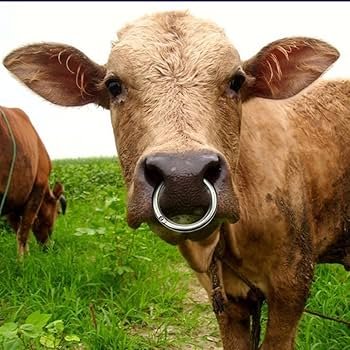
Many agricultural shows, livestock competitions, and cattle exhibitions require bulls over a specific age to have a permanent nose ring as a condition of entry.
The show ring places bulls in close proximity to other animals, judges, spectators, and handlers they may not know. Organizers require nose rings because the risk of an incident without one is too high in a public setting.
Many show regulations also require the bull to be led by two people simultaneously — one on a halter and one on the nose ring lead — so that if one line fails or the animal surges, the second handler has immediate control.
Reason 5 — Veterinary and Transport Management
Moving a bull into a transport trailer, through a loading chute, or onto a veterinary examination table requires precise control.
These situations often involve confined spaces, unfamiliar environments, and stress — exactly the conditions that make bulls most unpredictable. A nose ring attached to a lead rope gives the vet or handler directional control that a halter alone cannot provide in tight quarters.
The ring is also used for temporary tethering during procedures. A rope from the ring tied to a fixed point keeps the bull’s head relatively still while the vet examines teeth, eyes, feet, or reproductive organs without risking a sudden movement.
Reason 6 — Calf Weaning (For Younger Cattle)
A variation of the nose ring serves a completely different purpose for calves — preventing them from nursing after weaning age.
Plastic weaning nose rings clip to the calf’s nostrils without piercing. The small prongs on the ring poke the cow when the calf attempts to suckle, discouraging nursing. The cow moves away, the calf learns that nursing is no longer available, and natural weaning is achieved without full separation.
These are non-permanent, reusable clips — entirely different from the permanent pierced rings used on bulls. They are removed once weaning is complete.
Types of Bull Nose Rings
Permanent Pierced Rings
The standard bull nose ring is a permanent pierced ring placed through the nasal septum. These are the most common type used for long-term bull management.
They are made from aluminium, stainless steel, or copper in the form of two hinged semicircles fastened by a small brass bolt. The bolt head is broken off during installation to prevent loosening. Ring diameter ranges from 8 to 13 cm (3–5 inches) depending on the breed and size of the bull.
Self-Locking Show Rings (Bulldogs)
Self-locking or spring-closing show rings — commonly called “bulldogs” — are removable rings that do not require a permanent piercing.
They snap closed around the nasal septum and stay shut until released by the handler. They are widely used at agricultural shows on cows and steers, or on bulls that have not yet been permanently ringed.
They provide similar control to a permanent ring but can be removed after the show. Handlers attach a lead rope to the loop on the bulldog ring the same way they would to a permanent ring.
Nose Tongs (Bull Tongs)
Nose tongs are plier-action clips used for short-term control during veterinary procedures.
They grip the nasal septum firmly when closed and are held shut by a chain or rope. They can also be used to elevate the animal’s head by passing the rope over a bar at the front of a head bail. They are not for daily use — only for brief, specific procedures where precise head control is needed.
Temporary Snap-In Leads
Some handlers use snap-in nose leads that clip through the ring or around the septum for leading during specific situations. These are not permanent installations but are standard tools in show management and everyday farm handling.
| Ring Type | Permanent | Use Case | Material |
|---|---|---|---|
| Pierced bull ring | Yes | Long-term management | Aluminium, stainless steel, copper |
| Self-locking bulldog | No | Shows, temporary handling | Steel, brass |
| Nose tongs | No | Veterinary procedures | Metal (plier action) |
| Weaning ring | No | Calf weaning only | Plastic |
| Snap-in lead | No | Daily leading, shows | Metal clip |
When Is a Bull Nose Ring Inserted?
Recommended Age — 9 to 12 Months
The nose ring is typically inserted when the bull is between 9 and 12 months of age. At this point the animal is large enough that handling begins to carry real risk, but the nasal septum is still developing and the procedure is straightforward.
Norwegian Red, one of the world’s leading cattle breeding organizations, states that their bulls are ringed at 10 to 12 months, always under veterinary supervision with sedation and pain relief.
Waiting too long means the bull becomes harder to handle precisely at the moment the ring is being installed — a safety risk for both the animal and the person performing the procedure.
Some show bulls are ringed as young as 9 months if they will be attending competitions early. Farmers who ring their bulls at weaning time (around 6–8 months) do so to minimize the number of stressful procedures the calf goes through separately.
Who Performs the Procedure
The procedure is typically performed by a veterinarian who pierces the nasal septum with a scalpel or specialized punch under sedation and appropriate pain relief.
Some experienced farmers perform the procedure themselves, particularly in countries or regions where veterinary access is limited. Livestock forums confirm that the procedure itself is relatively straightforward when the animal is properly restrained — but improper placement creates complications.
An incorrectly placed ring — too close to the edge of the septum, too small for the animal’s breed, or placed without sedation — risks the ring tearing through the tissue. This is both painful and makes the ring useless for safe handling.
The Bull Staff — The Ring’s Essential Partner
A nose ring alone is not enough for safe bull handling. Every major veterinary textbook and farm safety authority emphasizes this clearly: the ring must be used with a bull staff.
What Is a Bull Staff?
A bull staff (also called a bull pole) is a wooden or metal pole typically 1.2 to 1.8 meters (4–6 feet) long with a hook at one end that snaps directly onto the nose ring.
The pole keeps the handler at a safe distance from the bull’s head, horns, and front legs. At full extension, the handler is far enough away that if the bull lunges, the pole absorbs and redirects the movement before it reaches the person.
The handler can push the bull backward into a pen, guide it through a chute, or steer it in any direction — all without being within striking range.
The Two-Line System
Show organizations and farm safety bodies recommend a two-line system for handling any bull: one line attached to the halter and one line to the nose ring.
If the bull surges forward against one line, the other immediately takes tension and redirects the head. The combined signals prevent the animal from building momentum in any single direction.
This dual-control approach is mandatory at many agricultural shows for bulls over 10 months of age, where two handlers must be present — one on each line.
Situations Where Bull Nose Rings Are Used Daily
Moving Between Paddocks and Pens
Every time a bull is moved from one paddock to another, through a gate, or between pens, the nose ring gives the handler directional control that a halter alone cannot provide reliably.
A bull that decides to stop and resist a halter lead can simply lower its head and plant its feet — and no amount of pulling on the halter will move 900 kg of bull. A firm signal from the nose ring shifts the animal’s attention and breaks the resistance.
Loading for Transport
Loading a bull into a trailer is one of the highest-risk routine tasks in livestock farming. The confined space, the ramp, the unfamiliar environment, and the enclosed trailer all increase the bull’s stress level.
The nose ring gives the handler precise directional control during the approach and loading — guiding the bull straight into the trailer rather than allowing it to veer sideways, back up, or turn against the handler.
Breeding Management
During breeding season, bulls are moved between pastures and introduced to cow herds. Their hormonal state makes them more reactive and less predictable than at any other time of year.
The nose ring is especially important during this period. Handlers managing breeding schedules can guide and separate bulls safely without the elevated risk that comes from trying to manage breeding-season behavior without a reliable control point.
Agricultural Shows and Competition
Show rings require bulls to walk calmly past other animals, judges, and crowds — all in close proximity. The nose ring and halter combination keeps the bull focused on the handler and responsive to subtle direction even in a stimulating, unfamiliar environment.
Alternatives to Nose Rings — Do They Work?
Cattle Crush Systems
A cattle crush (also called a head bail or squeeze chute) is a mechanical restraint device that holds the animal securely during veterinary procedures.
Crushes eliminate the need for nose control during specific procedures by immobilizing the animal entirely. They are excellent for planned procedures but cannot be used for daily walking and leading.
Behavioral Training and Stockmanship
Some highly experienced handlers with well-designed facilities manage bulls without permanent nose rings through intensive behavioral training from a young age, calm low-stress handling techniques, and purpose-built infrastructure that keeps the handler outside the bull’s flight zone.
This approach is effective when all conditions are ideal — experienced handler, well-trained bull, appropriate facilities. It is not practical or safe for most farm settings, especially when multiple people need to handle the same animal.
Electronic Prods
Electronic prods are strongly discouraged by animal welfare organizations for routine bull handling. They cause sharp pain, increase stress, and make the bull less predictable rather than more manageable. They are not a welfare-friendly alternative to the nose ring.
The Animal Welfare Debate
Are Nose Rings Cruel?
This is the most common question about the practice. The consensus among veterinary and animal welfare professionals is that properly placed and managed nose rings are acceptable when used correctly.
The key welfare standards recognized by professional livestock bodies include:
- Veterinary placement with sedation and analgesia
- Correct ring sizing for the animal’s breed and age
- Regular inspection for wear, infection, or injury
- Use of the ring as a communication tool with pressure and immediate release, not as a punishment device
Norwegian Red confirmed that a properly placed ring does not affect the bull’s ability to eat, drink, or live comfortably in daily life.
Where Welfare Concerns Arise
Welfare problems occur when rings are improperly placed (too close to the septum edge), too small for the animal’s size, allowed to become infected, damaged, or used to apply sustained harsh force rather than brief directional pressure.
These misuse cases are the source of animal welfare criticism — not the practice itself when carried out by trained professionals using correct technique and appropriate tools.
Pig Nose Rings — A Different and More Controversial Case
Pig nose rings serve a completely different purpose and generate significantly more animal welfare concern.
Pigs are natural rooters — they use their highly sensitive snouts to dig and forage in soil. This instinct is so powerful that pigs kept on farmland can cause significant ground damage. Nose rings on pigs are designed to cause discomfort specifically when the pig tries to root, discouraging the behavior by making the natural action painful.
Animal welfare groups argue that pig nose rings are more ethically problematic than bull nose rings because they target and punish an essential natural behavior rather than providing a control mechanism. Several regions with strong animal welfare frameworks have moved to restrict or ban the practice.
Frequently Asked Questions (FAQs)
Why do bulls have nose rings?
Bulls have nose rings because the nasal septum is highly sensitive to pressure, giving handlers a reliable low-force control point. It allows safe management of an animal that can weigh over 900 kg and cannot be physically overpowered by a human.
At what age is a nose ring inserted into a bull?
Nose rings are typically inserted between 9 and 12 months of age, usually by a veterinarian using sedation and pain relief. This age balances the bull’s growing size against the simplicity of the procedure.
Does a nose ring hurt a bull?
The initial insertion causes brief discomfort under sedation. A correctly placed, properly sized ring does not cause ongoing pain and does not affect the bull’s ability to eat, drink, or live normally.
What is a bull staff and why is it used with a nose ring?
A bull staff is a long pole that clips to the nose ring, keeping the handler at a safe distance from the bull. It is essential for safe handling because a ring alone is not enough protection if the bull lunges.
Do all bulls need a nose ring?
Not every bull is legally required to have one, but it is recommended for the safety of handlers and the animal. Many agricultural shows and livestock events require nose rings for bulls over 10 months of age.
What are bull nose rings made of?
They are most commonly made from aluminium, stainless steel, or copper in the form of two hinged semicircles fastened with a small brass bolt. Ring diameter ranges from 8 to 13 cm depending on the bull’s size and breed.
Can a nose ring stop a bull from charging?
A nose ring and bull staff can interrupt and redirect an early threat display. They do not guarantee safety — experienced farmers emphasize that no ring makes a bull fully trustworthy, and handlers should always maintain awareness.
Why do pigs also have nose rings?
Pig nose rings discourage rooting — the natural behavior of digging with the snout. Unlike bull rings which aid in safe handling, pig nose rings work by making rooting uncomfortable, which makes them more ethically controversial among animal welfare advocates.
What is a weaning nose ring on a calf?
A weaning ring is a temporary plastic clip attached to a calf’s nostrils that pokes the cow when the calf tries to suckle, encouraging natural weaning without fully separating mother and calf.
How long have bulls had nose rings?
At least 3,000 to 4,000 years. Ancient Sumerian artifacts from around 2500 BCE show bovines being led with nose rings, making it one of the oldest recorded livestock management practices in human history.
Conclusion
Why do bulls have nose rings comes down to biology, physics, and thousands of years of practical farming wisdom.
The nasal septum is the most nerve-sensitive area on a bull’s face, and a ring placed through it gives any handler a reliable, low-force control point over an animal that can weigh over 900 kg.
No person can physically overpower a mature bull — but a gentle signal through the nose ring can redirect one instantly.
From ancient Sumerian farmers to modern veterinary-supervised agricultural shows, the core purpose has never changed.
When fitted correctly by a trained professional, sized appropriately for the animal, and used as a calm communication tool rather than a punishment device, the bull nose ring is one of the most effective and welfare-conscious livestock management tools in agriculture.
Combined with a bull staff and proper stockmanship training, it protects both the handler and the animal.
Understanding why bulls have nose rings means understanding the entire relationship between human safety, animal biology, and responsible livestock care.


