


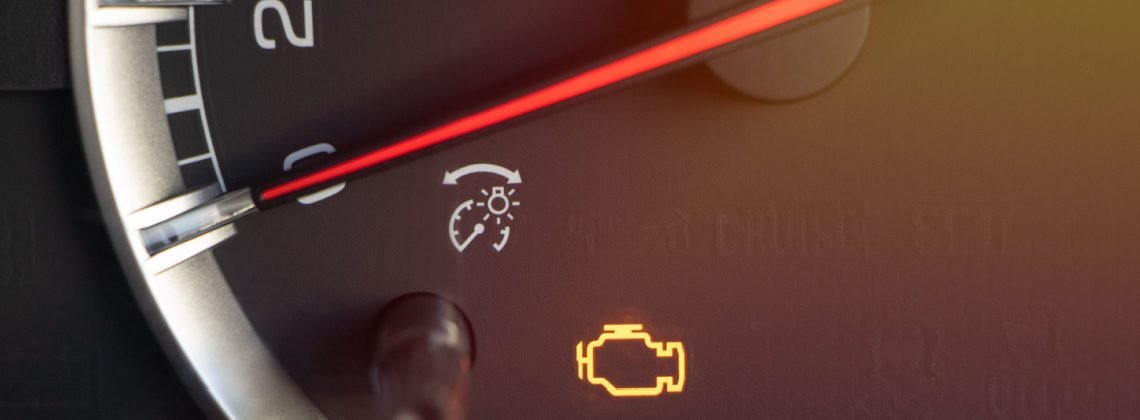
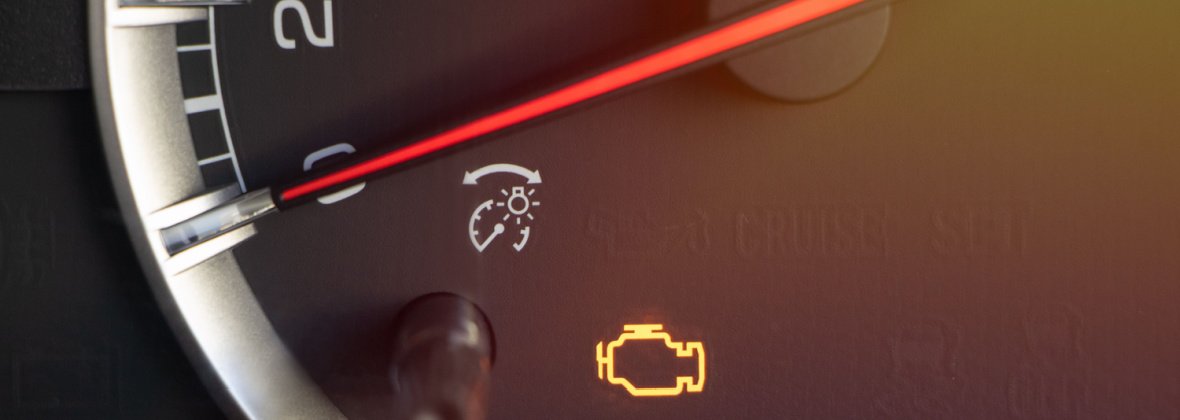
Why is my check engine light flashing is one of the most urgent questions a driver can face.
Unlike a steady check engine light, a flashing or blinking light is your car’s highest-level warning signal — it means active damage is happening right now.
Every mile you drive with that light blinking risks destroying your catalytic converter, fouling your engine, and turning a $150 repair into a $3,000 bill.
Flashing vs. Solid Check Engine Light — What Is the Difference?
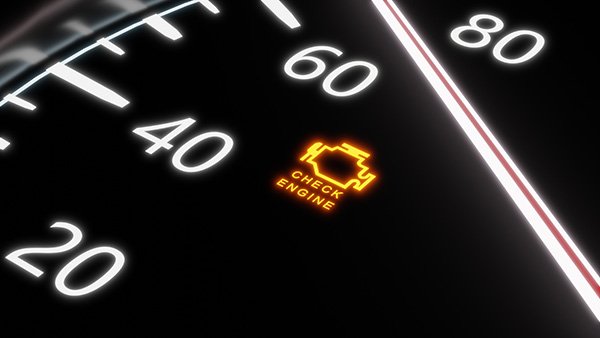
Most drivers treat both lights the same. That is a costly mistake.
A solid check engine light means your car’s computer has logged a fault — something like a sensor error, a loose gas cap, or an emissions issue. It needs attention, but the car is generally safe to drive home or to a shop.
A flashing check engine light is completely different. It means a serious engine misfire is occurring right now. Unburned fuel is being pumped directly into your exhaust system. When that raw fuel hits your catalytic converter, it can melt the internal ceramic core in minutes.
The rule is simple: Solid light = schedule a repair. Flashing light = pull over immediately.
| Light Behavior | Urgency | What It Means |
|---|---|---|
| Solid / Steady | Moderate | Logged fault — get it checked soon |
| Flashing / Blinking | Critical | Active misfire — stop driving now |
| Flashes then goes solid | High | Intermittent misfire — inspect today |
| Flashes then turns off | High | Past misfire — do not ignore it |
What Causes a Check Engine Light to Flash?
Cause 1: Engine Misfire — The #1 Reason
An engine misfire is the single most common cause of a flashing check engine light. A misfire happens when one or more cylinders fail to ignite the air-fuel mixture at the correct time.
When combustion fails, raw unburned fuel travels into the exhaust manifold and enters the catalytic converter. The converter operates at temperatures between 800°F and 1,200°F. Raw fuel hitting those temperatures causes the converter’s internal honeycomb structure to melt, crack, and fail permanently.
Your car shakes and vibrates because the engine is running unevenly — some cylinders are firing normally while others are not, creating an imbalance in engine rotation.
Common misfire symptoms alongside a flashing CEL:
- Engine shaking or rough idle
- Vibration felt through the steering wheel or floorboard
- Loss of power during acceleration
- Popping or sputtering sounds from the engine
- Smell of raw fuel from the exhaust
Cause 2: Bad Spark Plugs
Spark plugs are the most frequent root cause of engine misfires. They ignite the compressed air-fuel mixture in each cylinder. Over time, the electrode tip wears down, the gap widens, and the plug can no longer produce a reliable spark.
A fouled or worn-out spark plug causes that cylinder to misfire on every combustion cycle. On a 4-cylinder engine, one bad plug means 25% of your power is gone. On a V8, one bad plug still causes serious shaking and immediate catalytic converter risk.
Signs of bad spark plugs:
- Rough idle especially when cold
- Poor fuel economy
- Sluggish acceleration
- Hard starting
Most spark plugs need replacement every 30,000 to 100,000 miles depending on the type (copper vs. iridium). Check your owner’s manual for your specific interval.
Cause 3: Failing Ignition Coils
Ignition coils convert the battery’s 12 volts into the 20,000–45,000 volts needed to fire a spark plug. Modern cars use a Coil-on-Plug (COP) system with one coil per cylinder. When a coil fails, that cylinder stops firing completely.
A bad ignition coil is one of the fastest ways to trigger a flashing check engine light. The engine will shake violently, especially at idle. You may notice the shaking worsens during acceleration or when the engine is cold.
OBD-II codes associated with ignition coil failure:
- P0300 — Random/multiple cylinder misfire
- P0301 through P0308 — Specific cylinder misfire (cylinder number matches last digit)
- P0351 through P0358 — Ignition coil circuit fault
Cause 4: Clogged or Faulty Fuel Injectors
Each cylinder has a fuel injector that sprays a precise amount of atomized fuel into the combustion chamber. If an injector becomes clogged, it delivers too little fuel — causing a lean misfire. If an injector sticks open, it floods the cylinder with too much fuel — causing a rich misfire.
Both scenarios cause the check engine light to flash and the car to shake. A rich misfire is especially dangerous because excess fuel pours directly into the catalytic converter and can destroy it quickly.
Signs of injector problems:
- Rough idle that improves at higher RPMs
- Fuel smell from engine bay or exhaust
- Noticeable drop in fuel economy
- Hesitation when pressing the accelerator
Cause 5: Vacuum Leak
Your engine uses a network of rubber hoses and gaskets to control airflow. These hoses deteriorate with age — they crack, split, or become loose at their connections. A vacuum leak allows unmetered air into the intake manifold, throwing off the precise air-fuel ratio the engine needs.
The ECU cannot compensate for a large vacuum leak, leading to lean misfires and a flashing check engine light. You may hear a hissing sound from the engine bay — that is the most common giveaway.
Most common vacuum leak locations:
- Intake manifold gasket
- PCV valve hose
- Throttle body gasket
- Brake booster vacuum line
- EGR valve connections
Cause 6: Bad Oxygen Sensor
Oxygen sensors (O2 sensors) monitor how much oxygen is left in the exhaust after combustion. They send real-time data back to the ECU, which uses it to adjust the fuel injection rate and maintain the correct air-fuel ratio.
A faulty oxygen sensor sends wrong data to the ECU. The ECU then adjusts fuel delivery incorrectly — running the engine too rich or too lean. Both conditions can cause misfires, poor fuel economy, and a flashing or steady check engine light.
Oxygen sensor failure is one of the most common causes of check engine lights overall. The fix is usually straightforward: replace the sensor, which costs $50–$200 for the part plus labor.
Cause 7: Failing Catalytic Converter
A failing catalytic converter can itself trigger a flashing check engine light. If the internal honeycomb substrate has partially melted or broken apart (often from a prior misfire), pieces can rattle inside the converter housing or block exhaust flow.
Restricted exhaust flow creates back pressure in the engine, leading to rough running, shaking, and loss of power. You may smell rotten eggs (hydrogen sulfide) from the exhaust — a classic sign of catalytic converter failure.
Catalytic converter replacement is one of the most expensive repairs on this list. Costs range from $500 to $3,000+ depending on your vehicle and whether you use OEM or aftermarket parts.
Cause 8: Low Cylinder Compression
If a cylinder has low or no compression due to worn piston rings, a damaged valve, or a blown head gasket, that cylinder cannot generate enough pressure to combust the fuel-air mixture properly. This causes a mechanical misfire.
Compression-related misfires are more serious than ignition or fuel misfires because they point to internal engine damage. A compression test is needed to diagnose this. If compression is low in multiple cylinders, the repair cost can be significant.
Signs of low compression:
- Severe, persistent engine shaking
- Blue or white smoke from exhaust
- Oil consumption between oil changes
- Very difficult cold starts
Cause 9: Mass Airflow (MAF) Sensor Failure
The MAF sensor measures the volume and density of air entering the engine. It feeds this data to the ECU, which uses it to calculate the correct amount of fuel to inject. A dirty or failing MAF sensor reports incorrect airflow values.
The ECU then injects the wrong amount of fuel — too much or too little — creating misfires, rough idle, and a flashing check engine light. A dirty MAF sensor can sometimes be fixed with MAF sensor cleaner spray. A failed sensor needs replacement.
OBD-II codes for MAF issues:
- P0100 — MAF circuit malfunction
- P0101 — MAF circuit range/performance problem
- P0102 — MAF circuit low input
Cause 10: Loose or Damaged Gas Cap
A loose gas cap is one of the simplest and cheapest causes of a check engine light. It allows fuel vapor to escape the sealed fuel tank, triggering a fuel evaporation system (EVAP) fault code.
A loose gas cap is more likely to cause a steady check engine light than a flashing one. But it is always worth checking first before assuming something major is wrong. Tighten the cap firmly — you should feel it click. If the cap is cracked or the seal is damaged, replace it. New gas caps cost $10–$25.
Cause 11: Faulty Crankshaft Position Sensor
The crankshaft position sensor tells the ECU the exact position and rotation speed of the crankshaft. The ECU uses this to time the fuel injection and ignition spark precisely. If this sensor fails or sends erratic signals, the entire ignition and fuel delivery timing is thrown off.
Symptoms include intermittent stalling, hard starting, and misfires across multiple cylinders that cause a flashing check engine light. This is a common cause of a flashing light that appears briefly and then goes away.
Cause 12: EGR Valve Problems
The Exhaust Gas Recirculation (EGR) valve recirculates a portion of exhaust gases back into the intake manifold to reduce NOx emissions and combustion temperatures. When the EGR valve sticks open or closed, it disrupts the air-fuel mixture and combustion process.
A stuck-open EGR valve at idle causes rough idling, shaking, and can trigger misfire codes. Carbon buildup is the most common cause of EGR valve failure, especially in vehicles that do frequent short trips.
Cause 13: Bad Motor Mounts
Motor mounts hold the engine to the vehicle frame and absorb engine vibration. If a motor mount breaks or deteriorates, the engine movement is no longer dampened. Every small vibration becomes amplified through the cabin.
While bad motor mounts do not directly cause a flashing check engine light, they make engine shaking dramatically more noticeable and can worsen the sensation of a misfire. If your car shakes severely but the light is steady rather than flashing, damaged motor mounts are a strong possibility.
Cause 14: Transmission Problems
A slipping or failing automatic transmission can cause rough, jerky movement that feels similar to an engine misfire. In some cases, transmission issues also trigger check engine light codes because the ECU monitors transmission control systems.
Transmission-related shaking tends to be more noticeable during gear changes or under load rather than at idle. A dedicated transmission diagnostic is needed to confirm this as the cause.
OBD-II Diagnostic Trouble Codes for a Flashing CEL
When your check engine light flashes, your car stores diagnostic trouble codes (DTCs) in the ECU. An OBD-II scanner — available at any auto parts store or on Amazon for $20–$100 — plugs into the port under your dashboard (usually below the steering column) and reads these codes.
| OBD-II Code | Meaning | Urgency |
|---|---|---|
| P0300 | Random/multiple cylinder misfire | Critical |
| P0301–P0308 | Specific cylinder misfire | Critical |
| P0171 | System too lean (Bank 1) | High |
| P0172 | System too rich (Bank 1) | High |
| P0420 | Catalyst system efficiency below threshold | High |
| P0351–P0358 | Ignition coil circuit fault | High |
| P0201–P0208 | Injector circuit malfunction | High |
| P0100–P0102 | MAF sensor fault | Moderate-High |
| P0442 / P0455 | EVAP leak (loose gas cap) | Low-Moderate |
| P0340 | Crankshaft position sensor circuit fault | High |
What to Do When Your Check Engine Light Is Flashing
Step 1 — Pull over safely. Do not keep driving hoping it will go away. Find a safe spot, turn off the engine. Every additional mile with a flashing CEL risks converter damage.
Step 2 — Check for immediate danger signs. Look for smoke, smell for burning or rotten eggs, listen for loud knocking. If you see smoke or smell burning, do not restart the car.
Step 3 — Check the gas cap. It takes 10 seconds. Tighten it firmly. If the cap was loose, the light may not reset for one or two drive cycles.
Step 4 — Do not restart and drive. If the light was flashing and the car was shaking, do not attempt to drive home. Call a tow truck. Driving with an active misfire is how a $200 spark plug job becomes a $2,500 catalytic converter replacement.
Step 5 — Use an OBD-II scanner. If you have a scanner or a nearby auto parts store can scan it for free (AutoZone, O’Reilly, Advance Auto Parts all offer free scans), read the codes before deciding your next move. The code tells you exactly which system and which cylinder is affected.
Step 6 — Call a mechanic. Provide the codes to your mechanic so they can prepare for the diagnosis. This saves time and money.
Can You Drive with a Flashing Check Engine Light?
The short answer is: No. Do not drive.
The only exception is if the light stops flashing and goes solid, the engine smooths out completely, and you are less than 2 miles from a shop. Even then, avoid highways and heavy acceleration.
Driving with a flashing check engine light risks:
- Catalytic converter meltdown ($500–$3,000+ to replace)
- Fouled spark plugs (chain reaction to other cylinders)
- Damaged oxygen sensors
- Permanent engine damage from unlubricated or overheated components
Repair Costs for Common Flashing CEL Causes (2026)
| Repair | Parts Cost | Labor Cost | Total Estimate |
|---|---|---|---|
| Spark plug replacement (4-cyl) | $20–$80 | $80–$150 | $100–$250 |
| Ignition coil replacement (1 coil) | $30–$120 | $50–$150 | $80–$300 |
| Fuel injector cleaning | $50–$100 | $50–$100 | $50–$200 |
| Fuel injector replacement (1) | $100–$300 | $100–$300 | $150–$600 |
| Oxygen sensor replacement | $50–$200 | $50–$150 | $100–$350 |
| MAF sensor replacement | $80–$300 | $50–$100 | $130–$400 |
| Vacuum leak repair | $10–$50 | $75–$200 | $85–$250 |
| Catalytic converter replacement | $300–$2,000 | $200–$500 | $500–$3,000 |
| Head gasket repair | $500–$1,500 | $1,000–$2,500 | $1,500–$4,000 |
How to Prevent Your Check Engine Light from Flashing Again
Prevention is far cheaper than repair. These habits keep your ignition, fuel, and emissions systems healthy:
Follow Your Spark Plug Replacement Schedule
Copper plugs: every 30,000 miles. Platinum plugs: every 60,000 miles. Iridium plugs: every 80,000–100,000 miles. Do not skip this service — worn plugs are the leading cause of misfires.
Use Quality Fuel
Low-octane or contaminated fuel contributes to misfires and injector deposits. Use the octane rating specified in your owner’s manual. If your car requires premium, use premium.
Do Not Let the Tank Run to Empty
Running on fumes stirs up sediment from the bottom of the fuel tank. That debris enters the fuel filter and injectors, causing blockages and misfires. Keep the tank above a quarter full.
Change Your Air Filter Regularly
A clogged air filter restricts airflow to the engine, causing a rich fuel mixture and potential misfires. Most air filters need replacement every 15,000–30,000 miles.
Keep Up with Oil Changes
Engine oil lubricates valve train components. Dirty or low oil increases wear on camshafts, lifters, and valves — all of which affect cylinder compression and can eventually cause misfires.
Get Routine OBD-II Scans
Many auto parts stores offer free OBD-II scans. Doing a scan every 6 months catches stored fault codes before they escalate into active misfires and flashing lights.
Flashing Check Engine Light After Specific Events
Flashing CEL After Getting Gas
This often points to an EVAP system issue — the fuel evaporation control system. A loose gas cap, faulty purge valve, or cracked EVAP hose can trigger codes after refueling. Tighten the gas cap first. If the light persists, have the EVAP system tested.
Flashing CEL During Acceleration
A misfire that only appears under load — climbing a hill, merging onto a highway, or towing — suggests a fuel delivery problem or a weak ignition coil that cannot keep up with increased demand. This is common with partially clogged fuel injectors or a weak fuel pump.
Flashing CEL at Idle
A misfire that is worst at idle and improves at higher RPMs often points to a vacuum leak, dirty idle air control valve, or a stuck EGR valve. These conditions are more pronounced at low RPM when the engine is under less load.
Flashing CEL After a Cold Start
Cold start misfires are frequently caused by failing ignition coils. Coils are more likely to arc internally when cold due to thermal expansion gaps. If the light flashes for the first few minutes and then goes solid or off, a coil is a strong suspect.
Frequently Asked Questions (FAQs)
Why is my check engine light flashing and car shaking?
This combination almost always means active engine misfires. One or more cylinders are failing to combust fuel, causing the engine to run unevenly and shake while sending raw fuel into the exhaust system.
Is a flashing check engine light serious?
Yes — it is the most serious dashboard warning your car can display. A flashing light means stop driving immediately to prevent catalytic converter damage and potential engine failure.
Can I drive home with a flashing check engine light?
Only if the light goes back to solid, the engine smooths out, and home is less than 2 miles away. Otherwise, call a tow truck — driving risks thousands of dollars in additional damage.
What does a flashing check engine light mean vs. a solid one?
A solid light means a logged fault that needs attention soon. A flashing light means an active misfire is occurring right now and is causing real-time damage to engine components.
How do I find out why my check engine light is flashing?
Use an OBD-II scanner (free at most auto parts stores) to read the diagnostic trouble codes stored in your ECU — these codes tell you exactly which system or cylinder is affected.
Will a loose gas cap cause a check engine light to flash?
Rarely. A loose gas cap typically causes a steady check engine light and an EVAP code. A flashing light almost always points to an active engine misfire, not an EVAP issue.
How much does it cost to fix a flashing check engine light?
Costs range from $100–$300 for spark plugs or ignition coils up to $500–$3,000 for a damaged catalytic converter. Diagnosing early keeps repair costs in the lower range.
Can a bad spark plug cause a check engine light to flash?
Yes — worn or fouled spark plugs are the most common cause of engine misfires, which directly trigger a flashing check engine light. Replacing plugs on schedule prevents most misfire events.
Why does my check engine light flash then stop?
An intermittent misfire — one that occurs under specific conditions like acceleration, cold starts, or heavy load — causes the light to flash briefly then go solid or off. It still needs immediate diagnosis.
Can I reset a flashing check engine light by disconnecting the battery?
Disconnecting the battery clears stored codes temporarily but does not fix the underlying problem. The light will return once the ECU completes its self-tests and detects the same fault again.
Conclusion
A flashing check engine light is your car’s emergency signal — it means stop now, not later.
In almost every case, it points to an active engine misfire that is sending unburned fuel into your exhaust and destroying your catalytic converter with every passing minute.
The most common causes are bad spark plugs, failing ignition coils, clogged fuel injectors, vacuum leaks, and oxygen sensor failure.
All of these are fixable, and most are affordable when caught early.
The moment you see that light blinking, pull over safely, turn off the engine, and call for help.
Use a free OBD-II scan at any auto parts store to read the specific codes before you authorize any repair. Do not let a mechanic guess — the codes tell you exactly where to look.
A $150 spark plug replacement today is infinitely better than a $2,500 catalytic converter replacement next week.
Act fast, diagnose accurately, and your car will be back on the road without a major bill.


