


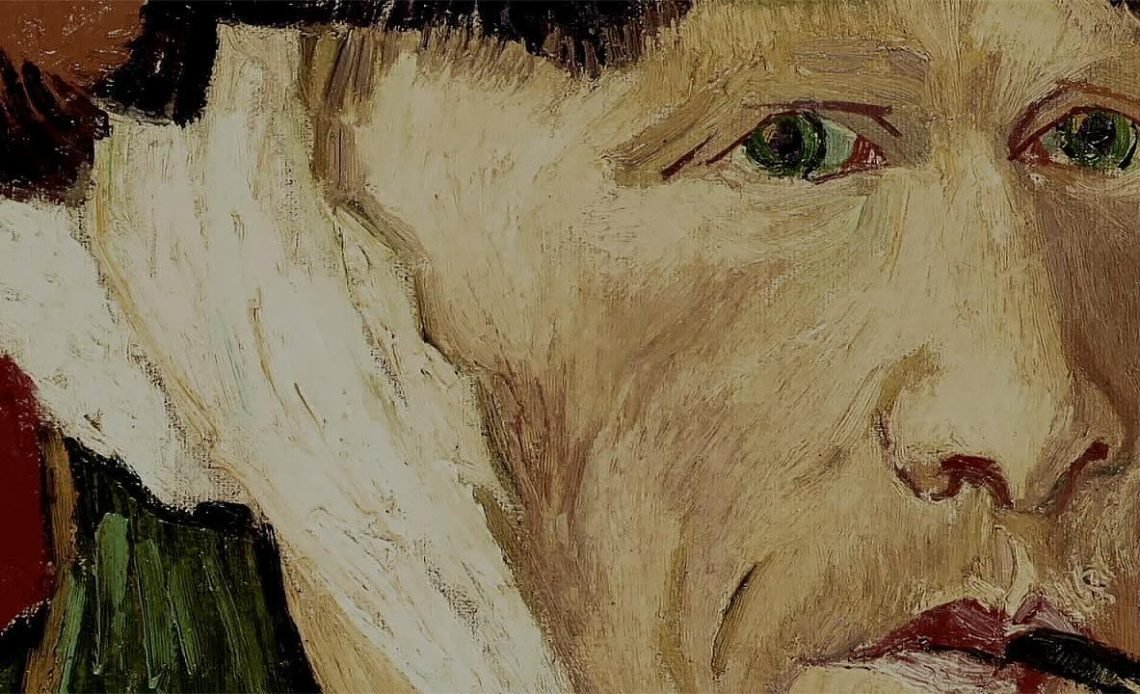
Why did Van Gogh cut off his ear? It is one of the most debated questions in all of art history, and more than 135 years after the night it happened, scholars still argue about the full truth.
On December 23, 1888, in the small French town of Arles, the 35-year-old Dutch painter Vincent van Gogh severed part of his left ear with a razor, wrapped it in newspaper, and delivered it to a woman named Rachel at a nearby brothel.
What drove him to do it — and whether he even acted alone — remains fiercely contested.
Who Was Vincent van Gogh?
Vincent van Gogh was born on March 30, 1853, in the Netherlands. He did not begin painting until the age of 27, making his output in the decade that followed all the more extraordinary.
In roughly ten years, he produced nearly 860 oil paintings and over 2,100 works in total. His paintings include some of the most recognized art in human history — The Starry Night, Sunflowers, The Bedroom, and his many haunting self-portraits.
Despite this, Van Gogh sold almost nothing during his lifetime. He struggled financially, emotionally, and physically for most of his adult years. He died at 37 from a self-inflicted gunshot wound in July 1890.
Van Gogh’s Life Before the Ear Incident
The Move to Arles and the Yellow House
In early 1888, Van Gogh moved to Arles in the south of France, drawn by the strong Mediterranean light and vivid colors. He rented a small, bright yellow building he called the Yellow House and painted with extraordinary intensity.
He created the Sunflowers series there, along with nearly 300 other artworks in little over a year. The Yellow House was more than a studio — it was the foundation of a dream.
The Dream of an Artists’ Colony
Van Gogh’s great ambition in Arles was to create what he called a “Studio of the South” — a community of painters who would live, work, and inspire one another away from the competitive pressures of Paris.
He sent invitations to several artists. Only one accepted: Paul Gauguin, a Post-Impressionist painter Van Gogh deeply admired. Gauguin arrived in October 1888, and for a brief period, the dream seemed real.
The Volatile Relationship With Gauguin
The two men were fundamentally different in temperament and artistic philosophy. Gauguin was confident, opinionated, and worldly. Van Gogh was intense, anxious, and deeply emotional.
They painted side by side for nine weeks. They argued constantly — about technique, about life, about vision. Gauguin believed in painting from imagination. Van Gogh insisted on painting directly from reality. The tension escalated steadily through November and December 1888.
Gauguin’s Decision to Leave
By mid-December 1888, Gauguin had had enough. He told Van Gogh he intended to return to Paris. For Van Gogh, this was not just the end of a friendship — it was the collapse of everything he had built.
Van Gogh also received a letter on the morning of December 23, 1888, believed by some researchers to have contained news that his brother Theo was getting engaged. Theo was Van Gogh’s emotional anchor and sole financial supporter. The fear of losing that connection may have added to his already fractured mental state.
What Happened on the Night of December 23, 1888
The Argument
That evening, a violent argument broke out between Van Gogh and Gauguin. The precise details are disputed — Gauguin later claimed Van Gogh followed him into the street with a razor before turning back.
What is not disputed is what happened next. Van Gogh returned alone to the Yellow House.
The Act
Alone and in a state of acute psychological crisis, Van Gogh took a razor, held it to the side of his head, and cut off part of his left ear with a single downward stroke.
Historical evidence, including a drawing later made by his treating physician Dr. Félix Rey, suggests it was the lower portion of the ear — the lobe — rather than the entire ear. Some accounts claim the full ear was severed. The exact amount removed has never been definitively settled.
The Delivery to Rachel
Van Gogh did not seek medical help. Instead, he wrapped the severed piece of ear in newspaper or cloth, walked through the streets of Arles to the local brothel known as the House of Tolerance, and asked for a woman named Rachel.
He handed her the package and told her to “guard this object carefully” or “keep this object carefully” — the exact phrasing varies across accounts. Rachel reportedly fainted from shock.
Discovery and Hospitalization
Van Gogh returned to the Yellow House, went to bed, and was found the next morning by police — unconscious, lying in a pool of blood.
He was taken to the Hôtel-Dieu hospital in Arles. Gauguin, who had spent the night at a hotel, left for Paris that same morning without seeing Van Gogh again. The two never met in person again.
Key Facts About the Ear Incident
| Detail | What Is Known |
|---|---|
| Date | December 23, 1888 |
| Location | Arles, France — the Yellow House |
| Which ear | Left ear |
| How much was removed | Disputed — the lobe, or possibly more |
| Tool used | An open razor |
| Where it was delivered | Brothel called the House of Tolerance |
| Recipient | A woman named Rachel |
| Discovered by | Police the following morning |
| Treating physician | Dr. Félix Rey |
| Initial diagnosis | Acute mania with generalized delirium |
The Major Theories: Why Did Van Gogh Cut Off His Ear?
Theory 1 — Mental Health Crisis (Most Widely Accepted)
The most widely accepted explanation is that the ear incident was the result of a severe mental health episode, not a rational decision of any kind.
Van Gogh had been under enormous strain — financial instability, isolation, fear of losing both Gauguin and Theo, poor diet, excessive drinking, and an underlying psychiatric condition that had been building for years. The argument with Gauguin was not the cause — it was the final trigger on an already loaded situation.
Theory 2 — Fear of Abandonment and Emotional Collapse
Some researchers and biographers focus specifically on the emotional meaning of Gauguin’s departure. Van Gogh had invested everything in the idea of an artistic brotherhood. When Gauguin chose to leave, it represented total rejection.
The act of cutting off the ear and delivering it to Rachel may have been an extreme and unconscious expression of grief and desperation — a cry for connection from someone who felt entirely alone.
Theory 3 — The Theo Engagement Letter
Researcher Bernadette Murphy and others have proposed that a letter Van Gogh received on the morning of December 23 contained news of Theo’s engagement to Jo Bonger.
Theo was not only Vincent’s brother — he was his emotional lifeline and the only person who consistently provided financial support. The fear that Theo might redirect his attention and money to a new wife may have pushed Van Gogh toward crisis. This letter has since been lost and its contents cannot be verified with certainty.
Theory 4 — Absinthe and Substance Use
Van Gogh was a heavy drinker of absinthe, a powerful alcoholic drink that was fashionable among artists of the era. Absinthe contains thujone, a compound that in high doses can cause seizures, hallucinations, and violent behavior.
Researchers at the American Journal of Psychiatry have noted that Van Gogh’s psychotic episodes during the last two years of his life were frequently linked to heavy absinthe consumption. Some believe the ear incident occurred during an episode of acute psychosis triggered or worsened by alcohol.
Theory 5 — Temporal Lobe Epilepsy
Van Gogh’s own physicians in Arles — Dr. Félix Rey and his chief Jules Urpar — initially diagnosed him with “acute mania with generalized delirium.” As the episodes continued, epilepsy was added to the diagnosis.
Dr. Théophile Peyron, who treated Van Gogh at the Saint-Rémy asylum in 1889, confirmed a diagnosis of epilepsy. Henri Gastaut, a neurologist who published a detailed study in 1956, identified Van Gogh’s major illness as temporal lobe epilepsy — a neurological condition causing seizures, hallucinations, and periods of profound irrational behavior — potentially precipitated by absinthe use.
Temporal lobe epilepsy can produce episodes where the person has no memory of what they did. This may explain why Van Gogh himself seemed confused about the events of that night.
Theory 6 — Bipolar Disorder
Many modern psychiatrists believe Van Gogh showed clear signs of bipolar disorder. His life alternated between periods of explosive creative energy and deep, debilitating depression.
A 2020 analysis by three art historians, published in the International Journal of Bipolar Disorders, concluded that Van Gogh most likely developed bipolar disorder as a young adult. The ear incident may have occurred during a severe manic or mixed episode — a state of high emotional intensity combined with impaired judgment and impulsivity.
Theory 7 — Gauguin Cut the Ear (The Pact of Silence Theory)
This is the most controversial theory, proposed by German historians Hans Kaufmann and Rita Wildegans in their book Van Gogh’s Ear: Paul Gauguin and the Pact of Silence.
They argue that Gauguin — a trained fencer skilled with a blade — actually severed Van Gogh’s ear during the argument, possibly accidentally, and that Van Gogh then covered for his friend out of affection and loyalty. The “pact of silence” refers to an agreement between the two men to never speak of what really happened.
Most mainstream historians and Van Gogh scholars consider this theory unpersuasive. The evidence is largely circumstantial and conflicts with Van Gogh’s own correspondence, newspaper reports from the time, and medical records.
All Major Theories Compared
| Theory | Proposed By | Evidence Strength |
|---|---|---|
| Mental health crisis (primary cause) | Van Gogh’s physicians, most historians | Very strong — supported by medical records and letters |
| Fear of abandonment | Biographers, psychologists | Strong — consistent with Van Gogh’s letters |
| Theo engagement letter | Bernadette Murphy and researchers | Moderate — letter is lost, cannot be confirmed |
| Absinthe and substance use | American Journal of Psychiatry researchers | Strong — consistent with timeline of episodes |
| Temporal lobe epilepsy | Henri Gastaut, Van Gogh’s physicians | Strong — supported by medical records |
| Bipolar disorder | Modern psychiatrists, 2020 study | Strong — consistent with life pattern |
| Gauguin cut the ear | Kaufmann and Wildegans (2009) | Weak — mostly circumstantial |
Van Gogh’s Mental Health: What the Evidence Shows
A Lifetime of Psychological Struggle
Van Gogh’s mental illness did not appear overnight. Letters and accounts from throughout his life describe periods of deep depression, extreme mood swings, anxiety, and episodes of what was described as confusion or stupor.
He drank heavily, smoked excessively, ate poorly, and frequently went without sleep — all of which would have destabilized any underlying psychiatric condition.
More Than 150 Diagnoses Proposed
Since Van Gogh’s death, well over 150 different physicians and researchers have proposed diagnoses for his mental state. This extraordinary number reflects both the complexity of his case and the incomplete nature of historical records.
Proposed diagnoses have included epilepsy, bipolar disorder, schizophrenia, borderline personality disorder, lead poisoning from paint, porphyria, and acute alcohol withdrawal. Schizophrenia and porphyria have largely been ruled out by modern researchers. Lead poisoning and carbon monoxide from gas lamps have also been considered and largely discounted.
What Happened After the Ear Incident
Van Gogh was hospitalized in Arles. After his release, his behavior disturbed his neighbors so much that they signed a petition to have him confined. He voluntarily admitted himself to the Saint-Paul-de-Mausole asylum in Saint-Rémy-de-Provence in May 1889.
During his year at Saint-Rémy, he experienced several severe relapses — at least twice occurring after he had access to absinthe again. He also produced some of his most celebrated work during this period, including The Starry Night.
The Self-Portraits With the Bandaged Ear
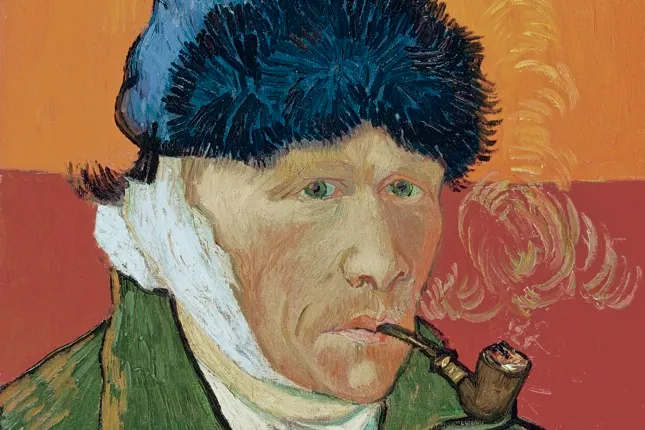
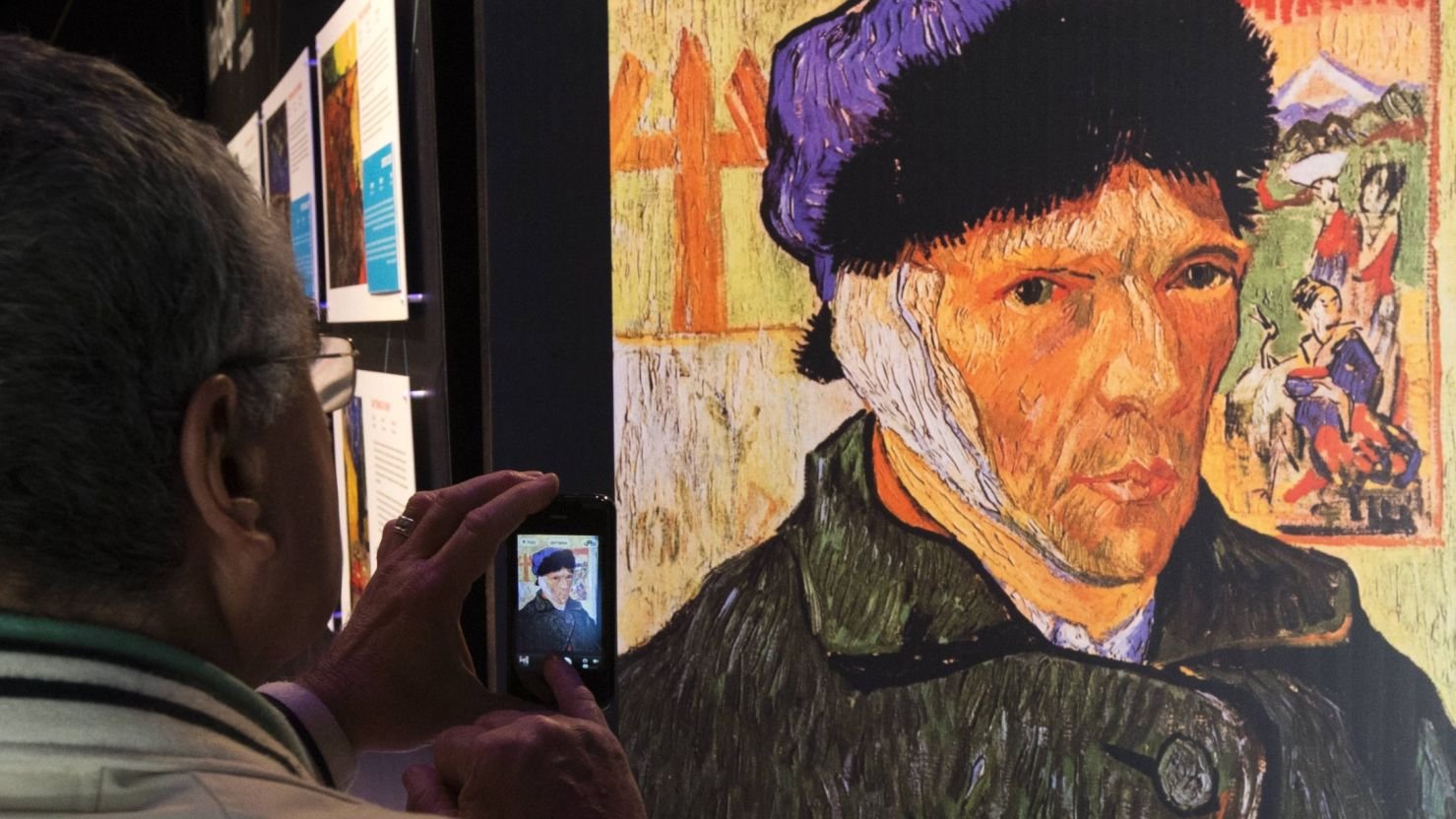
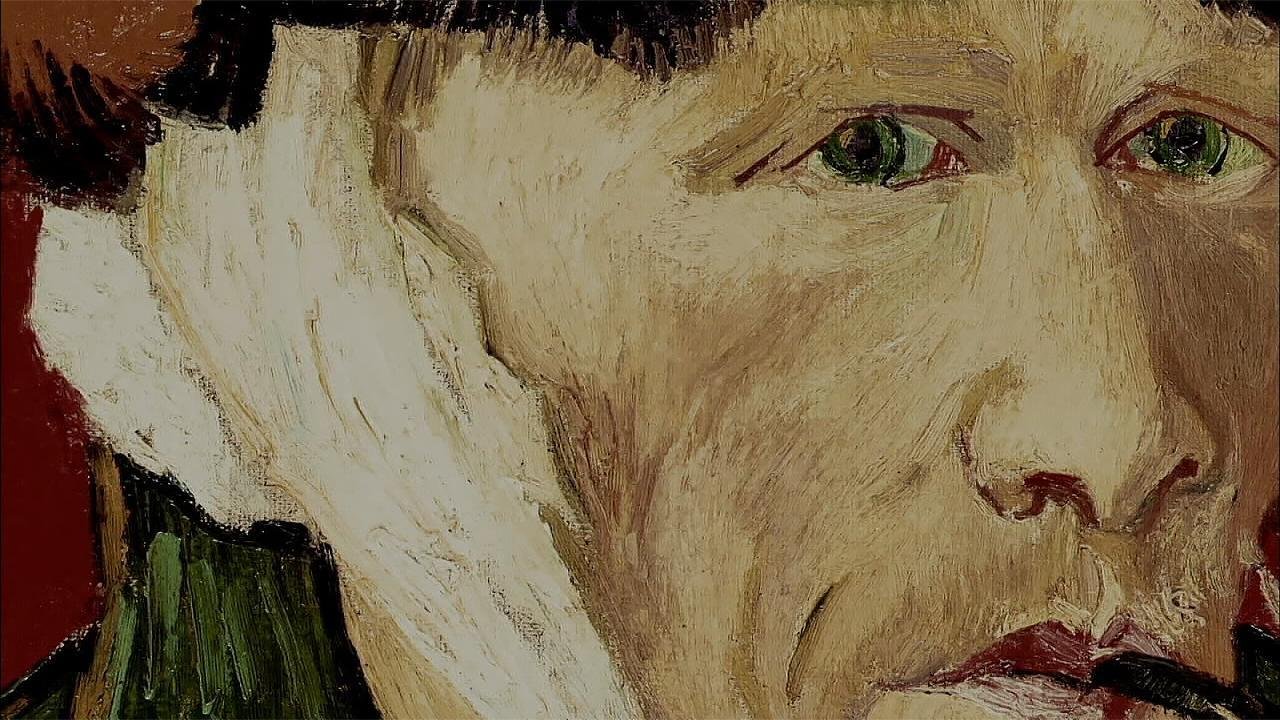
Just weeks after the incident, while still recovering in January 1889, Van Gogh painted two self-portraits showing his bandaged head. These are among the most psychologically powerful self-portraits in all of art history.
The paintings show remarkable composure — his gaze is steady, his expression dignified. Art historians have noted the contrast between the controlled brushwork and the violent circumstances that created the subject matter.
The self-portraits are now held at the Courtauld Gallery in London and a private collection respectively. They remain some of the most studied works in Western art.
Why Did Van Gogh Deliver the Ear to Rachel?
This part of the story has never been fully explained, and it may never be.
Some researchers believe Rachel was known personally to Van Gogh as a regular visitor to the brothel. Some have suggested she represented a connection or affection that Gauguin was also pursuing, making the gesture symbolic — a desperate offering to someone he cared for.
Others interpret it purely as a symptom of psychosis — an act that made sense within a severely distorted mental state but has no rational explanation from the outside.
Van Gogh himself, when later questioned, had limited memory of the events of that night. The most plausible interpretation is that his actions were driven by a complete break with reality during an acute psychiatric episode, and no single conscious motive can be assigned.
What Happened to Van Gogh After Arles
Saint-Rémy Asylum, 1889
Van Gogh spent twelve months at Saint-Rémy. Despite ongoing episodes of psychosis, he continued to paint with extraordinary output. During his time there he completed over 150 paintings, including multiple versions of The Starry Night and studies of irises and olive trees.
Dr. Peyron at Saint-Rémy confirmed the epilepsy diagnosis and noted that Van Gogh was lucid and functional between episodes, which is consistent with temporal lobe epilepsy.
Auvers-sur-Oise, 1890
In May 1890, Van Gogh moved to Auvers-sur-Oise, north of Paris, under the care of Dr. Paul Gachet. He painted with feverish energy — over 70 paintings in 70 days.
On July 27, 1890, he was found with a gunshot wound to the chest. He died two days later on July 29, 1890. His brother Theo, who had remained devoted to Vincent throughout, died six months later.
Van Gogh’s Legacy
Van Gogh’s work was largely unrecognized during his lifetime. Today his paintings sell at auction for hundreds of millions of dollars. Starry Night alone is considered one of the most recognized paintings in the world.
His story has inspired films, novels, musicals, and endless academic study. The ear incident — mysterious, tragic, and deeply human — remains at the center of that fascination.
Timeline of Key Events
| Date | Event |
|---|---|
| March 30, 1853 | Van Gogh born in the Netherlands |
| 1880 (age 27) | Decides to become an artist |
| February 1888 | Moves to Arles, rents the Yellow House |
| October 1888 | Gauguin arrives in Arles |
| December 23, 1888 | Ear incident — argument with Gauguin, self-mutilation, delivery to Rachel |
| December 24, 1888 | Found unconscious by police, hospitalized in Arles |
| May 1889 | Voluntarily enters Saint-Paul-de-Mausole asylum in Saint-Rémy |
| February 1890 | Most severe psychotic episode at Saint-Rémy |
| May 1890 | Moves to Auvers-sur-Oise under Dr. Gachet |
| July 27, 1890 | Self-inflicted gunshot wound |
| July 29, 1890 | Dies at age 37 |
| January 25, 1891 | Theo van Gogh dies, six months after Vincent |
Frequently Asked Questions (FAQs)
Why did Van Gogh cut off his ear?
The most accepted explanation is a severe mental health crisis triggered by Gauguin’s departure and years of mounting psychological strain. A single definitive motive has never been proven and likely never will be.
Did Van Gogh cut off his whole ear?
No. Historical evidence, including a sketch by his treating physician Dr. Félix Rey, indicates that only the lower portion of the ear — the lobe — was severed. Some accounts claim the full ear was removed, but this is disputed by medical records.
Who did Van Gogh give his ear to?
He gave it to a woman named Rachel at a local brothel in Arles called the House of Tolerance. He told her to “keep this object carefully.” She reportedly fainted from shock.
Did Paul Gauguin cut off Van Gogh’s ear?
German historians Kaufmann and Wildegans proposed this theory in 2009, suggesting Gauguin used a sword during their argument. Most mainstream Van Gogh scholars consider this theory unpersuasive and unsupported by the primary evidence.
What mental illness did Van Gogh have?
His own physicians diagnosed epilepsy. Modern researchers lean toward bipolar disorder or temporal lobe epilepsy, with heavy absinthe use as an aggravating factor. Over 150 different diagnoses have been proposed since his death.
When did Van Gogh cut off his ear?
The incident occurred on the night of December 23, 1888, in Arles, France. He was 35 years old at the time.
What happened to Van Gogh after the ear incident?
He was hospitalized in Arles, then voluntarily committed himself to the Saint-Rémy asylum in May 1889. He continued painting prolifically until his death by gunshot on July 29, 1890.
What did Van Gogh paint after cutting off his ear?
Just weeks after the incident, he painted two self-portraits showing himself with a bandaged ear. He went on to paint The Starry Night, irises, and over 150 works during his time at Saint-Rémy asylum.
Did Van Gogh remember cutting off his ear?
Accounts suggest Van Gogh had limited or no memory of the events of that night, which is consistent with a severe psychotic episode or temporal lobe epileptic seizure during which the person acts without conscious awareness.
Was Van Gogh famous when he cut off his ear?
No. During his lifetime Van Gogh was nearly unknown and sold almost no paintings. He became one of the most celebrated artists in history only after his death.
Conclusion
Why did Van Gogh cut off his ear? The honest answer in 2026 is the same as it was in 1888 — we do not know with absolute certainty, and we probably never will.
What the evidence strongly supports is this: Van Gogh was a man in profound psychological crisis, isolated, afraid of abandonment, drinking heavily, and suffering from an underlying condition that most modern researchers identify as bipolar disorder or temporal lobe epilepsy.
The argument with Gauguin on the night of December 23, 1888, was the breaking point — not the sole cause.
The delivery of the ear to Rachel, the self-portraits that followed, and the extraordinary work he produced during the years of his illness together tell the story of a man who felt everything too deeply and had almost no way to bear it.
That combination of suffering and genius is exactly why the world is still asking the question more than a century later.


