


Why are natural resources important? The answer is simple: without them, human life as we know it would not exist.
Every breath of air, every meal, every building, every device you use traces back to natural resources drawn from the Earth.
They are the foundation of survival, economic development, and ecological balance all at once.
Yet despite their absolute necessity, natural resources are being consumed, degraded, and depleted faster than the planet can replenish them.
Understanding what natural resources are, why they matter, and how we use and misuse them is one of the most important things any informed person can learn in 2026.
What Are Natural Resources? A Clear Definition
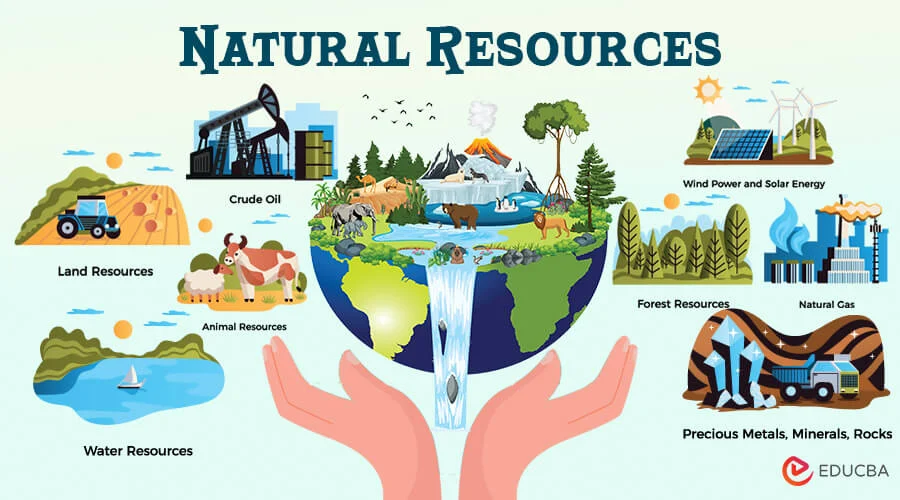
Natural resources are materials and substances that exist in the natural environment and have not been created by humans. They are found in the earth, water, atmosphere, and living organisms around us.
They include everything from the air we breathe and the water we drink, to the coal powering electricity grids and the minerals inside every smartphone. Some are visible and tangible. Others — like sunlight, wind, and atmospheric oxygen — are invisible but equally vital.
The formal definition used by environmental scientists is: any naturally occurring substance or energy that humans use to survive, produce goods, generate energy, or maintain ecological systems.
The Two Main Types of Natural Resources
Understanding the difference between renewable and nonrenewable natural resources is fundamental to understanding why their conservation matters so urgently.
| Type | Definition | Examples | Depletion Risk |
|---|---|---|---|
| Renewable | Replenish naturally within a human timescale | Solar energy, wind, freshwater, forests, fish | Low if managed responsibly |
| Nonrenewable | Formed over millions of years; finite in supply | Coal, oil, natural gas, minerals, metals | High — cannot be replaced once used |
| Inexhaustible | Available in effectively unlimited quantity | Sunlight, wind, tidal energy | None under normal conditions |
| Exhaustible | Limited and will run out with continued use | Fossil fuels, phosphate, rare earth minerals | Very high without conservation |
Renewable resources can become exhausted too — overfishing, deforestation, and aquifer depletion all demonstrate that the renewable label is not a guarantee of infinite supply. Responsible management is the key variable.
Natural Resources and Human Survival: The Absolute Basics
The most direct reason why natural resources are important is that they make human survival possible. There is no alternative foundation.
Air provides the oxygen every living organism on Earth requires for respiration. Clean, unpolluted air is a natural resource that hundreds of millions of people take entirely for granted until it is compromised by industrial pollution or wildfire smoke.
Freshwater is arguably the most critical natural resource on Earth. Humans can survive weeks without food, but only days without water. Agriculture, sanitation, and industry all depend on consistent access to clean freshwater — a resource under increasing pressure worldwide.
Soil is the foundation of the global food supply. Without fertile, nutrient-rich topsoil, crops cannot grow. It takes approximately 500 years for nature to form just one inch of topsoil — making its degradation through erosion, overfarming, and chemical contamination one of the most serious long-term threats to food security.
Why Are Natural Resources Important for Food Production?
The entire global food system is built on natural resources. Every calorie consumed by every human being originates from either plants or animals — both of which depend entirely on soil, water, sunlight, and biodiversity to exist.
Agricultural land currently covers about 50% of the Earth’s habitable surface. The productivity of that land depends directly on soil health, freshwater availability, pollinators like bees, and stable climate conditions — all of which are natural resources or depend on natural resource systems.
Forests and wetlands also play an indirect but critical role in food production. They regulate rainfall patterns, prevent soil erosion, filter groundwater, and maintain the biodiversity that supports healthy, productive agricultural ecosystems.
Natural Resources and Energy: Powering the World
Energy is the lifeblood of modern civilization, and virtually all energy comes from natural resources. Understanding this connection clarifies why resource management is inseparable from energy policy.
Fossil fuels — coal, oil, and natural gas — have powered the global economy for over 200 years. They remain the dominant energy source globally, accounting for around 80% of total world energy consumption as of recent estimates. But they are nonrenewable, finite, and their combustion drives climate change.
Renewable energy sources — solar, wind, hydropower, geothermal, and biomass — are all derived from natural resource systems. The global shift toward renewable energy is not just an environmental decision. It is a strategic response to the inevitable depletion of fossil fuels and the need to secure long-term energy stability.
| Energy Source | Resource Type | Renewable? | Environmental Impact |
|---|---|---|---|
| Coal | Fossil fuel | No | High CO₂, air pollution |
| Oil/Petroleum | Fossil fuel | No | High CO₂, spill risk |
| Natural gas | Fossil fuel | No | Lower CO₂ than coal, methane risk |
| Solar | Sunlight | Yes | Minimal in operation |
| Wind | Atmospheric | Yes | Minimal; some wildlife impact |
| Hydropower | Water | Yes | Ecosystem disruption if poorly sited |
| Geothermal | Earth’s heat | Yes | Very low |
| Biomass | Organic material | Yes if managed | Carbon-neutral if sustainable |
Why Are Natural Resources Important for Economic Development?
Natural resources are not just survival necessities — they are the raw material of every economy on Earth. The relationship between natural resources and national wealth is one of the most studied topics in development economics.
Agriculture, mining, forestry, fishing, and energy extraction together account for a massive share of global GDP, particularly in developing nations. Countries rich in natural resources — oil in Saudi Arabia, diamonds in Botswana, timber in Canada, copper in Chile — have built significant portions of their economies on resource extraction.
The WWF estimates that the total annual value of ecosystem services — the economic benefits that functioning natural systems provide — amounts to at least $125 trillion per year. This figure dwarfs the GDP of any single nation and underscores just how profoundly the global economy depends on healthy natural systems.
Manufacturing depends on metals and minerals. Construction depends on timber, stone, and sand. Technology depends on rare earth elements. Pharmaceuticals depend on plant compounds and biological compounds discovered in natural ecosystems. There is no sector of the economy that operates independently of natural resources.
The Role of Natural Resources in Industry and Manufacturing
Every manufactured object in the world — from the simplest tool to the most complex electronic device — is made from natural resources at its core.
Metals like iron, copper, aluminum, and steel are the structural backbone of construction, transportation, and technology. They come from mineral ore deposits that took geological ages to form and must be mined, refined, and processed.
Rare earth elements — a group of 17 metallic elements — are essential components of electric vehicle batteries, wind turbines, smartphones, and military technologies. Despite the name, some are not particularly rare, but their extraction is environmentally intensive and geographically concentrated.
Timber and wood products support construction, furniture manufacturing, paper production, and a vast range of industrial applications. Responsibly managed forests are a renewable resource. Unmanaged, they are one of the world’s fastest-depleting natural systems.
Natural Resources and Climate Regulation
One of the least visible but most important roles of natural resources is their function in regulating the Earth’s climate. This ecological service is not traded in markets, which is why it is so chronically undervalued.
Forests absorb carbon dioxide and store carbon in their biomass and soil. The world’s forests currently absorb roughly 2.6 billion tonnes of CO₂ per year — acting as a massive buffer against climate change. When forests are cleared, that stored carbon is released back into the atmosphere.
Oceans are the planet’s largest carbon sink, absorbing approximately 25% of all human carbon emissions each year. They also regulate temperature, generate oxygen through marine photosynthesis, and support the water cycle that delivers freshwater to land-based ecosystems.
Wetlands — swamps, marshes, bogs, and floodplains — are among the most carbon-dense ecosystems on Earth. Though they cover only about 6% of the Earth’s land surface, they store roughly 20–30% of all terrestrial carbon. Their destruction for agriculture and development releases enormous quantities of greenhouse gases.
Natural Resources and Biodiversity: The Living Web
Biodiversity — the variety of life on Earth — is itself a natural resource, and one of the most important. Healthy ecosystems depend on biological diversity to function, adapt, and recover from disturbance.
Pollinators, primarily bees and other insects, are essential to the reproduction of 75% of the world’s flowering plants and about 35% of global food crops. Their decline, driven largely by habitat loss and pesticide use, is a natural resource crisis with direct consequences for food security.
More than 1 billion people worldwide rely on forests for their livelihoods — for timber, food, medicine, and cultural practices. Forests are also home to roughly 80% of all terrestrial species. Deforestation does not just remove trees. It dismantles entire ecosystems and the services they provide.
Natural ecosystems also serve as the primary source of pharmaceutical discovery. Over 50% of modern drugs have origins in natural compounds found in plants, fungi, bacteria, and marine organisms. Biodiversity loss therefore represents a permanent closing of doors on medical knowledge we have not yet discovered.
Natural Resources and Water Security
Freshwater is one of the most critically stressed natural resources on Earth. While water covers about 71% of the planet’s surface, only 2.5% of that is freshwater — and of that fraction, only about 0.3% is accessible in rivers, lakes, and shallow aquifers.
Groundwater aquifers — underground water stores accumulated over thousands of years — are being depleted far faster than they can recharge in many of the world’s most agriculturally important regions, including parts of India, the United States, China, and the Middle East.
Climate change is intensifying freshwater stress by shifting precipitation patterns, accelerating glacier melt, and increasing the frequency and severity of droughts. The World Resources Institute projects that by 2040, more than 33 countries will face extremely high water stress — a natural resource crisis with massive humanitarian consequences.
Importance of Natural Resources for Human Health
The link between natural resources and human health is both direct and indirect, but it is profound in both directions.
Clean air is the most immediate example. The World Health Organization estimates that 7 million people die prematurely each year from air pollution — a direct consequence of burning fossil fuels and degrading the natural systems that filter and purify the atmosphere.
Clean water and sanitation — both dependent on natural hydrological systems — prevent waterborne diseases that still kill hundreds of thousands of people annually, primarily in lower-income countries where water infrastructure is underdeveloped.
Natural environments also support mental and physical health in ways science is increasingly documenting. Exposure to green spaces, forests, and natural landscapes is linked to reduced stress, lower blood pressure, improved immune function, and better mental health outcomes.
Natural Resources and Indigenous Communities
For billions of people worldwide — including hundreds of millions of indigenous and rural communities — natural resources are not abstract economic inputs. They are the direct basis of daily life, cultural identity, and community survival.
Indigenous peoples manage or have tenure rights over approximately 22% of the world’s land surface, which corresponds to roughly 80% of the world’s remaining biodiversity hotspots. Their stewardship of these lands has been recognized by conservation scientists as highly effective.
When natural resources are degraded, extracted without community consent, or cut off from indigenous communities through land displacement, the impact is not only economic. It is a destruction of culture, medicine systems, food sovereignty, and spiritual identity that cannot be measured in GDP.
The Threat of Resource Depletion: Where We Stand in 2026
The scale of natural resource depletion is one of the defining challenges of the 21st century. The numbers are stark.
| Resource | Status in 2026 | Key Threat |
|---|---|---|
| Topsoil | 33% of global farmland degraded | Erosion, intensive agriculture |
| Freshwater | 2 billion people face water scarcity | Over-extraction, climate change |
| Forests | 10 million hectares lost per year | Deforestation, agriculture expansion |
| Fossil fuels | Oil peak production projected mid-century | Finite supply, climate impact |
| Fish stocks | 34% of fisheries overfished (FAO) | Overfishing, ocean warming |
| Phosphorus | Critical for agriculture; finite supply | Mining depletion, no substitute |
| Rare earth elements | Supply chain stress increasing | Concentrated extraction, geopolitics |
| Biodiversity | 1 million species at extinction risk | Habitat loss, climate change |
The human population is expected to reach approximately 10 billion by 2050. Feeding, powering, and sustaining that population on a planet with already stressed natural systems requires a fundamental rethinking of how resources are used.
Why Natural Resource Conservation Matters
Conservation of natural resources is not a luxury or a special interest. It is a necessity — for economic stability, for human survival, and for ecological balance.
Renewable resources regenerate only if they are harvested within their capacity to recover. Forests grow back only if they are not clear-cut entirely. Fish populations recover only if fishing pressure does not exceed reproduction rates. These are not environmentalist arguments — they are basic biological and economic facts.
Nonrenewable resources, once depleted, are gone permanently on any human timescale. No technology can recreate in decades what geological processes took millions of years to produce. Conservation of nonrenewables buys time for the development and scaling of sustainable alternatives.
The economic cost of resource degradation is also massive. Soil erosion costs global agriculture an estimated $8 billion per year in lost productivity. Freshwater scarcity threatens industries from agriculture to semiconductor manufacturing. Biodiversity loss erodes the ecological services that underpin the entire economy.
Sustainable Use: What It Means and Why It Matters
Sustainable use of natural resources means using them at rates that allow natural systems to replenish and maintain their function. It is a balance between meeting today’s needs without compromising the ability of future generations to meet theirs.
This is the definition of sustainable development established by the Brundtland Commission in 1987 — and it remains the most widely accepted framework for thinking about natural resource management today.
Sustainable use requires thinking across three interconnected dimensions: economic viability, environmental integrity, and social equity. A resource use practice that benefits one dimension while degrading the others is not truly sustainable.
| Dimension | What It Means for Natural Resources |
|---|---|
| Economic | Resources support livelihoods without being depleted |
| Environmental | Extraction does not degrade ecosystems or biodiversity |
| Social | Benefits are equitably shared; communities have rights |
| Intergenerational | Future generations retain equal access to resources |
What Governments and Individuals Can Do
Protecting natural resources is both a policy challenge and a personal responsibility. Both matter, and neither alone is sufficient.
Government and Policy Level
Strong environmental regulations, protected area networks, pollution controls, and subsidy reform — moving support away from fossil fuels toward renewable energy — are among the most impactful levers governments hold.
International agreements like the Paris Climate Accord, the Kunming-Montreal Global Biodiversity Framework, and the UN Sustainable Development Goals all set targets for natural resource protection. Their success depends on implementation, not just signing.
Individual and Community Level
Consumer choices compound at scale. Reducing meat consumption, choosing sustainably sourced products, conserving water and energy at home, supporting reforestation initiatives, and voting for policies that protect natural systems are all meaningful contributions.
Education is perhaps the most powerful long-term tool. People who understand why natural resources are important are far more likely to make choices and demand policies that protect them.
Natural Resources and the Circular Economy
The circular economy is an emerging economic model designed to eliminate waste and keep natural resources in use for as long as possible. It contrasts sharply with the traditional linear model: extract, make, use, discard.
In a circular economy, products are designed for durability, repairability, and recyclability. Materials are kept in circulation rather than discarded after single use. This dramatically reduces the demand for virgin natural resources, cutting extraction pressure and environmental degradation at the same time.
Metals recovered through recycling already supply a significant share of global demand for aluminum, steel, and copper. Expanding circular approaches across more material categories could substantially reduce the resource extraction pressure that is currently straining natural systems worldwide.
Natural Resources in the Context of Climate Change
Climate change and natural resource depletion are deeply intertwined problems — each making the other worse in a set of accelerating feedback loops.
Burning fossil fuels drives climate change. Climate change then degrades freshwater systems, reduces agricultural productivity, intensifies wildfire, accelerates species extinction, and destabilizes the ecological systems that provide clean air, water, and food.
Conversely, protecting and restoring natural resources is one of the most cost-effective tools for addressing climate change. Reforestation, wetland restoration, and sustainable soil management together represent some of the highest-impact climate mitigation strategies available — while simultaneously protecting biodiversity and supporting food security.
This is why the concept of “nature-based solutions” has become central to global climate policy. Natural systems are not just victims of climate change — they are also part of the solution.
Frequently Asked Questions (FAQs)
Why are natural resources important for human survival?
Natural resources provide the air, water, food, and energy that all human life depends on. Without them, basic survival is impossible — they are the literal foundation of every living system on Earth.
What is the most important natural resource?
Clean freshwater is widely considered the most critical natural resource because no living organism can survive without it, and it is already severely stressed in many regions worldwide.
What is the difference between renewable and nonrenewable natural resources?
Renewable resources replenish naturally within a human timescale — like solar energy and forests. Nonrenewable resources like coal and oil took millions of years to form and cannot be replaced once used.
How do natural resources affect the economy?
Natural resources are the raw materials that drive agriculture, manufacturing, energy, construction, and technology. The WWF values global ecosystem services at over $125 trillion per year — more than the GDP of any country.
Why are natural resources running out?
Population growth, industrial overextraction, wasteful consumption patterns, and the lack of sustainable management practices are depleting natural resources faster than natural systems can regenerate them.
What happens when natural resources are depleted?
Depletion leads to food insecurity, water shortages, energy crises, economic instability, biodiversity collapse, and accelerated climate change — all of which have cascading humanitarian consequences.
How are natural resources connected to climate change?
Burning fossil fuels drives climate change, while forests, oceans, and wetlands absorb carbon and regulate the climate. Protecting natural resources is therefore one of the most effective climate change mitigation strategies available.
What can individuals do to conserve natural resources?
Reduce energy use, conserve water, choose sustainably sourced products, minimize waste, eat less resource-intensive food, support reforestation, and advocate for strong environmental protection policies.
Why is biodiversity considered a natural resource?
Biodiversity supports ecosystem functions like pollination, water purification, soil health, and carbon storage. It is also the source of most pharmaceutical discoveries and the basis of food system resilience.
Are natural resources important for developing countries?
Yes — many developing nations depend heavily on natural resource sectors for GDP, employment, and food security. Responsible resource management is therefore central to sustainable development and poverty reduction goals.
Conclusion
Why are natural resources important? Because they are the bedrock of everything — from the oxygen in each breath to the metals in every machine, from the soil growing food to the forests stabilizing the climate.
Natural resources are not background details in the story of human civilization.
They are the story itself. We have built economies, cultures, and entire ways of life on the assumption that these resources will always be there.
That assumption is now being tested. The good news is that understanding the importance of natural resources is the first step toward protecting them.
With better policy, smarter technology, more sustainable consumption, and genuine respect for natural systems, it is possible to meet the needs of the present without destroying the foundations future generations will depend on.
The time to act on that understanding is now.


