


Music is the way of connecting people from different regions, culture, emotions, and generations. Whether we talk about the gentle sound of a flute or soothing sound of piano, there are many musical instrument types that show the music experience. Each musical instrument has its own unique sound, character, and use in music.
Learning about the various categories of musical instruments will allow you to enjoy listening to music even more, and help you determine which instrument best suits you to begin your quest for playing an instrument of your own to create music. The following is an overview of the major categories of musical instruments with corresponding real-world exam
Also, if you want to learn music, whether it’s piano, guitar, dance, singing, trust Spardha School of Music.
1. String Instruments
String instruments create sounds from strings that vibrate. The sound’s pitch depends on how long/short the string is, how thick the string is, and how tightly it is pulled. The emotional character and versatility of string instruments makes them very expressive.
The most popular string instruments are:
- Guitar
- Violin
- Cello
- Harp
- Sitar
The guitar is indeed one of the most popular string instruments across the globe, with applications across many genres, from classical to rock to pop to Indian music! The violin and the sitar are often representative of expressive melodic solo work and storytelling through melody. Therefore string instruments are well-suited to someone who enjoys creating melodies/harmonies through their playing and wants to use them expressively when learning how to play an instrument.
- Percussion Instruments
Percussion instruments produce sounds by being either struck, shaken, or scraped. They create the foundation of rhythm for many styles of music and therefore are key to helping establish tempo and groove within any given piece of music.
Examples of popular percussion instruments are:
- Drums
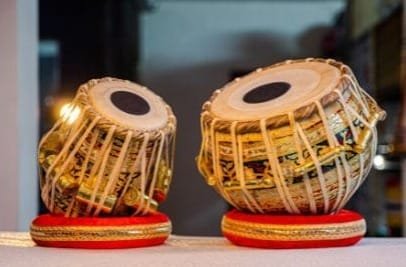
- Tabla
- Cajon
- Xylophone
- Djembe
In Indian classical music, the tabla establishes the structure of rhythm, while drum kits are the backbone of the vast majority of modern bands. If you love rhythm, coordination, and performing with lots of energy, then you will probably enjoy learning how to play a percussion instrument!
3. Wind Instruments
Wind instruments create sound by blowing air into them. The note’s pitch will change according to how you use your fingers, the amount of air pressure you blow in, and the length of the tube.
Wind instruments can be very expressive like a voice.
Some of the most popular wind instruments include:
- Flute
- Saxophone
- Trumpet
- Clarinet
- Harmonium
The flute is primarily used by Indian classical, Indian folk, and Western musicians; however, saxophones and trumpets are very commonly used for play in jazz and orchestral music. Wind instruments are great for beginners looking to build control of their breath and to develop expression when playing melodies.
4. Keyboard Instruments
Keyboard instruments create sound when you press on the keys, activating either strings, air, or electrical signals. Along with versatility, beginners can easily learn how to play these instruments.
Common examples of keyboard instruments include:
- Piano
- Keyboard
- Organ
- Synthesizer
The piano is the foundation for most people who begin formal lessons learning music because it provides a visual representation of notes and scales. With modern keyboards and synthesizers, musicians can experiment with more than one sound, thus providing composers and performers with several options.
5. Electronic Instruments
Electronic instruments produce sound through the use of electronic circuit-based systems or digital technology. These instruments have been widely adopted in making music today and in many live performances.
Examples of electronic instruments would be:
- Electric guitar(s)
- Digital keyboard(s)
- Drum machines
- MIDI controllers
With these types of musical instruments, musicians can create sound effects that can be layered to create new sounds through experimentation. Electronic instruments are popular among the more modern musicians, producers, and composers who are now exploring new-age sounds as a natural result of using them.
6. Traditional and Folk Instruments
Traditional instruments are an important representation of a culture’s heritage and often have a historical background as well as creating unique tonal distinctions.
Some examples of traditional instruments would be:
- Veena
- Santoor
- Shehnai
- Ektara
When we learn how to play traditional instruments, we help to preserve the musical traditions of our cultures while developing a very strong cultural identity. Traditional instruments are used widely for classical, devotional, and folk music.
Conclusion: Start Your Musical Journey with Spardha School of Music
The types of musical instruments available today span an incredible range, each offering distinct sounds, emotions, and musical roles. From strings and percussion to electronic innovations, every family contributes something unique to music’s rich tapestry.
Understanding these categories enhances your listening experience, deepens your appreciation for live performances, and if you’re beginning your musical journey, it helps you select the right instrument to match your creative vision.
Join Spardha School of Music
If you’re curious about a music instrument and want to start learning it, explore online music classes at Spardha School of Music. We offer 1:1 live and personalised classes, specialising in both Indian and Western music. Learn guitar online or start online keyboard classes under the guidance of expert and friendly teachers, all from the comfort of your home.
Book your free trial at Spardha and begin your musical journey today.

