


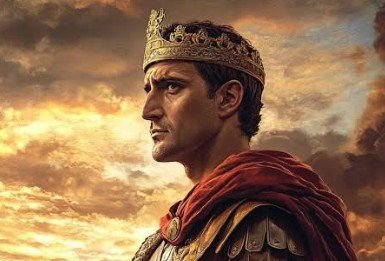
The relationship between the Roman Empire and Christianity changed dramatically during the early fourth century. At the centre of that transformation stood constantine, an emperor whose military victories, religious policies and patronage gave the Christian Church unprecedented legal security and public influence.
His story is frequently simplified into a sudden conversion followed by the immediate creation of a Christian empire. The surviving evidence presents a more complicated picture. His beliefs developed over time, traditional Roman religion did not disappear during his reign, and Christianity did not become the empire’s official religion under his government.
Christianity Before the Imperial Shift
Christians had experienced periods of hostility and persecution long before the fourth century, but enforcement varied across regions and reigns. The most severe empire-wide campaign began under Diocletian in 303. Imperial orders called for churches to be destroyed, scriptures surrendered and Christians removed from certain legal protections.
The persecution did not continue uniformly throughout Roman territory. Some officials enforced the measures more aggressively than others, and political changes affected their duration. In 311, Emperor Galerius issued an edict permitting Christians to gather again, provided they respected public order and prayed for the empire.
This earlier act matters because it corrects the claim that one later ruler single-handedly introduced toleration. What changed afterward was the extent of legal restoration, imperial support and Christian access to political authority.
The Milvian Bridge and Competing Accounts
In 312, the future sole emperor marched against Maxentius, who controlled Rome. Their armies met near the Milvian Bridge, where Maxentius was defeated and died during the retreat. The victor entered Rome as the leading ruler of the western empire.
Ancient Christian writers connected this campaign with a supernatural experience. Lactantius described a dream directing the emperor to place a Christian sign on his soldiers’ shields. Eusebius later described a vision involving a sign in the sky and a subsequent dream explaining its meaning.
These accounts are not identical, and Eusebius wrote his detailed version years after the battle. Historians therefore examine their timing, purpose and differences carefully. The evidence supports a growing association between the ruler and the Christian God, but it cannot establish every detail of a sudden, private conversion experience.
What the Edict of Milan Actually Did
In 313, the western emperor and Licinius agreed on a policy commonly called the Edict of Milan. It permitted religious observance and ordered the return of property taken from Christian communities during persecution.
The agreement was important because it replaced punishment with legal protection and restoration. Christians could worship openly, recover meeting places and organize with greater security. The policy also used broader language of religious liberty rather than granting freedom exclusively to one faith.
It did not declare Christianity the official religion of Rome. That development came later, under Emperor Theodosius I in 380. Any reliable account of constantine must distinguish toleration, imperial preference and formal establishment instead of treating them as the same event.
From Toleration to Active Patronage
The ruler’s policies soon extended beyond ending persecution. He granted privileges to clergy, supported church construction, restored confiscated property and allowed bishops to gain greater influence in public affairs.
Major building projects connected imperial resources with Christian worship. Churches associated with his patronage appeared in Rome, Jerusalem and other important locations. These projects made the faith increasingly visible within the physical and ceremonial landscape of the empire.
Imperial support did not instantly eliminate older religious traditions. Pagan temples, rituals, offices and communities remained part of Roman life. Coins and official imagery also show that religious change was gradual rather than completed through one decree.
The strongest historical conclusion is therefore not that the empire became uniformly Christian overnight. It is that Christianity acquired a favoured relationship with imperial authority that would have been difficult to imagine during the earlier persecutions.
Did Political Strategy Explain His Faith?
Some interpretations portray the emperor’s religious policy as purely political. Christianity was growing, bishops could help organize communities, and religious unity could support imperial stability. These considerations probably influenced his decisions.
Yet political usefulness does not prove that personal belief was insincere. Ancient rulers did not necessarily separate religion and government in modern terms. An emperor could regard divine support, military success, public order and personal conviction as interconnected.
His actions over several decades show sustained involvement rather than a brief tactical gesture. At the same time, evidence about his inner motives remains limited. A responsible historical account should acknowledge both political advantages and the possibility of genuine religious commitment.
Nicaea and the Limits of Imperial Power
A major theological dispute developed around Arius, a priest whose teachings concerned the relationship between Christ and God the Father. The conflict spread among Christian communities and threatened the unity desired by the imperial government.
In 325, the emperor convened the First Council of Nicaea. Bishops debated the controversy and produced a creed expressing their doctrinal settlement. The ruler supported the meeting, encouraged agreement and used imperial authority to reinforce its decisions.
He did not invent the doctrine or personally write the Nicene Creed. The theological arguments belonged primarily to bishops and other church leaders. His role was that of a powerful patron and political organizer seeking institutional unity.
The controversy also continued after the council. Subsequent disputes, reversals and exiles demonstrate that even an emperor could not permanently settle theological disagreement through a single meeting.
Why Was Baptism Delayed?
The ruler was baptized near the end of his life in 337 by Eusebius of Nicomedia. Modern readers sometimes interpret this delay as proof that his earlier commitment was false. That conclusion overlooks the religious practices and expectations of late antiquity.
Some converts postponed baptism because they believed it washed away previous sins and feared committing serious wrongdoing afterward. An emperor responsible for warfare, punishment and government may have found that concern especially significant.
Late baptism does not prove complete sincerity either. It simply cannot be used alone to invalidate decades of public support for Christianity. Belief, political calculation and evolving religious identity may all have shaped his choices.
What He Did Not Do
Several popular claims require correction:
- He did not create Christianity.
- He did not determine the biblical canon at Nicaea.
- He did not make Christianity Rome’s official religion.
- He did not immediately abolish traditional Roman worship.
- He did not resolve every disagreement within the Church.
- He was not baptized at the time of the Milvian Bridge battle.
Correcting these claims does not reduce his importance. It produces a clearer explanation of what actually changed during his reign.
A Balanced Historical Assessment
The legacy of constantine lies in changing Christianity’s relationship with Roman power. Legal toleration ended major penalties, restored property and allowed Christian institutions to operate publicly. Patronage then gave churches, clergy and bishops resources and influence previously unavailable to them.
His reign was neither the instantaneous birth of a Christian empire nor merely a cynical public-relations campaign. It was a prolonged transition in which religious conviction, political authority and concern for unity interacted. By placing imperial support behind Christianity, he created conditions that allowed the faith to become increasingly central to Roman government and the later history of Europe and the Mediterranean

