


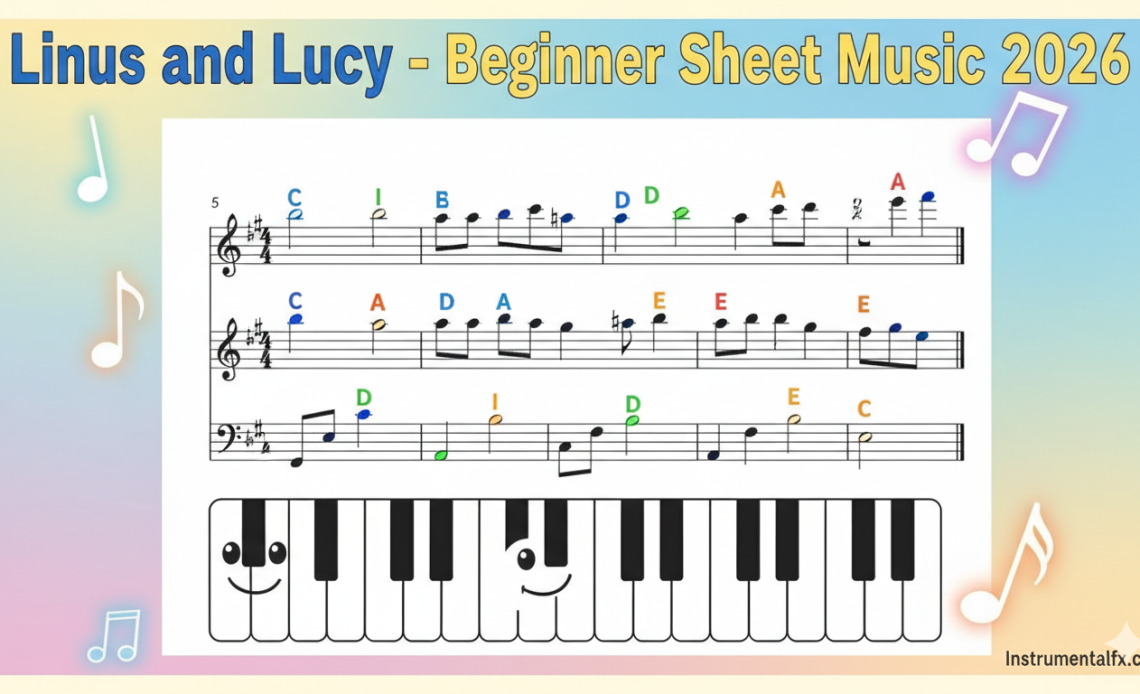
Linus and Lucy sheet music has become one of the most sought-after piano pieces for beginners and intermediate players worldwide.
Composed by jazz pianist Vince Guaraldi in 1964, this iconic theme from the Peanuts animated specials captures hearts with its playful melody and distinctive jazz rhythm.
Whether you’re a beginning pianist eager to learn this timeless classic or an experienced player looking for authentic arrangements, finding the right sheet music version makes all the difference.
This comprehensive guide covers everything from beginner-friendly arrangements to advanced transcriptions, helping you choose the perfect edition for your skill level and musical goals.
Quick Facts About Linus and Lucy Sheet Music
| Category | Details |
|---|---|
| Song Title | Linus and Lucy |
| Composer | Vince Guaraldi |
| Year Composed | 1964 |
| Original Album | Jazz Impressions of A Boy Named Charlie Brown |
| Famous From | A Charlie Brown Christmas (1965) |
| Music Genre | Jazz, Easy Listening |
| Time Signature | 4/4 |
| Key Signature | C Major (beginner versions), Ab Major (original) |
| Difficulty Levels | Beginner to Advanced |
| Average Sheet Music Price | $4.99 – $5.80 (digital/physical) |
| Copyright Owner | Lee Mendelson Film Productions, Inc. |
| Main Publishers | Hal Leonard, Musicnotes, Sheet Music Plus |
What is Linus and Lucy?

Linus and Lucy is the beloved instrumental jazz piano piece composed by Vince Guaraldi that serves as the unofficial theme song for the Peanuts franchise. The composition features a memorable, upbeat melody that perfectly captures the spirit of Charles Schulz’s iconic comic strip characters.
The song was originally recorded on October 26, 1964, with Monty Budwig on bass and Colin Bailey on drums for the album “Jazz Impressions of A Boy Named Charlie Brown.” It quickly became synonymous with Charlie Brown, Snoopy, and the entire Peanuts gang.
While “Linus and Lucy” was not originally written for the 1965 television special “A Charlie Brown Christmas,” it became the central musical theme for the Peanuts franchise. The piece has been featured in virtually every Peanuts special since its debut.
The History Behind the Composition
Television producer Lee Mendelson contacted Vince Guaraldi in the early 1960s after hearing his composition “Cast Your Fate to the Wind.” Mendelson was a fan of jazz and wanted Guaraldi to create music for a Peanuts documentary about Charles M. Schulz.
Guaraldi created “Linus and Lucy” specifically as the theme for this documentary project called “A Boy Named Charlie Brown.” Despite the popularity of the Peanuts comic strip, television networks showed no interest in airing the documentary at the time.
However, the music Guaraldi created didn’t go to waste. When the Coca-Cola Company commissioned a Peanuts Christmas special in 1965, Guaraldi returned to score the production and incorporated “Linus and Lucy” as the central theme.
The 1965 version used in the television special was recorded on September 17, 1965, with Fred Marshall on bass and Jerry Granelli on drums. This rendition features a memorable bridge section highlighted during Snoopy’s exuberant dance on Schroeder’s piano.
Why Linus and Lucy is Perfect for Piano Learners
The composition’s repetitive melodic patterns make it ideal for beginner and intermediate pianists. The left-hand bass line follows a consistent rhythmic pattern throughout most of the piece, allowing students to focus on mastering the right-hand melody.
The song’s recognizable tune provides strong motivation for learners. Students of all ages feel excited to play music they know and love, which encourages consistent practice and builds confidence at the piano.
Pattern-based learning is embedded in the composition’s structure. The main theme repeats multiple times with slight variations, helping students develop muscle memory and understand musical phrasing through repetition.
“Linus and Lucy” introduces jazz concepts in an accessible way. Beginner arrangements simplify complex jazz harmonies while maintaining the song’s essential character, making it an excellent introduction to jazz piano for classical-trained students.
Understanding Different Difficulty Levels
Sheet music for “Linus and Lucy” comes in multiple difficulty levels to accommodate pianists at every stage. Understanding these levels helps you select the arrangement that matches your current abilities and provides appropriate challenges.
- Five-Finger Piano (Very Easy) arrangements are designed for complete beginners and young children. These versions use a five-finger position with both hands staying in one position throughout the piece, typically with simplified rhythms.
- Easy Piano arrangements maintain the song’s recognizable melody while simplifying complex passages. These versions often reduce octave jumps, simplify left-hand patterns, and may slow the tempo slightly for easier learning.
- Big Note Piano editions feature larger note heads and wider spacing, making them perfect for younger students or adults with visual challenges. These arrangements typically fall between very easy and easy difficulty levels.
- Intermediate Piano Solo versions more closely resemble Guaraldi’s original recording. They include more complex rhythms, fuller left-hand patterns, and may incorporate basic jazz voicings while remaining accessible to progressing students.
- Advanced/Artist Transcription arrangements faithfully reproduce Guaraldi’s original performance. These versions include all the jazz harmonies, syncopation, and improvisational elements from the recorded version, suitable for experienced pianists.
Beginner-Friendly Sheet Music Arrangements
The Hal Leonard Easy Piano edition (Product #110117) is one of the most popular beginner arrangements available. This four-page arrangement in C Major simplifies the original while maintaining its essential character and charm.
Chrissy Ricker’s beginner arrangement available on Musicnotes (SKU: MN0238325) offers an excellent YouTube-inspired version. This arrangement is specifically designed for students who have watched online tutorials and want matching sheet music.
Jennifer Eklund’s arrangement (FMSM-1202) through FM Sheet Music provides a pattern-based approach perfect for beginners. This three-page arrangement emphasizes the repetitive nature of the melody, making it ideal for building confidence.
MuseScore offers free community arrangements at various beginner levels. Users like Dr-piano and jherbert have created accessible versions that students can download, print, and practice without cost.
The Charlie Brown Collection Easy Piano Songbook includes “Linus and Lucy” alongside other Peanuts favorites. This National Federation of Music Clubs 2024-2028 selection provides context by grouping related pieces together.
Intermediate Sheet Music Options
The Hal Leonard Piano Solo Sheets edition (Product #352295) offers an intermediate arrangement that balances authenticity with playability. This single-sheet edition captures more of the original’s jazzy character while remaining accessible.
Musicnotes’ intermediate arrangements by various artists provide options with different interpretive approaches. These versions typically include more sophisticated left-hand patterns and fuller harmonies than beginner editions.
The Piano Solo Songbook from “A Charlie Brown Christmas” includes an intermediate version alongside other songs from the special. This collection allows intermediate players to learn the complete soundtrack.
Educational Piano Library editions offer pedagogically designed intermediate arrangements. These versions focus on specific technical challenges, helping students develop proper jazz piano techniques through carefully crafted exercises.
Virtual Sheet Music’s intermediate arrangements often include practice tips and performance notes. These editions help students understand the musical decisions behind various passages and how to practice them effectively.
Advanced and Artist Transcription Versions
Vince Guaraldi’s Artist Transcription from Hal Leonard represents the gold standard for advanced players. This note-for-note transcription captures every detail of Guaraldi’s original recording, including improvised passages and jazz voicings.
The arrangement preserves the original key of Ab Major, which provides the authentic sound but presents challenges for pianists more comfortable in C Major. Advanced players appreciate the authenticity this key signature provides.
Artist transcriptions include all the syncopation, swing feel, and rhythmic complexity of the original performance. These elements require solid jazz piano fundamentals and an understanding of swing rhythm interpretation.
Some advanced editions include multiple verses or alternative takes. These comprehensive versions show how Guaraldi varied his improvisations across different recordings, providing insight into jazz improvisation techniques.
The Charlie Brown Collection Piano Solo Songbook for intermediate to advanced pianists includes the full artist transcription. This collection pairs “Linus and Lucy” with other Guaraldi compositions for comprehensive study.
Where to Purchase Sheet Music
Hal Leonard Corporation serves as the official publisher for most Vince Guaraldi Peanuts sheet music. Their website (halleonard.com) offers both physical sheet music and digital downloads through Sheet Music Direct.
Musicnotes.com provides instant digital downloads with interactive features. Their platform allows you to transpose arrangements to different keys, adjust tempo for practice, and play along with professional backing tracks.
Sheet Music Plus (sheetmusicplus.com) offers extensive inventory including rare and out-of-print editions. Their search filters help you find specific arrangements by difficulty level, publisher, and format.
J.W. Pepper & Son, Inc. serves educators and students with both physical and digital editions. They offer preview pages, helping you evaluate arrangements before purchasing.
Amazon carries published sheet music books including the complete Charlie Brown collections. While individual pieces may be harder to find, comprehensive songbooks provide good value for multiple songs.
Free Sheet Music Resources

MuseScore.com hosts a vibrant community of arrangers who share free versions of “Linus and Lucy.” Users can download, print, and even edit arrangements to suit their needs, though quality varies by arranger.
Popular arrangements on MuseScore include versions by xman2156, Dr-piano, and Isai Ethan Composer. These community contributions offer alternatives to commercial editions, especially useful for students on limited budgets.
YouTube channels featuring piano tutorials often provide accompanying sheet music. Channels like Chrissy Ricker and other piano educators offer free downloads to subscribers, though these may be simplified learning aids.
Public domain considerations don’t apply to “Linus and Lucy” as it remains under copyright protection. The copyright is owned by Lee Mendelson Film Productions, Inc., renewed after the original 1965 registration.
Educational fair use provisions may allow teachers to make single copies for instructional purposes. However, creating multiple copies for students or recitals typically requires purchasing proper licenses.
Digital vs. Physical Sheet Music
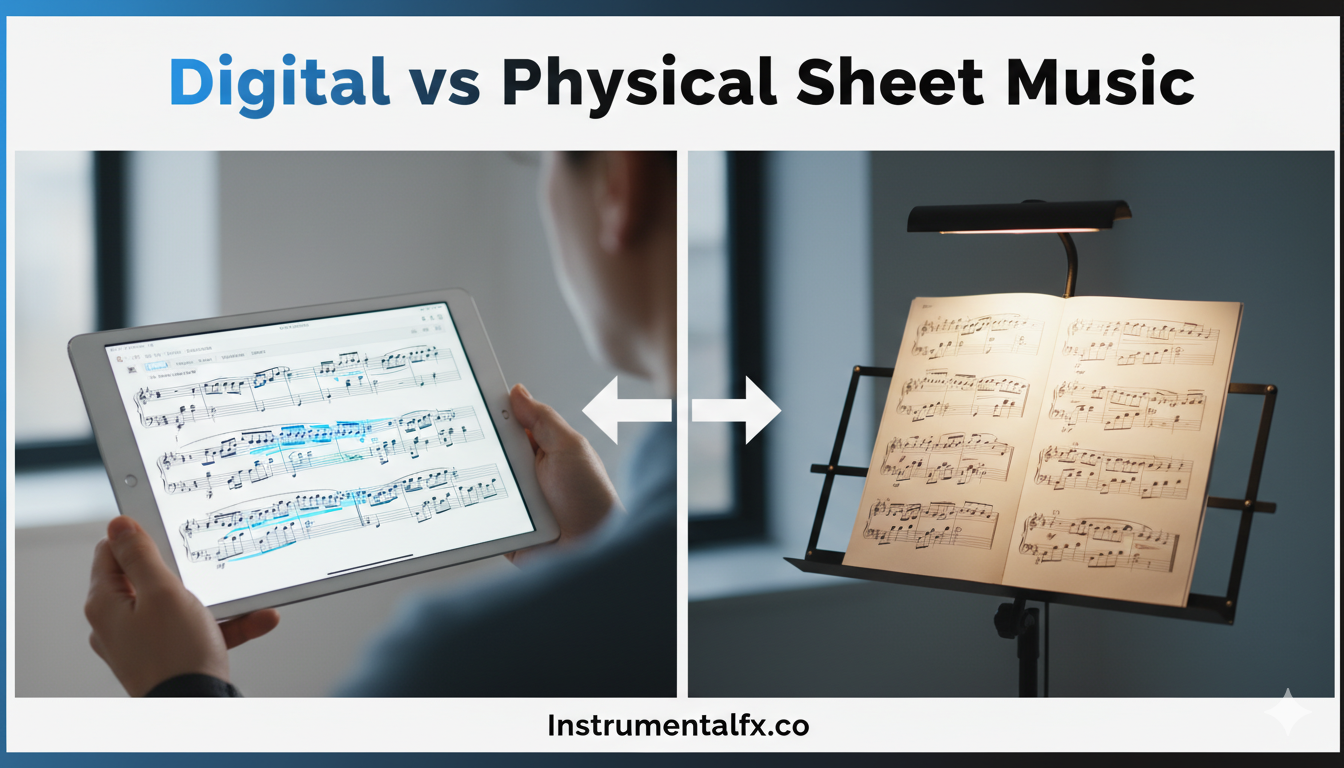
Digital sheet music offers instant access and portability through tablets and smartphones. Apps like Musicnotes, forScore, and Sheet Music Direct provide libraries that travel with you to lessons and performances.
Interactive digital features enhance practice sessions significantly. Many platforms include playback functions, tempo adjustment, loop sections for repetitive practice, and automatic page-turning during performance.
Physical sheet music provides tactile familiarity preferred by many traditional musicians. The ability to write notes directly on paper, fold pages for piano stands, and avoid screen glare appeals to certain learners.
Cost considerations differ between formats. Digital copies typically cost $4.99-$5.80 per song, while physical editions may include shipping costs but can be shared or resold more easily.
Environmental impact favors digital editions for reducing paper consumption. However, digital music requires devices and electricity, presenting its own environmental considerations.
Reading Piano Sheet Music Basics
Understanding treble and bass clefs is fundamental to reading piano music. “Linus and Lucy” uses both clefs simultaneously, with the right hand playing treble clef (higher notes) and left hand playing bass clef (lower notes).
Time signatures in “Linus and Lucy” indicate four beats per measure (4/4 time). This common time signature means each measure contains four quarter notes worth of rhythm, creating the steady pulse.
Key signatures determine which notes are sharp or flat throughout the piece. Beginner versions in C Major have no sharps or flats, while the original Ab Major version includes four flats (Bb, Eb, Ab, Db).
Rhythm notation shows how long to hold each note. Quarter notes, eighth notes, and sixteenth notes appear throughout “Linus and Lucy,” with the left hand often playing steady quarter notes while the right hand plays faster rhythms.
Dynamic markings indicate volume and expression. Even beginner arrangements include some dynamics like forte (loud) and piano (soft) to add musicality to performances.
Mastering the Left Hand Pattern
The signature left-hand pattern in “Linus and Lucy” consists of repeated bass notes alternating with chord hits. This ostinato (repeated pattern) creates the driving rhythm that characterizes the piece.
Begin by isolating the left hand and practicing slowly. Focus on evenness of rhythm and consistent volume across all notes before attempting to speed up or add the right hand.
The pattern typically follows a walking bass line with chord punctuation. In C Major beginner versions, the left hand often plays C-G-C-G or similar patterns that emphasize the tonic and dominant notes.
Finger positioning matters for efficiency and endurance. Use finger 5 (pinky) for the lowest bass notes and fingers 1-3 for chord tones, maintaining a relaxed hand position throughout.
Building stamina takes time as the left-hand pattern repeats throughout the entire piece. Practice in short sessions initially, gradually increasing duration as hand strength and muscle memory develop.
Learning the Right Hand Melody
The right-hand melody features a syncopated rhythm that gives “Linus and Lucy” its characteristic bounce. This syncopation means notes fall on unexpected beats, creating the jazzy, off-beat feeling.
Start by clapping or tapping the rhythm before playing notes. This separates rhythmic challenges from note-reading challenges, allowing you to master each element independently.
The melody uses a limited range in beginner versions, often staying within an octave. More advanced arrangements expand this range, incorporating octave jumps and wider intervallic leaps.
Fingering suggestions marked in quality sheet music editions guide proper hand position. Following these fingering numbers prevents awkward hand movements and prepares for smooth transitions between phrases.
Phrasing and articulation give the melody its personality. Pay attention to slurs (connected notes) and staccato marks (short, detached notes) that create the characteristic “bouncy” quality.
Practicing Tips for Beginners
Slow practice is essential when learning “Linus and Lucy.” Start at a tempo where you can play every note accurately and rhythmically, even if it feels painfully slow initially.
Hands-separate practice allows you to master each hand’s part independently. Spend significant time on left-hand patterns until they become automatic before adding the right-hand melody.
Section by section approach prevents overwhelm. Divide the piece into small phrases (4-8 measures), mastering each section before moving forward and eventually linking sections together.
Metronome practice develops steady timing crucial for this rhythmic piece. Begin at 60-80 BPM (beats per minute) and gradually increase speed as accuracy improves.
Daily consistency matters more than practice session length. Fifteen minutes of focused daily practice produces better results than occasional longer sessions, as regular repetition builds muscle memory.
Common Challenges and Solutions
- Rhythmic coordination between hands presents the biggest challenge for most learners. The right hand’s syncopated melody against the left hand’s steady pattern requires patience to coordinate smoothly.
- Solution: Practice each hand until automatic, then combine hands at a very slow tempo. Use a metronome and gradually increase speed by only 5-10 BPM increments once you achieve consistent accuracy.
- Maintaining steady tempo proves difficult when excitement builds during familiar passages. Students often speed up during easy sections and slow down during challenging ones.
- Solution: Record yourself playing and listen back objectively. Mark problem spots where tempo wavers and practice those specific measures with extra metronome work.
- Hand fatigue from repetitive patterns affects beginners unused to sustained playing. The left-hand ostinato particularly tires players without proper technique.
- Solution: Take frequent breaks during practice, ensure relaxed hand position with curved fingers, and build endurance gradually over weeks rather than forcing long practice sessions immediately.
- Reading ahead while playing becomes necessary as the piece progresses. Many students focus only on the current note, causing hesitation between measures.
- Solution: Practice sight-reading exercises daily, train your eyes to read one measure ahead of what you’re currently playing, and use slow practice to develop this essential skill.
Adding Jazz Feel and Expression
Swing rhythm transforms written eighth notes into a triplet feel. Rather than playing eighth notes evenly, swing makes the first note longer and the second shorter, creating a “long-short” lilting rhythm.
Understanding swing is crucial for authentic interpretation of “Linus and Lucy.” Listen to Vince Guaraldi’s original recording repeatedly to internalize this rhythmic feeling that distinguishes jazz from classical music.
Dynamic contrast adds interest beyond the basic notes. Gradually increase volume during exciting sections and decrease during bridges, creating musical conversation within the piece.
Tempo flexibility (rubato) in introductions and endings allows artistic freedom. While maintaining steady tempo during the main body is important, slight ritardandos (slowing down) at phrase endings add professional polish.
Touch and articulation distinguish good from great performances. Crisp, bouncy staccatos contrast with smooth legato passages, creating textural variety that holds listener attention.
Performance Preparation
Memorization enhances performance confidence and stage presence. Once you’ve learned the piece thoroughly with sheet music, begin memorizing short sections by playing repeatedly without looking at the music.
Mental practice away from the piano reinforces memory. Visualize your hands playing the piece, hear the music in your mind, and “feel” the physical movements required.
Performance anxiety management becomes important for recitals. Deep breathing exercises, positive self-talk, and performing for small friendly audiences before larger performances build confidence.
Stage presence matters beyond just playing the right notes. Practice walking to the piano, adjusting the bench, and taking a moment to center yourself before beginning.
Recovery strategies for mistakes prevent performances from derailing. If you make an error, keep going without stopping, returning to the established tempo and continuing confidently.
Supplementary Learning Resources

YouTube tutorials provide visual learning support for “Linus and Lucy.” Channels like HDpiano, Pianote, and various piano teachers offer free lessons showing hand positions and techniques.
Online piano learning platforms such as Flowkey, Simply Piano, and Playground Sessions include “Linus and Lucy” in their libraries. These apps provide real-time feedback on your playing accuracy.
Backing tracks and play-along recordings help practice timing and musicality. Search for “Linus and Lucy backing track” or “minus one” versions that provide accompaniment while you play the melody.
Piano method books incorporating “Linus and Lucy” provide structured progression. Books from publishers like Faber, Alfred, and Hal Leonard sometimes include this piece in their intermediate-level collections.
Private piano instruction accelerates learning significantly. A qualified teacher provides personalized feedback, corrects technique issues, and customizes instruction to your specific needs and goals.
Music Theory Behind Linus and Lucy
The chord progression in “Linus and Lucy” follows a relatively simple pattern that repeats throughout most of the piece. The main progression typically moves between tonic (I) and dominant (V) chords with some subdominant (IV) movement.
In the original Ab Major key, the progression uses Ab, Db, and Eb chords primarily. Beginner arrangements in C Major use C, F, and G chords, making finger positioning and reading more accessible.
The melodic structure features call-and-response phrasing common in jazz. The main melody “asks a question” in the first phrase, and the following phrase “answers” with a complementary melodic idea.
Modal mixture gives the piece its sophisticated sound. While primarily major key, Guaraldi occasionally borrows chords from the parallel minor key, adding harmonic interest and emotional depth.
Form analysis reveals an AABA structure common in jazz standards. The A sections present the main theme, while the B section (bridge) provides contrast before returning to the familiar A theme.
Transposing to Different Keys
The original recording exists in Ab Major with four flats. This key provides the authentic sound but presents reading challenges for pianists more comfortable with simpler key signatures.
C Major arrangements eliminate sharps and flats entirely, making note-reading significantly easier for beginners. This key signature change is the most common adaptation in educational editions.
G Major versions offer middle ground difficulty with only one sharp (F#). This key maintains some of the brightness of C Major while introducing students to sharp key signatures.
Transposition affects more than just note names. The key change influences fingering patterns, hand positions, and even the “feel” of the piece under the fingers.
Using transposition features on digital sheet music apps allows experimentation with different keys. Try several versions to find which key suits your hands and reading ability best.
Historical Context and Cultural Impact
“Linus and Lucy” premiered in 1964 during a transformative period in American music. Jazz was experiencing the cool jazz movement, and Guaraldi’s accessible style helped bring jazz into mainstream consciousness.
The piece became inseparable from the Peanuts brand identity. Wherever Peanuts characters appeared—television specials, commercials, theme parks—”Linus and Lucy” followed, creating powerful cultural associations.
Grammy Hall of Fame recognition came in 2007 when “A Charlie Brown Christmas” soundtrack earned this prestigious honor. The Library of Congress added the album to the National Recording Registry.
Commercial success was immediate and enduring. The album became one of the best-selling jazz albums ever, reaching Top 10 on the Billboard 200 and maintaining popularity for over six decades.
Educational influence extended far beyond entertainment value. “Linus and Lucy” introduced countless children to jazz piano, inspiring many to begin piano lessons specifically to learn this beloved piece.
Copyright and Usage Information
“Linus and Lucy” remains under copyright protection owned by Lee Mendelson Film Productions, Inc. The copyright was originally registered in 1965 and has been properly renewed.
Public performance rights require licensing through performing rights organizations like ASCAP, BMI, or SESAC. This includes recitals, concerts, and any public venue where the piece is performed.
Mechanical licenses allow recording and distribution of the composition. If you plan to record your performance for commercial release, proper licensing must be obtained through the Harry Fox Agency.
Educational exemptions provide some flexibility for classroom use under fair use doctrine. Teachers may use copyrighted music for educational purposes, but distribution of copies typically requires permission.
YouTube performances fall into a gray area regarding copyright. While many amateur performances exist online, technically these require synchronization licenses, though casual sharing is generally tolerated.
Comparing Sheet Music Publishers
Hal Leonard Corporation dominates the legitimate sheet music market with multiple editions at various difficulty levels. Their arrangements undergo professional editing and include helpful fingering suggestions and performance notes.
Musicnotes offers the advantage of instant digital delivery with interactive features. Their arrangements come from various sources, including arrangements by YouTube musicians like Chrissy Ricker and Jacob Koller.
Sheet Music Plus provides extensive inventory from multiple publishers. Their detailed filtering options help find exactly the right edition for your needs, and customer reviews guide purchasing decisions.
Alfred Music produces quality educational editions often used in piano method books. Their arrangements integrate well with structured lesson programs and include supplementary learning materials.
Willis Music and Frederick Harris Music publish arrangements approved by music teacher organizations. These editions meet specific examination board requirements for students pursuing formal music qualifications.
Creating Your Own Arrangement
Learning basic music theory enables you to create simplified or customized arrangements. Understanding chord progressions, voice leading, and harmonic function allows you to adapt existing arrangements to your skill level.
Notation software like MuseScore, Finale, or Sibelius facilitates arrangement creation. These programs provide professional-looking sheet music and playback features to hear your arrangements before printing.
Respecting copyright when creating personal arrangements is legally important. While you can create arrangements for personal practice, distributing or publishing them requires permission from copyright holders.
Simplification techniques for creating easier versions include reducing note density, simplifying rhythm patterns, eliminating challenging intervals, and maintaining recognizable melody while streamlining accompaniment.
Expanding arrangements for more advanced playing involves adding harmonies, incorporating improvisation sections, including stylistic embellishments, and varying repetitions to maintain interest.
Integrating into Piano Curriculum
“Linus and Lucy” serves as excellent supplementary material in structured piano programs. The piece motivates students while reinforcing concepts like steady rhythm, pattern recognition, and hand coordination.
Appropriate introduction timing varies by teaching philosophy. Some teachers introduce it early as a motivational piece, while others reserve it for students who’ve mastered basic techniques.
Skill prerequisites for successful learning include ability to read both clefs simultaneously, understanding of basic rhythm notation, hand independence for simple contrary motion, and physical endurance for repeated patterns.
Assessment criteria for evaluating student performances should include rhythmic accuracy and steadiness, correct notes and fingering, appropriate dynamics and articulation, and stylistic interpretation with swing feel.
Supplementary exercises that prepare students for “Linus and Lucy” include five-finger patterns in various keys, rhythm clapping exercises with syncopation, hand independence exercises, and other pattern-based jazz pieces.
Advanced Techniques and Variations

Improvisation opportunities exist throughout the piece for advanced players. After mastering the written arrangement, experiment with melodic variations during repetitions, maintaining the harmonic framework while creating new melodic ideas.
Chord substitutions add harmonic sophistication beyond the basic arrangement. Replace simple triads with seventh chords, ninth chords, or altered dominants to create richer, more professional-sounding performances.
Rhythmic variations prevent repetitions from becoming monotonous. Alter articulation patterns, add syncopated accents, or vary the left-hand ostinato subtly to maintain listener engagement.
Dynamic architecture across the entire piece creates emotional journey. Start moderately, build toward climaxes, use the bridge section for contrast, and plan your dynamic roadmap before performing.
Pedal technique enhances the piece’s sonority. While beginners often play without pedal initially, intermediate and advanced players use subtle pedaling to connect phrases and create depth.
Recording and Sharing Your Performance
Recording equipment ranges from smartphones to professional studio setups. Even basic phone recordings capture adequate audio for sharing progress with teachers or posting online.
Audio settings optimization improves recording quality significantly. Position the microphone 3-6 feet from the piano, minimize background noise, and consider room acoustics when choosing recording location.
Video recording considerations add visual component to audio documentation. Frame the shot to include hands and keyboard, ensure adequate lighting, and maintain stable camera positioning throughout.
Editing software allows post-production improvements. Programs like Audacity (free) or Adobe Audition (professional) enable volume normalization, minor corrections, and audio enhancement.
Sharing platforms each have different advantages: YouTube reaches broad audiences, Instagram works for short clips, TikTok connects with younger viewers, and SoundCloud focuses on audio sharing.
Performing for Different Occasions
Holiday concerts naturally suit “Linus and Lucy” given its association with “A Charlie Brown Christmas.” The piece works wonderfully in December recitals, nursing home performances, and church Christmas events.
Recitals throughout the year embrace the piece because of its universal recognition. Audiences of all ages respond enthusiastically, making it an excellent choice for building performance confidence.
Background music settings include restaurants, hotels, and events where jazz piano creates ambiance. “Linus and Lucy” fits perfectly in jazz brunch contexts or cocktail hour entertainment.
Competition considerations require checking specific event rules. Some competitions restrict certain popular pieces or require music from specific periods, so verify eligibility before preparing.
Collaborative opportunities include duets, ensemble arrangements, and accompanying other musicians. Four-hand versions allow teachers and students or two students to perform together.
Maintenance and Sheet Music Care
Physical sheet music preservation extends its lifespan significantly. Store in a cool, dry location away from direct sunlight, use page protectors for frequently-used pieces, and avoid folding or creasing pages.
Digital file organization prevents lost purchases. Create folders by composer, create playlists by difficulty level, back up files to cloud storage, and maintain purchase receipts for re-downloading.
Page-turning solutions for performance include memorization as the ideal solution, using page-turning apps with foot pedals, arranging music to minimize turns, and employing a page-turner assistant for formal performances.
Annotation best practices enhance learning without damaging original music. Use pencil only (never pen), mark fingerings lightly, note practice challenges, and erase marks if sharing or reselling.
Replacement considerations for lost or damaged sheet music favor digital purchases for instant replacement. Physical editions may require repurchasing, though some publishers offer replacement copies.
Building Your Peanuts Repertoire
Beyond “Linus and Lucy,” the Peanuts musical catalog offers numerous learning opportunities. “Christmas Time Is Here” provides lyrical contrast, “Skating” features similar rhythmic patterns, and “Blue Charlie Brown” introduces blues progressions.
The complete Charlie Brown Christmas album makes an excellent repertoire project. Learning the entire soundtrack over several months provides varied musical challenges while maintaining thematic connection.
Vince Guaraldi’s other jazz compositions outside Peanuts expand your jazz piano foundation. Pieces like “Cast Your Fate to the Wind” introduce different jazz styles and techniques.
Jazz standards that share similar characteristics include pieces with Latin-influenced rhythms, modal jazz compositions, and other jazz piano trio classics from the 1960s cool jazz era.
Creating themed recital programs around Peanuts music entertains audiences while showcasing multiple pieces. Such programs work particularly well for holiday concerts or family-friendly community events.
Frequently Asked Questions About Linus and Lucy Sheet Music
Where can I download Linus and Lucy sheet music for free?
MuseScore.com offers free community-created arrangements of varying quality and accuracy. However, purchasing official editions from publishers like Hal Leonard ensures accurate, legal arrangements that properly compensate the copyright holders.
What is the easiest version of Linus and Lucy for beginners?
The Hal Leonard Easy Piano edition (Product #110117) in C Major is the most beginner-friendly version, featuring simplified rhythms and patterns. Chrissy Ricker’s beginner arrangement on Musicnotes also provides an excellent starting point for newer pianists.
How long does it take to learn Linus and Lucy?
Learning time varies by skill level, but most beginners can play a recognizable version within 4-8 weeks of consistent daily practice. Intermediate players might master it in 2-3 weeks, while advanced players can learn it in days.
What skill level do I need to play Linus and Lucy?
Beginner versions require basic note reading in both clefs, understanding of quarter and eighth notes, and hand independence. You should be comfortable playing simple pieces with both hands before attempting this piece.
Is Linus and Lucy hard to play on piano?
Difficulty depends on the arrangement chosen. Easy piano versions are accessible to late-beginners, while artist transcriptions challenge advanced players. The repetitive patterns actually make it easier than its impressive sound suggests.
What key is Linus and Lucy originally in?
The original recording is in Ab Major with four flats. However, most beginner and easy piano arrangements transpose it to C Major (no sharps or flats) for easier reading and finger positioning.
Can I play Linus and Lucy at my piano recital?
Yes, “Linus and Lucy” works excellently for recitals due to its instant recognition and audience appeal. Verify any competition rules if entering formal events, as some restrict certain popular pieces or require specific repertoire.
Where can I find Linus and Lucy sheet music with letters?
Letter-note arrangements exist on some educational websites and YouTube channels, though they’re not recommended for serious learning. Proper sheet music develops essential reading skills that letter notes cannot provide for long-term musical growth.
How much does Linus and Lucy sheet music cost?
Official digital downloads typically cost $4.99-$5.80 from sites like Musicnotes or Sheet Music Direct. Physical editions range from $4.99-$6.99 plus shipping. Complete songbook collections offer better value if learning multiple Peanuts pieces.
What tempo should I play Linus and Lucy?
Beginners should start at 60-80 BPM (beats per minute) for accuracy. The original recording tempo is approximately 144 BPM. Gradually increase speed only after achieving consistent accuracy at slower tempos for proper technique development.
Conclusion
Linus and Lucy sheet music represents more than just notes on a page—it’s a gateway to understanding jazz piano, building performance confidence, and connecting with one of the most beloved musical themes in American culture.
Whether you’re a beginner taking your first steps into the world of piano playing or an advanced musician seeking to master Vince Guaraldi’s original interpretation, the right sheet music arrangement makes all the difference in your learning journey.
From free community arrangements on MuseScore to professional editions from Hal Leonard and Musicnotes, options exist for every skill level and budget.
The piece’s enduring popularity stems from its perfect balance of accessibility and musicality. Its repetitive patterns provide security for developing pianists while its jazz sensibility introduces sophisticated concepts in digestible form.
By choosing an arrangement appropriate to your current abilities, practicing consistently with proper technique, and gradually building toward more complex versions, you’ll not only learn this iconic piece but also develop fundamental skills that transfer to countless other piano works.
Remember that every professional pianist started as a beginner, and “Linus and Lucy” has launched thousands of musical journeys. With patience, dedication, and the right sheet music in hand, you’ll soon be bringing Charlie Brown’s world to life through your own piano performance.


