


Musicology dissertations fall apart in the last week more often than they fall apart in the argument. A committee member opens the related-work chapter, finds a book year that never existed in that edition, or an article an AI rewrite invented at 2 a.m., and the hallway conversation starts. I finished my literature chapter with a list built across Zotero, old seminar notes, and summaries I trusted too much. Before the bind date I ran that list through a Citation Checker pass on CiteTrue instead of trusting another tired skim.
This is not a methods paper about verification accuracy. It is a bind-week ledger: the printer slot was paid, the PDF was already with the committee, and the only useful question left was which lines would survive if someone who owns the book opened the page.
How Bad Years And Ghost Articles Enter Arts Theses
Arts references fail in two flavors. Some works are real but mistyped — a university-press monograph you handled in the archive, year drifted during a rewrite. Some are fluent nonsense — a plausible journal name completed by an assistant that never asked whether the article existed. Both look tidy in Times New Roman. Both can sink a defense when the wrong person decides to check.
People claim they hand-check hundreds of lines. After chapter four, they skim. I kept a verify-later PDF pile that never got verified. That pile is where bad years live until binding. The longer the thesis, the more the early chapters become furniture you stop seeing.
- Archive notes copied years ago with incomplete years
- AI paragraph rewrites that complete a reference for you
- Cross-chapter duplicates edited in only one place
- Secondary citations lifted from a review without opening the source
Why Musicology Lists Wander Across Formats
We cite scores, liner notes, conference programs, and university-press books beside journal articles. Formats wander on purpose. A tool that only scolds punctuation helps less than one that asks whether the work exists and whether the year on the page matches the record. That was the job in the final fortnight, when the prose was stable and the risk had shifted from writing quality to documentary shame.
What A Paid Bind Slot Does To Judgment
Once the bind shop invoice is paid, every correction is overnight panic with a shop that does not care about your committee calendar. Catching errors before that invoice is the only sane timeline. Skimming feels efficient until an examiner asks for a source you cannot produce. I had already told two friends the bind date. Social witnesses make denial harder, which is useful and unpleasant.
The Year Mismatch On A Book I Thought I Knew
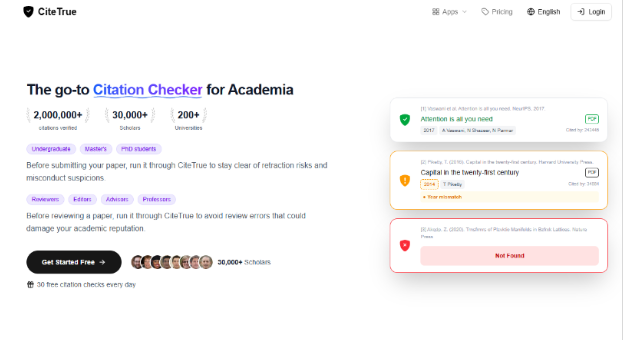
When I opened the bibliography in CiteTrue and clicked Verify, most cards came back Authentic. One familiar university-press title came back Authentic with Notice: year mismatch. The card showed my typed year against the matched record. I pulled the interlibrary loan slip I still had from the reading-room visit and lined the two dates up. The footnote had drifted by two years in an earlier rewrite. Next to the loan slip, the typed year looked scholarly until the digits refused to agree. That single miss would have taken an examiner who owns the book under a minute.
Boring failures are the ones committees catch. A gibberish title marked Not Found is easy to delete. A near-correct book with the wrong year looks careful until the shelf copy contradicts you. The same afternoon I killed two invented article lines that had survived three chapter rewrites because they sounded like seminar reading. I had quoted them with confidence. Confidence is not a retrieval test. I also found one Authentic-with-Notice row on a journal article where the issue number had drifted; small, fixable, and exactly the kind of thing a pedantic external examiner loves to mention in the first ten minutes.
Routing Unsure Rows Without Burning The Week
Unsure rows got opened against the PDF or catalog record I claimed to use. Inauthentic results after the fast pass were mostly AI leftovers or titles too mangled to match. Deep Verify costs five credits per citation on CiteTrue; I reserved it for contested lines I still believed were real after a manual glance. I did not Deep Verify the whole list. Fast Verify at one credit covered the first sweep. Escalating every yellow card would have wasted an afternoon I needed for front matter, pagination, and the acknowledgments page I kept postponing.
A Small Table I Kept Above The Keyboard
I needed decisions, not vibes. The cards already had a language. I wrote the student-side actions next to them so I would not renegotiate with myself at midnight.
| Result flavor | Action before bind |
| Authentic | Leave unless a style fix was already planned |
| Authentic with Notice | Fix the mismatched field immediately |
| Unsure | Open the source; do not argue with the card |
| Inauthentic / Not Found | Delete or replace; escalate only if you still believe it |
Where Batch Verification Fits Beside Zotero
Paste the block, run Verify, read the cards, export if your plan allows. Free daily credits covered chapter iterate loops. The final full bibliography needed a longer sitting, so I ran it when I was awake enough to act on notices instead of starring them for a fictional tomorrow. The point is triage, not a new research method.
Zotero stayed the library of record. CiteTrue stressed the near-final list the night before formatting. Suggested replacements after a deep not-found were leads to investigate, never automatic inserts. Two of three leads helped; one burned ten minutes and got discarded. That discard still counted as progress because it closed a maybe. I printed the final clean cards for my own archive — not because a rule required it, but because I wanted a paper trail if anyone later asked which night I had verified the list.
When An AI Citation Checker Belongs In The Pipeline
Run an AI Citation Checker after the prose is stable enough that you will not regenerate half the references tomorrow. Early messy drafts burn attention. One pass on the near-final list catches year drift and invented articles while hours remain. Obscure proceedings and some non-English sources still need manual confirmation even when a card looks confident. Unsure stays unpaid work you own. Students with a librarian co-author may live differently. Most musicology candidates have a bind date, a committee, and a list that grew while they slept.
Bind After The Notices Are Gone
If your field mixes books, articles, and odd ephemera, verify when the chapter is otherwise done. Fix notices. Dig into unsure rows. Delete ghosts. The mismatch on a book I thought I knew was enough to change how I treat every “almost right” footnote. Then bind — and keep the loan-slip photo in case anyone asks how you caught it.


