


Artificial intelligence is fundamentally reshaping digital content workflows across industries. From content creation to distribution and optimization, AI-driven systems are making it possible to scale output in ways that were previously not feasible for most organizations.
For online businesses, this transformation is not simply about speed. It is about restructuring how content is planned, produced, reviewed, and delivered.
The Evolution of Digital Content Production
Historically, content production was a manual and time-intensive process. Writers, editors, and marketers worked sequentially to produce each piece of content.
AI has changed this model by introducing parallel and automated workflows. Today, businesses can generate drafts, summarize research, and create variations of content in a fraction of the time.
However, this efficiency introduces a new challenge: maintaining consistency and originality across large volumes of AI-assisted output.
Scaling Content While Maintaining Quality
As organizations scale their content operations, maintaining quality becomes increasingly difficult.
Common challenges include:
- Repetitive sentence structures across AI-generated articles
- Lack of domain-specific insights
- Reduced originality in high-volume content strategies
- Inconsistent tone across multiple platforms
These issues highlight the importance of combining automation with editorial oversight.
Understanding AI Content Evaluation Systems
As AI-generated content becomes more widespread, businesses are also adopting tools to evaluate its structure and authenticity.
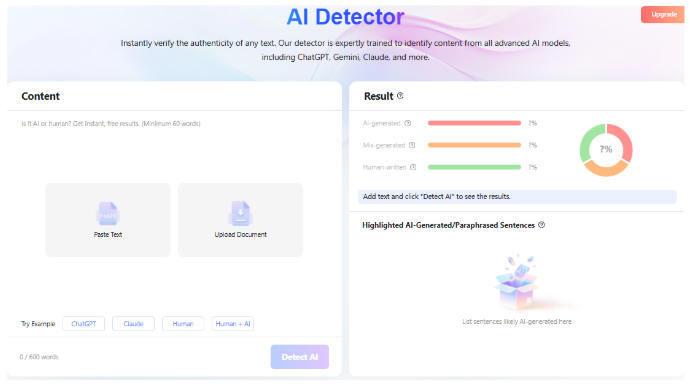
Many content teams explore technologies such as best free ai detector to better understand how automated content is being identified and assessed in digital environments.
These systems analyze linguistic predictability, sentence complexity, and structural patterns to generate probability-based assessments. While not definitive, they help teams improve editorial quality control processes.
Why Automation Alone Cannot Replace Editorial Thinking
AI is highly effective at generating structured content, but it lacks contextual understanding and real-world experience.
This is why many organizations now use hybrid workflows:
- AI handles initial drafting and structuring
- Humans refine tone and clarity
- Editors ensure factual accuracy and brand alignment
This combination allows businesses to maintain both speed and quality.
Improving AI-Generated Content for Real Audiences

Raw AI output often requires refinement before publication. This includes improving readability, adjusting tone, and aligning content with audience expectations.
In many cases, teams use workflows that function as a free ai humanizer, helping transform AI-generated drafts into more natural and engaging content suitable for publication.
This process ensures that efficiency gains from automation do not come at the expense of communication quality.
The Role of Lynote.ai in Modern Content Workflows
As AI becomes more integrated into content production, platforms like Lynote.ai reflect a broader shift toward structured AI content management.
Rather than focusing solely on generation, modern workflows increasingly emphasize evaluation, refinement, and quality control.
This shift suggests that the future of content automation will not be defined by generation alone, but by how effectively organizations manage the entire lifecycle of AI-assisted content.
Strategic Implications for Digital Businesses
For online businesses, AI content automation represents both an opportunity and a responsibility.
Organizations that adopt AI effectively can:
- Increase content output without proportional cost increases
- Improve operational efficiency
- Scale marketing efforts across multiple channels
However, success depends on how well AI is integrated into broader editorial systems, not just on generation capabilities.
Conclusion
AI content automation is transforming how digital workflows operate at every level. While the efficiency benefits are clear, maintaining quality, consistency, and authenticity remains essential.
The future of digital content will not be defined by full automation, but by hybrid systems that combine machine efficiency with human editorial intelligence.
Businesses that adopt this balanced approach will be best positioned to thrive in an increasingly automated digital landscape.

